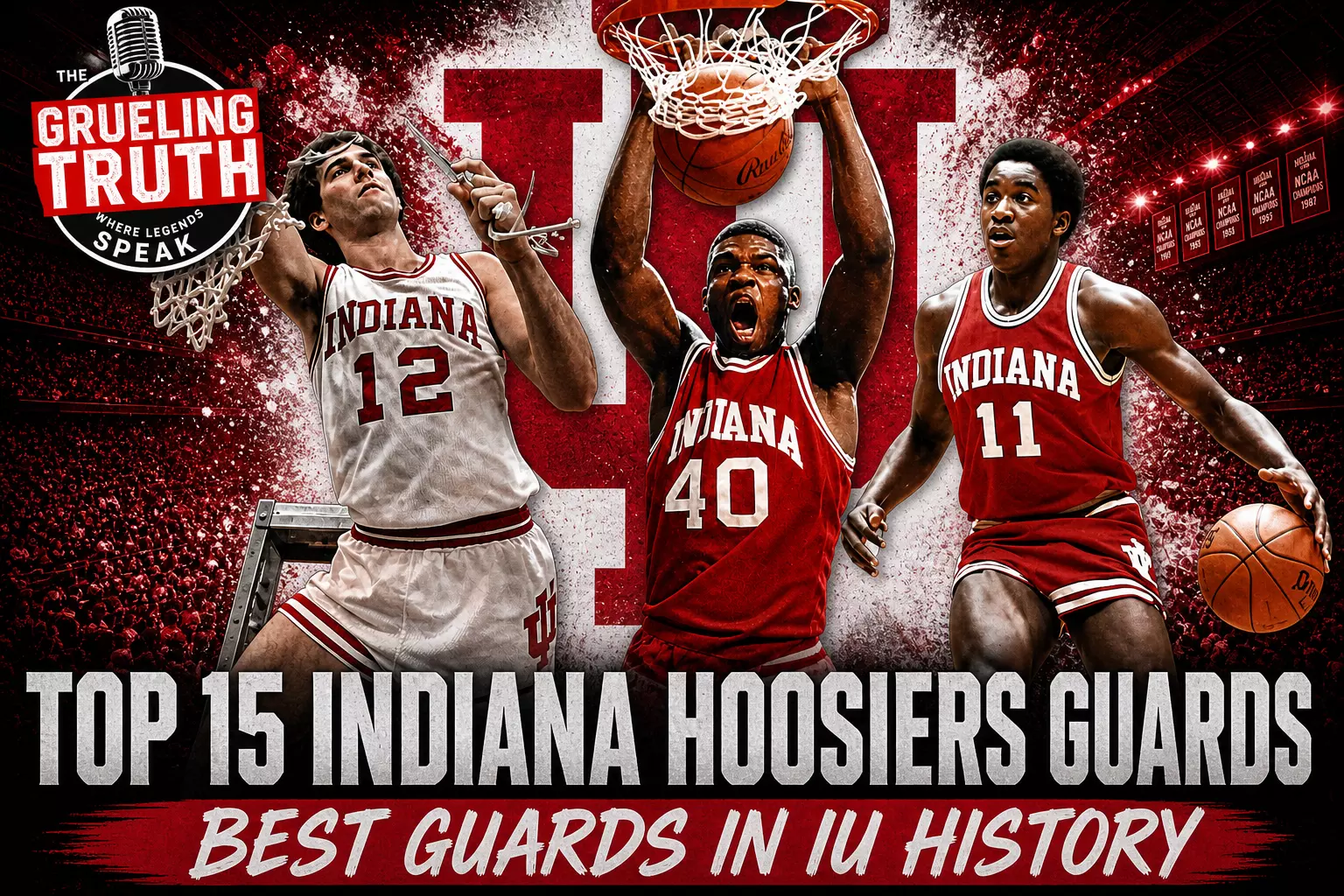
The Indiana Hoosiers have had some all time great Guards, from Thomas to Alford and all the way back to slick Leonard!
Indiana basketball has never been just about size or dominance in the paint—it has been defined just as much by the guards who controlled the game, dictated tempo, and delivered in the biggest moments. From championship runs to program-defining eras, elite guard play has been at the core of everything Indiana has accomplished. Whether it was the leadership of Isiah Thomas, the shooting brilliance of Steve Alford, or the defensive intensity and control of Quinn Buckner, Indiana’s backcourt tradition is as rich as any in college basketball history.
But like any great program, not all guards are remembered equally.
Some were scorers. Some were leaders. Some were winners who delivered on the biggest stage. What separates the great from the rest at Indiana isn’t just statistics—it’s impact. Who controlled games? Who stepped up when everything was on the line? Who helped define an era?
This list doesn’t chase hype or nostalgia. It weighs production, leadership, winning, and legacy to answer one question:
Who are the greatest guards in Indiana Hoosiers history?
Jordan Hulls is the kind of player that doesn’t jump off the page physically, but if you understand Indiana basketball, you understand exactly why he belongs on this list. Hulls was one of the most efficient and fundamentally sound guards the program has produced in the modern era. A career 90% free throw shooter, he was automatic in late-game situations, which made him invaluable in close contests.
Hulls played a critical role in Indiana’s resurgence under Tom Crean, helping lead the Hoosiers back to national relevance. He was a key contributor on the 2012 Sweet Sixteen team and the 2013 Big Ten championship squad. While he was never the focal point offensively, he spaced the floor, knocked down perimeter shots, and made smart decisions with the ball.
What separates Hulls is his discipline and consistency. He rarely forced shots, understood his role, and executed at a high level within the system. In a program built on fundamentals, Hulls fits perfectly.
Jordan Hulls Highlights
14. Tom Coverdale (1998–2002)
Tom Coverdale’s place in Indiana history is secured by one of the most improbable tournament runs the program has ever seen. In 2002, he led the Hoosiers to the national championship game, highlighted by a legendary Sweet Sixteen comeback win over Duke where he completely controlled the tempo.
Coverdale was never the most athletic or explosive guard, but he was fearless and tough. He had a knack for hitting big shots and making plays in high-pressure moments. Throughout that 2002 run, he consistently delivered when Indiana needed him most.
He averaged double figures as a senior and served as the emotional and strategic leader of that team. Coverdale understood how to manage games, when to take over, and how to keep his team composed.
His career proves something that often gets overlooked—great guards don’t just score, they lead. And Coverdale did that at the highest level.
IU Oklahoma Final Four 2002 Moye Coverdale
13. Greg Graham (1989–1993)
Greg Graham was a key contributor on one of the last truly elite Indiana teams. As a starting guard on the 1992 Final Four team, Graham provided scoring, toughness, and consistency on the perimeter.
By his senior season, he averaged over 16 points per game, proving he could be a reliable offensive option. He wasn’t flashy, but he was dependable—exactly what Bob Knight demanded from his guards.
Graham’s value went beyond scoring. He played within the system, defended his position, and made timely plays when Indiana needed them. His ability to contribute without forcing the game made him an ideal fit for those early 90s teams.
While he may not have the individual accolades of some others on this list, his role in one of Indiana’s most successful teams secures his place.
Greg Graham: One of the Greatest Hoosiers of All Time #iubb
12. A.J. Guyton (1996–2000)
A.J. Guyton was one of the most gifted scorers Indiana has ever had, and he carried that burden during a transitional period late in the Bob Knight era. Finishing his career with over 2,100 points, Guyton consistently shouldered the offensive load and delivered in high-pressure situations.
What separated Guyton was his ability to create his own shot. He could score off the dribble, knock down contested jumpers, and hit big shots late in games. Indiana often relied on him when possessions broke down, and more often than not, he delivered.
He was a two-time First Team All-Big Ten selection and one of the few players from that era who could take over a game offensively. While Indiana didn’t reach a Final Four during his tenure, Guyton’s individual production and clutch ability make him one of the most dangerous perimeter players the program has ever had.
AJ Guyton Hoosier Legend!
11. Bobby Leonard (1950–1954)
Bobby Leonard was the floor general for Indiana’s 1953 national championship team and one of the earliest great guards in program history. In an era where guard play was more about control than scoring, Leonard excelled at dictating tempo and leading his team.
He wasn’t a high-volume scorer, but he didn’t need to be. Leonard’s role was to run the offense, make smart decisions, and ensure that Indiana executed at a high level. His leadership was instrumental in guiding the Hoosiers to their second national title.
Leonard’s toughness and basketball IQ made him a perfect fit for that era. He understood how to manage games and keep his team composed in pressure situations.
While modern fans may overlook players from this era, Leonard’s impact on Indiana’s early championship history makes him impossible to ignore.\
Bobby ‘Slick’ Leonard: Heart of a Hoosier
10. Damon Bailey (1990–1994)
Damon Bailey
arrived at Indiana with as much hype as any player in program history—and he lived up to it.
As one of the most celebrated high school players in Indiana history, Bailey carried enormous expectations into Bloomington. He responded by becoming Indiana’s all-time leading scorer at the time of his graduation and a key contributor on the 1992 Final Four team.
Bailey was a complete guard. He could score, rebound, and defend, and he played with a toughness that fit perfectly into Bob Knight’s system. He wasn’t just a scorer—he understood how to win.
His ability to handle pressure and deliver consistently made him one of the most respected players of his era.
Creating a Phenom: What happened to the next Larry Bird DAMON BAILEY? Stunted Growth
9. Keith Smart (1983–1987)
Keith Smart will always be remembered for one of the most iconic shots in college basketball history—the jumper that won the 1987 national championship against Syracuse. But reducing his career to that moment does him a disservice.
Smart was a steady, intelligent guard who fit perfectly into Bob Knight’s system. He understood how to manage games, make the right reads, and execute under pressure. He wasn’t flashy or overly dominant statistically, but he was dependable—and that mattered.
Throughout the 1987 tournament run, Smart consistently made key plays, whether it was scoring, defending, or simply maintaining control in critical possessions. His ability to stay composed in the biggest moments is what ultimately defined his career.
Keith Smart winning shot 1987
8. Randy Wittman (1978–1983)
Randy Wittman was one of the purest shooters Indiana has ever produced and a critical piece of the 1981 national championship team. Over his career, he averaged 18.4 points per game and established himself as one of the most consistent offensive threats in the Big Ten.
Wittman’s strength was his ability to score within the system. He didn’t need to dominate the ball to be effective—he moved well without it, found open space, and made defenses pay. His shooting range and accuracy made him a constant threat, even in an era that didn’t emphasize perimeter shooting the way today’s game does.
He played alongside Isiah Thomas on the 1981 title team, providing balance and spacing that allowed Indiana’s offense to function at a high level. Wittman’s scoring consistency and ability to deliver in big moments made him invaluable.
Top 10 Greatest Shooters in Indiana Hoosier Basketball History
7. Jimmy Rayl (1960–1963)
Jimmy Rayl was one of the purest scorers in Indiana history. Playing in an era without a three-point line, Rayl still managed to put up scoring numbers that stand out decades later.
His 56-point performance against Minnesota remains one of the greatest single-game efforts in program history. At 6’3”, Rayl had range, confidence, and the ability to create his own shot.
He averaged over 20 points per game for his career, which is even more impressive considering the slower pace of the game during that time.
Rayl didn’t have the benefit of deep tournament runs, but individually, he was elite.
Remembering Jimmy Rayl’s fantastic basketball life
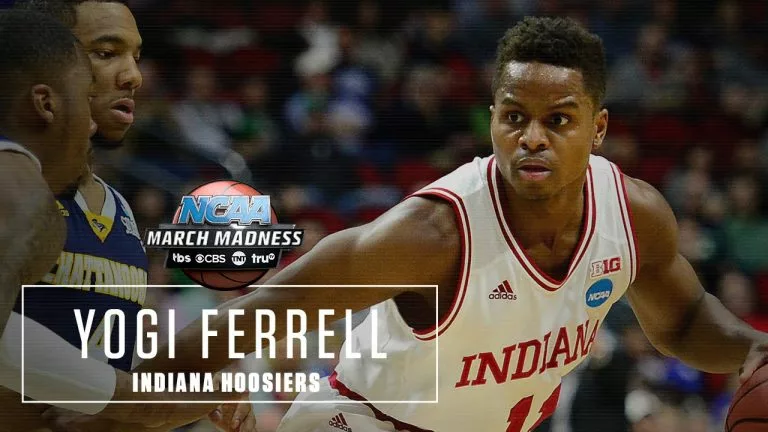
6. Yogi Ferrell (2012–2016)
Yogi Ferrell’s legacy is built on consistency, leadership, and production over four full seasons. He left Indiana as the program’s all-time leader in assists and one of its most reliable floor generals.
Ferrell was the engine behind the 2016 Big Ten championship team, controlling tempo and making smart decisions with the ball. He averaged double figures in scoring each season and improved as both a scorer and playmaker throughout his career.
What made Ferrell valuable was his balance. He didn’t force the game, but he could take over when necessary. He understood when to distribute, when to attack, and how to keep his team organized.
Yogi Ferrell shines for Hoosiers in NCAA Tournament
5. Victor Oladipo (2010–2013)
Victor Oladipo may be the most explosive two-way guard Indiana has ever had. By his junior season in 2012–13, he had developed into one of the best players in the country, earning consensus All-American honors and National Defensive Player of the Year.
Oladipo impacted the game in ways that went beyond scoring. He could lock down opposing guards, create turnovers, and change momentum with a single defensive play. Offensively, he was efficient, finishing at a high percentage and making smart decisions with the ball.
His athleticism set him apart, and his development over three seasons made him one of the most complete players in the country.
Victor Oladipo highlights: NCAA tournament top plays
4. Quinn Buckner (1972–1976)
Quinn Buckner was the leader of the
greatest team in college basketball history—the 1976 undefeated national champions. As the point guard, his job wasn’t to score—it was to control everything else.
Buckner set the tone defensively. He was one of the best perimeter defenders in the country, capable of shutting down opposing guards and disrupting offensive flow. Offensively, he was a facilitator who ensured execution.
His leadership was just as important as his play, anchoring the team emotionally and strategically.
Quinn Buckner on the incredible undefeated run by the 1976 Indiana Hoosiers | 68 Shining Moments
3. Calbert Cheaney (1989–1993)
Calbert Cheaney is Indiana’s all-time leading scorer, finishing his career with 2,613 points. He averaged over 20 points per game and was named National Player of the Year in 1993.
Cheaney’s efficiency and versatility made him nearly impossible to defend. He could score from anywhere and delivered consistently on the biggest stage.
Indiana vs Northwestern – 3/4/1993 – Calbert Cheaney Breaks Both Records
2. Isiah Thomas (1979–1981)
Isiah Thomas led Indiana to the 1981 national championship and established himself as one of the best point guards in the country.
He controlled tempo, scored when needed, and delivered in big moments. His leadership defined that championship team.
If Thomas plays all four years he would be number one on this list.
Isiah Thomas | Big Ten Icons
1. Steve Alford (1983–1987)
Steve Alford is the greatest guard in Indiana history. A two-time All-American and 1987 national champion, he was one of the best shooters college basketball has ever seen.
Alford delivered in big moments and carried Indiana to a title with elite scoring. Alford played all four years and his impact on the program was huge. I am not saying that Alford was better than Isaih, but he had a deeper impact playing twice as long as Thomas did.
Up To $1500 in Bonus Bets Paid Back if your First Bet Does Not Win
T&Cs apply
4.5/5
Gambling problem? Call 1-800-GAMBLER or 1-800-MY-RESET (Available in the US) 877-8-HOPENY or text HOPENY (467369) (NY) 1-800-327-5050 (MA), 1-800-BETS-OFF (IA), 1-800-981-0023 (PR). 21+ only. Please Gamble Responsibly. See BetMGM.com for Terms. First Bet Offer for new customers only (if applicable). Subject to eligibility requirements. Bonus bets are non-withdrawable. In partnership with Kansas Crossing Casino and Hotel. Promotional offers not available in Mississippi, Massachusetts, New York, Ontario, or Puerto Rico.
New DraftKings Customers: Spend $5+ Get $150 in Bonuses
T&Cs apply
4.5/5
GAMBLING PROBLEM? CALL 1-800-GAMBLER or 1-800-MY-RESET, (800) 327-5050 or visit gamblinghelplinema.org (MA). Please Gamble Responsibly. 888-789-7777/visit ccpg.org (CT), or visit www.mdgamblinghelp.org (MD), 1-800-981-0023 (PR). 21+ and present in most states. (18+ DC/NH/PR/WY). Void in CAN. Eligibility restrictions apply. On behalf of Boot Hill Casino (KS). Pass-thru of per wager tax may apply in IL. 1 per new DraftKings customer. $5+ first-time bet req. Max. $150 issued as non-withdrawable Bonus Bets. Stake removed from payout. Reward issued as $50 in Bonus Bets every 7 days via click-to-claim for 14 days. Bonus Bets and click-to-claims expire 7 days (168hrs) after issuance. Terms: sportsbook.draftkings.com/promos. Ends 10/11/26 at 11:59 PM ET. Sponsored by DK.
Must be 21+. GAMBLING PROBLEM? CALL 1-800-GAMBLER OR CALL 1-800-MY-RESET, www.mdgamblinghelp.org (MD), (800)-327-5050 or gamblinghelplinema.org (MA), Call (877)8-HOPENY or text HOPENY (467369) (NY), (888) 789-7777 or ccpg.org (CT), morethanagame.nc.gov (NC), 1800gambler.net (WV)
Bet $1 and get double the winnings up to $25 for your next 10 bets
T&Cs apply
4.4/5
21+ New users only. Must register using eligible promo code. First bet after registration must qualify. Max. Bonus Bet: $1,000. Bonus Bet expires 14 days after receipt. Void where prohibited. See Caesars.com/promos for full terms. Gambling Problem? 1-800-GAMBLER (1-800-426-2537)
21+ and present in OH. Gambling Problem? Call 1-800-GAMBLER.
This site is using
Cloudflare
and adheres to the
Google Safe Browsing Program. We adapted
Google's Privacy Guidelines
to keep your data safe at all times.
Close
Ready to Win Big? Join the Elite with Our Sports Betting Deals!
FanDuel Promo
New Users – Get $250 in Bonus Bets when you wager $5 for 5 days
Up To $1500 in Bonus Bets Paid Back if your First Bet Does Not Win
Best Slots
T&Cs and 21+ apply
Gambling problem? Call 1-800-GAMBLER or 1-800-MY-RESET (Available in the US) 877-8-HOPENY or text HOPENY (467369) (NY) 1-800-327-5050 (MA), 1-800-BETS-OFF (IA), 1-800-981-0023 (PR). 21+ only. Please Gamble Responsibly. See BetMGM.com for Terms. First Bet Offer for new customers only (if applicable). Subject to eligibility requirements. Bonus bets are non-withdrawable. In partnership with Kansas Crossing Casino and Hotel. Promotional offers not available in Mississippi, Massachusetts, New York, Ontario, or Puerto Rico.
Code:
Open BetMGM
Get Bonus
DraftKings Promo
New DraftKings Customers: Spend $5+ Get $150 in Bonuses
Newcomer
T&Cs and 21+ apply
GAMBLING PROBLEM? CALL 1-800-GAMBLER or 1-800-MY-RESET, (800) 327-5050 or visit gamblinghelplinema.org (MA). Please Gamble Responsibly. 888-789-7777/visit ccpg.org (CT), or visit www.mdgamblinghelp.org (MD), 1-800-981-0023 (PR). 21+ and present in most states. (18+ DC/NH/PR/WY). Void in CAN. Eligibility restrictions apply. On behalf of Boot Hill Casino (KS). Pass-thru of per wager tax may apply in IL. 1 per new DraftKings customer. $5+ first-time bet req. Max. $150 issued as non-withdrawable Bonus Bets. Stake removed from payout. Reward issued as $50 in Bonus Bets every 7 days via click-to-claim for 14 days. Bonus Bets and click-to-claims expire 7 days (168hrs) after issuance. Terms: sportsbook.draftkings.com/promos. Ends 10/11/26 at 11:59 PM ET. Sponsored by DK.
Code:
Open DraftKings
Get Bonus
Find out what the legends have to say about sports this week....