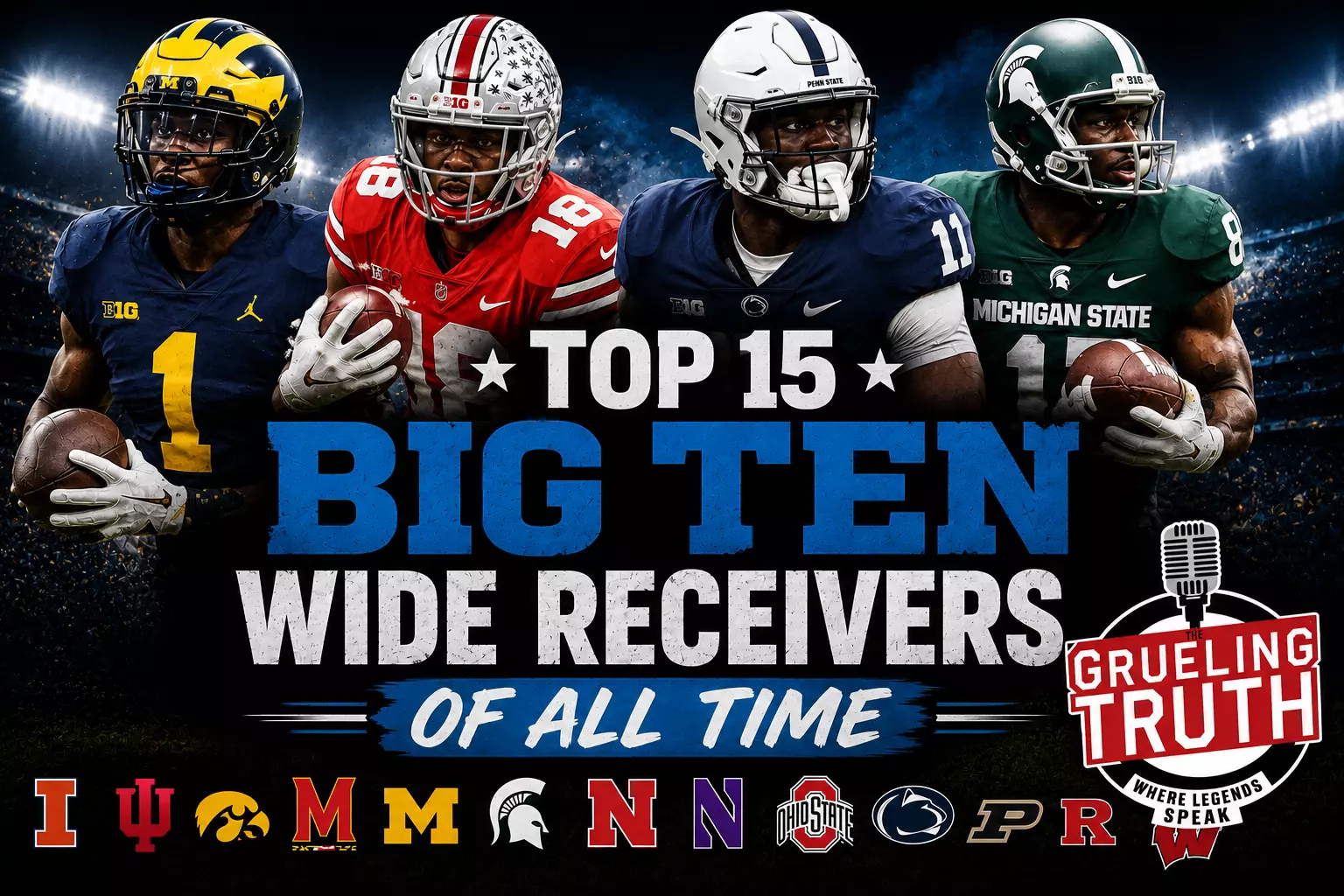
The Big Ten has long been known as a conference built on powerful running games, dominant offensive lines, and suffocating defense.
The Big Ten has long been known as a conference built on powerful running games, dominant offensive lines, and suffocating defense. Yet throughout its rich history, it has also produced some of college football’s greatest wide receivers. From Anthony Carter redefining the position at Michigan to Marvin Harrison Jr. and Ohio State’s modern pipeline of superstar pass catchers, the conference has consistently featured game-changing talent on the outside. This list ranks the 15 greatest wide receivers in Big Ten history based strictly on what they accomplished during their collegiate careers. Conference championships, All-American honors, individual awards, statistical production, impact on winning, and historical significance all played a role in these rankings.
NFL accomplishments
were considered only as supporting context—not as the deciding factor. These are the receivers who dominated Saturdays, rewrote record books, delivered unforgettable moments, and cemented their legacies as the greatest pass catchers the Big Ten has ever produced.
15. Chris Olave – Ohio State
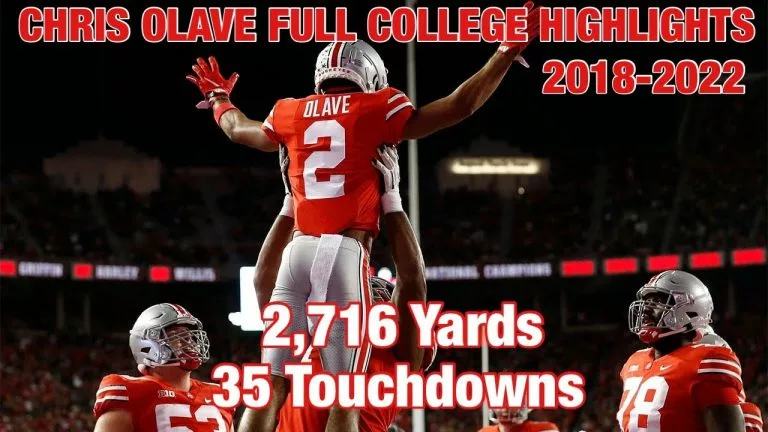
Chris Olave quietly put together one of the most productive careers in Ohio State history. A master route runner with outstanding football intelligence, Olave broke the Buckeyes’ all-time record with 35 career touchdown receptions. His ability to find openings in defenses, create separation, and consistently make big plays helped Ohio State compete for multiple College Football Playoff appearances. Olave possessed deceptive speed and perhaps the smoothest route-running ability of any receiver in recent Big Ten history. Despite sharing targets with several future NFL stars, he consistently remained the Buckeyes’ most dependable deep threat. His remarkable production and consistency place him among the conference’s greatest receivers.
Chris Olave Career Highlights | 2018-2022 Ohio State Wide Receiver |
14. Garrett Wilson – Ohio State
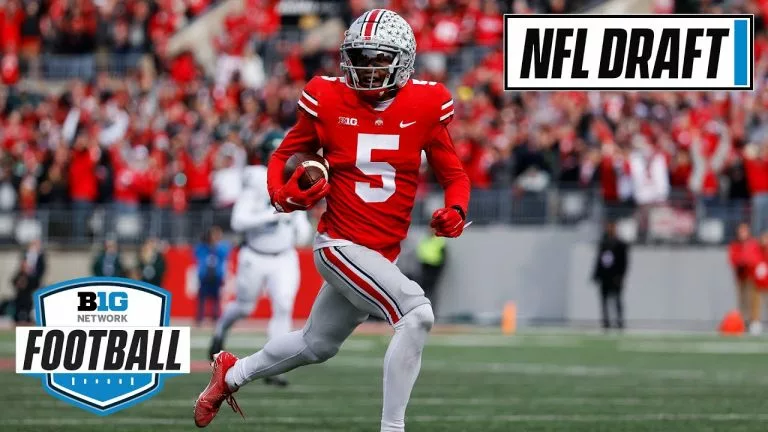
Garrett Wilson was one of the most electrifying receivers to ever wear the scarlet and gray. His spectacular body control, acrobatic catches, and elite route running made him one of the nation’s most difficult players to defend. Wilson earned consensus All-American honors while helping lead one of the country’s most explosive offenses. Whether lined up outside or in the slot, Wilson displayed the versatility to dominate every level of the field. His playmaking ability consistently produced game-changing moments, and his elite athleticism made him a first-round NFL Draft selection. Wilson helped continue Ohio State’s remarkable tradition of producing elite wide receivers.
Highlights: Ohio State Wide Receiver Garrett Wilson | Big Ten Football in the 2022 NFL Draft
13. Taylor Stubblefield – Purdue
Taylor Stubblefield flourished in Joe Tiller’s innovative “Basketball on Grass” offense, becoming one of the most productive receivers college football had ever seen. He graduated as the NCAA’s all-time leader in career receptions with 325 while finishing among the conference leaders in virtually every receiving category. Stubblefield combined outstanding hands with exceptional football instincts and a tireless work ethic. His consistency helped Purdue remain one of the nation’s premier passing offenses throughout his career. Few receivers have ever caught the football more consistently than Stubblefield.
Purdue at Notre Dame 2004 – Orton to Stubblefield
12. David Boston – Ohio State
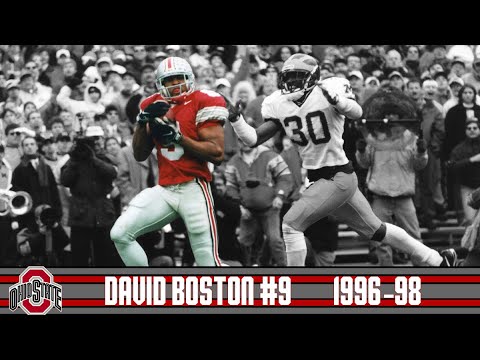
David Boston combined elite size, strength, and speed into one of the most physically dominant receivers in conference history. He set numerous Ohio State receiving records while helping lead the Buckeyes back to national prominence. Boston’s 34 career touchdown receptions stood as a school record for years.
David Boston | Ohio State Highlights
11. Charles Rogers – Michigan State
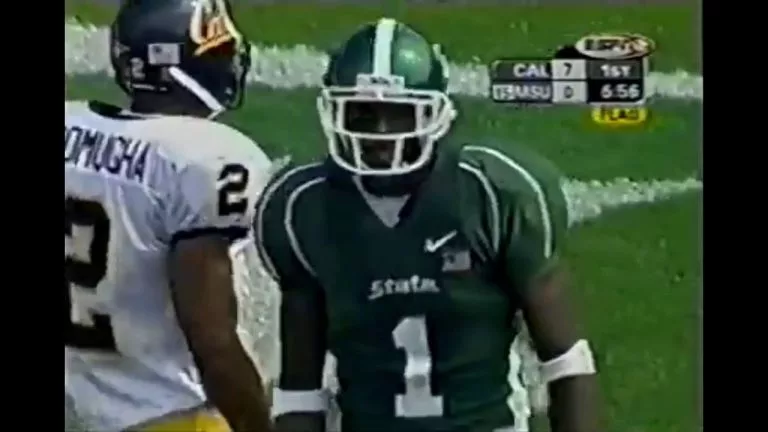
Charles Rogers may have possessed more natural talent than any receiver on this list. The 2002 Biletnikoff Award winner became the first player in NCAA history to catch a touchdown pass in 13 consecutive games. His size, speed, and leaping ability made him virtually uncoverable.
Charles Rogers Michigan State Highlights
10. Marvin Harrison Jr. – Ohio State
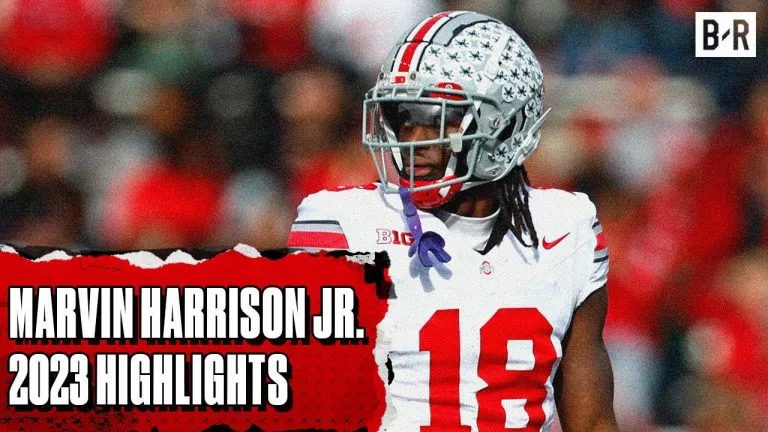
A two-time unanimous All-American and 2023 Biletnikoff Award winner, Marvin Harrison Jr. displayed NFL-ready skills throughout his Ohio State career. His elite route running, incredible hands, and remarkable consistency made him one of the finest receivers of the modern era.
Marvin Harrison Jr. Top Plays of 2023 CFB Season
9. Lee Evans – Wisconsin
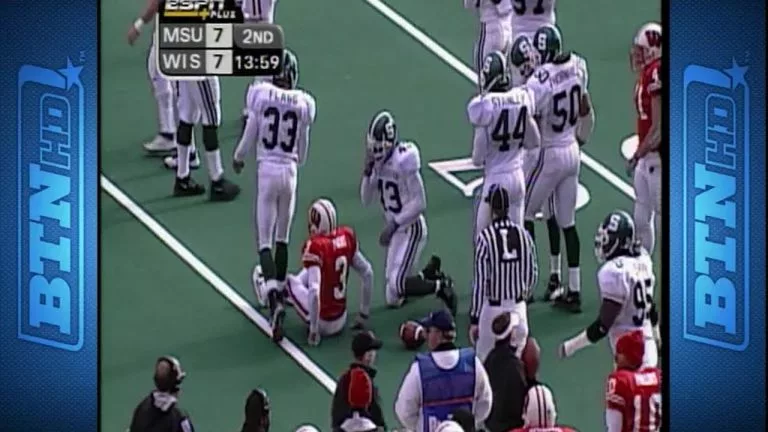
Lee Evans overcame a devastating knee injury to become Wisconsin’s all-time leading receiver. His 3,468 career receiving yards were once a Big Ten record, and his unforgettable five-touchdown performance against Michigan State remains one of the greatest single-game performances in conference history. Evans’ elite speed made him a constant deep threat, while his toughness and determination inspired teammates throughout his remarkable comeback.
The Big Ten’s Best Performances: 2001 – Wisconsin’s Lee Evans vs. Michigan State
8. Bobby Engram – Penn State
The inaugural
Biletnikoff Award winner, Bobby Engram was the cornerstone of Penn State’s legendary undefeated 1994 offense. He combined outstanding hands, route running, and football intelligence to become one of the nation’s most complete receivers. Engram finished his career with more than 3,000 receiving yards and remains one of Penn State’s all-time greats.
BOBBY ENGRAM – Senior Highlights (1995)
7. Cris Carter – Ohio State
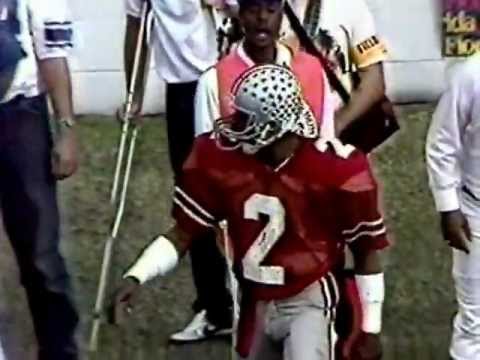
Before becoming an NFL Hall of Famer, Cris Carter displayed some of the finest hands college football had ever seen. A consensus All-American in 1986, Carter consistently made spectacular catches and became the prototype for the possession receiver. His talent helped establish Ohio State as one of the nation’s premier destinations for wide receivers.
Cris Carter’s One-Handed Grab — 1985 Citrus Bowl
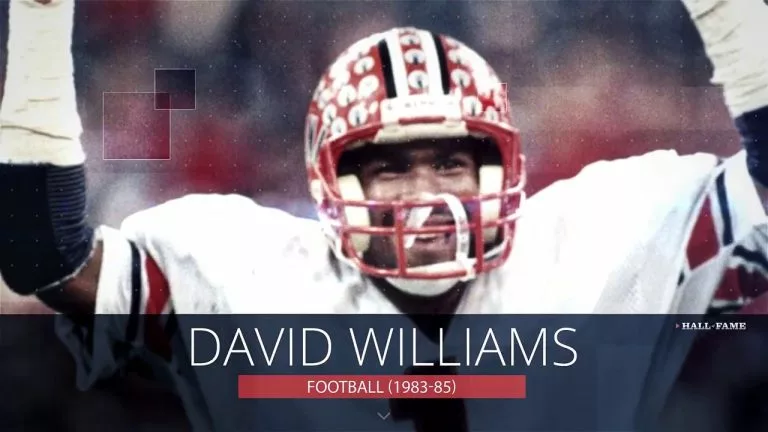
6. David Williams – Illinois
David Williams was one of the first truly dominant pass catchers in Big Ten history. A two-time consensus All-American, Williams led the nation with 101 receptions in 1984, an extraordinary accomplishment during an era when most teams relied heavily on the running game. He finished his Illinois career with 262 receptions, establishing school records that stood for years. Williams’ outstanding hands, route precision, and consistency helped transform Illinois into one of the conference’s most dangerous offensive teams. His accomplishments remain among the greatest ever by an Illini receiver.
David Williams – 2019 Illinois Athletics Hall of Fame
5. Andre Rison – Michigan State
Andre “Bad Moon” Rison was one of the most dynamic playmakers in Michigan State history. He helped lead the Spartans to the 1987 Big Ten Championship and a Rose Bowl victory while becoming one of the conference’s most explosive offensive weapons. Rison finished his collegiate career with nearly 3,000 receiving yards, using elite speed, outstanding route running, and exceptional hands to consistently beat opposing defenses. His ability to stretch the field opened opportunities for the entire offense, and he delivered numerous clutch performances during Michigan State’s championship run. Rison’s exciting style of play translated into an outstanding NFL career, but his legacy in East Lansing was already secure. He remains one of the greatest receivers in Spartan history and one of the Big Ten’s finest wideouts.
A three-time First-Team All-Big Ten selection, Al Toon was one of Wisconsin’s first truly elite wide receivers. Blessed with outstanding speed, body control, and reliable hands, Toon became one of the nation’s premier offensive weapons during the early 1980s. He finished his Badger career with numerous school receiving records while consistently producing against some of the toughest defenses in college football. Toon combined Olympic-caliber athleticism with exceptional route running, making him nearly impossible to cover one-on-one. His outstanding college career led to a first-round NFL Draft selection and an outstanding professional career with the New York Jets. Toon helped pave the way for future Wisconsin passing attacks and remains one of the greatest offensive players in school history. His production and consistency earn him a place among the greatest receivers the Big Ten has ever produced.
Wisconsin Reflections: Al Toon
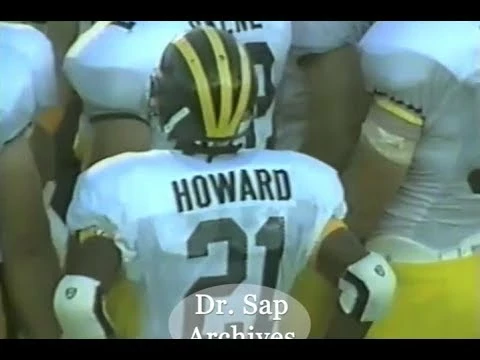
3. Desmond Howard – Michigan
Howard’s unforgettable 1991 Heisman Trophy season remains one of the greatest individual performances in college football history. His 19 touchdown receptions, combined with elite return ability, made him the most dangerous player in America.
1991 Desmond Howard Michigan TD’s
2. Braylon Edwards – Michigan
The only receiver in Big Ten history with three consecutive 1,000-yard seasons, Braylon Edwards finished his career with a conference-record 39 touchdown receptions and won the 2004 Biletnikoff Award. His production and clutch performances make him one of the greatest receivers the conference has ever seen.
Braylon Edwards 2003-2004 highlights
1. Anthony Carter – Michigan
Anthony Carter is the greatest wide receiver in
Big Ten history. A three-time consensus All-American and the 1982 Big Ten Most Valuable Player, Carter revolutionized the position during an era dominated by the running game. He finished with 161 receptions for 3,076 yards and 37 touchdowns while leading Michigan to three Rose Bowl appearances. Carter’s speed, route running, and ability to produce in the biggest games made him Bo Schembechler’s most dangerous offensive weapon. Inducted into the College Football Hall of Fame, Carter set the standard for greatness that every Big Ten receiver since has chased. His impact on Michigan football and the conference as a whole remains unmatched, making him the clear choice as the greatest wide receiver in Big Ten history.
Up To $1500 in Bonus Bets Paid Back if your First Bet Does Not Win
T&Cs apply
4.5/5
Gambling problem? Call 1-800-GAMBLER or 1-800-MY-RESET (Available in the US) 877-8-HOPENY or text HOPENY (467369) (NY) 1-800-327-5050 (MA), 1-800-BETS-OFF (IA), 1-800-981-0023 (PR). 21+ only. Please Gamble Responsibly. See BetMGM.com for Terms. First Bet Offer for new customers only (if applicable). Subject to eligibility requirements. Bonus bets are non-withdrawable. In partnership with Kansas Crossing Casino and Hotel. Promotional offers not available in Mississippi, Massachusetts, New York, Ontario, or Puerto Rico.
New DraftKings Customers: Spend $5+ Get $150 in Bonuses
T&Cs apply
4.5/5
GAMBLING PROBLEM? CALL 1-800-GAMBLER or 1-800-MY-RESET, (800) 327-5050 or visit gamblinghelplinema.org (MA). Please Gamble Responsibly. 888-789-7777/visit ccpg.org (CT), or visit www.mdgamblinghelp.org (MD), 1-800-981-0023 (PR). 21+ and present in most states. (18+ DC/NH/PR/WY). Void in CAN. Eligibility restrictions apply. On behalf of Boot Hill Casino (KS). Pass-thru of per wager tax may apply in IL. 1 per new DraftKings customer. $5+ first-time bet req. Max. $150 issued as non-withdrawable Bonus Bets. Stake removed from payout. Reward issued as $50 in Bonus Bets every 7 days via click-to-claim for 14 days. Bonus Bets and click-to-claims expire 7 days (168hrs) after issuance. Terms: sportsbook.draftkings.com/promos. Ends 10/11/26 at 11:59 PM ET. Sponsored by DK.
Must be 21+. GAMBLING PROBLEM? CALL 1-800-GAMBLER OR CALL 1-800-MY-RESET, www.mdgamblinghelp.org (MD), (800)-327-5050 or gamblinghelplinema.org (MA), Call (877)8-HOPENY or text HOPENY (467369) (NY), (888) 789-7777 or ccpg.org (CT), morethanagame.nc.gov (NC), 1800gambler.net (WV)
Bet $1 and get double the winnings up to $25 for your next 10 bets
T&Cs apply
4.4/5
21+ New users only. Must register using eligible promo code. First bet after registration must qualify. Max. Bonus Bet: $1,000. Bonus Bet expires 14 days after receipt. Void where prohibited. See Caesars.com/promos for full terms. Gambling Problem? 1-800-GAMBLER (1-800-426-2537)
21+ and present in OH. Gambling Problem? Call 1-800-GAMBLER.
This site is using
Cloudflare
and adheres to the
Google Safe Browsing Program. We adapted
Google's Privacy Guidelines
to keep your data safe at all times.
Close
Ready to Win Big? Join the Elite with Our Sports Betting Deals!
FanDuel Promo
New Users – Get $250 in Bonus Bets when you wager $5 for 5 days
Up To $1500 in Bonus Bets Paid Back if your First Bet Does Not Win
Best Slots
T&Cs and 21+ apply
Gambling problem? Call 1-800-GAMBLER or 1-800-MY-RESET (Available in the US) 877-8-HOPENY or text HOPENY (467369) (NY) 1-800-327-5050 (MA), 1-800-BETS-OFF (IA), 1-800-981-0023 (PR). 21+ only. Please Gamble Responsibly. See BetMGM.com for Terms. First Bet Offer for new customers only (if applicable). Subject to eligibility requirements. Bonus bets are non-withdrawable. In partnership with Kansas Crossing Casino and Hotel. Promotional offers not available in Mississippi, Massachusetts, New York, Ontario, or Puerto Rico.
Code:
Open BetMGM
Get Bonus
DraftKings Promo
New DraftKings Customers: Spend $5+ Get $150 in Bonuses
Newcomer
T&Cs and 21+ apply
GAMBLING PROBLEM? CALL 1-800-GAMBLER or 1-800-MY-RESET, (800) 327-5050 or visit gamblinghelplinema.org (MA). Please Gamble Responsibly. 888-789-7777/visit ccpg.org (CT), or visit www.mdgamblinghelp.org (MD), 1-800-981-0023 (PR). 21+ and present in most states. (18+ DC/NH/PR/WY). Void in CAN. Eligibility restrictions apply. On behalf of Boot Hill Casino (KS). Pass-thru of per wager tax may apply in IL. 1 per new DraftKings customer. $5+ first-time bet req. Max. $150 issued as non-withdrawable Bonus Bets. Stake removed from payout. Reward issued as $50 in Bonus Bets every 7 days via click-to-claim for 14 days. Bonus Bets and click-to-claims expire 7 days (168hrs) after issuance. Terms: sportsbook.draftkings.com/promos. Ends 10/11/26 at 11:59 PM ET. Sponsored by DK.
Code:
Open DraftKings
Get Bonus
Find out what the legends have to say about sports this week....