The first full weekend of the 2026 college football season delivered everything that makes the sport impossible to ignore.
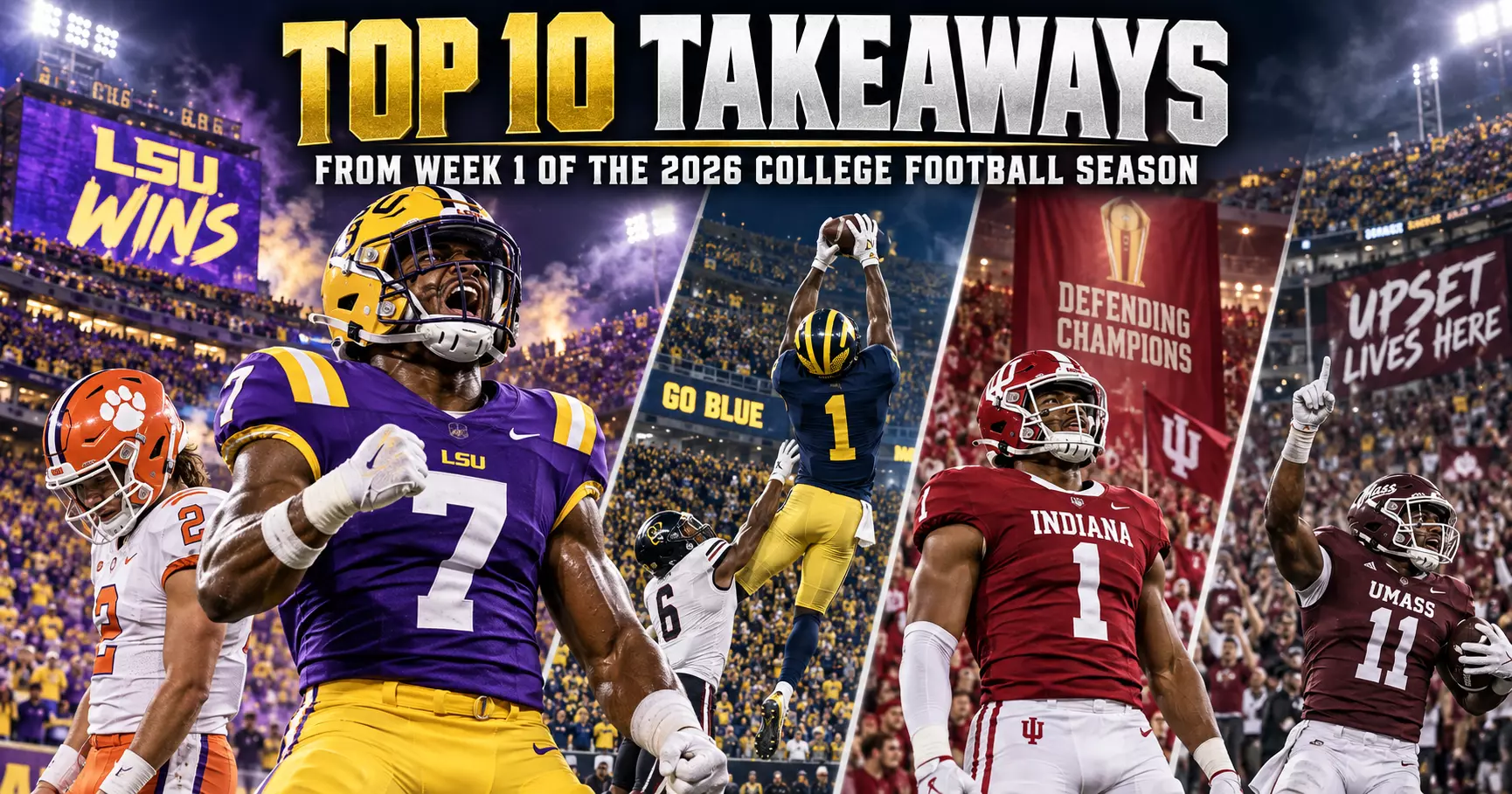
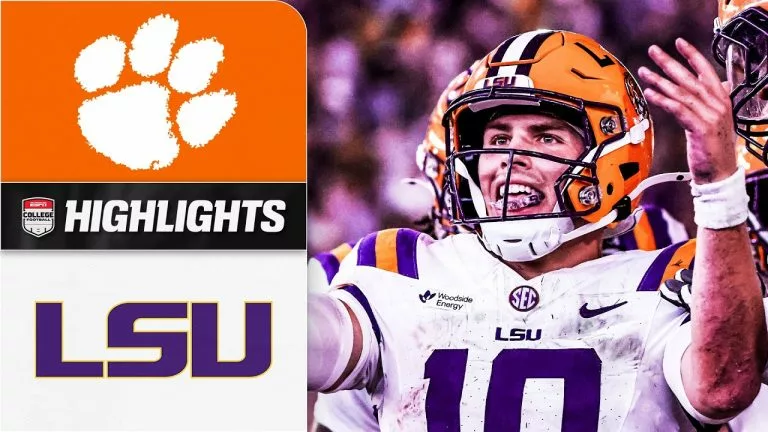
The first full weekend of the 2026 college football season delivered everything that makes the sport impossible to ignore. LSU announced the beginning of the Lane Kiffin era by humiliating Clemson. Michigan needed a controversial replay decision and a last-second miracle to avoid one of the most embarrassing losses in program history. UMass produced a genuine shocker at Rutgers, while Oregon survived the kind of opener that creates more questions than answers.
Elsewhere, defending national champion Indiana looked comfortable with Josh Hoover at quarterback, Miami unveiled a frightening new passing combination, and Ole Miss escaped Louisville in the best game of the weekend. Texas and Ohio State handled their tuneups before turning their attention toward each other.
One weekend does not define a season, but it can expose weaknesses, confirm strengths and change expectations. Here are the ten biggest takeaways from Week 1 of the 2026 college football season.
10. The Matt Campbell Era at Penn State Could Get Interesting Quickly
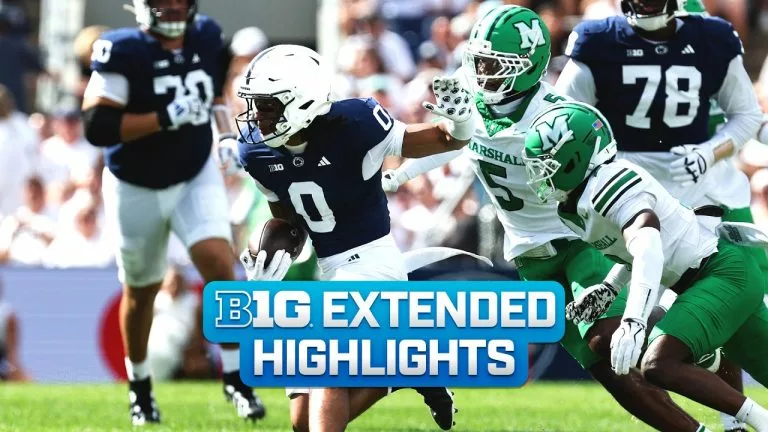
Penn State did exactly what a contender is supposed to do against an overmatched opponent, destroying Marshall 45-0 in
Matt Campbell’s debut. The Nittany Lions were sharp in every phase, and Rocco Becht gave his former Iowa State coach immediate stability at quarterback by throwing four touchdown passes without an interception. Koby Howard supplied the explosive element with six catches for 161 yards and a score, while the defense never allowed Marshall to establish anything resembling an offensive rhythm.
Nobody should place Penn State in the national championship game because of a Week 1 rout, but the manner of the victory mattered. Campbell inherited enormous expectations and a roster dramatically reshaped by player movement, yet Penn State looked organized, physical and comfortable from the opening kick. The schedule will become much more demanding, but this was the clean opening statement the program needed. James Franklin’s shadow will not disappear after one victory, although Campbell gave Penn State fans their first reason to believe the transition can work.
Marshall vs. Penn State | Extended Highlights | Big Ten Football | 09/05/26
9. Texas and Ohio State Took Care of Business—Now the Real Test Arrives
Texas and Ohio State spent Week 1 overwhelming inferior opponents before their massive Week 2 showdown in Austin. The Longhorns crushed Texas State 59-7 behind Arch Manning’s 305 passing yards and four touchdowns. Ohio State answered with a 56-3 demolition of Ball State as Julian Sayin threw for 320 yards and Jeremiah Smith caught eight passes for 151 yards and two scores.
Those results did not tell us whether either team is ready to win a national championship, but both avoided the sluggish opening performance that often precedes an early-season upset. Manning looked more comfortable and decisive than he did during some of the uneven stretches of 2025, while Smith immediately reminded everyone that he may be the most dangerous non-quarterback in the country. Now the warmups are finished. Ohio State’s retooled defense will face a completely different challenge from Texas, and Manning will get an opportunity to show whether his impressive opener was the beginning of a breakthrough season.
8. Notre Dame Still Knows How to Win with Defense and Patience
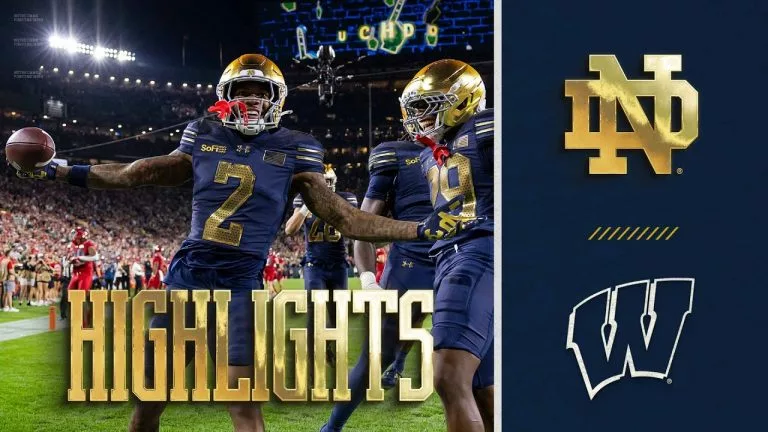
Notre Dame’s 41-13 victory over Wisconsin was more competitive than the final score suggests. The Fighting Irish led only 13-10 at halftime and spent much of the opening half fighting through Wisconsin’s physical approach. Instead of panicking, Marcus Freeman’s team allowed its defense, depth and special teams to change the game.
A Wisconsin kickoff fumble helped Notre Dame find its footing, and DJ McKinney’s 55-yard interception return for a touchdown broke the game open in the third quarter. Aneyas Williams ran for 90 yards and two scores, while CJ Carr threw two touchdown passes without being asked to carry the entire offense. That formula should look familiar to Notre Dame fans. The Irish do not need to play perfectly when they protect the football, tackle well and turn opponents’ mistakes into points. Wisconsin may not be an elite measuring stick, but winning comfortably at Lambeau Field after an uneven start showed that Notre Dame remains mature enough to survive adversity without abandoning its identity.
Highlights vs Wisconsin (9.6.26) | Notre Dame Football
7. Miami May Have Found the Nation’s Most Explosive New Passing Combination
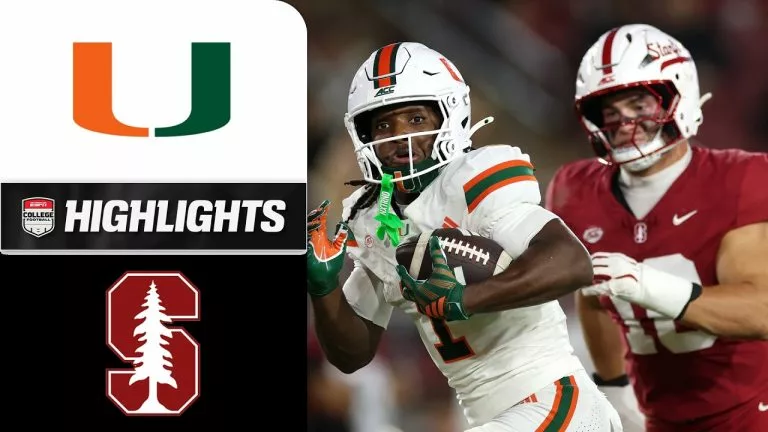
Miami’s 45-6 victory at Stanford was expected. The immediate chemistry between Darian Mensah and Malachi Toney was not. On Miami’s first offensive snap, Mensah hit Toney for 48 yards. Two plays later, they connected for a 23-yard touchdown. The night only became more frightening for future opponents.
Mensah completed 27 of 30 passes for 401 yards and five touchdowns in his Miami debut. Toney caught 12 passes for a program-record 234 yards and three scores, producing one of the most dominant receiving performances of the weekend. Stanford offered little resistance, so tougher defenses will determine whether those numbers represent Miami’s new reality or merely an opening-night explosion. Still, the Hurricanes appear to have the vertical passing threat they need to stretch the field and punish defenses that load up against the run. Miami entered the season with championship expectations. If Mensah and Toney can remain this efficient against ACC competition, those expectations will not look unreasonable.
Miami Hurricanes vs. Stanford Cardinal | Full Game Highlights | ESPN College Football
6. Indiana Has Reached the Point Where Dominance Feels Routine
Indiana opened its
national championship defense
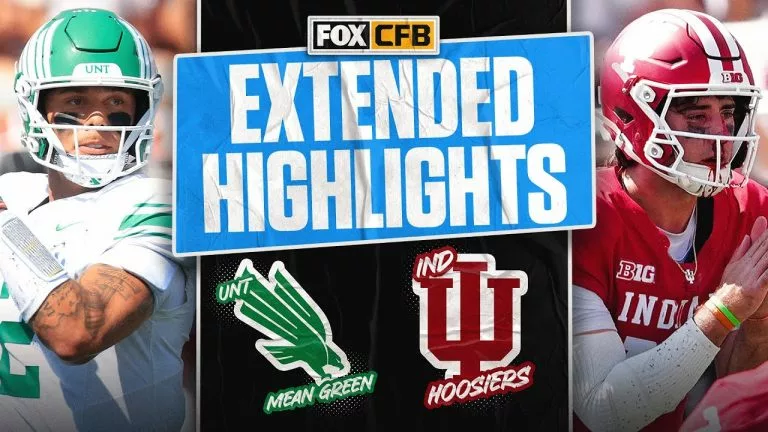
by beating North Texas 52-16, and the most revealing part of the performance was how unsurprising it felt. Curt Cignetti has changed the standard in Bloomington. The Hoosiers are no longer hoping to survive games against talented Group of Five opponents; they are expected to control them.
Josh Hoover looked comfortable in his Indiana debut, completing 13 of 16 passes for 231 yards, four touchdowns and no interceptions. Turbo Richard added two rushing touchdowns, and the Hoosiers extended the longest active winning streak in the FBS to 17 games. There were areas to clean up. North Texas moved the ball better than the final score suggests and actually finished with a slight advantage in total yardage. Indiana’s special teams, field position and red-zone execution created much of the separation. That is not a reason to dismiss the performance. It is evidence that championship teams can win decisively even when every statistical category does not go their way.
North Texas Mean Green vs No. 6 Indiana Hoosiers Highlights 🏈 FOX College Football
5. Ole Miss Survived, but Louisville Proved It Belongs
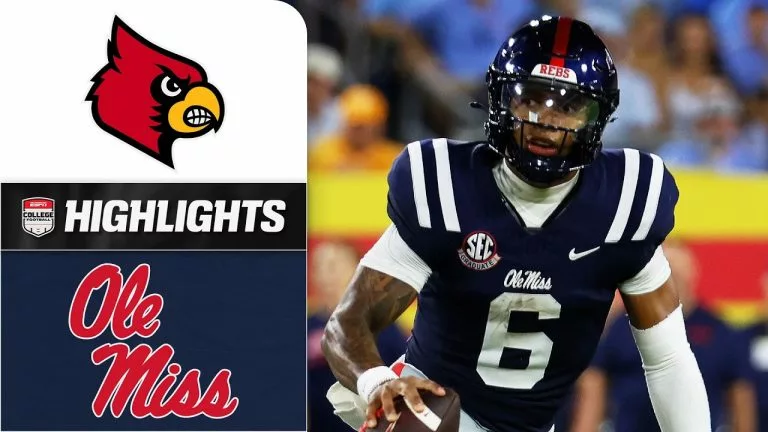
Ole Miss and Louisville produced Week 1’s most entertaining game, a 41-38 thriller decided by Lucas Carneiro’s 48-yard field goal as time expired. The Rebels trailed at halftime and committed costly early mistakes, but Trinidad Chambliss responded with a tremendous second half. He finished with 336 passing yards, three touchdown passes and a rushing score, while Deuce Alexander turned two catches into matching 62-yard touchdowns and finished with 159 receiving yards.
Louisville deserves almost as much attention as the winner. Lincoln Kienholz threw for 307 yards and two touchdowns, then erased a 14-point fourth-quarter deficit with a long touchdown pass and a seven-yard scoring run. The Cardinals tied the game with 1:28 remaining before Chambliss calmly moved Ole Miss into range for the winning kick. Ole Miss showed the resilience expected from a top-ten team, but the Rebels also surrendered 32 second-half points and lost running back Kewan Lacy to injury. They escaped Nashville with a win, not a clean bill of health.
Louisville Cardinals vs. Ole Miss Rebels | Full Game Highlights | ESPN College Football
4. Oregon Is Still Dangerous, but Boise State Exposed Real Concerns
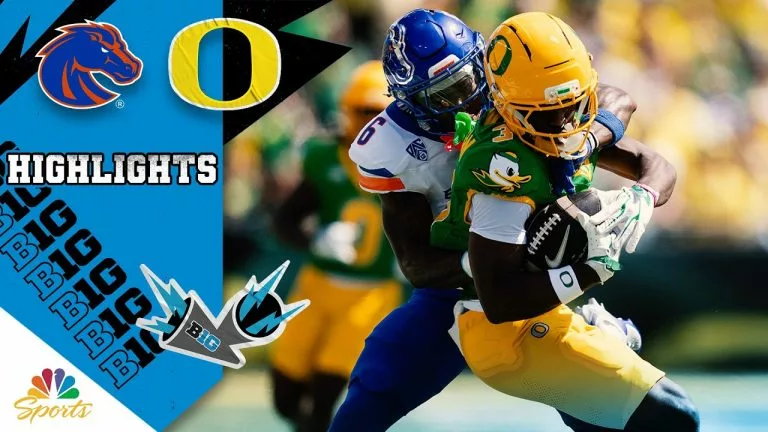
Oregon defeated Boise State 34-27, but the second-ranked Ducks looked far more vulnerable than expected. Boise State led 17-7 in the second quarter, answered Oregon’s early second-half surge and tied the game at 27 with fewer than nine minutes remaining. Oregon finally escaped when Dante Moore hit Dakorien Moore for a 62-yard touchdown.
Dante Moore was excellent, throwing for a career-high 378 yards and three scores. Oregon also outgained Boise State by more than 200 yards, which suggests the Ducks controlled more of the game than the final margin indicates. The concern was their inability to turn that statistical advantage into separation. Slow starts, defensive lapses and wasted opportunities are survivable in September, but they become fatal against the best teams in the Big Ten. Boise State should leave Eugene encouraged. The Broncos demonstrated that they can compete with a national contender and immediately established themselves as the team to beat in the rebuilt Pac-12. Oregon won, but Boise State may have improved its reputation more.
Boise State Broncos vs. Oregon Ducks | COLLEGE FOOTBALL HIGHLIGHTS | 9/5/2026 | NBC Sports
3. UMass Delivered the Upset That Makes College Football Special
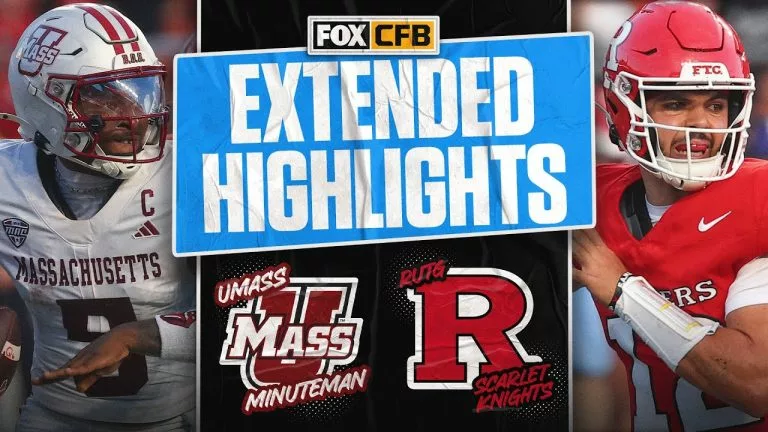
UMass entered its opener at Rutgers carrying a 16-game losing streak and one of the bleakest recent records in the Football Bowl Subdivision. The Minutemen left Piscataway with a 37-21 victory that should rank among the most meaningful wins in program history.
After falling behind 7-0, UMass scored 30 consecutive points and took complete control. William “Pop” Watson III threw for 197 yards and three touchdowns as the Minutemen played with more confidence, urgency and discipline than their Big Ten opponent. This was not a lucky bounce followed by desperate survival. UMass beat Rutgers decisively.
For Rutgers, the loss is devastating. Greg Schiano entered his seventh season since returning to the program needing evidence that the Scarlet Knights were ready to move forward. Instead, they became the first power-conference opponent UMass has beaten since the Minutemen moved to the FBS level in 2012. Week 1 always produces a reminder that reputation and resources do not guarantee anything. This was that reminder.
UMass Minutemen vs Rutgers Scarlet Knights Highlights 🏈 FOX College Football
2. Michigan Won the Game but Lost the Benefit of the Doubt
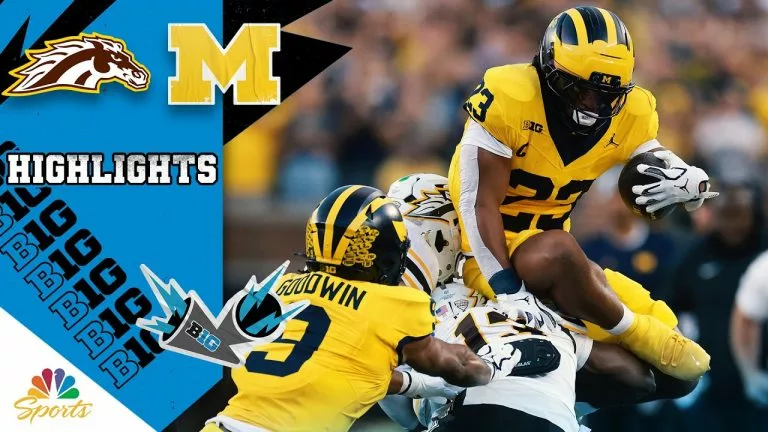
Michigan officially beat Western Michigan 13-12. Almost everyone watching initially believed the Wolverines had lost. Bryce Underwood’s desperation pass fell incomplete as the clock reached zero, apparently sealing a historic Western Michigan victory. Replay officials then restored one second, giving Michigan another snap. Underwood used it to hit JJ Buchanan for a 47-yard touchdown and one of the most improbable finishes in recent memory.
The Big Ten later released video and audio explaining that its replay system showed a Western Michigan defender touching the ball while out of bounds with one second remaining. That explanation made the decision defensible, but it did not erase the damage created by the lack of transparency during the broadcast. Viewers saw a clock at zero and received no meaningful explanation before Michigan was granted another chance.
The controversy should not obscure Michigan’s larger problem. The Wolverines needed a replay ruling and a miracle against Western Michigan in Kyle Whittingham’s debut. With Oklahoma next, Michigan has far more to fix than its public perception.
Western Michigan Broncos vs. Michigan Wolverines | COLLEGE FOOTBALL HIGHLIGHTS | 9/5/26 | NBC Sports
1. Lane Kiffin’s LSU Debut Changed the National Championship Conversation
No team made a louder statement in Week 1 than LSU. The
Tigers destroyed Clemson
51-10 in Lane Kiffin’s debut, turning what looked like one of the weekend’s marquee matchups into a four-quarter warning to the rest of the country. It was the worst defeat of Dabo Swinney’s head-coaching career.
Sam Leavitt looked like the dynamic quarterback LSU expected when it built its offense around him. Dilin Jones gave the Tigers balance on the ground, and Kiffin consistently created favorable matchups without asking his new quarterback to force the action. The more important development came on the other side of the ball. LSU was faster, stronger and better prepared than Clemson at every level. The Tigers did not merely win the game; they made Clemson look obsolete.
One September performance cannot guarantee a championship, and Kiffin’s teams will eventually face adversity. But LSU now looks capable of winning the SEC and the national title. Kiffin’s return to Ole Miss on September 19 was already personal. After this debut, it could also become one of the season’s defining games.
THE LANE KIFFIN ERA IS HERE 🤩 Clemson vs. LSU | Full Game Highlights | ESPN College Football
Final Thoughts
Week 1 reinforced an old lesson: blowouts can confirm talent, but pressure reveals much more. LSU looked ready for the biggest stage. Ole Miss and Oregon found ways to win when their opponents refused to disappear. Michigan survived, although its performance created more concern than confidence. UMass reminded everyone that the sport still has room for the unbelievable.
The opening weekend did not settle the national championship race, but it changed its shape. LSU forced its way into the center of the conversation, Indiana showed that last season’s title did not drain its edge, and Texas and Ohio State set up the first true heavyweight showdown of the new season. College football is back, and certainty did not survive the first weekend.
New Users – Get $350 in Bonus Bets when you wager $5 for 7 days
T&Cs apply
4.6/5
Gambling Problem? Call 1-800-GAMBLER or 1-800-MY-RESET. Call 1-888-789-7777 or visit ccpgg.org/chat (CT). Hope is here. GamblingHelpLineMA.org or call (800) 327-5050 for 24/7 support (MA). Visit www.mdgamblinghelp.org (MD). Call 1-877-8HOPE-NY or text HOPENY (NY). 21+ (18+ DC, WY) and present in select states (for KS, in affiliation with Kansas Star Casino). Find online real money wagering only. Min $5 wager required for 7 consecutive days. $5 free play credit. Bonus issued as non-withdrawable bonus with cash withdrawable bonus with cash withdrawable. Bonus bets which expire 7 days after receipt. Restrictions apply. See terms at sportsbook.fanduel.com. Call 1-877-770-7867 (LA).
Up To $1500 in Bonus Bets Paid Back if your First Bet Does Not Win
T&Cs apply
4.5/5
Gambling problem? Call 1-800-GAMBLER or 1-800-MY-RESET (Available in the US) 877-8-HOPENY or text HOPENY (467369) (NY) 1-800-327-5050 (MA), 1-800-BETS-OFF (IA), 1-800-981-0023 (PR). 21+ only. Please Gamble Responsibly. See BetMGM.com for Terms. First Bet Offer for new customers only (if applicable). Subject to eligibility requirements. Bonus bets are non-withdrawable. In partnership with Kansas Crossing Casino and Hotel. Promotional offers not available in Mississippi, Massachusetts, New York, Ontario, or Puerto Rico.
New DraftKings Customers: Bet $5, Get $200 + 3 Months of NBA League Pass!
T&Cs apply
4.5/5
GAMBLING PROBLEM? CALL 1-800-GAMBLER or 1-800-MY-RESET, (800) 327-5050 or visit gamblinghelplinema.org (MA). Please Gamble Responsibly. 888-789-7777/visit ccpg.org (CT), or visit www.mdgamblinghelp.org (MD), 1-800-981-0023 (PR). 21+ and present in most states. (18+ DC/NH/PR/WY). Void in CAN. Eligibility restrictions apply. On behalf of Boot Hill Casino (KS). Pass-thru of per wager tax may apply in IL. 1 per new Sportsbook customer. $5+ first-time bet req. Max. $200 issued as non-withdrawable Bonus Bets. Stake removed from payout. Reward issued as $50 in Bonus Bets every 7 days via click-to-claim for 21 days. Bonus Bets and click-to-claims expire 7 days (168hrs) after issuance. Terms: dkng.co/offer. Get 1 promo code to redeem a 3-month NBA League Pass subscription, complimentary of DraftKings. Subscription auto-renews monthly at then-current price (currently $16.99/mo); cancel anytime. Terms, restrictions, and eligibility requirements apply. Redeem League Pass by 12/19/26 at 11:59 PM ET. Addt’l terms: support.watch.nba.com/hc/en-us/articles/9165532876183-League-Pass-Terms-of-Use_. Ends 11/29/26 at 11:59 PM ET. Sponsored by DK.
Must be 21+. GAMBLING PROBLEM? CALL 1-800-GAMBLER OR CALL 1-800-MY-RESET, www.mdgamblinghelp.org (MD), (800)-327-5050 or gamblinghelplinema.org (MA), Call (877)8-HOPENY or text HOPENY (467369) (NY), (888) 789-7777 or ccpg.org (CT), morethanagame.nc.gov (NC), 1800gambler.net (WV)
Bet $1 and get double the winnings up to $25 for your next 10 bets
T&Cs apply
4.4/5
21+ New users only. Must register using eligible promo code. First bet after registration must qualify. Max. Bonus Bet: $1,000. Bonus Bet expires 14 days after receipt. Void where prohibited. See Caesars.com/promos for full terms. Gambling Problem? 1-800-GAMBLER (1-800-426-2537)
21+ and present in OH. Gambling Problem? Call 1-800-GAMBLER.
This site is using
Cloudflare
and adheres to the
Google Safe Browsing Program. We adapted
Google's Privacy Guidelines
to keep your data safe at all times.
Close
Ready to Win Big? Join the Elite with Our Sports Betting Deals!
FanDuel Promo
New Users – Get $350 in Bonus Bets when you wager $5 for 7 days
Our Favorite
T&Cs and 21+ apply
Gambling Problem? Call 1-800-GAMBLER or 1-800-MY-RESET. Call 1-888-789-7777 or visit ccpgg.org/chat (CT). Hope is here. GamblingHelpLineMA.org or call (800) 327-5050 for 24/7 support (MA). Visit www.mdgamblinghelp.org (MD). Call 1-877-8HOPE-NY or text HOPENY (NY). 21+ (18+ DC, WY) and present in select states (for KS, in affiliation with Kansas Star Casino). Find online real money wagering only. Min $5 wager required for 7 consecutive days. $5 free play credit. Bonus issued as non-withdrawable bonus with cash withdrawable bonus with cash withdrawable. Bonus bets which expire 7 days after receipt. Restrictions apply. See terms at sportsbook.fanduel.com. Call 1-877-770-7867 (LA).
Code:
Open FanDuel
Get Bonus
BetMGM Promo
Up To $1500 in Bonus Bets Paid Back if your First Bet Does Not Win
Best Slots
T&Cs and 21+ apply
Gambling problem? Call 1-800-GAMBLER or 1-800-MY-RESET (Available in the US) 877-8-HOPENY or text HOPENY (467369) (NY) 1-800-327-5050 (MA), 1-800-BETS-OFF (IA), 1-800-981-0023 (PR). 21+ only. Please Gamble Responsibly. See BetMGM.com for Terms. First Bet Offer for new customers only (if applicable). Subject to eligibility requirements. Bonus bets are non-withdrawable. In partnership with Kansas Crossing Casino and Hotel. Promotional offers not available in Mississippi, Massachusetts, New York, Ontario, or Puerto Rico.
Code:
Open BetMGM
Get Bonus
DraftKings Promo
New DraftKings Customers: Bet $5, Get $200 + 3 Months of NBA League Pass!
Newcomer
T&Cs and 21+ apply
GAMBLING PROBLEM? CALL 1-800-GAMBLER or 1-800-MY-RESET, (800) 327-5050 or visit gamblinghelplinema.org (MA). Please Gamble Responsibly. 888-789-7777/visit ccpg.org (CT), or visit www.mdgamblinghelp.org (MD), 1-800-981-0023 (PR). 21+ and present in most states. (18+ DC/NH/PR/WY). Void in CAN. Eligibility restrictions apply. On behalf of Boot Hill Casino (KS). Pass-thru of per wager tax may apply in IL. 1 per new Sportsbook customer. $5+ first-time bet req. Max. $200 issued as non-withdrawable Bonus Bets. Stake removed from payout. Reward issued as $50 in Bonus Bets every 7 days via click-to-claim for 21 days. Bonus Bets and click-to-claims expire 7 days (168hrs) after issuance. Terms: dkng.co/offer. Get 1 promo code to redeem a 3-month NBA League Pass subscription, complimentary of DraftKings. Subscription auto-renews monthly at then-current price (currently $16.99/mo); cancel anytime. Terms, restrictions, and eligibility requirements apply. Redeem League Pass by 12/19/26 at 11:59 PM ET. Addt’l terms: support.watch.nba.com/hc/en-us/articles/9165532876183-League-Pass-Terms-of-Use_. Ends 11/29/26 at 11:59 PM ET. Sponsored by DK.
Code:
Open DraftKings
Get Bonus
Find out what the legends have to say about sports this week....
New Users – Get $350 in Bonus Bets when you wager $5 for 7 days
Gambling Problem? Call 1-800-GAMBLER or 1-800-MY-RESET. Call 1-888-789-7777 or visit ccpgg.org/chat (CT). Hope is here. GamblingHelpLineMA.org or call (800) 327-5050 for 24/7 support (MA). Visit www.mdgamblinghelp.org (MD). Call 1-877-8HOPE-NY or text HOPENY (NY). 21+ (18+ DC, WY) and present in select states (for KS, in affiliation with Kansas Star Casino). Find online real money wagering only. Min $5 wager required for 7 consecutive days. $5 free play credit. Bonus issued as non-withdrawable bonus with cash withdrawable bonus with cash withdrawable. Bonus bets which expire 7 days after receipt. Restrictions apply. See terms at sportsbook.fanduel.com. Call 1-877-770-7867 (LA).