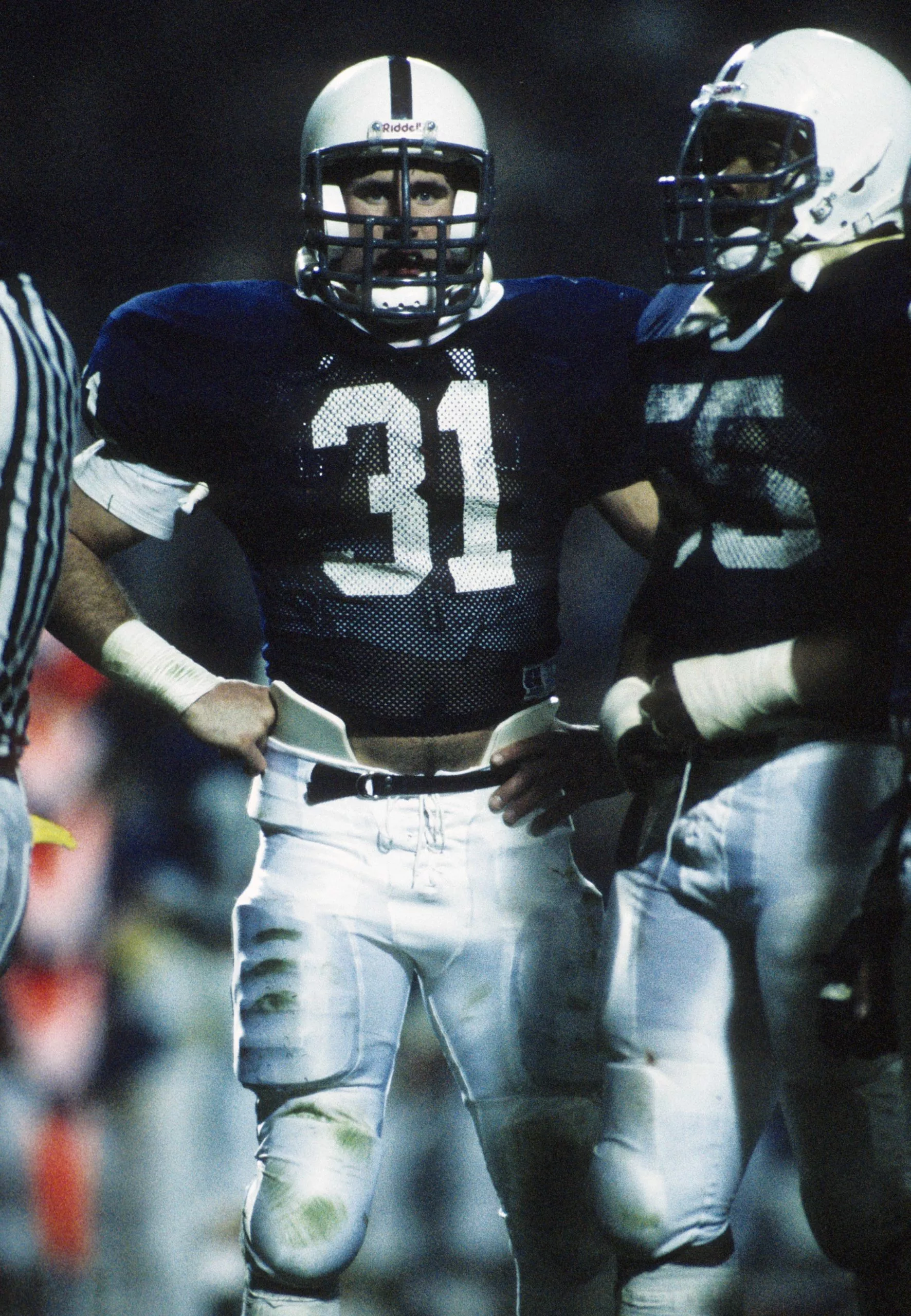
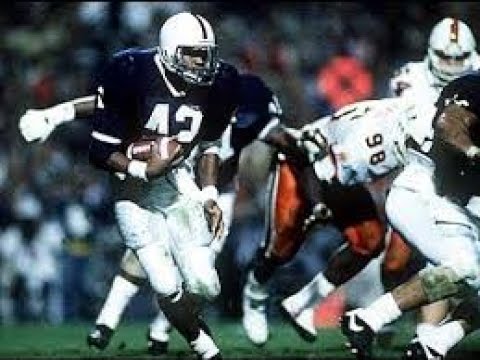
Jan 2, 1987; Tempe, AZ, USA; FILE PHOTO; Penn State Nittany Lions linebacker Shane Conlan (31) against the Miami Hurricanes in the 1987 Fiesta Bowl at Sun Devils Stadium. Penn State defeated Miami 14-10. Mandatory Credit: USA TODAY Sports
Great defenses stop offenses.
Legendary defenses break opponents mentally.
The most feared defenses in college football history did more than dominate statistically. They intimidated quarterbacks, destroyed offensive game plans, and physically punished opponents for sixty minutes. Teams entered games already nervous because they knew pain was coming.
Some of these defenses were loaded with future NFL stars.
Others relied on discipline, violence, and relentless effort.
But all of them created fear.
These were the units offensive coordinators lost sleep over. The groups that turned stadiums silent. The defenses that changed seasons, won championships, and became permanent parts of college football history.
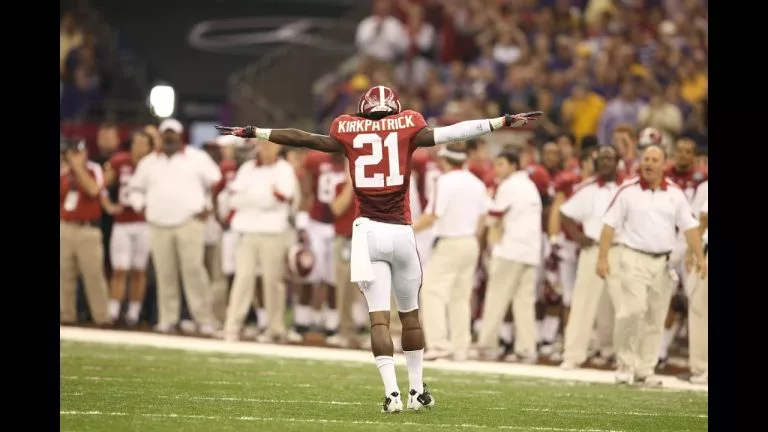
The 2011 University of Alabama defense looked like an NFL roster playing college football.
Led by Dont’a Hightower, Courtney Upshaw, Dre Kirkpatrick, Mark Barron, and a monstrous defensive line rotation, Alabama suffocated opponents weekly. LSU managed only 92 total yards in the BCS National Championship Game as Nick Saban’s defense delivered one of the greatest title-game performances ever.
The Crimson Tide allowed just 8.2 points per game.
That number barely feels real in the modern era.
More importantly, opponents looked defeated emotionally before halftime almost every week.
2011 Alabama Defense Extended Highlights
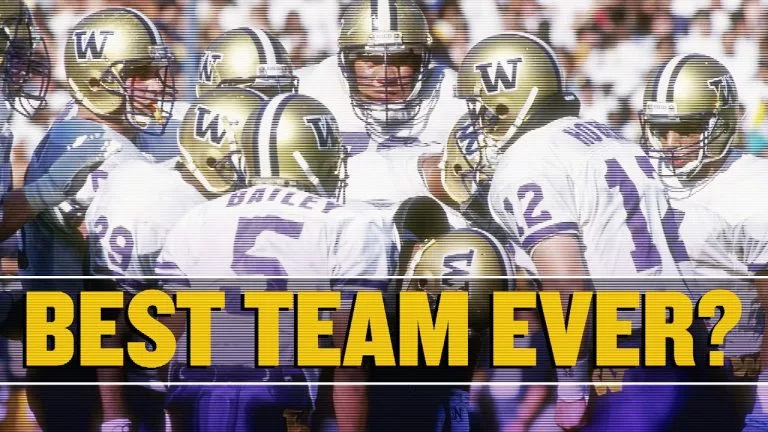
9. 1991 Washington Huskies
The 1991 University of Washington defense combined speed, aggression, and brutality perfectly.
Led by Steve Emtman, the Huskies physically overwhelmed nearly everyone they faced. Washington allowed only 9.2 points per game while finishing undefeated and winning a share of the national championship.
Miami eventually won the AP title.
But many still believe Washington was the best team in America.
The defense especially became legendary after destroying Michigan 34–14 in the Rose Bowl.
Steve Emtman looked unblockable.
And opposing quarterbacks knew it.
Don’t forget 1991 Washington when debating the best college football team ever
8. 1985 Oklahoma Sooners
Barry Switzer’s 1985 University of Oklahoma defense played angry.
The Sooners combined elite athleticism with overwhelming physicality under defensive coordinator Jim Johnson. Led by Tony Casillas, Brian Bosworth, and a terrifying front seven, Oklahoma punished offenses relentlessly.
The defense allowed just 10.7 points per game during a brutal schedule and completely shut down Penn State in the Orange Bowl national championship game.
What made Oklahoma terrifying was speed.
For its era, the defense looked revolutionary athletically.
1985 National Championship – OU vs. Penn State
7. 2011 LSU Tigers
The 2011 Louisiana State University defense might have had the greatest secondary in college football history.
Tyrann Mathieu.
Morris Claiborne.
Eric Reid.
Brandon Taylor.
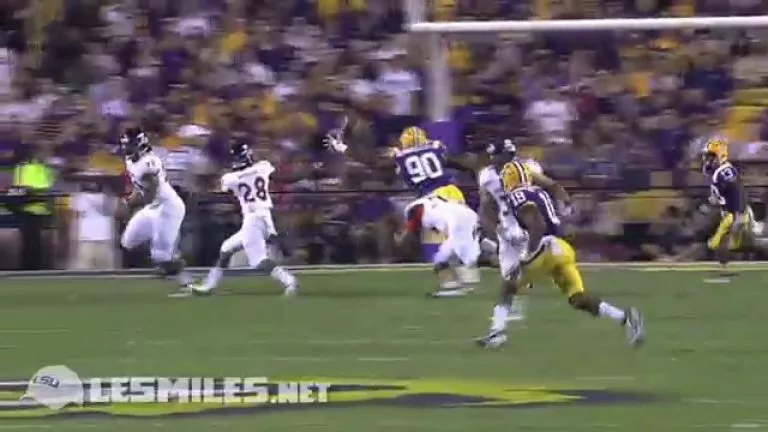
Combined with LSU’s ferocious defensive line and linebacker speed, the Tigers became a turnover-producing nightmare. The defense scored points itself repeatedly and fed directly off Death Valley’s atmosphere.
LSU defeated Oregon, Alabama, Arkansas, Georgia, and others during one of the toughest schedules ever.
Then Alabama got revenge in the national title game.
But for most of the season, LSU’s defense felt unbeatable.
LSU Football 2011 Defense Highlight
6. 1988 Notre Dame Fighting Irish
Lou Holtz built the 1988 University of Notre Dame defense around toughness, discipline, and controlled violence.
The Fighting Irish defense carried Notre Dame to an undefeated national championship by surviving one brutal matchup after another. Miami, Michigan, USC, and West Virginia all struggled to move the football consistently.
The unit played smart, physical football with extraordinary emotional intensity.
And nobody symbolized it better than linebacker Frank Stams and defensive leader Chris Zorich.
Notre Dame made every game ugly.
That was exactly how they wanted it.
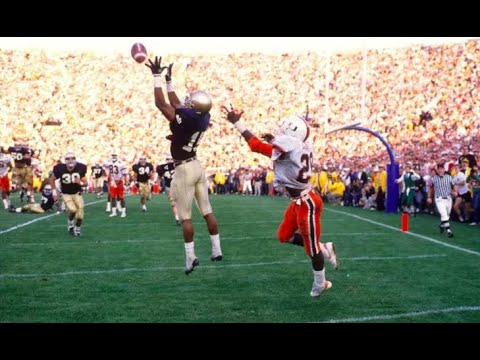
Notre Dame-Miami 1988
5. 1966 Michigan State Spartans
The 1966 Michigan State University defense became legendary during one of college football’s toughest eras.
Bubba Smith anchored a defensive front so dominant that opponents frequently looked helpless offensively. Michigan State allowed just 7.3 points per game while battling elite competition weekly in the Big Ten.
The famous “Game of the Century” against Notre Dame ended 10–10 largely because both defenses played at an absurd level physically.
Bubba Smith terrified offenses.
And deservedly so.
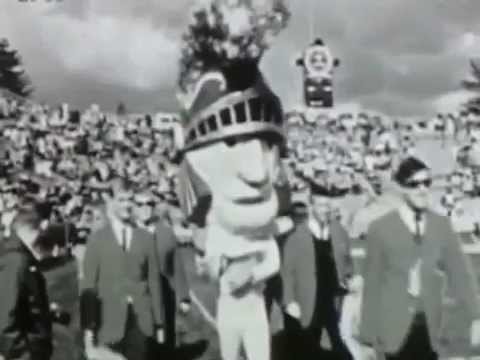
Men of Sparta: A documentary on the 1966 Michigan State Football told through the eyes of Bob Apisa
4. 1971 Nebraska Cornhuskers
The 1971 University of Nebraska defense helped power what many still consider the greatest college football team ever.
Nebraska combined massive size with elite speed and relentless aggression. Opponents simply could not handle the Cornhuskers physically. The famous “Game of the Century” victory over Oklahoma showcased a defense capable of surviving even explosive offenses.
Nebraska’s dominance continued in bowl season when they crushed Alabama 38–6.
The defense looked overwhelming even against the nation’s elite.
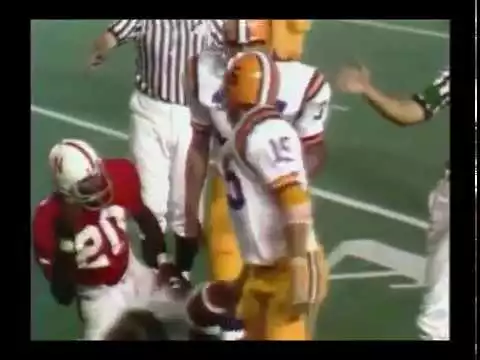
1971 Orange Bowl Nebraska vs LSU No Huddle
3. 1997 Michigan Wolverines
Charles Woodson deserved the Heisman Trophy largely because Michigan’s defense terrified offenses nationally.
The 1997 University of Michigan defense allowed only 9.5 points per game while dominating the Big Ten physically. Woodson became the face of the defense, but the Wolverines also featured elite linebacker play and suffocating team discipline.
Michigan held opponents under 10 points nine separate times.
Nebraska eventually split the national championship with Michigan, but defensively the Wolverines were unmatched that season.
The unit played with incredible precision and toughness.
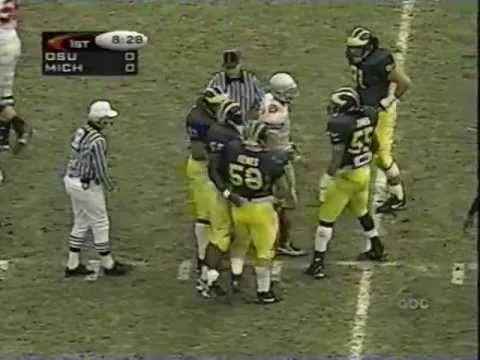
1997 Michigan Defense
2. 1986 Penn State Nittany Lions
The 1986 Penn State defense remains the most feared college football defense ever because it combined discipline, intelligence, physicality, and execution perfectly.
Penn State
did not always overwhelm offenses athletically.
They destroyed them mentally.
Led by Shane Conlan and one of the smartest defensive units in football history, the Nittany Lions suffocated opponents with positioning, tackling, and mistake-free football. Their masterpiece came against Miami in the Fiesta Bowl national championship game.
Miami entered with overwhelming talent and swagger.
Penn State intercepted Vinny Testaverde five times.
The defense frustrated Miami so completely that one of the greatest teams ever emotionally unraveled on national television.
That is true defensive intimidation.
Penn State-Miami 1986
1. 2001 Miami Hurricanes
Most people remember the offense.
Smart football fans remember the defense too.
The 2001 University of Miami defense featured Ed Reed, Jonathan Vilma, Vince Wilfork, Phillip Buchanon, Mike Rumph, and countless future NFL players.
Miami played with swagger bordering on intimidation. Opponents often looked rattled before games even started because the Hurricanes attacked with overwhelming team speed.
The defense forced turnovers constantly and punished mistakes instantly.
That team remains one of the most talented rosters college football has ever seen.
2001 Miami Hurricanes National Championship Highlights
Final Thoughts
The greatest defenses become mythology.
Quarterbacks remember them forever. Fans still talk about them decades later. Offensive coordinators build entire game plans hoping merely to survive them.
These defenses were not simply talented.
They were feared.
And in college football history, fear has always been one of the most powerful weapons of all.
Up To $1500 in Bonus Bets Paid Back if your First Bet Does Not Win
T&Cs apply
4.5/5
Gambling problem? Call 1-800-GAMBLER or 1-800-MY-RESET (Available in the US) 877-8-HOPENY or text HOPENY (467369) (NY) 1-800-327-5050 (MA), 1-800-BETS-OFF (IA), 1-800-981-0023 (PR). 21+ only. Please Gamble Responsibly. See BetMGM.com for Terms. First Bet Offer for new customers only (if applicable). Subject to eligibility requirements. Bonus bets are non-withdrawable. In partnership with Kansas Crossing Casino and Hotel. Promotional offers not available in Mississippi, Massachusetts, New York, Ontario, or Puerto Rico.
New DraftKings Customers: Spend $5+ Get $150 in Bonuses
T&Cs apply
4.5/5
GAMBLING PROBLEM? CALL 1-800-GAMBLER or 1-800-MY-RESET, (800) 327-5050 or visit gamblinghelplinema.org (MA). Please Gamble Responsibly. 888-789-7777/visit ccpg.org (CT), or visit www.mdgamblinghelp.org (MD), 1-800-981-0023 (PR). 21+ and present in most states. (18+ DC/NH/PR/WY). Void in CAN. Eligibility restrictions apply. On behalf of Boot Hill Casino (KS). Pass-thru of per wager tax may apply in IL. 1 per new DraftKings customer. $5+ first-time bet req. Max. $150 issued as non-withdrawable Bonus Bets. Stake removed from payout. Reward issued as $50 in Bonus Bets every 7 days via click-to-claim for 14 days. Bonus Bets and click-to-claims expire 7 days (168hrs) after issuance. Terms: sportsbook.draftkings.com/promos. Ends 10/11/26 at 11:59 PM ET. Sponsored by DK.
Must be 21+. GAMBLING PROBLEM? CALL 1-800-GAMBLER OR CALL 1-800-MY-RESET, www.mdgamblinghelp.org (MD), (800)-327-5050 or gamblinghelplinema.org (MA), Call (877)8-HOPENY or text HOPENY (467369) (NY), (888) 789-7777 or ccpg.org (CT), morethanagame.nc.gov (NC), 1800gambler.net (WV)
Bet $1 and get double the winnings up to $25 for your next 10 bets
T&Cs apply
4.4/5
21+ New users only. Must register using eligible promo code. First bet after registration must qualify. Max. Bonus Bet: $1,000. Bonus Bet expires 14 days after receipt. Void where prohibited. See Caesars.com/promos for full terms. Gambling Problem? 1-800-GAMBLER (1-800-426-2537)
21+ and present in OH. Gambling Problem? Call 1-800-GAMBLER.
This site is using
Cloudflare
and adheres to the
Google Safe Browsing Program. We adapted
Google's Privacy Guidelines
to keep your data safe at all times.
Close
Ready to Win Big? Join the Elite with Our Sports Betting Deals!
FanDuel Promo
New Users – Get $250 in Bonus Bets when you wager $5 for 5 days
Up To $1500 in Bonus Bets Paid Back if your First Bet Does Not Win
Best Slots
T&Cs and 21+ apply
Gambling problem? Call 1-800-GAMBLER or 1-800-MY-RESET (Available in the US) 877-8-HOPENY or text HOPENY (467369) (NY) 1-800-327-5050 (MA), 1-800-BETS-OFF (IA), 1-800-981-0023 (PR). 21+ only. Please Gamble Responsibly. See BetMGM.com for Terms. First Bet Offer for new customers only (if applicable). Subject to eligibility requirements. Bonus bets are non-withdrawable. In partnership with Kansas Crossing Casino and Hotel. Promotional offers not available in Mississippi, Massachusetts, New York, Ontario, or Puerto Rico.
Code:
Open BetMGM
Get Bonus
DraftKings Promo
New DraftKings Customers: Spend $5+ Get $150 in Bonuses
Newcomer
T&Cs and 21+ apply
GAMBLING PROBLEM? CALL 1-800-GAMBLER or 1-800-MY-RESET, (800) 327-5050 or visit gamblinghelplinema.org (MA). Please Gamble Responsibly. 888-789-7777/visit ccpg.org (CT), or visit www.mdgamblinghelp.org (MD), 1-800-981-0023 (PR). 21+ and present in most states. (18+ DC/NH/PR/WY). Void in CAN. Eligibility restrictions apply. On behalf of Boot Hill Casino (KS). Pass-thru of per wager tax may apply in IL. 1 per new DraftKings customer. $5+ first-time bet req. Max. $150 issued as non-withdrawable Bonus Bets. Stake removed from payout. Reward issued as $50 in Bonus Bets every 7 days via click-to-claim for 14 days. Bonus Bets and click-to-claims expire 7 days (168hrs) after issuance. Terms: sportsbook.draftkings.com/promos. Ends 10/11/26 at 11:59 PM ET. Sponsored by DK.
Code:
Open DraftKings
Get Bonus
Find out what the legends have to say about sports this week....