The NFL has always marketed itself on toughness, intimidation, and controlled violence. But throughout its history, there have been players who didn’t just play hard — they pushed the boundaries of legality, sportsmanship, and basic decency. These weren’t simply aggressive competitors. These were players whose reputations followed them into every stadium, whose presence changed how opponents played, and whose actions forced rule changes, fines, suspensions, and sometimes public outrage.
Being “dirty” in the NFL isn’t about one late hit or a single bad moment. It’s about
patterns
— repeated cheap shots, deliberate attempts to injure, psychological warfare, and a willingness to cross lines even when the consequences were clear.
This list breaks down the
Top 10 Dirtiest Players in NFL History, plus honorable mentions. Some were Hall of Fame–caliber talents. Others were role players who weaponized intimidation. All of them earned their reputations the hard way.
Criteria
To qualify, players had to demonstrate
repeated, documented behavior, including:
Multiple personal fouls, fines, or suspensions
Cheap shots away from the play
Hits targeting the head, knees, or vulnerable players
Taunting, spitting, biting, or other unsportsmanlike acts
A league-wide reputation acknowledged by players, coaches, or officials
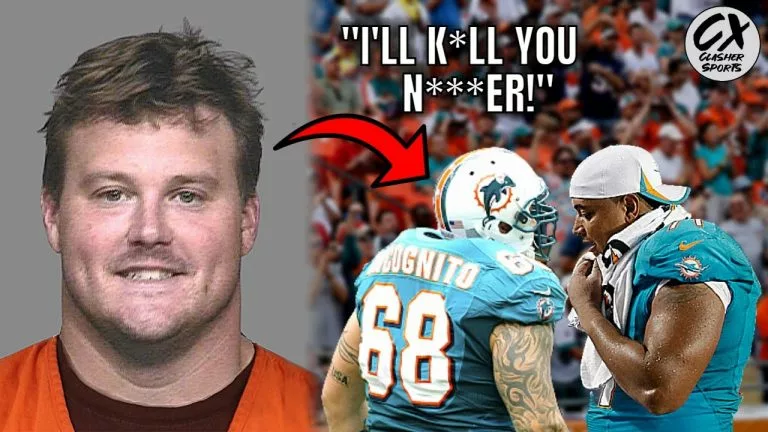
10. Richie Incognito
Richie Incognito represents a different kind of “dirty” — one rooted as much in behavior as physical play. On the field, Incognito was a technically sound offensive lineman, but his style leaned heavily on intimidation, late hits, and borderline illegal blocking techniques. In 2008 alone, he was fined over $35,000 in a single game, racking up personal fouls, facemask penalties, and chop blocks that drew league scrutiny.
However, Incognito’s legacy as a dirty player truly crystallized off the field. The 2014 Miami Dolphins bullying scandal exposed racially charged harassment, threats, and psychological abuse directed at teammate Jonathan Martin. The revelation painted Incognito not as a misunderstood tough guy, but as a toxic presence whose aggression lacked boundaries. While Incognito attempted a comeback years later, his reputation never recovered.
Unlike other players on this list who were feared for their hits, Incognito became infamous for
weaponizing hostility, both mentally and physically. Coaches tolerated him because he played through pain and blocked with edge, but teammates often paid the price. Dirty play isn’t always about injuring opponents — sometimes it’s about destroying locker rooms. Incognito mastered both.
THE VERY DISTURBING & TROUBLING History Of Richie Incognito
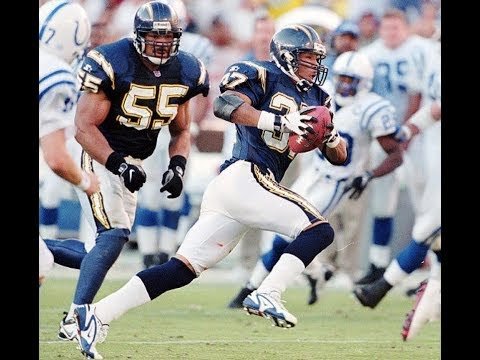
9. Rodney Harrison
Rodney Harrison was one of the most feared safeties of his era — and not always for the right reasons. A relentless hitter with elite instincts, Harrison built a Hall of Fame résumé while simultaneously becoming a magnet for fines and suspensions. Players voted him the NFL’s dirtiest player multiple times (2004, 2006, and 2008), a rare and telling distinction.
Harrison’s hits routinely targeted receivers’ heads and knees, often just late enough to draw flags but early enough to inflict damage. His 2002 suspension for an illegal hit on Jerry Rice was emblematic of his style: explosive, unnecessary, and dangerous. Over his career, Harrison accumulated more than $200,000 in fines — a staggering total for a defensive back.
What made Harrison particularly controversial was his awareness. He wasn’t reckless; he was calculated. He understood the rules and chose to cross the line anyway, believing intimidation was worth the cost. Opponents dreaded crossing the middle of the field when Harrison lurked nearby. While teammates praised his leadership, his legacy remains inseparable from the damage he inflicted.
Rodney Harrison – {Career Highlights} Necessary Roughness!!!!
8. Hines Ward
Hines Ward is often celebrated as a “tough, gritty” wide receiver — but that framing glosses over how dangerous his blocking style truly was. Ward specialized in blindside crackback blocks, often launching himself into unsuspecting defenders’ heads and necks. These weren’t incidental collisions; they were deliberate, violent hits designed to incapacitate.
The most infamous came in 2008, when Ward shattered Bengals linebacker Keith Rivers’ jaw with a blindside block that Rivers never saw coming. The injury ended Rivers’ season and directly led to the NFL implementing the “Hines Ward Rule,” banning blindside blocks targeting defenseless players.
Ward blurred the line between toughness and recklessness, benefiting from a league that had yet to prioritize player safety. While Steelers fans adored him, defenders across the league viewed him as a threat. Ward never apologized for his style, insisting it was part of the game — even as the league rewrote rules because of it.
Hine$ Ward – Heinz Field (pt. 2) (Career Highlight$)
7. Cortland Finnegan
Cortland Finnegan made his living as an agitator. A skilled cornerback, Finnegan’s true weapon was psychological warfare. He talked constantly, shoved receivers after plays, tugged jerseys, and escalated every interaction. His most notorious moment came in 2010, when he engaged in a full-blown fistfight with Texans star Andre Johnson — a fight widely viewed as Finnegan’s fault.
Finnegan’s dirtiness wasn’t about illegal hits; it was about provocation. He baited opponents into penalties, fights, and mental mistakes. While coaches valued his edge, referees watched him closely, and opponents despised him. His ability to frustrate elite receivers made him effective, but also cemented his reputation as one of the league’s most annoying and dirty defenders.
He rarely crossed the line accidentally — Finnegan’s entire game was about pushing opponents to cross it for him.
Andre Johnson fights Cortland Finnegan (HQ) BEST NFL FIGHT! BEST HQ
6. Jack Tatum
Nicknamed “The Assassin,” Jack Tatum embodied the Raiders’ outlaw image of the 1970s. Helmet-to-helmet hits, launching at defenseless receivers, and celebrating violent collisions were all part of his brand. Tatum didn’t just hit hard — he hit to hurt.
His most infamous moment came in 1978, when his hit on Patriots receiver Darryl Stingley resulted in permanent paralysis. Tatum never apologized, later stating injuries were part of football. That lack of remorse hardened public opinion against him.
While many of Tatum’s contemporaries praised his fearlessness, history has judged him more harshly. He symbolized an era when player safety was ignored and brutality was rewarded. His legacy remains one of the clearest examples of how the NFL once glorified recklessness.
Jack “Assassin” Tatum Career Highlights
5. Ndamukong Suh
Few players combined dominance and dirtiness like Ndamukong Suh. One of the most physically imposing defensive tackles ever, Suh frequently crossed the line from aggressive to malicious. His most notorious act came in 2011, when he stomped on Packers lineman Evan Dietrich-Smith — an act that led to suspension and widespread condemnation.
That wasn’t an isolated incident. Suh was fined repeatedly for late hits, groin kicks, and unnecessary roughness. His temper often overrode his judgment, turning routine plays into controversies.
What made Suh particularly frustrating was that he didn’t need to play dirty. His talent alone made him elite. Yet time and again, he chose violence over discipline, tarnishing his legacy.
Ndamukong Suh Dirtiest Plays
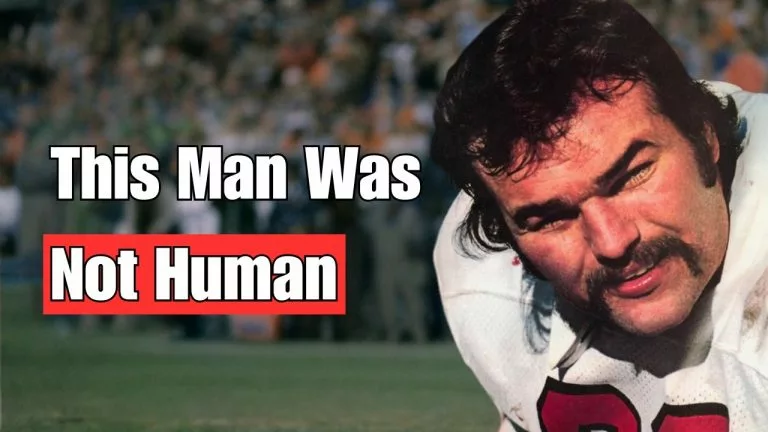
4. Conrad Dobler
Conrad Dobler didn’t just embrace being dirty — he celebrated it. A 1970s offensive lineman, Dobler openly admitted to biting, punching, kicking, and spitting on opponents in piles. He once proudly called himself “the dirtiest player in football.”
Dobler thrived in an era that encouraged brutality, but even by 1970s standards, he stood out. Defenders feared playing against him because every snap became a battle for survival. While some viewed his tactics as gamesmanship, others saw them as outright cheating.
His reputation became so strong that referees often penalized him preemptively. Dobler remains the rare player whose self-admitted dirtiness became his calling card.
The NFL Maniac Who Became the “Dirtiest Player Ever”
3. James Harrison
James Harrison was a generational pass rusher — and a serial rule-breaker. Known for devastating hits, Harrison frequently targeted quarterbacks and receivers in ways that earned fines and suspensions. His hit on Mohamed Massaquoi in 2010 resulted in a massive fine and symbolized the league’s crackdown on head shots.
Harrison played angry football. He sought intimidation and thrived on fear. While teammates admired his work ethic, opponents braced for impact every snap. His style walked the edge between dominance and danger, often stepping over it.
James Harrison: Hard Hitting MACHINE! | Throwback Originals
2. Vontaze Burfict
No modern player embodies dirty football like Vontaze Burfict. From college to the pros, Burfict accumulated suspensions, fines, and ejections at a historic rate. His helmet-to-helmet hit on Antonio Brown in the 2016 playoffs became one of the most infamous moments in NFL history.
Burfict wasn’t reckless — he was intentional. His pattern of targeting vulnerable players led to multiple suspensions, including a season-long ban in 2019. The league eventually decided Burfict couldn’t be trusted to play safely.
Vontaze Burfict Dirty Plays and Moments Compilation
1. Bill Romanowski
Bill Romanowski stands alone. No player combined elite success with sheer malice like Romanowski. He spat on opponents, delivered late hits, and even broke a teammate’s eye socket in practice. His aggression knew no limits.
Romanowski believed intimidation was a competitive advantage, regardless of consequences. Teammates feared him as much as opponents. His legacy is one of championships, controversy, and outright hostility.
Meet the DIRTIEST Player in NFL History
Honorable Mentions
Shawne Merriman
– PED suspensions and reckless hits
Joey Porter
– Late hits and sideline chaos
Albert Haynesworth
– Stomping incident remains infamous
Ray Lewis
– Fined repeatedly late in career
Roy Williams
– Horse-collar tackles forced rule changes
Final Thought
The NFL has evolved, but dirty play has always existed. These players didn’t just test limits — they defined them. Whether celebrated or condemned, their reputations endure because violence, controversy, and spectacle have always been part of football’s complicated DNA.
Up To $1500 in Bonus Bets Paid Back if your First Bet Does Not Win
T&Cs apply
4.5/5
Gambling problem? Call 1-800-GAMBLER or 1-800-MY-RESET (Available in the US) 877-8-HOPENY or text HOPENY (467369) (NY) 1-800-327-5050 (MA), 1-800-BETS-OFF (IA), 1-800-981-0023 (PR). 21+ only. Please Gamble Responsibly. See BetMGM.com for Terms. First Bet Offer for new customers only (if applicable). Subject to eligibility requirements. Bonus bets are non-withdrawable. In partnership with Kansas Crossing Casino and Hotel. Promotional offers not available in Mississippi, Massachusetts, New York, Ontario, or Puerto Rico.
New DraftKings Customers: Spend $5+ Get $150 in Bonuses
T&Cs apply
4.5/5
GAMBLING PROBLEM? CALL 1-800-GAMBLER or 1-800-MY-RESET, (800) 327-5050 or visit gamblinghelplinema.org (MA). Please Gamble Responsibly. 888-789-7777/visit ccpg.org (CT), or visit www.mdgamblinghelp.org (MD), 1-800-981-0023 (PR). 21+ and present in most states. (18+ DC/NH/PR/WY). Void in CAN. Eligibility restrictions apply. On behalf of Boot Hill Casino (KS). Pass-thru of per wager tax may apply in IL. 1 per new DraftKings customer. $5+ first-time bet req. Max. $150 issued as non-withdrawable Bonus Bets. Stake removed from payout. Reward issued as $50 in Bonus Bets every 7 days via click-to-claim for 14 days. Bonus Bets and click-to-claims expire 7 days (168hrs) after issuance. Terms: sportsbook.draftkings.com/promos. Ends 10/11/26 at 11:59 PM ET. Sponsored by DK.
Must be 21+. GAMBLING PROBLEM? CALL 1-800-GAMBLER OR CALL 1-800-MY-RESET, www.mdgamblinghelp.org (MD), (800)-327-5050 or gamblinghelplinema.org (MA), Call (877)8-HOPENY or text HOPENY (467369) (NY), (888) 789-7777 or ccpg.org (CT), morethanagame.nc.gov (NC), 1800gambler.net (WV)
Bet $1 and get double the winnings up to $25 for your next 10 bets
T&Cs apply
4.4/5
21+ New users only. Must register using eligible promo code. First bet after registration must qualify. Max. Bonus Bet: $1,000. Bonus Bet expires 14 days after receipt. Void where prohibited. See Caesars.com/promos for full terms. Gambling Problem? 1-800-GAMBLER (1-800-426-2537)
21+ and present in OH. Gambling Problem? Call 1-800-GAMBLER.
This site is using
Cloudflare
and adheres to the
Google Safe Browsing Program. We adapted
Google's Privacy Guidelines
to keep your data safe at all times.
Close
Ready to Win Big? Join the Elite with Our Sports Betting Deals!
FanDuel Promo
New Users – Get $250 in Bonus Bets when you wager $5 for 5 days
Up To $1500 in Bonus Bets Paid Back if your First Bet Does Not Win
Best Slots
T&Cs and 21+ apply
Gambling problem? Call 1-800-GAMBLER or 1-800-MY-RESET (Available in the US) 877-8-HOPENY or text HOPENY (467369) (NY) 1-800-327-5050 (MA), 1-800-BETS-OFF (IA), 1-800-981-0023 (PR). 21+ only. Please Gamble Responsibly. See BetMGM.com for Terms. First Bet Offer for new customers only (if applicable). Subject to eligibility requirements. Bonus bets are non-withdrawable. In partnership with Kansas Crossing Casino and Hotel. Promotional offers not available in Mississippi, Massachusetts, New York, Ontario, or Puerto Rico.
Code:
Open BetMGM
Get Bonus
DraftKings Promo
New DraftKings Customers: Spend $5+ Get $150 in Bonuses
Newcomer
T&Cs and 21+ apply
GAMBLING PROBLEM? CALL 1-800-GAMBLER or 1-800-MY-RESET, (800) 327-5050 or visit gamblinghelplinema.org (MA). Please Gamble Responsibly. 888-789-7777/visit ccpg.org (CT), or visit www.mdgamblinghelp.org (MD), 1-800-981-0023 (PR). 21+ and present in most states. (18+ DC/NH/PR/WY). Void in CAN. Eligibility restrictions apply. On behalf of Boot Hill Casino (KS). Pass-thru of per wager tax may apply in IL. 1 per new DraftKings customer. $5+ first-time bet req. Max. $150 issued as non-withdrawable Bonus Bets. Stake removed from payout. Reward issued as $50 in Bonus Bets every 7 days via click-to-claim for 14 days. Bonus Bets and click-to-claims expire 7 days (168hrs) after issuance. Terms: sportsbook.draftkings.com/promos. Ends 10/11/26 at 11:59 PM ET. Sponsored by DK.
Code:
Open DraftKings
Get Bonus
Find out what the legends have to say about sports this week....