The Heisman Trophy is supposed to recognize the most outstanding player in college football, but its history proves that voters can be idiots
The Heisman Trophy is supposed to recognize the most outstanding player in college football, but its history proves that voters have not always followed that standard. Reputation, school prestige, position, team record and regional bias have frequently influenced the outcome.
Some deserving players lost to equally worthy winners. Others were denied because they played at the wrong school, played an undervalued position or emerged before voters were willing to break with tradition. Statistics alone do not settle every debate, but production, dominance, value and performance against elite competition must matter.
This list considers what each player accomplished during the season in question—not what he later did in the NFL. It also accounts for the voting standards and biases of the era.
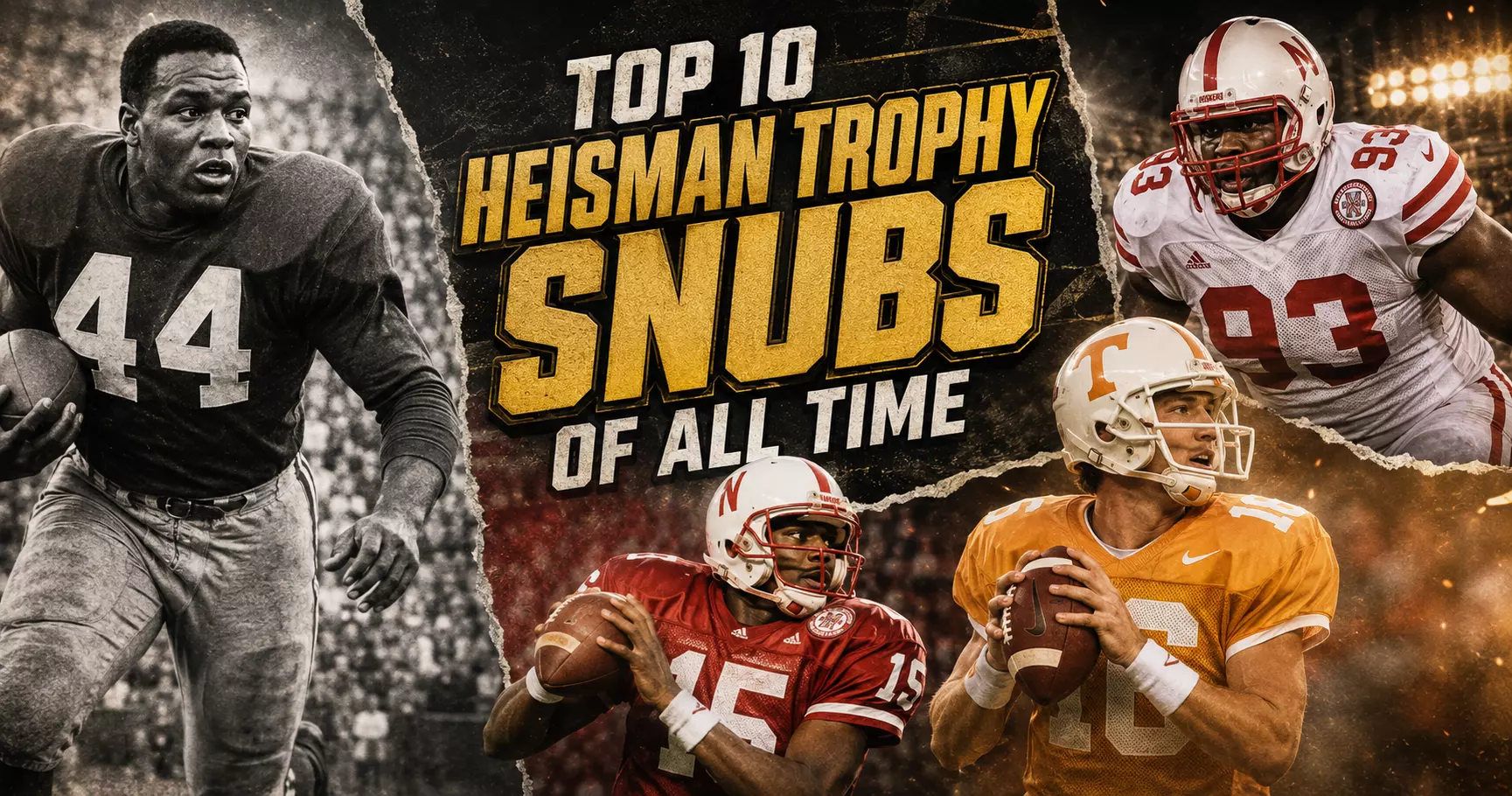
Here are the 10 biggest Heisman Trophy snubs in college football history.
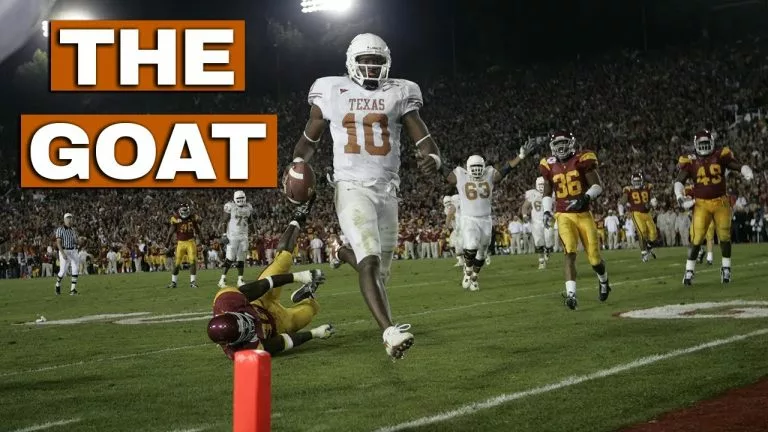
10. Vince Young, QB, Texas — 2005
Vince Young produced a season worthy of winning the
Heisman
in almost any other year. The Texas quarterback passed for 3,036 yards and 26 touchdowns while rushing for 1,050 yards and 12 more scores during the regular season. He led the Longhorns to a 12–0 record, including a breakthrough victory at Ohio State and a 70–3 demolition of Colorado in the Big 12 Championship Game. USC running back Reggie Bush won after accumulating 2,218 yards from scrimmage and 18 touchdowns, receiving 784 first-place votes. Bush was electrifying and has since been officially reinstated as the 2005 winner. The problem was that Heisman ballots were submitted before Young’s defining performance against USC in the Rose Bowl. Young generated 467 yards of offense and scored the game-winning touchdown in Texas’ 41–38 championship victory. Bowl results cannot retroactively determine a regular-season award, but that performance confirmed what many already believed: Young was college football’s most valuable and dangerous player.
85 MINUTES of Vince Young Texas Highlights 🤘
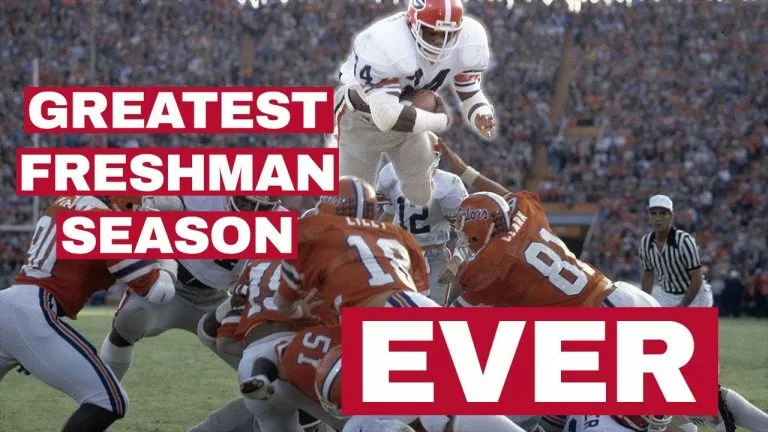
9. Herschel Walker, RB, Georgia — 1980
Herschel Walker was only an 18-year-old freshman when he transformed Georgia into a national championship team. Walker rushed for 1,616 yards and 15 touchdowns, repeatedly carrying the Bulldogs against defenses constructed specifically to stop him. He announced himself by running through Tennessee’s Bill Bates in his collegiate debut and never slowed down. Georgia completed a 12–0 season, while Walker finished third in the Heisman voting behind South Carolina running back George Rogers and Pittsburgh defensive end Hugh Green. Rogers was a worthy winner after leading the nation with 1,781 rushing yards, but Walker’s impact was greater. Georgia rose from 6–5 in 1979 to unbeaten national champion largely because of its freshman phenomenon. The biggest obstacle was not production—it was class standing. Heisman voters simply were not prepared to give the award to a freshman. Walker eventually won in 1982, but his 1980 performance was already worthy.
Herschel Walker Runs for 238 Yards on Florida (1980)
8. LaDainian Tomlinson, RB, TCU — 2000
LaDainian Tomlinson led the country with 2,158 rushing yards and scored 22 touchdowns in 2000, yet somehow finished fourth in the Heisman voting. Florida State quarterback Chris Weinke won after passing for 4,167 yards and leading the Seminoles into the national championship game. Oklahoma quarterback Josh Heupel finished second, while Purdue quarterback Drew Brees placed third. Tomlinson’s greatest disadvantage was playing for TCU before the Horned Frogs became a nationally prominent program. He did not receive the weekly television exposure afforded quarterbacks at Florida State, Oklahoma and Purdue. Tomlinson rushed for at least 100 yards in every regular-season game and surpassed 200 yards five times. Opponents knew TCU’s offense revolved around him and still could not contain him. Finishing behind one quarterback could have been defended. Falling behind three demonstrated how badly school recognition and positional preference damaged his candidacy. Tomlinson deserved far better than fourth place.
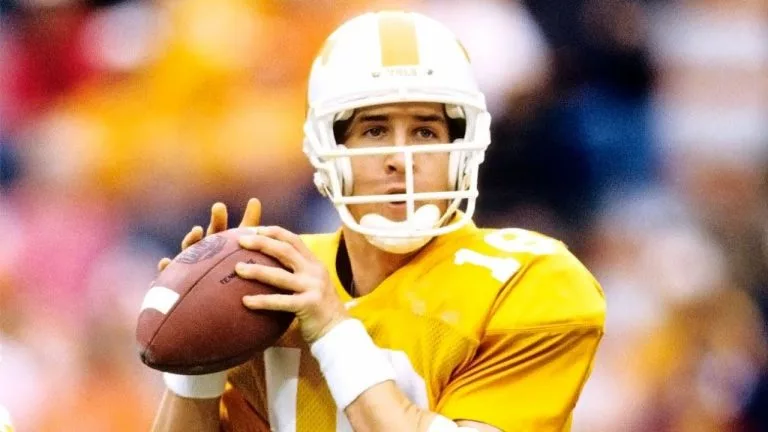
Peyton Manning entered the 1997 season as the Heisman favorite and largely delivered. He completed 287 of 477 passes for 3,819 yards, 36 touchdowns and 11 interceptions while leading Tennessee to the SEC championship. Manning broke numerous conference and school records and commanded one of the nation’s most productive passing attacks. Michigan cornerback Charles Woodson won after contributing on defense, offense and special teams for an undefeated team headed to the Rose Bowl. Woodson’s versatility made him an exceptional candidate, so this was not an indefensible selection. The controversy came from the apparent movement against Manning. He was omitted entirely from 110 ballots and lost every voting region except the South. Manning’s loss to Florida earlier in the season also remained central to the debate, even though the Heisman was not supposed to be determined by one game. Woodson was deserving, but Manning’s production, leadership and SEC championship made this one of the closest legitimate arguments in Heisman history.
Peyton Manning 1997 Tennessee Full Senior SZN Highlights | 13 Mins of Pure Magic!!!
6. Chuck Muncie, RB, California — 1975
Chuck Muncie finished second to Ohio State’s Archie Griffin in 1975, allowing Griffin to become the only two-time Heisman winner. The historical achievement was memorable, but Muncie produced the stronger individual season. California’s star rushed for 1,460 yards and 13 touchdowns while averaging 6.4 yards per carry. He also caught 39 passes for 392 yards and two more scores, giving him 1,852 yards from scrimmage and 15 total touchdowns. Griffin rushed for 1,357 yards but scored only four touchdowns. Muncie was the centerpiece of a California offense that led the nation in total yardage and finished in a tie for the Pac-8 championship. Griffin’s reputation, Ohio State’s national prominence and the Buckeyes’ 11–0 regular season carried tremendous weight. Griffin was a great player, but the 1975 trophy too often feels like recognition of his career rather than an award for that particular season.
WVU vs California, Sept. 20, 1975
5. Larry Fitzgerald, WR, Pittsburgh — 2003
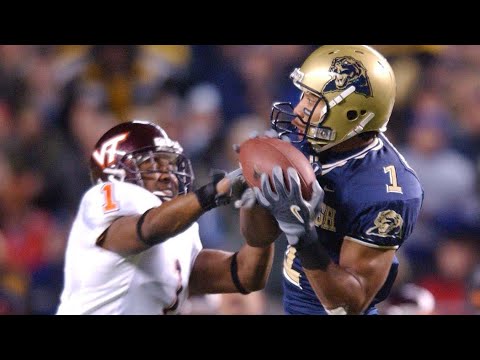
Larry Fitzgerald delivered one of the greatest receiving seasons in college football history in 2003. The Pittsburgh sophomore caught 92 passes for 1,672 yards and 22 touchdowns, scoring in 11 consecutive games during the season. Defenses rolled coverage toward him, assigned multiple players to him and still failed to keep him out of the end zone. Oklahoma quarterback Jason White won the Heisman after throwing for 3,846 yards and 40 touchdowns, benefiting from the Sooners’ pursuit of a national championship and an emotional comeback story after two major knee injuries. White was excellent, but Fitzgerald was the most unstoppable player in the country. He finished only 128 points behind White, 1,481–1,353, despite playing a position that had never produced a Heisman winner. Fitzgerald led the
voting among ballots
cast during the final week, but many voters had submitted their choices before Oklahoma’s 35–7 loss to Kansas State. Early voting helped decide an extremely close race.
Larry Fitzgerald Pitt highlights
4. Tommie Frazier, QB, Nebraska — 1995
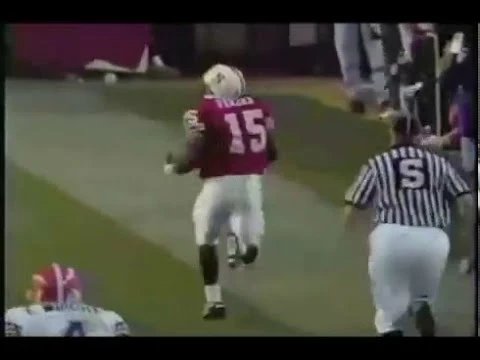
Tommie Frazier was the leader of what may have been the greatest college football team ever assembled. Nebraska averaged more than 52 points and nearly 400 rushing yards per game during the 1995 regular season, with Frazier controlling Tom Osborne’s option offense. He passed for 1,362 yards and 17 touchdowns while rushing for 604 yards and 14 scores. Those statistics do not fully measure his impact. Frazier made the correct option read, punished defenders as a runner and delivered big passes whenever opponents overcommitted to Nebraska’s ground game. Ohio State running back Eddie George won after rushing for 1,927 yards and scoring 25 total touchdowns, defeating Frazier by 264 points. George had a tremendous season, but Frazier was the central figure on an undefeated defending champion that overwhelmed virtually everyone it played. His legendary 75-yard run against Florida came after the voting, but Nebraska’s regular-season dominance had already made his value clear. No player better represented the nation’s best team.
Tommie Frazier- The Greatest Run In College Football History
3. Marshall Faulk, RB, San Diego State — 1992
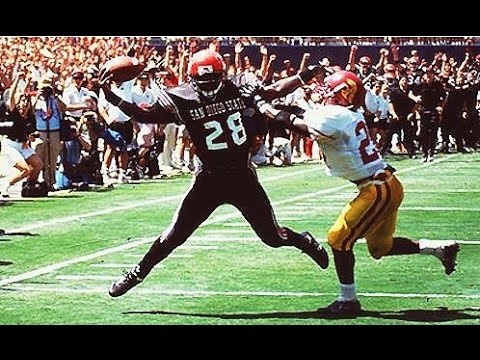
Marshall Faulk led the nation with 1,630 rushing yards while averaging 6.2 yards per carry and scoring 15 touchdowns in 1992. He added 18 receptions for 128 yards and handled an enormous portion of San Diego State’s offense. Despite those numbers, Faulk lost to Miami quarterback Gino Torretta, who passed for approximately 3,060 yards, 19 touchdowns and seven interceptions. Torretta’s strongest argument was Miami’s undefeated record and 29-game winning streak. Faulk’s greatest disadvantage was playing for San Diego State, a program without Miami’s television exposure, national ranking or championship reputation. Contemporary coverage practically summarized the race: Torretta had the best team, Georgia’s Garrison Hearst played in the strongest conference and Faulk had the best statistics. The award supposedly honored the most outstanding player, not the quarterback of the highest-ranked team. Faulk finished second but received barely half as many first-place votes as Torretta. It remains one of the clearest examples of program prestige overwhelming individual dominance.
Classic Tailback – Marshall Faulk San Diego State Highlights
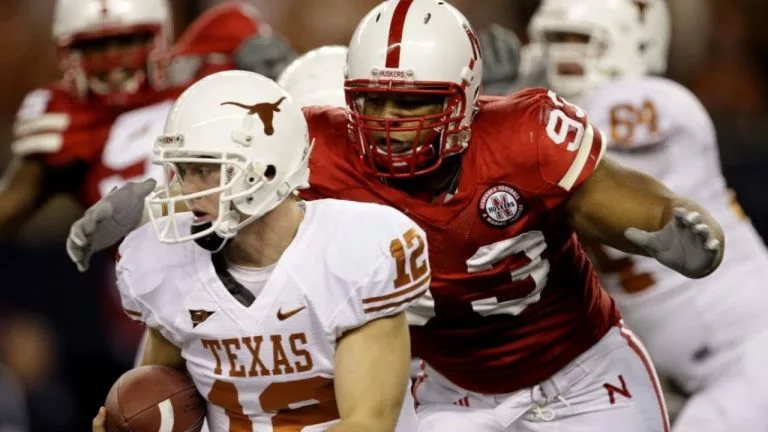
2. Ndamukong Suh, DT, Nebraska — 2009
Ndamukong Suh produced a season that should have shattered the Heisman Trophy’s offensive bias. Playing defensive tackle, Suh recorded 85 tackles, 24 tackles for loss, 12 sacks, 24 quarterback pressures and 10 pass breakups. Those are remarkable numbers for an edge rusher and almost unbelievable for an interior lineman facing constant double- and triple-teams. Suh’s defining performance came against Texas in the Big 12 Championship Game, where he recorded 12 tackles, seven tackles for loss and 4.5 sacks while nearly destroying the Longhorns’ national championship hopes by himself. Alabama running back Mark Ingram won the closest Heisman vote ever, with Stanford’s Toby Gerhart second and Texas quarterback Colt McCoy third. Suh finished fourth. Nebraska led the country in scoring defense, allowing only 10.4 points per game, and Suh was the overwhelming reason. He won the Bednarik, Lombardi, Nagurski and Outland awards. He was arguably college football’s best player, but voters could not see beyond his position.
Ndamukong Suh Nearly Beat Texas BY HIMSELF! 😱😱😱
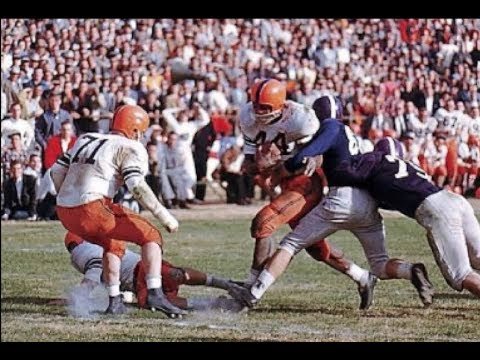
1. Jim Brown, RB, Syracuse — 1956
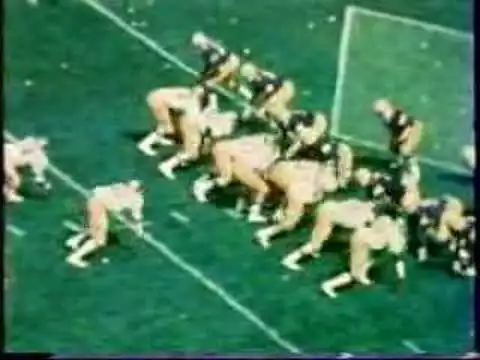
Jim Brown’s fifth-place finish in 1956 remains the greatest injustice in Heisman Trophy history. Brown rushed for 986 yards and 13 touchdowns in only eight regular-season games, averaging 6.2 yards per carry. His yardage ranked third nationally, while his 13 rushing touchdowns tied for the national lead. He also kicked extra points, returned kicks and played defense for a Syracuse team that finished the regular season 7–1. Notre Dame quarterback Paul Hornung won despite the Fighting Irish finishing 2–8. Hornung passed for 917 yards, three touchdowns and 13 interceptions while rushing for 420 yards. His versatility was impressive, but his production did not approach
Brown’s dominance. Hornung benefited from Notre Dame’s enormous national profile during an era when television exposure and regional voting carried tremendous influence. Brown did not merely lose—he finished behind four players. The best player in college football was treated like an afterthought while the quarterback of a two-win glamour program received the trophy.
Classic Tailback – Jim Brown Syracuse Highlights
Conclusion
Every Heisman debate requires context. Archie Griffin, George Rogers, Chris Weinke, Jason White, Reggie Bush, Charles Woodson, Eddie George, Gino Torretta, Mark Ingram and Paul Hornung all constructed legitimate cases.
The issue is whether voters consistently identified the most outstanding player.
They frequently favored quarterbacks, nationally prominent programs and championship contenders. Players from smaller schools faced enormous exposure disadvantages, while defensive stars had to produce almost unimaginable numbers merely to reach New York.
Jim Brown’s fifth-place finish remains the worst decision because his superiority was so clear and the winning team was so unsuccessful. Ndamukong Suh’s loss demonstrated that the same positional prejudice survived more than 50 years later.
The Heisman Trophy has produced many worthy winners. These 10 seasons prove that it has also left some of college football’s greatest performances unrewarded.
New Users – Get $350 in Bonus Bets when you wager $5 for 7 days
T&Cs apply
4.6/5
Gambling Problem? Call 1-800-GAMBLER or 1-800-MY-RESET. Call 1-888-789-7777 or visit ccpgg.org/chat (CT). Hope is here. GamblingHelpLineMA.org or call (800) 327-5050 for 24/7 support (MA). Visit www.mdgamblinghelp.org (MD). Call 1-877-8HOPE-NY or text HOPENY (NY). 21+ (18+ DC, WY) and present in select states (for KS, in affiliation with Kansas Star Casino). Find online real money wagering only. Min $5 wager required for 7 consecutive days. $5 free play credit. Bonus issued as non-withdrawable bonus with cash withdrawable bonus with cash withdrawable. Bonus bets which expire 7 days after receipt. Restrictions apply. See terms at sportsbook.fanduel.com. Call 1-877-770-7867 (LA).
Up To $1500 in Bonus Bets Paid Back if your First Bet Does Not Win
T&Cs apply
4.5/5
Gambling problem? Call 1-800-GAMBLER or 1-800-MY-RESET (Available in the US) 877-8-HOPENY or text HOPENY (467369) (NY) 1-800-327-5050 (MA), 1-800-BETS-OFF (IA), 1-800-981-0023 (PR). 21+ only. Please Gamble Responsibly. See BetMGM.com for Terms. First Bet Offer for new customers only (if applicable). Subject to eligibility requirements. Bonus bets are non-withdrawable. In partnership with Kansas Crossing Casino and Hotel. Promotional offers not available in Mississippi, Massachusetts, New York, Ontario, or Puerto Rico.
New DraftKings Customers: Bet $5, Get $200 + 3 Months of NBA League Pass!
T&Cs apply
4.5/5
GAMBLING PROBLEM? CALL 1-800-GAMBLER or 1-800-MY-RESET, (800) 327-5050 or visit gamblinghelplinema.org (MA). Please Gamble Responsibly. 888-789-7777/visit ccpg.org (CT), or visit www.mdgamblinghelp.org (MD), 1-800-981-0023 (PR). 21+ and present in most states. (18+ DC/NH/PR/WY). Void in CAN. Eligibility restrictions apply. On behalf of Boot Hill Casino (KS). Pass-thru of per wager tax may apply in IL. 1 per new Sportsbook customer. $5+ first-time bet req. Max. $200 issued as non-withdrawable Bonus Bets. Stake removed from payout. Reward issued as $50 in Bonus Bets every 7 days via click-to-claim for 21 days. Bonus Bets and click-to-claims expire 7 days (168hrs) after issuance. Terms: dkng.co/offer. Get 1 promo code to redeem a 3-month NBA League Pass subscription, complimentary of DraftKings. Subscription auto-renews monthly at then-current price (currently $16.99/mo); cancel anytime. Terms, restrictions, and eligibility requirements apply. Redeem League Pass by 12/19/26 at 11:59 PM ET. Addt’l terms: support.watch.nba.com/hc/en-us/articles/9165532876183-League-Pass-Terms-of-Use_. Ends 11/29/26 at 11:59 PM ET. Sponsored by DK.
Must be 21+. GAMBLING PROBLEM? CALL 1-800-GAMBLER OR CALL 1-800-MY-RESET, www.mdgamblinghelp.org (MD), (800)-327-5050 or gamblinghelplinema.org (MA), Call (877)8-HOPENY or text HOPENY (467369) (NY), (888) 789-7777 or ccpg.org (CT), morethanagame.nc.gov (NC), 1800gambler.net (WV)
Bet $1 and get double the winnings up to $25 for your next 10 bets
T&Cs apply
4.4/5
21+ New users only. Must register using eligible promo code. First bet after registration must qualify. Max. Bonus Bet: $1,000. Bonus Bet expires 14 days after receipt. Void where prohibited. See Caesars.com/promos for full terms. Gambling Problem? 1-800-GAMBLER (1-800-426-2537)
21+ and present in OH. Gambling Problem? Call 1-800-GAMBLER.
This site is using
Cloudflare
and adheres to the
Google Safe Browsing Program. We adapted
Google's Privacy Guidelines
to keep your data safe at all times.
Close
Ready to Win Big? Join the Elite with Our Sports Betting Deals!
FanDuel Promo
New Users – Get $350 in Bonus Bets when you wager $5 for 7 days
Our Favorite
T&Cs and 21+ apply
Gambling Problem? Call 1-800-GAMBLER or 1-800-MY-RESET. Call 1-888-789-7777 or visit ccpgg.org/chat (CT). Hope is here. GamblingHelpLineMA.org or call (800) 327-5050 for 24/7 support (MA). Visit www.mdgamblinghelp.org (MD). Call 1-877-8HOPE-NY or text HOPENY (NY). 21+ (18+ DC, WY) and present in select states (for KS, in affiliation with Kansas Star Casino). Find online real money wagering only. Min $5 wager required for 7 consecutive days. $5 free play credit. Bonus issued as non-withdrawable bonus with cash withdrawable bonus with cash withdrawable. Bonus bets which expire 7 days after receipt. Restrictions apply. See terms at sportsbook.fanduel.com. Call 1-877-770-7867 (LA).
Code:
Open FanDuel
Get Bonus
BetMGM Promo
Up To $1500 in Bonus Bets Paid Back if your First Bet Does Not Win
Best Slots
T&Cs and 21+ apply
Gambling problem? Call 1-800-GAMBLER or 1-800-MY-RESET (Available in the US) 877-8-HOPENY or text HOPENY (467369) (NY) 1-800-327-5050 (MA), 1-800-BETS-OFF (IA), 1-800-981-0023 (PR). 21+ only. Please Gamble Responsibly. See BetMGM.com for Terms. First Bet Offer for new customers only (if applicable). Subject to eligibility requirements. Bonus bets are non-withdrawable. In partnership with Kansas Crossing Casino and Hotel. Promotional offers not available in Mississippi, Massachusetts, New York, Ontario, or Puerto Rico.
Code:
Open BetMGM
Get Bonus
DraftKings Promo
New DraftKings Customers: Bet $5, Get $200 + 3 Months of NBA League Pass!
Newcomer
T&Cs and 21+ apply
GAMBLING PROBLEM? CALL 1-800-GAMBLER or 1-800-MY-RESET, (800) 327-5050 or visit gamblinghelplinema.org (MA). Please Gamble Responsibly. 888-789-7777/visit ccpg.org (CT), or visit www.mdgamblinghelp.org (MD), 1-800-981-0023 (PR). 21+ and present in most states. (18+ DC/NH/PR/WY). Void in CAN. Eligibility restrictions apply. On behalf of Boot Hill Casino (KS). Pass-thru of per wager tax may apply in IL. 1 per new Sportsbook customer. $5+ first-time bet req. Max. $200 issued as non-withdrawable Bonus Bets. Stake removed from payout. Reward issued as $50 in Bonus Bets every 7 days via click-to-claim for 21 days. Bonus Bets and click-to-claims expire 7 days (168hrs) after issuance. Terms: dkng.co/offer. Get 1 promo code to redeem a 3-month NBA League Pass subscription, complimentary of DraftKings. Subscription auto-renews monthly at then-current price (currently $16.99/mo); cancel anytime. Terms, restrictions, and eligibility requirements apply. Redeem League Pass by 12/19/26 at 11:59 PM ET. Addt’l terms: support.watch.nba.com/hc/en-us/articles/9165532876183-League-Pass-Terms-of-Use_. Ends 11/29/26 at 11:59 PM ET. Sponsored by DK.
Code:
Open DraftKings
Get Bonus
Find out what the legends have to say about sports this week....
New Users – Get $350 in Bonus Bets when you wager $5 for 7 days
Gambling Problem? Call 1-800-GAMBLER or 1-800-MY-RESET. Call 1-888-789-7777 or visit ccpgg.org/chat (CT). Hope is here. GamblingHelpLineMA.org or call (800) 327-5050 for 24/7 support (MA). Visit www.mdgamblinghelp.org (MD). Call 1-877-8HOPE-NY or text HOPENY (NY). 21+ (18+ DC, WY) and present in select states (for KS, in affiliation with Kansas Star Casino). Find online real money wagering only. Min $5 wager required for 7 consecutive days. $5 free play credit. Bonus issued as non-withdrawable bonus with cash withdrawable bonus with cash withdrawable. Bonus bets which expire 7 days after receipt. Restrictions apply. See terms at sportsbook.fanduel.com. Call 1-877-770-7867 (LA).