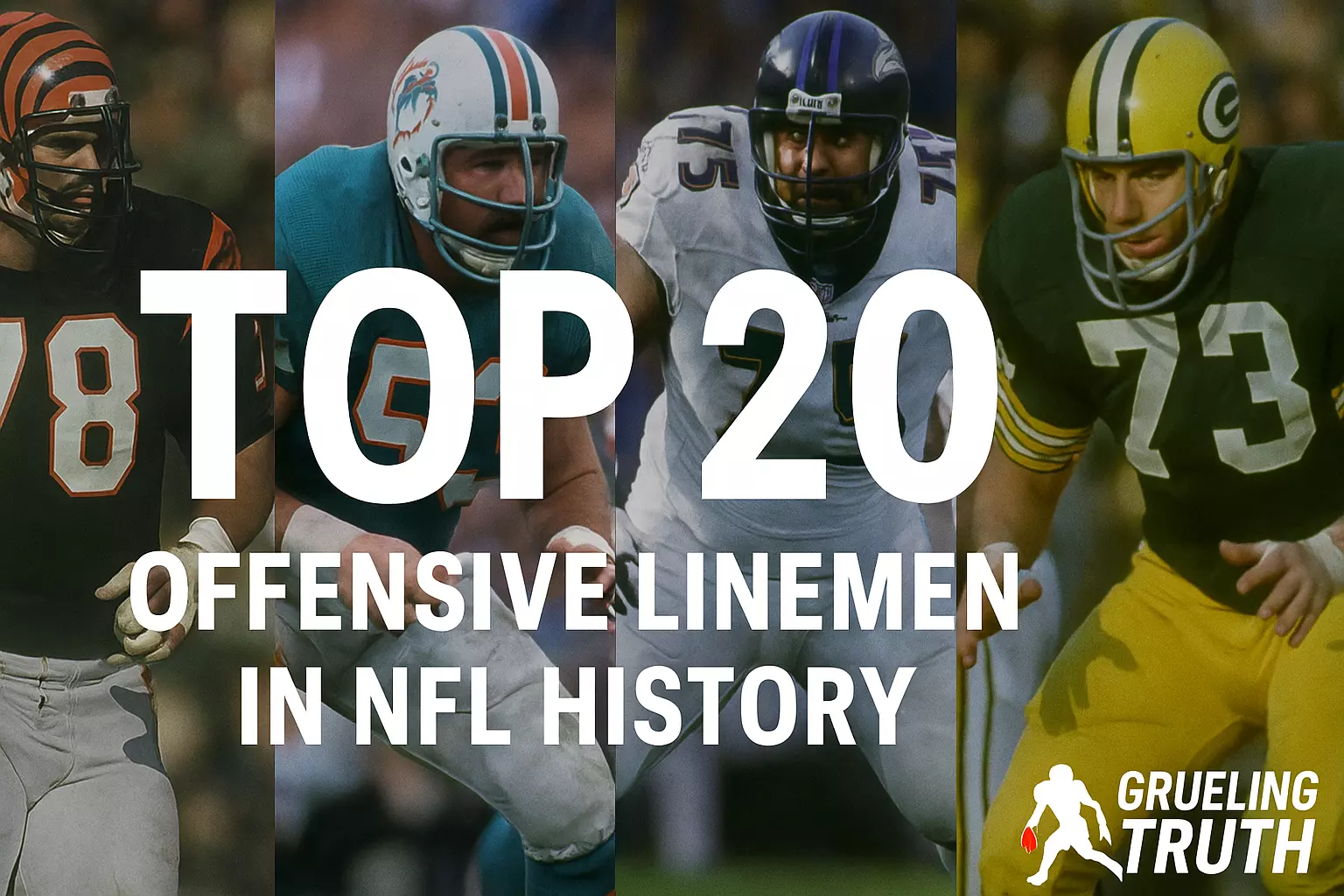
The offensive line is often overlooked in football, yet it is arguably the most important unit on any team. While quarterbacks, wide receivers, and running backs get the glory, offensive linemen are the ones who make it possible. They protect the franchise quarterback, create running lanes, and set the physical tone of the game. Without them, the flashiest offense collapses. In this article, we give long-overdue recognition to the big men in the trenches. These are the
20 greatest offensive linemen in NFL history, ranked for their dominance, consistency, and lasting impact on the game.
20) Mick Tingelhoff
Mick Tingelhoff went undrafted, but he became the beating heart of the Minnesota Vikings’ offensive line. Starting as a rookie in 1962, Tingelhoff never missed a game in 17 seasons — a streak of 240 consecutive starts. He earned six straight Pro Bowl selections from 1964 to 1969, along with five First-Team All-Pro honors.
He was also named the
NFL’s Top Offensive Lineman
in 1969. Tingelhoff played in all four of the Vikings’ Super Bowl appearances, anchoring the line during the team’s golden age. His blend of durability, intelligence, and leadership made him the prototype for the modern center.
Mick Tingelhoff
19) Richmond Webb
Richmond Webb was a steady force at left tackle for the Miami Dolphins throughout the 1990s. Protecting Dan Marino’s blindside, Webb started 118 consecutive games and earned seven straight Pro Bowl appearances.
His quick feet and long arms made him a nightmare for edge rushers. Though injuries shortened the latter part of his career, Webb’s dominance during his prime cannot be overlooked. While his Hall of Fame induction remains debated, his consistency and reliability place him firmly among the game’s best linemen.
Richmond Webb ring of honor induction
18) Walter Jones
Walter Jones was a once-in-a-generation talent. Drafted 6th overall by Seattle in 1997, Jones played his entire career with the Seahawks and became the cornerstone of their offensive line. He started every game he played and never allowed more than three sacks in a single season.
A nine-time Pro Bowler and seven-time All-Pro, Jones was named to the NFL’s 2000s All-Decade Team. His legendary pass-blocking ability helped Shaun Alexander win the 2005 MVP award, and his presence gave Seattle stability for more than a decade. Simply put, Jones was nearly impossible to beat one-on-one.
Walter Jones Seahawks Great Block
17) Art Shell
At 6’5” and 265 pounds, Art Shell dominated defensive ends with technique and toughness. A pillar of the Oakland Raiders’ offensive line from 1968–1982, Shell earned eight Pro Bowl appearances and two First-Team All-Pro honors.
His blocking paved the way for Ken Stabler and the Raiders’ vertical passing attack, as well as bruising running backs like Mark van Eeghen. Beyond his Hall of Fame playing career, Shell broke barriers as the NFL’s first African American head coach, cementing his place as one of football’s most influential figures.
16) Alan Faneca
Alan Faneca was the prototype guard of the 2000s. Known for his agility and pulling ability, Faneca became the engine of the Pittsburgh Steelers’ power running game. He earned nine Pro Bowl nods, six First-Team All-Pro selections, and a spot on the NFL’s 2000s All-Decade Team.
His most famous block came in Super Bowl XL, when he sprung Willie Parker for a 75-yard touchdown run — still the longest rushing score in Super Bowl history. Faneca’s consistency and dominance make him one of the greatest guards of all time.
Why Alan Faneca is Greatest Pulling Guard of All-Time | Baldy Breakdown
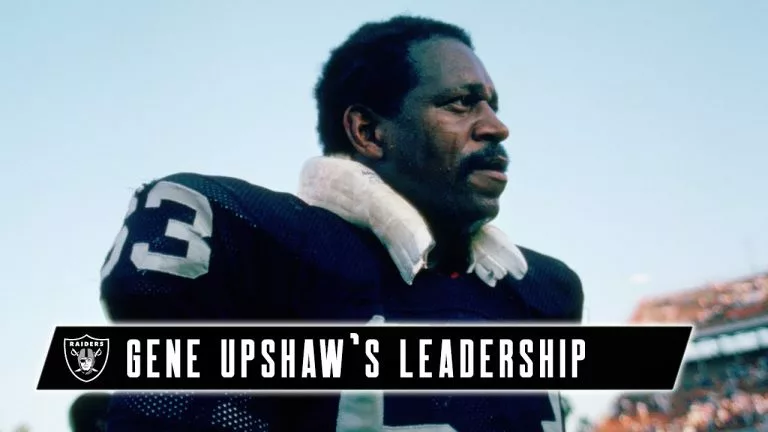
15) Gene Upshaw
Gene Upshaw was the face of the Raiders’ offensive line for 15 seasons. Playing at guard, he started 207 of 217 games and became a seven-time Pro Bowler. Upshaw won two Super Bowls with Oakland and was known for his combination of power and technique.
After retiring, Upshaw became executive director of the NFL Players Association, where he shaped labor negotiations for decades. While his tenure was not without controversy, his influence on the game extended far beyond his playing days. As both a player and a leader, Upshaw left a massive legacy.
Gene Upshaw Was a Natural-Born Leader, Leaving a Lasting Impact on the Game of Football | Raiders
14) Jim Otto
Jim Otto, nicknamed “Mr. Raider,” embodied toughness. Passed over in the NFL Draft for being undersized, Otto instead signed with the Raiders and became one of the AFL’s greatest players.
He played 210 consecutive games from 1960 to 1974, appearing in nine AFL All-Star Games and three NFL Pro Bowls. Otto’s endurance and ferocity made him the face of Oakland football in its early days. His gold Hall of Fame jacket is a reminder that size doesn’t define greatness — heart and durability do.
The Original Raider | Remembering Jim Otto | NFL
13) Will Shields
Durability and excellence defined Will Shields. In 14 seasons with the Kansas City Chiefs, Shields never missed a game. He blocked for legends like Marcus Allen and Priest Holmes, opening lanes for 1,000-yard rushers season after season.
A 12-time Pro Bowler, Shields was named to the NFL’s 2000s All-Decade Team. His ability to dominate both in pass protection and run blocking made him one of the most complete guards in league history. Few linemen combined reliability and dominance the way Shields did.
A Look Back at Will Shields
12) Willie Roaf
Willie Roaf was a mountain of a man at 6’5”, 320 pounds, but what made him special was his rare athleticism. Selected to 11 Pro Bowls in his 13 seasons, Roaf earned All-Decade honors for both the 1990s and 2000s.
Whether with the New Orleans Saints or Kansas City Chiefs, Roaf was dominant in both pass protection and run blocking. His unique blend of size, footwork, and balance made him nearly unstoppable. Roaf’s ability to neutralize elite pass rushers is why he is remembered as one of the most athletic tackles in NFL history.
Football Gameplan Special – 2012 Pro Football Hall of Fame Interviews – Willie Roaf
11) Dan Dierdorf
Dan Dierdorf was the anchor of the St. Louis Cardinals’ line in the 1970s and early 1980s. Starting at multiple positions before settling at right tackle, Dierdorf earned six Pro Bowl selections and four straight First-Team All-Pro honors.
Known for his intelligence and versatility, Dierdorf later became a Hall of Fame broadcaster, bringing the same knowledge of the game to the booth. His impact extended beyond his playing days, as he became one of the most recognizable voices in football.
Dan Dierdorf Highlight Video
10) Mike Webster
“Iron Mike” Webster was the standard for
NFL centers. A key piece of Pittsburgh’s dynasty, Webster earned nine Pro Bowl appearances and helped lead the Steelers to four Super Bowl victories in the 1970s.
He was known for his toughness, leadership, and ability to make line calls, protecting Terry Bradshaw and opening lanes for Franco Harris. His Hall of Fame career established him as the greatest center in NFL history.
Mike Webster Closing Remarks @ 1997 Pro Football HOF Enshrinement
9) Dwight Stephenson
Dwight Stephenson’s career was cut short by injury, but in his prime, he was unmatched. From 1981 to 1987 with the Dolphins, Stephenson was considered the best center in the league.
He earned five straight Pro Bowls and four First-Team All-Pro nods. His quickness and technique set him apart, and many still regard him as the most talented center to ever play, even with only eight seasons in the league.
oline Dwight Stephenson
8) Randall McDaniel
Randall McDaniel was as athletic as he was dominant. With incredible quickness and power, McDaniel earned 12 consecutive Pro Bowl selections, a record for offensive linemen.
Playing primarily with the Minnesota Vikings, McDaniel was versatile enough to excel in both run blocking and pass protection. His pulling ability and physical style made him a nightmare for linebackers and defensive linemen alike.
Randall McDaniel Induction Video
7) Orlando Pace
Orlando Pace was the first overall pick in 1997 and lived up to every expectation. Protecting Kurt Warner’s blindside, he was the foundation of the Rams’ “Greatest Show on Turf.”
A seven-time Pro Bowler and member of the 2000s All-Decade Team, Pace’s dominance at left tackle redefined the position. His blend of size, agility, and strength made him nearly unbeatable.
Orlando Pace highlight Video
6) Bruce Matthews
Bruce Matthews may have been the most versatile lineman ever. Over his 19-year career with the Oilers and Titans, he played every position on the line.
With 292 starts, Matthews ranks second all-time in games started. He was selected to 14 Pro Bowls, a testament to his durability and dominance. Few players in NFL history could match his adaptability and longevity.
Bruce Matthews
5) John Hannah
Nicknamed “The Hog,” John Hannah is widely regarded as the greatest guard of all time. His quickness and leverage made him a dominant pulling guard who could get out in front of runners like a fullback.
From 1976 to 1985, Hannah made nine Pro Bowls and was named to the NFL’s 75th Anniversary All-Time Team. His technique and intensity helped redefine guard play in the modern era.
John Hannah Highlights
4) Forrest Gregg
Vince Lombardi himself called Forrest Gregg the best player he ever coached. Gregg played in 188 consecutive games, a remarkable feat of durability in his era.
He earned nine Pro Bowl appearances and seven First-Team All-Pro selections, helping the Green Bay Packers dominate the 1960s. Gregg’s role in executing the famous Lombardi power sweep made him one of the most iconic right tackles in NFL history.
Forrest Gregg
3) Jonathan Ogden
Jonathan Ogden stood at 6’9” and 340 pounds, making him one of the largest offensive linemen ever. Despite his size, he had quick feet and remarkable athleticism.
Ogden was selected to 11 Pro Bowls and helped lead the Ravens to a Super Bowl XXXV title. His dominance at left tackle set a new standard for the position and made him the face of Baltimore’s franchise for more than a decade.
Jonathan Ogden Hall Of Fame 2013 Speech
2) Larry Allen
Larry Allen was pure strength personified. At 6’3”, 325 pounds, he could bench-press over 700 pounds and routinely manhandled defensive linemen.
An 11-time Pro Bowler and member of both the 1990s and 2000s All-Decade Teams, Allen’s versatility allowed him to dominate at both guard and tackle. His raw power and technique made him one of the most feared linemen in NFL history.
Larry Allen Prevents Pick-Six
1) Anthony Muñoz
Anthony Muñoz is widely regarded as the greatest offensive lineman of all time. At 6’6” and 280 pounds, he blended size, strength, and flawless technique.
Over 13 seasons with the
Cincinnati Bengals, Muñoz earned 11 Pro Bowl selections and was named Offensive Lineman of the Year three times. His ability to dominate in both pass protection and run blocking revolutionized the left tackle position. Simply put, no one ever did it better.
Anthony Muñoz Highlights DVD
Conclusion
The offensive line will never be glamorous, but football fans know that games are won in the trenches. From Mick Tingelhoff’s unmatched durability to Anthony Muñoz’s flawless dominance, these men shaped the very foundation of championship football. They protected Hall of Fame quarterbacks, opened lanes for legendary running backs, and changed the way the game is played.
These 20 names are more than just linemen — they are architects of dynasties, enforcers of toughness, and masters of technique. The next time you watch a game, keep your eyes on the line of scrimmage. That’s where true greatness begins. Or if you want to learn more about sports and betting, check out some of the other articles on our site, such as our
NFL bettors guide to the World Cup.
Up To $1500 in Bonus Bets Paid Back if your First Bet Does Not Win
T&Cs apply
4.5/5
Gambling problem? Call 1-800-GAMBLER or 1-800-MY-RESET (Available in the US) 877-8-HOPENY or text HOPENY (467369) (NY) 1-800-327-5050 (MA), 1-800-BETS-OFF (IA), 1-800-981-0023 (PR). 21+ only. Please Gamble Responsibly. See BetMGM.com for Terms. First Bet Offer for new customers only (if applicable). Subject to eligibility requirements. Bonus bets are non-withdrawable. In partnership with Kansas Crossing Casino and Hotel. Promotional offers not available in Mississippi, Massachusetts, New York, Ontario, or Puerto Rico.
New DraftKings Customers: Spend $5+ Get $150 in Bonuses
T&Cs apply
4.5/5
GAMBLING PROBLEM? CALL 1-800-GAMBLER or 1-800-MY-RESET, (800) 327-5050 or visit gamblinghelplinema.org (MA). Please Gamble Responsibly. 888-789-7777/visit ccpg.org (CT), or visit www.mdgamblinghelp.org (MD), 1-800-981-0023 (PR). 21+ and present in most states. (18+ DC/NH/PR/WY). Void in CAN. Eligibility restrictions apply. On behalf of Boot Hill Casino (KS). Pass-thru of per wager tax may apply in IL. 1 per new DraftKings customer. $5+ first-time bet req. Max. $150 issued as non-withdrawable Bonus Bets. Stake removed from payout. Reward issued as $50 in Bonus Bets every 7 days via click-to-claim for 14 days. Bonus Bets and click-to-claims expire 7 days (168hrs) after issuance. Terms: sportsbook.draftkings.com/promos. Ends 10/11/26 at 11:59 PM ET. Sponsored by DK.
Must be 21+. GAMBLING PROBLEM? CALL 1-800-GAMBLER OR CALL 1-800-MY-RESET, www.mdgamblinghelp.org (MD), (800)-327-5050 or gamblinghelplinema.org (MA), Call (877)8-HOPENY or text HOPENY (467369) (NY), (888) 789-7777 or ccpg.org (CT), morethanagame.nc.gov (NC), 1800gambler.net (WV)
Bet $1 and get double the winnings up to $25 for your next 10 bets
T&Cs apply
4.4/5
21+ New users only. Must register using eligible promo code. First bet after registration must qualify. Max. Bonus Bet: $1,000. Bonus Bet expires 14 days after receipt. Void where prohibited. See Caesars.com/promos for full terms. Gambling Problem? 1-800-GAMBLER (1-800-426-2537)
21+ and present in OH. Gambling Problem? Call 1-800-GAMBLER.
This site is using
Cloudflare
and adheres to the
Google Safe Browsing Program. We adapted
Google's Privacy Guidelines
to keep your data safe at all times.
Close
Ready to Win Big? Join the Elite with Our Sports Betting Deals!
FanDuel Promo
New Users – Get $250 in Bonus Bets when you wager $5 for 5 days
Up To $1500 in Bonus Bets Paid Back if your First Bet Does Not Win
Best Slots
T&Cs and 21+ apply
Gambling problem? Call 1-800-GAMBLER or 1-800-MY-RESET (Available in the US) 877-8-HOPENY or text HOPENY (467369) (NY) 1-800-327-5050 (MA), 1-800-BETS-OFF (IA), 1-800-981-0023 (PR). 21+ only. Please Gamble Responsibly. See BetMGM.com for Terms. First Bet Offer for new customers only (if applicable). Subject to eligibility requirements. Bonus bets are non-withdrawable. In partnership with Kansas Crossing Casino and Hotel. Promotional offers not available in Mississippi, Massachusetts, New York, Ontario, or Puerto Rico.
Code:
Open BetMGM
Get Bonus
DraftKings Promo
New DraftKings Customers: Spend $5+ Get $150 in Bonuses
Newcomer
T&Cs and 21+ apply
GAMBLING PROBLEM? CALL 1-800-GAMBLER or 1-800-MY-RESET, (800) 327-5050 or visit gamblinghelplinema.org (MA). Please Gamble Responsibly. 888-789-7777/visit ccpg.org (CT), or visit www.mdgamblinghelp.org (MD), 1-800-981-0023 (PR). 21+ and present in most states. (18+ DC/NH/PR/WY). Void in CAN. Eligibility restrictions apply. On behalf of Boot Hill Casino (KS). Pass-thru of per wager tax may apply in IL. 1 per new DraftKings customer. $5+ first-time bet req. Max. $150 issued as non-withdrawable Bonus Bets. Stake removed from payout. Reward issued as $50 in Bonus Bets every 7 days via click-to-claim for 14 days. Bonus Bets and click-to-claims expire 7 days (168hrs) after issuance. Terms: sportsbook.draftkings.com/promos. Ends 10/11/26 at 11:59 PM ET. Sponsored by DK.
Code:
Open DraftKings
Get Bonus
Find out what the legends have to say about sports this week....