What is a Solana 15-minute prediction market?
Similar to the
Solana 5 minute prediction market, the basic idea sounds simple enough but the specifics change depending on which site you’re using.
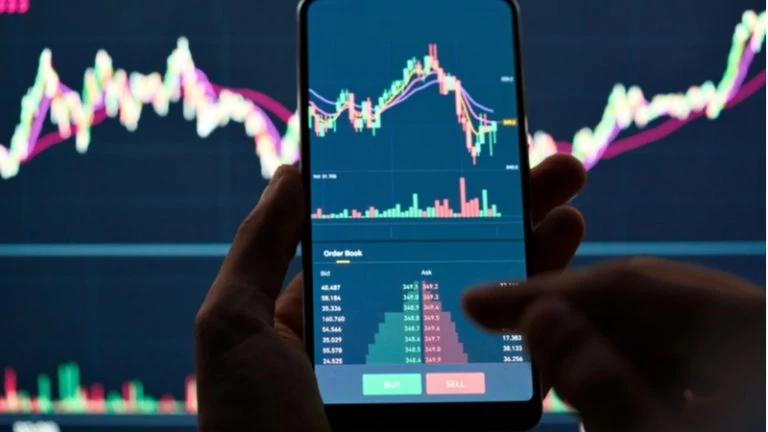
A Solana 15-minute prediction market is an event contract that follows what SOL’s price does inside a defined window. You pick a position, the clock runs out and the contract settles off a specific price source. Most versions are running a straight up-or-down question, did SOL finish higher or lower than where it started when the window opened. Each winning contract pays $1 at resolution and the price on the order book reflects what traders think the probability is, so a contract trading at $0.65 means the market is pricing in roughly a 65% chance of it landing that way. You buy at that price, and if the contract settles in your favor you collect $1 per share. If it settles the other way you lose what you paid.
What the contract involves
The contract has nothing to do with buying or selling SOL itself. You’re taking a view on where the price lands inside a fixed 15-minute window and the trade resolves on its own once the window closes. There’s no leverage or margin involved so the only money at risk is what you put into the position up front. Compare that to spot trading or perpetuals where you’d be watching charts and managing stop losses the whole time a position is open and you can see why the format has pulled in people who don’t normally trade crypto directly.
Pros and cons of Solana 15-minute prediction markets
Pros and Cons
- Defined maximum loss on every contract
- Fast settlement without overnight position risk
- Simple Yes/No or Up/Down format
- Settlement sources differ from popular exchange charts
Why Solana works so well for short-timeframe markets
SOL’s trading culture keeps the price moving constantly, which makes tiny windows tradable. Although that speed works both ways.
Volatility and liquidity working together
Like with
Bitcoin 5 minute prediction market, there’s plenty of movement on SOL most days to make 15-minute windows viable as a trading product, which is exactly why the most popular sites offer it as a format. The 24/7 news cycle around the asset is part of it, and the fast reaction time to broader market shifts is the other. Liquidity plus movement is what keeps those order books active on short-duration contracts.
The appeal of defined outcomes
The Financial Times reported that 5 and 15-minute crypto up/down contracts on sites like Polymarket and Kalshi were producing roughly $70 million in daily trading volume. Part of that growth comes from the defined-loss structure, because you always know the worst case before the trade opens and the contracts don’t require any crypto custody or wallet management on the trader’s side.
How SOL 15-minute markets settle
Settlement with these and
Bitcoin 15 minute prediction market
is the part most people skip past, although it’s the part that can change the outcome of your trade.
Polymarket SOL Up or Down 15m
Polymarket’s version is the more straightforward of the two. The market opens with a reference price pulled from Chainlink’s SOL/USD data stream, the 15-minute window runs and then the end price gets checked against that same Chainlink source. If the closing price is equal to or greater than the opening reference “Up” resolves as the winner.
Kalshi SOL 15 min
Kalshi’s settlement works on a different principle. Rather than comparing start price to end price, some of their SOL contracts ask a target-price question and they resolve it using the simple average of CF Benchmarks’ SOLUSD_RTI over the final 60 seconds before the end time. That averaging mechanism flattens last-second spikes which means a sharp wick right at expiry might not save a position the way it would on a spot exchange.
Why traders like 15-minute crypto prediction markets
The 15-minute format specifically has picked up volume quickly and most of that comes down to how the contracts are built.
💰 Simple pricing with fast resolution
Yes/No strips the complexity out of the format here. You just look at a probability-style price, decide if it’s mispriced and take a position. Settlement happens in minutes rather than weeks and there’s no margin call risk because the maximum loss is built into the contract price from the start.
You don’t need to hold any Solana to trade these markets at all.
Prediction market apps like
Kalshi and Crypto.com both run as CFTC-regulated entities where the account is funded in USD and Polymarket takes deposits through other standard methods too.
The risks
The countdown clock and minimal interface can make these feel simpler than they are but there are a few things you need to know before you start trading every 15-minute window.
Small moves have big consequences
On a 15-minute contract a fraction of a cent can decide the outcome. SOL just has to land on the wrong side of the settlement threshold by any amount, with the settlement source potentially being Chainlink or CF Benchmarks rather than the chart you’re watching. That gap between what’s on the exchange chart and what the contract actually settles against is real and shows up most when conditions get volatile.
Fees and spreads hit harder on short trades
The shorter the trade duration the more fees eat into your edge. Robinhood charges $0.01 per contract in commission plus a possible $0.01 exchange fee and that can compound fast across a session.
The overtrading trap
This is an important one because the format makes it easy to overtrade on
crypto prediction markets. A new 15-minute market opens as soon as the last one settles so there’s always another window sitting right there, and the temptation to jump back in builds when you’ve just watched a contract resolve. That cycle can turn a measured trading session into something closer to an impulse loop if you don’t set limits before you start.
Where to trade SOL 15-minute prediction markets
We tested four of the best prediction market sites that offer some form of SOL 15-minute prediction market access. Here are the standouts.
Kalshi – Best direct regulated SOL 15-minute option
Kalshi: Pros and Cons
- Find markets via search facility
- Extensive range of prediction markets
- Clear fees system
- Large help center
- Limited promos for existing customers
On Kalshi the combination of direct SOL 15-minute contracts and CFTC-regulated status make it our strongest pick. The dedicated crypto event markets settle off CF Benchmarks Real-Time Indexes and the market page is well-organized with target price, timeline and payout logic all on show. Politics, economics, weather and more sit on the wider offering of markets and the market page filtering and contract detail views gave us everything we needed without clicking through multiple screens.
Crypto.com: Pros and Cons
- Sports, elections, culture, and economics markets
- Low commission for trading
- Supports USD and cryptocurrency payments
- No crypto prediction markets
Most people who end up trading Solana 15 minute prediction market contracts on Crypto.com are already using the app for something else like spot trading, staking or the Visa card program. The prediction trading side sits inside that same app and you can fund positions by converting crypto you already hold into USD without transferring to a separate account. Contracts are CFTC-regulated Yes/No events with $1 and $10 payout structures.
Sponsored by Crypto.com – Not investment advice. Trading prediction markets and crypto involves risk, including potential loss of your stake. Consider your risk tolerance before participating. Crypto.com connects U.S. users to CDNA (regulated by CFTC) for derivatives trading. CDNA membership required. Trading may not be suitable for all—you could lose your entire investment plus fees. Past performance doesn’t guarantee future results. This is not a solicitation or recommendation to trade.
Polymarket – Best pure Up/Down market feel
Polymarket: Pros and Cons
- Plenty of prediction market topics
- Trending and breaking areas of interest
- Lots of predictions in all major subject areas
- User-friendly site design
If you want the most stripped-back version of a Solana 15 minute prediction market contract, Polymarket is where that lives. Their SOL Up or Down 15m format resolves purely on Chainlink’s SOL/USD settlement with no target-price mechanics to think about and each correct contract pays $1 at resolution. The order book shows real-time probability shifts and activity tabs give you a feel for how much volume is flowing through. The broader site spans politics, sports, crypto and culture, and the volume on crypto short-duration markets specifically has been consistently strong.
Robinhood – Best mainstream brokerage-style access
Robinhood: Pros and Cons
- Apps for Android and iOS
- $0.01 commission per trade
- 24/7 live chat support
- Limited bonuses for prediction markets
Robinhood is more of the convenient choice here rather than the specialized one for these markets. A Crypto category sits inside the prediction markets hub and everything funds through the same investing account you’d use for stocks or options, with no separate deposit or wallet setup involved. The prediction markets section sits next to fractional shares, recurring investments and retirement accounts in one portfolio view. The Robinhood fee is $0.01 per contract commission and the executing exchange may add another $0.01 on top.
| Feature |
Kalshi |
Crypto.com |
Polymarket |
Robinhood |
| SOL 15-min markets |
Direct contracts |
Broader prediction trading |
Direct Up/Down 15m |
Crypto category access |
| Settlement source |
CF Benchmarks SOLUSD_RTI |
CFTC-regulated contracts |
Chainlink SOL/USD |
Exchange-level settlement |
| Regulation |
CFTC-regulated DCM |
CFTC-regulated |
Decentralized |
FINRA/SEC registered |
How to start trading these markets
-
Click the banners on this page to visit one of the
prediction market apps
we’ve covered and create an account
-
Complete the sign-up process and verify your identity. Most operators require KYC before you can fund your account or place a trade
-
Deposit funds using the method available on your chosen site like USD transfer on Kalshi, crypto conversion on Crypto.com, standard deposit on Polymarket or your existing Robinhood investing balance
-
Find the SOL 15-minute market section. On Polymarket look for SOL Up or Down 15m and on Kalshi browse the crypto category for SOL contracts with a 15-minute window
-
Read the contract resolution rules before you do anything else. Check the settlement source, the exact question the contract is asking and the closing time down to the second
-
Pick your position and set your size based on what you’re comfortable losing. The contract price is your maximum risk on every trade
-
Watch the window play out or step away and check the result after settlement. Trying to trade around every tick inside a 15-minute window usually costs more on spreads than it adds in edge
The countdown is ticking and it’s your move
Solana 15-minute prediction markets have carved out a space in crypto trading and the prediction market sites covered here each bring something different to the format. They’re simple to understand but the settlement mechanics, fees and contract structures reward traders who read the details before they trade the clock.
Click the banners on this page to get started and see how the 15-minute window feels with real positions on the line.
Get off to a great start with these crypto prediction sites
Solana 15-minute prediction markets FAQ’s
❓ What is a Solana 15-minute prediction market?
It’s an event contract that follows what SOL’s price does inside a 15-minute window. The contract settles itself off a price source like Chainlink or CF Benchmarks once the clock runs out.
📊 Which sites offer Solana 15-minute prediction market contracts?
Direct markets are available on Kalshi and Polymarket. Crypto.com has broader CFTC-regulated prediction trading and Robinhood includes crypto event contracts in its brokerage app.
⚖️ Are Solana 15-minute prediction market trades regulated?
Both Kalshi and Crypto.com are under CFTC oversight, Polymarket runs on a decentralized structure and Robinhood is FINRA and SEC registered on the broader brokerage side.
💰 How much do you need to start trading a Solana 15-minute prediction market?
Crypto.com lets you start prediction trading from $10, the amounts on Kalshi and Robinhood depend on contract price, and Polymarket needs a deposit before you trade.
⏱️ How does settlement work on a Solana 15-minute prediction market?
Polymarket compares the start and end Chainlink SOL/USD price. Kalshi takes the 60-second average of CF Benchmarks’ SOLUSD_RTI before the contract’s end time.