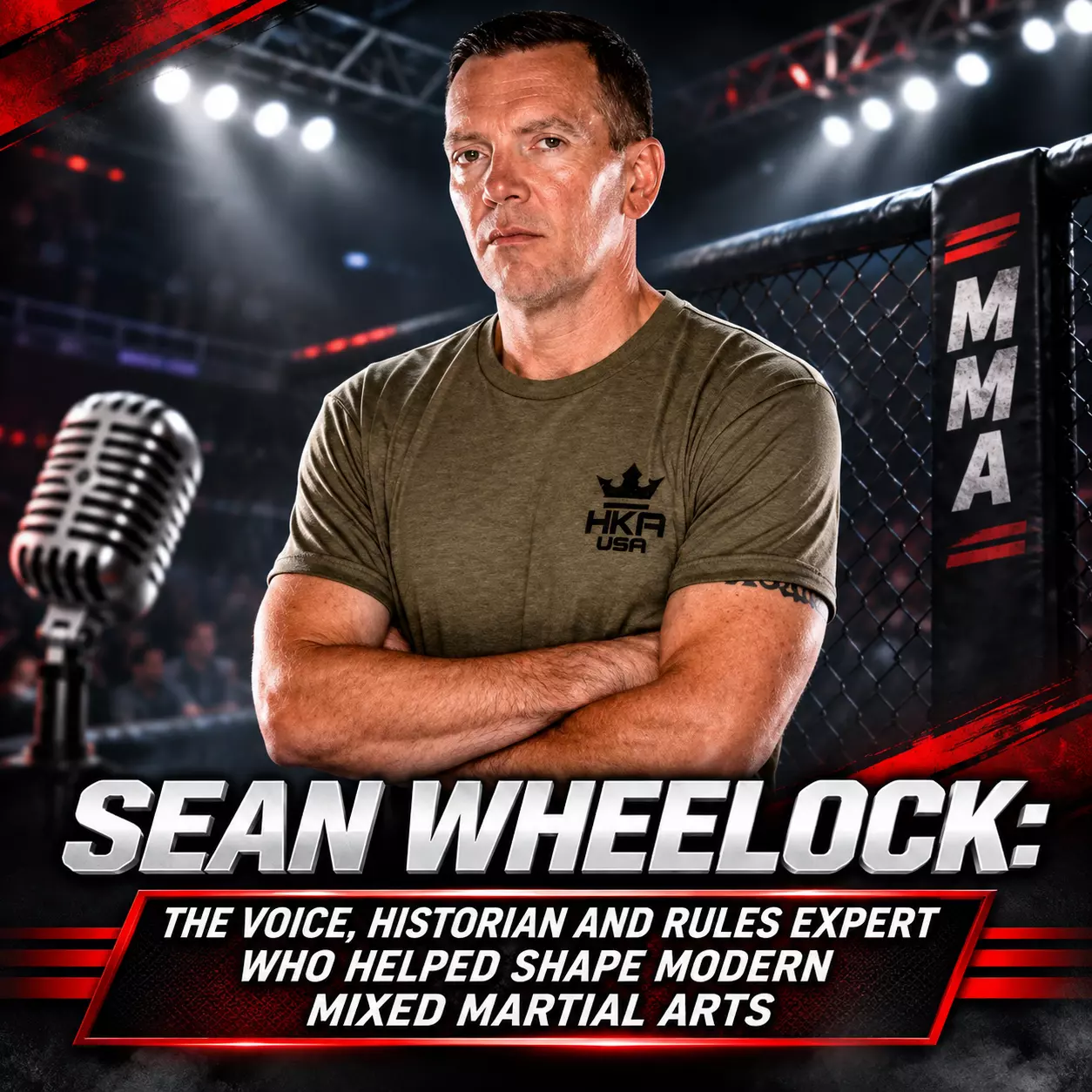
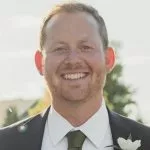
Sean Wheelock: The Voice, Historian and Rules Expert Who Helped Shape Modern Mixed Martial Arts
Mixed martial arts has experienced an extraordinary transformation over the past three decades, evolving from a controversial spectacle into an internationally recognized sport. Throughout that journey, broadcasters, regulators and historians have played essential roles in educating audiences and helping the sport establish its identity.
Few individuals have experienced that evolution from as many perspectives as Sean Wheelock, a veteran play-by-play commentator, combat sports historian, author and athletic commissioner.
From calling fights for PRIDE, M-1 Global and
Bellator MMA
to contributing to Bare Knuckle Fighting Championship and major boxing broadcasts, Wheelock has built a career around explaining combat sports to audiences worldwide.
His contributions extend beyond the broadcast booth. He has helped preserve the history of the Ultimate Fighting Championship, worked on the regulatory side of combat sports and educated viewers about the rules and judging standards that determine the outcomes of fights.
With more than 5,500 bouts called across 26 countries, according to his published professional biography, Wheelock has established himself as one of combat sports’ most experienced voices.
A Passion for Fighting That Began With UFC 1
Wheelock’s connection to mixed martial arts began long before the sport achieved mainstream popularity.
On November 12, 1993, the first Ultimate Fighting Championship took place in Denver, Colorado. The event introduced television audiences to a competition between fighters representing different martial arts disciplines, including Brazilian jiu-jitsu, boxing, karate and sumo wrestling.
Wheelock was just 19 years old when he discovered the event through a promotional poster at a Kansas City-area gym.
His mother purchased the $14.95 pay-per-view broadcast, allowing him to witness what would become a defining moment in combat sports history.
That experience sparked a fascination with MMA that eventually developed into his professional career.
Unlike many commentators who discover a sport after entering broadcasting, Wheelock followed mixed martial arts from its earliest UFC event. His understanding of the sport’s beginnings would later become one of his defining professional strengths.
From Soccer Broadcasting to the Biggest Stages in MMA
Before becoming widely recognized for his MMA commentary, Wheelock established himself as an accomplished soccer broadcaster.
His career included assignments with ESPN, Fox Soccer Channel, BBC programming and coverage associated with Major League Soccer.
He also worked in international soccer broadcasting, including coverage of the 2006 FIFA World Cup for XM Radio.
Those assignments helped him develop the fundamental skills of live sports commentary: anticipating developing action, communicating complex situations clearly and delivering information while maintaining the excitement of competition.
However, his passion for combat sports continued to grow.
During the early 2000s, Wheelock began calling regional MMA events throughout the Midwest. His goal was to move from smaller productions into major international promotions.
A significant breakthrough came when he submitted a commentary demo to PRIDE Fighting Championships.
He subsequently joined the Japanese organization during its final period of operation, moving from regional MMA broadcasts to one of the sport’s most prestigious international stages.
His experience with PRIDE eventually opened doors at M-1 Global, where he formed a commentary partnership with fellow broadcaster and martial arts analyst Jimmy Smith.
That partnership would become especially important during the next stage of his career.
Interview with Sean!
SOAS: Guest Sean Wheelock one of the most experienced and respected voices in mixed martial arts
Becoming the Voice of Bellator MMA
One of Wheelock’s most recognizable career chapters began in April 2010, when he joined Bellator Fighting Championships as its play-by-play commentator.
Working alongside Jimmy Smith, Wheelock became a familiar voice to MMA fans as Bellator expanded its television presence and developed into a major American promotion.
Bellator’s early tournament format created unique opportunities for storytelling. Fighters were required to advance through brackets, sometimes facing multiple difficult opponents before earning an opportunity to challenge for a championship.
Wheelock’s commentary helped viewers understand those tournament narratives, the fighters’ backgrounds and the technical developments unfolding inside the cage.
His broadcasting philosophy emphasized preparation and respect for every athlete, regardless of their position on the fight card.
In a 2015 interview with
MMA Fighting, Wheelock explained that he applied the same level of preparation to preliminary bouts as he did to main events.
That approach reflected a belief that lesser-known fighters deserved the same professional attention as established stars.
Wheelock remained with Bellator until July 2015, when the television production moved in a different broadcasting direction.
His five-year tenure remains an important part of Bellator’s early television history.
Beyond Bellator: Bare Knuckle Fighting Championship and Netflix
Wheelock’s career continued to evolve as combat sports expanded into new formats and broadcasting platforms.
One of his most significant roles has been serving as a play-by-play commentator for Bare Knuckle Fighting Championship (BKFC).
The promotion helped revive regulated bare-knuckle boxing, presenting a different style of competition from traditional gloved boxing and mixed martial arts.
Wheelock brought extensive combat sports knowledge to BKFC broadcasts, explaining the techniques, strategies and unique challenges associated with bare-knuckle competition.
His connection to the promotion also allowed him to witness its development from an emerging organization into an internationally recognized combat sports brand.
Beyond BKFC, Wheelock expanded his television presence through Netflix boxing broadcasts, serving as a rules and scoring analyst.
In July 2025, he was part of the broadcast team for the highly anticipated third meeting between Katie Taylor and Amanda Serrano, helping viewers understand scoring criteria and officiating decisions.
His versatility demonstrates an important distinction in his career: Wheelock is not limited to calling the action. He also possesses the technical understanding necessary to explain why particular decisions are made.
Helping Shape the Rules of Combat Sports
Although audiences primarily recognize Wheelock for his voice, his contributions behind the scenes may prove equally important.
In July 2015, he was appointed to the Kansas Athletic Commission, giving him an opportunity to participate in the regulatory side of combat sports.
Athletic commissions are responsible for overseeing sanctioned events, enforcing regulations and helping protect the health and safety of competitors.
Wheelock also became involved with the Association of Boxing Commissions and Combative Sports (ABC), including work related to MMA rules and regulations.
His contributions have extended to bare-knuckle boxing.
In August 2023, the ABC approved unified rules for bare-knuckle fighting. Wheelock was among those who helped draft the standardized rules.
The establishment of those regulations provided athletic commissions with a common framework for evaluating and sanctioning bare-knuckle events.
In a January 2025 interview with
MMA Fighting, Wheelock explained that unified regulations played a major role in opening additional markets to
BKFC.
His participation illustrates the importance of experienced individuals helping combat sports develop responsible regulatory structures.
As of the ABC’s published committee roster updated in December 2025, Wheelock remained listed as a member of its MMA Rules and Regulations Committee.
Preserving MMA History: Is This Legal?
Wheelock’s appreciation for MMA history led to one of his most important projects outside broadcasting.
In 2014, he collaborated with UFC co-founder Art Davie to publish Is This Legal? The Inside Story of the First UFC from the Man Who Created It.
The book examines the origins of the Ultimate Fighting Championship, documenting the challenges, personalities and decisions involved in creating the original event.
The project offers readers a look at the development of a promotion that eventually became a global sports business.
For Wheelock, the subject carried special personal significance. Having watched UFC 1 live in 1993, he later helped document the story of the people responsible for creating it.
That connection between fan, broadcaster and historian gives his career an unusual dimension.
In July 2018, Wheelock took the stage at the UFC Hall of Fame induction ceremony to introduce Art Davie as a member of the Class of 2018.
The occasion represented a meaningful intersection of his professional work and personal appreciation for the sport’s history.
His published professional biography also reports that Is This Legal? has been in development as a feature film project with Amazon Studios.
Bringing MMA History to a New Generation
Wheelock has also contributed to the preservation of mixed martial arts history through podcasts, interviews and retrospective programming.
In May 2020, he launched MMA Rewind with Sean Wheelock through FITE, now known as TrillerTV.
The program revisited significant events from MMA history, featuring conversations with individuals who experienced those moments firsthand.
Its debut episode featured Art Davie and veteran referee John McCarthy, discussing UFC 5 and its importance to the sport’s development.
The series explored subjects ranging from early UFC events to PRIDE, Bellator, Strikeforce and other influential promotions.
These discussions highlighted a central theme in Wheelock’s work: understanding today’s combat sports landscape requires an appreciation for the people and organizations that created it.
A Career Built on Preparation, Knowledge and Respect
Sports broadcasting demands more than an exciting voice.
The best commentators can recognize subtle tactical developments, explain unfamiliar techniques and tell compelling stories without distracting from the athletes competing.
Wheelock’s career demonstrates those skills across several different combat sports.
His experience calling international MMA events exposed him to different fighting styles, cultures and approaches to competition.
His background in soccer broadcasting also helped shape a disciplined play-by-play approach, emphasizing clear descriptions and an understanding of how action develops.
Meanwhile, his work with athletic commissions provides a perspective unavailable to many traditional commentators.
He can explain not only what happens during a fight, but also how the sport’s regulatory framework influences the athletes, officials and organizations involved.
That combination makes him particularly valuable when controversial judging decisions, rule interpretations or unusual fight stoppages require additional explanation.
For younger broadcasters entering MMA, Wheelock’s career offers an example of how preparation, technical knowledge and professionalism can create long-term opportunities.
Why Sean Wheelock Matters to Modern MMA
Mixed martial arts has produced legendary fighters, successful promoters and influential coaches. However, its development has also depended on individuals who educate audiences and preserve its history.
Sean Wheelock belongs to that group.
His broadcasting career connects several important eras of combat sports, from the international popularity of PRIDE and the rise of Bellator to the expansion of bare-knuckle fighting and combat sports programming on Netflix.
His regulatory involvement has helped establish clearer standards for competition, while his historical projects have ensured that important stories from the earliest years of MMA remain accessible.
Perhaps his most distinctive contribution is the ability to bring these different perspectives together.
He understands the excitement of combat sports as a lifelong fan, the challenges of live broadcasting as an experienced commentator and the responsibilities of regulation through his work with athletic commissions.
Those experiences provide a foundation for thoughtful discussions about the industry’s past, present and future.
The Verdict: A Lasting Voice in Combat Sports
Sean Wheelock’s career represents more than three decades of dedication to the sports he loves.
What began with a teenager watching the first UFC pay-per-view developed into a professional journey spanning international arenas, television networks, athletic commissions and historical publishing.
Along the way, Wheelock has worked alongside influential figures in MMA, covered thousands of contests and helped audiences better understand the athletes and regulations that define combat sports.
His work with Bellator helped establish his reputation as a leading MMA broadcaster. His contributions to
BKFC
and Netflix demonstrate his continuing relevance, while his collaboration with Art Davie helped preserve an essential chapter of UFC history.
As mixed martial arts and other combat sports continue to evolve, Sean Wheelock remains an important figure in understanding how the industry reached its current position.
For The Grueling Truth, Wheelock’s story is a reminder that the people who help tell the stories of combat sports can leave a lasting impact on the sports themselves.
New Users - Get $200 in Bonus Bets when you wager $5 for 4 days
T&Cs apply
4.6/5
Gambling Problem? Call 1-800-GAMBLER or 1-800-MY-RESET. Visit www.mdgamblinghelp.org (MD). 1-888-789-7777 or ccpg.org/chat (CT). Hope is here. GamblingHelpLineMA.org or (800) 327-5050 for 24/7 support (MA). 1-877-8-HOPENY or text HOPENY (467369) (NY). 21+ (18+ D.C., WY) and present in select states (for KS, in affiliation with Kansas Star Casino). First online real money wager only. Min $5 wager required for 4 consecutive days. $5 first deposit required. Bonus issued as nonwithdrawable bonus bets which expire 5 days after receipt. Restrictions apply. See terms at sportsbook.fanduel.com. Call 1-877-770-7867 (LA).
Get Up to $1,000 Back in Bonus Bets Over Your First 10 Days
T&Cs apply
4.5/5
Gambling problem? Call 1-800-GAMBLER or 1-800-MY-RESET (Available in the US) 877-8-HOPENY or text HOPENY (467369) (NY) 1-800-327-5050 (MA), 1-800-BETS-OFF (IA), 21+ only. Please Gamble Responsibly. Visit mdgamblinghelp.org (MD). See BetMGM.com for Terms. New Player Offer for new players only. Subject to eligibility requirements. Bonus bets are non-withdrawable. In partnership with Kansas Crossing Casino and Hotel. This promotional offer is not available in NJ, MA, MI, NV, NY, ON, PA, PR, and WV.
GAMBLING PROBLEM? CALL 1-800-GAMBLER or 1-800-MY-RESET, (800) 327-5050 or visit gamblinghelplinema.org (MA). Please Gamble Responsibly. 888-789-7777/visit ccpg.org (CT), or visit www.mdgamblinghelp.org (MD), 1-800-981-0023 (PR). 21+ and present in most states. (18+ DC/NH/PR/WY). Void in CAN. Eligibility restrictions apply. On behalf of Boot Hill Casino (KS). Pass-thru of per wager tax may apply in IL. 1 per new Sportsbook customer. $5+ first-time bet req. Max. $200 issued as non-withdrawable Bonus Bets. Stake removed from payout. Reward issued as $50 in Bonus Bets every 7 days via click-to-claim for 21 days. Bonus Bets and click-to-claims expire 7 days (168hrs) after issuance. Terms: dkng.co/offer. Get 1 promo code to redeem a 3-month NBA League Pass subscription, complimentary of DraftKings. Subscription auto-renews monthly at then-current price (currently $16.99/mo); cancel anytime. Terms, restrictions, and eligibility requirements apply. Redeem League Pass by 12/19/26 at 11:59 PM ET. Addt’l terms: support.watch.nba.com/hc/en-us/articles/9165532876183-League-Pass-Terms-of-Use_. Ends 11/29/26 at 11:59 PM ET. Sponsored by DK.
Must be 21+. GAMBLING PROBLEM? CALL 1-800-GAMBLER OR CALL 1-800-MY-RESET, www.mdgamblinghelp.org (MD), (800)-327-5050 or gamblinghelplinema.org (MA), Call (877)8-HOPENY or text HOPENY (467369) (NY), (888) 789-7777 or ccpg.org (CT), morethanagame.nc.gov (NC), 1800gambler.net (WV)
Bet $1 and get double the winnings up to $25 for your next 10 bets
T&Cs apply
4.4/5
21+ New users only. Must register using eligible promo code. First bet after registration must qualify. Max. Bonus Bet: $1,000. Bonus Bet expires 14 days after receipt. Void where prohibited. See Caesars.com/promos for full terms. Gambling Problem? 1-800-GAMBLER (1-800-426-2537)
21+ and present in OH. Gambling Problem? Call 1-800-GAMBLER.
The sweepstakes and social casinos featured here are for adults aged 18 or over. No purchase is necessary to enter or win, and every operator offers a free way to get Sweeps Coins. Availability in Ohio varies by operator. Offers are subject to each operator's terms. Need a break? Call or text 1-800-MY-RESET (24/7) or visit https://ncpgambling.org. We may earn a commission when you sign up through links on this site. This does not change how we review operators.
This site is using
Cloudflare
and adheres to the
Google Safe Browsing Program. We adapted
Google's Privacy Guidelines
to keep your data safe at all times.
Close
Ready to Win Big? Join the Elite with Our Sports Betting Deals!
FanDuel Promo
New Users - Get $200 in Bonus Bets when you wager $5 for 4 days
Our Favorite
T&Cs and 21+ apply
Gambling Problem? Call 1-800-GAMBLER or 1-800-MY-RESET. Visit www.mdgamblinghelp.org (MD). 1-888-789-7777 or ccpg.org/chat (CT). Hope is here. GamblingHelpLineMA.org or (800) 327-5050 for 24/7 support (MA). 1-877-8-HOPENY or text HOPENY (467369) (NY). 21+ (18+ D.C., WY) and present in select states (for KS, in affiliation with Kansas Star Casino). First online real money wager only. Min $5 wager required for 4 consecutive days. $5 first deposit required. Bonus issued as nonwithdrawable bonus bets which expire 5 days after receipt. Restrictions apply. See terms at sportsbook.fanduel.com. Call 1-877-770-7867 (LA).
Code:
Open FanDuel
Get Bonus
BetMGM Promo
Get Up to $1,000 Back in Bonus Bets Over Your First 10 Days
Best Slots
T&Cs and 21+ apply
Gambling problem? Call 1-800-GAMBLER or 1-800-MY-RESET (Available in the US) 877-8-HOPENY or text HOPENY (467369) (NY) 1-800-327-5050 (MA), 1-800-BETS-OFF (IA), 21+ only. Please Gamble Responsibly. Visit mdgamblinghelp.org (MD). See BetMGM.com for Terms. New Player Offer for new players only. Subject to eligibility requirements. Bonus bets are non-withdrawable. In partnership with Kansas Crossing Casino and Hotel. This promotional offer is not available in NJ, MA, MI, NV, NY, ON, PA, PR, and WV.
Code:
Open BetMGM
Get Bonus
DraftKings Promo
Bet $5, Get $200 + 3 Months of NBA League Pass
Newcomer
T&Cs and 21+ apply
GAMBLING PROBLEM? CALL 1-800-GAMBLER or 1-800-MY-RESET, (800) 327-5050 or visit gamblinghelplinema.org (MA). Please Gamble Responsibly. 888-789-7777/visit ccpg.org (CT), or visit www.mdgamblinghelp.org (MD), 1-800-981-0023 (PR). 21+ and present in most states. (18+ DC/NH/PR/WY). Void in CAN. Eligibility restrictions apply. On behalf of Boot Hill Casino (KS). Pass-thru of per wager tax may apply in IL. 1 per new Sportsbook customer. $5+ first-time bet req. Max. $200 issued as non-withdrawable Bonus Bets. Stake removed from payout. Reward issued as $50 in Bonus Bets every 7 days via click-to-claim for 21 days. Bonus Bets and click-to-claims expire 7 days (168hrs) after issuance. Terms: dkng.co/offer. Get 1 promo code to redeem a 3-month NBA League Pass subscription, complimentary of DraftKings. Subscription auto-renews monthly at then-current price (currently $16.99/mo); cancel anytime. Terms, restrictions, and eligibility requirements apply. Redeem League Pass by 12/19/26 at 11:59 PM ET. Addt’l terms: support.watch.nba.com/hc/en-us/articles/9165532876183-League-Pass-Terms-of-Use_. Ends 11/29/26 at 11:59 PM ET. Sponsored by DK.
Code:
Open DraftKings
Get Bonus
Find out what the legends have to say about sports this week....
New Users - Get $200 in Bonus Bets when you wager $5 for 4 days
Gambling Problem? Call 1-800-GAMBLER or 1-800-MY-RESET. Visit www.mdgamblinghelp.org (MD). 1-888-789-7777 or ccpg.org/chat (CT). Hope is here. GamblingHelpLineMA.org or (800) 327-5050 for 24/7 support (MA). 1-877-8-HOPENY or text HOPENY (467369) (NY). 21+ (18+ D.C., WY) and present in select states (for KS, in affiliation with Kansas Star Casino). First online real money wager only. Min $5 wager required for 4 consecutive days. $5 first deposit required. Bonus issued as nonwithdrawable bonus bets which expire 5 days after receipt. Restrictions apply. See terms at sportsbook.fanduel.com. Call 1-877-770-7867 (LA).