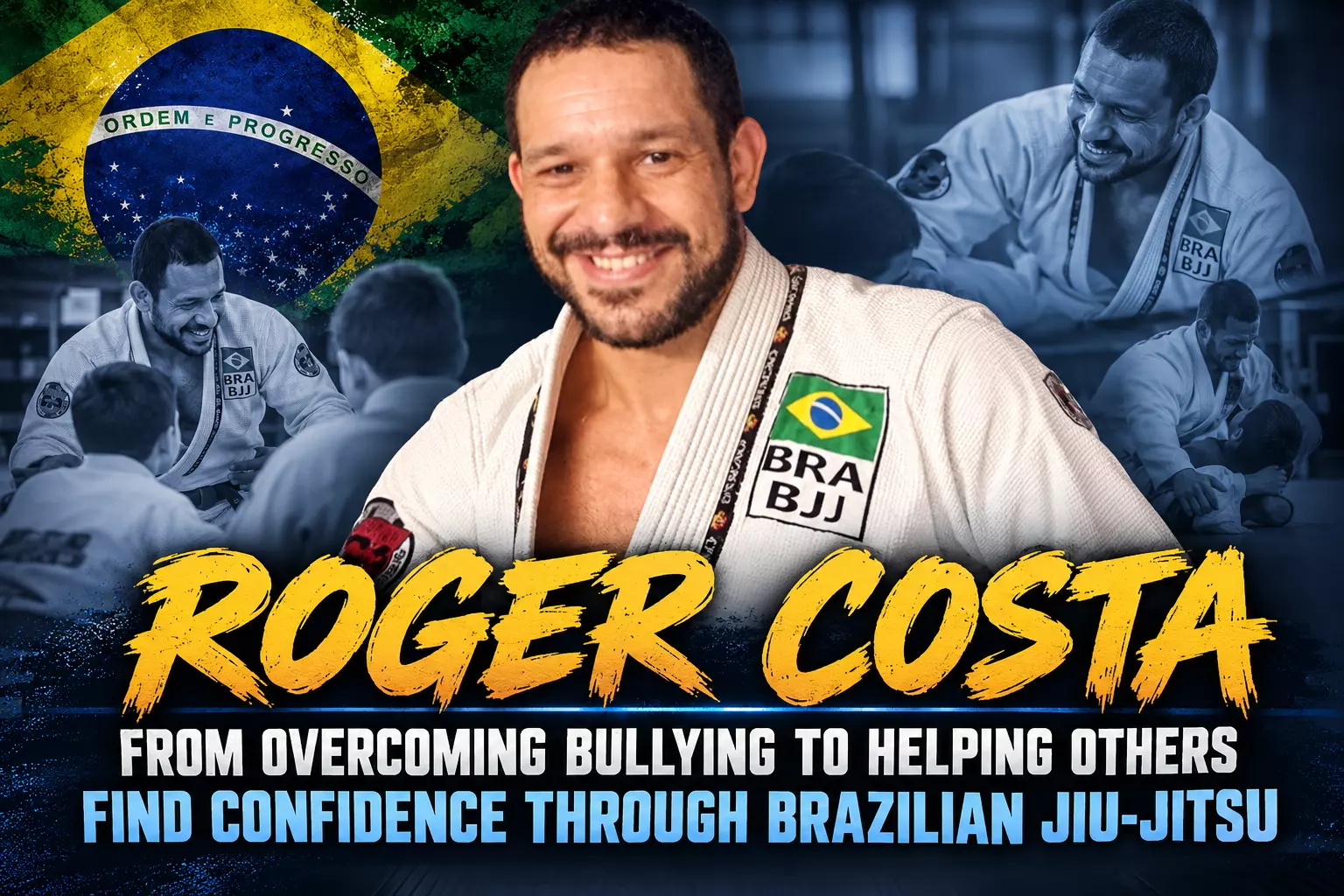
add this information Roger Costa: From Overcoming Bullying to Helping Others Find Confidence Through Brazilian Jiu-Jitsu
Roger Costa: From Learning Self-Defense to Teaching Confidence Through Brazilian Jiu-Jitsu
For Roger Costa, Brazilian jiu-jitsu began with a personal need: learning how to defend himself. In his published coaching biography, the São Paulo native describes bullying as the experience that first pushed him toward the mats. Over time, that search for confidence developed into a career centered on teaching others.
Today, Costa’s public profiles describe an instructor whose work spans recreational training, competition preparation and coaching professional fighters. His story offers a perspective on martial arts that extends beyond medals. It raises a question relevant to students at every level: What can learning to handle difficult situations on the mat teach someone about life outside the academy?
Costa is a sixth-degree Brazilian jiu-jitsu black belt under the São Paulo Federation in Brazil. Ronin Jiu Jitsu & Judo Academy identifies him as its head professor, and his biography there describes more than three decades of involvement in the art. Those credentials establish the foundation of a career built around both practicing and explaining jiu-jitsu.
A Journey That Began With Self-Defense
Costa’s account of his beginnings helps explain the emphasis he places on confidence. Someone entering an academy after experiencing bullying may arrive with concerns very different from those of an aspiring tournament champion. Learning a technique can matter, but so can finding an environment where asking questions and making mistakes feel possible.
That distinction gives his personal story relevance to beginners. Before a student can pursue advanced competition goals, there is often a simpler challenge: becoming comfortable enough to keep returning. Costa’s biography presents self-defense and empowerment as the starting point of his own journey, connecting his teaching interests with an experience he understands personally.
The progression from seeking protection to helping others learn provides a meaningful thread through his career. For a nervous newcomer, an instructor who remembers the uncertainty of beginning can offer a valuable perspective on the learning process.
Competition and the Lessons of Pressure
Competition became another part of that journey. His Ronin biography credits him with three São Paulo state championship titles and victories in superfights in Brazil and the United States. His BJJ Training Pros profile also lists a NAGA championship. These accomplishments appear in his published biographies; the specific tournament dates, divisions and results have not been independently verified for this profile.
A competitive background can give an instructor a useful perspective on preparation and pressure. A match creates a setting in which a practitioner must make decisions against someone actively trying to impose a different outcome. For students interested in competing, that experience can provide a starting point for conversations about strategy, expectations and responding when an initial plan fails.
Those lessons also have value during everyday training. Progress requires recognizing mistakes, making adjustments and remaining patient when improvement comes slowly. Competition can sharpen those demands, but students encounter them long before entering a tournament.
Making Teaching a Career
Costa’s public presentation places substantial emphasis on teaching. His BJJ Training Pros biography reports more than 25 years of instructional experience and describes a shift toward coaching during the preceding decade. He identifies resilience, discipline and dedication as central values in his work with students.
That focus invites a broader understanding of what a successful martial arts career can look like. An instructor’s contribution may include helping a competitor prepare for a match, but it can also involve helping a newcomer understand a basic position or giving a discouraged student a reason to continue learning. Those quieter achievements rarely produce a highlight reel.
Costa’s coaching profile names UFC veteran Marcus Brimage and Bellator veteran Moyses Gabin among the fighters he has worked with. It also describes teaching hobbyists and grapplers with different ambitions. The profile does not specify the duration or scope of each professional coaching relationship, so those names should be understood as reported experience rather than evidence that he directed their entire careers.
The range of students is an interesting part of his identity as a coach. A professional fighter, a recreational adult and a first-time student can enter the same training space seeking very different outcomes. Effective instruction requires recognizing those differences. Technical knowledge provides the material; communication helps determine whether someone can use it.
Extending Instruction Beyond the Academy
Ronin Jiu Jitsu & Judo Academy, located in Evergreen Park, Illinois, features Costa on its instructor roster as head professor. The academy offers Brazilian jiu-jitsu alongside other martial arts programs. Its listing establishes a public academy connection, although the title alone does not indicate his daily teaching schedule or current place of residence.
His educational work also reaches beyond an academy floor. Through BJJ Training Pros, Costa offers reviews of training videos, allowing students to submit footage for feedback. That format creates another way to discuss decisions made during training and identify areas a practitioner wants to improve.
Costa has also published instructional material titled
BJJ Based Solo Drills and Mobility. The guide introduces movements including bridges, hip escapes, base switches and break falls. In its introduction, he describes experience helping schools develop programs and introducing individuals and families to martial arts.
The publication reflects an interest in giving students material they can revisit. Written instruction and video feedback serve different purposes from a live class, but both can extend a conversation about learning. A student can return to an explanation, formulate a question and bring that question into the next training session.
Confidence, Resilience and Continued Growth
What makes Costa an interesting interview subject is the connection between his personal beginnings and his educational focus. His account starts with wanting greater security in the face of bullying. His public teaching philosophy returns to confidence, resilience and growth. That connection provides context for a career otherwise described in ranks, titles and coaching credits.
It also creates room for questions that reach beyond technique. How does a coach recognize progress in someone who never enters a tournament? What helps a nervous beginner return after a difficult class? How should instruction change as students grow older or develop different goals?
These questions matter because students measure success in different ways. One may pursue a championship, while another hopes to become more confident, improve physical conditioning or develop a lasting interest in training. Understanding those goals is part of making instruction useful.
Conclusion
Roger Costa’s story begins with a search for self-defense and develops into a career devoted to helping others learn. His sixth-degree Brazilian jiu-jitsu black belt under the São Paulo Federation in Brazil, reported competitive accomplishments and extensive teaching background provide the professional framework. His experience with bullying gives that framework a personal foundation.
Through academy instruction, individual feedback and educational resources, Costa’s work reflects the many ways a longtime practitioner can contribute to the sport. His profile also offers a reminder that an instructor’s influence reaches beyond the athletes who win medals. It can be found in students who gain confidence, work through frustration and discover that they are capable of more than they initially believed.
New Users - Get $200 in Bonus Bets when you wager $5 for 4 days
T&Cs apply
4.6/5
Gambling Problem? Call 1-800-GAMBLER or 1-800-MY-RESET. Visit www.mdgamblinghelp.org (MD). 1-888-789-7777 or ccpg.org/chat (CT). Hope is here. GamblingHelpLineMA.org or (800) 327-5050 for 24/7 support (MA). 1-877-8-HOPENY or text HOPENY (467369) (NY). 21+ (18+ D.C., WY) and present in select states (for KS, in affiliation with Kansas Star Casino). First online real money wager only. Min $5 wager required for 4 consecutive days. $5 first deposit required. Bonus issued as nonwithdrawable bonus bets which expire 5 days after receipt. Restrictions apply. See terms at sportsbook.fanduel.com. Call 1-877-770-7867 (LA).
Get Up to $1,000 Back in Bonus Bets Over Your First 10 Days
T&Cs apply
4.5/5
Gambling problem? Call 1-800-GAMBLER or 1-800-MY-RESET (Available in the US) 877-8-HOPENY or text HOPENY (467369) (NY) 1-800-327-5050 (MA), 1-800-BETS-OFF (IA), 21+ only. Please Gamble Responsibly. Visit mdgamblinghelp.org (MD). See BetMGM.com for Terms. New Player Offer for new players only. Subject to eligibility requirements. Bonus bets are non-withdrawable. In partnership with Kansas Crossing Casino and Hotel. This promotional offer is not available in NJ, MA, MI, NV, NY, ON, PA, PR, and WV.
New DraftKings Customers: Bet $5, Get $200 + 3 Months of NBA League Pass
T&Cs apply
4.5/5
GAMBLING PROBLEM? CALL 1-800-GAMBLER or 1-800-MY-RESET, (800) 327-5050 or visit gamblinghelplinema.org (MA). Please Gamble Responsibly. 888-789-7777/visit ccpg.org (CT), or visit www.mdgamblinghelp.org (MD), 1-800-981-0023 (PR). 21+ and present in most states. (18+ DC/NH/PR/WY). Void in CAN. Eligibility restrictions apply. On behalf of Boot Hill Casino (KS). Pass-thru of per wager tax may apply in IL. 1 per new Sportsbook customer. $5+ first-time bet req. Max. $200 issued as non-withdrawable Bonus Bets. Stake removed from payout. Reward issued as $50 in Bonus Bets every 7 days via click-to-claim for 21 days. Bonus Bets and click-to-claims expire 7 days (168hrs) after issuance. Terms: dkng.co/offer. Get 1 promo code to redeem a 3-month NBA League Pass subscription, complimentary of DraftKings. Subscription auto-renews monthly at then-current price (currently $16.99/mo); cancel anytime. Terms, restrictions, and eligibility requirements apply. Redeem League Pass by 12/19/26 at 11:59 PM ET. Addt’l terms: support.watch.nba.com/hc/en-us/articles/9165532876183-League-Pass-Terms-of-Use_. Ends 11/29/26 at 11:59 PM ET. Sponsored by DK.
Must be 21+. GAMBLING PROBLEM? CALL 1-800-GAMBLER OR CALL 1-800-MY-RESET, www.mdgamblinghelp.org (MD), (800)-327-5050 or gamblinghelplinema.org (MA), Call (877)8-HOPENY or text HOPENY (467369) (NY), (888) 789-7777 or ccpg.org (CT), morethanagame.nc.gov (NC), 1800gambler.net (WV)
Bet $1 and get double the winnings up to $25 for your next 10 bets
T&Cs apply
4.4/5
21+ New users only. Must register using eligible promo code. First bet after registration must qualify. Max. Bonus Bet: $1,000. Bonus Bet expires 14 days after receipt. Void where prohibited. See Caesars.com/promos for full terms. Gambling Problem? 1-800-GAMBLER (1-800-426-2537)
21+ and present in OH. Gambling Problem? Call 1-800-GAMBLER.
This site is using
Cloudflare
and adheres to the
Google Safe Browsing Program. We adapted
Google's Privacy Guidelines
to keep your data safe at all times.
Close
Ready to Win Big? Join the Elite with Our Sports Betting Deals!
FanDuel Promo
New Users - Get $200 in Bonus Bets when you wager $5 for 4 days
Our Favorite
T&Cs and 21+ apply
Gambling Problem? Call 1-800-GAMBLER or 1-800-MY-RESET. Visit www.mdgamblinghelp.org (MD). 1-888-789-7777 or ccpg.org/chat (CT). Hope is here. GamblingHelpLineMA.org or (800) 327-5050 for 24/7 support (MA). 1-877-8-HOPENY or text HOPENY (467369) (NY). 21+ (18+ D.C., WY) and present in select states (for KS, in affiliation with Kansas Star Casino). First online real money wager only. Min $5 wager required for 4 consecutive days. $5 first deposit required. Bonus issued as nonwithdrawable bonus bets which expire 5 days after receipt. Restrictions apply. See terms at sportsbook.fanduel.com. Call 1-877-770-7867 (LA).
Code:
Open FanDuel
Get Bonus
BetMGM Promo
Get Up to $1,000 Back in Bonus Bets Over Your First 10 Days
Best Slots
T&Cs and 21+ apply
Gambling problem? Call 1-800-GAMBLER or 1-800-MY-RESET (Available in the US) 877-8-HOPENY or text HOPENY (467369) (NY) 1-800-327-5050 (MA), 1-800-BETS-OFF (IA), 21+ only. Please Gamble Responsibly. Visit mdgamblinghelp.org (MD). See BetMGM.com for Terms. New Player Offer for new players only. Subject to eligibility requirements. Bonus bets are non-withdrawable. In partnership with Kansas Crossing Casino and Hotel. This promotional offer is not available in NJ, MA, MI, NV, NY, ON, PA, PR, and WV.
Code:
Open BetMGM
Get Bonus
DraftKings Promo
New DraftKings Customers: Bet $5, Get $200 + 3 Months of NBA League Pass
Newcomer
T&Cs and 21+ apply
GAMBLING PROBLEM? CALL 1-800-GAMBLER or 1-800-MY-RESET, (800) 327-5050 or visit gamblinghelplinema.org (MA). Please Gamble Responsibly. 888-789-7777/visit ccpg.org (CT), or visit www.mdgamblinghelp.org (MD), 1-800-981-0023 (PR). 21+ and present in most states. (18+ DC/NH/PR/WY). Void in CAN. Eligibility restrictions apply. On behalf of Boot Hill Casino (KS). Pass-thru of per wager tax may apply in IL. 1 per new Sportsbook customer. $5+ first-time bet req. Max. $200 issued as non-withdrawable Bonus Bets. Stake removed from payout. Reward issued as $50 in Bonus Bets every 7 days via click-to-claim for 21 days. Bonus Bets and click-to-claims expire 7 days (168hrs) after issuance. Terms: dkng.co/offer. Get 1 promo code to redeem a 3-month NBA League Pass subscription, complimentary of DraftKings. Subscription auto-renews monthly at then-current price (currently $16.99/mo); cancel anytime. Terms, restrictions, and eligibility requirements apply. Redeem League Pass by 12/19/26 at 11:59 PM ET. Addt’l terms: support.watch.nba.com/hc/en-us/articles/9165532876183-League-Pass-Terms-of-Use_. Ends 11/29/26 at 11:59 PM ET. Sponsored by DK.
Code:
Open DraftKings
Get Bonus
Find out what the legends have to say about sports this week....
New Users - Get $200 in Bonus Bets when you wager $5 for 4 days
Gambling Problem? Call 1-800-GAMBLER or 1-800-MY-RESET. Visit www.mdgamblinghelp.org (MD). 1-888-789-7777 or ccpg.org/chat (CT). Hope is here. GamblingHelpLineMA.org or (800) 327-5050 for 24/7 support (MA). 1-877-8-HOPENY or text HOPENY (467369) (NY). 21+ (18+ D.C., WY) and present in select states (for KS, in affiliation with Kansas Star Casino). First online real money wager only. Min $5 wager required for 4 consecutive days. $5 first deposit required. Bonus issued as nonwithdrawable bonus bets which expire 5 days after receipt. Restrictions apply. See terms at sportsbook.fanduel.com. Call 1-877-770-7867 (LA).