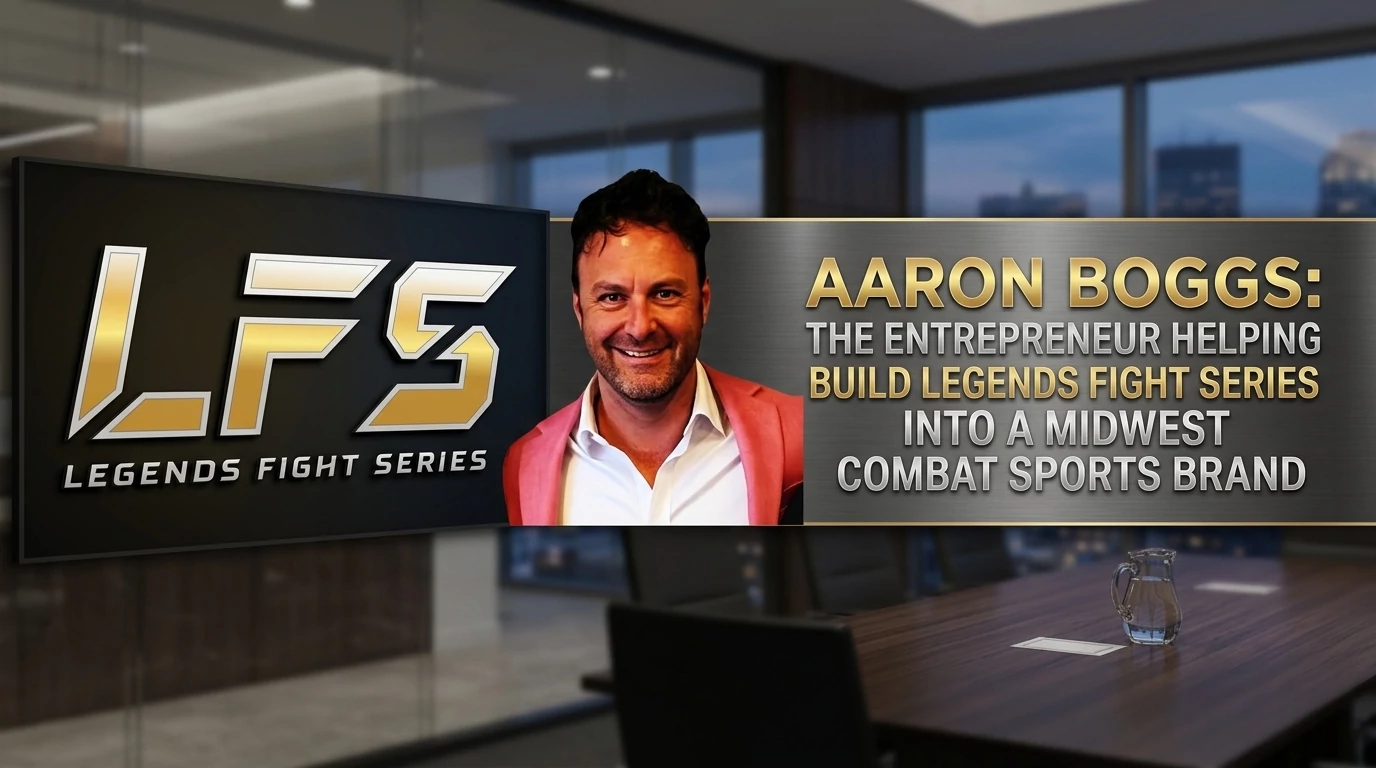
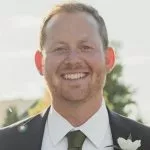
Aaron Boggs: The Entrepreneur Helping Build Legends Fight Series Into a Midwest Combat Sports Brand
When most people think about mixed martial arts promoters, they picture someone who has spent a lifetime matchmaking fights, training fighters or working inside combat-sports gyms.
Aaron Boggs took a different route into the fight business.
Boggs is an Ohio entrepreneur whose background spans manufacturing, aerospace, digital marketing, technology, venture building, sports safety and business development. Today, one of his most visible projects is
Legends Fight Series, the regional MMA, boxing and Muay Thai promotion he co-founded with longtime combat-sports promoter and former professional boxer
Troy Speakman.
That pairing is central to understanding LFS. Speakman supplies decades of experience inside the fight business, while Boggs brings experience building companies, developing brands, securing partnerships, using technology and creating scalable business operations. Legends Fight Series describes Boggs as providing the entrepreneurial and operating side of a promotion whose ambition is to become a major developmental platform for Midwest fighters.
For Boggs, LFS is also the latest chapter in a career built largely around one recurring idea:
taking something with potential and figuring out how to make it bigger.
Who Is Aaron Boggs?
Aaron Boggs is an entrepreneur, executive and company builder based in Ohio whose career has moved through several industries.
His professional profile traces his education to
Mount Vernon Nazarene University from 1996 to 2000. Early in his career, Boggs worked in corporate environments that included TRW Automotive, DaimlerChrysler, Lithonia Lighting and Rolls-Royce. In his own reflections on that period, Boggs has emphasized the value of accumulating experiences rather than simply chasing job titles.
Those corporate roles gave way to entrepreneurship.
Boggs became a co-founder and president of
RevLocal, the Ohio-based digital marketing company founded in 2010. RevLocal specialized in helping local businesses and multi-location brands with search marketing, reputation management, paid advertising, social media and other digital services.
RevLocal grew well beyond a small Ohio startup. By 2016, it had appeared on the Columbus Business First Fast 50 list of rapidly growing private companies for four consecutive years. Later, RevLocal became a Google Premier Partner, placing it among Google’s highest-level agency partners under the program’s requirements at the time.
In August 2024,
Hibu acquired RevLocal. Hibu described RevLocal as serving thousands of small and medium-sized businesses and multi-location brands across the United States.
That history matters when examining what Boggs is trying to accomplish with Legends Fight Series. He is not simply approaching MMA as a fan interested in putting on fights. He brings experience in taking a locally rooted company, developing systems around it, building relationships and expanding it into a much larger operation.
From Corporate Executive to Entrepreneur
Boggs’ early career included positions with recognizable industrial names.
His own biography notes experience with
Chrysler and Rolls-Royce, while another career reflection references work in accounting at TRW Automotive and DaimlerChrysler, along with experience at Lithonia Lighting and Rolls-Royce.
The aerospace connection eventually resurfaced in an unexpected way through LFS.
When Legends Fight Series announced a partnership with the
United States Air Force
in 2026, Boggs explained that the relationship had personal significance because his Rolls-Royce Aerospace work involved engines connected to important Air Force aircraft. LFS also announced plans for Air Force participation at events, including recruiting activations and recognition of military members and veterans.
It is an example of how Boggs’ earlier career has intersected with his newer ventures.
Rather than keeping business, technology, sports and community partnerships in separate lanes, his projects increasingly overlap.
Building RevLocal
RevLocal remains one of the most important parts of Boggs’ business résumé.
Boggs helped launch the company in 2010 and served as its president as it expanded nationally. The company’s central philosophy emphasized relationships with small-business owners rather than simply selling them software.
That philosophy appears repeatedly in Boggs’ public comments.
He argued that digital marketing companies should function as partners to local businesses and emphasized customer relationships as a differentiator. That approach helped RevLocal earn industry recognition in areas such as reputation management and digital marketing.
The business also put Boggs in front of national audiences.
Getty Images documented him speaking as RevLocal president at search-industry events in New York, including ONWARD conferences focused on the future of search. His LinkedIn profile also lists published work dating back to 2013 examining how search technology was changing.
That experience in digital discovery, branding and customer acquisition translates naturally into sports promotion, where getting attention for fighters and convincing people to buy tickets are almost as important commercially as what happens inside the cage.
What Companies Is Aaron Boggs Involved With?
Boggs’ business interests now extend well beyond one company.
LOUD Collective
Boggs is listed as
CEO and Founder of LOUD Collective, an organization built around combining investment, executive leadership and hands-on operational support for growing businesses.
LOUD describes its model as working directly alongside founders instead of functioning solely as a traditional investment firm. Its team includes executives focused on operations, finance, technology, human resources, strategy and business development.
Boggs has increasingly used LOUD as a platform for businesses connected to technology, healthcare, sports and growth-stage entrepreneurship.
Vizible
Boggs is also the
founder of Vizible, an AI-powered marketing business aimed at local companies and multi-location organizations. Vizible lists Boggs as founder alongside a management team that includes specialists in marketing, sales, finance and franchise development.
The venture brings Boggs back to familiar territory: helping small and local businesses attract customers, but with a greater emphasis on artificial intelligence and automation.
In a March 2026 article, Boggs described himself as the founder of Vizible and co-founder and CEO of LOUD Collective while discussing how AI agents could change how smaller companies operate.
XSport Mouthguards
Boggs has also become deeply involved in athlete-safety technology through
XSport Guards/Mouthguards, where he has been identified publicly as CEO.
XSport markets specialized protective equipment, particularly custom mouthguards designed for athletes in contact sports. Former NFL running back
Tiki Barber
became a spokesman for the company, with Boggs framing the partnership around athlete safety and performance.
XSport is particularly significant to Boggs’ MMA story because it brought him directly into the combat-sports ecosystem.
Dianyx Innovations
Boggs is also listed as
CEO of Dianyx Innovations, a health-technology company developing intraoral biosensor technology designed to collect health and performance information through oral appliances.
Dianyx’s current leadership page describes Boggs as an experienced founder and executive and highlights his background with companies including Rolls-Royce and LOUD Collective.
Combined, these ventures show why Boggs is difficult to describe with a single title.
He is simultaneously involved in business consulting and investment, digital marketing, artificial intelligence, health technology, sports equipment and combat-sports promotion.
How Aaron Boggs Became Involved in MMA
Boggs’ involvement in MMA appears to have deepened through the intersection of
sports technology, athlete safety and Ohio’s regional combat-sports community.
Before Legends Fight Series emerged under its current name, Boggs and XSport were involved with the
Ohio Combat League, the promotion associated with Troy Speakman’s long history in regional MMA.
Boggs wrote about XSport partnering with Ohio Combat League for an event at MegaCorp Pavilion in Newport, Kentucky. The activation included a crowd-selected Fighter of the Night sponsorship designed to support athletes with XSport products.
That relationship put Boggs around fighters, coaches, promoters and fans rather than simply observing
MMA
from outside the industry.
His involvement with XSport also connected him to higher-level combat athletes. Boggs has discussed working with fighters using the company’s mouthguards and has publicly followed the careers of athletes attempting to reach or compete in the UFC.
Eventually, the relationship with Speakman developed into something considerably larger.
Aaron Boggs and Legends Fight Series
Legends Fight Series represents the evolution of the promotional history associated with
Team Tory Promotions and Ohio Combat League.
LFS says that history encompasses approximately two decades of
MMA promotion, while Speakman’s broader combat-sports promotional résumé extends more than 30 years and 200 events. Boggs joined Speakman as co-founder as the organization was repositioned under the Legends Fight Series brand.
The division of strengths is important.
Speakman understands matchmaking, fighters and the mechanics of promoting combat sports.
Boggs understands growth.
LFS itself describes Boggs’ contribution in terms of
entrepreneurial energy and operating strength, while positioning the promotion as more than a collection of independent fight nights. The larger goal is to establish a recognizable Midwest platform where athletes can develop toward promotions such as the UFC, PFL and LFA.
That means thinking beyond the traditional regional fight-card model.
LFS has emphasized higher-profile venues, premium seating, sponsorship experiences, red-carpet elements, fighter interactions and enhanced production. The company has also pursued partnerships with organizations including the U.S. Air Force and T3 Performance.
LFS has staged events at venues ranging from stadium settings to major entertainment facilities and has targeted markets throughout Ohio, Kentucky and Indiana.
Boggs summarized that approach ahead of a ForeFront Field event by saying the objective was to combine high-level competition with an atmosphere that makes fans feel they are witnessing something significant.
Building Fighters, Not Just Fight Cards
One of the most interesting aspects of the LFS business model is how strongly the promotion emphasizes fighter development.
LFS openly states that its goal is to
build careers rather than simply fill fight cards.
The promotion says it wants matchmaking to help athletes strengthen their records, improve their skills and gain exposure to larger promotions. That positioning gives LFS a potential identity in a crowded regional MMA marketplace.
This is another place where Boggs’ business background becomes relevant.
A fighter can be viewed much like an emerging brand. Athletic ability matters first, but storytelling, visibility, sponsorship opportunities, media exposure and audience development can significantly influence the opportunities available to an athlete.
Boggs spent much of his career helping businesses become visible.
LFS gives him an opportunity to apply many of those same concepts to fighters.
What Are People Saying About Aaron Boggs?
Public commentary about Boggs tends to focus heavily on his
leadership style, ability to build organizations and combination of strategy with execution.
In 2020, Smart Business included Boggs among its Columbus Smart 50 honorees. Its profile described him as working to create a RevLocal culture where employees could grow professionally and serve others.
Professional recommendations on Boggs’ LinkedIn profile strike a similar theme. Ian Browde describes him as a leader characterized by humility, curiosity and discipline, while former colleagues have praised his ability to combine forward-looking strategy with practical execution and attention to organizational culture.
Inside Legends Fight Series, matchmaker
Brandon “Hardrock” Higdon
has credited Boggs and Speakman with increasing the level of venues, production and partnerships surrounding regional combat sports. Higdon said the pair had “raised the bar” for the region.
There is also evidence that fans are responding to the presentation LFS is trying to create.
Testimonials published by LFS repeatedly mention the atmosphere, production, close-up experience and quality of the venues. Those are testimonials about the promotion rather than personal reviews of Boggs, but they are relevant because experience design is precisely the area where his operating and branding background is supposed to complement Speakman’s fight-promotion expertise.
The Businessman Behind the Fight Promotion
Boggs is not trying to become the story inside the cage.
His value to Legends Fight Series appears to be what happens around it.
He can pursue sponsors.
He can develop corporate partnerships.
He can build marketing systems.
He can help create premium experiences.
He understands technology.
He has experience scaling companies.
And he knows how to think about a regional operation as something that could eventually become much larger.
That does not guarantee LFS will reach the national scale it is pursuing. Combat-sports promotion is notoriously difficult. Fighters withdraw. Cards change. Ticket sales fluctuate. Regulation differs by state. Production costs can grow quickly, and the competition for fighters, sponsors and audience attention is enormous.
But Boggs’ résumé gives LFS something many regional promotions do not have: an executive who has already experienced the process of helping build and scale companies outside combat sports.
Night of Champions and the Next Step for LFS
That strategy will again be on display when Legends Fight Series presents
Night of Champions at MegaCorp Pavilion in Newport, Kentucky, on September 12, 2026.
For Boggs and LFS, Newport is especially meaningful because the area has ties to the promotion’s Ohio Combat League history. LFS has specifically described the September event as a return to MegaCorp Pavilion carrying that history forward under the new brand.
Events like Night of Champions will ultimately determine whether the LFS concept works.
A successful regional promotion cannot survive on branding alone. The fights have to deliver. Fighters have to want to compete there. Coaches need to trust the organization. Sponsors need to see value. Fans need to come back.
Boggs’ job is helping make all of those pieces connect.
Conclusion
Aaron Boggs’ path to mixed martial arts is unusual, and that may ultimately be one of Legends Fight Series’ greatest advantages.
He did not spend his entire career inside a boxing gym or
MMA cage.
Instead, he learned business through manufacturing, aerospace, technology and entrepreneurship. He helped build RevLocal from a startup into a national digital-marketing company that was eventually acquired by Hibu. He moved into venture building, artificial intelligence, sports technology and health innovation through organizations including LOUD Collective, Vizible, XSport and Dianyx.
Then he brought that experience into combat sports.
Together,
Aaron Boggs and Troy Speakman represent two different sides of the same equation.
Speakman brings decades of fight-promotion knowledge.
Boggs brings the experience of an entrepreneur who thinks about brands, partnerships, systems, technology and growth.
Legends Fight Series is where those two worlds meet.
The ambition is bigger than producing successful
MMA cards. LFS wants to become a Midwest pipeline where developing fighters can build their names, fans can receive a major-event experience without traveling to a UFC show, sponsors can meaningfully interact with audiences and local combat sports can be presented with the production and professionalism normally associated with much larger organizations.
Whether LFS ultimately becomes that kind of promotion will be determined over years rather than one fight night.
But Boggs has spent much of his professional life building businesses around opportunities he believes others have overlooked.
With Legends Fight Series, he believes he has found another one —
the enormous amount of fighting talent, passionate fans and untapped combat-sports potential sitting right in the middle of the Midwest.
New Users – Get $350 in Bonus Bets when you wager $5 for 7 days
T&Cs apply
4.6/5
Gambling Problem? Call 1-800-GAMBLER or 1-800-MY-RESET. Call 1-888-789-7777 or visit ccpgg.org/chat (CT). Hope is here. GamblingHelpLineMA.org or call (800) 327-5050 for 24/7 support (MA). Visit www.mdgamblinghelp.org (MD). Call 1-877-8HOPE-NY or text HOPENY (NY). 21+ (18+ DC, WY) and present in select states (for KS, in affiliation with Kansas Star Casino). Find online real money wagering only. Min $5 wager required for 7 consecutive days. $5 free play credit. Bonus issued as non-withdrawable bonus with cash withdrawable bonus with cash withdrawable. Bonus bets which expire 7 days after receipt. Restrictions apply. See terms at sportsbook.fanduel.com. Call 1-877-770-7867 (LA).
Up To $1500 in Bonus Bets Paid Back if your First Bet Does Not Win
T&Cs apply
4.5/5
Gambling problem? Call 1-800-GAMBLER or 1-800-MY-RESET (Available in the US) 877-8-HOPENY or text HOPENY (467369) (NY) 1-800-327-5050 (MA), 1-800-BETS-OFF (IA), 1-800-981-0023 (PR). 21+ only. Please Gamble Responsibly. See BetMGM.com for Terms. First Bet Offer for new customers only (if applicable). Subject to eligibility requirements. Bonus bets are non-withdrawable. In partnership with Kansas Crossing Casino and Hotel. Promotional offers not available in Mississippi, Massachusetts, New York, Ontario, or Puerto Rico.
New DraftKings Customers: Bet $5, Get $200 + 3 Months of NBA League Pass!
T&Cs apply
4.5/5
GAMBLING PROBLEM? CALL 1-800-GAMBLER or 1-800-MY-RESET, (800) 327-5050 or visit gamblinghelplinema.org (MA). Please Gamble Responsibly. 888-789-7777/visit ccpg.org (CT), or visit www.mdgamblinghelp.org (MD), 1-800-981-0023 (PR). 21+ and present in most states. (18+ DC/NH/PR/WY). Void in CAN. Eligibility restrictions apply. On behalf of Boot Hill Casino (KS). Pass-thru of per wager tax may apply in IL. 1 per new Sportsbook customer. $5+ first-time bet req. Max. $200 issued as non-withdrawable Bonus Bets. Stake removed from payout. Reward issued as $50 in Bonus Bets every 7 days via click-to-claim for 21 days. Bonus Bets and click-to-claims expire 7 days (168hrs) after issuance. Terms: dkng.co/offer. Get 1 promo code to redeem a 3-month NBA League Pass subscription, complimentary of DraftKings. Subscription auto-renews monthly at then-current price (currently $16.99/mo); cancel anytime. Terms, restrictions, and eligibility requirements apply. Redeem League Pass by 12/19/26 at 11:59 PM ET. Addt’l terms: support.watch.nba.com/hc/en-us/articles/9165532876183-League-Pass-Terms-of-Use_. Ends 11/29/26 at 11:59 PM ET. Sponsored by DK.
Must be 21+. GAMBLING PROBLEM? CALL 1-800-GAMBLER OR CALL 1-800-MY-RESET, www.mdgamblinghelp.org (MD), (800)-327-5050 or gamblinghelplinema.org (MA), Call (877)8-HOPENY or text HOPENY (467369) (NY), (888) 789-7777 or ccpg.org (CT), morethanagame.nc.gov (NC), 1800gambler.net (WV)
Bet $1 and get double the winnings up to $25 for your next 10 bets
T&Cs apply
4.4/5
21+ New users only. Must register using eligible promo code. First bet after registration must qualify. Max. Bonus Bet: $1,000. Bonus Bet expires 14 days after receipt. Void where prohibited. See Caesars.com/promos for full terms. Gambling Problem? 1-800-GAMBLER (1-800-426-2537)
21+ and present in OH. Gambling Problem? Call 1-800-GAMBLER.
This site is using
Cloudflare
and adheres to the
Google Safe Browsing Program. We adapted
Google's Privacy Guidelines
to keep your data safe at all times.
Close
Ready to Win Big? Join the Elite with Our Sports Betting Deals!
FanDuel Promo
New Users – Get $350 in Bonus Bets when you wager $5 for 7 days
Our Favorite
T&Cs and 21+ apply
Gambling Problem? Call 1-800-GAMBLER or 1-800-MY-RESET. Call 1-888-789-7777 or visit ccpgg.org/chat (CT). Hope is here. GamblingHelpLineMA.org or call (800) 327-5050 for 24/7 support (MA). Visit www.mdgamblinghelp.org (MD). Call 1-877-8HOPE-NY or text HOPENY (NY). 21+ (18+ DC, WY) and present in select states (for KS, in affiliation with Kansas Star Casino). Find online real money wagering only. Min $5 wager required for 7 consecutive days. $5 free play credit. Bonus issued as non-withdrawable bonus with cash withdrawable bonus with cash withdrawable. Bonus bets which expire 7 days after receipt. Restrictions apply. See terms at sportsbook.fanduel.com. Call 1-877-770-7867 (LA).
Code:
Open FanDuel
Get Bonus
BetMGM Promo
Up To $1500 in Bonus Bets Paid Back if your First Bet Does Not Win
Best Slots
T&Cs and 21+ apply
Gambling problem? Call 1-800-GAMBLER or 1-800-MY-RESET (Available in the US) 877-8-HOPENY or text HOPENY (467369) (NY) 1-800-327-5050 (MA), 1-800-BETS-OFF (IA), 1-800-981-0023 (PR). 21+ only. Please Gamble Responsibly. See BetMGM.com for Terms. First Bet Offer for new customers only (if applicable). Subject to eligibility requirements. Bonus bets are non-withdrawable. In partnership with Kansas Crossing Casino and Hotel. Promotional offers not available in Mississippi, Massachusetts, New York, Ontario, or Puerto Rico.
Code:
Open BetMGM
Get Bonus
DraftKings Promo
New DraftKings Customers: Bet $5, Get $200 + 3 Months of NBA League Pass!
Newcomer
T&Cs and 21+ apply
GAMBLING PROBLEM? CALL 1-800-GAMBLER or 1-800-MY-RESET, (800) 327-5050 or visit gamblinghelplinema.org (MA). Please Gamble Responsibly. 888-789-7777/visit ccpg.org (CT), or visit www.mdgamblinghelp.org (MD), 1-800-981-0023 (PR). 21+ and present in most states. (18+ DC/NH/PR/WY). Void in CAN. Eligibility restrictions apply. On behalf of Boot Hill Casino (KS). Pass-thru of per wager tax may apply in IL. 1 per new Sportsbook customer. $5+ first-time bet req. Max. $200 issued as non-withdrawable Bonus Bets. Stake removed from payout. Reward issued as $50 in Bonus Bets every 7 days via click-to-claim for 21 days. Bonus Bets and click-to-claims expire 7 days (168hrs) after issuance. Terms: dkng.co/offer. Get 1 promo code to redeem a 3-month NBA League Pass subscription, complimentary of DraftKings. Subscription auto-renews monthly at then-current price (currently $16.99/mo); cancel anytime. Terms, restrictions, and eligibility requirements apply. Redeem League Pass by 12/19/26 at 11:59 PM ET. Addt’l terms: support.watch.nba.com/hc/en-us/articles/9165532876183-League-Pass-Terms-of-Use_. Ends 11/29/26 at 11:59 PM ET. Sponsored by DK.
Code:
Open DraftKings
Get Bonus
Find out what the legends have to say about sports this week....
New Users – Get $350 in Bonus Bets when you wager $5 for 7 days
Gambling Problem? Call 1-800-GAMBLER or 1-800-MY-RESET. Call 1-888-789-7777 or visit ccpgg.org/chat (CT). Hope is here. GamblingHelpLineMA.org or call (800) 327-5050 for 24/7 support (MA). Visit www.mdgamblinghelp.org (MD). Call 1-877-8HOPE-NY or text HOPENY (NY). 21+ (18+ DC, WY) and present in select states (for KS, in affiliation with Kansas Star Casino). Find online real money wagering only. Min $5 wager required for 7 consecutive days. $5 free play credit. Bonus issued as non-withdrawable bonus with cash withdrawable bonus with cash withdrawable. Bonus bets which expire 7 days after receipt. Restrictions apply. See terms at sportsbook.fanduel.com. Call 1-877-770-7867 (LA).