2027 UFL Draft Recap: Team-by-Team Breakdown, Biggest Winners, Losers and Early Championship Outlook
THE GRUELING TRUTH | NOVEMBER 19, 2026
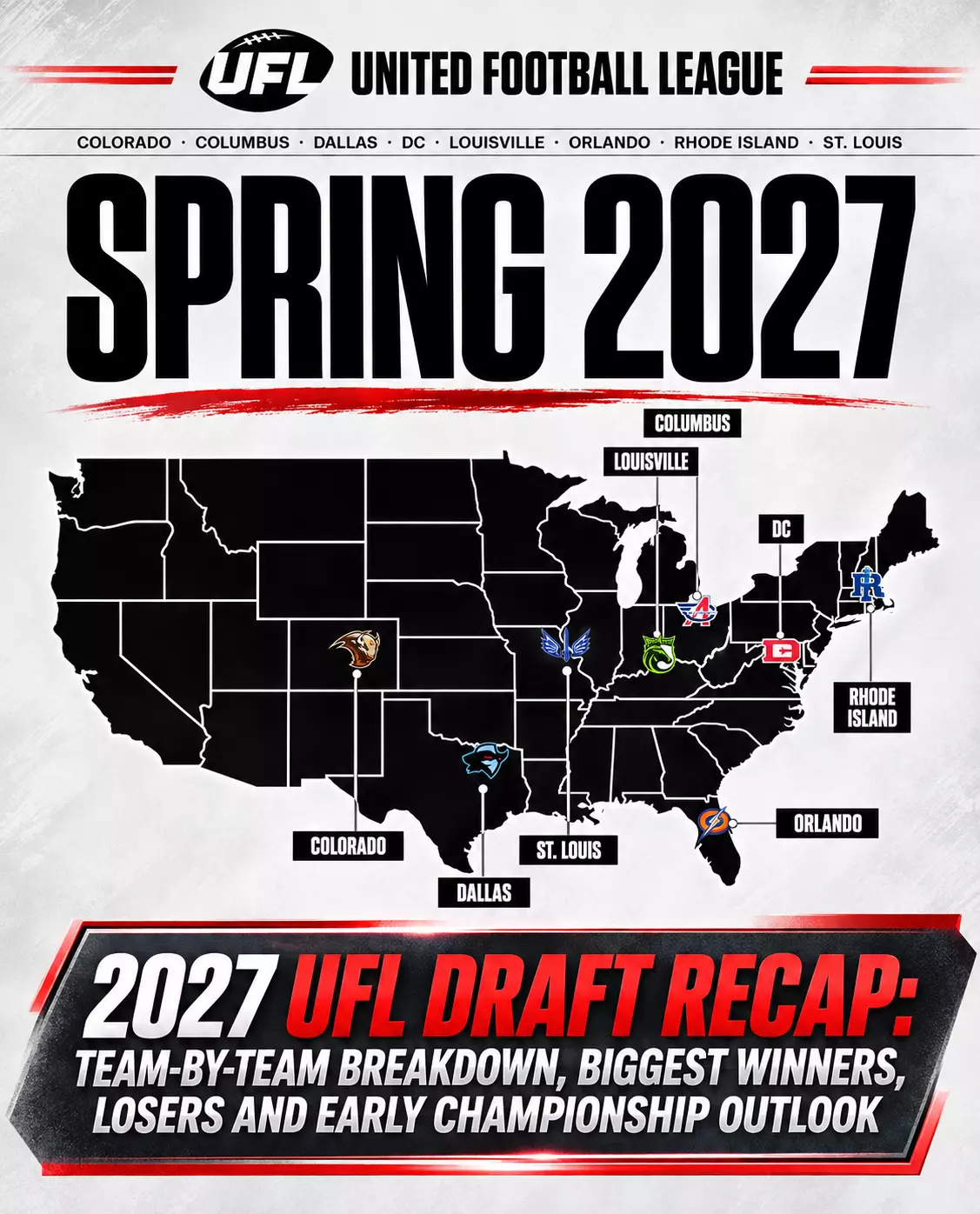
The United Football League’s 2027 Draft delivered one of the biggest moments in the league’s young history, bringing together eight franchises, established professional talent and emerging stars looking for another opportunity to prove themselves.
Held November 18–19, 2026, the draft began at Ballpark Village in St. Louis, with the first two rounds televised nationally on NFL Network. The remaining rounds continued Thursday morning.
The headline belonged to the Columbus Aviators, who selected former Vanderbilt quarterback and 2025 Heisman Trophy runner-up Diego Pavia with the first overall pick. But beyond that attention-grabbing decision, this draft was largely about offensive line protection, defensive pressure and building rosters capable of competing for the 2027
UFL championship.
The central question is which organizations found genuine difference-makers—and which may have missed opportunities to address their biggest weaknesses.
First-round draft results
Pick Team Player Position
1 Columbus Aviators Diego Pavia QB
2 Colorado Stampede Xavier Thomas EDGE
3 Rhode Island Breakers Jahfari Harvey EDGE
4 Dallas Renegades Jalen Kimber CB
5 St. Louis Battlehawks Isaiah Jatta OT
6 Orlando Storm Ricky Lee III OL
7 DC Defenders Aamil Wagner OT
8 Louisville Kings Dalton Wagner OT
Team-by-team draft breakdown
Analysis covers confirmed selections through Round 10. Rounds 11–15 are not yet included in these grades.
1. Columbus Aviators — Grade: A
Key selections:
Diego Pavia (QB), Tru Edwards (WR), Jamil Muhammad (EDGE), Carter Warren (OT), Jaheim Bell (TE), Eric Gentry (LB), Miles Davis (RB), Luke Floriea (WR).
Biggest addition:
Diego Pavia, No. 1 overall.
Columbus made the boldest move of the draft by selecting Pavia, a dynamic dual-threat quarterback with the leadership and athleticism to change the direction of its offense.
Pairing Pavia with Tru Edwards immediately gives Columbus an intriguing passing combination. Edwards brings size and speed, while later selections Jaheim Bell and Luke Floriea provide additional potential weapons.
The Aviators also addressed protection by selecting Carter Warren and Tomas Rimac. On defense, Jamil Muhammad, Eric Gentry and Vincent Anthony provide valuable reinforcements.
Why they win:
Columbus didn’t simply select the biggest name available. It built around its new quarterback while strengthening several other positions.
Biggest concern:
Pavia’s decision to sign and play in the
UFL
will ultimately determine how valuable this selection becomes.
Verdict:
The Aviators have the draft’s highest potential offensive impact and may have found a franchise-changing quarterback.
2. St. Louis Battlehawks — Grade: A-
Key selections:
Isaiah Jatta (OT), Derrick Graham (OT), Justin Wodtly (DT), Beanie Bishop (CB), Matthew McDoom (CB), Antwaun Powell-Ryland Jr. (EDGE).
Biggest addition:
Isaiah Jatta, No. 5 overall.
The Battlehawks attacked one of football’s most important position groups, using their first two selections on offensive tackles.
Jatta provides size and potential long-term stability, while Graham adds another experienced blocker. St. Louis followed by addressing defensive depth with Wodtly, Bishop, McDoom and Powell-Ryland.
Perhaps the biggest news surrounding the team wasn’t a draft selection at all. Star receiver Hakeem Butler, the
2026 UFL Offensive Player of the Year, announced his return for 2027.
Why they win:
Improving pass protection while retaining Butler gives the Battlehawks a strong foundation for an improved offense.
Biggest concern:
Questions remain about the team’s quarterback situation.
Verdict:
St. Louis made several smart football decisions instead of chasing headlines. This draft could produce multiple immediate contributors.
3. Rhode Island Breakers — Grade: A-
Key selections:
Jahfari Harvey (EDGE), Jeremiah Byers (OT), Caleb Etienne (OT), Cornelius Johnson (WR), Tanner McLachlan (TE), Wyatt Bowles (G), A.T. Perry (WR).
Biggest addition:
Jeremiah Byers, No. 10 overall.
Rhode Island quietly assembled one of the draft’s most balanced early classes.
Harvey provides an edge-rushing presence, while Byers and Etienne address the offensive line. Additional help arrived with Wyatt Bowles at guard.
The Breakers also took advantage of draft capital acquired from DC, selecting Cornelius Johnson and Jeremiah Martin in the third and fourth rounds, respectively.
The addition of former Wake Forest receiver A.T. Perry in Round 8 could prove especially valuable if he becomes a consistent receiving threat.
Why they win:
Rhode Island addressed several important needs while accumulating talent on both sides of the football.
Biggest concern:
The team still needs its new offensive line pieces to develop chemistry.
Verdict:
One of the strongest overall drafts through ten rounds, particularly considering the additional selections.
Colorado clearly wanted to become more physical defensively.
Thomas brings NFL experience and pass-rushing ability. McCutchin offers athleticism in the secondary, while Hill-Green provides another option at linebacker.
The Stampede’s most interesting value selections came later. Hollin Pierce in Round 4 and running back Damien Martinez in Round 8 give Colorado developmental offensive pieces with potential to outperform their draft positions.
Why they win:
The defense could become more disruptive, and later selections helped balance the roster.
Biggest concern:
Colorado may still need additional stability along the offensive line.
Verdict:
A stronger overall draft than its first two rounds initially suggested. The later selections improved Colorado’s outlook considerably.
DC’s first-round selection was especially important because protecting quarterback Jordan Ta’amu remains a priority.
Wagner gives the Defenders an offensive tackle with experience at Notre Dame. Taking Cunningham in the second round was more unconventional but brings interesting versatility.
Cunningham previously starred as a dual-threat quarterback at Louisville before transitioning to receiver in the NFL. That creates opportunities for specialized offensive packages, although his exact role remains uncertain.
DC also selected Tristan Leigh in Round 9 to strengthen its offensive tackle depth.
Why they win:
The Defenders improved protection and added an intriguing multi-position athlete.
Biggest concern:
With Rhode Island obtaining several additional picks through trades, DC had fewer opportunities in the early middle rounds.
Verdict:
A productive draft, but one that may depend heavily on Wagner becoming an immediate contributor and Cunningham finding a defined role.
6. Dallas Renegades — Grade: B-
Key selections:
Jalen Kimber (CB), Marvin Jones Jr. (DL), Chris Paul (LB), Eric Scott (CB), Jerome Carvin (G), Jack Henderson (S), Dalys Beanum (CB).
Biggest addition:
Jalen Kimber, No. 4 overall.
Dallas focused heavily on defense, particularly its secondary.
Kimber brings college experience and NFL exposure. Marvin Jones Jr. adds talent up front, while Chris Paul gives the linebacker group additional competition.
The selection of Dalys Beanum in Round 7 could be an underrated move. His college career included significant interception production at South Dakota State.
However, Dallas took offensive linemen Jerome Carvin and Shiyazh Pete only after investing multiple high selections elsewhere.
Why they win:
The Renegades have a better chance of creating turnovers and pressuring opposing quarterbacks.
Biggest concern:
Offensive line improvement may not have received sufficient attention early.
Verdict:
Dallas added useful defensive talent but still has questions about whether its offense received enough support.
7. Orlando Storm — Grade: B-
Key selections:
Ricky Lee III (OL), Jalan Gaines (EDGE), Jacob Roberts (LB), Marcus Allen (CB), Brodric Martin (NT), J.R. Singleton (DL), Cam’Ron Stewart (EDGE).
Biggest addition:
Ricky Lee III, No. 6 overall.
Orlando entered the draft with a strong foundation and focused on adding depth and physicality.
Lee brings professional experience along the offensive line. Gaines, Roberts, Martin and Singleton reinforce the defense.
The potential steal is Cam’Ron Stewart, selected in Round 9. The Temple pass rusher was highly regarded on at least one independent pre-draft prospect board, making his late selection especially interesting.
Why they win:
Orlando improved its defensive depth without abandoning offensive line development.
Biggest concern:
The running game could still use a more decisive upgrade at running back.
Verdict:
A solid draft for an established team, though not necessarily one that dramatically changes Orlando’s ceiling.
8. Louisville Kings — Grade: C+
Key selections:
Dalton Wagner (OT), Corey Robinson II (OT), Dan Jackson (S), Tre Hawkins III (CB), McCallan Castles (TE), Vershon Lee (C), Christian Fitzpatrick (WR), Fred Farrier II (WR).
Biggest addition:
Dalton Wagner, No. 8 overall.
The defending champions approached the draft differently from several competitors.
Louisville emphasized offensive line continuity, taking two former Arkansas tackles with its opening selections.
Wagner and Robinson bring size and professional experience, giving the Kings another opportunity to maintain their successful rushing attack.
The selection of Dan Jackson in Round 3 addressed the secondary, and Tre Hawkins III provided additional cornerback depth. Louisville also added weapons with Castles, Fitzpatrick and Farrier.
Why they win:
Reinforcing the offensive line should help the defending champions retain their physical identity.
Biggest concern:
The team may have passed on opportunities to improve its defensive front earlier.
Verdict:
Louisville had a reasonable plan, but its draft appears more focused on maintaining its current strengths than significantly expanding them. As defending champions, the Kings still have a strong foundation.
Biggest winners of the 2027 UFL Draft
1. Columbus Aviators — Best offensive upside
Pavia has the potential to change the franchise’s trajectory. Adding Edwards, Bell and Floriea makes Columbus one of the most intriguing offensive rebuilds.
2. St. Louis Battlehawks — Best foundational improvements
Two tackles, additional defensive depth and Butler’s return make St. Louis a potential contender if quarterback play improves.
3. Rhode Island Breakers — Best overall roster balance
Rhode Island filled needs across the offensive line, defensive front and receiving group while using additional draft capital effectively.
Biggest losers and concerns
These aren’t necessarily organizations that selected bad players. They are teams that, based on early evaluations, may have missed opportunities.
1. Louisville Kings — Most conservative approach.
Selecting consecutive offensive tackles helped reinforce a strength, but the defending champions may regret not prioritizing the defensive front sooner.
2. Dallas Renegades — Offensive line concerns.
Dallas invested heavily in defense. That could pay off, but struggling to protect the quarterback would limit the benefit of those additions.
3. Orlando Storm — Running game uncertainty.
Orlando added useful talent, but its running back situation remains an important question heading into 2027.
Biggest draft steals and players to watch
Player Team Why he stands out
Cam’Ron Stewart, EDGE Orlando Highly regarded pass-rush prospect available in Round 9
Hollin Pierce, OL Colorado Experienced college tackle acquired in Round 4
Damien Martinez, RB Colorado Potential rushing-game impact in Round 8
A.T. Perry, WR Rhode Island Size and receiving upside from a Round 8 selection
Luke Floriea, WR Columbus Productive Kent State receiver acquired in Round 9
Dalys Beanum, CB Dallas Ball-hawking potential in the secondary
Early draft report card
Columbus Aviators A
St. Louis Battlehawks A-
Rhode Island Breakers A-
Colorado Stampede B+
DC Defenders B
Dallas Renegades B-
Orlando Storm B-
Louisville Kings C+
Editorial grades based on talent, roster needs, draft value and potential immediate impact through ten rounds—not official UFL grades.
The Verdict: Who won the UFL Draft?
Columbus is the biggest winner so far, but St. Louis and Rhode Island may have assembled the most dependable collections of talent.
Columbus made the selection that will define this draft by taking Diego Pavia. His combination of competitiveness, mobility and playmaking ability is exactly the type of talent that can raise a developing franchise’s ceiling. If he signs and becomes the starting quarterback, Columbus could produce one of the league’s most exciting offenses.
St. Louis may prove to be the more immediately competitive beneficiary. Strengthening the offensive line while welcoming Hakeem Butler back gives the Battlehawks the ingredients for a more consistent attack.
Rhode Island deserves considerable credit for addressing multiple needs. The Breakers’ combination of pass rushers, offensive linemen and potential receiving weapons gives them several paths to improvement.
As for Louisville, a draft grade alone shouldn’t overshadow the fact that the Kings are defending
UFL champions. Their emphasis on protecting an established winning formula could prove more valuable than it appears today.
Conclusion
The 2027 UFL Draft demonstrated that the league is increasingly focused on roster continuity, competitive balance and developing identifiable stars.
Pavia gave the event its marquee moment, but the emphasis on offensive tackles, defensive linemen and secondary depth showed that coaches were prioritizing the fundamentals of winning professional football.
The greatest uncertainty remains player availability.
Drafting a player gives a UFL organization his rights; it does not guarantee he will sign or report.
That distinction will be especially important for players with potential NFL opportunities.
For now, Columbus earns the top grade, St. Louis and Rhode Island look like major beneficiaries, and the defending champion Louisville Kings remain a team nobody should overlook.
Ultimately, the true winners won’t be determined by draft-night excitement. They’ll be determined by which players sign contracts, become starters and help their teams compete for the
2027 UFL championship.
Reporting note: This is a November 19 draft recap using confirmed results through Round 10. The remaining five rounds may change the final team rankings.
New Users - Get $200 in Bonus Bets when you wager $5 for 4 days
T&Cs apply
4.6/5
Gambling Problem? Call 1-800-GAMBLER or 1-800-MY-RESET. Visit www.mdgamblinghelp.org (MD). 1-888-789-7777 or ccpg.org/chat (CT). Hope is here. GamblingHelpLineMA.org or (800) 327-5050 for 24/7 support (MA). 1-877-8-HOPENY or text HOPENY (467369) (NY). 21+ (18+ D.C., WY) and present in select states (for KS, in affiliation with Kansas Star Casino). First online real money wager only. Min $5 wager required for 4 consecutive days. $5 first deposit required. Bonus issued as nonwithdrawable bonus bets which expire 5 days after receipt. Restrictions apply. See terms at sportsbook.fanduel.com. Call 1-877-770-7867 (LA).
Get Up to $1,000 Back in Bonus Bets Over Your First 10 Days
T&Cs apply
4.5/5
Gambling problem? Call 1-800-GAMBLER or 1-800-MY-RESET (Available in the US) 877-8-HOPENY or text HOPENY (467369) (NY) 1-800-327-5050 (MA), 1-800-BETS-OFF (IA), 21+ only. Please Gamble Responsibly. Visit mdgamblinghelp.org (MD). See BetMGM.com for Terms. New Player Offer for new players only. Subject to eligibility requirements. Bonus bets are non-withdrawable. In partnership with Kansas Crossing Casino and Hotel. This promotional offer is not available in NJ, MA, MI, NV, NY, ON, PA, PR, and WV.
GAMBLING PROBLEM? CALL 1-800-GAMBLER or 1-800-MY-RESET, (800) 327-5050 or visit gamblinghelplinema.org (MA). Please Gamble Responsibly. 888-789-7777/visit ccpg.org (CT), or visit www.mdgamblinghelp.org (MD), 1-800-981-0023 (PR). 21+ and present in most states. (18+ DC/NH/PR/WY). Void in CAN. Eligibility restrictions apply. On behalf of Boot Hill Casino (KS). Pass-thru of per wager tax may apply in IL. 1 per new Sportsbook customer. $5+ first-time bet req. Max. $200 issued as non-withdrawable Bonus Bets. Stake removed from payout. Reward issued as $50 in Bonus Bets every 7 days via click-to-claim for 21 days. Bonus Bets and click-to-claims expire 7 days (168hrs) after issuance. Terms: dkng.co/offer. Get 1 promo code to redeem a 3-month NBA League Pass subscription, complimentary of DraftKings. Subscription auto-renews monthly at then-current price (currently $16.99/mo); cancel anytime. Terms, restrictions, and eligibility requirements apply. Redeem League Pass by 12/19/26 at 11:59 PM ET. Addt’l terms: support.watch.nba.com/hc/en-us/articles/9165532876183-League-Pass-Terms-of-Use_. Ends 11/29/26 at 11:59 PM ET. Sponsored by DK.
Must be 21+. GAMBLING PROBLEM? CALL 1-800-GAMBLER OR CALL 1-800-MY-RESET, www.mdgamblinghelp.org (MD), (800)-327-5050 or gamblinghelplinema.org (MA), Call (877)8-HOPENY or text HOPENY (467369) (NY), (888) 789-7777 or ccpg.org (CT), morethanagame.nc.gov (NC), 1800gambler.net (WV)
Bet $1 and get double the winnings up to $25 for your next 10 bets
T&Cs apply
4.4/5
21+ New users only. Must register using eligible promo code. First bet after registration must qualify. Max. Bonus Bet: $1,000. Bonus Bet expires 14 days after receipt. Void where prohibited. See Caesars.com/promos for full terms. Gambling Problem? 1-800-GAMBLER (1-800-426-2537)
21+ and present in OH. Gambling Problem? Call 1-800-GAMBLER.
The sweepstakes and social casinos featured here are for adults aged 18 or over. No purchase is necessary to enter or win, and every operator offers a free way to get Sweeps Coins. Availability in Ohio varies by operator. Offers are subject to each operator's terms. Need a break? Call or text 1-800-MY-RESET (24/7) or visit https://ncpgambling.org. We may earn a commission when you sign up through links on this site. This does not change how we review operators.
This site is using
Cloudflare
and adheres to the
Google Safe Browsing Program. We adapted
Google's Privacy Guidelines
to keep your data safe at all times.
Close
Ready to Win Big? Join the Elite with Our Sports Betting Deals!
FanDuel Promo
New Users - Get $200 in Bonus Bets when you wager $5 for 4 days
Our Favorite
T&Cs and 21+ apply
Gambling Problem? Call 1-800-GAMBLER or 1-800-MY-RESET. Visit www.mdgamblinghelp.org (MD). 1-888-789-7777 or ccpg.org/chat (CT). Hope is here. GamblingHelpLineMA.org or (800) 327-5050 for 24/7 support (MA). 1-877-8-HOPENY or text HOPENY (467369) (NY). 21+ (18+ D.C., WY) and present in select states (for KS, in affiliation with Kansas Star Casino). First online real money wager only. Min $5 wager required for 4 consecutive days. $5 first deposit required. Bonus issued as nonwithdrawable bonus bets which expire 5 days after receipt. Restrictions apply. See terms at sportsbook.fanduel.com. Call 1-877-770-7867 (LA).
Code:
Open FanDuel
Get Bonus
BetMGM Promo
Get Up to $1,000 Back in Bonus Bets Over Your First 10 Days
Best Slots
T&Cs and 21+ apply
Gambling problem? Call 1-800-GAMBLER or 1-800-MY-RESET (Available in the US) 877-8-HOPENY or text HOPENY (467369) (NY) 1-800-327-5050 (MA), 1-800-BETS-OFF (IA), 21+ only. Please Gamble Responsibly. Visit mdgamblinghelp.org (MD). See BetMGM.com for Terms. New Player Offer for new players only. Subject to eligibility requirements. Bonus bets are non-withdrawable. In partnership with Kansas Crossing Casino and Hotel. This promotional offer is not available in NJ, MA, MI, NV, NY, ON, PA, PR, and WV.
Code:
Open BetMGM
Get Bonus
DraftKings Promo
Bet $5, Get $200 + 3 Months of NBA League Pass
Newcomer
T&Cs and 21+ apply
GAMBLING PROBLEM? CALL 1-800-GAMBLER or 1-800-MY-RESET, (800) 327-5050 or visit gamblinghelplinema.org (MA). Please Gamble Responsibly. 888-789-7777/visit ccpg.org (CT), or visit www.mdgamblinghelp.org (MD), 1-800-981-0023 (PR). 21+ and present in most states. (18+ DC/NH/PR/WY). Void in CAN. Eligibility restrictions apply. On behalf of Boot Hill Casino (KS). Pass-thru of per wager tax may apply in IL. 1 per new Sportsbook customer. $5+ first-time bet req. Max. $200 issued as non-withdrawable Bonus Bets. Stake removed from payout. Reward issued as $50 in Bonus Bets every 7 days via click-to-claim for 21 days. Bonus Bets and click-to-claims expire 7 days (168hrs) after issuance. Terms: dkng.co/offer. Get 1 promo code to redeem a 3-month NBA League Pass subscription, complimentary of DraftKings. Subscription auto-renews monthly at then-current price (currently $16.99/mo); cancel anytime. Terms, restrictions, and eligibility requirements apply. Redeem League Pass by 12/19/26 at 11:59 PM ET. Addt’l terms: support.watch.nba.com/hc/en-us/articles/9165532876183-League-Pass-Terms-of-Use_. Ends 11/29/26 at 11:59 PM ET. Sponsored by DK.
Code:
Open DraftKings
Get Bonus
Find out what the legends have to say about sports this week....
New Users - Get $200 in Bonus Bets when you wager $5 for 4 days
Gambling Problem? Call 1-800-GAMBLER or 1-800-MY-RESET. Visit www.mdgamblinghelp.org (MD). 1-888-789-7777 or ccpg.org/chat (CT). Hope is here. GamblingHelpLineMA.org or (800) 327-5050 for 24/7 support (MA). 1-877-8-HOPENY or text HOPENY (467369) (NY). 21+ (18+ D.C., WY) and present in select states (for KS, in affiliation with Kansas Star Casino). First online real money wager only. Min $5 wager required for 4 consecutive days. $5 first deposit required. Bonus issued as nonwithdrawable bonus bets which expire 5 days after receipt. Restrictions apply. See terms at sportsbook.fanduel.com. Call 1-877-770-7867 (LA).