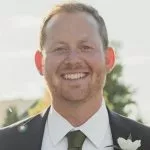
Ricky Proehl Takes the Reins of the UFL’s Flagship Franchise
In St. Louis, football credibility matters. This is a city shaped by
championship moments,
defined by precision offense, and fueled by one of the most passionate fan bases in professional football. When the Battlehawks needed a new head coach following
Anthony Becht’s departure to Orlando, they did not chase a novelty hire or an untested name. Instead, they turned inward—to experience, continuity, and a figure who understands both the city and the standard.
Ricky Proehl
is now the head coach of the St. Louis Battlehawks, and his appointment signals one clear intention:
the Battlehawks are not rebuilding—they are advancing.
Ricky Proehl: Player, Coach, and Cultural Fit
Proehl’s hire works on multiple levels. While his name resonates emotionally with St. Louis fans, the substance of the decision lies in his football résumé. Proehl represents what successful spring football leadership looks like:
NFL credibility, developmental focus, and system clarity.
The Player: Built for Big Moments
An undrafted receiver out of East Carolina, Proehl built a
17-year NFL career (1990–2006)
through preparation and technical mastery rather than raw athleticism.
Career highlights include:
669 receptions
8,878 receiving yards
54 touchdowns
Four Super Bowl appearances
Two Super Bowl championships (Rams, Colts)
In St. Louis, Proehl will forever be remembered for his touchdown catch in the
1999 NFC Championship Game, the play that sent the Rams to Super Bowl XXXIV. It was the defining moment of a career defined by reliability under pressure.
The Coach: A Teacher Before a Tactician
Unlike many first-time head coaches, Proehl arrives with more than a decade of professional coaching experience.
NFL Development Background
Proehl served as a wide receivers coach for the
Carolina Panthers from 2011–2016, including the franchise’s
15–1 Super Bowl 50 season. During that span, he worked closely with receivers such as
Steve Smith Sr., Kelvin Benjamin, and Ted Ginn Jr., emphasizing route precision, spacing, and situational awareness.
Spring Football Continuity
Proehl is also familiar with the spring-football grind. He previously served as
wide receivers coach for the Battlehawks, giving him insight into the unique demands of:
Condensed practice schedules
Rapid installation periods
The Dome’s unique home-field advantage
That familiarity allows St. Louis to transition seamlessly rather than reset.
A Franchise Built to Win Now
The Battlehawks enter the 2026 season with one of the strongest foundations in the UFL. Across multiple spring leagues, St. Louis has established itself as:
A perennial playoff contender
A league attendance leader
A destination for NFL-caliber reclamation talent
This is not a developmental rebuild. The expectation is championships.
Coaching Philosophy: Precision, Pressure, and Player Growth
Proehl’s teams will be defined by execution, not gimmicks.
Offensive Identity
The Battlehawks’ offense is expected to remain pass-oriented but efficient, with an emphasis on:
Slot receiver usage
Timing-based concepts
High-percentage throws
Rather than a pure Air Raid system, the offense projects as a
pro-style passing attack
adapted to spring football’s realities: fewer reps, smaller playbooks, and the need for quarterback efficiency.
Defensive Approach
Defensively, St. Louis will continue to lean into physicality and aggression, particularly at home. The goal is disruption—forcing mistakes rather than simply containing opponents.
Player Development: The Real Competitive Edge
One of Proehl’s most valuable traits is his
player-first developmental mindset. The Battlehawks aim to be:
A pipeline back to the NFL
A proving ground for overlooked talent
A program where weekly film improvement is the standard
In a league defined by roster turnover, development equals sustainability.
2026 Outlook: Expectations Are the Point
This is not a transition year in St. Louis.
It is a
continuation year with higher expectations.
Up To $1500 in Bonus Bets Paid Back if your First Bet Does Not Win
T&Cs apply
4.5/5
Gambling problem? Call 1-800-GAMBLER or 1-800-MY-RESET (Available in the US) 877-8-HOPENY or text HOPENY (467369) (NY) 1-800-327-5050 (MA), 1-800-BETS-OFF (IA), 1-800-981-0023 (PR). 21+ only. Please Gamble Responsibly. See BetMGM.com for Terms. First Bet Offer for new customers only (if applicable). Subject to eligibility requirements. Bonus bets are non-withdrawable. In partnership with Kansas Crossing Casino and Hotel. Promotional offers not available in Mississippi, Massachusetts, New York, Ontario, or Puerto Rico.
New DraftKings Customers: Spend $5+ Get $150 in Bonuses
T&Cs apply
4.5/5
GAMBLING PROBLEM? CALL 1-800-GAMBLER or 1-800-MY-RESET, (800) 327-5050 or visit gamblinghelplinema.org (MA). Please Gamble Responsibly. 888-789-7777/visit ccpg.org (CT), or visit www.mdgamblinghelp.org (MD), 1-800-981-0023 (PR). 21+ and present in most states. (18+ DC/NH/PR/WY). Void in CAN. Eligibility restrictions apply. On behalf of Boot Hill Casino (KS). Pass-thru of per wager tax may apply in IL. 1 per new DraftKings customer. $5+ first-time bet req. Max. $150 issued as non-withdrawable Bonus Bets. Stake removed from payout. Reward issued as $50 in Bonus Bets every 7 days via click-to-claim for 14 days. Bonus Bets and click-to-claims expire 7 days (168hrs) after issuance. Terms: sportsbook.draftkings.com/promos. Ends 10/11/26 at 11:59 PM ET. Sponsored by DK.
Must be 21+. GAMBLING PROBLEM? CALL 1-800-GAMBLER OR CALL 1-800-MY-RESET, www.mdgamblinghelp.org (MD), (800)-327-5050 or gamblinghelplinema.org (MA), Call (877)8-HOPENY or text HOPENY (467369) (NY), (888) 789-7777 or ccpg.org (CT), morethanagame.nc.gov (NC), 1800gambler.net (WV)
Bet $1 and get double the winnings up to $25 for your next 10 bets
T&Cs apply
4.4/5
21+ New users only. Must register using eligible promo code. First bet after registration must qualify. Max. Bonus Bet: $1,000. Bonus Bet expires 14 days after receipt. Void where prohibited. See Caesars.com/promos for full terms. Gambling Problem? 1-800-GAMBLER (1-800-426-2537)
21+ and present in OH. Gambling Problem? Call 1-800-GAMBLER.
This site is using
Cloudflare
and adheres to the
Google Safe Browsing Program. We adapted
Google's Privacy Guidelines
to keep your data safe at all times.
Close
Ready to Win Big? Join the Elite with Our Sports Betting Deals!
FanDuel Promo
New Users – Get $250 in Bonus Bets when you wager $5 for 5 days
Up To $1500 in Bonus Bets Paid Back if your First Bet Does Not Win
Best Slots
T&Cs and 21+ apply
Gambling problem? Call 1-800-GAMBLER or 1-800-MY-RESET (Available in the US) 877-8-HOPENY or text HOPENY (467369) (NY) 1-800-327-5050 (MA), 1-800-BETS-OFF (IA), 1-800-981-0023 (PR). 21+ only. Please Gamble Responsibly. See BetMGM.com for Terms. First Bet Offer for new customers only (if applicable). Subject to eligibility requirements. Bonus bets are non-withdrawable. In partnership with Kansas Crossing Casino and Hotel. Promotional offers not available in Mississippi, Massachusetts, New York, Ontario, or Puerto Rico.
Code:
Open BetMGM
Get Bonus
DraftKings Promo
New DraftKings Customers: Spend $5+ Get $150 in Bonuses
Newcomer
T&Cs and 21+ apply
GAMBLING PROBLEM? CALL 1-800-GAMBLER or 1-800-MY-RESET, (800) 327-5050 or visit gamblinghelplinema.org (MA). Please Gamble Responsibly. 888-789-7777/visit ccpg.org (CT), or visit www.mdgamblinghelp.org (MD), 1-800-981-0023 (PR). 21+ and present in most states. (18+ DC/NH/PR/WY). Void in CAN. Eligibility restrictions apply. On behalf of Boot Hill Casino (KS). Pass-thru of per wager tax may apply in IL. 1 per new DraftKings customer. $5+ first-time bet req. Max. $150 issued as non-withdrawable Bonus Bets. Stake removed from payout. Reward issued as $50 in Bonus Bets every 7 days via click-to-claim for 14 days. Bonus Bets and click-to-claims expire 7 days (168hrs) after issuance. Terms: sportsbook.draftkings.com/promos. Ends 10/11/26 at 11:59 PM ET. Sponsored by DK.
Code:
Open DraftKings
Get Bonus
Find out what the legends have to say about sports this week....