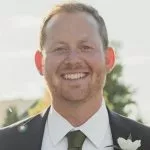
A New Era of Professional Football in the Bluegrass
Louisville has long been a basketball stronghold, but in 2026, professional spring football officially plants its flag in the Derby City. The
Louisville Kings
enter their inaugural season carrying more than just a fresh brand—they carry the weight of local pride, expectation, and the opportunity to establish professional football as a sustainable presence in Kentucky.
At the center of it all is a familiar name:
Chris Redman.
The former University of Louisville quarterback returns home not as a player, but as the face of the franchise. His hiring is more than symbolic. It’s strategic. If the Kings are going to build credibility quickly, there is no better ambassador than one of the most accomplished quarterbacks in Louisville football history.
Chris Redman: The Player, The Leader, The Architect
The Playing Career
Chris Redman’s football journey began in Louisville, and that matters.
A graduate of Louisville Male High School, Redman was one of the most prolific prep quarterbacks of his era. He stayed home to play for the University of Louisville and helped elevate the Cardinals’ national profile in the late 1990s.
At Louisville (1996–1999), Redman:
Threw for over 12,000 career passing yards
Completed more than 1,000 passes during his college career
Won the
Johnny Unitas Golden Arm Award (1999)
Was a Heisman Trophy finalist
Helped usher Louisville into a modern, high-volume passing era
Redman finished his collegiate career as one of the most statistically productive quarterbacks in NCAA history at the time.
He was selected in the
third round of the 2000 NFL Draft by the Baltimore Ravens. While he did not start for Baltimore during their Super Bowl XXXV championship season, he was part of that roster and later carved out a solid professional career, including starting stretches with the Atlanta Falcons.
Redman’s NFL career spanned nearly a decade and reinforced his reputation as a steady, prepared, locker-room leader.
The Coaching Transition
Redman does not arrive in Louisville with decades of head coaching experience. What he brings instead is:
Deep quarterback knowledge
A strong understanding of professional locker rooms
Community ties that immediately legitimize the franchise
His leadership style is expected to resemble a “CEO head coach” model—delegating technical execution to experienced coordinators while focusing heavily on culture, accountability, and operational discipline.
For a first-year franchise, culture matters more than scheme.
Expansion teams often struggle not because of talent gaps, but because of avoidable mistakes—penalties, miscommunication, poor situational execution. Redman’s quarterback background suggests a coach who values structure, clarity, and situational football.
Building a Louisville Identity
The Kings’ early roster construction strategy appears rooted in familiarity and regional connection. For a new franchise, local engagement is critical.
While final roster decisions will define the team’s true identity, the organizational philosophy leans toward:
SEC-tested physicality
Experienced skill-position players
High-effort, high-motor defenders
Louisville is not trying to mimic another city’s brand. The Kings’ identity is being built around toughness, resilience, and regional pride—values deeply embedded in Kentucky football culture.
The long-term goal is clear: make Lynn Family Stadium one of the most difficult environments in spring football.
Coaching Philosophy & Tactical Outlook
Offensive Approach: Pro-Style Foundation
Offensive Coordinator
Steve Logan, a longtime college head coach and veteran assistant, brings decades of experience to the Kings’ offensive structure.
Logan is known for:
Quarterback development
Structured passing concepts
Emphasis on decision-making and ball security
Expect a pro-style system built on:
Controlled passing game concepts
Play-action efficiency
Protecting the football
Situational awareness
This will not be a reckless, high-variance offense. It will likely prioritize stability and rhythm, especially in Year One.
Defensive Identity: Physical and Disciplined
Defensive Coordinator
Jamie Sharper, a former NFL linebacker and veteran coach, provides immediate credibility on that side of the ball.
Sharper’s background suggests:
A linebacker-centric defensive philosophy
Aggressive run fits
Emphasis on gap discipline
Physicality at the point of attack
For an expansion team, stopping the run early in the season is critical. It shortens games and reduces pressure on a developing offense.
Expect Louisville’s defense to play with controlled aggression rather than exotic complexity in Year One.
Operational Priorities for Year One
Expansion teams face predictable challenges:
Roster continuity
Communication under pressure
Special teams execution
Avoiding self-inflicted mistakes
Redman’s public messaging has emphasized what he calls “operational cleanliness.” That means:
Low turnover rate
Limited penalties
Strong special teams
Smart clock management
Those fundamentals may not make highlight reels—but they win spring football games.
Meet the Staff
Head Coach – Chris Redman
Louisville football icon and former NFL quarterback. Cultural leader and public face of the franchise.
Offensive Coordinator – Steve Logan
Veteran college coach and quarterback developer. Tasked with building the Kings’ offensive identity.
Defensive Coordinator – Jamie Sharper
Former NFL linebacker and experienced defensive coach. Responsible for installing a physical, disciplined defensive system.
The Realistic Outlook
In Year One, success for Louisville should not be measured only by championships. It should be measured by:
Establishing credibility
Playing disciplined football
Competing weekly
Building a fan base
If Redman succeeds in making the Kings competitive and mistake-resistant,
Louisville
could quickly become one of the most stable franchises in spring football.
But building a winner takes time—even with a hometown legend at the helm.
Final Word
Chris Redman represents more than nostalgia. He represents continuity between Louisville’s football past and its professional future.
The Kings are not simply launching a team. They are launching a long-term experiment in whether professional spring football can thrive in a city that loves the game.
If leadership, discipline, and community alignment matter as much as they should, Louisville’s first chapter could be a strong one.
And in the Bluegrass, the story always starts with pride.
Up To $1500 in Bonus Bets Paid Back if your First Bet Does Not Win
T&Cs apply
4.5/5
Gambling problem? Call 1-800-GAMBLER or 1-800-MY-RESET (Available in the US) 877-8-HOPENY or text HOPENY (467369) (NY) 1-800-327-5050 (MA), 1-800-BETS-OFF (IA), 1-800-981-0023 (PR). 21+ only. Please Gamble Responsibly. See BetMGM.com for Terms. First Bet Offer for new customers only (if applicable). Subject to eligibility requirements. Bonus bets are non-withdrawable. In partnership with Kansas Crossing Casino and Hotel. Promotional offers not available in Mississippi, Massachusetts, New York, Ontario, or Puerto Rico.
New DraftKings Customers: Spend $5+ Get $150 in Bonuses
T&Cs apply
4.5/5
GAMBLING PROBLEM? CALL 1-800-GAMBLER or 1-800-MY-RESET, (800) 327-5050 or visit gamblinghelplinema.org (MA). Please Gamble Responsibly. 888-789-7777/visit ccpg.org (CT), or visit www.mdgamblinghelp.org (MD), 1-800-981-0023 (PR). 21+ and present in most states. (18+ DC/NH/PR/WY). Void in CAN. Eligibility restrictions apply. On behalf of Boot Hill Casino (KS). Pass-thru of per wager tax may apply in IL. 1 per new DraftKings customer. $5+ first-time bet req. Max. $150 issued as non-withdrawable Bonus Bets. Stake removed from payout. Reward issued as $50 in Bonus Bets every 7 days via click-to-claim for 14 days. Bonus Bets and click-to-claims expire 7 days (168hrs) after issuance. Terms: sportsbook.draftkings.com/promos. Ends 10/11/26 at 11:59 PM ET. Sponsored by DK.
Must be 21+. GAMBLING PROBLEM? CALL 1-800-GAMBLER OR CALL 1-800-MY-RESET, www.mdgamblinghelp.org (MD), (800)-327-5050 or gamblinghelplinema.org (MA), Call (877)8-HOPENY or text HOPENY (467369) (NY), (888) 789-7777 or ccpg.org (CT), morethanagame.nc.gov (NC), 1800gambler.net (WV)
Bet $1 and get double the winnings up to $25 for your next 10 bets
T&Cs apply
4.4/5
21+ New users only. Must register using eligible promo code. First bet after registration must qualify. Max. Bonus Bet: $1,000. Bonus Bet expires 14 days after receipt. Void where prohibited. See Caesars.com/promos for full terms. Gambling Problem? 1-800-GAMBLER (1-800-426-2537)
21+ and present in OH. Gambling Problem? Call 1-800-GAMBLER.
This site is using
Cloudflare
and adheres to the
Google Safe Browsing Program. We adapted
Google's Privacy Guidelines
to keep your data safe at all times.
Close
Ready to Win Big? Join the Elite with Our Sports Betting Deals!
FanDuel Promo
New Users – Get $250 in Bonus Bets when you wager $5 for 5 days
Up To $1500 in Bonus Bets Paid Back if your First Bet Does Not Win
Best Slots
T&Cs and 21+ apply
Gambling problem? Call 1-800-GAMBLER or 1-800-MY-RESET (Available in the US) 877-8-HOPENY or text HOPENY (467369) (NY) 1-800-327-5050 (MA), 1-800-BETS-OFF (IA), 1-800-981-0023 (PR). 21+ only. Please Gamble Responsibly. See BetMGM.com for Terms. First Bet Offer for new customers only (if applicable). Subject to eligibility requirements. Bonus bets are non-withdrawable. In partnership with Kansas Crossing Casino and Hotel. Promotional offers not available in Mississippi, Massachusetts, New York, Ontario, or Puerto Rico.
Code:
Open BetMGM
Get Bonus
DraftKings Promo
New DraftKings Customers: Spend $5+ Get $150 in Bonuses
Newcomer
T&Cs and 21+ apply
GAMBLING PROBLEM? CALL 1-800-GAMBLER or 1-800-MY-RESET, (800) 327-5050 or visit gamblinghelplinema.org (MA). Please Gamble Responsibly. 888-789-7777/visit ccpg.org (CT), or visit www.mdgamblinghelp.org (MD), 1-800-981-0023 (PR). 21+ and present in most states. (18+ DC/NH/PR/WY). Void in CAN. Eligibility restrictions apply. On behalf of Boot Hill Casino (KS). Pass-thru of per wager tax may apply in IL. 1 per new DraftKings customer. $5+ first-time bet req. Max. $150 issued as non-withdrawable Bonus Bets. Stake removed from payout. Reward issued as $50 in Bonus Bets every 7 days via click-to-claim for 14 days. Bonus Bets and click-to-claims expire 7 days (168hrs) after issuance. Terms: sportsbook.draftkings.com/promos. Ends 10/11/26 at 11:59 PM ET. Sponsored by DK.
Code:
Open DraftKings
Get Bonus
Find out what the legends have to say about sports this week....