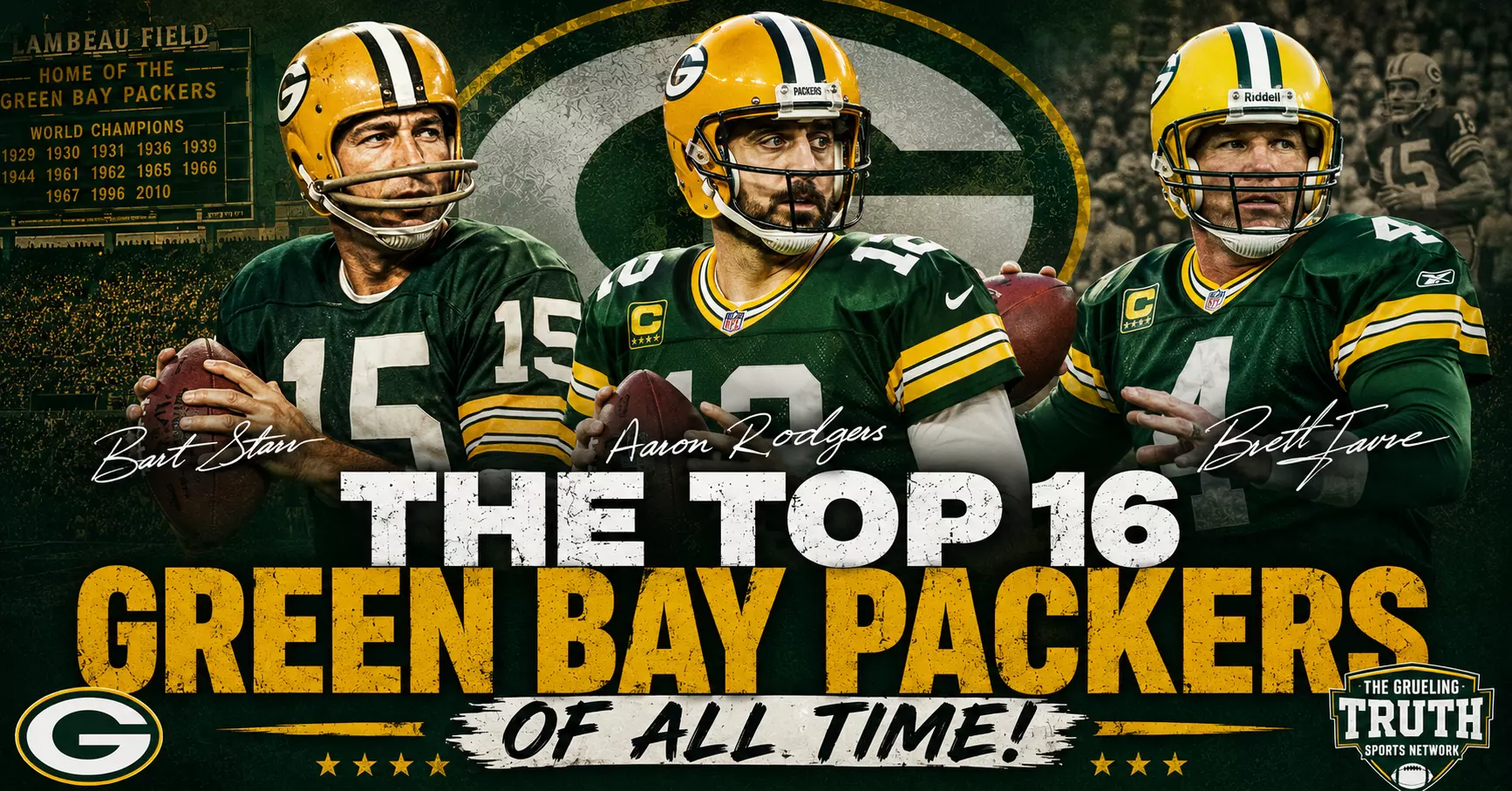
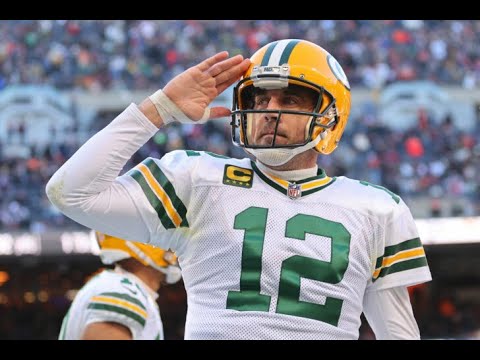
Top 16 Green Bay Packers of All-Time! Once again just like the Steelers list, more than 16 guys deserve to be on this list.
16. Jim Ringo (C)
Jim Ringo was one of the greatest centers in
NFL history
and helped establish the standard for excellence at the position during the 1950s and 1960s. While centers rarely receive the recognition afforded to quarterbacks or skill position players, Ringo was the anchor of some of the greatest offensive lines ever assembled. His intelligence, toughness, and ability to diagnose defenses made him invaluable to Vince Lombardi’s championship teams.
Ringo was selected to seven Pro Bowls and earned seven First-Team All-Pro selections during his career with the Packers. He played a pivotal role in Green Bay’s NFL Championship teams in 1961 and 1962 before being traded to the Philadelphia Eagles in one of Lombardi’s most controversial personnel decisions. Ringo was inducted into both the Green Bay Packers Hall of Fame and the Pro Football Hall of Fame and remains one of the greatest centers the game has ever produced. His excellence helped define an era of Packers football that would become synonymous with championship success.
Jim Ringo Remembers the Champion Packers
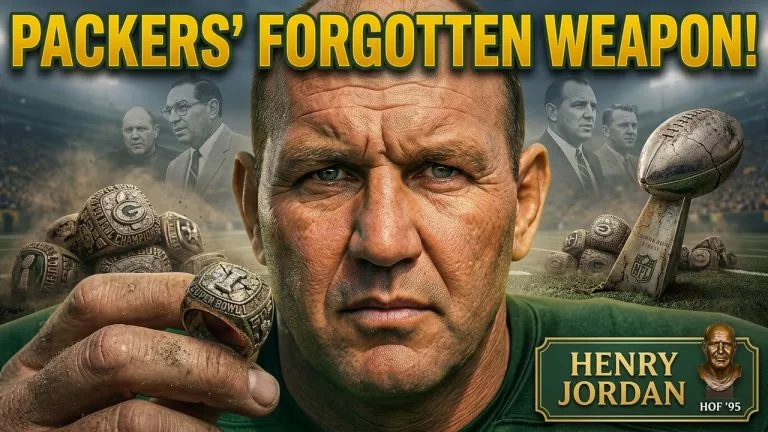
15. Henry Jordan (DT)
Despite being considered undersized for a defensive tackle at just 6-foot-2 and approximately 248 pounds, Henry Jordan became one of the most dominant interior defensive linemen of his generation. Jordan combined exceptional quickness with remarkable leverage and technique, making him nearly impossible to block consistently. He was one of the emotional leaders of Vince Lombardi’s legendary defenses during the 1960s.
Jordan earned four First-Team All-Pro selections and was named to four Pro Bowls while helping lead Green Bay to five NFL Championships, including victories in Super Bowls I and II. Perhaps his greatest individual performance came during the 1967 Western Conference Championship Game against the Los Angeles Rams when he recorded an unofficial 3.5 sacks against one of football’s most physical offensive lines. Unfortunately for Jordan, sacks were not recognized as an official NFL statistic during his era, which likely cost him additional historical recognition.
Jordan’s dominance earned him induction into both the Packers Hall of Fame and the Pro Football Hall of Fame, cementing his status as one of Green Bay’s greatest defensive players.
Henry Jordan: The Packers’ Forgotten Defensive Weapon!
14. Sterling Sharpe (WR)
Few careers in NFL history leave fans wondering “what if” more than Sterling Sharpe’s. Before a devastating neck injury forced him into retirement following the 1994 season, Sharpe had established himself as arguably the most dominant wide receiver in football. His combination of size, strength, route-running ability, and competitiveness made him virtually impossible to defend during his seven-year career.
Sharpe was selected to five Pro Bowls and earned three First-Team All-Pro selections while leading the NFL in receptions three times and touchdown receptions twice. In 1992, he became the first player in NFL history to record back-to-back 100-catch seasons and finished his Packers career with 595 receptions, 8,134 receiving yards, and 65 touchdowns. Had his career not been prematurely ended at the age of 29, there is little doubt Sharpe would have been a first-ballot Pro Football Hall of Famer.
His dominance during the early years of Brett Favre’s career helped return Green Bay to prominence and laid the foundation for the Packers’ resurgence during the 1990s.
sterling sharpe
13. Paul Hornung (HB)
“The Golden Boy” remains one of the most versatile and beloved players in Green Bay Packers history. Paul Hornung could seemingly do everything on a football field. He could run, catch, block, kick, and score touchdowns in virtually every conceivable fashion. Vince Lombardi often referred to Hornung as his favorite player because of his willingness to sacrifice individual statistics for the success of the team.
Hornung led the NFL in scoring for three consecutive seasons from 1959 through 1961 and set what was then an NFL record by scoring 176 points in just 12 games during the 1960 season—a record that stood for nearly five decades. He was named the NFL’s Most Valuable Player in 1961 and helped lead Green Bay to four NFL Championships during his career.
While modern fans may overlook his statistical accomplishments because of the era in which he played, Hornung revolutionized the concept of offensive versatility. He remains one of the greatest all-around players in NFL history and was unquestionably one of the cornerstones of Vince Lombardi’s dynasty.
Paul Hornung HD
12. Jerry Kramer (RG)
No player better symbolizes Vince Lombardi’s legendary power sweep than Jerry Kramer. One of the greatest guards in NFL history, Kramer combined intelligence, toughness, and athleticism to become the cornerstone of Green Bay’s offensive line during its greatest era. The power sweep that helped define the Packers dynasty simply doesn’t exist without Kramer leading the way.
His most famous moment came during the final seconds of the Ice Bowl on December 31, 1967. Facing third-and-goal with just 16 seconds remaining, Kramer executed arguably the most famous block in NFL history, sealing off Jethro Pugh to spring Bart Starr’s quarterback sneak that won the NFL Championship. That play alone would have cemented his legacy in Green Bay.
Kramer was selected to five First-Team All-Pro teams and earned ten Pro Bowl selections while helping lead the Packers to five NFL Championships and victories in Super Bowls I and II. He also kicked three field goals during Green Bay’s 16-7 victory over the New York Giants in the 1962 NFL Championship Game.
For years, Kramer was considered one of the greatest Hall of Fame omissions in professional sports before finally receiving his well-deserved induction into the Pro Football Hall of Fame in 2018. Few players have ever had a greater impact on championship football than Jerry Kramer.
Jerry Kramer for Pro Football Hall of Fame 2013
11. Willie Wood (S)
Before the NFL began fully appreciating the value of versatile defensive backs, Willie Wood was redefining what the safety position could become. Despite going undrafted after his college career at USC was interrupted by injury, Wood became one of the greatest safeties in football history and one of the most accomplished players ever to wear a Packers uniform.
Wood was selected to eight Pro Bowls and earned five First-Team All-Pro honors during his remarkable career in Green Bay. He intercepted 48 passes during his 12 seasons with the Packers and possessed an uncanny ability to anticipate opposing quarterbacks. Just as importantly, he was one of the NFL’s premier punt return specialists, still ranking among Green Bay’s all-time leaders in both punt returns and punt return yardage.
His greatest postseason moment came in Super Bowl II when he returned an interception 50 yards for a touchdown that effectively sealed Green Bay’s victory over the Oakland Raiders. Wood played on five NFL Championship teams and was an integral part of arguably the greatest defense of the Lombardi era.
Few safeties in NFL history combined instincts, versatility, and championship success better than Willie Wood.
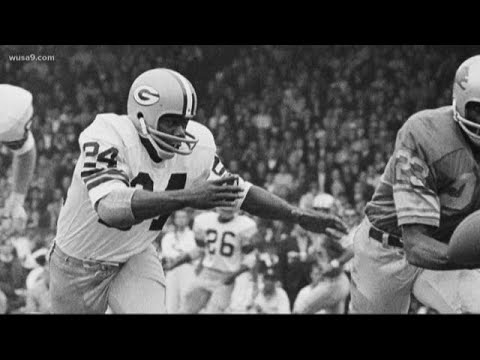
NFL legend Willie Wood remembered for his DC roots
10. Willie Davis (DE)
Willie Davis is often overlooked when discussing the greatest defensive ends in NFL history, largely because official sack statistics were not kept during his playing days. Had they been, Davis would almost certainly rank among the all-time leaders. His combination of speed, power, and relentless effort made him one of the most feared pass rushers of the 1960s.
Davis earned five Pro Bowl selections and was named First-Team All-Pro five times while helping lead Green Bay to five NFL Championships and victories in the first two Super Bowls. Unofficial statistics credit Davis with well over 100 career sacks, including two sacks in Super Bowl I and three more in Super Bowl II. Those performances remain among the greatest in Super Bowl history despite not appearing in the official record books.
More importantly, Davis was one of the unquestioned leaders of Vince Lombardi’s championship teams. His professionalism, preparation, and leadership helped establish the culture that made Green Bay the NFL’s model franchise during the 1960s.
Simply put, Willie Davis belongs among the greatest defensive players in Packers history and among the greatest defensive ends football has ever seen.
Willie Davis Green Bay Packers
9. Jim Taylor (FB)
Overshadowed nationally by Jim Brown throughout much of his career, Jim Taylor was nevertheless one of the greatest running backs of his generation and a critical piece of Vince Lombardi’s championship dynasty. Taylor combined exceptional power, balance, and determination to become one of the NFL’s premier offensive weapons during the early 1960s.
Taylor earned five Pro Bowl selections and was named First-Team All-Pro five times while rushing for 8,207 career yards and 83 touchdowns. He led the Packers in rushing seven different seasons and captured the NFL rushing title in 1962 after rushing for 1,474 yards—a remarkable accomplishment considering the physical nature of football during that era. He was also named the NFL’s Most Valuable Player in 1962.
The success of Lombardi’s power sweep was largely dependent upon Taylor’s unique running style. He possessed the vision to find cutback lanes and the toughness to finish runs with authority. Had he not played during the same era as Jim Brown, Taylor likely would have received even greater national recognition for his accomplishments.
Taylor’s induction into both the Packers Hall of Fame and the Pro Football Hall of Fame merely confirms what Green Bay fans have known for generations—he was one of the greatest fullbacks in NFL history.
NFL Tough Guys Jim Taylor
8. Herb Adderley (CB)
Long before the term
“shutdown cornerback”
became part of football’s vocabulary, Herb Adderley was redefining the position. Blessed with elite speed, tremendous instincts, and exceptional ball skills, Adderley became one of the most feared defensive backs of his era. Quarterbacks simply learned not to throw in his direction—a remarkable compliment considering Green Bay’s aggressive defensive philosophy during the Vince Lombardi years.
Adderley was selected to five Pro Bowls and earned five First-Team All-Pro honors while helping lead Green Bay to five NFL Championships and victories in Super Bowls I and II. He intercepted 39 passes during his nine seasons with the Packers and was equally dangerous as a kick returner. He remains among the franchise leaders in kickoff returns and kickoff return yardage while returning two kickoffs for touchdowns during his illustrious career.
Perhaps even more impressive was his football intelligence. Adderley had an uncanny ability to diagnose route combinations before they fully developed, allowing him to consistently create turnovers and game-changing plays. After leaving Green Bay, he would go on to win another Super Bowl with the Dallas Cowboys, becoming the only player to win championships in both Super Bowl I and Super Bowl VI.
Herb Adderley was one of the greatest cornerbacks in NFL history and remains one of the finest defensive players ever to wear the Green and Gold.
Herb Adderley Highlights
7. Brett Favre (QB)
Few players have ever embodied a franchise the way Brett Favre embodied the Green Bay Packers. During his 16 seasons as Green Bay’s starting quarterback, Favre restored one of the NFL’s flagship organizations to championship relevance while becoming one of the most entertaining players football has ever seen.
Favre won an unprecedented three consecutive NFL Most Valuable Player awards from 1995 through 1997, was named to eleven Pro Bowls, and earned three First-Team All-Pro selections. He threw for 61,655 passing yards and 442 touchdowns as a Packer while leading Green Bay to two Super Bowl appearances and a victory in Super Bowl XXXI. His legendary toughness resulted in 297 consecutive starts, including the playoffs, one of the most remarkable records in professional sports history.
What separated Favre from many great quarterbacks was his fearless approach to the game. Every throw, no matter how improbable, seemed possible when it left his hand. While that mentality occasionally produced frustrating interceptions, it also produced some of the greatest moments in Packers history.
Favre changed the trajectory of the franchise and helped usher in nearly three decades of quarterback excellence in Green Bay.
The legendary career of Brett Favre – highs and lows
6. Aaron Rodgers (QB)
Aaron Rodgers may be the most physically gifted quarterback in NFL history. His ability to combine arm talent, accuracy, intelligence, and mobility allowed him to dominate opposing defenses for nearly two decades while rewriting the Packers’ record books in the process.
Rodgers won four NFL Most Valuable Player awards during his career in Green Bay and was selected to ten Pro Bowls while earning four First-Team All-Pro selections. He finished his Packers career with 59,055 passing yards, 475 touchdown passes, and an astonishing career passer rating of 103.6, one of the greatest marks in NFL history. Rodgers also led Green Bay to a victory in Super Bowl XLV and was deservedly named the game’s Most Valuable Player after throwing for 304 yards and three touchdowns against the Pittsburgh Steelers.
The only reason Rodgers does not rank higher on this list is championships. Fair or unfair, quarterbacks are judged by postseason success, and winning just one Super Bowl despite spending most of his career with championship-caliber rosters leaves many Packers fans wondering what might have been.
Regardless, Aaron Rodgers remains one of the greatest quarterbacks football has ever produced and unquestionably belongs among Green Bay’s all-time legends.
Aaron Rodgers Career Highlights
5. Reggie White (DE)
No free-agent signing has ever changed the course of a franchise quite like Reggie White’s arrival in Green Bay. Already considered one of the greatest defensive players in NFL history before joining the Packers, White immediately transformed Green Bay into a legitimate championship contender while helping revolutionize NFL free agency.
Despite spending just six seasons with the Packers, White earned six consecutive Pro Bowl selections and six consecutive First-Team All-Pro honors in Green Bay. He recorded 68.5 sacks during his Packers career and was named the NFL’s Defensive Player of the Year in 1998. His greatest performance came during Super Bowl XXXI when he recorded an incredible three sacks against the New England Patriots, helping secure Green Bay’s first championship in nearly three decades.
White’s impact extended well beyond his statistics. His decision to sign with Green Bay legitimized the organization as a destination franchise and opened the door for future free-agent acquisitions. He was also one of the game’s greatest leaders and ambassadors, earning universal respect from teammates and opponents alike.
While his time in Green Bay was relatively brief compared to others on this list, few players have ever had a greater impact on a franchise’s fortunes than the “Minister of Defense.”
Reggie White (DE, Eagles, Packers) Career Highlights | NFL
4. Ray Nitschke (MLB)
When people think about the toughness and intimidation of Vince Lombardi’s Green Bay Packers, the first image that comes to mind is usually Ray Nitschke staring through his famous black-rimmed glasses. Nitschke wasn’t just the heart of Lombardi’s defense—he was its soul. His intensity, leadership, and physical style of play helped establish the identity of one of the greatest dynasties in professional sports history.
Nitschke was selected to two Pro Bowls and earned five First-Team All-Pro selections during his remarkable career. While those numbers may seem modest compared to some modern stars, they fail to fully capture his dominance during an era loaded with Hall of Fame linebackers. He was the Most Valuable Player of the 1962 NFL Championship Game against the New York Giants after recording an interception, recovering two fumbles, and leading one of the greatest defensive performances in championship history.
More importantly, Nitschke was the unquestioned emotional leader of five NFL Championship teams and victories in Super Bowls I and II. His relentless pursuit of perfection perfectly embodied Lombardi’s famous philosophy that winning wasn’t everything—it was the only thing.
Few middle linebackers have ever played the position better or with greater passion than Ray Nitschke. More than fifty years later, he remains the very definition of what it means to play Green Bay Packers football.
TOUGHEST PLAYER IN NFL HISTORY – Ray Nitschke
3. Forrest Gregg (RT)
When Vince Lombardi was once asked who the greatest player he ever coached was, his answer surprised many people—it wasn’t Bart Starr, Paul Hornung, or Ray Nitschke. Lombardi simply answered, “Forrest Gregg.”
That statement alone should tell you everything you need to know about Gregg’s greatness.
Arguably the greatest right tackle in NFL history, Gregg combined unmatched toughness with exceptional athletic ability and football intelligence. He was selected to an incredible nine Pro Bowls and earned seven First-Team All-Pro selections while helping lead Green Bay to five NFL Championships and victories in the first two Super Bowls. Gregg missed just one game during his sixteen NFL seasons despite routinely playing through injuries that would sideline most players today.
His dominance in both pass protection and run blocking made Lombardi’s famous power sweep possible and provided Bart Starr with the protection necessary to become one of football’s greatest postseason quarterbacks.
Gregg later returned to Green Bay as the franchise’s head coach from 1984 through 1987 before eventually leading the Cincinnati Bengals to Super Bowl XXIII. His contributions to professional football extended far beyond his playing career, but it is his remarkable excellence as a player that earns him the No. 3 spot on this list.
Friends and family honor the life of Forrest Gregg
2. Don Hutson (WR)
No player in NFL history revolutionized his position more than Don Hutson. Before Hutson arrived in Green Bay in 1935, the forward pass was little more than an occasional offensive novelty. By the time he retired in 1945, he had fundamentally changed professional football forever.
Hutson led the NFL in receptions eight times, receiving yards seven times, and touchdown receptions an astonishing nine times during his remarkable eleven-year career. At the time of his retirement, he held eighteen major NFL records and possessed 99 career touchdown receptions—a mark that would stand as the NFL record for forty-four years until Steve Largent finally surpassed it in 1989.
What makes Hutson’s accomplishments even more remarkable is how thoroughly he dominated his contemporaries. In 1942, he caught 74 passes while no other player in the NFL had more than 27. He essentially created modern route running decades before defenses had any idea how to defend it.
Hutson was also an outstanding defensive back, recording 30 career interceptions while contributing as Green Bay’s kicker by making seven field goals and 172 extra points. Quite simply, he was one of the greatest all-around football players who has ever lived.
Without Don Hutson, modern passing offenses may look entirely different than they do today.
Don Hutson 1930s & 40s Highlights | Throwback Month!
1. Bart Starr (QB)
No player better represents championship football than Bart Starr.
While modern fans often focus on passing statistics when evaluating quarterbacks, Starr’s greatness was defined by something far more important—winning. He remains the only quarterback in NFL history to lead his team to five NFL Championships and finished his remarkable postseason career with a 9-1 playoff record. In an era when every game was decided by physicality, toughness, and execution, no player performed better when the stakes were highest.
Starr was named the
NFL’s Most Valuable Player
in 1966 and led the league in passer rating four times during his career. He also earned MVP honors in both Super Bowl I and Super Bowl II, making him the only quarterback to win the award in the first two Super Bowls. Of course, he is perhaps best remembered for his legendary quarterback sneak with just thirteen seconds remaining in the Ice Bowl on December 31, 1967—a play that perfectly symbolizes his courage and competitive greatness.
Statistics alone can never adequately measure Bart Starr’s impact on football. He was Vince Lombardi’s extension on the field, the unquestioned leader of the greatest dynasty in NFL history, and one of the most respected figures the game has ever known.
No player has won more NFL Championships than Bart Starr. No player better represents what it means to be a Green Bay Packer.
That is why he remains the greatest player in franchise history.
Up To $1500 in Bonus Bets Paid Back if your First Bet Does Not Win
T&Cs apply
4.5/5
Gambling problem? Call 1-800-GAMBLER or 1-800-MY-RESET (Available in the US) 877-8-HOPENY or text HOPENY (467369) (NY) 1-800-327-5050 (MA), 1-800-BETS-OFF (IA), 1-800-981-0023 (PR). 21+ only. Please Gamble Responsibly. See BetMGM.com for Terms. First Bet Offer for new customers only (if applicable). Subject to eligibility requirements. Bonus bets are non-withdrawable. In partnership with Kansas Crossing Casino and Hotel. Promotional offers not available in Mississippi, Massachusetts, New York, Ontario, or Puerto Rico.
New DraftKings Customers: Spend $5+ Get $150 in Bonuses
T&Cs apply
4.5/5
GAMBLING PROBLEM? CALL 1-800-GAMBLER or 1-800-MY-RESET, (800) 327-5050 or visit gamblinghelplinema.org (MA). Please Gamble Responsibly. 888-789-7777/visit ccpg.org (CT), or visit www.mdgamblinghelp.org (MD), 1-800-981-0023 (PR). 21+ and present in most states. (18+ DC/NH/PR/WY). Void in CAN. Eligibility restrictions apply. On behalf of Boot Hill Casino (KS). Pass-thru of per wager tax may apply in IL. 1 per new DraftKings customer. $5+ first-time bet req. Max. $150 issued as non-withdrawable Bonus Bets. Stake removed from payout. Reward issued as $50 in Bonus Bets every 7 days via click-to-claim for 14 days. Bonus Bets and click-to-claims expire 7 days (168hrs) after issuance. Terms: sportsbook.draftkings.com/promos. Ends 10/11/26 at 11:59 PM ET. Sponsored by DK.
Must be 21+. GAMBLING PROBLEM? CALL 1-800-GAMBLER OR CALL 1-800-MY-RESET, www.mdgamblinghelp.org (MD), (800)-327-5050 or gamblinghelplinema.org (MA), Call (877)8-HOPENY or text HOPENY (467369) (NY), (888) 789-7777 or ccpg.org (CT), morethanagame.nc.gov (NC), 1800gambler.net (WV)
Bet $1 and get double the winnings up to $25 for your next 10 bets
T&Cs apply
4.4/5
21+ New users only. Must register using eligible promo code. First bet after registration must qualify. Max. Bonus Bet: $1,000. Bonus Bet expires 14 days after receipt. Void where prohibited. See Caesars.com/promos for full terms. Gambling Problem? 1-800-GAMBLER (1-800-426-2537)
21+ and present in OH. Gambling Problem? Call 1-800-GAMBLER.
This site is using
Cloudflare
and adheres to the
Google Safe Browsing Program. We adapted
Google's Privacy Guidelines
to keep your data safe at all times.
Close
Ready to Win Big? Join the Elite with Our Sports Betting Deals!
FanDuel Promo
New Users – Get $250 in Bonus Bets when you wager $5 for 5 days
Up To $1500 in Bonus Bets Paid Back if your First Bet Does Not Win
Best Slots
T&Cs and 21+ apply
Gambling problem? Call 1-800-GAMBLER or 1-800-MY-RESET (Available in the US) 877-8-HOPENY or text HOPENY (467369) (NY) 1-800-327-5050 (MA), 1-800-BETS-OFF (IA), 1-800-981-0023 (PR). 21+ only. Please Gamble Responsibly. See BetMGM.com for Terms. First Bet Offer for new customers only (if applicable). Subject to eligibility requirements. Bonus bets are non-withdrawable. In partnership with Kansas Crossing Casino and Hotel. Promotional offers not available in Mississippi, Massachusetts, New York, Ontario, or Puerto Rico.
Code:
Open BetMGM
Get Bonus
DraftKings Promo
New DraftKings Customers: Spend $5+ Get $150 in Bonuses
Newcomer
T&Cs and 21+ apply
GAMBLING PROBLEM? CALL 1-800-GAMBLER or 1-800-MY-RESET, (800) 327-5050 or visit gamblinghelplinema.org (MA). Please Gamble Responsibly. 888-789-7777/visit ccpg.org (CT), or visit www.mdgamblinghelp.org (MD), 1-800-981-0023 (PR). 21+ and present in most states. (18+ DC/NH/PR/WY). Void in CAN. Eligibility restrictions apply. On behalf of Boot Hill Casino (KS). Pass-thru of per wager tax may apply in IL. 1 per new DraftKings customer. $5+ first-time bet req. Max. $150 issued as non-withdrawable Bonus Bets. Stake removed from payout. Reward issued as $50 in Bonus Bets every 7 days via click-to-claim for 14 days. Bonus Bets and click-to-claims expire 7 days (168hrs) after issuance. Terms: sportsbook.draftkings.com/promos. Ends 10/11/26 at 11:59 PM ET. Sponsored by DK.
Code:
Open DraftKings
Get Bonus
Find out what the legends have to say about sports this week....