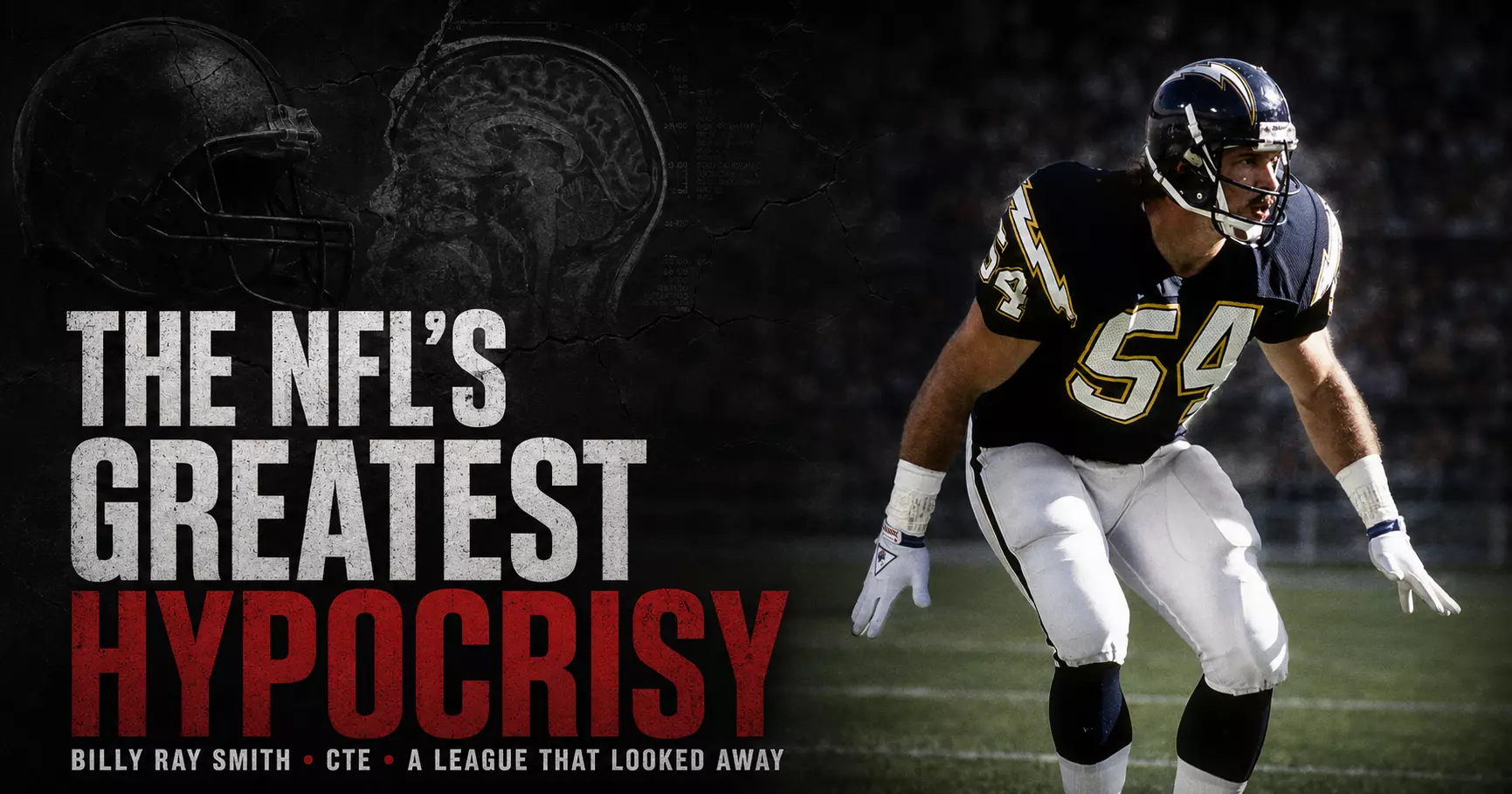
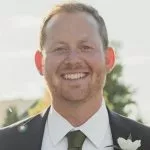
Billy Ray Smith Jr. spent ten seasons delivering the kind of punishment the NFL once celebrated without apology.
Billy Ray Smith Jr. spent ten seasons delivering the kind of punishment the NFL once celebrated without apology. The former San Diego Chargers linebacker was fast, physical and fearless—the prototype for an era when defensive players were encouraged to intimidate opponents and violent collisions were packaged as entertainment.
Smith died on July 29 at only 64 years old. According to his family, he had endured a long battle with dementia caused by chronic traumatic encephalopathy, commonly known as CTE. He died peacefully, surrounded by loved ones, but there was nothing peaceful about the disease that reportedly took him from them.
His death should force another uncomfortable conversation about the National Football League’s treatment of the men who built its multibillion-dollar empire.
Smith was the fifth overall selection in the
1983 NFL Draft
and spent his entire professional career with the Chargers. He played in 126 games, recorded 26.5 sacks and intercepted 15 passes. He was a two-time Chargers Defensive Player of the Year, the team’s MVP in 1987 and eventually a member of its 50th anniversary team.
After football, Smith became a successful and popular broadcaster in San Diego. He was more than a former player. He was a husband, father, community figure and personality whose life should not be reduced to statistics or old highlights.
Yet Smith’s final years followed a pattern that has become horrifyingly familiar. Another former football player suffered cognitive decline. Another family watched someone it loved gradually disappear. Another death was connected to a disease the NFL spent years minimizing, questioning and attempting to explain away.
The league will undoubtedly offer its condolences. It will speak about Smith’s character, accomplishments and importance to the Chargers. Those words may be sincere, but they are not enough.
The NFL has had decades to prove that it cares about former players. Too often, it has treated them as financial liabilities instead of the people who made the league rich.
What
Concussion
Brought Into the Open
The 2015 movie
Concussion, starring Will Smith as Dr. Bennet Omalu, introduced millions of people to a story that the NFL never wanted told.
Omalu discovered CTE while examining the brain of former Pittsburgh Steelers center Mike Webster. Webster was a Hall of Fame player who became homeless, struggled with severe psychological problems and died at 50. When Omalu examined his brain, he found evidence of damage caused by repeated head trauma.
The most important point was not that Webster had suffered one spectacular concussion. It was that years of repeated blows—including hits that might not have produced obvious symptoms—had damaged his brain.
Omalu later found similar evidence in other former players. Instead of welcoming the research and immediately reconsidering how football was played, the NFL and people associated with its medical establishment challenged the findings and attempted to discredit the connection.
The league had created its Mild Traumatic Brain Injury Committee in 1994, but that committee repeatedly published conclusions suggesting that NFL players were not facing significant long-term consequences from concussions. The NFL promoted uncertainty long after there was ample reason for alarm.
That is what
Concussion
brought to light. It was not simply the story of one doctor making a medical discovery. It was the story of an enormously powerful sports league protecting its product while former players were losing their memories, personalities and independence.
The NFL eventually stopped pretending there was no connection between football and long-term brain damage. That change did not come because the league suddenly developed a conscience. It came after medical research, lawsuits, congressional attention, investigative journalism and public outrage made continued denial impossible.
The Evidence Can No Longer Be Dismissed
CTE currently can be definitively diagnosed only after death, and researchers correctly warn that donated-brain studies cannot establish the prevalence of the disease across every person who played football. The families most concerned about brain damage are naturally more likely to donate a loved one’s brain for examination.
Even with that limitation, the findings are staggering.
Boston University’s CTE Center reported in 2023 that researchers had diagnosed CTE in 345 of the 376 former NFL players whose brains they had studied—a rate of 91.7 percent within that donated sample. By comparison, only one of 164 brains in a separate community-based study showed evidence of the disease, and that person had played college football.
Those numbers do not prove that 91.7 percent of all former NFL players have CTE. They do prove that repeated exposure to football-related head impacts cannot honestly be dismissed as a minor or isolated concern.
Billy Ray Smith is now another name attached to that conversation. He joins Mike Webster, Junior Seau, Dave Duerson, Andre Waters and too many others whose lives after football became part of the sport’s darkest legacy.
Fighting the Players After They Built the League
The NFL agreed to a concussion settlement intended to compensate qualifying former players suffering from dementia and other neurological conditions. The league frequently points to that settlement as proof that it has accepted responsibility.
The actual administration of those benefits tells a much uglier story.
A Washington Post investigation found that former players diagnosed with dementia by qualified doctors were still denied compensation. At least 14 players reportedly failed to qualify for settlement money or medical care and later died with CTE confirmed through an autopsy. Eight had been diagnosed with dementia or a related memory disorder while still alive.
A subsequent investigation found that 343 of 1,221 claims based on diagnoses made by settlement-approved doctors had been denied—a rejection rate of 28 percent. Some cases remained under review for more than a year, and three players died before receiving a decision. Administrators examined medical records and social-media activity while families waited for help.
Think about the cruelty of that process.
These players spent their careers being told to play hurt, sacrifice their bodies and put the team first. Some were sent back onto the field after suffering head injuries because toughness was considered more important than neurological health. Then, when the damage became impossible to hide, they were required to navigate an adversarial system and prove that they were sufficiently impaired to deserve assistance.
The league benefited from their toughness and later demanded documentation of their suffering.
That is not compassion. It is corporate damage control.
The Game Has Been Softened—But Not Without a Reason
There is no question that the NFL has softened its rules.
Quarterbacks
receive protections that would have been unimaginable during Smith’s playing career. Defenders can be penalized or fined for lowering their helmets, hitting defenseless receivers or landing on quarterbacks with their body weight. Kickoff rules have been changed. Concussion spotters and independent neurological consultants have been added. Players who display symptoms are supposed to enter a formal evaluation process.
Fans and former players sometimes complain that defenders no longer know how they are allowed to tackle. That criticism has merit. Football is a violent collision sport, and the NFL occasionally asks defensive players to perform the impossible: stop elite athletes moving at full speed without making forceful contact with their heads, necks or bodies.
The league has softened the game because it had to. Research and history demonstrated that the old version was destroying some of the men who played it.
The problem is not that the NFL finally introduced safety rules. The problem is that those rules are presented as evidence of concern while almost every major business decision creates additional physical demands.
The league wants credit for changing the tackle while it continues expanding the workload.
If Player Safety Comes First, Why Is Football Played Nearly Every Day?
The traditional NFL week once revolved overwhelmingly around Sunday afternoon. Now the league stretches its product across the calendar whenever another broadcaster or streaming service is willing to pay.
Games are played on Sunday, Monday and Thursday throughout the season. Saturday games arrive late in the year. Friday games have entered the schedule. Christmas games are staged regardless of the day of the week. The 2026 season will even open with games on Wednesday and Thursday before continuing Sunday and Monday.
Every short week matters. Football players do not fully recover from an NFL game in three or four days. Their bodies are still repairing damaged muscles, joints and connective tissue when they are asked to play again. Fatigue can affect preparation, technique and the ability to protect oneself during collisions.
The NFL knows this. It simply values additional television windows more.
If safety were truly the league’s highest priority, Thursday games would be played only after a bye. Teams would not be moved through multiple short weeks. Holiday scheduling would be designed around recovery instead of broadcast exclusivity.
Instead, “player safety” becomes a phrase used at news conferences while the schedule is constructed to occupy as many profitable days as possible.
Nine International Games Reveal the Real Priority
The hypocrisy becomes even clearer with the NFL’s international expansion.
The league has scheduled a record nine international games in 2026 across four continents, seven countries and eight stadiums. Teams will play in Australia, Brazil, England, France, Germany, Mexico and Spain. The NFL calls it an ambitious global expansion. It is also an enormous travel burden placed on players during the regular season.
Playing overseas means long flights, disrupted sleeping patterns, unfamiliar facilities and additional strain on bodies already absorbing weekly punishment. The NFL’s first game in Australia will require the San Francisco 49ers and Los Angeles Rams to travel across the Pacific for a division game that counts in the standings.
That is not being done for player health. It is being done to develop markets, attract international sponsors, sell subscriptions and generate more revenue.
The league cannot tell everyone that rest and recovery are essential, then send teams across the world during the season because another market is available. It cannot insist that every safety decision is based on medical science while allowing commercial ambitions to dictate travel and preparation.
Remember the Men, Not Just the Product
Billy Ray Smith’s death should be more than another sad headline followed by a moment of silence.
It should remind everyone that NFL players are not disposable pieces of entertainment. They are human beings who may live with the consequences of the game long after the applause ends and the checks stop arriving.
No rule can make football completely safe. Everyone who plays understands that injuries are possible. But earlier generations could not give fully informed consent about CTE because the league itself spent years disputing and minimizing the danger.
The NFL owes those players more than ceremonial tributes. It owes them accessible medical care, fair disability benefits and a process that does not automatically treat every claim as a threat to the bottom line. It owes current players schedules built around reasonable recovery rather than relentless content creation.
The league did not become concerned about brain trauma before the evidence emerged. It questioned the evidence. It did not voluntarily rush to compensate every damaged retiree. It fought claims and built barriers. It did not respond to the dangers by reducing its appetite. It added games, added television windows and expanded across the globe.
Billy Ray Smith gave
football his strength, his talent and a decade of his life. According to his family, the damage from that life followed him until his death.
The NFL will say it mourns him.
If the league truly cares, it should finally prove it by treating the players who built the game as something more valuable than the next game itself.
New Users – Get $350 in Bonus Bets when you wager $5 for 7 days
T&Cs apply
4.6/5
Gambling Problem? Call 1-800-GAMBLER or 1-800-MY-RESET. Call 1-888-789-7777 or visit ccpgg.org/chat (CT). Hope is here. GamblingHelpLineMA.org or call (800) 327-5050 for 24/7 support (MA). Visit www.mdgamblinghelp.org (MD). Call 1-877-8HOPE-NY or text HOPENY (NY). 21+ (18+ DC, WY) and present in select states (for KS, in affiliation with Kansas Star Casino). Find online real money wagering only. Min $5 wager required for 7 consecutive days. $5 free play credit. Bonus issued as non-withdrawable bonus with cash withdrawable bonus with cash withdrawable. Bonus bets which expire 7 days after receipt. Restrictions apply. See terms at sportsbook.fanduel.com. Call 1-877-770-7867 (LA).
Up To $1500 in Bonus Bets Paid Back if your First Bet Does Not Win
T&Cs apply
4.5/5
Gambling problem? Call 1-800-GAMBLER or 1-800-MY-RESET (Available in the US) 877-8-HOPENY or text HOPENY (467369) (NY) 1-800-327-5050 (MA), 1-800-BETS-OFF (IA), 1-800-981-0023 (PR). 21+ only. Please Gamble Responsibly. See BetMGM.com for Terms. First Bet Offer for new customers only (if applicable). Subject to eligibility requirements. Bonus bets are non-withdrawable. In partnership with Kansas Crossing Casino and Hotel. Promotional offers not available in Mississippi, Massachusetts, New York, Ontario, or Puerto Rico.
New DraftKings Customers: Bet $5, Get $200 + 3 Months of NBA League Pass!
T&Cs apply
4.5/5
GAMBLING PROBLEM? CALL 1-800-GAMBLER or 1-800-MY-RESET, (800) 327-5050 or visit gamblinghelplinema.org (MA). Please Gamble Responsibly. 888-789-7777/visit ccpg.org (CT), or visit www.mdgamblinghelp.org (MD), 1-800-981-0023 (PR). 21+ and present in most states. (18+ DC/NH/PR/WY). Void in CAN. Eligibility restrictions apply. On behalf of Boot Hill Casino (KS). Pass-thru of per wager tax may apply in IL. 1 per new Sportsbook customer. $5+ first-time bet req. Max. $200 issued as non-withdrawable Bonus Bets. Stake removed from payout. Reward issued as $50 in Bonus Bets every 7 days via click-to-claim for 21 days. Bonus Bets and click-to-claims expire 7 days (168hrs) after issuance. Terms: dkng.co/offer. Get 1 promo code to redeem a 3-month NBA League Pass subscription, complimentary of DraftKings. Subscription auto-renews monthly at then-current price (currently $16.99/mo); cancel anytime. Terms, restrictions, and eligibility requirements apply. Redeem League Pass by 12/19/26 at 11:59 PM ET. Addt’l terms: support.watch.nba.com/hc/en-us/articles/9165532876183-League-Pass-Terms-of-Use_. Ends 11/29/26 at 11:59 PM ET. Sponsored by DK.
Must be 21+. GAMBLING PROBLEM? CALL 1-800-GAMBLER OR CALL 1-800-MY-RESET, www.mdgamblinghelp.org (MD), (800)-327-5050 or gamblinghelplinema.org (MA), Call (877)8-HOPENY or text HOPENY (467369) (NY), (888) 789-7777 or ccpg.org (CT), morethanagame.nc.gov (NC), 1800gambler.net (WV)
Bet $1 and get double the winnings up to $25 for your next 10 bets
T&Cs apply
4.4/5
21+ New users only. Must register using eligible promo code. First bet after registration must qualify. Max. Bonus Bet: $1,000. Bonus Bet expires 14 days after receipt. Void where prohibited. See Caesars.com/promos for full terms. Gambling Problem? 1-800-GAMBLER (1-800-426-2537)
21+ and present in OH. Gambling Problem? Call 1-800-GAMBLER.
This site is using
Cloudflare
and adheres to the
Google Safe Browsing Program. We adapted
Google's Privacy Guidelines
to keep your data safe at all times.
Close
Ready to Win Big? Join the Elite with Our Sports Betting Deals!
FanDuel Promo
New Users – Get $350 in Bonus Bets when you wager $5 for 7 days
Our Favorite
T&Cs and 21+ apply
Gambling Problem? Call 1-800-GAMBLER or 1-800-MY-RESET. Call 1-888-789-7777 or visit ccpgg.org/chat (CT). Hope is here. GamblingHelpLineMA.org or call (800) 327-5050 for 24/7 support (MA). Visit www.mdgamblinghelp.org (MD). Call 1-877-8HOPE-NY or text HOPENY (NY). 21+ (18+ DC, WY) and present in select states (for KS, in affiliation with Kansas Star Casino). Find online real money wagering only. Min $5 wager required for 7 consecutive days. $5 free play credit. Bonus issued as non-withdrawable bonus with cash withdrawable bonus with cash withdrawable. Bonus bets which expire 7 days after receipt. Restrictions apply. See terms at sportsbook.fanduel.com. Call 1-877-770-7867 (LA).
Code:
Open FanDuel
Get Bonus
BetMGM Promo
Up To $1500 in Bonus Bets Paid Back if your First Bet Does Not Win
Best Slots
T&Cs and 21+ apply
Gambling problem? Call 1-800-GAMBLER or 1-800-MY-RESET (Available in the US) 877-8-HOPENY or text HOPENY (467369) (NY) 1-800-327-5050 (MA), 1-800-BETS-OFF (IA), 1-800-981-0023 (PR). 21+ only. Please Gamble Responsibly. See BetMGM.com for Terms. First Bet Offer for new customers only (if applicable). Subject to eligibility requirements. Bonus bets are non-withdrawable. In partnership with Kansas Crossing Casino and Hotel. Promotional offers not available in Mississippi, Massachusetts, New York, Ontario, or Puerto Rico.
Code:
Open BetMGM
Get Bonus
DraftKings Promo
New DraftKings Customers: Bet $5, Get $200 + 3 Months of NBA League Pass!
Newcomer
T&Cs and 21+ apply
GAMBLING PROBLEM? CALL 1-800-GAMBLER or 1-800-MY-RESET, (800) 327-5050 or visit gamblinghelplinema.org (MA). Please Gamble Responsibly. 888-789-7777/visit ccpg.org (CT), or visit www.mdgamblinghelp.org (MD), 1-800-981-0023 (PR). 21+ and present in most states. (18+ DC/NH/PR/WY). Void in CAN. Eligibility restrictions apply. On behalf of Boot Hill Casino (KS). Pass-thru of per wager tax may apply in IL. 1 per new Sportsbook customer. $5+ first-time bet req. Max. $200 issued as non-withdrawable Bonus Bets. Stake removed from payout. Reward issued as $50 in Bonus Bets every 7 days via click-to-claim for 21 days. Bonus Bets and click-to-claims expire 7 days (168hrs) after issuance. Terms: dkng.co/offer. Get 1 promo code to redeem a 3-month NBA League Pass subscription, complimentary of DraftKings. Subscription auto-renews monthly at then-current price (currently $16.99/mo); cancel anytime. Terms, restrictions, and eligibility requirements apply. Redeem League Pass by 12/19/26 at 11:59 PM ET. Addt’l terms: support.watch.nba.com/hc/en-us/articles/9165532876183-League-Pass-Terms-of-Use_. Ends 11/29/26 at 11:59 PM ET. Sponsored by DK.
Code:
Open DraftKings
Get Bonus
Find out what the legends have to say about sports this week....
New Users – Get $350 in Bonus Bets when you wager $5 for 7 days
Gambling Problem? Call 1-800-GAMBLER or 1-800-MY-RESET. Call 1-888-789-7777 or visit ccpgg.org/chat (CT). Hope is here. GamblingHelpLineMA.org or call (800) 327-5050 for 24/7 support (MA). Visit www.mdgamblinghelp.org (MD). Call 1-877-8HOPE-NY or text HOPENY (NY). 21+ (18+ DC, WY) and present in select states (for KS, in affiliation with Kansas Star Casino). Find online real money wagering only. Min $5 wager required for 7 consecutive days. $5 free play credit. Bonus issued as non-withdrawable bonus with cash withdrawable bonus with cash withdrawable. Bonus bets which expire 7 days after receipt. Restrictions apply. See terms at sportsbook.fanduel.com. Call 1-877-770-7867 (LA).