These are the articles I love to write the most — the ones that shine a light on players whose names have been neglected by history, overshadowed by time, or simply forgotten by a modern football world obsessed with fantasy stats and viral highlights. There are countless great players from the game’s past who deserve far more recognition than they receive today. Sharing their stories with younger generations is not just fun — it feels like a responsibility.
A little over 8 years ago, I wrote an article about
six men who should
not
be in the
Pro Football Hall of Fame.
After publication, I received a thoughtful, handwritten rebuttal from former Giants and Rams pass-rusher
Gary Jeter
— and that unexpected message changed everything.
Gary wasn’t writing to defend himself or complain about my selections. Instead, he wanted to talk about someone I
didn’t
mention:
his uncle, Bob Jeter, a player whose name I embarrassingly had never even heard of at the time. According to Gary, Bob Jeter wasn’t just a good player — he was one of the greatest players ever to line up at cornerback for the Green Bay Packers during the Lombardi dynasty.
So I started digging. Then I started calling. Then I interviewed Gary directly.
What I discovered about Bob Jeter was not just surprising — it was inspiring. His story spans segregation, integration, college stardom, professional reinvention, and life-changing community service. And yet, far too many football fans know nothing about him.
That ends today.
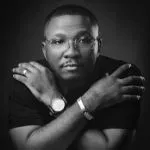
Interview with Gary Jeter former Giant and Rams legend!
From Segregated West Virginia to Statewide History
Bob Jeter’s football journey began in the coal country of West Virginia, and his early years placed him directly in the middle of one of the most impactful cultural transitions in American sports.
Jeter first starred at
Dunbar High School, one of the premier segregated Black schools in the state. He was already a standout athlete, but his story took a historic turn when his family moved and he transferred to
Weir High School, an integrated school where he quickly proved he belonged among the best players in the state — regardless of race.
He didn’t just excel. He
made history.
At Weir, Bob became the
first African-American player ever named to the West Virginia Sports Writers’ All-State Team, breaking a barrier that had stood for generations. In a football-rich state like West Virginia, this was no small feat.
A Star at Iowa — and a Rose Bowl Legend
After high school, Bob Jeter chose to play college football at the
University of Iowa, one of the best programs in the nation at the time. There, he emerged as a dominant two-way player — the kind of athlete who today would be labeled as “positionless” in the most complimentary sense.
His finest hour came on one of the sport’s biggest stages.
In the
1959 Rose Bowl, Iowa dismantled the University of California, and Bob Jeter ran wild:
9 carries
194 rushing yards
81-yard touchdown run
(a Rose Bowl record)
Named the Rose Bowl MVP
Even decades later, Gary Jeter recalled watching the film and seeing his uncle’s speed and fluidity jump off the screen. Many fans today don’t even realize that Bob Jeter is still one of the most dominant Rose Bowl performers of all time.
Drafted Twice — and Choosing His Own Path
Bob’s professional journey started with a rare distinction: he was drafted
twice
— by two leagues.
First Round, AFL Draft —
San Diego Chargers
Second Round, NFL Draft —
Green Bay Packers
But instead of joining either league right away, Jeter made a bold and unconventional decision: he went to the
Canadian Football League, signing with the
BC Lions.
In 1960, he finished second on the team in both rushing and receiving yards, showing the same versatility that defined his college career. But by 1961, his playing time had diminished, and after the season ended, Jeter decided it was time to take his talents back to the United States.
Lombardi’s Conversion: From Receiver to Cornerback
In 1962, Jeter joined the
Green Bay Packers, but not as an immediate contributor. He spent his first season on the
Taxi Squad
(today’s practice squad) and saw limited action in 1963 and 1964 while trying to make the roster as a receiver.
It was then that
Vince Lombardi
made one of the most underappreciated coaching decisions of his legendary career:
He moved Bob Jeter from wide receiver to
cornerback.
That single switch changed the Packers’ defense — and Jeter’s life.
Becoming a Cornerback Superstar
Jeter got his first real break in
1965, starting the
NFL Championship Game
against the Cleveland Browns — and he never looked back.
Over the next several seasons, Jeter formed one of the
greatest cornerback duos in NFL history
with Hall of Famer
Herb Adderley. NFL.com ranked them the
4th-best CB tandem of all time, and none other than Hall of Fame quarterback
Len Dawson
said they were the very best he ever faced.
Bob Jeter’s credentials:
Started on three straight Packers championship teams (1965–67)
Two-time Pro Bowler (1967, 1968)
Led Packers with
8 interceptions in 1968, Lombardi’s final year
26 career interceptions, 2 returned for touchdowns
These aren’t the numbers of a complementary player. These are the numbers of a legitimate star.
And yet, he is rarely mentioned in the conversation about the great defensive backs of the 1960s — an omission rooted far more in lack of branding than lack of talent.
A Final Chapter in Chicago
Bob was traded to the
Chicago Bears
in 1971, where he played through the 1973 season before retiring. His impact, however, had already been cemented in Green Bay — a crucial piece of a dynasty and a defensive force who shut down some of the era’s best receivers.
A Life of Leadership Beyond Football
Perhaps the most overlooked part of Bob Jeter’s story is what he did
after
football.
He chose to stay in Chicago, where he became a coordinator for the
Chicago Park District, organizing citywide youth sports programs. For countless children, especially in underserved neighborhoods, Bob Jeter wasn’t just a former NFL player — he was a mentor, a leader, and a force for good.
His legacy extended through his family:
His son
Rob Jeter
became the head basketball coach at UW-Milwaukee
His brother
Tony Jeter
played two seasons for the Pittsburgh Steelers
His nephew
Gary Jeter
had a long NFL career from 1977–1989 and was a first-round pick
Bob Jeter passed away in 2008, but his impact — on football, on Chicago, and on the many lives he touched — remains alive.
Why Bob Jeter Matters
Bob Jeter’s life is a testament to perseverance, adaptability, and excellence. He succeeded in segregated America, broke barriers in integrated schools, dominated in college football, reinvented himself in the pros, and served the community long after his playing days.
He is not just a forgotten player. He is a
forgotten pioneer.
And it’s time football fans rediscovered his story.
Up To $1500 in Bonus Bets Paid Back if your First Bet Does Not Win
T&Cs apply
4.5/5
Gambling problem? Call 1-800-GAMBLER or 1-800-MY-RESET (Available in the US) 877-8-HOPENY or text HOPENY (467369) (NY) 1-800-327-5050 (MA), 1-800-BETS-OFF (IA), 1-800-981-0023 (PR). 21+ only. Please Gamble Responsibly. See BetMGM.com for Terms. First Bet Offer for new customers only (if applicable). Subject to eligibility requirements. Bonus bets are non-withdrawable. In partnership with Kansas Crossing Casino and Hotel. Promotional offers not available in Mississippi, Massachusetts, New York, Ontario, or Puerto Rico.
New DraftKings Customers: Spend $5+ Get $150 in Bonuses
T&Cs apply
4.5/5
GAMBLING PROBLEM? CALL 1-800-GAMBLER or 1-800-MY-RESET, (800) 327-5050 or visit gamblinghelplinema.org (MA). Please Gamble Responsibly. 888-789-7777/visit ccpg.org (CT), or visit www.mdgamblinghelp.org (MD), 1-800-981-0023 (PR). 21+ and present in most states. (18+ DC/NH/PR/WY). Void in CAN. Eligibility restrictions apply. On behalf of Boot Hill Casino (KS). Pass-thru of per wager tax may apply in IL. 1 per new DraftKings customer. $5+ first-time bet req. Max. $150 issued as non-withdrawable Bonus Bets. Stake removed from payout. Reward issued as $50 in Bonus Bets every 7 days via click-to-claim for 14 days. Bonus Bets and click-to-claims expire 7 days (168hrs) after issuance. Terms: sportsbook.draftkings.com/promos. Ends 10/11/26 at 11:59 PM ET. Sponsored by DK.
Must be 21+. GAMBLING PROBLEM? CALL 1-800-GAMBLER OR CALL 1-800-MY-RESET, www.mdgamblinghelp.org (MD), (800)-327-5050 or gamblinghelplinema.org (MA), Call (877)8-HOPENY or text HOPENY (467369) (NY), (888) 789-7777 or ccpg.org (CT), morethanagame.nc.gov (NC), 1800gambler.net (WV)
Bet $1 and get double the winnings up to $25 for your next 10 bets
T&Cs apply
4.4/5
21+ New users only. Must register using eligible promo code. First bet after registration must qualify. Max. Bonus Bet: $1,000. Bonus Bet expires 14 days after receipt. Void where prohibited. See Caesars.com/promos for full terms. Gambling Problem? 1-800-GAMBLER (1-800-426-2537)
21+ and present in OH. Gambling Problem? Call 1-800-GAMBLER.
This site is using
Cloudflare
and adheres to the
Google Safe Browsing Program. We adapted
Google's Privacy Guidelines
to keep your data safe at all times.
Close
Ready to Win Big? Join the Elite with Our Sports Betting Deals!
FanDuel Promo
New Users – Get $250 in Bonus Bets when you wager $5 for 5 days
Up To $1500 in Bonus Bets Paid Back if your First Bet Does Not Win
Best Slots
T&Cs and 21+ apply
Gambling problem? Call 1-800-GAMBLER or 1-800-MY-RESET (Available in the US) 877-8-HOPENY or text HOPENY (467369) (NY) 1-800-327-5050 (MA), 1-800-BETS-OFF (IA), 1-800-981-0023 (PR). 21+ only. Please Gamble Responsibly. See BetMGM.com for Terms. First Bet Offer for new customers only (if applicable). Subject to eligibility requirements. Bonus bets are non-withdrawable. In partnership with Kansas Crossing Casino and Hotel. Promotional offers not available in Mississippi, Massachusetts, New York, Ontario, or Puerto Rico.
Code:
Open BetMGM
Get Bonus
DraftKings Promo
New DraftKings Customers: Spend $5+ Get $150 in Bonuses
Newcomer
T&Cs and 21+ apply
GAMBLING PROBLEM? CALL 1-800-GAMBLER or 1-800-MY-RESET, (800) 327-5050 or visit gamblinghelplinema.org (MA). Please Gamble Responsibly. 888-789-7777/visit ccpg.org (CT), or visit www.mdgamblinghelp.org (MD), 1-800-981-0023 (PR). 21+ and present in most states. (18+ DC/NH/PR/WY). Void in CAN. Eligibility restrictions apply. On behalf of Boot Hill Casino (KS). Pass-thru of per wager tax may apply in IL. 1 per new DraftKings customer. $5+ first-time bet req. Max. $150 issued as non-withdrawable Bonus Bets. Stake removed from payout. Reward issued as $50 in Bonus Bets every 7 days via click-to-claim for 14 days. Bonus Bets and click-to-claims expire 7 days (168hrs) after issuance. Terms: sportsbook.draftkings.com/promos. Ends 10/11/26 at 11:59 PM ET. Sponsored by DK.
Code:
Open DraftKings
Get Bonus
Find out what the legends have to say about sports this week....