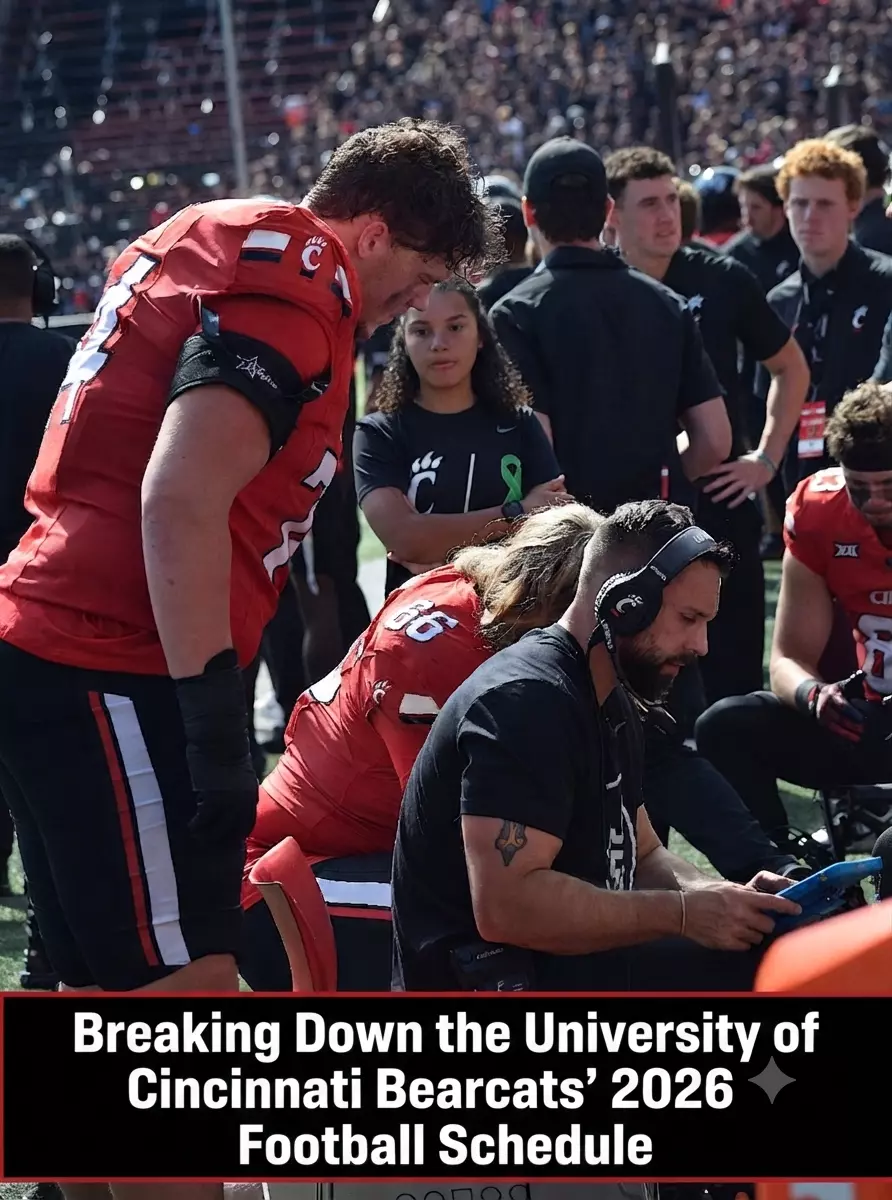
Breaking Down the University of Cincinnati Bearcats' 2026 Football Schedule
Breaking Down the University of Cincinnati Bearcats’ 2026 Football Schedule
The University of Cincinnati enters the 2026 football season looking to continue its climb in the Big 12 Conference with a schedule that offers both opportunity and significant challenges. Head coach Scott Satterfield’s squad will play seven games in the Cincinnati area, including six at historic Nippert Stadium and the annual Battle for the Victory Bell against Miami (Ohio), while navigating a demanding conference slate that features several difficult road trips and marquee home matchups.
With bowl eligibility once again the primary objective, the Bearcats have a favorable non-conference schedule before entering one of the nation’s most competitive conferences. How Cincinnati performs at home—and whether it can steal a few road victories—will ultimately determine how successful the 2026 campaign becomes.
2026 Cincinnati Football Schedule
Sept. 5
– Boston College (Home)
Sept. 12
– Western Carolina (Home)
Sept. 19
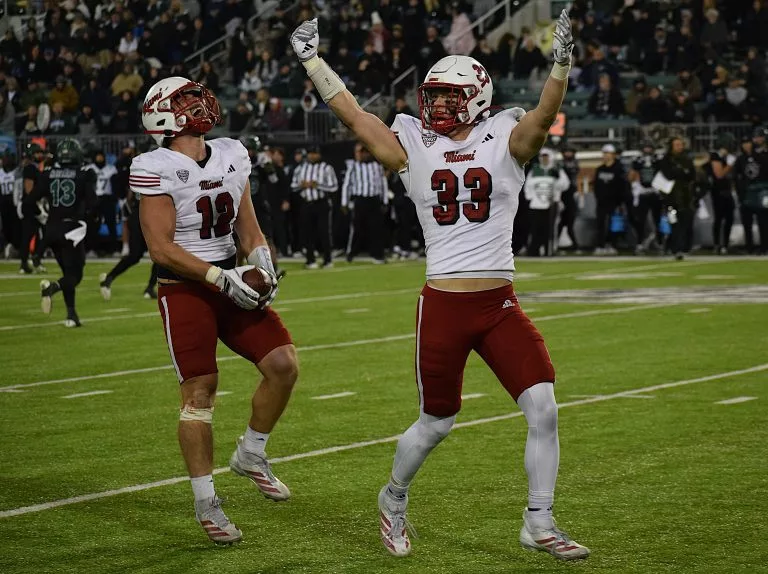
– Miami (Ohio) (Neutral Site – Cincinnati)
Sept. 26
– Kansas State (Home)
Oct. 3
– at Arizona
Oct. 10
– Bye Week
Oct. 17
– at West Virginia
Oct. 24
– Texas Tech (Home – 100th Homecoming)
Oct. 31
– Utah (Home)
Nov. 7
– at Houston
Nov. 14
– at Iowa State
Nov. 21
– Colorado (Home)
Nov. 28
– at BYU
Non-Conference Schedule Sets the Tone
Cincinnati begins the season with three consecutive non-conference games that should help establish momentum before Big 12 play.
Week 1: Boston College
Opening against an ACC opponent immediately provides an early measuring stick. Boston College traditionally fields a physical football team, making this an excellent test for Cincinnati’s offensive and defensive lines. A victory would give the Bearcats an impressive résumé-building win before conference competition begins.
Week 2: Western Carolina
Western Carolina represents the lone FCS opponent on the schedule. While Cincinnati will be heavily favored, the game gives the coaching staff an opportunity to rotate younger players, evaluate depth, and continue developing chemistry before entering conference play.
Week 3: Miami (Ohio)
Few rivalries in college football carry the tradition of the Battle for the Victory Bell. The annual matchup against Miami (Ohio) is always one of the most anticipated games on Cincinnati’s schedule regardless of records. Rivalry games rarely follow expectations, and protecting the Victory Bell remains one of the Bearcats’ top early-season priorities.
Big 12 Play Begins at Nippert
Week 4: Kansas State
Conference play opens with one of Cincinnati’s toughest home games. Kansas State has consistently been among the Big 12’s most disciplined programs and annually competes near the top of the standings. Starting conference action with a home victory would provide a significant boost toward bowl eligibility and the conference race.
Week 5: at Arizona
The Bearcats immediately hit the road for a challenging trip to Tucson. Traveling across the country early in conference play presents another difficult hurdle as Cincinnati attempts to prove it can win away from home.
Midseason Reset
Following the Arizona game, Cincinnati receives its lone bye week on October 10. The timing is ideal, allowing players to recover before entering the heart of the conference schedule.
Challenging October Stretch
Week 7: at West Virginia
Morgantown has long been considered one of college football’s more difficult road environments. The Mountaineers traditionally play with intensity at home, making this one of Cincinnati’s toughest away contests.
Week 8: Texas Tech (100th Homecoming)
One of the season’s marquee games comes during Cincinnati’s historic 100th Homecoming celebration. Texas Tech makes its first appearance at Nippert Stadium, adding another intriguing conference matchup to an already significant weekend.
Week 9: Utah
The Bearcats remain at home to host another Big 12 contender in Utah. Consecutive home games against Texas Tech and Utah could ultimately define Cincinnati’s conference season and determine whether the Bearcats remain in contention entering November.
November Will Determine the Season
Week 10: at Houston
Road games become increasingly important late in the season, and Houston presents another difficult conference challenge. Winning away from home in November often separates bowl teams from conference contenders.
Week 11: at Iowa State
A trip to Ames is never easy. Iowa State has developed into one of the Big 12’s most consistent programs, and Jack Trice Stadium has become one of the conference’s toughest venues for visiting teams.
Week 12: Colorado
Cincinnati returns home for its final game at Nippert Stadium against Colorado. Senior Day provides extra motivation, and the outcome could carry significant implications for postseason positioning.
Week 13: at BYU
The regular season concludes with perhaps the most difficult road trip of the year. Playing at BYU’s LaVell Edwards Stadium presents unique challenges because of the altitude, travel distance, and passionate home crowd. If postseason positioning remains undecided, this could become one of the season’s most important games.
Games That Could Define the Season
Several contests stand out as pivotal moments on Cincinnati’s schedule.
Kansas State opens conference play and provides an immediate opportunity to establish momentum in the Big 12. The rivalry game against Miami (Ohio) remains essential for local bragging rights, while consecutive home games against Texas Tech and Utah could shape Cincinnati’s conference championship aspirations. The late-season road swing featuring Houston, Iowa State, and BYU may ultimately determine whether the Bearcats finish near the top half of the Big 12 or simply secure bowl eligibility.
Overall Schedule Outlook
The Bearcats appear to have a balanced schedule that features manageable non-conference games paired with a demanding Big 12 slate. Cincinnati benefits from several high-profile conference games at Nippert Stadium but must also survive difficult road trips to Arizona, West Virginia, Houston, Iowa State, and BYU.
If Cincinnati can capitalize on its home-field advantage, protect the Victory Bell against Miami (Ohio), and steal a couple of victories on the road, the Bearcats could position themselves for another postseason appearance and potentially compete for an upper-tier finish in the Big 12. With a favorable early schedule, an appropriately timed bye week, and several nationally attractive home matchups, the 2026 season provides Cincinnati with an excellent opportunity to continue building momentum in one of college football’s deepest conferences.
Betting Odds
Season Win Total:
5.5 Wins
Over 5.5:
+120
Under 5.5:
-155
Odds to Win the Big 12 Championship:
+8000
Oddsmakers view Cincinnati as a team capable of competing for bowl eligibility but facing an uphill climb in the rugged Big 12 Conference. The Bearcats’ manageable non-conference schedule gives them a solid opportunity to build momentum before conference play begins, but difficult road trips to Arizona, West Virginia, Houston, Iowa State, and BYU will likely determine whether Cincinnati surpasses its projected win total.
Top 4 Season Prop Bets
Prop Bet #1: Cincinnati Over 5.5 Regular Season Wins (+120)
DraftKings
4.5/5
Over 5.5 Regular Season Wins
Favorable Non-Conference Schedule
Six Home Games
Bowl Potential
New DraftKings Customers: Spend $5+ Get $150 in Bonuses
Get bonus now
GAMBLING PROBLEM? CALL 1-800-GAMBLER or 1-800-MY-RESET, (800) 327-5050 or visit gamblinghelplinema.org (MA). Please Gamble Responsibly. 888-789-7777/visit ccpg.org (CT), or visit www.mdgamblinghelp.org (MD), 1-800-981-0023 (PR). 21+ and present in most states. (18+ DC/NH/PR/WY). Void in CAN. Eligibility restrictions apply. On behalf of Boot Hill Casino (KS). Pass-thru of per wager tax may apply in IL. 1 per new DraftKings customer. $5+ first-time bet req. Max. $150 issued as non-withdrawable Bonus Bets. Stake removed from payout. Reward issued as $50 in Bonus Bets every 7 days via click-to-claim for 14 days. Bonus Bets and click-to-claims expire 7 days (168hrs) after issuance. Terms: sportsbook.draftkings.com/promos. Ends 10/11/26 at 11:59 PM ET. Sponsored by DK.
Cincinnati has a realistic path to six victories in 2026. The Bearcats should be favored against Western Carolina and Miami (Ohio), while home games against Boston College, Texas Tech, Utah, and Colorado provide opportunities to exceed expectations. If Cincinnati can protect Nippert Stadium and steal one or two road victories, the over becomes an attractive value play.
Prop Bet #2: Cincinnati to Defeat Miami (Ohio)
FanDuel
4.6/5
Battle for the Victory Bell
Historic Rivalry
Superior Talent
Home-State Bragging Rights
New Users – Get $250 in Bonus Bets when you wager $5 for 5 days
The Battle for the Victory Bell remains one of the oldest rivalries in college football, and Cincinnati enters the matchup with the more talented roster. Rivalry games are often unpredictable, but the Bearcats have consistently treated this game as a priority and should be in position to retain the Victory Bell once again.
Prop Bet #3: Cincinnati to Become Bowl Eligible
Caesars
4.4/5
Team to Make a Bowl Game
Six-Win Target
Balanced Schedule
Experienced Roster
Bet $1 and get double the winnings up to $25 for your next 10 bets
–
21+ New users only. Must register using eligible promo code. First bet after registration must qualify. Max. Bonus Bet: $1,000. Bonus Bet expires 14 days after receipt. Void where prohibited. See Caesars.com/promos for full terms. Gambling Problem? 1-800-GAMBLER (1-800-426-2537)
With a projected win total of 5.5, sportsbooks expect Cincinnati to be right on the bowl eligibility line. The Bearcats have enough winnable games on their schedule to reach six victories if they handle business in non-conference play and earn three conference wins. This prop offers value for bettors who believe Cincinnati can outperform preseason expectations.
Prop Bet #4: Cincinnati to Finish with Exactly Six Regular Season Wins
BetMGM
4.5/5
Exactly 6 Regular Season Wins
Most Likely Outcome
Competitive Big 12
Strong Home Schedule
Up To $1500 in Bonus Bets Paid Back if your First Bet Does Not Win
Get bonus now
Gambling problem? Call 1-800-GAMBLER or 1-800-MY-RESET (Available in the US) 877-8-HOPENY or text HOPENY (467369) (NY) 1-800-327-5050 (MA), 1-800-BETS-OFF (IA), 1-800-981-0023 (PR). 21+ only. Please Gamble Responsibly. See BetMGM.com for Terms. First Bet Offer for new customers only (if applicable). Subject to eligibility requirements. Bonus bets are non-withdrawable. In partnership with Kansas Crossing Casino and Hotel. Promotional offers not available in Mississippi, Massachusetts, New York, Ontario, or Puerto Rico.
A 6-6 finish appears to be Cincinnati’s most realistic outcome entering the 2026 season. The Bearcats have enough talent to reach bowl eligibility but also face one of the nation’s more challenging conference schedules. Winning three non-conference games and splitting key Big 12 contests would put Cincinnati right at the six-win mark.
Final Thoughts
The 2026 season presents an important opportunity for Cincinnati to continue establishing itself in the Big 12 Conference. A favorable start, six games at Nippert Stadium, and an experienced roster give the Bearcats a realistic path toward another bowl appearance. However, success will ultimately depend on winning at home, protecting the Victory Bell, and finding a way to pull off a few key road victories against conference opponents. If Cincinnati can meet those expectations, the Bearcats could exceed preseason projections and finish among the conference’s biggest surprises.
Up To $1500 in Bonus Bets Paid Back if your First Bet Does Not Win
T&Cs apply
4.5/5
Gambling problem? Call 1-800-GAMBLER or 1-800-MY-RESET (Available in the US) 877-8-HOPENY or text HOPENY (467369) (NY) 1-800-327-5050 (MA), 1-800-BETS-OFF (IA), 1-800-981-0023 (PR). 21+ only. Please Gamble Responsibly. See BetMGM.com for Terms. First Bet Offer for new customers only (if applicable). Subject to eligibility requirements. Bonus bets are non-withdrawable. In partnership with Kansas Crossing Casino and Hotel. Promotional offers not available in Mississippi, Massachusetts, New York, Ontario, or Puerto Rico.
New DraftKings Customers: Spend $5+ Get $150 in Bonuses
T&Cs apply
4.5/5
GAMBLING PROBLEM? CALL 1-800-GAMBLER or 1-800-MY-RESET, (800) 327-5050 or visit gamblinghelplinema.org (MA). Please Gamble Responsibly. 888-789-7777/visit ccpg.org (CT), or visit www.mdgamblinghelp.org (MD), 1-800-981-0023 (PR). 21+ and present in most states. (18+ DC/NH/PR/WY). Void in CAN. Eligibility restrictions apply. On behalf of Boot Hill Casino (KS). Pass-thru of per wager tax may apply in IL. 1 per new DraftKings customer. $5+ first-time bet req. Max. $150 issued as non-withdrawable Bonus Bets. Stake removed from payout. Reward issued as $50 in Bonus Bets every 7 days via click-to-claim for 14 days. Bonus Bets and click-to-claims expire 7 days (168hrs) after issuance. Terms: sportsbook.draftkings.com/promos. Ends 10/11/26 at 11:59 PM ET. Sponsored by DK.
Must be 21+. GAMBLING PROBLEM? CALL 1-800-GAMBLER OR CALL 1-800-MY-RESET, www.mdgamblinghelp.org (MD), (800)-327-5050 or gamblinghelplinema.org (MA), Call (877)8-HOPENY or text HOPENY (467369) (NY), (888) 789-7777 or ccpg.org (CT), morethanagame.nc.gov (NC), 1800gambler.net (WV)
Bet $1 and get double the winnings up to $25 for your next 10 bets
T&Cs apply
4.4/5
21+ New users only. Must register using eligible promo code. First bet after registration must qualify. Max. Bonus Bet: $1,000. Bonus Bet expires 14 days after receipt. Void where prohibited. See Caesars.com/promos for full terms. Gambling Problem? 1-800-GAMBLER (1-800-426-2537)
21+ and present in OH. Gambling Problem? Call 1-800-GAMBLER.
This site is using
Cloudflare
and adheres to the
Google Safe Browsing Program. We adapted
Google's Privacy Guidelines
to keep your data safe at all times.
Close
Ready to Win Big? Join the Elite with Our Sports Betting Deals!
FanDuel Promo
New Users – Get $250 in Bonus Bets when you wager $5 for 5 days
Up To $1500 in Bonus Bets Paid Back if your First Bet Does Not Win
Best Slots
T&Cs and 21+ apply
Gambling problem? Call 1-800-GAMBLER or 1-800-MY-RESET (Available in the US) 877-8-HOPENY or text HOPENY (467369) (NY) 1-800-327-5050 (MA), 1-800-BETS-OFF (IA), 1-800-981-0023 (PR). 21+ only. Please Gamble Responsibly. See BetMGM.com for Terms. First Bet Offer for new customers only (if applicable). Subject to eligibility requirements. Bonus bets are non-withdrawable. In partnership with Kansas Crossing Casino and Hotel. Promotional offers not available in Mississippi, Massachusetts, New York, Ontario, or Puerto Rico.
Code:
Open BetMGM
Get Bonus
DraftKings Promo
New DraftKings Customers: Spend $5+ Get $150 in Bonuses
Newcomer
T&Cs and 21+ apply
GAMBLING PROBLEM? CALL 1-800-GAMBLER or 1-800-MY-RESET, (800) 327-5050 or visit gamblinghelplinema.org (MA). Please Gamble Responsibly. 888-789-7777/visit ccpg.org (CT), or visit www.mdgamblinghelp.org (MD), 1-800-981-0023 (PR). 21+ and present in most states. (18+ DC/NH/PR/WY). Void in CAN. Eligibility restrictions apply. On behalf of Boot Hill Casino (KS). Pass-thru of per wager tax may apply in IL. 1 per new DraftKings customer. $5+ first-time bet req. Max. $150 issued as non-withdrawable Bonus Bets. Stake removed from payout. Reward issued as $50 in Bonus Bets every 7 days via click-to-claim for 14 days. Bonus Bets and click-to-claims expire 7 days (168hrs) after issuance. Terms: sportsbook.draftkings.com/promos. Ends 10/11/26 at 11:59 PM ET. Sponsored by DK.
Code:
Open DraftKings
Get Bonus
Find out what the legends have to say about sports this week....