The Big Ten Conference has long been synonymous with college football excellence. Founded in 1896 as the Western Conference
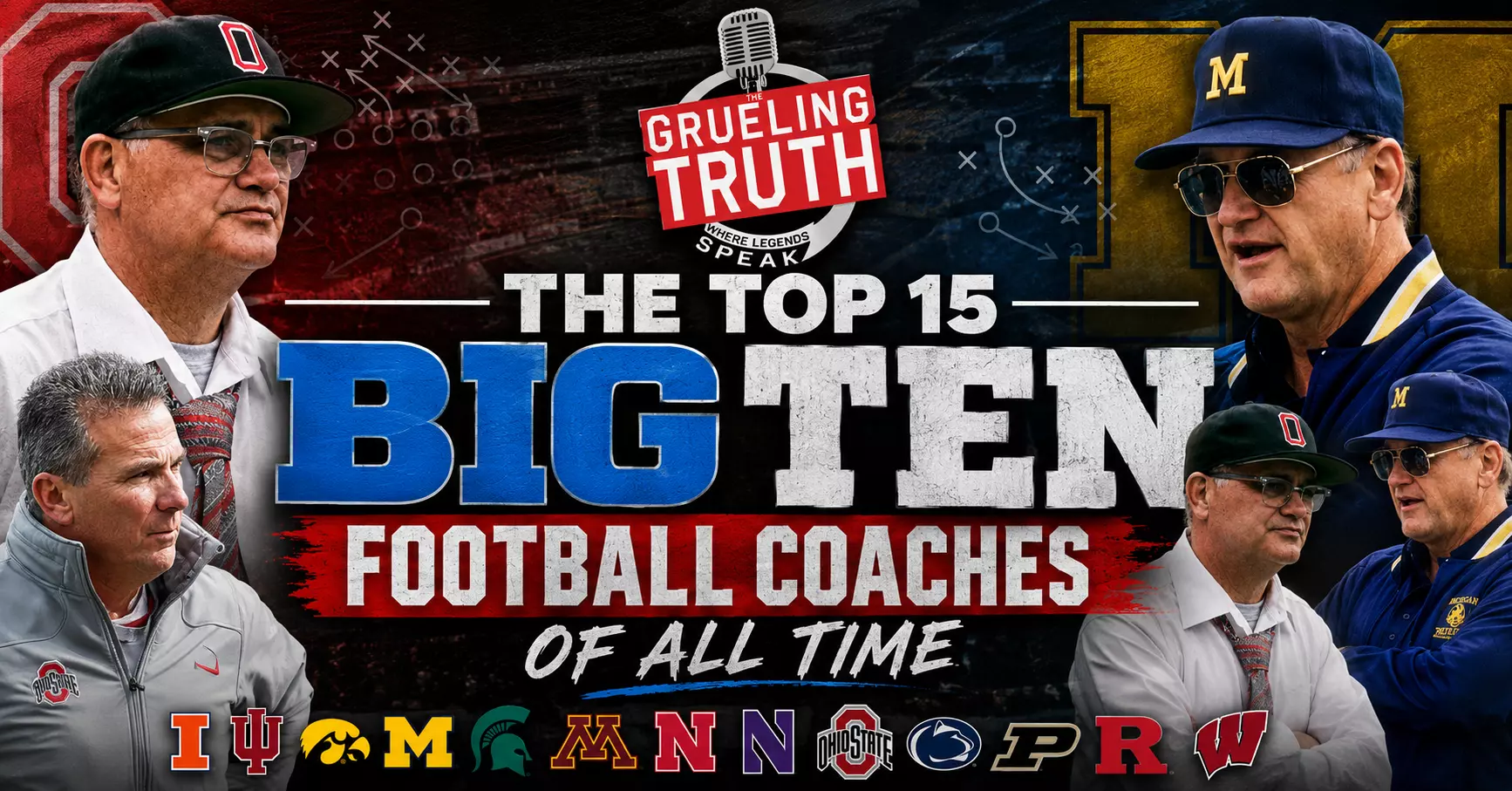
The Big Ten Conference has long been synonymous with college football excellence. Founded in 1896 as the Western Conference, it has produced more national champions, Hall of Fame coaches, Heisman Trophy winners, and iconic rivalries than perhaps any conference in the history of the sport. From the leather-helmet era to today’s expanded 18-team super conference, the Big Ten has consistently set the standard for tradition, physicality, and winning.
The conference’s greatest coaches did far more than pile up victories. They built dynasties, revolutionized offensive and defensive football, won national championships, developed countless NFL players, and created legacies that continue to shape college football decades after they patrolled the sidelines.
Ranking these legends isn’t easy. This list considers national championships, Big Ten championships, overall winning percentage, longevity, innovation, historical significance, and lasting impact on the conference. Coaches from every era are represented, making this a celebration of more than a century of Big Ten football. Cignetti, Day, and Lanning will all be on this list at some point, and with the way Cignetti is going, he might be at number one, but all are still early in their Big Ten Coaching Tenure.
15. Clarence “Biggie” Munn – Michigan State
Before Michigan State became a national power under Duffy Daugherty, it was Clarence “Biggie” Munn who established the Spartans as one of
college football’s elite programs. Munn coached Michigan State from 1947 through 1953, compiling an outstanding 54-9-2 record while posting one of the highest winning percentages in Big Ten history. His .846 career winning percentage remains among the best ever recorded by a conference coach.
Munn guided Michigan State to national championships in 1951 and 1952, with the 1952 squad finishing undefeated and widely regarded as one of the greatest teams of its era. After Michigan State officially joined the Big Ten in 1953, Munn immediately led the Spartans to a conference championship, proving they belonged among the league’s traditional powers.
Known for his disciplined teams and physical style of play, Munn helped establish Michigan State as a legitimate football powerhouse before stepping aside to become the school’s athletic director. His influence extended well beyond his coaching career, as he laid the foundation for the sustained success that followed under Duffy Daugherty. While his coaching tenure was relatively brief compared to others on this list, his remarkable winning percentage, national championships, and transformational impact on Michigan State football earn him a deserving place among the greatest coaches in Big Ten history.
14. Barry Alvarez – Wisconsin
No coach has done more to transform a Big Ten football program than Barry Alvarez did at Wisconsin. When he accepted the Badgers’ head coaching position in 1990, Wisconsin was one of the nation’s worst major college football programs. The Badgers had enjoyed only one winning season during the previous decade and had become an afterthought in the conference.
Within four years, Alvarez engineered one of the greatest turnarounds college football has ever seen. Wisconsin won the 1993 Big Ten championship and defeated UCLA in the Rose Bowl, giving the Badgers their first Rose Bowl victory since 1963.
That breakthrough proved to be only the beginning.
Alvarez finished his coaching career with a 118-73-4 record while winning three Big Ten championships and three Rose Bowl titles. His teams became known for dominating the line of scrimmage, controlling the clock with powerful rushing attacks, and playing fundamentally sound defense. Wisconsin developed a clear identity that still defines the program today.
His influence became even greater after leaving the sidelines. As Wisconsin’s athletic director, Alvarez helped hire Bret Bielema and later Paul Chryst, ensuring the program maintained the physical style and winning culture he had established. Wisconsin remained one of the Big Ten’s premier programs for nearly three decades because of the standard Alvarez created.
Few coaches have changed the trajectory of an entire athletic department the way Barry Alvarez did. His rebuilding job remains one of the greatest in college football history and secures his place among the conference’s all-time coaching legends.
13. Kirk Ferentz – Iowa
Longevity alone does not earn a place among the greatest coaches in college football history, but sustained excellence certainly does. No coach has represented consistency in the Big Ten quite like Kirk Ferentz.
Taking over Iowa in 1999 following the retirement of Hayden Fry, Ferentz inherited enormous expectations. After a difficult rebuilding period, he developed the Hawkeyes into one of the nation’s most respected and consistently competitive programs. By the end of the 2025 season, he had become Iowa’s all-time winningest coach with more than 210 victories and the longest-tenured active coach in the Football Bowl Subdivision.
Ferentz has led Iowa to multiple Big Ten championships, numerous New Year’s Day bowl appearances, and countless Top 25 finishes despite rarely recruiting at the same level as conference heavyweights such as Ohio State, Michigan, or Penn State. His ability to consistently identify and develop overlooked recruits has become one of the defining characteristics of his program.
Under Ferentz, Iowa has produced dozens of NFL players, particularly along the offensive line and at tight end. His player development has become legendary, turning lightly recruited prospects into All-Americans and first-round NFL Draft selections.
Perhaps Ferentz’s greatest accomplishment has been maintaining excellence in one of college football’s most challenging conferences for more than a quarter-century. While many programs have cycled through coaches in search of stability, Iowa has remained remarkably consistent under his leadership. His combination of longevity, integrity, player development, and sustained winning make him one of the greatest coaches the Big Ten has ever produced.
12. Hayden Fry – Iowa
When Hayden Fry arrived in Iowa City in 1979, the Hawkeyes were one of the worst programs in major college football. Iowa had endured 17 consecutive losing seasons and had become an afterthought in the Big Ten. By the time Fry retired following the 1998 season, he had completely transformed the program into a consistent conference contender and one of the league’s model football programs.
Fry compiled a 143-89-6 record during his 20 seasons at Iowa, making him the winningest coach in school history until Kirk Ferentz eventually surpassed him. More importantly, he changed the culture of Iowa football. The Hawkeyes captured three Big Ten championships (1981, 1985, and 1990), earned 14 bowl appearances, and finished in the national Top 10 four times.
The 1985 season remains one of the greatest in school history. Led by quarterback Chuck Long, Iowa climbed to No. 1 in the nation after defeating top-ranked Michigan and spent much of the season in the national championship conversation.
Fry’s influence stretched far beyond wins and losses. His coaching tree became one of the most impressive in college football history, producing future head coaches such as Bill Snyder, Barry Alvarez, Bob Stoops, Mike Stoops, and Dan McCarney. His innovative use of the Tigerhawk logo, pink visiting locker room, and creative offensive philosophy made Iowa instantly recognizable nationwide.
Without Hayden Fry, there is no modern Iowa football. He resurrected a dormant giant and laid the foundation for decades of sustained success, making him one of the most influential coaches in Big Ten history.
11. Lloyd Carr – Michigan
Replacing a legend is one of the most difficult jobs in sports, but Lloyd Carr managed to do exactly that. Taking over for Gary Moeller in 1995, Carr maintained Michigan’s tradition of excellence while carving out an impressive legacy of his own over the next 13 seasons.
Carr compiled a stellar 122-40 record with the Wolverines, winning five Big Ten championships and leading Michigan to the 1997 national championship. That undefeated team, led by Heisman Trophy-winning defensive back Charles Woodson, remains one of the greatest squads in school history and capped one of the finest seasons ever produced by a Big Ten program.
Beyond championships, Carr consistently kept Michigan among the nation’s elite. His teams won four Rose Bowls, defeated Ohio State five times, and regularly finished inside the national Top 10. Known as an exceptional recruiter and developer of talent, Carr sent dozens of players to the NFL while maintaining the high academic and athletic standards expected in Ann Arbor.
Although he often coached during the height of Ohio State’s resurgence under Jim Tressel, Carr’s consistency and ability to sustain Michigan’s place among college football’s elite make him one of the greatest coaches the Big Ten has ever seen. His national championship, conference titles, and lasting influence on the Michigan program firmly secure his place in this ranking.
10. Bo Schembechler – Michigan
Few names are more closely associated with Big Ten football than Bo Schembechler. For 21 seasons, from 1969 through 1989, Schembechler transformed Michigan into one of the nation’s elite programs and helped create what many consider the greatest rivalry in American sports.
When Bo arrived from Miami (Ohio), Michigan was searching for an identity after years of inconsistency. That identity came quickly. In just his first season, the Wolverines shocked top-ranked Ohio State in one of the biggest upsets in college football history, a victory that launched the legendary “Ten Year War” between Schembechler and Woody Hayes.
Over the next two decades, Michigan became the model of consistency. Schembechler compiled an incredible 194-48-5 record, won a Big Ten-record 13 conference championships, and led the Wolverines to 17 bowl games. His teams finished in the national Top 10 an astonishing 16 times and captured five outright Big Ten titles along with eight shared championships.
Bo’s teams embodied physical football. They controlled the line of scrimmage, ran the football with relentless efficiency, and played disciplined, fundamentally sound defense. He believed championships were won through toughness, preparation, and execution rather than flashy offensive schemes. That philosophy became synonymous with Michigan football and continues to influence the program today.
Ironically, the only blemish on Schembechler’s résumé was his postseason record. Despite leading Michigan to 17 bowl appearances, he finished just 5-12 in those games and never won a national championship. Critics often point to those shortcomings when comparing him with Woody Hayes and other coaching legends.
Even so, Bo’s impact on the Big Ten cannot be overstated. He coached three Heisman Trophy winners, developed countless NFL players, and helped elevate “The Game” into college football’s premier rivalry. His leadership, consistency, and ability to compete for championships year after year make him one of the greatest coaches the sport has ever known.
9. Robert Zuppke – Illinois
Robert Zuppke wasn’t simply one of
Illinois’ greatest coaches—he was one of the true innovators in the history of college football. Leading the Fighting Illini from 1913 through 1941, Zuppke transformed Illinois into a national power while earning a reputation as one of the game’s brightest strategic minds.
Over 29 seasons, he compiled a 131-81-12 record, won seven Big Ten championships, and claimed four recognized national championships. His teams consistently challenged the conference’s traditional powers and frequently finished among the nation’s elite.
Zuppke’s influence extended beyond victories. He was credited with helping popularize numerous offensive concepts, including shifts, misdirection, and creative formations that were considered revolutionary during his era. His innovative thinking earned him the nickname “The Sage of Champaign.”
His greatest teams came during the 1920s, when Illinois regularly defeated national powers while producing legendary players such as Red Grange. The Galloping Ghost became one of football’s first national superstars under Zuppke’s guidance, helping elevate both Illinois football and the sport itself to unprecedented popularity.
Few coaches combined innovation, longevity, and championships as successfully as Zuppke. His lasting impact on offensive football and his role in making Illinois one of the nation’s premier programs firmly secure his place among the ten greatest coaches in Big Ten history.
8. Duffy Daugherty – Michigan State
Few coaches changed the landscape of college football quite like Duffy Daugherty. Taking over at Michigan State in 1954 after Clarence “Biggie” Munn moved into the athletic director’s office, Daugherty elevated the Spartans into one of the nation’s premier programs. Over 19 seasons, he compiled a 109-69-5 record while winning two Big Ten championships and capturing consensus national championships in 1965 and 1966.
Daugherty’s impact went far beyond wins and losses. At a time when many major college football programs in the South resisted integration, he aggressively recruited African-American talent from across the country, particularly from the South. His willingness to recruit players overlooked because of race helped build powerhouse teams while also helping accelerate the integration of college football. Future stars such as Bubba Smith, George Webster, Gene Washington, Clinton Jones, and Charlie Thornhill became cornerstones of his championship teams.
The 1966 “Game of the Century” against Notre Dame remains one of the most famous contests in college football history, ending in a 10-10 tie between the nation’s top two teams. While some criticized Daugherty’s conservative approach late in that game, it did not diminish what his teams accomplished. His influence on both football strategy and racial integration makes him one of the most important figures in Big Ten history.
7. Urban Meyer – Ohio State
Urban Meyer spent only seven seasons at Ohio State, but few coaches have packed more success into a shorter tenure. Taking over a program coming off NCAA sanctions in 2012, Meyer immediately restored the Buckeyes to national prominence by leading them to a perfect 12-0 season in his first year.
His greatest achievement came in 2014 when Ohio State captured the inaugural College Football Playoff National Championship. Despite losing two starting quarterbacks during the season, Meyer guided third-string quarterback Cardale Jones through victories over Alabama and Oregon to claim the national title. It remains one of the greatest coaching jobs in modern college football.
Meyer finished his Ohio State career with an incredible 83-9 overall record, three Big Ten championships, and an undefeated 7-0 record against Michigan. His teams consistently ranked among the nation’s best in recruiting, offensive production, and player development. While his Buckeye career was shorter than many coaching legends, his .902 winning percentage ranks among the greatest in conference history. His combination of championships, rivalry dominance, and postseason success makes him one of the finest coaches ever to patrol a Big Ten sideline.
Top 10 College Football Running Backs of All Time
Top 10 College Football Running Backs of All Time!
6. Bernie Bierman – Minnesota
Long before Minnesota became known primarily for hockey, the Golden Gophers were one of college football’s dominant dynasties under Bernie Bierman. Coaching from 1932 through 1941 before returning after World War II from 1945 to 1950, Bierman built one of the greatest runs in college football history.
His teams won five national championships (1934, 1935, 1936, 1940, and 1941) and seven Big Ten championships while compiling an outstanding 93-38-6 record. During the 1930s and early 1940s, Minnesota was the gold standard of college football, regularly overwhelming opponents with disciplined execution, physical line play, and outstanding defense.
Bierman was also one of football’s greatest innovators. His emphasis on conditioning, preparation, and fundamentally sound football became a model for future generations of coaches. Minnesota’s dominance during his tenure helped establish the Big Ten as the nation’s premier football conference during one of the sport’s formative eras.
Although many modern fans are unfamiliar with Bierman’s accomplishments because they occurred nearly a century ago, his résumé speaks for itself. Five national championships place him among the winningest coaches in college football history, while his sustained excellence helped create one of the greatest dynasties the Big Ten has ever produced.
5. Joe Paterno – Penn State
Although Joe Paterno spent most of his legendary career outside the Big Ten, his impact on the conference after Penn State joined in 1993 was immediate and profound. By the time he retired following the 2011 season, Paterno had firmly established the Nittany Lions as one of the Big Ten’s flagship programs while adding another remarkable chapter to one of the greatest coaching careers in college football history.
Paterno finished his career with 409 victories, the most in major college football history at the time of his retirement. After Penn State entered the Big Ten, he led the Nittany Lions to three conference championships (1994, 2005, and 2008) while consistently keeping them in the national championship conversation. The 1994 Penn State team, led by Kerry Collins, Ki-Jana Carter, and Kyle Brady, finished undefeated and is still considered by many to be one of the greatest teams never to win the consensus national championship.
Beyond the victories, Paterno represented stability. His teams were known for discipline, fundamentals, and developing outstanding student-athletes. Penn State became one of the conference’s premier programs under his leadership, regularly competing for Big Ten and national championships.
While his legacy was permanently complicated by the Jerry Sandusky scandal and the university’s failures surrounding it, Paterno’s coaching accomplishments on the field remain among the greatest in the history of college football. From a football standpoint alone, his influence on the Big Ten during nearly two decades of conference membership earns him a place among its greatest coaches.
4. Amos Alonzo Stagg – Chicago
Long before Michigan and Ohio State became synonymous with
Big Ten football, Amos Alonzo Stagg built the University of Chicago into one of the sport’s first great dynasties. Coaching the Maroons from 1892 through 1932, Stagg became one of the founding fathers of modern football while helping shape nearly every aspect of the game.
During his remarkable career at Chicago, Stagg compiled a 204-83-19 record and won seven Western Conference—later Big Ten—championships. His teams consistently dominated the early years of college football while helping establish the conference as one of the nation’s elite.
Stagg’s influence reached far beyond championships. He introduced or helped popularize countless innovations that remain part of football today, including the tackling dummy, the huddle, man-in-motion concepts, fake punts, end-around plays, shifting formations, and many practice techniques still used by coaches across every level of football.
More importantly, Stagg viewed football as a tool for building character. His emphasis on sportsmanship, conditioning, and discipline helped define the values of college athletics during its formative years.
Few individuals have ever influenced football as profoundly as Amos Alonzo Stagg. While later coaches accumulated more national championships or victories, none contributed more to the actual evolution of the sport. Without Stagg, football as we know it today might look entirely different.
Top 10 Indiana Hoosier Football Players of All Time
Top 10 Indiana Hoosier Football Players of All Time
3. Fielding H. Yost – Michigan
If Amos Alonzo Stagg helped invent modern football, Fielding H. Yost perfected offensive dominance. During his legendary tenure at Michigan from 1901 through 1926, Yost coached some of the most unstoppable teams college football has ever seen.
His famous “Point-a-Minute” teams became one of the sport’s earliest dynasties. The 1901 Michigan squad outscored opponents an astonishing 550-0 while finishing undefeated and earning a national championship. Over the next quarter-century, Yost guided Michigan to six recognized national championships and ten Big Ten titles while compiling a phenomenal 165-29-10 record with the Wolverines.
Yost’s teams were known for speed, precision, and relentless offensive execution at a time when most programs relied almost exclusively on brute force. His emphasis on conditioning and innovative offensive tactics placed Michigan decades ahead of many of its competitors.
His influence extended beyond coaching. Yost later served as Michigan’s athletic director and played a central role in the construction of Michigan Stadium, now one of the most iconic venues in sports.
Few coaches have ever dominated their era the way Fielding Yost dominated the early twentieth century. His championships, innovation, and role in building Michigan into one of college football’s premier programs make him one of the true giants of the Big Ten.
2. Jim Tressel – Ohio State
Jim Tressel arrived at Ohio State in 2001 with one promise.
“You’ll be proud of our young people in the classroom, in the community and, most especially, in 310 days in Ann Arbor.”
He delivered almost immediately.
Tressel inherited a talented program but transformed Ohio State into the Big Ten’s dominant force throughout the 2000s. Over ten seasons, he compiled a remarkable 106-22 record while winning six Big Ten championships and capturing the 2002 BCS National Championship in one of college football’s greatest upsets, defeating a heavily favored Miami team that entered the Fiesta Bowl riding a 34-game winning streak.
Perhaps no coach understood the importance of “The Game” more than Tressel. He posted an outstanding 9-1 record against Michigan, restoring Ohio State’s dominance in the rivalry after several years of Wolverine success during the 1990s.
His teams became known for elite defense, mistake-free football, special teams excellence, and an ability to win close games. Tressel’s calm demeanor earned him the nickname “The Senator,” while his disciplined approach made Ohio State one of the nation’s most consistently successful programs.
Although his tenure ended amid the tattoo memorabilia scandal, Tressel’s accomplishments between the lines remain extraordinary. Few coaches have won at the level he did while simultaneously dominating college football’s greatest rivalry. His success at both Youngstown State and Ohio State makes him one of the finest coaches in college football history and firmly places him among the Big Ten’s elite.
Top 10 Michigan State Football Players of All Time
Top 10 Michigan State Football Players of All Time
1. Woody Hayes – Ohio State
No coach has had a greater impact on Big Ten football than Woody Hayes. During his 28 seasons at Ohio State from 1951 through 1978, Hayes built one of the greatest dynasties in college football history and established a standard of excellence that still defines Buckeye football today.
Hayes finished with a remarkable 205-61-10 record at Ohio State while winning five national championships (1954, 1957, 1961, 1968, and 1970) and 13 Big Ten championships, tying Bo Schembechler for the most in conference history despite coaching in an era with fewer games and no conference championship game.
His coaching philosophy became famous as “three yards and a cloud of dust.” Hayes believed in dominating opponents physically by running the football, controlling the clock, playing outstanding defense, and minimizing mistakes. While many criticized his conservative offensive philosophy, the results spoke for themselves. Ohio State became the measuring stick for excellence throughout much of the 1950s, 1960s, and 1970s.
Hayes coached two Heisman Trophy winners, developed dozens of All-Americans, and produced countless NFL players. More importantly, he instilled a culture of discipline, accountability, and relentless competitiveness that remains embedded within Ohio State football.
Of course, Hayes’ career ended in dramatic and unfortunate fashion. During the 1978 Gator Bowl, he punched Clemson linebacker Charlie Bauman after an interception return, leading to his immediate dismissal. It remains one of the most infamous moments in college football history and unquestionably tarnished his legacy.
Yet it cannot erase nearly three decades of unparalleled success.
His rivalry with Bo Schembechler defined an entire generation of college football. Their annual clashes weren’t simply games; they were national events that frequently decided the Big Ten championship and often determined who would play for a national title. Together they elevated “The Game” into the sport’s greatest rivalry, but Hayes ultimately holds the edge because of one critical difference.
He won five national championships.
While Bo consistently built outstanding teams, Hayes finished the job more often on the biggest stage. His combination of conference dominance, national titles, player development, innovation, and historical significance makes him the greatest coach in Big Ten football history.
Conclusion
Ranking the greatest coaches in
Big Ten history
is no easy task because every era presented different challenges. Amos Alonzo Stagg helped invent the game. Fielding Yost revolutionized offense. Bernie Bierman and Duffy Daugherty built dynasties. Hayden Fry, Barry Alvarez, and Kirk Ferentz transformed struggling programs into annual contenders. Jim Tressel, Urban Meyer, Lloyd Carr, and Joe Paterno carried the conference into the modern era.
But when every accomplishment is weighed—national championships, conference titles, longevity, innovation, player development, and overall impact—Woody Hayes stands alone.
His five national championships remain the gold standard in Big Ten history, while his 13 conference championships, 205 victories, and decades of dominance established Ohio State as one of college football’s premier programs. Although his career ended in controversy, his influence on the sport has endured for nearly half a century.
The Big Ten has produced dozens of legendary coaches over the past 130 years, but only one sits atop the mountain. From the leather-helmet era to the modern College Football Playoff, every great coach who followed was measured against the standard Woody Hayes established.
That is why he remains the greatest Big Ten football coach of all time.
Up To $1500 in Bonus Bets Paid Back if your First Bet Does Not Win
T&Cs apply
4.5/5
Gambling problem? Call 1-800-GAMBLER or 1-800-MY-RESET (Available in the US) 877-8-HOPENY or text HOPENY (467369) (NY) 1-800-327-5050 (MA), 1-800-BETS-OFF (IA), 1-800-981-0023 (PR). 21+ only. Please Gamble Responsibly. See BetMGM.com for Terms. First Bet Offer for new customers only (if applicable). Subject to eligibility requirements. Bonus bets are non-withdrawable. In partnership with Kansas Crossing Casino and Hotel. Promotional offers not available in Mississippi, Massachusetts, New York, Ontario, or Puerto Rico.
New DraftKings Customers: Spend $5+ Get $150 in Bonuses
T&Cs apply
4.5/5
GAMBLING PROBLEM? CALL 1-800-GAMBLER or 1-800-MY-RESET, (800) 327-5050 or visit gamblinghelplinema.org (MA). Please Gamble Responsibly. 888-789-7777/visit ccpg.org (CT), or visit www.mdgamblinghelp.org (MD), 1-800-981-0023 (PR). 21+ and present in most states. (18+ DC/NH/PR/WY). Void in CAN. Eligibility restrictions apply. On behalf of Boot Hill Casino (KS). Pass-thru of per wager tax may apply in IL. 1 per new DraftKings customer. $5+ first-time bet req. Max. $150 issued as non-withdrawable Bonus Bets. Stake removed from payout. Reward issued as $50 in Bonus Bets every 7 days via click-to-claim for 14 days. Bonus Bets and click-to-claims expire 7 days (168hrs) after issuance. Terms: sportsbook.draftkings.com/promos. Ends 10/11/26 at 11:59 PM ET. Sponsored by DK.
Must be 21+. GAMBLING PROBLEM? CALL 1-800-GAMBLER OR CALL 1-800-MY-RESET, www.mdgamblinghelp.org (MD), (800)-327-5050 or gamblinghelplinema.org (MA), Call (877)8-HOPENY or text HOPENY (467369) (NY), (888) 789-7777 or ccpg.org (CT), morethanagame.nc.gov (NC), 1800gambler.net (WV)
Bet $1 and get double the winnings up to $25 for your next 10 bets
T&Cs apply
4.4/5
21+ New users only. Must register using eligible promo code. First bet after registration must qualify. Max. Bonus Bet: $1,000. Bonus Bet expires 14 days after receipt. Void where prohibited. See Caesars.com/promos for full terms. Gambling Problem? 1-800-GAMBLER (1-800-426-2537)
21+ and present in OH. Gambling Problem? Call 1-800-GAMBLER.
This site is using
Cloudflare
and adheres to the
Google Safe Browsing Program. We adapted
Google's Privacy Guidelines
to keep your data safe at all times.
Close
Ready to Win Big? Join the Elite with Our Sports Betting Deals!
FanDuel Promo
New Users – Get $250 in Bonus Bets when you wager $5 for 5 days
Up To $1500 in Bonus Bets Paid Back if your First Bet Does Not Win
Best Slots
T&Cs and 21+ apply
Gambling problem? Call 1-800-GAMBLER or 1-800-MY-RESET (Available in the US) 877-8-HOPENY or text HOPENY (467369) (NY) 1-800-327-5050 (MA), 1-800-BETS-OFF (IA), 1-800-981-0023 (PR). 21+ only. Please Gamble Responsibly. See BetMGM.com for Terms. First Bet Offer for new customers only (if applicable). Subject to eligibility requirements. Bonus bets are non-withdrawable. In partnership with Kansas Crossing Casino and Hotel. Promotional offers not available in Mississippi, Massachusetts, New York, Ontario, or Puerto Rico.
Code:
Open BetMGM
Get Bonus
DraftKings Promo
New DraftKings Customers: Spend $5+ Get $150 in Bonuses
Newcomer
T&Cs and 21+ apply
GAMBLING PROBLEM? CALL 1-800-GAMBLER or 1-800-MY-RESET, (800) 327-5050 or visit gamblinghelplinema.org (MA). Please Gamble Responsibly. 888-789-7777/visit ccpg.org (CT), or visit www.mdgamblinghelp.org (MD), 1-800-981-0023 (PR). 21+ and present in most states. (18+ DC/NH/PR/WY). Void in CAN. Eligibility restrictions apply. On behalf of Boot Hill Casino (KS). Pass-thru of per wager tax may apply in IL. 1 per new DraftKings customer. $5+ first-time bet req. Max. $150 issued as non-withdrawable Bonus Bets. Stake removed from payout. Reward issued as $50 in Bonus Bets every 7 days via click-to-claim for 14 days. Bonus Bets and click-to-claims expire 7 days (168hrs) after issuance. Terms: sportsbook.draftkings.com/promos. Ends 10/11/26 at 11:59 PM ET. Sponsored by DK.
Code:
Open DraftKings
Get Bonus
Find out what the legends have to say about sports this week....