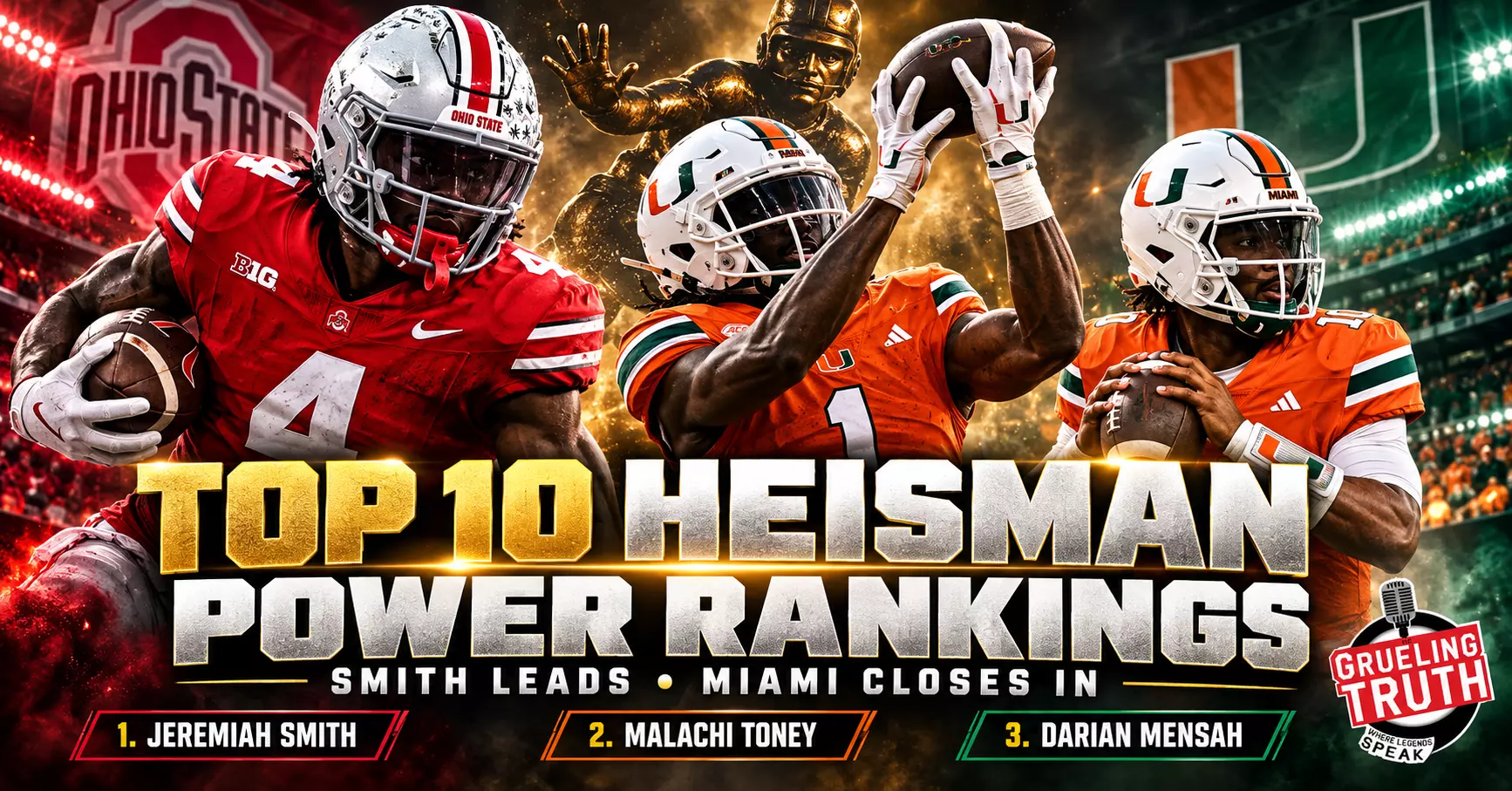
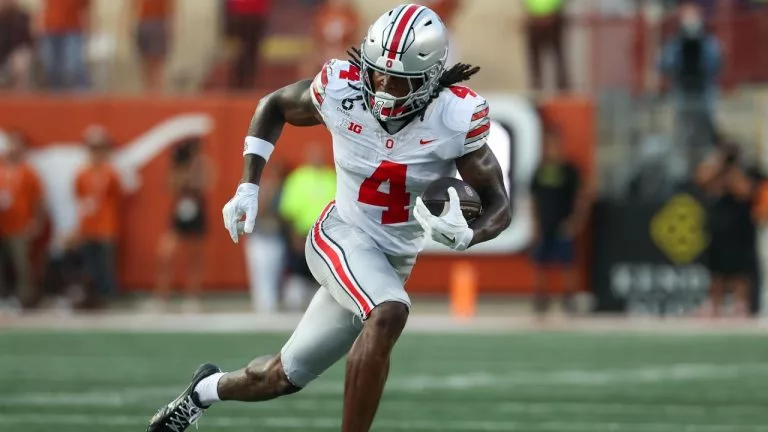
The Heisman race has an unusual shape entering Week 9: three wide receivers have compelling cases, Miami has two serious candidates
The Heisman race has an unusual shape entering Week 9: three wide receivers have compelling cases, Miami has two serious candidates, and several quarterbacks remain within reach of a November surge.
These are editorial power rankings as of October 28, based on production, efficiency, competition and impact—not official voting or betting odds.
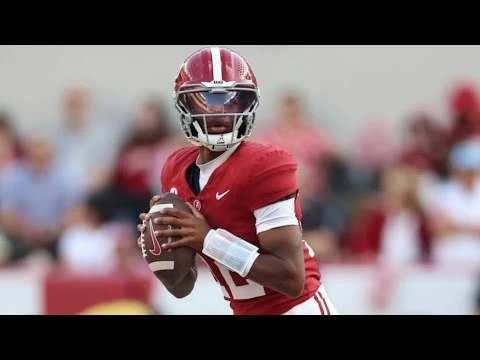
10. Keelon Russell, QB, Alabama
Russell strengthened his candidacy with
311 passing yards and three touchdowns
in Alabama’s
31–20 victory over Texas A&M. He completed 19 of 30 attempts, threw one interception and helped the Crimson Tide finish the game with two fourth-quarter touchdown passes.
That response keeps him in the discussion, but his next task is consistency. A strong performance can restore momentum; a serious Heisman challenge requires several of them against meaningful opposition. Russell has the opportunity to climb if Alabama’s offense continues producing and his decision-making remains dependable.
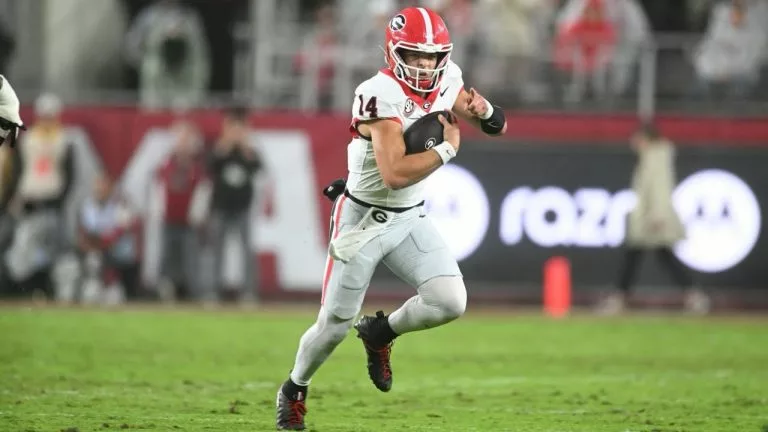
Keelon Russell 🔥 Dynamic Alabama QB 2026 Highlights
9. Gunner Stockton, QB, Georgia
Stockton remains a candidate because of his production and the position Georgia occupies nationally. He entered
Florida week
with
1,570 passing yards, 16 touchdown passes and four interceptions.
The Florida game offers an opportunity to strengthen that résumé. Stockton needs an efficient, influential performance that goes beyond benefiting from the talent around him. Georgia’s success gives him visibility, but the quarterbacks and receivers ahead of him have supplied stronger individual arguments so far.
Gunner Stockton 2026 CFB Game Highlights vs Alabama
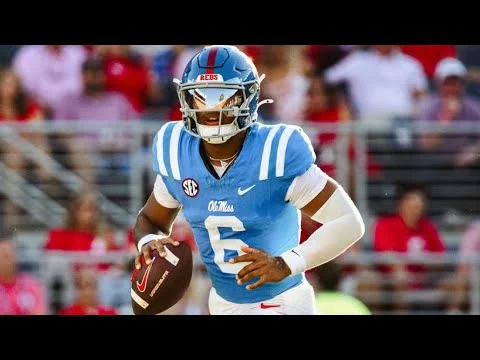
8. Trinidad Chambliss, QB, Ole Miss
Chambliss remains dangerous enough to recover ground, but his performance at Texas damaged his standing. He finished with
250 passing yards, two touchdowns and three interceptions, completing 25 of 52 attempts in the
34–27 defeat.
The concern is the combination of turnovers and inefficient passing, not merely that Ole Miss lost. Heisman candidates can survive defeats, particularly when they play well. Chambliss now needs to rebuild his case with cleaner decisions and sustained production rather than relying on his earlier momentum.
Trinidad Chambliss 🔥 The Best QB in College Football 2026 Highlights
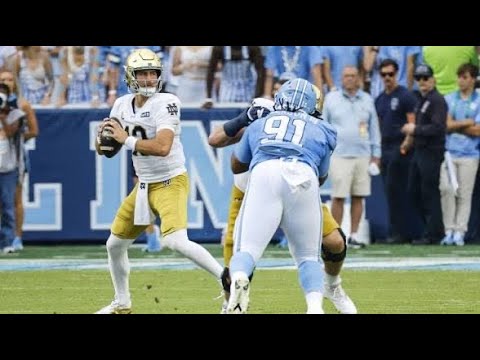
7. CJ Carr, QB, Notre Dame
Carr’s strongest statistical argument is his efficiency in protecting the football. Through seven games, he has
1,639 passing yards, 16 touchdown passes and one interception, with a
66.8% completion rate.
That touchdown-to-interception balance deserves recognition. It suggests a quarterback producing scoring opportunities without repeatedly giving possessions away. The limitation is that the candidates ahead of him have delivered more overwhelming individual production. Carr can change that assessment with major performances in the remaining schedule, but he needs to add to his résumé rather than simply preserve it.
CJ Carr 2026 CFB Game Highlights vs North Carolina
6. Devon Dampier, QB, Utah
Dampier’s contribution to Utah’s unbeaten season deserves a place in the race. Against Houston, he rushed for a season-high
150 yards and two touchdowns, helping the Utes win
21–13
and improve to
7–0.
His dual-threat ability gives him a different route to consideration from the pure passers. He can change a game even when the passing attack is not supplying the decisive plays. To climb higher, he needs more complete offensive performances while continuing to deliver against contenders. Team success strengthens his candidacy, but the individual standard must remain demanding.
Devon Dampier Highlights vs. Arkansas | 2026 Monster Energy Big 12 Football
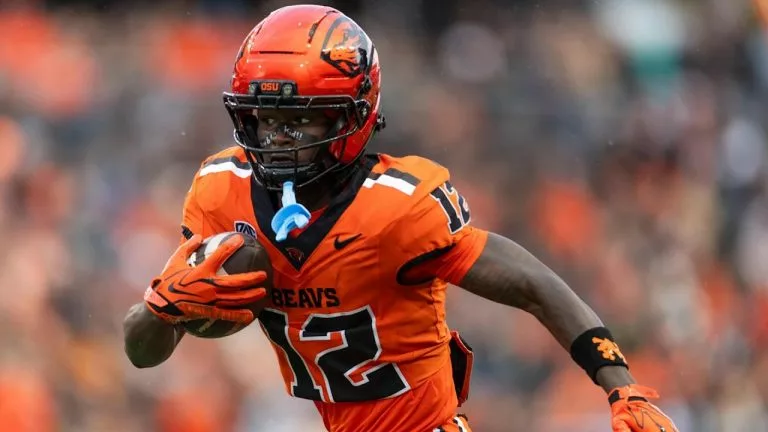
5. Jesse Legree, WR, Oregon State
Legree’s numbers demand a serious assessment:
46 receptions, 1,040 receiving yards and 14 touchdowns
through seven games. He is averaging
22.6 yards per catch.
That is an extraordinary combination of yardage, scoring and explosiveness. His ranking should not be limited by how much attention his program receives.
The challenge is comparing that production with the competition faced by other candidates. Legree has an excellent statistical case, but the strongest Heisman argument must consider context alongside totals. He belongs firmly in the leading group and has a credible path higher if he maintains this pace.
Jesse Legree | 2026 Midseason Highlights
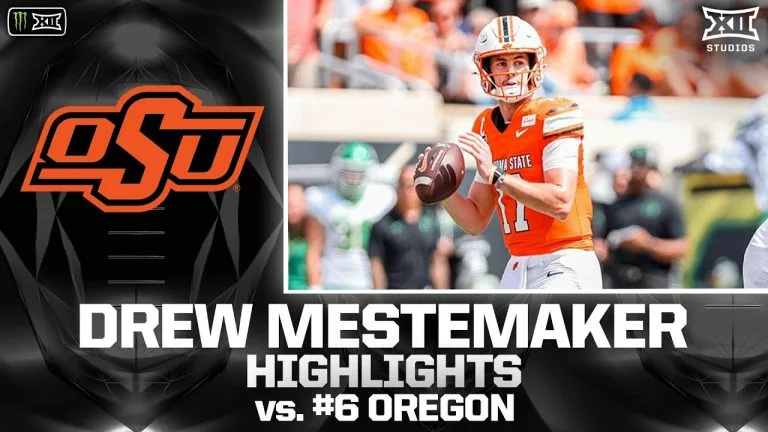
4. Drew Mestemaker, QB, Oklahoma State
Mestemaker deserves more attention after throwing for
386 yards and four touchdowns without an interception
in Oklahoma State’s
57–24 victory over Colorado. His performance earned another Manning Award Star of the Week recognition.
His appeal is the combination of substantial production and an offense capable of generating explosive plays. He needs to keep assembling performances that hold up beyond the final score: efficient possessions, accurate downfield throws and sound decisions when opponents make the game uncomfortable. He may not win the Heisman but he is the most NFL ready Quarterback in College Football.
Drew Mestemaker DOMINATES #6 Oregon | 2026 Monster Energy Big 12 Football
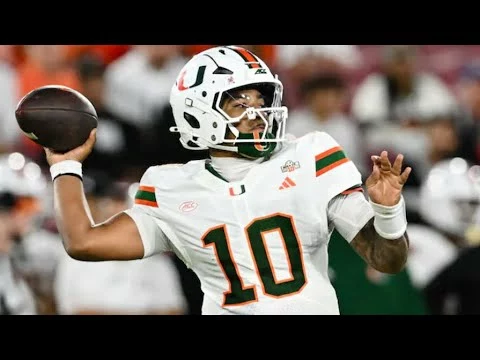
3. Darian Mensah, QB, Miami
Mensah delivered another outstanding performance against Pitt, completing
31 of 37 passes for 387 yards and four touchdowns without an interception
in Miami’s
52–23 victory.
His case rests on accuracy, offensive command and the ability to turn Miami’s receiving talent into sustained production. He deserves substantial credit for the operation of an attack that forces defenses to defend the entire field.
The challenge is separating his contribution from Malachi Toney’s. Their success reinforces both candidacies. Neither should be dismissed because the other is excellent. Mensah remains close enough to the top that one major performance could change the order.
Darian Mensah🔥Most Accurate QB in College Football 2026 Miami Highlights
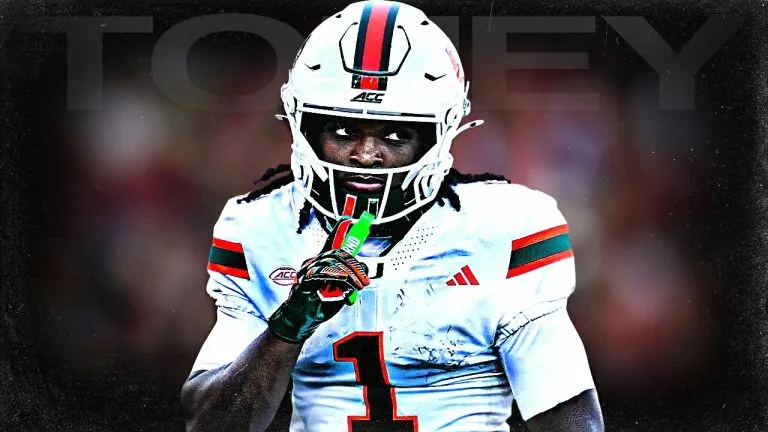
2. Malachi Toney, WR, Miami
Toney has
66 receptions for 952 yards and 11 touchdowns
through seven games. Against Pitt, he caught a school-record
16 passes for 194 yards and three scores.
He gets the narrow edge over Mensah on this board because of the receiving workload he has handled and the level of production he continues supplying within it. Miami has repeatedly found reasons to put the ball in his hands.
The argument for No. 1 is legitimate.
Toney combines
volume with scoring impact, and his latest performance strengthened his case considerably. To take the lead, he needs to keep pairing that involvement with efficiency and decisive contributions.
Malachi Toney 🔥 Top WR in College Football ᴴᴰ
1. Jeremiah Smith, WR, Ohio State
Smith retains the top position with
52 receptions, 984 receiving yards and 12 touchdowns
through seven games. Those totals give him more receiving yards and touchdowns than Toney on fewer catches.
That combination of explosiveness and scoring keeps him narrowly ahead.
Ohio State’s quarterback change now creates a significant test. Smith should not be penalized in advance for Julian Sayin’s injury, but his ability to remain influential with Luke Fahey or Tavien St. Clair will help shape the race.
The Buckeyes must create opportunities for him, and Smith must capitalize when they arrive. He has earned the lead through his performance. Miami’s stars have made it a narrow one.
The closest call is at the top:
Smith has the edge in explosive receiving production; Toney has the heavier reception volume; Mensah supplies the quarterback command behind Miami’s attack. All three have a strong case heading into the next round of games.
New Users – Get $350 in Bonus Bets when you wager $5 for 7 days
T&Cs apply
4.6/5
Gambling Problem? Call 1-800-GAMBLER or 1-800-MY-RESET. Call 1-888-789-7777 or visit ccpgg.org/chat (CT). Hope is here. GamblingHelpLineMA.org or call (800) 327-5050 for 24/7 support (MA). Visit www.mdgamblinghelp.org (MD). Call 1-877-8HOPE-NY or text HOPENY (NY). 21+ (18+ DC, WY) and present in select states (for KS, in affiliation with Kansas Star Casino). Find online real money wagering only. Min $5 wager required for 7 consecutive days. $5 free play credit. Bonus issued as non-withdrawable bonus with cash withdrawable bonus with cash withdrawable. Bonus bets which expire 7 days after receipt. Restrictions apply. See terms at sportsbook.fanduel.com. Call 1-877-770-7867 (LA).
Get Up to $1,000 Back in Bonus Bets Over Your First 10 Days
T&Cs apply
4.5/5
Gambling problem? Call 1-800-GAMBLER or 1-800-MY-RESET (Available in the US) 877-8-HOPENY or text HOPENY (467369) (NY) 1-800-327-5050 (MA), 1-800-BETS-OFF (IA), 21+ only. Please Gamble Responsibly. Visit mdgamblinghelp.org (MD). See BetMGM.com for Terms. New Player Offer for new players only. Subject to eligibility requirements. Bonus bets are non-withdrawable. In partnership with Kansas Crossing Casino and Hotel. This promotional offer is not available in NJ, MA, MI, NV, NY, ON, PA, PR, and WV.
New DraftKings Customers: Bet $5, Get $200 + 3 Months of NBA League Pass!
T&Cs apply
4.5/5
GAMBLING PROBLEM? CALL 1-800-GAMBLER or 1-800-MY-RESET, (800) 327-5050 or visit gamblinghelplinema.org (MA). Please Gamble Responsibly. 888-789-7777/visit ccpg.org (CT), or visit www.mdgamblinghelp.org (MD), 1-800-981-0023 (PR). 21+ and present in most states. (18+ DC/NH/PR/WY). Void in CAN. Eligibility restrictions apply. On behalf of Boot Hill Casino (KS). Pass-thru of per wager tax may apply in IL. 1 per new Sportsbook customer. $5+ first-time bet req. Max. $200 issued as non-withdrawable Bonus Bets. Stake removed from payout. Reward issued as $50 in Bonus Bets every 7 days via click-to-claim for 21 days. Bonus Bets and click-to-claims expire 7 days (168hrs) after issuance. Terms: dkng.co/offer. Get 1 promo code to redeem a 3-month NBA League Pass subscription, complimentary of DraftKings. Subscription auto-renews monthly at then-current price (currently $16.99/mo); cancel anytime. Terms, restrictions, and eligibility requirements apply. Redeem League Pass by 12/19/26 at 11:59 PM ET. Addt’l terms: support.watch.nba.com/hc/en-us/articles/9165532876183-League-Pass-Terms-of-Use_. Ends 11/29/26 at 11:59 PM ET. Sponsored by DK.
Must be 21+. GAMBLING PROBLEM? CALL 1-800-GAMBLER OR CALL 1-800-MY-RESET, www.mdgamblinghelp.org (MD), (800)-327-5050 or gamblinghelplinema.org (MA), Call (877)8-HOPENY or text HOPENY (467369) (NY), (888) 789-7777 or ccpg.org (CT), morethanagame.nc.gov (NC), 1800gambler.net (WV)
Bet $1 and get double the winnings up to $25 for your next 10 bets
T&Cs apply
4.4/5
21+ New users only. Must register using eligible promo code. First bet after registration must qualify. Max. Bonus Bet: $1,000. Bonus Bet expires 14 days after receipt. Void where prohibited. See Caesars.com/promos for full terms. Gambling Problem? 1-800-GAMBLER (1-800-426-2537)
21+ and present in OH. Gambling Problem? Call 1-800-GAMBLER.
This site is using
Cloudflare
and adheres to the
Google Safe Browsing Program. We adapted
Google's Privacy Guidelines
to keep your data safe at all times.
Close
Ready to Win Big? Join the Elite with Our Sports Betting Deals!
FanDuel Promo
New Users – Get $350 in Bonus Bets when you wager $5 for 7 days
Our Favorite
T&Cs and 21+ apply
Gambling Problem? Call 1-800-GAMBLER or 1-800-MY-RESET. Call 1-888-789-7777 or visit ccpgg.org/chat (CT). Hope is here. GamblingHelpLineMA.org or call (800) 327-5050 for 24/7 support (MA). Visit www.mdgamblinghelp.org (MD). Call 1-877-8HOPE-NY or text HOPENY (NY). 21+ (18+ DC, WY) and present in select states (for KS, in affiliation with Kansas Star Casino). Find online real money wagering only. Min $5 wager required for 7 consecutive days. $5 free play credit. Bonus issued as non-withdrawable bonus with cash withdrawable bonus with cash withdrawable. Bonus bets which expire 7 days after receipt. Restrictions apply. See terms at sportsbook.fanduel.com. Call 1-877-770-7867 (LA).
Code:
Open FanDuel
Get Bonus
BetMGM Promo
Get Up to $1,000 Back in Bonus Bets Over Your First 10 Days
Best Slots
T&Cs and 21+ apply
Gambling problem? Call 1-800-GAMBLER or 1-800-MY-RESET (Available in the US) 877-8-HOPENY or text HOPENY (467369) (NY) 1-800-327-5050 (MA), 1-800-BETS-OFF (IA), 21+ only. Please Gamble Responsibly. Visit mdgamblinghelp.org (MD). See BetMGM.com for Terms. New Player Offer for new players only. Subject to eligibility requirements. Bonus bets are non-withdrawable. In partnership with Kansas Crossing Casino and Hotel. This promotional offer is not available in NJ, MA, MI, NV, NY, ON, PA, PR, and WV.
Code:
Open BetMGM
Get Bonus
DraftKings Promo
New DraftKings Customers: Bet $5, Get $200 + 3 Months of NBA League Pass!
Newcomer
T&Cs and 21+ apply
GAMBLING PROBLEM? CALL 1-800-GAMBLER or 1-800-MY-RESET, (800) 327-5050 or visit gamblinghelplinema.org (MA). Please Gamble Responsibly. 888-789-7777/visit ccpg.org (CT), or visit www.mdgamblinghelp.org (MD), 1-800-981-0023 (PR). 21+ and present in most states. (18+ DC/NH/PR/WY). Void in CAN. Eligibility restrictions apply. On behalf of Boot Hill Casino (KS). Pass-thru of per wager tax may apply in IL. 1 per new Sportsbook customer. $5+ first-time bet req. Max. $200 issued as non-withdrawable Bonus Bets. Stake removed from payout. Reward issued as $50 in Bonus Bets every 7 days via click-to-claim for 21 days. Bonus Bets and click-to-claims expire 7 days (168hrs) after issuance. Terms: dkng.co/offer. Get 1 promo code to redeem a 3-month NBA League Pass subscription, complimentary of DraftKings. Subscription auto-renews monthly at then-current price (currently $16.99/mo); cancel anytime. Terms, restrictions, and eligibility requirements apply. Redeem League Pass by 12/19/26 at 11:59 PM ET. Addt’l terms: support.watch.nba.com/hc/en-us/articles/9165532876183-League-Pass-Terms-of-Use_. Ends 11/29/26 at 11:59 PM ET. Sponsored by DK.
Code:
Open DraftKings
Get Bonus
Find out what the legends have to say about sports this week....
New Users – Get $350 in Bonus Bets when you wager $5 for 7 days
Gambling Problem? Call 1-800-GAMBLER or 1-800-MY-RESET. Call 1-888-789-7777 or visit ccpgg.org/chat (CT). Hope is here. GamblingHelpLineMA.org or call (800) 327-5050 for 24/7 support (MA). Visit www.mdgamblinghelp.org (MD). Call 1-877-8HOPE-NY or text HOPENY (NY). 21+ (18+ DC, WY) and present in select states (for KS, in affiliation with Kansas Star Casino). Find online real money wagering only. Min $5 wager required for 7 consecutive days. $5 free play credit. Bonus issued as non-withdrawable bonus with cash withdrawable bonus with cash withdrawable. Bonus bets which expire 7 days after receipt. Restrictions apply. See terms at sportsbook.fanduel.com. Call 1-877-770-7867 (LA).