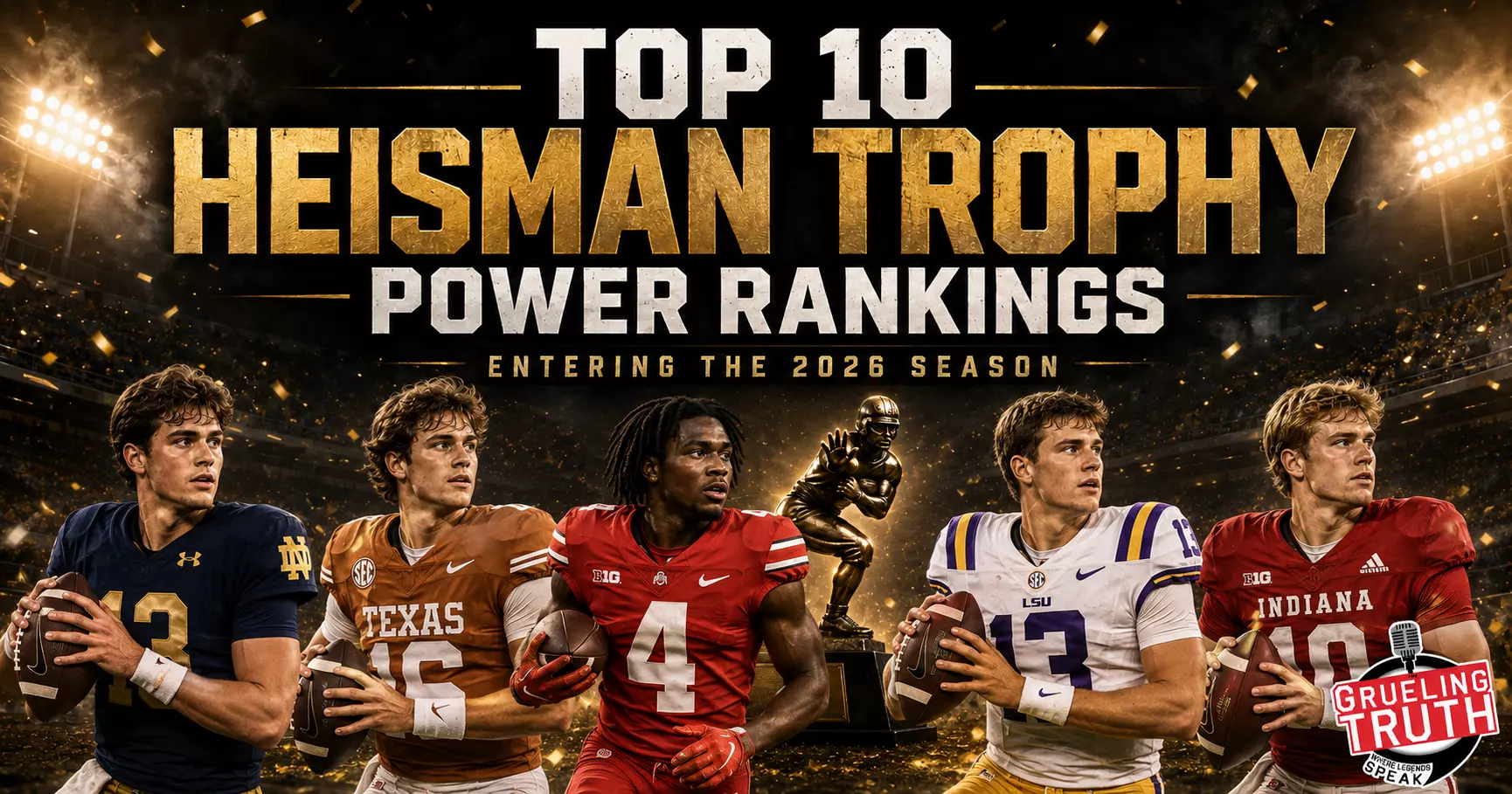
The 2026 Heisman Trophy race features established stars, high-profile transfers and quarterbacks that are talented.
The 2026 Heisman Trophy race features established stars, high-profile transfers and quarterbacks leading legitimate national championship contenders. It also includes Ohio State wide receiver Jeremiah Smith, arguably the most talented player in college football, attempting to overcome the award’s preference for quarterbacks.
Quarterbacks have won 16 of the past 20 Heisman Trophies, so it should surprise nobody that they dominate these preseason rankings. However, the award is not decided by statistics alone. Team success, nationally televised performances, memorable moments and late-season momentum will help determine who travels to New York.
Here are our top 10 Heisman Trophy contenders entering the 2026 college football season, ranked from No. 10 to No. 1.
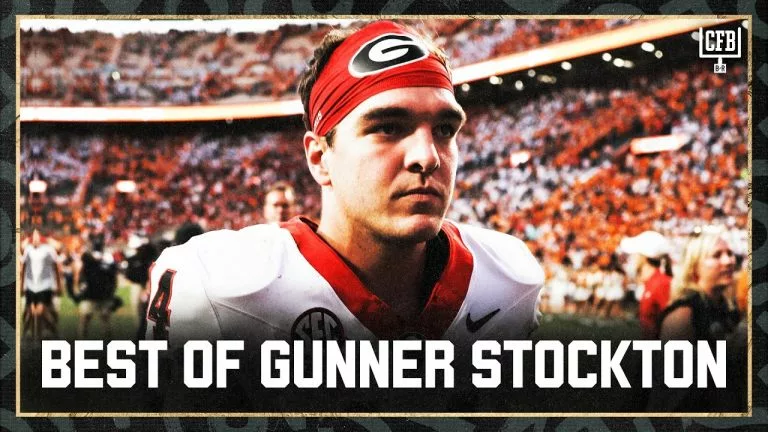
10. Gunner Stockton, QB, Georgia
Gunner Stockton enters the
2026 season
as a proven winner leading one of the most powerful programs in college football. He accounted for 34 touchdowns in 2025 and ranked sixth nationally in Total QBR, demonstrating that he was more than a caretaker for Georgia’s talented roster.
Stockton was not always spectacular, but he consistently protected the football, moved the chains and delivered timely plays. That reliability gives him a credible Heisman path. Georgia’s schedule will provide several nationally televised opportunities against ranked opponents, allowing Stockton to build a championship résumé.
His greatest disadvantage could be Georgia’s balance. The Bulldogs’ running game and defense may prevent him from accumulating the enormous statistics usually associated with the award. Stockton must become more explosive without sacrificing his efficiency.
If Georgia wins the SEC and Stockton approaches 40 total touchdowns, voters will have difficulty ignoring the quarterback of one of the country’s best teams.
Best Highlights Of Gunner Stockton At Georgia 🔥 | Top College Plays
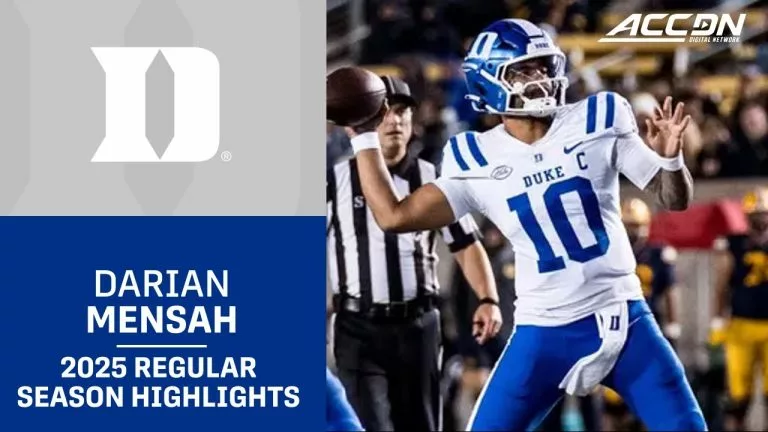
9. Darian Mensah, QB, Miami
Darian Mensah passed for 3,973 yards at Duke in 2025, finishing second nationally in that category. He now moves to Miami, where the Hurricanes offer a larger stage and a roster capable of competing for the ACC championship.
Mensah’s statistical foundation is already strong. He accounted for 35 touchdowns last season while completing approximately 70% of his passes. Miami gives him an opportunity to pair that production with the victories and national exposure Heisman voters demand.
The primary question is how quickly Mensah can adjust to a new offense and develop chemistry with an entirely different group of receivers. Transfer quarterbacks do not always reproduce their previous statistics immediately, especially when expectations are as high as they will be in Miami.
The Hurricanes will be judged by championships rather than respectable numbers. If Mensah leads them to an ACC title while approaching 4,000 passing yards again, he will become a legitimate finalist. His transfer provides Miami with an experienced quarterback who has already demonstrated that he can handle a high-volume passing attack.
Darian Mensah 2025 Regular Season Highlights | Duke QB
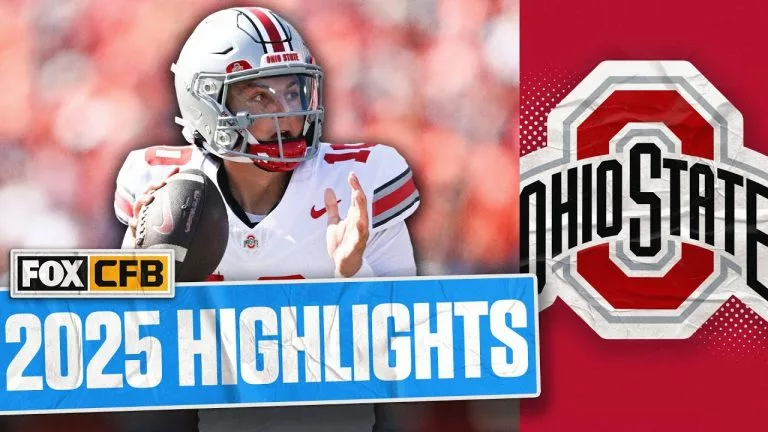
8. Julian Sayin, QB, Ohio State
Julian Sayin is the only returning finalist from the 2025 Heisman ceremony, making him one of the safest candidates on the board.
Sayin completed an outstanding 77% of his passes for 3,610 yards and 32 touchdowns. His 177.45 passing-efficiency rating ranked second nationally, trailing only Heisman winner Fernando Mendoza. Sayin also finished among the national leaders in Total QBR.
There is little doubt about his accuracy or supporting cast. Ohio State begins the season ranked No. 1 and once again possesses elite talent throughout its offense. If the Buckeyes remain undefeated deep into November, Sayin will have the team success and national exposure required to stay near the top of the race.
His greatest obstacle may be standing on his own sideline. Jeremiah Smith will receive significant Heisman support, potentially dividing voters between Ohio State’s quarterback and its generational receiver.
Nevertheless, the returning Heisman finalist quarterbacking the preseason No. 1 team belongs among the leading contenders. Sayin already has the résumé. Now he needs the signature moments.
Julian Sayin 2025 Ohio State Buckeyes Freshman Season Highlights 🏈 FOX College Football
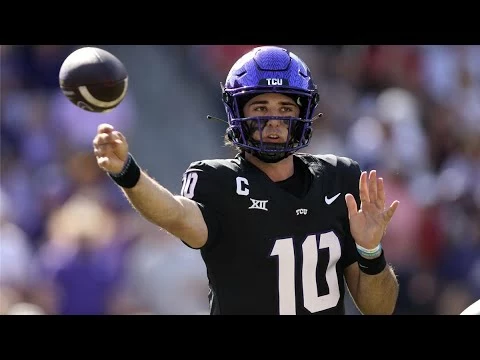
7. Josh Hoover, QB, Indiana
Josh Hoover steps into one of the most fascinating situations in college football. The former TCU quarterback transfers to defending national champion Indiana, where he will replace 2025 Heisman Trophy winner Fernando Mendoza.
Hoover brings considerably more experience than the typical transfer quarterback. He passed for 3,472 yards in 2025 and has accumulated more than 9,600 career passing yards. He is a proven downfield thrower who is comfortable handling a high-volume offense.
Indiana coach Curt Cignetti has already demonstrated his ability to maximize veteran quarterbacks. The system should provide Hoover with favorable matchups, play-action opportunities and receivers capable of creating yards after the catch.
Replacing a Heisman winner creates enormous expectations, but it also gives Hoover a proven blueprint. Indiana does not need him to duplicate Mendoza immediately. It needs him to distribute the football efficiently, limit turnovers and perform in the season’s biggest moments.
If the Hoosiers remain near the top of the Big Ten, Hoover’s candidacy could grow quickly. A transfer quarterback leading Indiana toward consecutive national championships would be one of the biggest stories of the season.
Josh Hoover | 2025 TCU Highlights
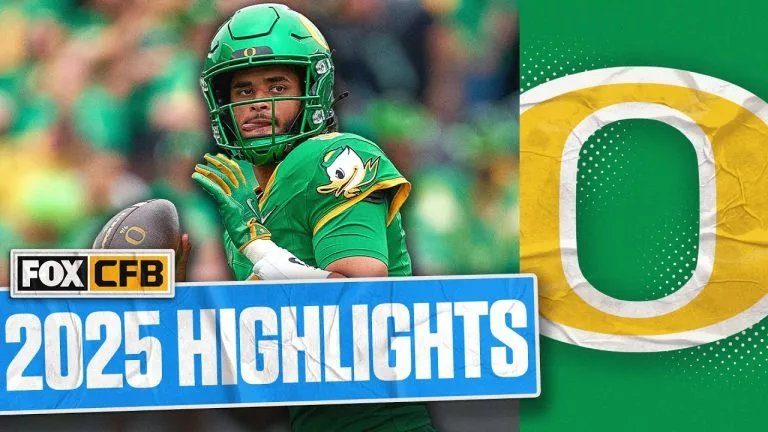
6. Dante Moore, QB, Oregon
Dante Moore passed for 3,565 yards and 30 touchdowns during his breakout 2025 season. Those numbers would make him a serious contender under any circumstances. Producing them for an Oregon program expected to compete for the Big Ten championship gives him an even stronger foundation.
Moore’s arm talent has never been questioned. He can drive the football outside the numbers, attack the middle of the field and throw accurately while moving outside the pocket. His development as a decision-maker allowed those physical gifts to become consistent production.
Oregon enters the season ranked among the leading national championship contenders. Moore should receive multiple opportunities to perform in nationally televised games with major conference and playoff consequences.
The Ducks’ depth could work against his individual statistics because Oregon may not need him to throw 40 times every Saturday. However, Heisman voters will care more about his performances against Ohio State and other ranked opponents than his numbers in blowout victories.
If Moore leads Oregon to the Big Ten championship, he will have an excellent chance of reaching New York.
Dante Moore 2025 Oregon Ducks Season Highlights 🏈 FOX College Football
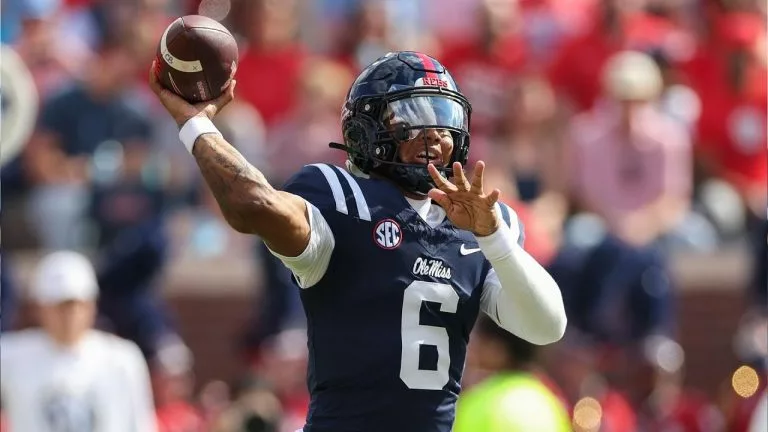
5. Trinidad Chambliss, QB, Ole Miss
Trinidad Chambliss
owns the most compelling story in the race. The former Division II quarterback transferred from Ferris State and emerged as one of college football’s most dangerous players during Ole Miss’ run to the College Football Playoff semifinals.
Chambliss passed for 3,937 yards, rushed for another 527 and accounted for 30 touchdowns in 2025. He threw only three interceptions while averaging 8.8 yards per passing attempt. Few quarterbacks combined explosive production and ball security as effectively.
His ability to extend plays makes him especially difficult to defend. Chambliss can punish man coverage with his legs, create throwing lanes outside the pocket and turn broken plays into momentum-changing gains.
His return required a legal battle after the NCAA denied his request for another season of eligibility. A court decision positioned him to play in 2026, although the unusual situation will remain part of the national conversation.
If Ole Miss remains an SEC and playoff contender under Pete Golding, Chambliss could transform his remarkable journey into a Heisman-winning campaign.
Trinidad Chambliss | 2025 Highlights
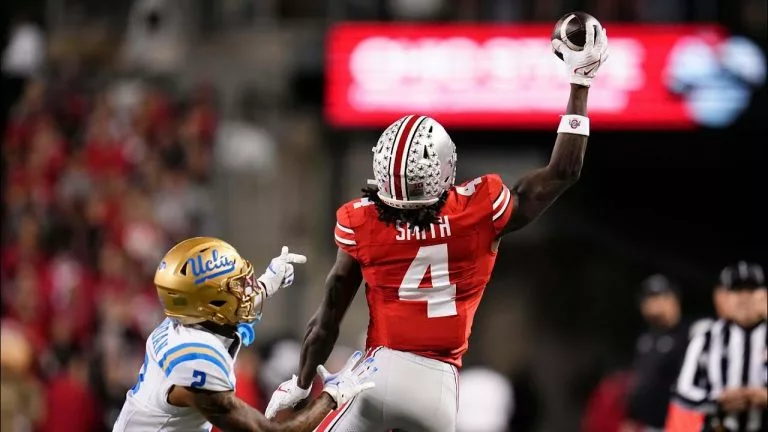
4. Jeremiah Smith, WR, Ohio State
Jeremiah Smith might be the best player in college football. Unfortunately, being the best player does not necessarily make someone the Heisman favorite.
Wide receivers face an exceptionally difficult path because they depend upon quarterbacks to deliver the football. Smith must also share Heisman attention with Ohio State quarterback Julian Sayin. Every touchdown connection strengthens both campaigns and could split the Buckeyes’ vote.
Smith possesses NFL size, outstanding body control, elite acceleration and the ability to dominate regardless of the coverage. Defenses can double-team him, place a safety over the top and still watch him win contested catches or turn short completions into touchdowns.
Smith finished sixth in the 2025 Heisman voting, giving him an established national profile. He will probably need approximately 1,500 receiving yards, 15 touchdowns and several unforgettable performances to overcome the award’s quarterback bias.
His candidacy ultimately comes down to one question: Will voters honor the country’s most outstanding player, or automatically favor the quarterback of an elite team?
Jeremiah Smith | 2025 Highlights
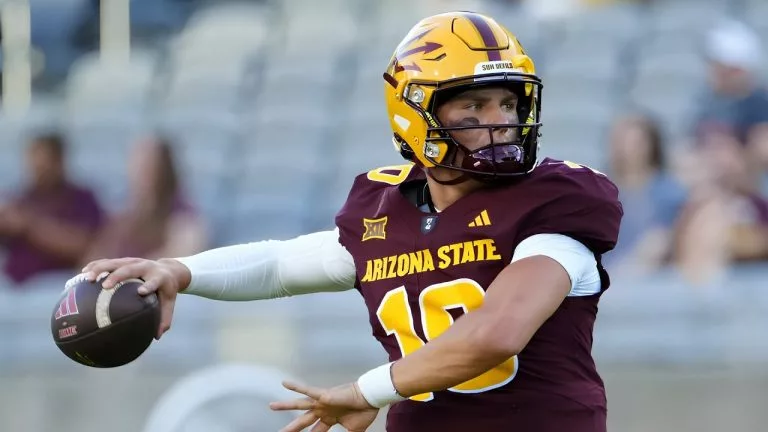
3. Sam Leavitt, QB, LSU
Sam Leavitt might have the widest range of possible outcomes among the leading Heisman candidates. His final season at Arizona State was disrupted by injury, but his transfer to LSU places him inside an offense capable of producing huge quarterback numbers.
Lane Kiffin’s system should emphasize Leavitt’s best qualities: mobility, aggressive downfield passing and the ability to make quick decisions in space. Kiffin has consistently created favorable matchups and explosive plays for his quarterbacks, making LSU an ideal destination for a talented passer looking to revive his national profile.
Leavitt did not perform like a Heisman contender throughout 2025, but a healthy offseason and a better offensive fit could completely change his trajectory. The Tigers will provide plenty of high-profile opportunities, although their demanding SEC schedule leaves little room for inconsistency.
Leavitt must remain healthy, reduce his mistakes and lead LSU into College Football Playoff contention. If he does, his combination of talent, mobility and offensive environment could make him one of the season’s biggest breakout stars.
Sam Leavitt | 2025 Highlights
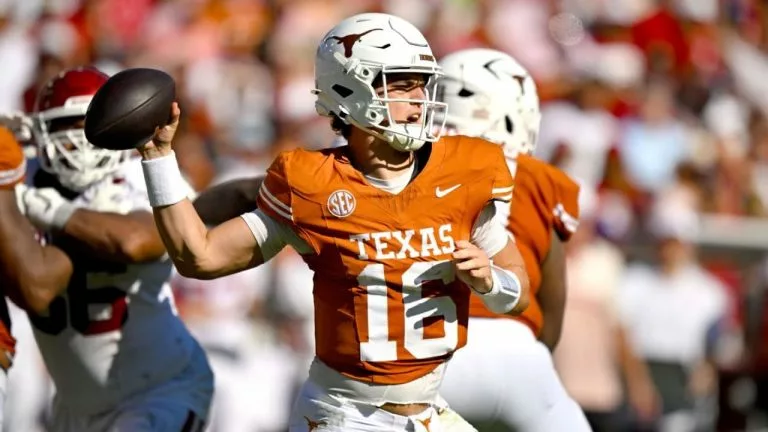
2. Arch Manning, QB, Texas
No player enters the 2026 season carrying more name recognition or public attention than
Arch Manning. His first full season as Texas’ starting quarterback was uneven, but it was hardly the disaster some critics portrayed it to be.
Manning passed for 3,163 yards and 26 touchdowns while adding 10 rushing scores. His 37 total touchdowns placed him among the nation’s most productive quarterbacks. More importantly, he finished the season considerably better than he started it.
The late improvement matters. Manning appeared more comfortable operating Steve Sarkisian’s offense, became more decisive under pressure and showed that his running ability is a legitimate weapon. He does not need to become Peyton or Eli Manning to win the Heisman. He simply needs to build upon the player he became during the second half of 2025.
Texas enters the season as a top-five national championship contender. If Manning leads the Longhorns into SEC title contention while producing more than 40 touchdowns, his visibility could become a major advantage in a close race.
The pressure will be relentless, but every great performance will immediately become national news.
Arch Manning | 2025 Highlights
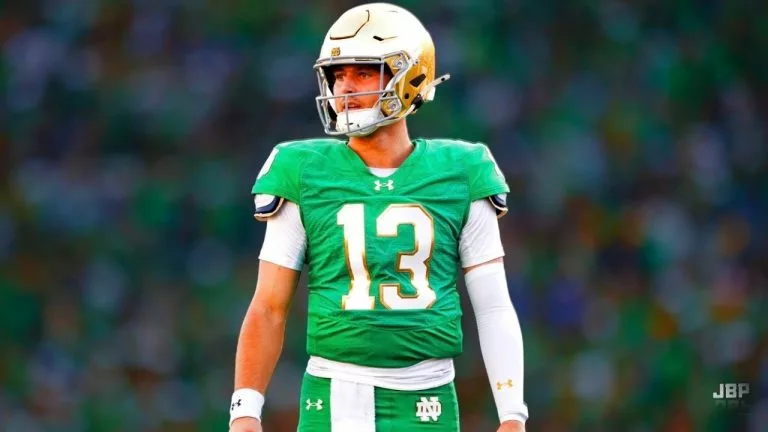
1. CJ Carr, QB, Notre Dame
CJ Carr enters his second season as Notre Dame’s starting quarterback with everything a serious Heisman contender needs: efficiency, national exposure and a team capable of reaching the College Football Playoff.
Carr completed 66.6% of his passes for 2,741 yards and 24 touchdowns against only six interceptions in 2025. His 9.4 yards per attempt ranked among the national leaders, demonstrating that he was not simply accumulating safe completions. Carr consistently attacked defenses downfield while protecting the football.
The most encouraging part of his candidacy is his potential for significant improvement. Carr produced those numbers during his first season as a college starter. With another offseason of development and greater control of the offense, he could become one of the country’s most complete quarterbacks.
Notre Dame enters the season as a legitimate national championship contender, giving Carr an enormous platform. If the Irish reach November with one loss or fewer, their quarterback will likely remain near the top of every Heisman ballot.
Carr has the production, team and opportunity. Entering the 2026 season, he deserves the top position in our Heisman Trophy power rankings.
Up To $1500 in Bonus Bets Paid Back if your First Bet Does Not Win
T&Cs apply
4.5/5
Gambling problem? Call 1-800-GAMBLER or 1-800-MY-RESET (Available in the US) 877-8-HOPENY or text HOPENY (467369) (NY) 1-800-327-5050 (MA), 1-800-BETS-OFF (IA), 1-800-981-0023 (PR). 21+ only. Please Gamble Responsibly. See BetMGM.com for Terms. First Bet Offer for new customers only (if applicable). Subject to eligibility requirements. Bonus bets are non-withdrawable. In partnership with Kansas Crossing Casino and Hotel. Promotional offers not available in Mississippi, Massachusetts, New York, Ontario, or Puerto Rico.
New DraftKings Customers: Spend $5+ Get $150 in Bonuses
T&Cs apply
4.5/5
GAMBLING PROBLEM? CALL 1-800-GAMBLER or 1-800-MY-RESET, (800) 327-5050 or visit gamblinghelplinema.org (MA). Please Gamble Responsibly. 888-789-7777/visit ccpg.org (CT), or visit www.mdgamblinghelp.org (MD), 1-800-981-0023 (PR). 21+ and present in most states. (18+ DC/NH/PR/WY). Void in CAN. Eligibility restrictions apply. On behalf of Boot Hill Casino (KS). Pass-thru of per wager tax may apply in IL. 1 per new DraftKings customer. $5+ first-time bet req. Max. $150 issued as non-withdrawable Bonus Bets. Stake removed from payout. Reward issued as $50 in Bonus Bets every 7 days via click-to-claim for 14 days. Bonus Bets and click-to-claims expire 7 days (168hrs) after issuance. Terms: sportsbook.draftkings.com/promos. Ends 10/11/26 at 11:59 PM ET. Sponsored by DK.
Must be 21+. GAMBLING PROBLEM? CALL 1-800-GAMBLER OR CALL 1-800-MY-RESET, www.mdgamblinghelp.org (MD), (800)-327-5050 or gamblinghelplinema.org (MA), Call (877)8-HOPENY or text HOPENY (467369) (NY), (888) 789-7777 or ccpg.org (CT), morethanagame.nc.gov (NC), 1800gambler.net (WV)
Bet $1 and get double the winnings up to $25 for your next 10 bets
T&Cs apply
4.4/5
21+ New users only. Must register using eligible promo code. First bet after registration must qualify. Max. Bonus Bet: $1,000. Bonus Bet expires 14 days after receipt. Void where prohibited. See Caesars.com/promos for full terms. Gambling Problem? 1-800-GAMBLER (1-800-426-2537)
21+ and present in OH. Gambling Problem? Call 1-800-GAMBLER.
This site is using
Cloudflare
and adheres to the
Google Safe Browsing Program. We adapted
Google's Privacy Guidelines
to keep your data safe at all times.
Close
Ready to Win Big? Join the Elite with Our Sports Betting Deals!
FanDuel Promo
New Users – Get $250 in Bonus Bets when you wager $5 for 5 days
Up To $1500 in Bonus Bets Paid Back if your First Bet Does Not Win
Best Slots
T&Cs and 21+ apply
Gambling problem? Call 1-800-GAMBLER or 1-800-MY-RESET (Available in the US) 877-8-HOPENY or text HOPENY (467369) (NY) 1-800-327-5050 (MA), 1-800-BETS-OFF (IA), 1-800-981-0023 (PR). 21+ only. Please Gamble Responsibly. See BetMGM.com for Terms. First Bet Offer for new customers only (if applicable). Subject to eligibility requirements. Bonus bets are non-withdrawable. In partnership with Kansas Crossing Casino and Hotel. Promotional offers not available in Mississippi, Massachusetts, New York, Ontario, or Puerto Rico.
Code:
Open BetMGM
Get Bonus
DraftKings Promo
New DraftKings Customers: Spend $5+ Get $150 in Bonuses
Newcomer
T&Cs and 21+ apply
GAMBLING PROBLEM? CALL 1-800-GAMBLER or 1-800-MY-RESET, (800) 327-5050 or visit gamblinghelplinema.org (MA). Please Gamble Responsibly. 888-789-7777/visit ccpg.org (CT), or visit www.mdgamblinghelp.org (MD), 1-800-981-0023 (PR). 21+ and present in most states. (18+ DC/NH/PR/WY). Void in CAN. Eligibility restrictions apply. On behalf of Boot Hill Casino (KS). Pass-thru of per wager tax may apply in IL. 1 per new DraftKings customer. $5+ first-time bet req. Max. $150 issued as non-withdrawable Bonus Bets. Stake removed from payout. Reward issued as $50 in Bonus Bets every 7 days via click-to-claim for 14 days. Bonus Bets and click-to-claims expire 7 days (168hrs) after issuance. Terms: sportsbook.draftkings.com/promos. Ends 10/11/26 at 11:59 PM ET. Sponsored by DK.
Code:
Open DraftKings
Get Bonus
Find out what the legends have to say about sports this week....