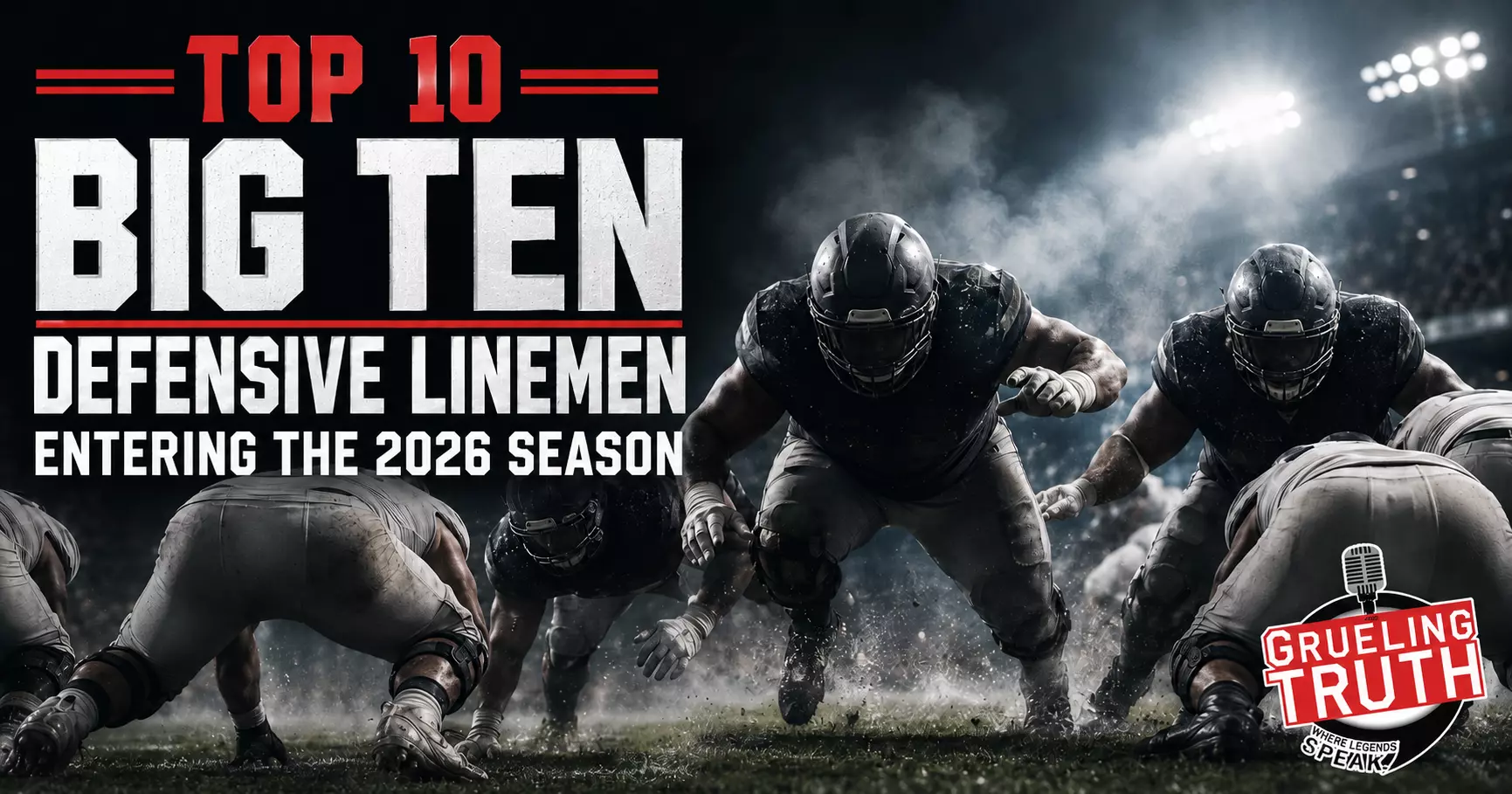
The Big Ten enters the 2026 season with an impressive collection of pass rushers, run-stuffing defensive tackles and versatile linemen.
The Big Ten enters the 2026 season with an impressive collection of pass rushers, run-stuffing defensive tackles and versatile linemen capable of playing multiple positions.
Oregon possesses the deepest defensive front in the conference, but the Ducks do not own every spot near the top. Michigan added one of the country’s most productive pass rushers, Minnesota returns an established sack leader, Indiana brings back an All-American defensive tackle, and Ohio State reloaded through both player development and the transfer portal.
This ranking includes traditional defensive linemen and edge defenders. Production, consistency, positional value, returning experience and projected 2026 impact were all considered.
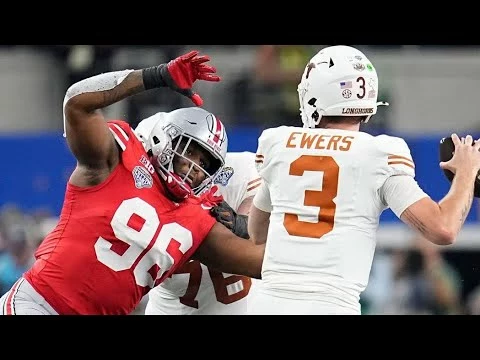
10. Eddrick Houston, Defensive Tackle, Ohio State
Eddrick Houston enters 2026 as one of the most intriguing
breakout candidates
on Ohio State’s defense.
Houston recorded 21 tackles, three sacks and a forced fumble during his sophomore season despite making only four starts. His best football arrived during the College Football Playoff, including a five-tackle, 1.5-sack performance against Miami in the Cotton Bowl.
That postseason production demonstrated why Houston was considered one of the nation’s top defensive-line prospects coming out of high school. He possesses the power to hold his position against the running game but is athletic enough to penetrate gaps and pressure quarterbacks.
Ohio State lost Big Ten Defensive Lineman of the Year Kayden McDonald to the NFL, creating a significant opening in the middle. Houston must now prove that he can maintain his effectiveness while playing considerably more snaps. If he does, he could finish the season much higher than No. 10.
Eddrick Houston 2024 highlights! Ohio State DL
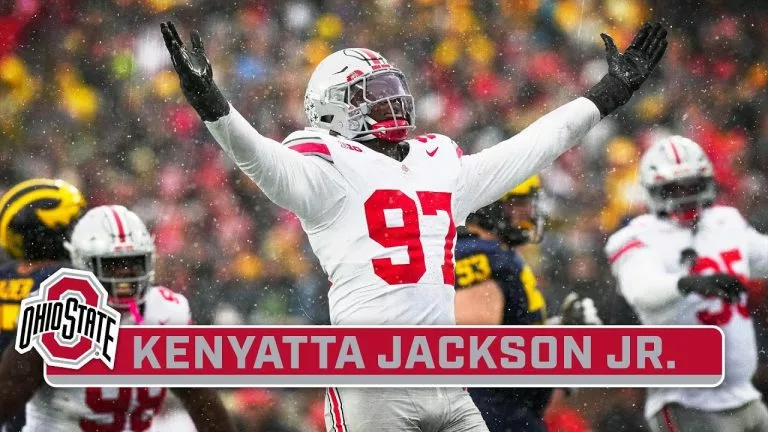
9. Kenyatta Jackson Jr., Defensive End, Ohio State
Kenyatta Jackson Jr. has waited patiently for his opportunity to become the featured edge defender in Ohio State’s defense.
Jackson started all 14 games in 2025 and produced 28 tackles, 11 tackles for loss, 6.5 sacks and two pass breakups. He was never the biggest name on Ohio State’s defensive front, but he became a dependable player who consistently set the edge and generated pressure.
At 6-foot-6 and approximately 265 pounds, Jackson has the physical profile NFL teams want. His length makes him difficult to block when he plays with proper leverage, and his experience should make him one of the leaders of Ohio State’s reconstructed defense.
The next step is becoming more consistently disruptive. Jackson has produced solid numbers, but Ohio State now needs him to become the player opposing offenses specifically design their protection plans to stop. A double-digit sack season is within reach.
2026 SENIOR HIGHLIGHTS: DE Kenyatta Jackson Jr. | Ohio State Football
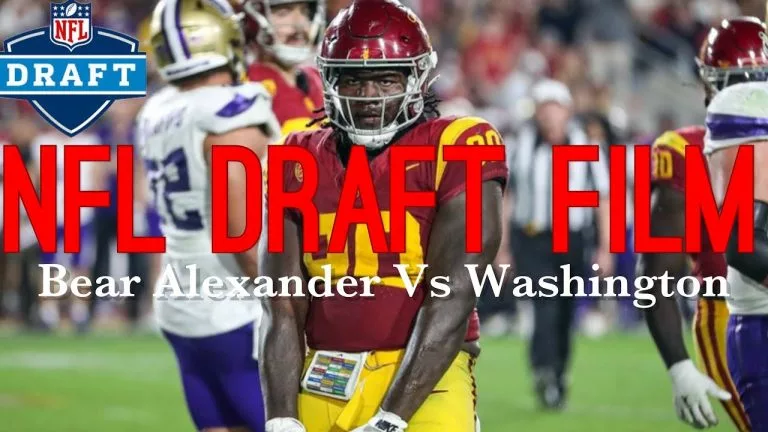
8. Bear Alexander, Defensive Tackle, Oregon
Bear Alexander has experienced a complicated college career, but his first season at Oregon reminded everyone why he was once considered an elite prospect.
Alexander recorded 50 tackles and 6.5 tackles for loss in 2025. Those numbers do not fully capture his value. At approximately 315 pounds, he can occupy multiple blockers, collapse the middle of the pocket and create opportunities for Oregon’s outstanding edge rushers.
The biggest issue throughout Alexander’s career has been consistency. At his best, he possesses the size, quickness and power to become one of the most disruptive interior defenders in the country. At other times, his impact has not matched his physical ability.
Oregon’s defensive-line depth should help him. The Ducks do not need Alexander to play an excessive number of snaps, allowing him to remain fresh and attack in favorable situations. If his production catches up with his talent, Alexander could become a dominant 2026 performer.
Film Room: USC DT Bear Alexander Vs Washington
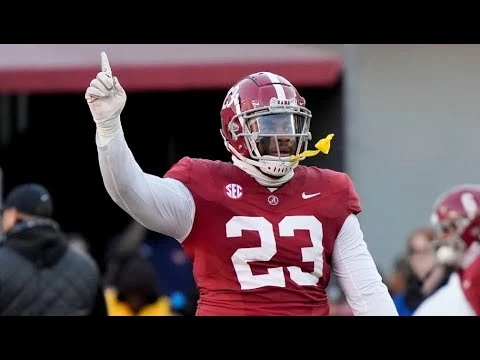
7. James Smith, Defensive Tackle, Ohio State
Ohio State found its potential replacement for Kayden McDonald by signing former Alabama defensive tackle James Smith.
Smith started 12 games for Alabama in 2025, recording 28 tackles, 2.5 sacks and two quarterback hurries. The statistics were not overwhelming, but his size, strength and SEC experience make him one of the most important defensive transfers in the Big Ten.
Smith gives Ohio State a powerful interior presence capable of controlling blockers and keeping linebackers clean. He also possesses enough athleticism to push the pocket rather than functioning strictly as a space-eating nose tackle.
The adjustment to a new program and defensive system creates some uncertainty. Smith must also become more productive as a pass rusher if he wants to develop into an All-American candidate.
However, experienced defensive tackles with Smith’s physical tools are difficult to find. His arrival gives Ohio State one of the conference’s deepest interior rotations.
NEW OHIO STATE DT James Smith Alabama Highlights
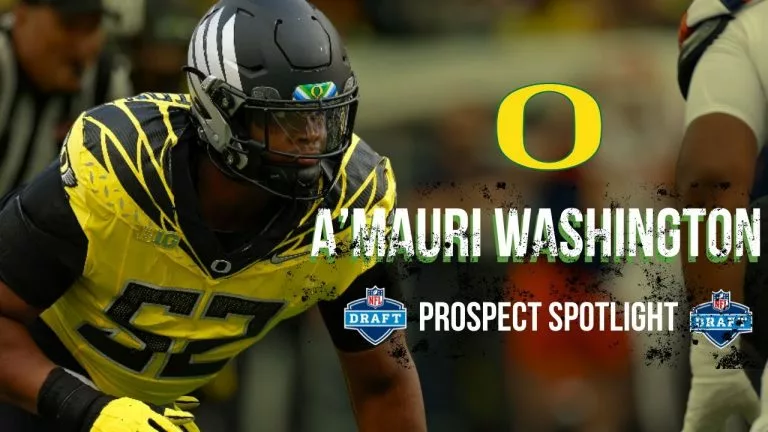
6. A’Mauri Washington, Defensive Tackle, Oregon
A’Mauri Washington may be the most important player on Oregon’s loaded defensive front.
The 6-foot-3, 330-pound tackle seriously considered entering the NFL Draft before returning to Eugene. He reportedly received a second-round draft evaluation, demonstrating how highly professional scouts already regard his ability.
Washington recorded 33 tackles in 2025 while consistently drawing double teams. His greatest value comes from his ability to control the middle of the line. Opponents cannot easily move him with one blocker, forcing offenses to devote additional resources to stopping Oregon’s interior defense.
That creates favorable matchups for Matayo Uiagalelei, Teitum Tuioti and Bear Alexander.
Washington does not need spectacular sack totals to dominate a game. His ability to destroy blocking schemes, close rushing lanes and prevent quarterbacks from comfortably stepping into the pocket makes Oregon’s entire defense better. He is an essential component of what could be college football’s best defensive line.
A’Mauri Washington Is An ANIMAL!
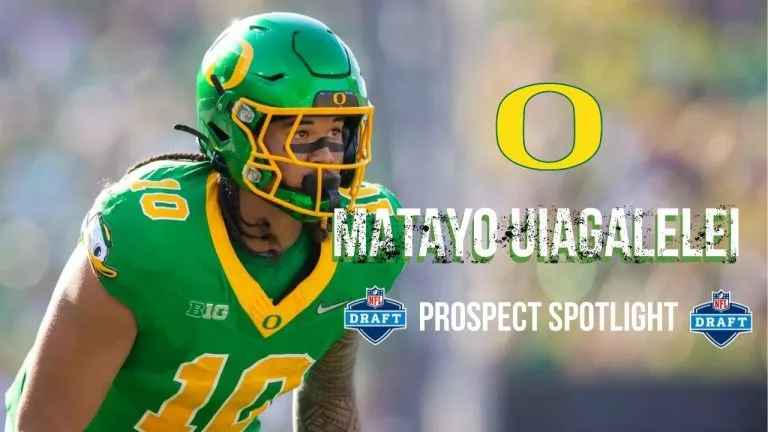
5. Matayo Uiagalelei, Edge, Oregon
Matayo Uiagalelei
enters his senior season with an opportunity to establish himself as one of the nation’s premier edge defenders.
Uiagalelei recorded 34 tackles, six sacks and two forced fumbles in 2025. He and Teitum Tuioti combined for 15.5 sacks, giving Oregon one of the most dangerous pass-rushing combinations in college football.
At 6-foot-5, Uiagalelei has the length and athletic ability to pressure quarterbacks from several alignments. He can win outside with speed, convert that speed into power or move inside on passing downs to attack slower guards.
Oregon’s defensive-line depth prevents opponents from focusing exclusively on him. Double-teaming Uiagalelei creates opportunities for Tuioti, Washington and Alexander. Blocking him with one offensive tackle can create an entirely different problem.
Uiagalelei must become more consistent against the run, but his pass-rushing talent gives him legitimate first-round NFL Draft potential.
Matayo Uiagalelei Has IMMENSE UPSIDE!
4. Tyrique Tucker, Defensive Tackle, Indiana
Tyrique Tucker was one of the indispensable players in Indiana’s national championship defense.
The 6-foot, 307-pound defensive tackle started all 16 games in 2025 and recorded 40 tackles, 12 tackles for loss, six sacks and two pass breakups. He earned first-team All-Big Ten honors from the coaches and media and was named a third-team Associated Press All-American.
Tucker’s quickness distinguishes him from many interior linemen. He fires off the ball, gets underneath taller blockers and can penetrate the backfield before running plays have time to develop.
His return is particularly important because Indiana lost several stars from its championship roster. Tucker provides continuity, leadership and a proven interior pass rush.
Indiana will need him to handle more attention in 2026, but his combination of power, leverage and experience makes him the conference’s most productive returning defensive tackle.
FILM STUDY: How Indiana’s Undersized Defensive Line Exposes Giants Like Miami
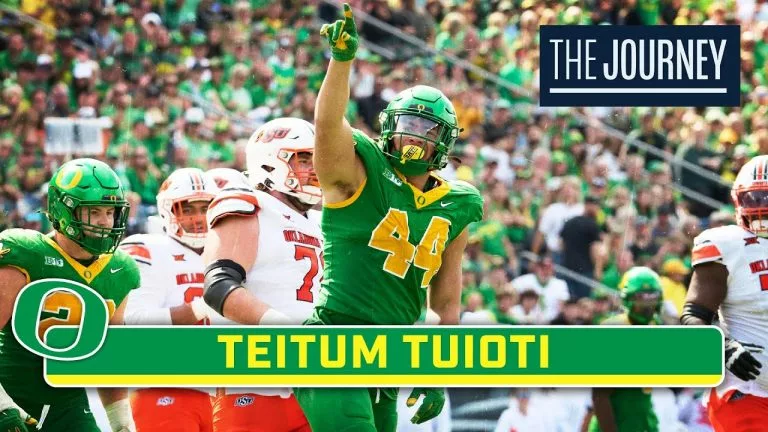
3. Teitum Tuioti, Edge, Oregon
Teitum Tuioti developed into an elite defensive player during Oregon’s 2025 playoff run.
Tuioti finished the season with 68 tackles, 16 tackles for loss and 9.5 sacks. He recorded at least one sack in each of Oregon’s final nine games, including two tackles for loss in the Orange Bowl victory over Texas Tech. His tackle-for-loss and sack totals both ranked among the Big Ten’s five best.
What separates Tuioti from many pass-rush specialists is his all-around production. He is active against the run, pursues plays across the field and consistently finishes tackles.
Oregon’s exceptional defensive line makes it dangerous to direct additional blockers toward him. Tuioti should receive numerous favorable matchups, particularly when Washington and Alexander command attention inside.
Another double-digit sack season would place him firmly in the All-America conversation.
Spotlighting Teitum Tuioti | Oregon Football | The Journey
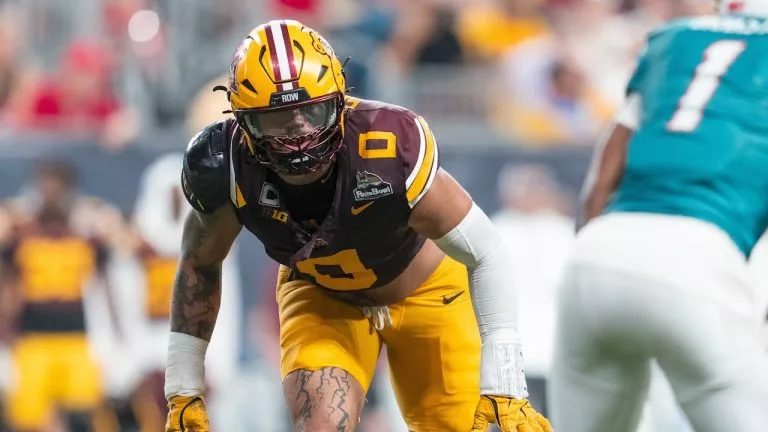
2. Anthony Smith, Defensive End, Minnesota
Anthony Smith was one of the Big Ten’s most disruptive defenders in 2025, and his decision to return transformed Minnesota’s defensive outlook.
Smith finished the regular season with 32 tackles, 13.5 tackles for loss and 10.5 sacks. He then dominated the Rate Bowl, producing six tackles, four tackles for loss and two sacks while earning Defensive MVP honors. That pushed his complete season total to 12.5 sacks.
The Minnesota defender combines power with an explosive first step. He can beat offensive tackles around the corner, attack inside gaps or use his strength to walk blockers back into the quarterback.
Smith will receive even more attention in 2026. Opponents will use tight ends, running backs and sliding protections to prevent him from controlling games.
The challenge is maintaining his production when every opponent knows he is Minnesota’s most dangerous defender. Smith has already proven he can generate elite numbers. Now he must demonstrate that he can do it as a marked man.
Anthony Smith | 2025 Minnesota Gopher Football Season Highlights
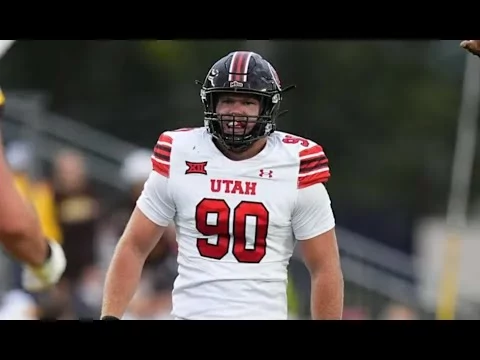
1. John Henry Daley, Defensive End, Michigan
John Henry Daley enters the 2026 season as the Big Ten’s most accomplished returning pass rusher—but also one of its biggest medical questions.
Daley was spectacular at Utah in 2025. He recorded 48 tackles, 17.5 tackles for loss, 11.5 sacks and two forced fumbles in only 11 games. He was tied for the national lead in tackles for loss and ranked second in sacks before suffering a ruptured Achilles tendon in November.
Daley followed
Kyle Whittingham
to Michigan, giving the Wolverines an established edge rusher for their new defensive system. His combination of speed, hand technique and relentless effort made him almost impossible to contain during his final season at Utah.
This ranking assumes Daley returns close to full strength. If he does, no Big Ten defensive lineman has a better combination of recent production and game-changing ability.
John Henry Daley Utah Highlights
Final Rankings
John Henry Daley, Michigan
Anthony Smith, Minnesota
Teitum Tuioti, Oregon
Tyrique Tucker, Indiana
Matayo Uiagalelei, Oregon
A’Mauri Washington, Oregon
James Smith, Ohio State
Bear Alexander, Oregon
Kenyatta Jackson Jr., Ohio State
Eddrick Houston, Ohio State
Oregon dominates the list with four selections, which explains why the Ducks may possess the country’s best defensive front. However, Michigan’s John Henry Daley claims the top individual position based on his extraordinary 2025 production. If his recovery limits him, Anthony Smith, Teitum Tuioti and Tyrique Tucker are all legitimate candidates to become the Big Ten’s best defensive lineman in 2026.
New Users – Get $350 in Bonus Bets when you wager $5 for 7 days
T&Cs apply
4.6/5
Gambling Problem? Call 1-800-GAMBLER or 1-800-MY-RESET. Call 1-888-789-7777 or visit ccpgg.org/chat (CT). Hope is here. GamblingHelpLineMA.org or call (800) 327-5050 for 24/7 support (MA). Visit www.mdgamblinghelp.org (MD). Call 1-877-8HOPE-NY or text HOPENY (NY). 21+ (18+ DC, WY) and present in select states (for KS, in affiliation with Kansas Star Casino). Find online real money wagering only. Min $5 wager required for 7 consecutive days. $5 free play credit. Bonus issued as non-withdrawable bonus with cash withdrawable bonus with cash withdrawable. Bonus bets which expire 7 days after receipt. Restrictions apply. See terms at sportsbook.fanduel.com. Call 1-877-770-7867 (LA).
Up To $1500 in Bonus Bets Paid Back if your First Bet Does Not Win
T&Cs apply
4.5/5
Gambling problem? Call 1-800-GAMBLER or 1-800-MY-RESET (Available in the US) 877-8-HOPENY or text HOPENY (467369) (NY) 1-800-327-5050 (MA), 1-800-BETS-OFF (IA), 1-800-981-0023 (PR). 21+ only. Please Gamble Responsibly. See BetMGM.com for Terms. First Bet Offer for new customers only (if applicable). Subject to eligibility requirements. Bonus bets are non-withdrawable. In partnership with Kansas Crossing Casino and Hotel. Promotional offers not available in Mississippi, Massachusetts, New York, Ontario, or Puerto Rico.
New DraftKings Customers: Bet $5, Get $200 + 3 Months of NBA League Pass!
T&Cs apply
4.5/5
GAMBLING PROBLEM? CALL 1-800-GAMBLER or 1-800-MY-RESET, (800) 327-5050 or visit gamblinghelplinema.org (MA). Please Gamble Responsibly. 888-789-7777/visit ccpg.org (CT), or visit www.mdgamblinghelp.org (MD), 1-800-981-0023 (PR). 21+ and present in most states. (18+ DC/NH/PR/WY). Void in CAN. Eligibility restrictions apply. On behalf of Boot Hill Casino (KS). Pass-thru of per wager tax may apply in IL. 1 per new Sportsbook customer. $5+ first-time bet req. Max. $200 issued as non-withdrawable Bonus Bets. Stake removed from payout. Reward issued as $50 in Bonus Bets every 7 days via click-to-claim for 21 days. Bonus Bets and click-to-claims expire 7 days (168hrs) after issuance. Terms: dkng.co/offer. Get 1 promo code to redeem a 3-month NBA League Pass subscription, complimentary of DraftKings. Subscription auto-renews monthly at then-current price (currently $16.99/mo); cancel anytime. Terms, restrictions, and eligibility requirements apply. Redeem League Pass by 12/19/26 at 11:59 PM ET. Addt’l terms: support.watch.nba.com/hc/en-us/articles/9165532876183-League-Pass-Terms-of-Use_. Ends 11/29/26 at 11:59 PM ET. Sponsored by DK.
Must be 21+. GAMBLING PROBLEM? CALL 1-800-GAMBLER OR CALL 1-800-MY-RESET, www.mdgamblinghelp.org (MD), (800)-327-5050 or gamblinghelplinema.org (MA), Call (877)8-HOPENY or text HOPENY (467369) (NY), (888) 789-7777 or ccpg.org (CT), morethanagame.nc.gov (NC), 1800gambler.net (WV)
Bet $1 and get double the winnings up to $25 for your next 10 bets
T&Cs apply
4.4/5
21+ New users only. Must register using eligible promo code. First bet after registration must qualify. Max. Bonus Bet: $1,000. Bonus Bet expires 14 days after receipt. Void where prohibited. See Caesars.com/promos for full terms. Gambling Problem? 1-800-GAMBLER (1-800-426-2537)
21+ and present in OH. Gambling Problem? Call 1-800-GAMBLER.
This site is using
Cloudflare
and adheres to the
Google Safe Browsing Program. We adapted
Google's Privacy Guidelines
to keep your data safe at all times.
Close
Ready to Win Big? Join the Elite with Our Sports Betting Deals!
FanDuel Promo
New Users – Get $350 in Bonus Bets when you wager $5 for 7 days
Our Favorite
T&Cs and 21+ apply
Gambling Problem? Call 1-800-GAMBLER or 1-800-MY-RESET. Call 1-888-789-7777 or visit ccpgg.org/chat (CT). Hope is here. GamblingHelpLineMA.org or call (800) 327-5050 for 24/7 support (MA). Visit www.mdgamblinghelp.org (MD). Call 1-877-8HOPE-NY or text HOPENY (NY). 21+ (18+ DC, WY) and present in select states (for KS, in affiliation with Kansas Star Casino). Find online real money wagering only. Min $5 wager required for 7 consecutive days. $5 free play credit. Bonus issued as non-withdrawable bonus with cash withdrawable bonus with cash withdrawable. Bonus bets which expire 7 days after receipt. Restrictions apply. See terms at sportsbook.fanduel.com. Call 1-877-770-7867 (LA).
Code:
Open FanDuel
Get Bonus
BetMGM Promo
Up To $1500 in Bonus Bets Paid Back if your First Bet Does Not Win
Best Slots
T&Cs and 21+ apply
Gambling problem? Call 1-800-GAMBLER or 1-800-MY-RESET (Available in the US) 877-8-HOPENY or text HOPENY (467369) (NY) 1-800-327-5050 (MA), 1-800-BETS-OFF (IA), 1-800-981-0023 (PR). 21+ only. Please Gamble Responsibly. See BetMGM.com for Terms. First Bet Offer for new customers only (if applicable). Subject to eligibility requirements. Bonus bets are non-withdrawable. In partnership with Kansas Crossing Casino and Hotel. Promotional offers not available in Mississippi, Massachusetts, New York, Ontario, or Puerto Rico.
Code:
Open BetMGM
Get Bonus
DraftKings Promo
New DraftKings Customers: Bet $5, Get $200 + 3 Months of NBA League Pass!
Newcomer
T&Cs and 21+ apply
GAMBLING PROBLEM? CALL 1-800-GAMBLER or 1-800-MY-RESET, (800) 327-5050 or visit gamblinghelplinema.org (MA). Please Gamble Responsibly. 888-789-7777/visit ccpg.org (CT), or visit www.mdgamblinghelp.org (MD), 1-800-981-0023 (PR). 21+ and present in most states. (18+ DC/NH/PR/WY). Void in CAN. Eligibility restrictions apply. On behalf of Boot Hill Casino (KS). Pass-thru of per wager tax may apply in IL. 1 per new Sportsbook customer. $5+ first-time bet req. Max. $200 issued as non-withdrawable Bonus Bets. Stake removed from payout. Reward issued as $50 in Bonus Bets every 7 days via click-to-claim for 21 days. Bonus Bets and click-to-claims expire 7 days (168hrs) after issuance. Terms: dkng.co/offer. Get 1 promo code to redeem a 3-month NBA League Pass subscription, complimentary of DraftKings. Subscription auto-renews monthly at then-current price (currently $16.99/mo); cancel anytime. Terms, restrictions, and eligibility requirements apply. Redeem League Pass by 12/19/26 at 11:59 PM ET. Addt’l terms: support.watch.nba.com/hc/en-us/articles/9165532876183-League-Pass-Terms-of-Use_. Ends 11/29/26 at 11:59 PM ET. Sponsored by DK.
Code:
Open DraftKings
Get Bonus
Find out what the legends have to say about sports this week....
New Users – Get $350 in Bonus Bets when you wager $5 for 7 days
Gambling Problem? Call 1-800-GAMBLER or 1-800-MY-RESET. Call 1-888-789-7777 or visit ccpgg.org/chat (CT). Hope is here. GamblingHelpLineMA.org or call (800) 327-5050 for 24/7 support (MA). Visit www.mdgamblinghelp.org (MD). Call 1-877-8HOPE-NY or text HOPENY (NY). 21+ (18+ DC, WY) and present in select states (for KS, in affiliation with Kansas Star Casino). Find online real money wagering only. Min $5 wager required for 7 consecutive days. $5 free play credit. Bonus issued as non-withdrawable bonus with cash withdrawable bonus with cash withdrawable. Bonus bets which expire 7 days after receipt. Restrictions apply. See terms at sportsbook.fanduel.com. Call 1-877-770-7867 (LA).