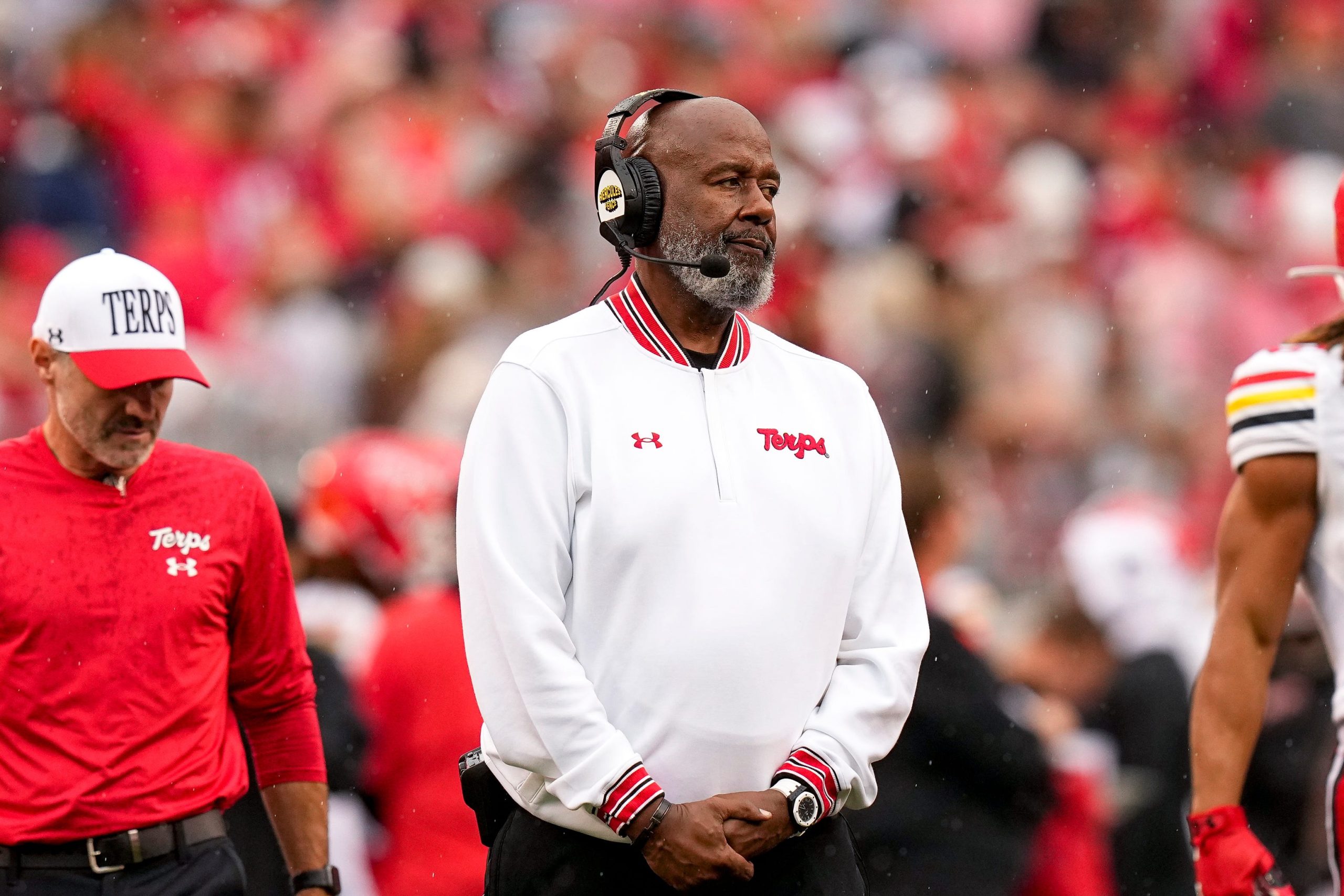
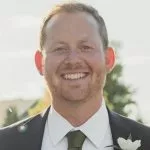
Maryland Terrapins head coach Mike Locksley reacts in the first half of the NCAA football game at Ohio Stadium on Oct. 10, 2026 in Columbus, Ohio.
Halloween has not even arrived, and three Power Four schools have fired their head coaches in a single week. Maryland moved on from Mike Locksley after a 12th straight Big Ten loss, NC State fired Dave Doeren, its all-time wins leader, less than a day after a 31-28 loss at Stanford, and Baylor let Dave Aranda go after a one-point loss to Kansas. So the college football hot seat is officially open for business, and from what it seems, the next name to go will be decided by the size of the check as much as the record.
To be honest, that is the part of the college football hot seat conversation that fans tend to skip. Every struggling coach looks fireable on a Saturday night, but athletic directors look at buyouts on Sunday morning, and the numbers on this list are wildly different.
Greg Schiano has the cheapest way out
Rutgers sits at the top of the latest hot seat index, and it is hard to argue. The Scarlet Knights are 2-5 and 1-3 in the Big Ten after a 42-14 loss at Northwestern, and the season started with a 37-21 home loss to UMass, a team that came in as a 29-point underdog. Greg Schiano, the Rutgers head coach in his second stint, returned in 2020 and has watched another season start to slip away.
Ironically, Schiano did not even make
a preseason top 10 list of coaches on the hot seat
that included Aranda and Locksley. The omission shows how fast this season turned on him, and it also shows that nobody saw a UMass loss coming.
Here is why he is one of the likeliest next dominoes. His contract calls for roughly 77% of his remaining compensation if Rutgers fires him, and On3 estimates the cost at about $18.5 million after the season. The figure is real money for Rutgers, but it is cheap compared with what several other schools on this list would have to pay.
Lincoln Riley is too expensive to fire, for now
Lincoln Riley, the USC head coach, is the most interesting case on the board. USC is 6-2 and 3-2 in the Big Ten, which looks fine on paper. However, the Trojans just lost 24-7 at Wisconsin, and Ohio State, Indiana, and UCLA are still on the schedule, so a 7-5 finish is very much in play.
Be that as it may, firing Riley would be a roughly $70 million headache. He arrived from Oklahoma on a widely reported 10-year, $110 million deal, although USC has not confirmed the terms, and his buyout has been estimated at about $70 million. Very few schools in America would write that check in October, especially for a coach who is still four games over .500.
Meanwhile, the rumor mill has done something strange. Riley’s name has been floated as a candidate for the Baylor opening, the same job that opened over the weekend. We can’t really say for sure if that is serious, but it could offer both sides a cleaner exit than USC simply firing him and paying the reported buyout.
The College Football hot seat wild cards
Sonny Dykes, the TCU head coach, is the hardest one to read. TCU is 3-4 and 1-3 in the Big 12 after a 24-20 home loss to West Virginia, and Dykes fired co-offensive coordinator and offensive line coach A.J. Ricker after that game. The losses started back in Dublin, where North Carolina beat TCU 15-10 in the opener, and they never really stopped.
But here is the catch. TCU gave Dykes an extension in April, and since TCU is a private school, nobody outside the building knows what his buyout looks like. He also took TCU to the national title game in 2022, and that kind of credit lasts longer than one bad October.
Elsewhere, Mike Norvell is 3-4 at Florida State with a buyout above $51 million, and Deion Sanders is 2-5 at Colorado after a 57-24 loss at Oklahoma State, with a reported $26 million buyout. In both cases, the money is the biggest thing standing between those coaches and the door.
So here is the bottom line, at least from where we sit. The college football hot seat comes down to who a school can afford to replace, and Schiano has one of the lower publicly reported buyouts among these coaches. The twist is that his estimated buyout drops to $11.7 million after the 2027 season, so Rutgers has to decide whether one more losing year is worth saving close to $7 million.
New Users – Get $350 in Bonus Bets when you wager $5 for 7 days
T&Cs apply
4.6/5
Gambling Problem? Call 1-800-GAMBLER or 1-800-MY-RESET. Call 1-888-789-7777 or visit ccpgg.org/chat (CT). Hope is here. GamblingHelpLineMA.org or call (800) 327-5050 for 24/7 support (MA). Visit www.mdgamblinghelp.org (MD). Call 1-877-8HOPE-NY or text HOPENY (NY). 21+ (18+ DC, WY) and present in select states (for KS, in affiliation with Kansas Star Casino). Find online real money wagering only. Min $5 wager required for 7 consecutive days. $5 free play credit. Bonus issued as non-withdrawable bonus with cash withdrawable bonus with cash withdrawable. Bonus bets which expire 7 days after receipt. Restrictions apply. See terms at sportsbook.fanduel.com. Call 1-877-770-7867 (LA).
Get Up to $1,000 Back in Bonus Bets Over Your First 10 Days
T&Cs apply
4.5/5
Gambling problem? Call 1-800-GAMBLER or 1-800-MY-RESET (Available in the US) 877-8-HOPENY or text HOPENY (467369) (NY) 1-800-327-5050 (MA), 1-800-BETS-OFF (IA), 21+ only. Please Gamble Responsibly. Visit mdgamblinghelp.org (MD). See BetMGM.com for Terms. New Player Offer for new players only. Subject to eligibility requirements. Bonus bets are non-withdrawable. In partnership with Kansas Crossing Casino and Hotel. This promotional offer is not available in NJ, MA, MI, NV, NY, ON, PA, PR, and WV.
New DraftKings Customers: Bet $5, Get $200 + 3 Months of NBA League Pass!
T&Cs apply
4.5/5
GAMBLING PROBLEM? CALL 1-800-GAMBLER or 1-800-MY-RESET, (800) 327-5050 or visit gamblinghelplinema.org (MA). Please Gamble Responsibly. 888-789-7777/visit ccpg.org (CT), or visit www.mdgamblinghelp.org (MD), 1-800-981-0023 (PR). 21+ and present in most states. (18+ DC/NH/PR/WY). Void in CAN. Eligibility restrictions apply. On behalf of Boot Hill Casino (KS). Pass-thru of per wager tax may apply in IL. 1 per new Sportsbook customer. $5+ first-time bet req. Max. $200 issued as non-withdrawable Bonus Bets. Stake removed from payout. Reward issued as $50 in Bonus Bets every 7 days via click-to-claim for 21 days. Bonus Bets and click-to-claims expire 7 days (168hrs) after issuance. Terms: dkng.co/offer. Get 1 promo code to redeem a 3-month NBA League Pass subscription, complimentary of DraftKings. Subscription auto-renews monthly at then-current price (currently $16.99/mo); cancel anytime. Terms, restrictions, and eligibility requirements apply. Redeem League Pass by 12/19/26 at 11:59 PM ET. Addt’l terms: support.watch.nba.com/hc/en-us/articles/9165532876183-League-Pass-Terms-of-Use_. Ends 11/29/26 at 11:59 PM ET. Sponsored by DK.
Must be 21+. GAMBLING PROBLEM? CALL 1-800-GAMBLER OR CALL 1-800-MY-RESET, www.mdgamblinghelp.org (MD), (800)-327-5050 or gamblinghelplinema.org (MA), Call (877)8-HOPENY or text HOPENY (467369) (NY), (888) 789-7777 or ccpg.org (CT), morethanagame.nc.gov (NC), 1800gambler.net (WV)
Bet $1 and get double the winnings up to $25 for your next 10 bets
T&Cs apply
4.4/5
21+ New users only. Must register using eligible promo code. First bet after registration must qualify. Max. Bonus Bet: $1,000. Bonus Bet expires 14 days after receipt. Void where prohibited. See Caesars.com/promos for full terms. Gambling Problem? 1-800-GAMBLER (1-800-426-2537)
21+ and present in OH. Gambling Problem? Call 1-800-GAMBLER.
This site is using
Cloudflare
and adheres to the
Google Safe Browsing Program. We adapted
Google's Privacy Guidelines
to keep your data safe at all times.
Close
Ready to Win Big? Join the Elite with Our Sports Betting Deals!
FanDuel Promo
New Users – Get $350 in Bonus Bets when you wager $5 for 7 days
Our Favorite
T&Cs and 21+ apply
Gambling Problem? Call 1-800-GAMBLER or 1-800-MY-RESET. Call 1-888-789-7777 or visit ccpgg.org/chat (CT). Hope is here. GamblingHelpLineMA.org or call (800) 327-5050 for 24/7 support (MA). Visit www.mdgamblinghelp.org (MD). Call 1-877-8HOPE-NY or text HOPENY (NY). 21+ (18+ DC, WY) and present in select states (for KS, in affiliation with Kansas Star Casino). Find online real money wagering only. Min $5 wager required for 7 consecutive days. $5 free play credit. Bonus issued as non-withdrawable bonus with cash withdrawable bonus with cash withdrawable. Bonus bets which expire 7 days after receipt. Restrictions apply. See terms at sportsbook.fanduel.com. Call 1-877-770-7867 (LA).
Code:
Open FanDuel
Get Bonus
BetMGM Promo
Get Up to $1,000 Back in Bonus Bets Over Your First 10 Days
Best Slots
T&Cs and 21+ apply
Gambling problem? Call 1-800-GAMBLER or 1-800-MY-RESET (Available in the US) 877-8-HOPENY or text HOPENY (467369) (NY) 1-800-327-5050 (MA), 1-800-BETS-OFF (IA), 21+ only. Please Gamble Responsibly. Visit mdgamblinghelp.org (MD). See BetMGM.com for Terms. New Player Offer for new players only. Subject to eligibility requirements. Bonus bets are non-withdrawable. In partnership with Kansas Crossing Casino and Hotel. This promotional offer is not available in NJ, MA, MI, NV, NY, ON, PA, PR, and WV.
Code:
Open BetMGM
Get Bonus
DraftKings Promo
New DraftKings Customers: Bet $5, Get $200 + 3 Months of NBA League Pass!
Newcomer
T&Cs and 21+ apply
GAMBLING PROBLEM? CALL 1-800-GAMBLER or 1-800-MY-RESET, (800) 327-5050 or visit gamblinghelplinema.org (MA). Please Gamble Responsibly. 888-789-7777/visit ccpg.org (CT), or visit www.mdgamblinghelp.org (MD), 1-800-981-0023 (PR). 21+ and present in most states. (18+ DC/NH/PR/WY). Void in CAN. Eligibility restrictions apply. On behalf of Boot Hill Casino (KS). Pass-thru of per wager tax may apply in IL. 1 per new Sportsbook customer. $5+ first-time bet req. Max. $200 issued as non-withdrawable Bonus Bets. Stake removed from payout. Reward issued as $50 in Bonus Bets every 7 days via click-to-claim for 21 days. Bonus Bets and click-to-claims expire 7 days (168hrs) after issuance. Terms: dkng.co/offer. Get 1 promo code to redeem a 3-month NBA League Pass subscription, complimentary of DraftKings. Subscription auto-renews monthly at then-current price (currently $16.99/mo); cancel anytime. Terms, restrictions, and eligibility requirements apply. Redeem League Pass by 12/19/26 at 11:59 PM ET. Addt’l terms: support.watch.nba.com/hc/en-us/articles/9165532876183-League-Pass-Terms-of-Use_. Ends 11/29/26 at 11:59 PM ET. Sponsored by DK.
Code:
Open DraftKings
Get Bonus
Find out what the legends have to say about sports this week....
New Users – Get $350 in Bonus Bets when you wager $5 for 7 days
Gambling Problem? Call 1-800-GAMBLER or 1-800-MY-RESET. Call 1-888-789-7777 or visit ccpgg.org/chat (CT). Hope is here. GamblingHelpLineMA.org or call (800) 327-5050 for 24/7 support (MA). Visit www.mdgamblinghelp.org (MD). Call 1-877-8HOPE-NY or text HOPENY (NY). 21+ (18+ DC, WY) and present in select states (for KS, in affiliation with Kansas Star Casino). Find online real money wagering only. Min $5 wager required for 7 consecutive days. $5 free play credit. Bonus issued as non-withdrawable bonus with cash withdrawable bonus with cash withdrawable. Bonus bets which expire 7 days after receipt. Restrictions apply. See terms at sportsbook.fanduel.com. Call 1-877-770-7867 (LA).