The SEC’s wide receiver landscape underwent a significant transformation during the offseason. New faces abound this season!
The SEC’s wide receiver landscape underwent a significant transformation during the offseason. Several of the conference’s most productive pass catchers departed for the NFL, while the transfer portal moved established playmakers such as Cam Coleman, Eric Singleton Jr. and Isaiah Horton to new programs.
Texas enters the season with arguably the best receiving tandem in college football. Tennessee returns two receivers who exceeded 800 yards in 2025, Alabama still possesses one of the country’s most naturally gifted playmakers, and several high-profile transfers will be asked to become immediate No. 1 options.
These rankings consider previous production, individual talent, projected role, quarterback situation and expected impact during the 2026 season.
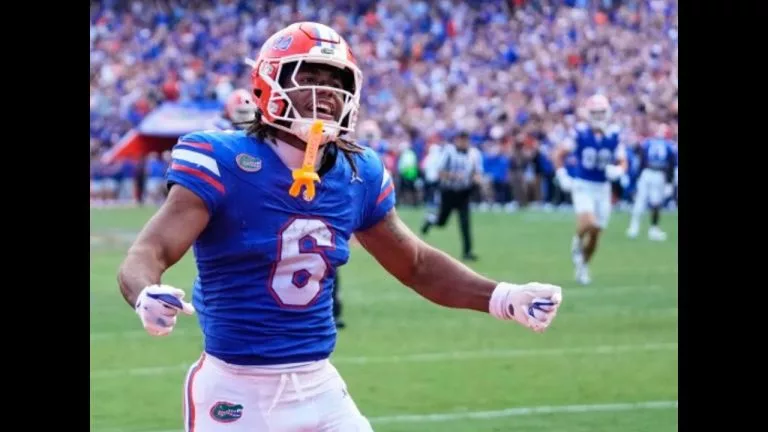
10. Dallas Wilson, Florida
Dallas Wilson’s placement is based more on potential than proven production, but that potential is enormous.
The former
five-star recruit
was limited to four appearances by injuries during his freshman season. Wilson still caught 12 passes for 174 yards and three touchdowns, including six receptions for 111 yards and two scores in Florida’s victory over Texas.
At 6-foot-3 and approximately 210 pounds, Wilson possesses the size, speed and catch radius needed to become a dominant outside receiver. His performance against Texas demonstrated what he can accomplish when healthy.
Florida added Auburn transfer Eric Singleton Jr., who should command plenty of defensive attention. That could help Wilson receive favorable coverage on the outside instead of immediately forcing him to carry the entire passing attack.
Durability remains the biggest concern. Wilson missed Florida’s first four and final four games in 2025, preventing him from establishing any consistent rhythm. If he stays healthy throughout 2026, however, this ranking could eventually look far too low.
Dallas Wilson Florida Highlights
9. Isiah Canion, Georgia
Georgia needed to find a new outside receiver after losing Zachariah Branch, and Isiah Canion could provide the Bulldogs with precisely what they were missing.
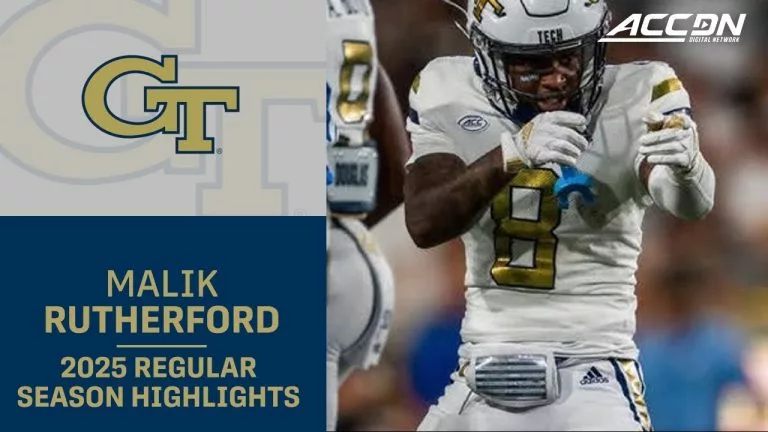
The Georgia Tech transfer caught 33 passes for 480 yards and four touchdowns in 2025. Those numbers are not overwhelming, but they do not fully represent Canion’s physical ability.
At 6-foot-4, Canion gives quarterback Gunner Stockton a large downfield target who can win contested catches and become a significant weapon inside the red zone. He should also benefit from playing in a Georgia offense that can generate favorable matchups through its running game and play-action passing attack.
Canion must prove he can consistently separate against SEC defensive backs. However, his size and ball skills give him a relatively high ceiling in Athens.
Georgia has traditionally spread the football among several receivers and tight ends, which may prevent Canion from producing enormous reception totals. Nevertheless, he has the potential to become the Bulldogs’ primary vertical threat and their most dangerous outside receiver.
Isiah Canion 2025 Regular Season Highlights | Georgia Tech WR
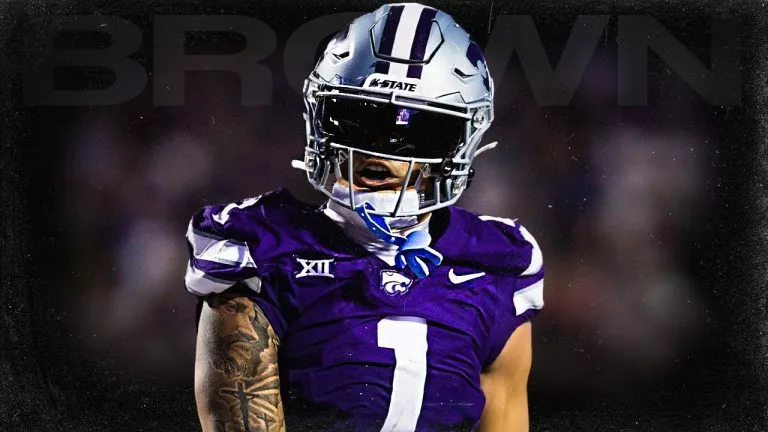
8. Jayce Brown, LSU
Jayce Brown arrives at LSU after becoming one of Kansas State’s most dependable offensive weapons.
Brown caught 41 passes for 712 yards and five touchdowns in 2025, averaging more than 17 yards per reception. He demonstrated the ability to stretch defenses from the slot while also creating separation on intermediate routes.
LSU rebuilt much of its offense through the transfer portal, including the addition of quarterback Sam Leavitt. Brown’s experience and route-running ability should make him a reliable target as the Tigers attempt to establish chemistry within their new offense.
The biggest question is whether Brown can transition from the Big 12 to the weekly physical demands of the SEC. He will encounter better defensive backs and more complicated coverage packages than he typically faced at Kansas State.
However, LSU’s system should provide Brown with opportunities to move around the formation and avoid being isolated against an opponent’s best cornerback. If he develops an immediate connection with Leavitt, Brown could become LSU’s leading receiver and threaten the 1,000-yard mark.
Jayce Brown 🔥 Top WR in College Football ᴴᴰ
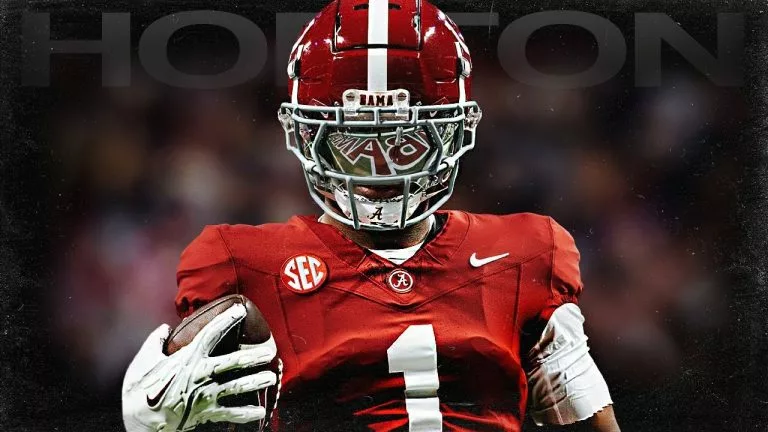
7. Isaiah Horton, Texas A&M
Isaiah Horton was Alabama’s third option during the 2025 season, but he still produced 42 receptions for 511 yards and eight touchdowns.
The touchdown total illustrates what makes Horton such an appealing addition for Texas A&M. At 6-foot-4 and more than 200 pounds, he is a difficult matchup in the red zone and on contested throws.
Texas A&M needed a new featured receiver following the departure of KC Concepcion. Horton should receive considerably more opportunities with the Aggies than he did while competing for targets in Alabama’s crowded receiver room.
Horton’s combination of SEC experience and physical ability reduces the uncertainty that normally accompanies a transfer. He already understands the speed and physicality of the conference and has proven he can produce against quality defenses.
The challenge will be handling the responsibilities that come with becoming a No. 1 receiver. Opposing defenses will pay more attention to Horton, and he will need to create separation more consistently instead of relying entirely on his size. Even so, double-digit touchdowns are a realistic possibility.
ELITE WR 🔥 Isaiah Horton Highlights ᴴᴰ
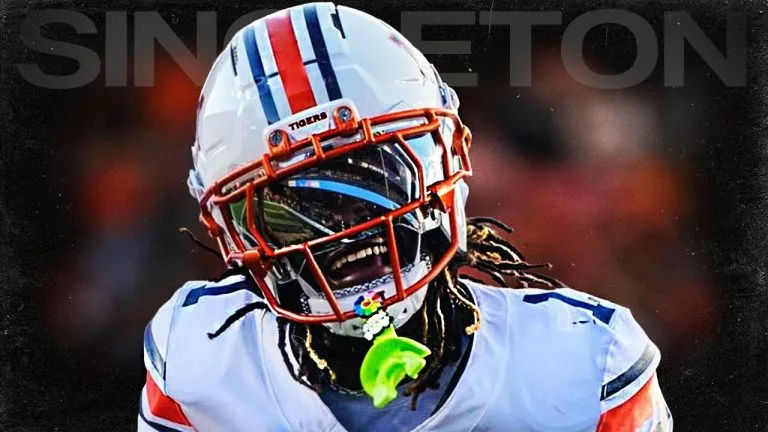
6. Eric Singleton Jr., Florida
Eric Singleton Jr. could become one of the most impactful transfer additions in the SEC.
Singleton caught 58 passes for 534 yards and three touchdowns at Auburn in 2025. Those numbers were respectable but disappointing compared with expectations, largely because Auburn struggled to establish a consistent passing attack.
Florida should use Singleton as its primary slot receiver and manufacture opportunities for him in space. At approximately 5-foot-10, he is not a traditional contested-catch target. His game is built around acceleration, quickness and yards after the catch.
Singleton can contribute on screens, jet sweeps and vertical routes from the slot. His presence should also prevent defenses from concentrating exclusively on Dallas Wilson and Florida’s outside receivers.
The Gators’ quarterback situation and offensive transition create some uncertainty, but Singleton has enough experience to become a stabilizing presence. If Florida can consistently get the football into his hands, he could produce significantly better numbers than he did during his final season at Auburn.
Expect Singleton to become one of the SEC’s most dangerous open-field playmakers.
Eric Singleton 🔥 WR Highlights ᴴᴰ
5. Braylon Staley, Tennessee
Braylon Staley emerged as one of the conference’s biggest surprises in 2025.
Staley caught 68 passes for 837 yards and six touchdowns while earning
SEC Freshman of the Year
honors. His production was especially impressive considering he entered the season without an established role.
Operating primarily from the slot, Staley became a reliable option on intermediate routes and displayed the quickness needed to create yards after the catch. He was effective against both man and zone coverage and rarely appeared overwhelmed by the moment.
The concern for 2026 is Tennessee’s quarterback uncertainty. George MacIntyre and talented freshman Faizon Brandon entered the offseason competing for the job. Either player will experience a learning curve against SEC defenses.
Tennessee’s offensive system should still create plenty of opportunities for Staley. Josh Heupel’s spacing concepts regularly force defenders to cover receivers in one-on-one situations.
Staley may not have the overwhelming physical traits of the receivers ranked ahead of him, but his combination of production, reliability and scheme fit makes him one of the SEC’s safest breakout candidates.
BRAYLON STALEY (Tennessee) II Full 2025 Highlights
4. Mike Matthews, Tennessee
Mike Matthews entered Tennessee as a five-star prospect, and he began fulfilling that potential during the 2025 season.
Matthews finished with 53 receptions for 813 yards and four touchdowns in his first season as a full-time starter. At 6-foot-1 and nearly 200 pounds, he combines impressive speed with the strength needed to defeat physical coverage.
Matthews can produce from different alignments, but his ability to attack defenses downfield makes him particularly valuable in Tennessee’s offense. The Volunteers routinely create vertical opportunities through wide formations and tempo, and Matthews has the athleticism to take advantage.
His statistical ceiling will depend heavily on Tennessee’s quarterback competition. An inexperienced starter may need time before consistently completing difficult throws against SEC defenses.
Matthews will also share targets with Staley, although their different skill sets should allow both receivers to remain productive. Staley can control the middle of the field while Matthews attacks opponents outside and vertically.
A 1,000-yard season is realistic, and Matthews could eventually become one of the highest-selected SEC receivers in the 2027 NFL Draft.
Prized Vols five-star freshman wide receiver Mike Matthews is staying on Rocky Top
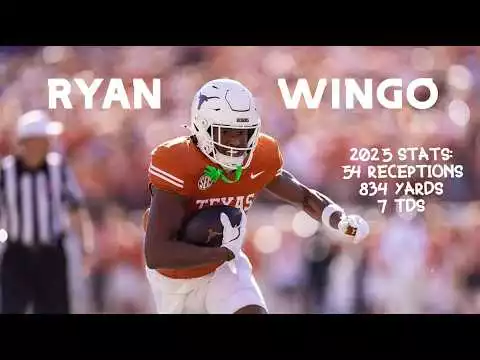
3. Ryan Wingo, Texas
Ryan Wingo developed into Texas’ leading receiver during the 2025 season, catching 54 passes for 834 yards and seven touchdowns.
His breakout performance came against Mississippi State, when he recorded a career-high 184 receiving yards on only five catches. That game demonstrated Wingo’s ability to turn limited opportunities into explosive production.
Wingo possesses an impressive combination of size, speed and versatility. Texas can line him up outside, use him in the slot or involve him in the running game. He has already accumulated more than 1,300 career receiving yards entering his junior season.
The addition of Cam Coleman creates an interesting situation. Wingo may receive fewer total targets, but Coleman’s presence should prevent defenses from consistently rolling coverage in his direction.
With Arch Manning returning at quarterback, Texas should possess one of the country’s most dangerous passing attacks. Coleman and Wingo give the Longhorns two legitimate No. 1 receivers, making it nearly impossible for opponents to double-team either player.
Wingo may not lead Texas in every statistical category, but he should be more efficient and explosive in 2026.
Ryan Wingo – Texas | 2025 Highlights
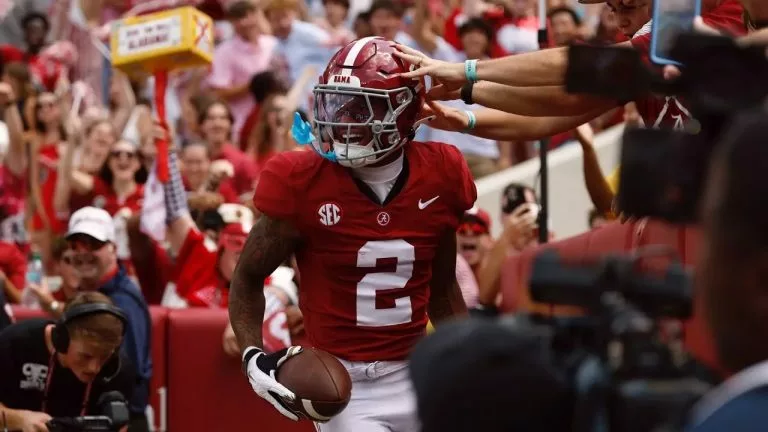
2. Ryan Williams, Alabama
Ryan Williams remains one of the most naturally gifted receivers in college football, but he enters 2026 needing to reestablish himself after an inconsistent sophomore season.
Williams recorded 49 receptions for 689 yards and four touchdowns in 2025. That represented a noticeable decline from his sensational freshman campaign, when he immediately became one of the sport’s most recognizable playmakers.
Drops were part of the problem. Williams also struggled to consistently generate the explosive plays that defined his first season.
The talent has not disappeared. Williams possesses outstanding acceleration, body control and open-field creativity. He can score from anywhere and remains capable of taking over a game with only a handful of touches.
Alabama’s quarterback situation will influence his production, but the departures of Germie Bernard and Isaiah Horton should make Williams the unquestioned centerpiece of the passing game. He will receive more targets—and more defensive attention.
If Williams improves his concentration and rediscovers his freshman-year confidence, he can lead the SEC in receiving. The difference between No. 3 and No. 1 on this list is extremely small.
Ryan Williams | 2025 Highlights
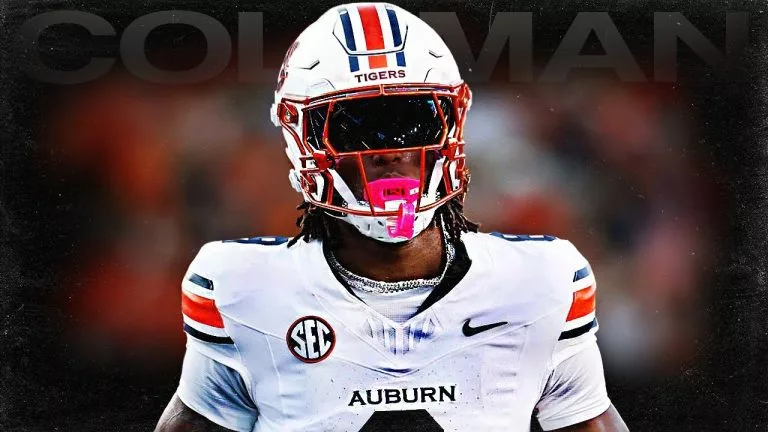
1. Cam Coleman, Texas
Cam Coleman enters 2026 as the best wide receiver in the SEC and one of the top three receivers in
college football.
Coleman caught 56 passes for 708 yards and five touchdowns at Auburn in 2025. Those numbers did not completely reflect his ability because Auburn’s passing game struggled throughout the season.
Over two seasons with the Tigers, Coleman accumulated 1,306 receiving yards and 13 touchdowns despite inconsistent quarterback play.
Now he will play in Steve Sarkisian’s offense with Arch Manning throwing him the football. That represents an enormous upgrade in both scheme and quarterback stability.
At 6-foot-3 and approximately 200 pounds, Coleman possesses elite body control, strong hands and the ability to make contested catches appear routine. He can win vertically, dominate in the red zone and adjust to inaccurate throws.
Playing alongside Wingo should create more one-on-one opportunities than Coleman received at Auburn. Defenses cannot consistently double-team him without leaving another future NFL receiver isolated on the opposite side.
Coleman has the talent and supporting cast required to surpass 1,000 yards, score double-digit touchdowns and become a first-round selection in the 2027 NFL Draft.
Cam Coleman 🔥 Top WR in College Football ᴴᴰ
Final Rankings
Cam Coleman, Texas
Ryan Wingo, Texas
Ryan Williams, Alabama
Mike Matthews, Tennessee
Braylon Staley, Tennessee
Eric Singleton Jr., Florida
Isaiah Horton, Texas A&M
Jayce Brown, LSU
Isiah Canion, Georgia
Dallas Wilson, Florida
Honorable Mentions
Parker Livingstone of Oklahoma deserves attention after recording 29 receptions for 516 yards and six touchdowns at Texas. Emmett Mosley V could also produce significant numbers as Texas’ slot receiver, while Alabama’s Lotzeir Brooks and South Carolina’s Nyck Harbor possess considerable breakout potential.
The SEC may not return as many proven 1,000-yard receivers as it has in previous seasons, but the conference has no shortage of talent. Texas leads the way with Coleman and Wingo, Tennessee returns two established weapons, and Williams remains capable of reclaiming his position among college football’s elite.
The eventual order will depend on quarterback play and how quickly the conference’s major transfers adjust to their new offenses. On talent alone, however, Coleman begins the season as the receiver everyone else in the SEC is chasing.
Up To $1500 in Bonus Bets Paid Back if your First Bet Does Not Win
T&Cs apply
4.5/5
Gambling problem? Call 1-800-GAMBLER or 1-800-MY-RESET (Available in the US) 877-8-HOPENY or text HOPENY (467369) (NY) 1-800-327-5050 (MA), 1-800-BETS-OFF (IA), 1-800-981-0023 (PR). 21+ only. Please Gamble Responsibly. See BetMGM.com for Terms. First Bet Offer for new customers only (if applicable). Subject to eligibility requirements. Bonus bets are non-withdrawable. In partnership with Kansas Crossing Casino and Hotel. Promotional offers not available in Mississippi, Massachusetts, New York, Ontario, or Puerto Rico.
New DraftKings Customers: Spend $5+ Get $150 in Bonuses
T&Cs apply
4.5/5
GAMBLING PROBLEM? CALL 1-800-GAMBLER or 1-800-MY-RESET, (800) 327-5050 or visit gamblinghelplinema.org (MA). Please Gamble Responsibly. 888-789-7777/visit ccpg.org (CT), or visit www.mdgamblinghelp.org (MD), 1-800-981-0023 (PR). 21+ and present in most states. (18+ DC/NH/PR/WY). Void in CAN. Eligibility restrictions apply. On behalf of Boot Hill Casino (KS). Pass-thru of per wager tax may apply in IL. 1 per new DraftKings customer. $5+ first-time bet req. Max. $150 issued as non-withdrawable Bonus Bets. Stake removed from payout. Reward issued as $50 in Bonus Bets every 7 days via click-to-claim for 14 days. Bonus Bets and click-to-claims expire 7 days (168hrs) after issuance. Terms: sportsbook.draftkings.com/promos. Ends 10/11/26 at 11:59 PM ET. Sponsored by DK.
Must be 21+. GAMBLING PROBLEM? CALL 1-800-GAMBLER OR CALL 1-800-MY-RESET, www.mdgamblinghelp.org (MD), (800)-327-5050 or gamblinghelplinema.org (MA), Call (877)8-HOPENY or text HOPENY (467369) (NY), (888) 789-7777 or ccpg.org (CT), morethanagame.nc.gov (NC), 1800gambler.net (WV)
Bet $1 and get double the winnings up to $25 for your next 10 bets
T&Cs apply
4.4/5
21+ New users only. Must register using eligible promo code. First bet after registration must qualify. Max. Bonus Bet: $1,000. Bonus Bet expires 14 days after receipt. Void where prohibited. See Caesars.com/promos for full terms. Gambling Problem? 1-800-GAMBLER (1-800-426-2537)
21+ and present in OH. Gambling Problem? Call 1-800-GAMBLER.
This site is using
Cloudflare
and adheres to the
Google Safe Browsing Program. We adapted
Google's Privacy Guidelines
to keep your data safe at all times.
Close
Ready to Win Big? Join the Elite with Our Sports Betting Deals!
FanDuel Promo
New Users – Get $250 in Bonus Bets when you wager $5 for 5 days
Up To $1500 in Bonus Bets Paid Back if your First Bet Does Not Win
Best Slots
T&Cs and 21+ apply
Gambling problem? Call 1-800-GAMBLER or 1-800-MY-RESET (Available in the US) 877-8-HOPENY or text HOPENY (467369) (NY) 1-800-327-5050 (MA), 1-800-BETS-OFF (IA), 1-800-981-0023 (PR). 21+ only. Please Gamble Responsibly. See BetMGM.com for Terms. First Bet Offer for new customers only (if applicable). Subject to eligibility requirements. Bonus bets are non-withdrawable. In partnership with Kansas Crossing Casino and Hotel. Promotional offers not available in Mississippi, Massachusetts, New York, Ontario, or Puerto Rico.
Code:
Open BetMGM
Get Bonus
DraftKings Promo
New DraftKings Customers: Spend $5+ Get $150 in Bonuses
Newcomer
T&Cs and 21+ apply
GAMBLING PROBLEM? CALL 1-800-GAMBLER or 1-800-MY-RESET, (800) 327-5050 or visit gamblinghelplinema.org (MA). Please Gamble Responsibly. 888-789-7777/visit ccpg.org (CT), or visit www.mdgamblinghelp.org (MD), 1-800-981-0023 (PR). 21+ and present in most states. (18+ DC/NH/PR/WY). Void in CAN. Eligibility restrictions apply. On behalf of Boot Hill Casino (KS). Pass-thru of per wager tax may apply in IL. 1 per new DraftKings customer. $5+ first-time bet req. Max. $150 issued as non-withdrawable Bonus Bets. Stake removed from payout. Reward issued as $50 in Bonus Bets every 7 days via click-to-claim for 14 days. Bonus Bets and click-to-claims expire 7 days (168hrs) after issuance. Terms: sportsbook.draftkings.com/promos. Ends 10/11/26 at 11:59 PM ET. Sponsored by DK.
Code:
Open DraftKings
Get Bonus
Find out what the legends have to say about sports this week....