The SEC enters the 2026 season with one of its deepest running back classes in years. For the first time in conference history.
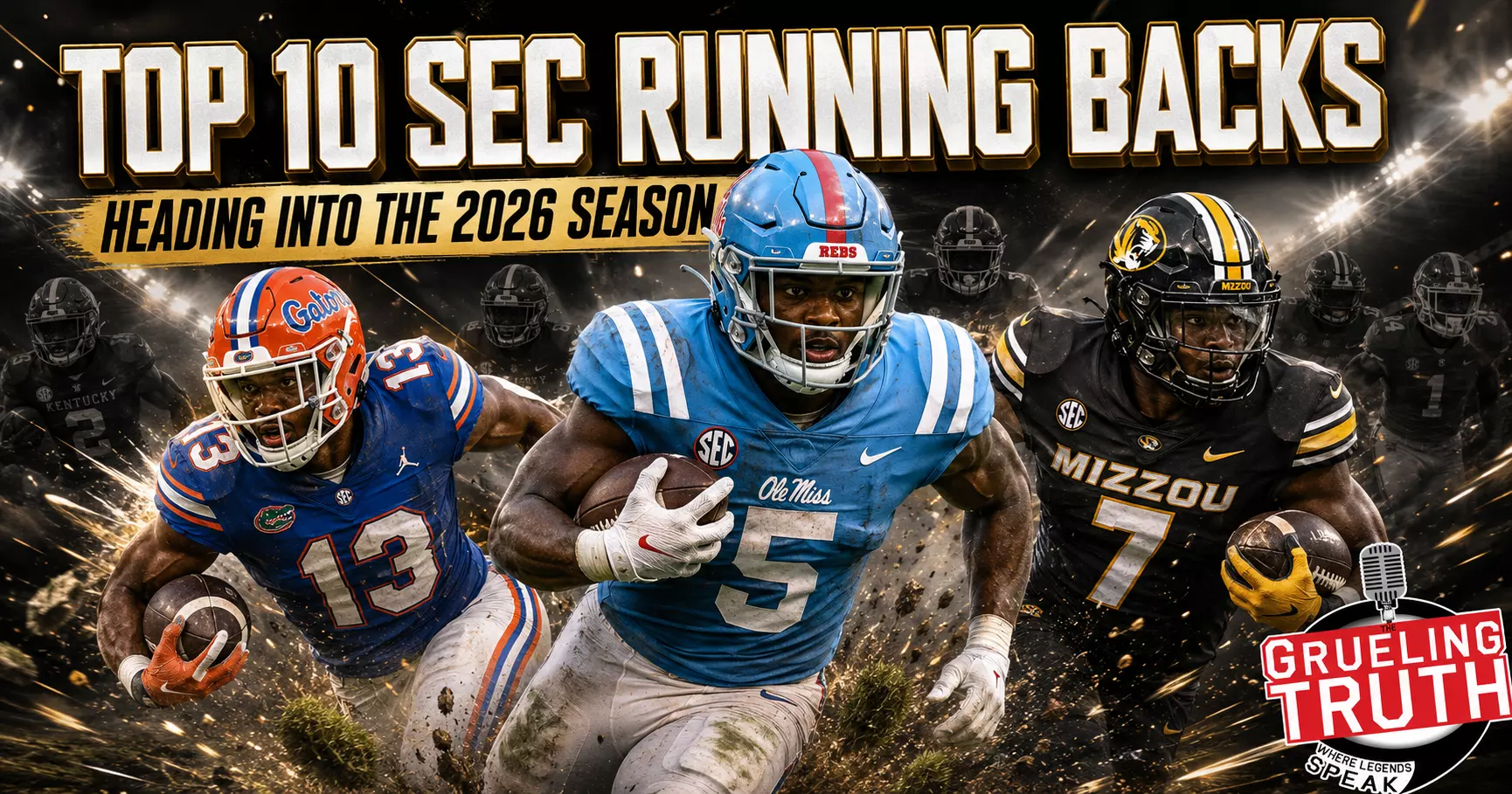
The SEC enters the 2026 season with one of its deepest running back classes in years. For the first time in conference history, multiple 1,500-yard rushers are returning, while four different backs who surpassed 1,000 yards in 2025 remain on SEC rosters.
Ole Miss’ Kewan Lacy, Missouri’s Ahmad Hardy and Florida’s Jadan Baugh could all contend for the Doak Walker Award. Tennessee returns a 1,000-yard runner who scored 16 touchdowns, Texas added an explosive transfer, and Georgia has a potential breakout star running behind an experienced offensive line.
These rankings are based on 2025 production, health, receiving ability, projected workload, offensive system and the quality of each player’s supporting cast. They are not rankings based strictly on NFL potential.
Fluff Bothwell enters his second Mississippi State season with an opportunity to become the centerpiece of Jeff Lebby’s offense.
Bothwell rushed 142 times for 677 yards and six touchdowns in 2025, averaging 4.8 yards per carry. He also caught 14 passes for 105 yards, demonstrating that he can contribute as more than an early-down power back.
At approximately 6-foot and 230 pounds, Bothwell runs with the physical attitude his nickname suggests. He attacks defenders, finishes runs forward and has enough short-area quickness to exploit an opening before it disappears.
His production declined during the second half of 2025, making consistency his biggest concern. Mississippi State also must improve its blocking and avoid forcing Bothwell to create too many yards before reaching the line of scrimmage.
Dual-threat quarterback Kamario Taylor could help. Defenses must respect Taylor’s legs, potentially creating more favorable running lanes for Bothwell. If the Bulldogs’ offense develops as expected, Bothwell could approach 1,000 yards and become one of the conference’s breakout players.
Fluff Bothwell USA Highlights
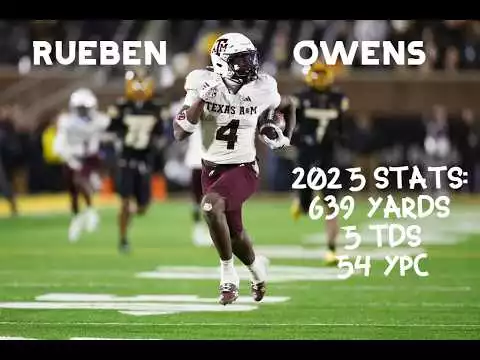
9. Rueben Owens II, Texas A&M Aggies
Rueben Owens II may finally receive the opportunity to become Texas A&M’s unquestioned lead back.
Owens arrived in College Station as one of the nation’s top running back recruits and flashed significant potential as a freshman. A serious injury cost him nearly the entire 2024 season, and he spent much of 2025 sharing opportunities with Le’Veon Moss and Amari Daniels.
Despite the crowded backfield, Owens led the Aggies with 639 rushing yards and five touchdowns on 119 carries. He also caught 13 passes for 130 yards, averaging 10 yards per reception.
Owens possesses excellent vision, smooth acceleration and the versatility to become a three-down contributor. He does not have to leave the field when Texas A&M moves into passing situations.
Quarterback Marcel Reed’s mobility should create additional space in the running game, although Reed will also take some carries away from the backs.
If Owens remains healthy and handles an expanded workload, his production should increase dramatically. The talent has always been present. The question is whether 2026 will finally become his complete breakout season.
Rueben Owens II – Texas A&M | 2025 Highlights
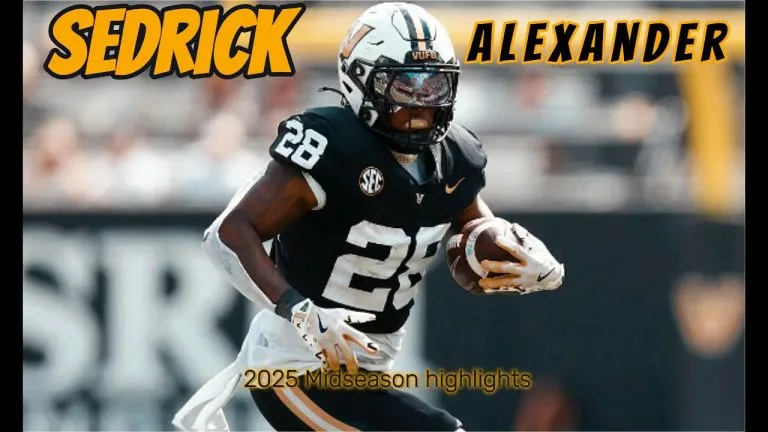
8. Sedrick Alexander, Vanderbilt Commodores
Sedrick Alexander was frequently overshadowed by quarterback Diego Pavia, but he quietly became one of the SEC’s most productive touchdown makers.
Alexander rushed for 567 yards and 11 touchdowns on 105 carries in 2025. He was even more dangerous as a receiver, catching 19 passes for 200 yards and four scores. That gave him 15 total touchdowns on only 124 offensive touches.
His efficiency improved significantly from 2024, with his rushing average jumping from 3.6 to 5.4 yards per carry. He also demonstrated big-play ability against Alabama, proving that he can score from distance rather than merely finishing short-yardage opportunities.
Pavia’s departure should create a larger role for Alexander. Vanderbilt is expected to rely on an inexperienced quarterback, making the running game and short passing attack especially important.
The Commodores must avoid becoming predictable. Opponents will understand that Alexander is the most reliable returning offensive weapon and could crowd the line of scrimmage.
Still, his versatility and projected workload give him a legitimate opportunity to produce more than 1,000 yards from scrimmage.
Sedrick Alexander 2025 Midseason Highlights
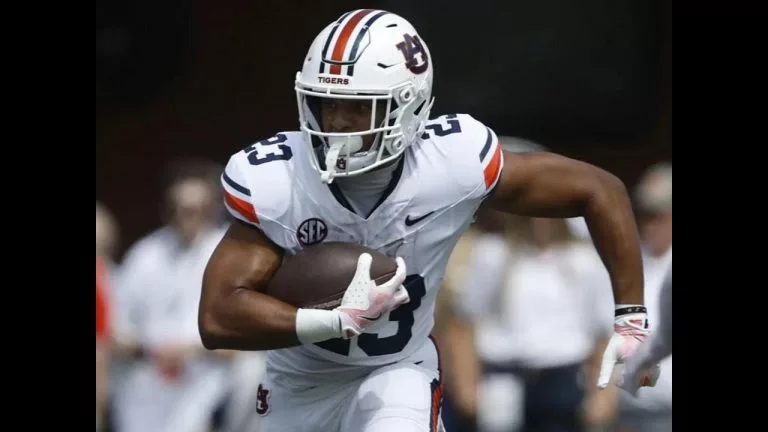
7. Jeremiah Cobb, Auburn Tigers
Jeremiah Cobb produced a strong 2025 season despite playing in an Auburn offense that frequently struggled to create consistency.
Cobb rushed 175 times for 969 yards and five touchdowns, averaging an impressive 5.5 yards per attempt. He added 11 receptions for 83 yards and nearly became one of the conference’s four 1,000-yard rushers.
The arrival of head coach Alex Golesh and quarterback Byrum Brown could unlock another level.
Golesh’s offense creates running opportunities through tempo, spacing and quarterback movement. Brown rushed for more than 1,000 yards at South Florida in 2025, forcing defenses to account for him on every option or zone-read concept.
That attention should create wider rushing lanes for Cobb. Defenders will no longer be able to crash toward the running back without considering Brown’s ability to keep the football.
Cobb must become a more productive receiver and improve in pass protection to remain on the field for every situation. As a pure runner, however, he has already proven capable of producing against
SEC defenses. Auburn’s offensive change makes him especially intriguing.
Jeremiah Cobb 2025 Auburn Highlights
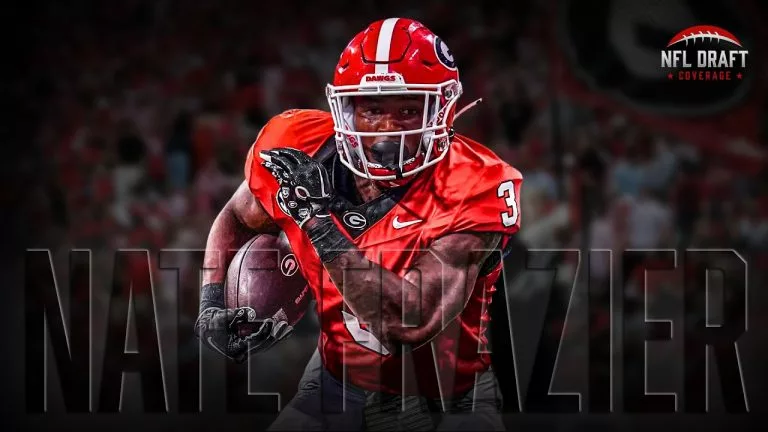
6. Nate Frazier, Georgia Bulldogs
Nate Frazier has displayed flashes of becoming Georgia’s next elite running back. The 2026 season should provide his best opportunity to turn those flashes into consistent dominance.
Frazier rushed for 947 yards and six touchdowns on 173 carries in 2025, averaging 5.5 yards per attempt. He added 16 receptions for 116 yards and another score, giving him more than 1,000 yards from scrimmage.
His explosiveness separates him from many of the conference’s other backs. Frazier has the acceleration to turn a well-blocked play into a long touchdown, including a 59-yard scoring run during the 2025 season.
Georgia returns approximately 61 percent of its offensive line snaps, the second-highest percentage in the SEC. That continuity should help a running game that has occasionally lacked the overwhelming physicality associated with Kirby Smart’s best teams.
The Bulldogs will continue rotating backs, so Frazier may not receive 300 carries. He does not need that workload to produce. With improved consistency and more explosive runs, he could become Georgia’s first true running back superstar in several seasons.
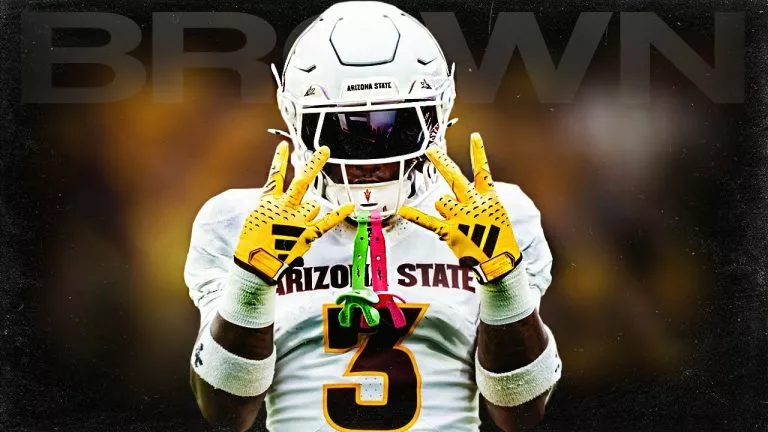
Texas strengthened an already talented offense by adding Arizona State transfer Raleek Brown.
Brown rushed 186 times for 1,141 yards and four touchdowns in 2025, averaging 6.1 yards per carry while replacing Cam Skattebo as Arizona State’s featured back. He also caught 34 passes for 239 yards and two touchdowns.
His receiving ability makes him especially dangerous in Steve Sarkisian’s offense. Brown can line up in the backfield, motion into the slot or become a checkdown option when defenses concentrate on stopping quarterback Arch Manning.
Texas is expected to divide carries between Brown and Hollywood Smothers, creating one of the SEC’s deepest backfields. That rotation could limit Brown’s raw rushing totals, but it should also keep him fresh and allow Sarkisian to use him in favorable situations.
Brown lacks the traditional size of an every-down SEC power back, but he compensates with speed, vision and elusiveness. Defenses will have difficulty concentrating on him while also accounting for Manning and Texas’ receivers.
He may not lead the conference in carries, but Brown could lead all SEC backs in explosive plays.
Raleek Brown 🔥 Top RB in College Football ᴴᴰ
4. DeSean Bishop, Tennessee Volunteers
DeSean Bishop quietly produced one of the SEC’s best running back seasons in 2025.
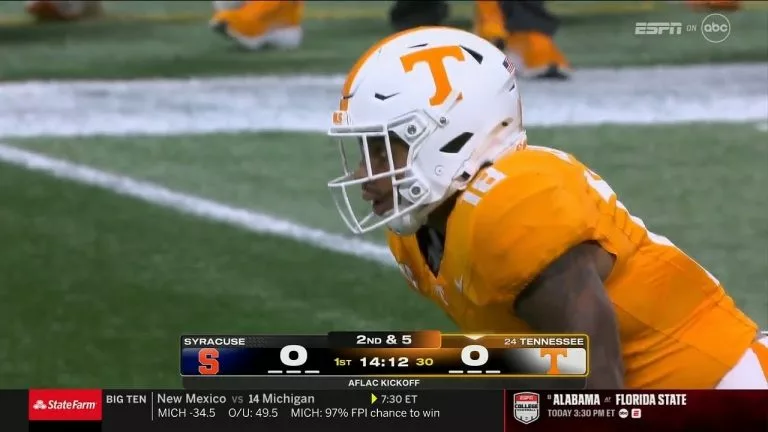
The former walk-on rushed for 1,076 yards and 16 touchdowns on 182 attempts, averaging 5.9 yards per carry. He also caught 15 passes for 135 yards, proving capable of contributing to Tennessee’s passing attack.
Bishop’s 16 rushing touchdowns tied him for second among SEC running backs. His ability to finish drives became especially important as Tennessee adjusted to a new quarterback.
Josh Heupel’s offensive system has consistently created productive rushing attacks through tempo and horizontal spacing. The Volunteers spread defenders across the field, preventing opponents from placing too many players near the line of scrimmage.
Bishop should receive an even larger role following the departures of Star Thomas and Peyton Lewis. Tennessee’s uncertainty at quarterback also makes a dependable rushing attack essential.
At 5-foot-10 and approximately 200 pounds, Bishop is not an overpowering back. He succeeds through vision, decisive cuts and an understanding of blocking concepts. Another 1,000-yard season should be the expectation, not the ceiling.
DeSean Bishop vs Syracuse 2025 – 🍊 Crush
3. Ahmad Hardy, Missouri Tigers
If this ranking were based only on proven ability, Ahmad Hardy could easily occupy the top position.
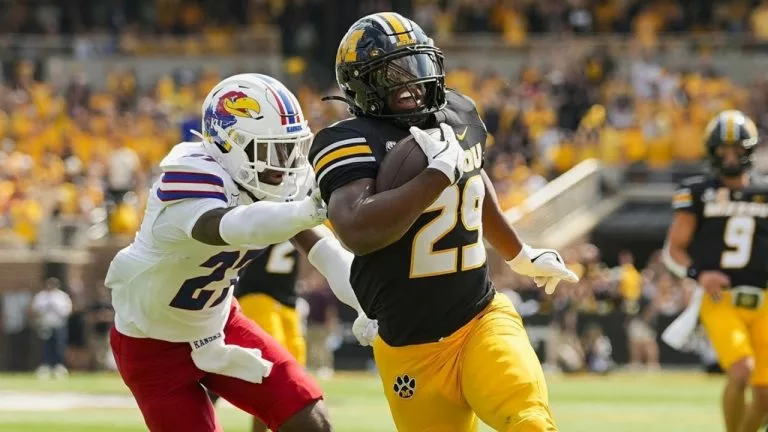
Hardy rushed for 1,649 yards and 16 touchdowns on 256 attempts in 2025, averaging an outstanding 6.4 yards per carry. He finished second nationally with 126.8 rushing yards per game and recorded eight 100-yard performances.
His most remarkable game came against Mississippi State, when Hardy rushed 25 times for 300 yards and three touchdowns.
Unfortunately, his availability for 2026 remains uncertain after he suffered a gunshot wound to his upper leg at an outdoor concert in May. Hardy has been rehabilitating at Missouri’s facility, but the program has not established a definitive football timetable.
That uncertainty is the only reason he ranks third.
Hardy combines contact balance, vision and explosive acceleration. He rushed for 1,351 yards at Louisiana-Monroe in 2024 before becoming even more productive against SEC competition.
If Hardy makes a complete recovery, he may still be the best running back in college football. Missouri also has an excellent replacement option in Jamal Roberts, who rushed for 753 yards in 2025.
Ahmad Hardy | 2025 Highlights
2. Jadan Baugh, Florida Gators
Jadan Baugh’s 2025 production becomes more impressive when considering the offense surrounding him.
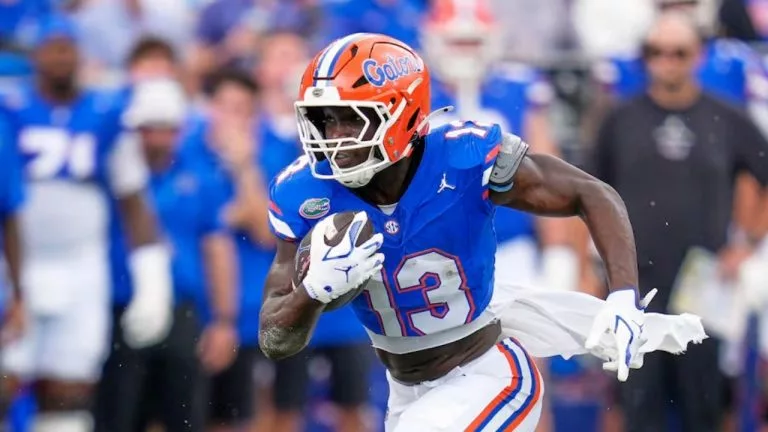
Baugh rushed 220 times for 1,170 yards and eight touchdowns while adding 33 receptions for 210 yards and two receiving scores. He averaged 5.3 yards per carry despite playing for a Florida team that finished 4–8 and rarely frightened defenses through the air.
Opponents understood that Baugh was Florida’s most dependable weapon. They frequently crowded the line of scrimmage and forced the Gators to beat them another way. Baugh still produced more than 1,300 yards from scrimmage.
His decision to remain at Florida following Billy Napier’s firing was a major victory for new coach Jon Sumrall. Baugh gives the Gators a proven offensive foundation while Aaron Philo and Tramell Jones Jr. compete at quarterback.
Buster Faulkner should design an offense that uses Baugh’s power, balance and receiving ability. Improved quarterback play would finally give him lighter boxes.
If Florida becomes even an average passing team, Baugh could challenge for the
SEC rushing title.
Jaden Baugh | 2025 Highlights
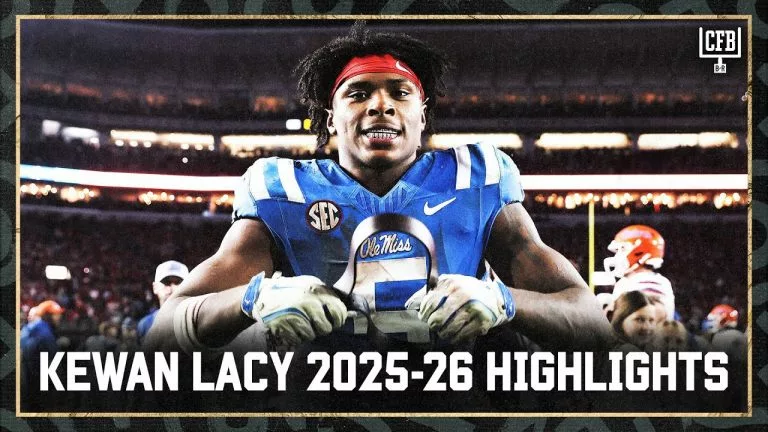
1. Kewan Lacy, Ole Miss Rebels
Kewan Lacy enters 2026 as the SEC’s top running back because he combines elite production, durability, scoring ability and certainty about his availability.
Lacy carried the football 306 times for 1,567 yards and 24 touchdowns during Ole Miss’ historic 2025 season. He also caught 29 passes for 177 yards, finishing with 1,744 yards from scrimmage.
His 24 rushing touchdowns led the SEC and established him as one of the most reliable red-zone players in college football. Even when opponents knew Ole Miss intended to give him the ball, Lacy repeatedly finished drives.
Keeping Lacy in Oxford after Lane Kiffin left for LSU was crucial for new coach Pete Golding. His return gives Ole Miss an established offensive centerpiece alongside quarterback Trinidad Chambliss.
The departure of Kiffin creates some uncertainty about the system, but the Rebels would be foolish to move away from what worked. Lacy has proven he can handle a heavy workload, create yards after contact and remain productive late in games.
He enters the season as the SEC’s best back and a leading Doak Walker Award contender.
Kewan Lacy Top Plays | 2025-26 College Football Season
Final Rankings
Kewan Lacy, Ole Miss
Jadan Baugh, Florida
Ahmad Hardy, Missouri
DeSean Bishop, Tennessee
Raleek Brown, Texas
Nate Frazier, Georgia
Jeremiah Cobb, Auburn
Sedrick Alexander, Vanderbilt
Rueben Owens II, Texas A&M
Fluff Bothwell, Mississippi State
Honorable mentions: Caden Durham, LSU; Sutton Smith, Arkansas; CJ Baxter, Kentucky; Tory Blaylock, Oklahoma; Daniel Hill, Alabama.
New Users – Get $350 in Bonus Bets when you wager $5 for 7 days
T&Cs apply
4.6/5
Gambling Problem? Call 1-800-GAMBLER or 1-800-MY-RESET. Call 1-888-789-7777 or visit ccpgg.org/chat (CT). Hope is here. GamblingHelpLineMA.org or call (800) 327-5050 for 24/7 support (MA). Visit www.mdgamblinghelp.org (MD). Call 1-877-8HOPE-NY or text HOPENY (NY). 21+ (18+ DC, WY) and present in select states (for KS, in affiliation with Kansas Star Casino). Find online real money wagering only. Min $5 wager required for 7 consecutive days. $5 free play credit. Bonus issued as non-withdrawable bonus with cash withdrawable bonus with cash withdrawable. Bonus bets which expire 7 days after receipt. Restrictions apply. See terms at sportsbook.fanduel.com. Call 1-877-770-7867 (LA).
Up To $1500 in Bonus Bets Paid Back if your First Bet Does Not Win
T&Cs apply
4.5/5
Gambling problem? Call 1-800-GAMBLER or 1-800-MY-RESET (Available in the US) 877-8-HOPENY or text HOPENY (467369) (NY) 1-800-327-5050 (MA), 1-800-BETS-OFF (IA), 1-800-981-0023 (PR). 21+ only. Please Gamble Responsibly. See BetMGM.com for Terms. First Bet Offer for new customers only (if applicable). Subject to eligibility requirements. Bonus bets are non-withdrawable. In partnership with Kansas Crossing Casino and Hotel. Promotional offers not available in Mississippi, Massachusetts, New York, Ontario, or Puerto Rico.
New DraftKings Customers: Bet $5, Get $200 + 3 Months of NBA League Pass!
T&Cs apply
4.5/5
GAMBLING PROBLEM? CALL 1-800-GAMBLER or 1-800-MY-RESET, (800) 327-5050 or visit gamblinghelplinema.org (MA). Please Gamble Responsibly. 888-789-7777/visit ccpg.org (CT), or visit www.mdgamblinghelp.org (MD), 1-800-981-0023 (PR). 21+ and present in most states. (18+ DC/NH/PR/WY). Void in CAN. Eligibility restrictions apply. On behalf of Boot Hill Casino (KS). Pass-thru of per wager tax may apply in IL. 1 per new Sportsbook customer. $5+ first-time bet req. Max. $200 issued as non-withdrawable Bonus Bets. Stake removed from payout. Reward issued as $50 in Bonus Bets every 7 days via click-to-claim for 21 days. Bonus Bets and click-to-claims expire 7 days (168hrs) after issuance. Terms: dkng.co/offer. Get 1 promo code to redeem a 3-month NBA League Pass subscription, complimentary of DraftKings. Subscription auto-renews monthly at then-current price (currently $16.99/mo); cancel anytime. Terms, restrictions, and eligibility requirements apply. Redeem League Pass by 12/19/26 at 11:59 PM ET. Addt’l terms: support.watch.nba.com/hc/en-us/articles/9165532876183-League-Pass-Terms-of-Use_. Ends 11/29/26 at 11:59 PM ET. Sponsored by DK.
Must be 21+. GAMBLING PROBLEM? CALL 1-800-GAMBLER OR CALL 1-800-MY-RESET, www.mdgamblinghelp.org (MD), (800)-327-5050 or gamblinghelplinema.org (MA), Call (877)8-HOPENY or text HOPENY (467369) (NY), (888) 789-7777 or ccpg.org (CT), morethanagame.nc.gov (NC), 1800gambler.net (WV)
Bet $1 and get double the winnings up to $25 for your next 10 bets
T&Cs apply
4.4/5
21+ New users only. Must register using eligible promo code. First bet after registration must qualify. Max. Bonus Bet: $1,000. Bonus Bet expires 14 days after receipt. Void where prohibited. See Caesars.com/promos for full terms. Gambling Problem? 1-800-GAMBLER (1-800-426-2537)
21+ and present in OH. Gambling Problem? Call 1-800-GAMBLER.
This site is using
Cloudflare
and adheres to the
Google Safe Browsing Program. We adapted
Google's Privacy Guidelines
to keep your data safe at all times.
Close
Ready to Win Big? Join the Elite with Our Sports Betting Deals!
FanDuel Promo
New Users – Get $350 in Bonus Bets when you wager $5 for 7 days
Our Favorite
T&Cs and 21+ apply
Gambling Problem? Call 1-800-GAMBLER or 1-800-MY-RESET. Call 1-888-789-7777 or visit ccpgg.org/chat (CT). Hope is here. GamblingHelpLineMA.org or call (800) 327-5050 for 24/7 support (MA). Visit www.mdgamblinghelp.org (MD). Call 1-877-8HOPE-NY or text HOPENY (NY). 21+ (18+ DC, WY) and present in select states (for KS, in affiliation with Kansas Star Casino). Find online real money wagering only. Min $5 wager required for 7 consecutive days. $5 free play credit. Bonus issued as non-withdrawable bonus with cash withdrawable bonus with cash withdrawable. Bonus bets which expire 7 days after receipt. Restrictions apply. See terms at sportsbook.fanduel.com. Call 1-877-770-7867 (LA).
Code:
Open FanDuel
Get Bonus
BetMGM Promo
Up To $1500 in Bonus Bets Paid Back if your First Bet Does Not Win
Best Slots
T&Cs and 21+ apply
Gambling problem? Call 1-800-GAMBLER or 1-800-MY-RESET (Available in the US) 877-8-HOPENY or text HOPENY (467369) (NY) 1-800-327-5050 (MA), 1-800-BETS-OFF (IA), 1-800-981-0023 (PR). 21+ only. Please Gamble Responsibly. See BetMGM.com for Terms. First Bet Offer for new customers only (if applicable). Subject to eligibility requirements. Bonus bets are non-withdrawable. In partnership with Kansas Crossing Casino and Hotel. Promotional offers not available in Mississippi, Massachusetts, New York, Ontario, or Puerto Rico.
Code:
Open BetMGM
Get Bonus
DraftKings Promo
New DraftKings Customers: Bet $5, Get $200 + 3 Months of NBA League Pass!
Newcomer
T&Cs and 21+ apply
GAMBLING PROBLEM? CALL 1-800-GAMBLER or 1-800-MY-RESET, (800) 327-5050 or visit gamblinghelplinema.org (MA). Please Gamble Responsibly. 888-789-7777/visit ccpg.org (CT), or visit www.mdgamblinghelp.org (MD), 1-800-981-0023 (PR). 21+ and present in most states. (18+ DC/NH/PR/WY). Void in CAN. Eligibility restrictions apply. On behalf of Boot Hill Casino (KS). Pass-thru of per wager tax may apply in IL. 1 per new Sportsbook customer. $5+ first-time bet req. Max. $200 issued as non-withdrawable Bonus Bets. Stake removed from payout. Reward issued as $50 in Bonus Bets every 7 days via click-to-claim for 21 days. Bonus Bets and click-to-claims expire 7 days (168hrs) after issuance. Terms: dkng.co/offer. Get 1 promo code to redeem a 3-month NBA League Pass subscription, complimentary of DraftKings. Subscription auto-renews monthly at then-current price (currently $16.99/mo); cancel anytime. Terms, restrictions, and eligibility requirements apply. Redeem League Pass by 12/19/26 at 11:59 PM ET. Addt’l terms: support.watch.nba.com/hc/en-us/articles/9165532876183-League-Pass-Terms-of-Use_. Ends 11/29/26 at 11:59 PM ET. Sponsored by DK.
Code:
Open DraftKings
Get Bonus
Find out what the legends have to say about sports this week....
New Users – Get $350 in Bonus Bets when you wager $5 for 7 days
Gambling Problem? Call 1-800-GAMBLER or 1-800-MY-RESET. Call 1-888-789-7777 or visit ccpgg.org/chat (CT). Hope is here. GamblingHelpLineMA.org or call (800) 327-5050 for 24/7 support (MA). Visit www.mdgamblinghelp.org (MD). Call 1-877-8HOPE-NY or text HOPENY (NY). 21+ (18+ DC, WY) and present in select states (for KS, in affiliation with Kansas Star Casino). Find online real money wagering only. Min $5 wager required for 7 consecutive days. $5 free play credit. Bonus issued as non-withdrawable bonus with cash withdrawable bonus with cash withdrawable. Bonus bets which expire 7 days after receipt. Restrictions apply. See terms at sportsbook.fanduel.com. Call 1-877-770-7867 (LA).