The Big Ten lost several outstanding running backs after the 2025 season, including Nebraska’s Emmett Johnson and Penn State’s Kaytron Allen
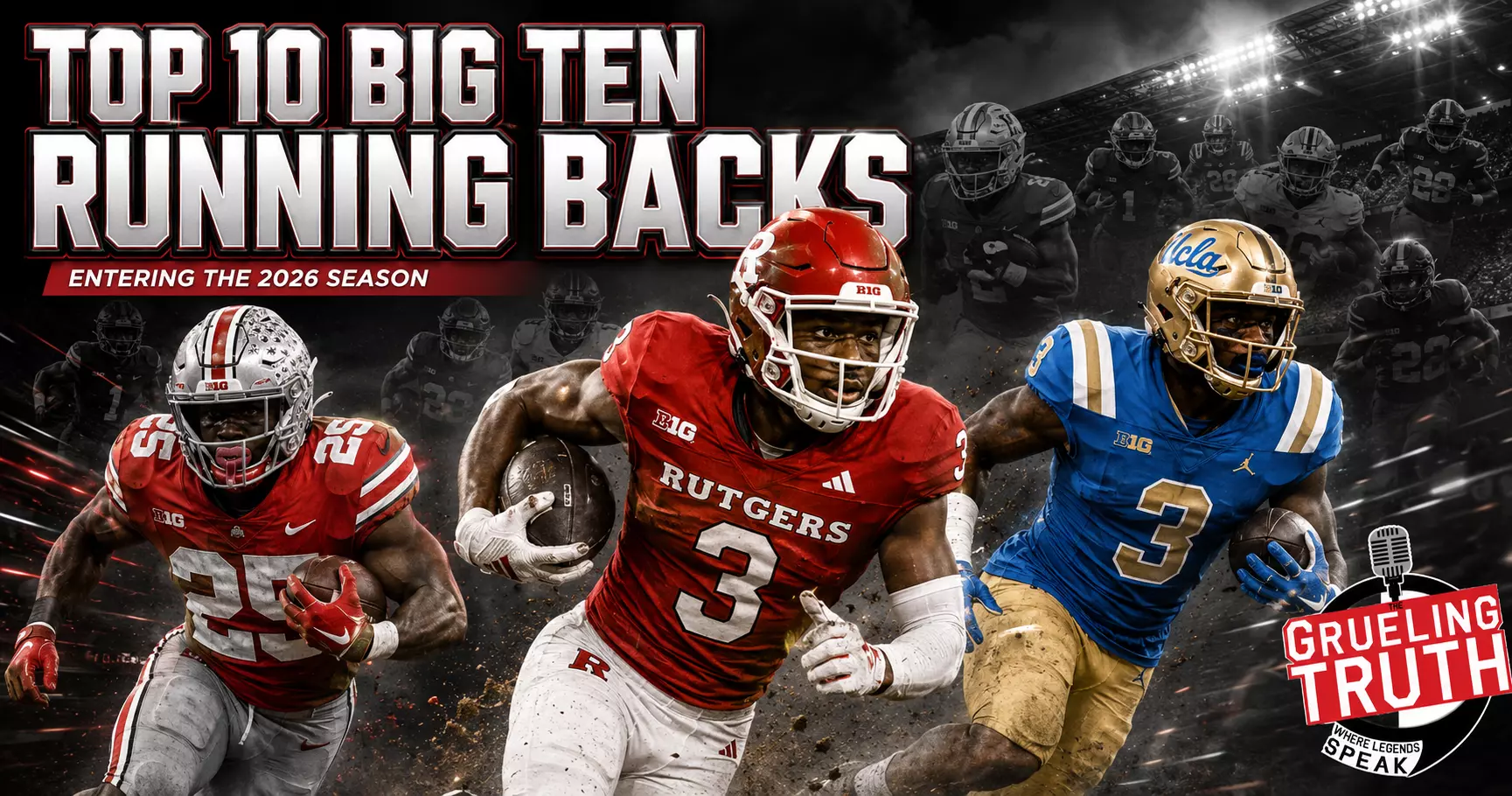
The Big Ten lost several outstanding running backs after the 2025 season, including Nebraska’s Emmett Johnson and Penn State’s Kaytron Allen. The conference nevertheless enters 2026 with another deep collection of proven runners, productive transfers and young players preparing to become national stars.
These rankings are based on previous production, explosiveness, receiving ability, projected workload, offensive system and the level of competition each player will face. NFL potential matters, but the primary question is simple: Which running backs are most likely to make the greatest impact during the
2026 college football season?
Players such as Illinois’ Ca’Lil Valentine, Iowa’s L.J. Phillips Jr., Wisconsin’s Abu Sama III and Oregon’s Makhi Hughes deserve consideration. However, each enters the season with either workload uncertainty, injury questions or significant competition for carries.
Here are the top 10 Big Ten running backs entering 2026.
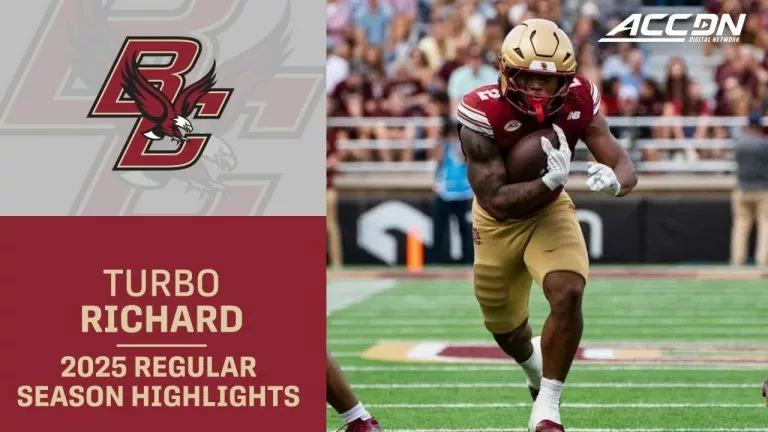
10. Turbo Richard, Indiana Hoosiers
Indiana needed to replace Roman Hemby following its undefeated national championship season, and Curt Cignetti found an experienced, versatile option in Boston College transfer Turbo Richard.
Richard led Boston College in 2025 with 749 rushing yards and nine touchdowns on 145 carries. He also caught 30 passes for 213 yards and two more scores. In 19 career games for the Eagles, Richard accumulated 1,027 rushing yards, 275 receiving yards and 13 total touchdowns.
At 5-foot-8 and approximately 207 pounds, Richard possesses the low center of gravity necessary to run through contact. His acceleration allows him to turn small openings into significant gains, while his receiving experience makes him useful on third downs and in space.
Indiana may employ a committee that includes Khobie Martin and several other capable backs, but Richard has the experience and three-down ability to emerge as the leader. Playing alongside quarterback Josh Hoover should also prevent defenses from loading the box. If Richard adjusts quickly to Indiana’s system, a 1,000-yard season is realistic.
Turbo Richard 2025 Regular Season Highlights | Boston College RB
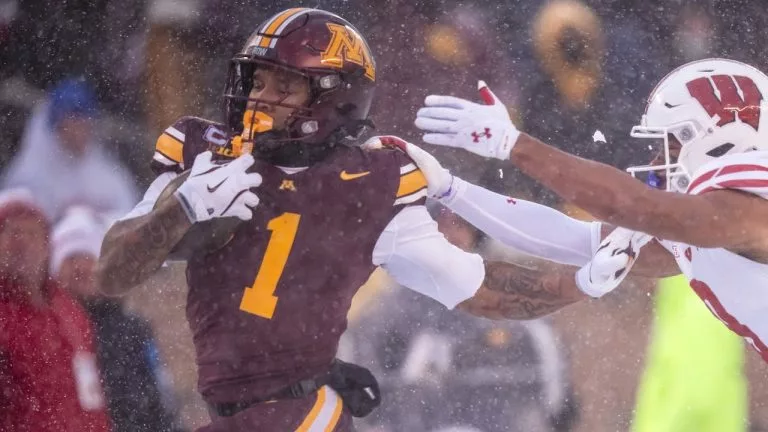
9. Darius Taylor, Minnesota Golden Gophers
Injuries prevented Darius Taylor from producing his best season in 2025, but his overall résumé still places him among the Big Ten’s most accomplished returning runners.
Taylor rushed for 670 yards despite battling a lower-body injury. He recorded four 100-yard performances, including 148 yards against Nebraska. Through three seasons at Minnesota, Taylor has accumulated 2,455 rushing yards and 19 touchdowns while averaging slightly more than five yards per carry.
The 6-foot, 215-pound senior is a physical runner who consistently creates yards after contact. Nearly 80 percent of his 2025 rushing production came after defenders first made contact, illustrating how difficult he is to stop cleanly.
Taylor is also a capable receiver. He caught 54 passes during his first two seasons, giving Minnesota the ability to move him around the formation.
His placement at No. 9 is based more on recent durability concerns than talent. If Taylor remains healthy, he could easily outperform this ranking and challenge for first-team All-Big Ten recognition.
Darius Taylor | 2025 Minnesota Gopher Football Highlights
8. Caleb Komolafe, Northwestern Wildcats
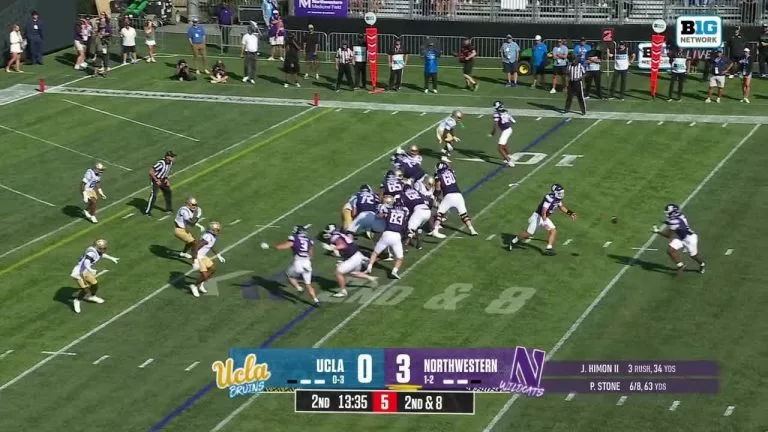
Caleb Komolafe became one of the Big Ten’s most unexpected breakout players after Cam Porter suffered a season-ending injury early in 2025.
Komolafe responded by rushing for 941 yards and 11 touchdowns. He also contributed as a receiver and finished the season with 12 total scores, helping Northwestern rebound from its offensive struggles and finish 7–6.
What makes Komolafe especially interesting in 2026 is the arrival of offensive coordinator Chip Kelly. Kelly has built productive rushing attacks throughout his coaching career by creating favorable numbers, using tempo and forcing defenders to make decisions in space.
Komolafe is not a spectacular physical specimen, but he possesses excellent vision, patience and the acceleration to exploit a crease. He rarely wastes movement behind the line and demonstrated that he can handle an expanded workload.
Northwestern added Joseph Himon II and former Florida State runner Gavin Sawchuk, so Komolafe will not receive every carry. Still, he enters the season as the Wildcats’ clear top option and has an excellent chance to surpass 1,000 rushing yards.
Caleb Komolafe Runs the Rock in vs. UCLA | Northwestern Football | 09/27/25
7. Carson Hansen, Penn State Nittany Lions
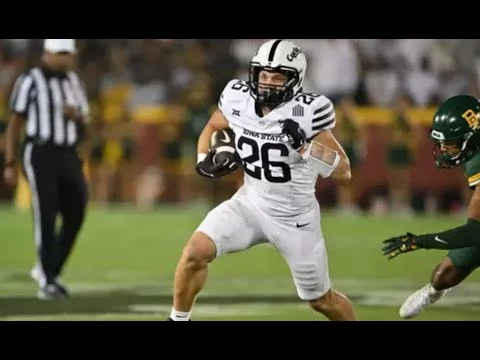
Penn State lost one of college football’s best running back combinations when Kaytron Allen and Nick Singleton departed, but the Nittany Lions reloaded by acquiring Iowa State transfer Carson Hansen.
Hansen earned second-team All-Big 12 honors in 2025 after rushing for 952 yards and six touchdowns on 188 attempts. He averaged 5.1 yards per carry, caught 19 passes for 134 yards and ended the season with five consecutive 100-yard rushing performances.
At 6-foot-2 and 220 pounds, Hansen brings the size necessary to handle Penn State’s traditional inside-running responsibilities. He runs with patience, absorbs contact and becomes more effective as games progress.
Hansen will share carries with Quinton Martin Jr., James Peoples and Cam Wallace, making Penn State’s backfield one of the conference’s deepest. That competition may prevent Hansen from producing enormous individual totals, but it should also keep him fresh.
The rebuilt offensive line presents some uncertainty. However, Hansen’s experience, reliability and late-season 2025 production make him the safest option in the Nittany Lions’ backfield entering 2026.
Carson Hansen Iowa State Highlights
6. King Miller, USC Trojans
King Miller entered the 2025 season as a walk-on buried on USC’s depth chart. By the end of the year, he had become one of the conference’s most exciting runners and earned a scholarship.
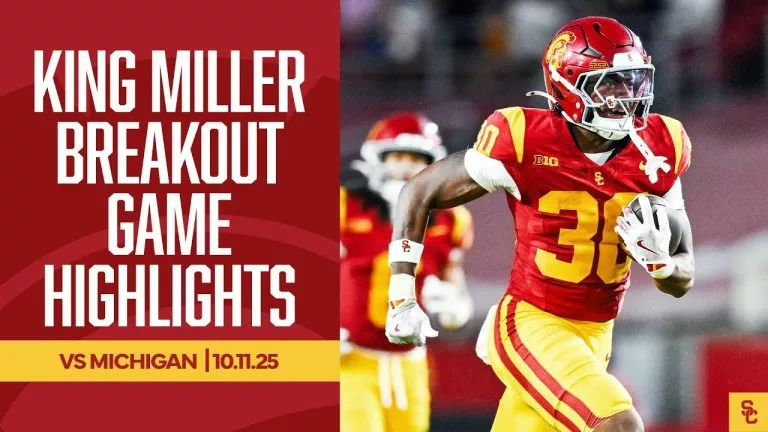
Miller rushed for 972 yards on only 156 attempts, averaging an outstanding 6.2 yards per carry. He produced four 100-yard games during Big Ten play and finished with at least 70 rushing yards in seven of USC’s final eight contests. His signature performance came against Michigan, when he rushed for 158 yards on 18 carries.
The 6-foot, 215-pound Miller combines patience with excellent short-area acceleration. He generated 610 yards after contact in 2025, demonstrating that his success was not solely the product of Lincoln Riley’s offensive spacing.
USC’s passing attack, led by quarterback Jayden Maiava, will force opponents to protect the entire field. That should provide Miller with lighter defensive boxes and favorable running lanes.
The Trojans may rotate multiple backs, but Miller has already proven he can produce against Big Ten defenses. A larger role could turn him into one of the conference’s biggest stars.
Highlights of King Miller’s breakout performance vs Michigan
5. Cam Edwards, Michigan State Spartans
Cam Edwards arrives at Michigan State after producing one of the most impressive rushing seasons in
Connecticut history.
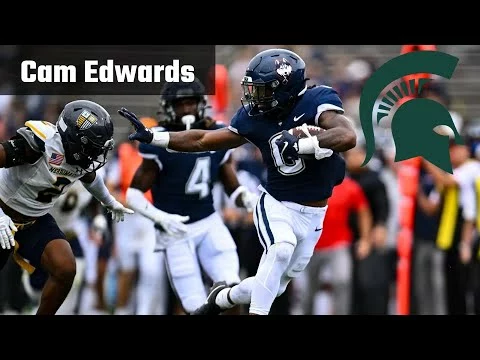
Edwards ran for 1,240 yards and 15 touchdowns during the 2025 season, helping UConn secure its second consecutive nine-win campaign. He completed his Huskies career with 2,690 rushing yards and an average of 5.6 yards per attempt, placing himself among the program’s most productive runners.
His transfer gives new Michigan State coach Pat Fitzgerald a proven veteran around whom he can build the offense. Fitzgerald traditionally wants to establish the running game, control possession and use physical football to shorten games.
Edwards fits that approach. He runs decisively, breaks arm tackles and has enough speed to create explosive plays once he reaches the second level. He also demonstrated the durability necessary to function as a primary ball carrier.
The major question is Michigan State’s offensive line. Edwards will face stronger defensive fronts on a weekly basis than he encountered at UConn. Nevertheless, his production and projected workload make him a strong candidate to lead the conference in carries.
Michigan State Transfer: Cam Edwards 2025 Highlights
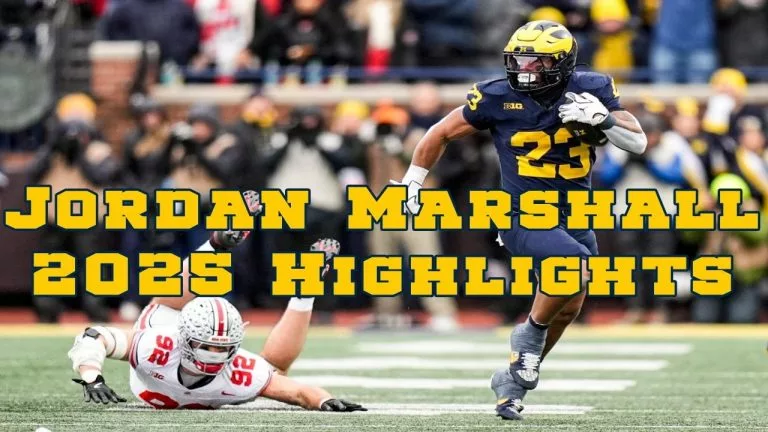
4. Jordan Marshall, Michigan Wolverines
Jordan Marshall enters 2026 as Michigan’s clear lead back after Justice Haynes transferred to Georgia Tech.
Marshall led Michigan with 932 rushing yards and 10 touchdowns in 2025 despite opening the season in a shared backfield. He averaged 6.2 yards per carry and added 92 receiving yards. Once Haynes was unavailable, Marshall produced four consecutive 100-yard performances, including 185 yards and three touchdowns against Purdue.
The 5-foot-11, 216-pound runner combines power, balance and home-run ability. He forced 46 missed tackles and received an excellent 87.8 overall grade from Pro Football Focus. Marshall also scored several long touchdowns, proving he can provide explosiveness rather than merely grinding out short gains.
A shoulder injury caused him to miss Michigan’s final two games, so durability must be monitored. The Wolverines also added highly regarded freshman Savion Hiter, who will demand carries.
Still, Kyle Whittingham’s physical philosophy should make Marshall the centerpiece of Michigan’s offense. With a full season as the starter, he could become a national award candidate.
Jordan Marshall 2025 Highlights
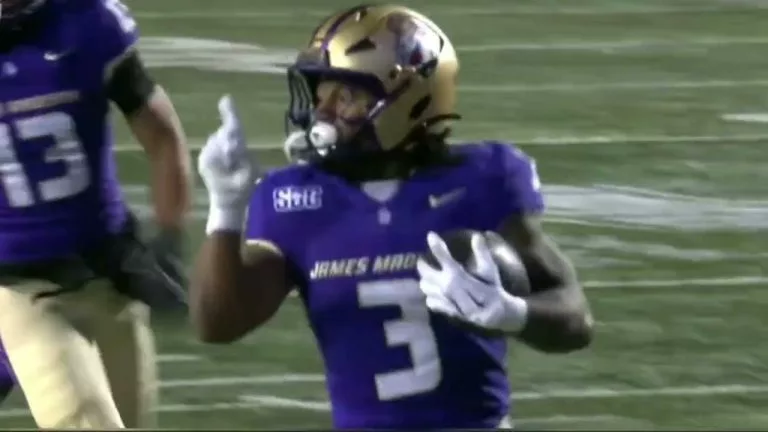
3. Wayne Knight, UCLA Bruins
No Big Ten running back arrives with more impressive 2025 all-purpose production than UCLA transfer Wayne Knight.
Knight starred for James Madison, rushing for 1,373 yards while averaging 6.63 yards per attempt. He ranked seventh nationally in rushing and third with a school-record 2,039 all-purpose yards. Knight earned second-team All-America recognition, first-team All-Sun Belt honors and was named the Sun Belt Championship Game’s Most Valuable Player.
The 5-foot-7, 193-pound runner is dangerous as a rusher, receiver and return specialist. His quickness makes him extremely difficult to tackle in space, and his low build allows him to hide behind blockers before bursting through openings.
Knight also followed head coach Bob Chesney and offensive coordinator Dean Kennedy from James Madison to UCLA. That familiarity should eliminate much of the learning curve normally associated with a transfer.
The move from the Sun Belt to the Big Ten represents a significant increase in weekly competition. But Knight’s versatility and knowledge of the offense should make him UCLA’s featured playmaker immediately. He is capable of leading the conference in all-purpose yardage.
Wayne Knight 2025 CFB Sun Belt Championship Game Highlights vs Troy
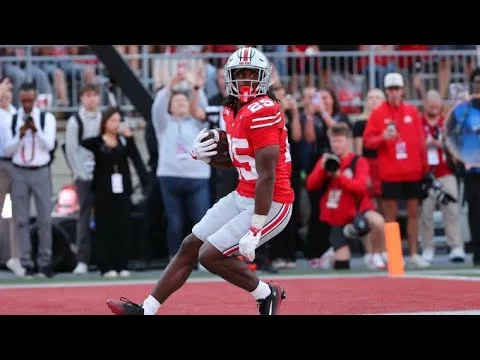
2. Bo Jackson, Ohio State Buckeyes
Lamar “Bo” Jackson needed only one season to establish himself as Ohio State’s next elite running back.
Jackson rushed for 1,090 yards and six touchdowns as a true freshman in 2025, averaging more than six yards per carry and earning freshman All-America honors. His 36 explosive runs tied for sixth nationally, while his 724 yards after contact ranked among the best totals in the Power Four.
The 6-foot, 217-pound sophomore possesses an exceptional combination of power, patience and acceleration. He can run through linebackers between the tackles or outrun defensive backs once he reaches the open field.
Jackson also performed in Ohio State’s biggest games. He rushed for 117 yards against Michigan, helping the Buckeyes end their losing streak in the rivalry.
Ohio State will continue rotating its talented running backs, which could limit Jackson’s total carries. The presence of quarterback Julian Sayin and receiver Jeremiah Smith, however, will make it nearly impossible for defenses to devote extra players to stopping the run.
Jackson’s ceiling may be higher than that of any running back in the conference. If his workload increases, he could contend for the Doak Walker Award.
LAMAR “BO” JACKSON: OHIO STATE TRUE FRESHMAN RB SENSATION – SEASON HIGHLIGHTS
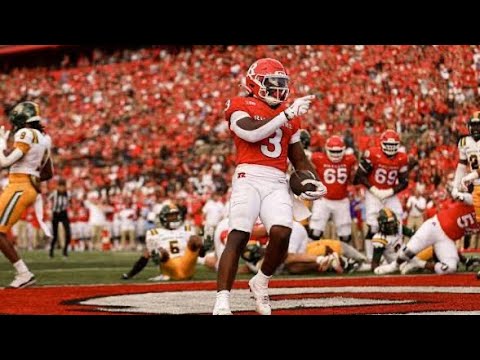
1. Antwan Raymond, Rutgers Scarlet Knights
Antwan Raymond enters 2026 as the Big Ten’s most proven returning running back and the favorite to win the Ameche-Dayne
Running Back of the Year
Award.
Raymond rushed for 1,241 yards and 13 touchdowns on 244 carries in 2025. He added 225 receiving yards and two scores, giving him 1,466 yards from scrimmage and 15 total touchdowns.
His production becomes even more impressive when considering the attention he received from opposing defenses. Rutgers lacked an elite passing attack, allowing opponents to concentrate heavily on stopping Raymond. They frequently knew the football was coming to him and still struggled to bring him down.
Raymond forced 76 missed tackles and produced 884 yards after contact, both among the best marks in the country. His 36 explosive runs tied Ohio State’s Bo Jackson for the most among returning Big Ten backs.
The 5-foot-11, 205-pound junior combines vision, contact balance and big-play speed. Rutgers will continue feeding him the ball, giving Raymond both the ability and expected workload to lead the conference in rushing.
Antwan Raymond Highlights | Top RB in College Football
Final Ranking
Antwan Raymond, Rutgers
Bo Jackson, Ohio State
Wayne Knight, UCLA
Jordan Marshall, Michigan
Cam Edwards, Michigan State
King Miller, USC
Carson Hansen, Penn State
Caleb Komolafe, Northwestern
Darius Taylor, Minnesota
Turbo Richard, Indiana
Honorable mentions: Ca’Lil Valentine, Illinois; L.J. Phillips Jr., Iowa; Abu Sama III, Wisconsin; Makhi Hughes, Oregon; Khobie Martin, Indiana.
Up To $1500 in Bonus Bets Paid Back if your First Bet Does Not Win
T&Cs apply
4.5/5
Gambling problem? Call 1-800-GAMBLER or 1-800-MY-RESET (Available in the US) 877-8-HOPENY or text HOPENY (467369) (NY) 1-800-327-5050 (MA), 1-800-BETS-OFF (IA), 1-800-981-0023 (PR). 21+ only. Please Gamble Responsibly. See BetMGM.com for Terms. First Bet Offer for new customers only (if applicable). Subject to eligibility requirements. Bonus bets are non-withdrawable. In partnership with Kansas Crossing Casino and Hotel. Promotional offers not available in Mississippi, Massachusetts, New York, Ontario, or Puerto Rico.
New DraftKings Customers: Spend $5+ Get $150 in Bonuses
T&Cs apply
4.5/5
GAMBLING PROBLEM? CALL 1-800-GAMBLER or 1-800-MY-RESET, (800) 327-5050 or visit gamblinghelplinema.org (MA). Please Gamble Responsibly. 888-789-7777/visit ccpg.org (CT), or visit www.mdgamblinghelp.org (MD), 1-800-981-0023 (PR). 21+ and present in most states. (18+ DC/NH/PR/WY). Void in CAN. Eligibility restrictions apply. On behalf of Boot Hill Casino (KS). Pass-thru of per wager tax may apply in IL. 1 per new DraftKings customer. $5+ first-time bet req. Max. $150 issued as non-withdrawable Bonus Bets. Stake removed from payout. Reward issued as $50 in Bonus Bets every 7 days via click-to-claim for 14 days. Bonus Bets and click-to-claims expire 7 days (168hrs) after issuance. Terms: sportsbook.draftkings.com/promos. Ends 10/11/26 at 11:59 PM ET. Sponsored by DK.
Must be 21+. GAMBLING PROBLEM? CALL 1-800-GAMBLER OR CALL 1-800-MY-RESET, www.mdgamblinghelp.org (MD), (800)-327-5050 or gamblinghelplinema.org (MA), Call (877)8-HOPENY or text HOPENY (467369) (NY), (888) 789-7777 or ccpg.org (CT), morethanagame.nc.gov (NC), 1800gambler.net (WV)
Bet $1 and get double the winnings up to $25 for your next 10 bets
T&Cs apply
4.4/5
21+ New users only. Must register using eligible promo code. First bet after registration must qualify. Max. Bonus Bet: $1,000. Bonus Bet expires 14 days after receipt. Void where prohibited. See Caesars.com/promos for full terms. Gambling Problem? 1-800-GAMBLER (1-800-426-2537)
21+ and present in OH. Gambling Problem? Call 1-800-GAMBLER.
This site is using
Cloudflare
and adheres to the
Google Safe Browsing Program. We adapted
Google's Privacy Guidelines
to keep your data safe at all times.
Close
Ready to Win Big? Join the Elite with Our Sports Betting Deals!
FanDuel Promo
New Users – Get $250 in Bonus Bets when you wager $5 for 5 days
Up To $1500 in Bonus Bets Paid Back if your First Bet Does Not Win
Best Slots
T&Cs and 21+ apply
Gambling problem? Call 1-800-GAMBLER or 1-800-MY-RESET (Available in the US) 877-8-HOPENY or text HOPENY (467369) (NY) 1-800-327-5050 (MA), 1-800-BETS-OFF (IA), 1-800-981-0023 (PR). 21+ only. Please Gamble Responsibly. See BetMGM.com for Terms. First Bet Offer for new customers only (if applicable). Subject to eligibility requirements. Bonus bets are non-withdrawable. In partnership with Kansas Crossing Casino and Hotel. Promotional offers not available in Mississippi, Massachusetts, New York, Ontario, or Puerto Rico.
Code:
Open BetMGM
Get Bonus
DraftKings Promo
New DraftKings Customers: Spend $5+ Get $150 in Bonuses
Newcomer
T&Cs and 21+ apply
GAMBLING PROBLEM? CALL 1-800-GAMBLER or 1-800-MY-RESET, (800) 327-5050 or visit gamblinghelplinema.org (MA). Please Gamble Responsibly. 888-789-7777/visit ccpg.org (CT), or visit www.mdgamblinghelp.org (MD), 1-800-981-0023 (PR). 21+ and present in most states. (18+ DC/NH/PR/WY). Void in CAN. Eligibility restrictions apply. On behalf of Boot Hill Casino (KS). Pass-thru of per wager tax may apply in IL. 1 per new DraftKings customer. $5+ first-time bet req. Max. $150 issued as non-withdrawable Bonus Bets. Stake removed from payout. Reward issued as $50 in Bonus Bets every 7 days via click-to-claim for 14 days. Bonus Bets and click-to-claims expire 7 days (168hrs) after issuance. Terms: sportsbook.draftkings.com/promos. Ends 10/11/26 at 11:59 PM ET. Sponsored by DK.
Code:
Open DraftKings
Get Bonus
Find out what the legends have to say about sports this week....