The SEC quarterback class entering 2026 includes proven stars, dangerous dual-threat playmakers, highly regarded transfers a
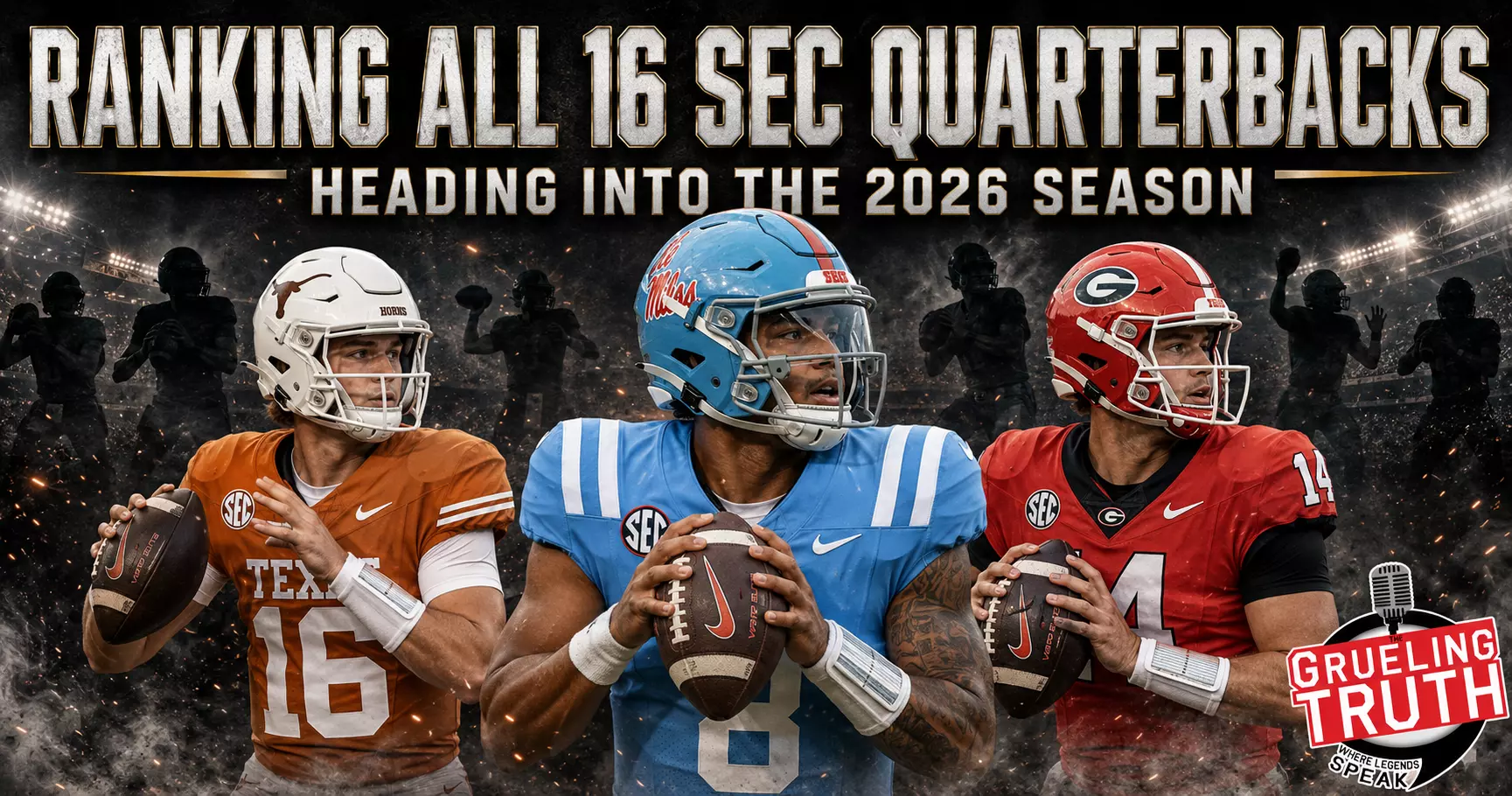
The SEC quarterback class entering 2026 includes proven stars, dangerous dual-threat playmakers, highly regarded transfers and several talented players who must survive fall-camp competitions before taking control of their teams.
These rankings are based on previous production, decision-making, mobility, experience, offensive system, supporting cast and projected impact during the 2026 season. They are not rankings of long-term NFL potential. A player with elite physical tools may appear below a more accomplished veteran because production and reliability matter.
Several jobs remain technically unsettled. Keelon Russell is the projected starter at Alabama, Aaron Philo gets the slight advantage at Florida, Faizon Brandon has generated momentum at Tennessee and KJ Jackson remains the most likely choice at Arkansas.
With those projections established, here is a ranking of all 16
SEC quarterbacks
entering the 2026 season.
16. KJ Jackson, Arkansas Razorbacks
Arkansas begins a new era under Ryan Silverfield with KJ Jackson competing against Memphis transfer AJ Hill for the starting position.
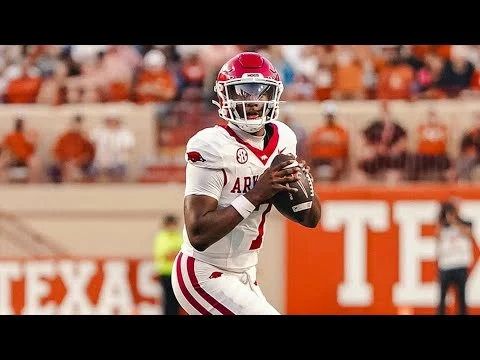
Jackson receives the slight advantage because he gained valuable SEC experience behind Taylen Green. He appeared against Texas and Missouri late in 2025, demonstrating arm talent and enough mobility to keep plays alive. He completed 67.9 percent of his adjusted attempts and averaged 8.2 yards per pass in limited duty.
The sample remains extremely small.
Silverfield developed productive quarterbacks at Memphis, most notably Seth Henigan and Brendon Lewis. That history provides reason to believe the Razorbacks can build a functional offense around whichever quarterback wins the job.
Jackson must become more consistent when pressured and prove he can manage an entire game rather than providing occasional relief appearances. Arkansas also needs improved protection and more dependable playmakers around him.
There is upside here, but too much remains unknown. Jackson could eventually rise several positions, but he begins fall camp near the bottom of the conference.
KJ Jackson 2025 Highlights
15. Kenny Minchey, Kentucky Wildcats
Kenny Minchey spent three seasons at Notre Dame but received few meaningful opportunities behind the Fighting Irish’s other quarterbacks.
Minchey nevertheless brings talent and experience in a major program to Kentucky. He competed seriously with CJ Carr for Notre Dame’s starting position before Carr eventually won the job. Remaining competitive with one of the country’s most highly regarded quarterbacks should not be dismissed.
The biggest reason for optimism is new Kentucky coach Will Stein.
Stein helped develop excellent quarterbacks at Oregon and should construct an offense that creates clear reads, spacing and opportunities for explosive passes. Minchey possesses enough athleticism to extend plays and can threaten defenses as a runner when necessary.
However, he must prove he can handle a full SEC schedule. Limited game action cannot simulate third-and-long against Georgia, Texas or Alabama.
Cutter Boley could also challenge for the job, so Minchey is not guaranteed to start. If Stein’s system produces another quarterback breakthrough, this ranking may look too low by October.
Kenny Minchey 2025 Highlights!
14. Aaron Philo, Florida Gators
Aaron Philo holds a narrow advantage over Tramell Jones Jr. in Florida’s ongoing competition, largely because of his experience with offensive coordinator Buster Faulkner.
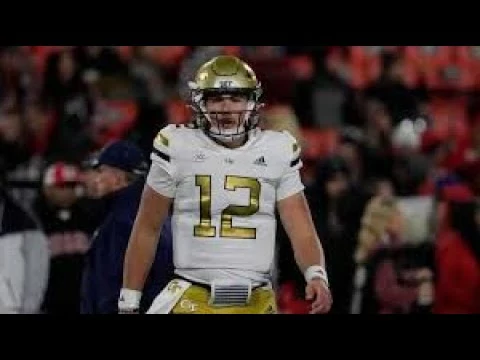
Philo played behind Haynes King at Georgia Tech, appearing in eight games over two seasons. His most impressive performance came against Gardner-Webb in 2025, when he completed 21 of 28 passes for 373 yards and a touchdown. He also produced 265 passing yards and a game-winning touchdown run against North Carolina State in 2024.
Philo has shown accuracy, toughness and the ability to create outside the pocket. His familiarity with Faulkner’s offense should help him make the transition to Gainesville.
The concern is experience. Philo has made only one college start and has thrown three career interceptions against two touchdown passes. Florida possesses an excellent running back in Jadan Baugh and explosive receivers, so the quarterback will not have to carry the offense.
If Philo protects the football, he could become one of the SEC’s surprise players.
Aaron Philo Career Georgia Tech Highlights
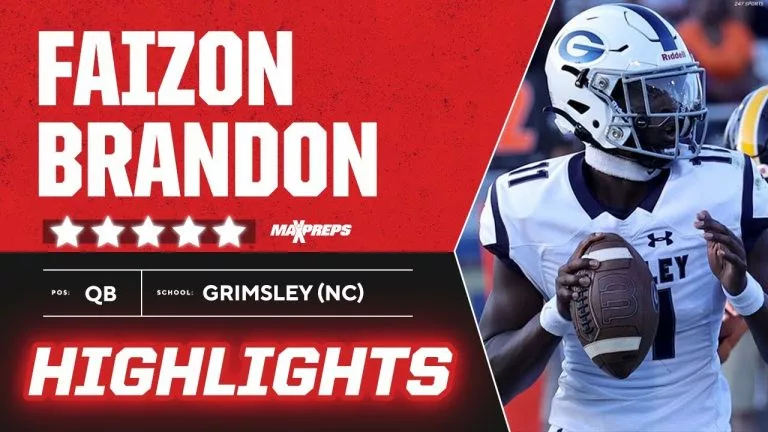
13. Faizon Brandon, Tennessee Volunteers
George MacIntyre entered the offseason as Tennessee’s apparent favorite, but true freshman Faizon Brandon generated significant momentum during spring practice and may possess the higher ceiling.
Brandon was one of the top overall prospects in the 2026 recruiting class. At approximately 6-foot-4 and 225 pounds, he combines an NFL-caliber frame with excellent mobility and natural arm talent. He can attack defenses vertically, which makes him an ideal fit for Josh Heupel’s offense.
The concern is obvious: Brandon has never taken a college snap.
Tennessee’s system creates favorable opportunities through tempo, spacing and deep throws. It can also become difficult for an inexperienced quarterback when defenses eliminate the first read or create immediate pressure.
MacIntyre has spent a year learning the offense and may still win the competition. For ranking purposes, Brandon receives the projection because of his spring performance and exceptional talent.
His early results may be inconsistent, but by the second half of the season, Brandon could become one of the conference’s most dangerous quarterbacks.
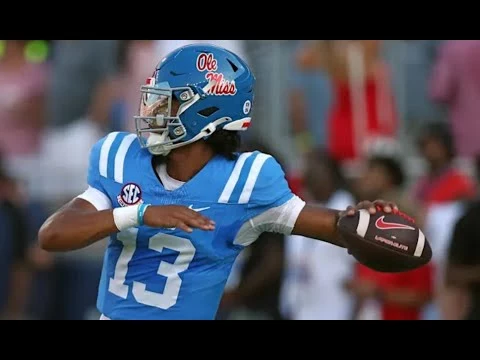
Austin Simmons began the 2025 season as Ole Miss’ starting quarterback before an ankle injury opened the door for Trinidad Chambliss.
Simmons completed 64.1 percent of his limited passes for 533 yards, four touchdowns and five interceptions. Those numbers illustrate both sides of his game. He possesses the arm strength and confidence to make difficult downfield throws, but he also takes unnecessary chances.
Missouri is betting that greater experience and a new environment will help Simmons become more disciplined.
The Tigers should provide him with a solid running game and enough receiving talent to create favorable matchups. Eli Drinkwitz has produced effective college offenses and should not ask Simmons to force the football into constant danger.
The challenge is replacing the quarterback-friendly structure Simmons left at Ole Miss. He must process defenses more quickly and understand when an incomplete pass is better than attempting a spectacular play.
The physical ability is undeniable. If Simmons reduces the turnovers, he can lead Missouri back into the Top 25.
Austin Simmons Ole Miss Highlights
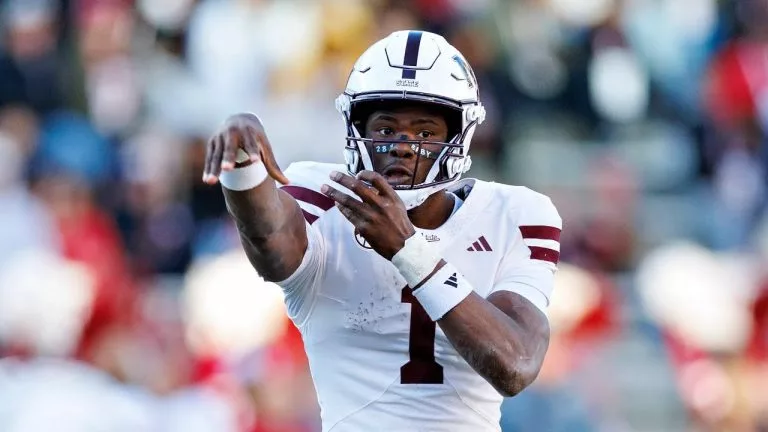
11. Kamario Taylor, Mississippi State Bulldogs
Kamario Taylor provided Mississippi State supporters with a glimpse of his enormous potential late in the 2025 season.
The 6-foot-4 quarterback threw five touchdown passes without an interception in limited action, averaging 8.2 yards per attempt. He also challenged Ole Miss with his mobility during the Egg Bowl, demonstrating that he can become a true dual-threat weapon.
Taylor plays aggressively. His average depth of target exceeded 13 yards, showing that he is willing and able to attack defenses vertically. That mentality fits Jeff Lebby’s offensive philosophy.
His ball placement remains inconsistent, and SEC coordinators will have an entire offseason to study his tendencies. Taylor must learn when to take a shorter completion instead of searching for a big play.
Mississippi State’s overall roster also gives him less margin for error than quarterbacks playing for the conference’s established contenders.
Taylor is far from a finished product, but his combination of size, athleticism and downfield passing ability makes him one of the SEC’s most intriguing young quarterbacks. His ceiling is much higher than No. 10.
Every KaMario Taylor touchdown from the 2025 season🐶
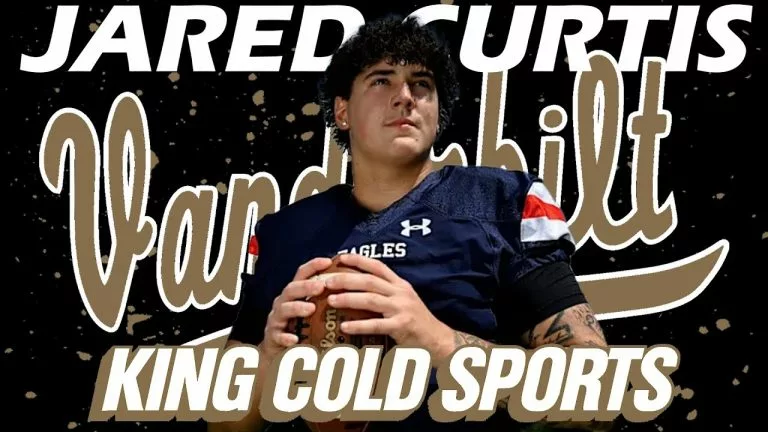
10. Jared Curtis, Vanderbilt Commodores
Jared Curtis could eventually become one of the best quarterbacks in the SEC, but asking a true freshman to replace Diego Pavia is a massive challenge.
Curtis arrives as one of the country’s highest-rated quarterback recruits after originally committing to Georgia. At 6-foot-4 and approximately 225 pounds, he has the size, arm strength and mobility necessary to become an outstanding college quarterback.
Potential and immediate readiness are different things.
Pavia provided Vanderbilt with experience, leadership, creativity and confidence. He understood how to extend plays without consistently placing the football in danger. Curtis will be learning how to read SEC defenses while facing pass rushers more talented than anyone he encountered in high school.
Clark Lea has upgraded Vanderbilt’s overall roster, and the coaching staff should design the offense to protect its young quarterback. Still, freshman mistakes are inevitable. Curtis may make dramatic progress during the season, but entering Week 1, every other projected
SEC starter
has either more college experience or a more established résumé.
Jared Curtis Senior Year Highlights | 5-Star QB Flips to Vanderbilt
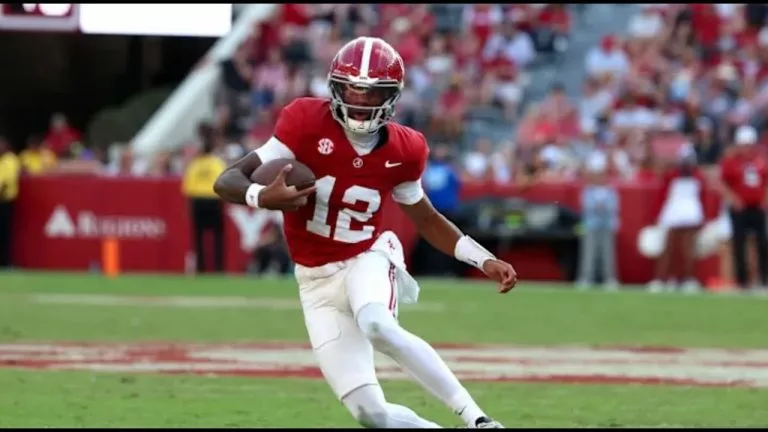
9. Keelon Russell, Alabama Crimson Tide
Alabama’s competition between Keelon Russell and Austin Mack remains one of the most important battles of fall camp.
Russell receives the projection because of his elite talent and encouraging development. He completed 11 of 15 passes for 143 yards and two touchdowns during limited action in 2025. He also performed well during spring practice and possesses more dynamic playmaking ability than Mack.
Russell was a five-star recruit and one of the country’s most polished high school quarterbacks. He throws accurately from different platforms, remains composed in the pocket and has enough mobility to punish man coverage.
Mack offers greater size and more familiarity with Kalen DeBoer, having followed him from Washington. Either quarterback could function effectively in Alabama’s system.
The primary issue is inexperience. Russell has never started a college game, and the pressure surrounding Alabama’s quarterback position is enormous.
Surrounded by elite talent and coached by DeBoer, Russell could become a star immediately. Until he proves it against SEC defenses, he remains below the established veterans.
Keelon Russell Freshman Year Highlights | 2025-2026
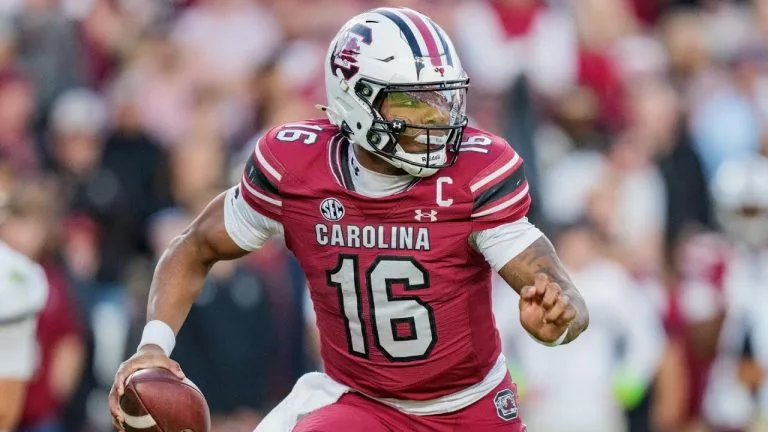
8. LaNorris Sellers, South Carolina Gamecocks
LaNorris Sellers entered 2025 as a possible first-round NFL Draft selection and Heisman Trophy contender. Instead, South Carolina collapsed to 4–8, and Sellers endured a frustrating season behind one of the conference’s worst offensive lines.
Some of his problems were caused by constant pressure. Others were self-inflicted.
Sellers held the football too long, took avoidable sacks and forced passes when throwing the ball away would have been the correct decision. He finished with an uneven touchdown-to-interception ratio and failed to build upon his encouraging 2024 season.
His physical ability remains extraordinary. At approximately 6-foot-3 and 240 pounds, Sellers is exceptionally difficult to tackle and possesses the arm strength to attack every part of the field.
South Carolina has changed its offensive approach and must provide better protection. If that happens, Sellers can produce a major comeback season.
Few quarterbacks possess a higher ceiling. But after what happened in 2025, Sellers must earn his way back into the conference’s top tier.
LaNorris Sellers | 2025 Highlights
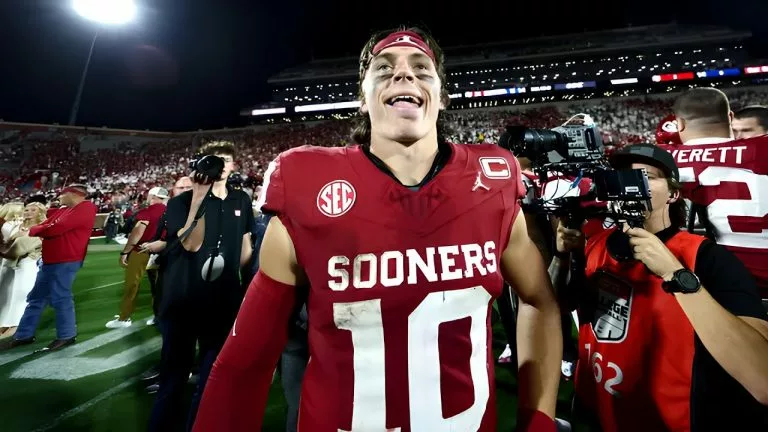
7. John Mateer, Oklahoma Sooners
John Mateer’s first Oklahoma season was divided into two distinct parts.
Before suffering a hand injury, Mateer looked like one of the SEC’s most dangerous quarterbacks. He created explosive plays with his arm and legs while giving Oklahoma an aggressive offensive identity.
After returning, he never completely regained his early form. His accuracy declined, his decision-making became inconsistent and costly turnovers hurt the Sooners against LSU and Alabama. Oklahoma’s College Football Playoff appearance ended with Mateer making mistakes that an experienced quarterback must avoid.
Mateer still possesses significant value. He has extensive starting experience, legitimate dual-threat ability and the competitive temperament to handle difficult situations. He also should benefit from entering his second year in Oklahoma’s system.
The Sooners cannot ask him to carry the entire offense again. Better protection and a stronger running game would allow Mateer to play under control.
If he remains healthy and reduces turnovers, Oklahoma can return to the Playoff—and Mateer can outperform this ranking.
John Mateer | 2025 Highlights
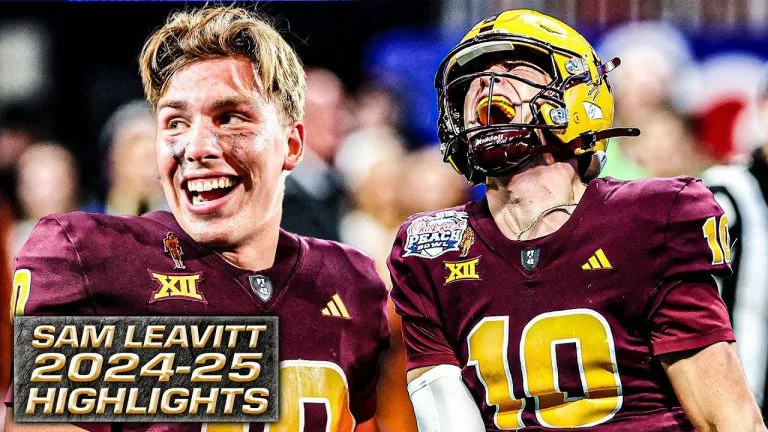
6. Sam Leavitt, LSU Tigers
Sam Leavitt’s 2025 season at Arizona State was disrupted by a foot injury that eventually required surgery. Before that setback, he had already proven himself as one of the country’s most promising quarterbacks.
Leavitt ranked ninth nationally in Total QBR during Arizona State’s 2024 Big 12 championship season. His ability to extend plays, deliver accurate passes on the move and threaten defenses as a runner made him exceptionally difficult to contain.
He now transfers to LSU to play for Lane Kiffin.
Few coaches have been more effective at creating productive quarterback play. Kiffin’s system should provide Leavitt with defined reads, explosive opportunities and favorable matchups. LSU also offers a level of surrounding talent Leavitt did not consistently enjoy at Arizona State.
The questions involve health and adjustment. Leavitt must prove his foot is fully recovered and adapt to SEC speed.
If he remains healthy, he has the talent and coaching support to become an All-SEC selection and lead LSU into the College Football Playoff.
Sam Leavitt HIGHLIGHTS from the 2024-25 College Football Season 🎥 | ESPN College Football
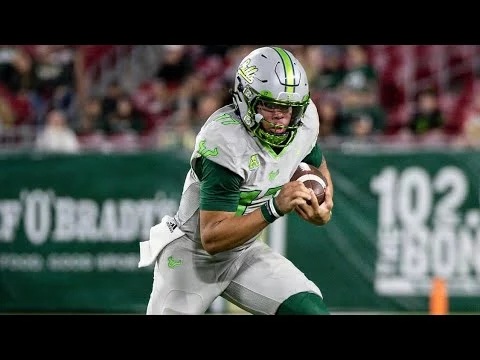
5. Byrum Brown, Auburn Tigers
Byrum Brown followed Alex Golesh from South Florida to Auburn after producing one of the nation’s most impressive dual-threat seasons.
Brown passed for 3,158 yards and 28 touchdowns in 2025 while completing 66.3 percent of his attempts. He added 1,008 rushing yards and 14 touchdowns, giving him more than 4,100 total yards and 42 combined scores.
Those numbers are exceptional regardless of conference.
Brown already understands Golesh’s up-tempo system, eliminating the adjustment period most transfers face. His running ability will immediately change how defenses approach Auburn, particularly in the red zone.
The question is whether the production will translate against SEC athletes. Running lanes close more quickly, pass rushers recover faster and defensive backs are less forgiving.
Auburn must also protect Brown from unnecessary punishment. Asking him to carry the ball repeatedly against physical
SEC defenses
could become unsustainable.
Even with those concerns, Brown is a proven playmaker with complete command of the offense. He gives Auburn a chance to become one of the conference’s surprise teams.
Byrum Brown🔥South Florida Transfer QB 2025 Highlights
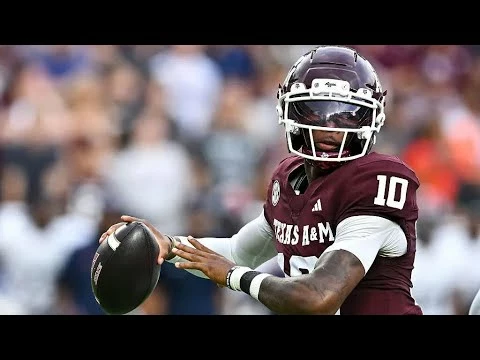
4. Marcel Reed, Texas A&M Aggies
Marcel Reed took a major step forward in 2025, leading Texas A&M to an 11–2 record and its first College Football Playoff appearance.
Reed threw for 3,169 yards and 25 touchdowns while adding 493 rushing yards and six scores. His athleticism forces defenses to account for every gap and gives the Aggies an answer when passing plays break down.
His season ended poorly. Reed threw six interceptions over his final four games, including costly mistakes against Texas and Miami. He also took seven sacks in the Playoff loss, showing that he must become more decisive under pressure.
Those failures should not erase the overall progress.
Reed has already announced his return and will enter 2026 as one of the conference’s most experienced dual-threat starters. Texas A&M must replace leading receiver KC Concepcion and adjust to a new offensive coordinator, but Reed remains the offense’s foundation.
If he improves his late-game decision-making, Reed can lead the Aggies back into SEC championship contention.
Marcel Reed | 2025 Texas A&M Highlights
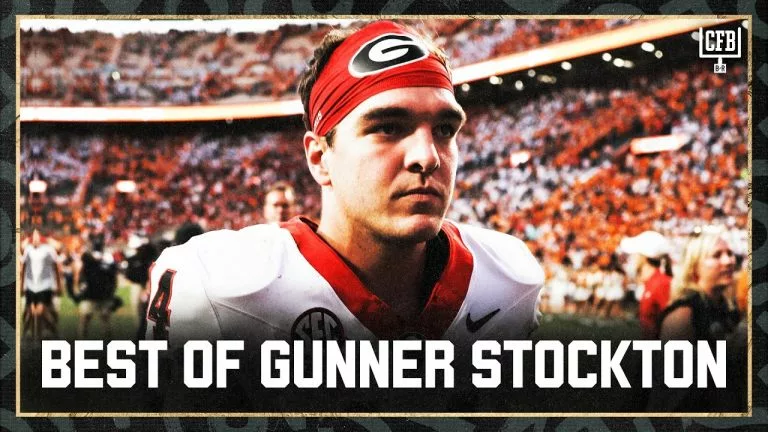
3. Gunner Stockton, Georgia Bulldogs
Gunner Stockton does not always produce spectacular highlights, but he does what Georgia needs from its quarterback.
Stockton protected the football, completed a high percentage of his passes and consistently kept the Bulldogs ahead of schedule in 2025. He posted one of the SEC’s lowest turnover-worthy play rates and demonstrated toughness as a runner.
Georgia’s offense asked Stockton to function primarily as an efficient distributor. Nearly 40 percent of his passes were thrown at or behind the line of scrimmage, allowing talented teammates to create yards after the catch.
The question is whether Georgia can continue operating that way after losing several important playmakers. Stockton may need to attack defenses vertically more often and create offense when the original structure breaks down.
He has the experience, leadership and supporting cast to handle that responsibility. Kirby Smart does not need Stockton to become a reckless gunslinger; he needs him to make timely throws and avoid disastrous mistakes.
Stockton’s floor is exceptionally high, which makes Georgia a championship contender again.
Best Highlights Of Gunner Stockton At Georgia 🔥 | Top College Plays
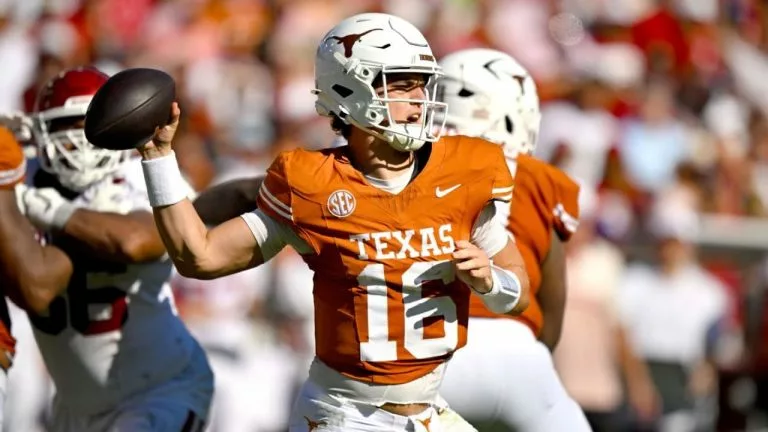
2. Arch Manning, Texas Longhorns
Arch Manning’s first full season as Texas’ starter began unevenly but ended with him playing like the quarterback everyone expected.
Manning finished 2025 with 3,163 passing yards and 26 touchdowns. He became increasingly dangerous late in the season, producing outstanding performances against Mississippi State, Vanderbilt and Arkansas before earning Citrus Bowl Most Valuable Player honors.
Texas also finally began using Manning’s legs more aggressively. He rushed for 53 yards against Texas A&M and exploded for 155 against Michigan, revealing another dimension defenses must respect.
Manning still needs to become more consistent outside the pocket. Early in 2025, his mechanics and accuracy sometimes disappeared when plays became unscripted. He improved significantly as the season progressed.
The supporting cast is strong, the offensive line should be improved and Steve Sarkisian remains one of the country’s best offensive coaches.
Manning enters 2026 as a legitimate Heisman Trophy contender and potential No. 1 NFL Draft selection. He has every opportunity to finish the season at No. 1.
Arch Manning | 2025 Highlights
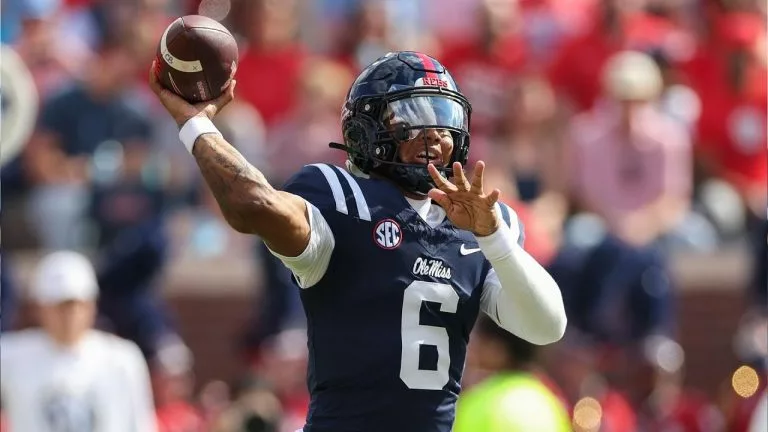
1. Trinidad Chambliss, Ole Miss Rebels
Trinidad Chambliss earned the top position by producing at an elite level throughout Ole Miss’ historic 2025 season.
After replacing the injured Austin Simmons, Chambliss threw for nearly 4,000 yards, tossed 22 touchdown passes and added eight rushing scores. He led Ole Miss to a program-record 13 victories and the College Football Playoff semifinals while finishing eighth in Heisman Trophy voting.
Chambliss was especially impressive in critical moments. He rarely placed the football in danger, delivered accurate downfield passes and used his mobility without immediately abandoning the passing play. His 86.0 Total QBR ranked among the nation’s best.
A Mississippi court cleared Chambliss to play in 2026 after rejecting the NCAA’s effort to prevent his additional season of eligibility.
Lane Kiffin has departed for LSU, creating questions about how the offense will change under Pete Golding’s staff. Ole Miss nevertheless returns star running back Kewan Lacy and enough playmakers to remain dangerous.
Until another
SEC quarterback
proves otherwise, Chambliss deserves the top ranking.
New Users – Get $350 in Bonus Bets when you wager $5 for 7 days
T&Cs apply
4.6/5
Gambling Problem? Call 1-800-GAMBLER or 1-800-MY-RESET. Call 1-888-789-7777 or visit ccpgg.org/chat (CT). Hope is here. GamblingHelpLineMA.org or call (800) 327-5050 for 24/7 support (MA). Visit www.mdgamblinghelp.org (MD). Call 1-877-8HOPE-NY or text HOPENY (NY). 21+ (18+ DC, WY) and present in select states (for KS, in affiliation with Kansas Star Casino). Find online real money wagering only. Min $5 wager required for 7 consecutive days. $5 free play credit. Bonus issued as non-withdrawable bonus with cash withdrawable bonus with cash withdrawable. Bonus bets which expire 7 days after receipt. Restrictions apply. See terms at sportsbook.fanduel.com. Call 1-877-770-7867 (LA).
Up To $1500 in Bonus Bets Paid Back if your First Bet Does Not Win
T&Cs apply
4.5/5
Gambling problem? Call 1-800-GAMBLER or 1-800-MY-RESET (Available in the US) 877-8-HOPENY or text HOPENY (467369) (NY) 1-800-327-5050 (MA), 1-800-BETS-OFF (IA), 1-800-981-0023 (PR). 21+ only. Please Gamble Responsibly. See BetMGM.com for Terms. First Bet Offer for new customers only (if applicable). Subject to eligibility requirements. Bonus bets are non-withdrawable. In partnership with Kansas Crossing Casino and Hotel. Promotional offers not available in Mississippi, Massachusetts, New York, Ontario, or Puerto Rico.
New DraftKings Customers: Bet $5, Get $200 + 3 Months of NBA League Pass!
T&Cs apply
4.5/5
GAMBLING PROBLEM? CALL 1-800-GAMBLER or 1-800-MY-RESET, (800) 327-5050 or visit gamblinghelplinema.org (MA). Please Gamble Responsibly. 888-789-7777/visit ccpg.org (CT), or visit www.mdgamblinghelp.org (MD), 1-800-981-0023 (PR). 21+ and present in most states. (18+ DC/NH/PR/WY). Void in CAN. Eligibility restrictions apply. On behalf of Boot Hill Casino (KS). Pass-thru of per wager tax may apply in IL. 1 per new Sportsbook customer. $5+ first-time bet req. Max. $200 issued as non-withdrawable Bonus Bets. Stake removed from payout. Reward issued as $50 in Bonus Bets every 7 days via click-to-claim for 21 days. Bonus Bets and click-to-claims expire 7 days (168hrs) after issuance. Terms: dkng.co/offer. Get 1 promo code to redeem a 3-month NBA League Pass subscription, complimentary of DraftKings. Subscription auto-renews monthly at then-current price (currently $16.99/mo); cancel anytime. Terms, restrictions, and eligibility requirements apply. Redeem League Pass by 12/19/26 at 11:59 PM ET. Addt’l terms: support.watch.nba.com/hc/en-us/articles/9165532876183-League-Pass-Terms-of-Use_. Ends 11/29/26 at 11:59 PM ET. Sponsored by DK.
Must be 21+. GAMBLING PROBLEM? CALL 1-800-GAMBLER OR CALL 1-800-MY-RESET, www.mdgamblinghelp.org (MD), (800)-327-5050 or gamblinghelplinema.org (MA), Call (877)8-HOPENY or text HOPENY (467369) (NY), (888) 789-7777 or ccpg.org (CT), morethanagame.nc.gov (NC), 1800gambler.net (WV)
Bet $1 and get double the winnings up to $25 for your next 10 bets
T&Cs apply
4.4/5
21+ New users only. Must register using eligible promo code. First bet after registration must qualify. Max. Bonus Bet: $1,000. Bonus Bet expires 14 days after receipt. Void where prohibited. See Caesars.com/promos for full terms. Gambling Problem? 1-800-GAMBLER (1-800-426-2537)
21+ and present in OH. Gambling Problem? Call 1-800-GAMBLER.
This site is using
Cloudflare
and adheres to the
Google Safe Browsing Program. We adapted
Google's Privacy Guidelines
to keep your data safe at all times.
Close
Ready to Win Big? Join the Elite with Our Sports Betting Deals!
FanDuel Promo
New Users – Get $350 in Bonus Bets when you wager $5 for 7 days
Our Favorite
T&Cs and 21+ apply
Gambling Problem? Call 1-800-GAMBLER or 1-800-MY-RESET. Call 1-888-789-7777 or visit ccpgg.org/chat (CT). Hope is here. GamblingHelpLineMA.org or call (800) 327-5050 for 24/7 support (MA). Visit www.mdgamblinghelp.org (MD). Call 1-877-8HOPE-NY or text HOPENY (NY). 21+ (18+ DC, WY) and present in select states (for KS, in affiliation with Kansas Star Casino). Find online real money wagering only. Min $5 wager required for 7 consecutive days. $5 free play credit. Bonus issued as non-withdrawable bonus with cash withdrawable bonus with cash withdrawable. Bonus bets which expire 7 days after receipt. Restrictions apply. See terms at sportsbook.fanduel.com. Call 1-877-770-7867 (LA).
Code:
Open FanDuel
Get Bonus
BetMGM Promo
Up To $1500 in Bonus Bets Paid Back if your First Bet Does Not Win
Best Slots
T&Cs and 21+ apply
Gambling problem? Call 1-800-GAMBLER or 1-800-MY-RESET (Available in the US) 877-8-HOPENY or text HOPENY (467369) (NY) 1-800-327-5050 (MA), 1-800-BETS-OFF (IA), 1-800-981-0023 (PR). 21+ only. Please Gamble Responsibly. See BetMGM.com for Terms. First Bet Offer for new customers only (if applicable). Subject to eligibility requirements. Bonus bets are non-withdrawable. In partnership with Kansas Crossing Casino and Hotel. Promotional offers not available in Mississippi, Massachusetts, New York, Ontario, or Puerto Rico.
Code:
Open BetMGM
Get Bonus
DraftKings Promo
New DraftKings Customers: Bet $5, Get $200 + 3 Months of NBA League Pass!
Newcomer
T&Cs and 21+ apply
GAMBLING PROBLEM? CALL 1-800-GAMBLER or 1-800-MY-RESET, (800) 327-5050 or visit gamblinghelplinema.org (MA). Please Gamble Responsibly. 888-789-7777/visit ccpg.org (CT), or visit www.mdgamblinghelp.org (MD), 1-800-981-0023 (PR). 21+ and present in most states. (18+ DC/NH/PR/WY). Void in CAN. Eligibility restrictions apply. On behalf of Boot Hill Casino (KS). Pass-thru of per wager tax may apply in IL. 1 per new Sportsbook customer. $5+ first-time bet req. Max. $200 issued as non-withdrawable Bonus Bets. Stake removed from payout. Reward issued as $50 in Bonus Bets every 7 days via click-to-claim for 21 days. Bonus Bets and click-to-claims expire 7 days (168hrs) after issuance. Terms: dkng.co/offer. Get 1 promo code to redeem a 3-month NBA League Pass subscription, complimentary of DraftKings. Subscription auto-renews monthly at then-current price (currently $16.99/mo); cancel anytime. Terms, restrictions, and eligibility requirements apply. Redeem League Pass by 12/19/26 at 11:59 PM ET. Addt’l terms: support.watch.nba.com/hc/en-us/articles/9165532876183-League-Pass-Terms-of-Use_. Ends 11/29/26 at 11:59 PM ET. Sponsored by DK.
Code:
Open DraftKings
Get Bonus
Find out what the legends have to say about sports this week....
New Users – Get $350 in Bonus Bets when you wager $5 for 7 days
Gambling Problem? Call 1-800-GAMBLER or 1-800-MY-RESET. Call 1-888-789-7777 or visit ccpgg.org/chat (CT). Hope is here. GamblingHelpLineMA.org or call (800) 327-5050 for 24/7 support (MA). Visit www.mdgamblinghelp.org (MD). Call 1-877-8HOPE-NY or text HOPENY (NY). 21+ (18+ DC, WY) and present in select states (for KS, in affiliation with Kansas Star Casino). Find online real money wagering only. Min $5 wager required for 7 consecutive days. $5 free play credit. Bonus issued as non-withdrawable bonus with cash withdrawable bonus with cash withdrawable. Bonus bets which expire 7 days after receipt. Restrictions apply. See terms at sportsbook.fanduel.com. Call 1-877-770-7867 (LA).