Two years ago, the Pac-12 was pronounced dead.USC and UCLA had already bolted for the Big Ten. Oregon and Washington followed them.
Two years ago, the Pac-12 was pronounced dead.
USC and UCLA had already bolted for the Big Ten. Oregon and Washington followed them. Arizona, Arizona State, Colorado and Utah left for the Big 12, while California and Stanford crossed the country to join the ACC. A conference that had existed in some form for more than a century had been reduced to Oregon State and Washington State.
The Pac-12 name remained alive, but only technically.
Oregon State and Washington State spent two seasons attempting to survive as the abandoned remnants of a once-powerful conference. They pieced together schedules, negotiated temporary television arrangements and fought to preserve the Pac-12’s financial assets while the rest of college football moved forward without them.
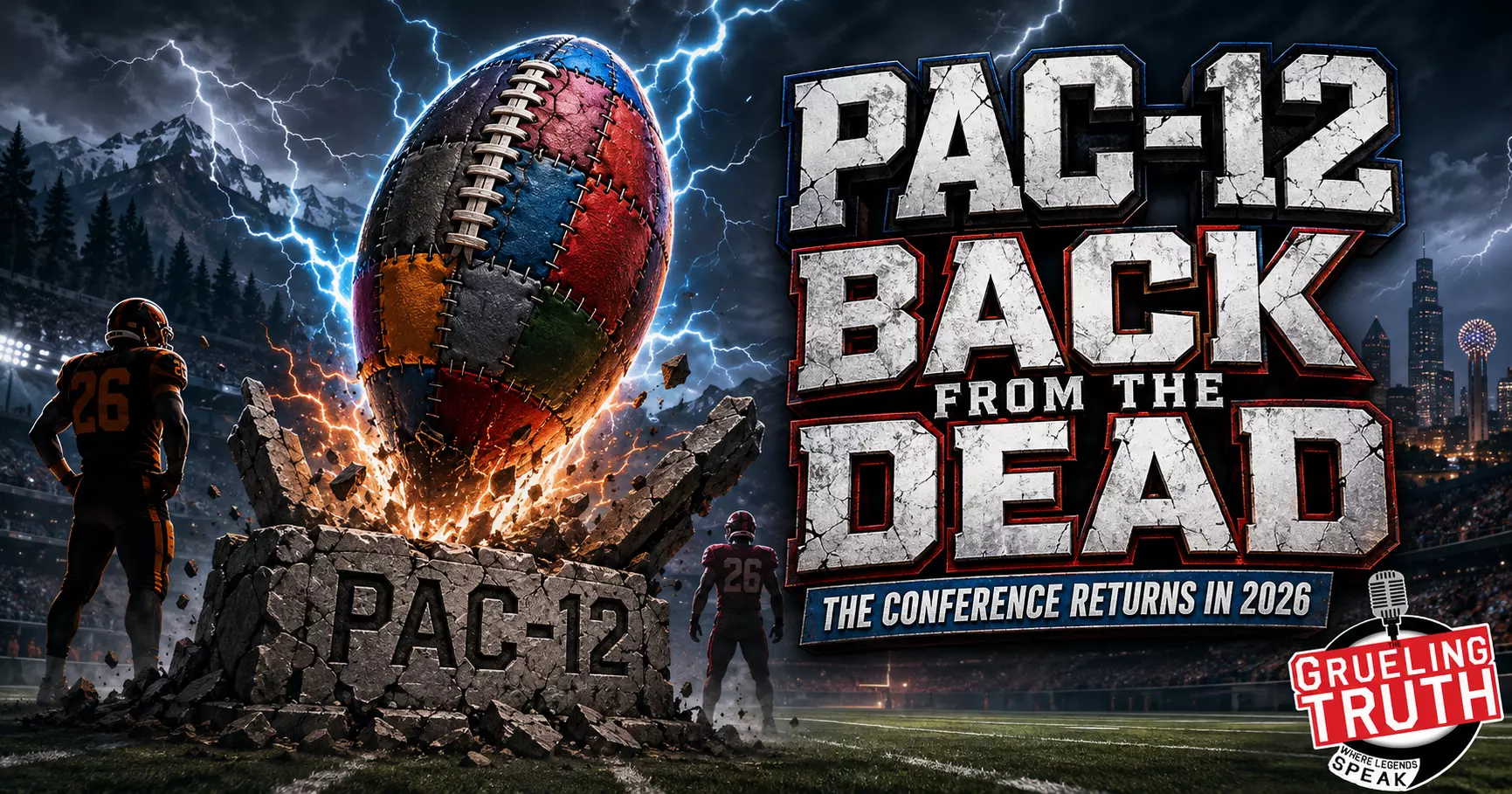
Now, after two seasons as a two-school shell, the Pac-12 is officially back for the 2026 season.
It does not look anything like the conference that once featured USC, UCLA, Oregon, Washington and the rest of the West Coast’s traditional powers. The rebuilt Pac-12 contains eight football programs stretching from Pullman, Washington, to San Marcos, Texas.
Oregon State and Washington State are the only holdovers. Boise State, Fresno State, Colorado State, San Diego State and Utah State arrive from the Mountain West. Texas State makes the move from the Sun Belt. Gonzaga joins as a full member in non-football sports.
It is a conference created out of survival, ambition and geographical necessity. It is part
traditional western league, part upgraded Mountain West and part Frankenstein creation.
It may not resemble the old Pac-12, but it is alive.
Oregon State and Washington State Refused to Let the Conference Die
The rebuilt conference would not exist without Oregon State and Washington State.
When the Pac-12 collapsed, the two schools faced a brutal reality. Neither had received an invitation to one of the remaining power conferences, and joining the Mountain West would have meant surrendering the Pac-12 name, its remaining assets and any possibility of rebuilding something more valuable.
Instead of accepting that fate, Oregon State and Washington State held the line.
The schools maintained the conference’s legal structure, gained control of its remaining assets and used temporary scheduling agreements to keep their football programs operating. The situation was awkward and financially uncertain, but it bought them time.
That time became the Pac-12’s most valuable resource.
Commissioner Teresa Gould and the two remaining schools understood that the conference did not need to recreate the old Pac-12 immediately. It needed enough credible members to preserve its Football Bowl Subdivision status, secure a media agreement and remain connected to the College Football Playoff.
The rebuilding process began in September 2024, when the Pac-12 announced the additions of Boise State, Colorado State, Fresno State and San Diego State. Utah State later became the fifth Mountain West program to make the move.
Gonzaga strengthened the conference’s basketball identity, but because the Bulldogs do not sponsor football, the Pac-12 still needed another football-playing member. Texas State supplied the final piece.
The Bobcats gave the conference eight football programs, satisfying the membership requirement necessary to operate as an FBS league.
Oregon State and Washington State did not save the old Pac-12. That version of the conference is gone.
What they saved was the opportunity to build a new one.
Meet the New Pac-12
The conference officially relaunched on July 1, 2026, with nine full members and eight football-playing schools:
Boise State
Colorado State
Fresno State
Gonzaga
Oregon State
San Diego State
Texas State
Utah State
Washington State
Gonzaga will compete in basketball and the conference’s other sponsored sports but does not have a football program.
The football league is essentially a collection of the strongest available western programs outside the Power Four, with Texas State providing a valuable entrance into one of the country’s most important recruiting regions.
It is an unusual arrangement, but conference geography stopped making sense years ago. California and Stanford are now in the Atlantic Coast Conference. USC and UCLA regularly travel to the Midwest and East Coast for Big Ten games. SMU shares a conference with Boston College and Syracuse.
Compared with those arrangements, a league stretching from Texas to Washington hardly seems outrageous.
Travel will still be a challenge, particularly for non-revenue sports. San Marcos and Pullman are separated by more than 1,700 miles. San Diego State and Washington State are not natural regional partners. Gonzaga’s basketball teams will make trips to Texas, while Texas State will travel throughout the Mountain and Pacific time zones.
The conference is not compact, but it is coherent enough to survive. Every football member is located in the western half of the country, and most already share competitive history through the Mountain West or previous nonconference meetings.
It is not the old Pacific Coast identity, but it is far more geographically sensible than several current Power Four leagues.
Boise State Gives the Conference Immediate Football Credibility
No program outside the traditional power conferences has built a more recognizable football identity during the modern era. The Broncos have produced undefeated seasons, major bowl victories, NFL players and one of the most famous plays in college football history.
The blue field remains one of the sport’s most recognizable settings.
Boise State gives the new Pac-12 something every rebuilt conference needs: a national football brand. The Broncos have already demonstrated that they can reach the College Football Playoff and compete for major postseason opportunities.
The other additions also bring significant value.
Fresno State has a strong football tradition, a passionate fan base and access to one of California’s most productive recruiting regions. San Diego State offers a major media market, a modern stadium and recent success in both football and basketball.
Colorado State has invested heavily in its facilities and provides access to the rapidly growing Front Range market. Utah State brings a competitive football history and strengthens the conference’s Mountain time-zone presence.
Texas State may be the most intriguing long-term addition. The Bobcats have improved their football profile and play in one of the fastest-growing areas of the country. More importantly, Pac-12 programs can now tell recruits that the conference has a permanent foothold in Texas.
Oregon State and Washington State provide continuity with the original conference. Both retain passionate fan bases, Pac-12 history and facilities capable of supporting high-level football.
The rebuilt league does not possess one dominant national power comparable to Ohio State, Georgia or Texas. It does, however, contain multiple programs capable of winning ten games and competing for the Group of Six playoff position.
Gonzaga Transforms the Basketball Conference
Gonzaga’s arrival is just as important away from football.
The Bulldogs have been one of the nation’s premier men’s basketball programs for more than two decades. Gonzaga brings national recognition, NCAA tournament success and a basketball brand more valuable than those of most Power Four schools.
The new Pac-12 should be a compelling basketball league.
Gonzaga immediately becomes the centerpiece, but San Diego State has also established itself as a national contender. Boise State, Colorado State, Utah State and Washington State have all produced NCAA tournament teams and high-quality basketball in recent seasons.
That collection could make the Pac-12 stronger nationally in basketball than it is in football—at least initially.
The conference also announced that its men’s and women’s basketball tournaments will return to Las Vegas. That move gives the league a familiar postseason home and creates a tournament capable of drawing western fans from several different programs.
Gonzaga would not have joined a conference with no future. Its decision gave the Pac-12 credibility at an essential moment and proved the league could attract a nationally significant athletic program.
The Television Deal Gives the Pac-12 Visibility
The collapse of the previous Pac-12 was driven partly by its inability to secure a media agreement comparable to those of competing power conferences.
The rebuilt league could not afford to repeat that mistake.
Pac-12 home football games will appear across CBS, The CW, CBS Sports Network and USA Network. The football championship game will air on CBS, providing the conference with a valuable national broadcast window.
USA Network is scheduled to carry 22 regular-season football games per year under a five-year agreement. The CW will air 13 regular-season games, while CBS and CBS Sports Network will provide additional coverage.
That distribution may be more important than the raw financial value.
The old Pac-12 Network suffered from limited availability and years of distribution problems. Fans frequently struggled to find games, and the conference’s best teams often played late at night on channels unavailable in large portions of the country.
The new arrangement places Pac-12 games on widely distributed national networks. CBS gives the conference a traditional college football platform. The CW has increased its sports presence and already developed a relationship with Oregon State and Washington State. USA Network gives the league another nationally available home.
The deal will not generate Big Ten or SEC money. It may not even approach the annual payouts received by schools in the ACC or Big 12.
But every Pac-12 game should be accessible, and accessibility is the first step toward rebuilding the conference’s national value.
If Boise State, Washington State, Oregon State or another member enters the playoff race, fans will be able to watch the games. That was not always guaranteed during the final years of the old league.
The Pac-12 Retains a Path to the College Football Playoff
The new Pac-12 will not regain its former power-conference status simply by relaunching.
The Big Ten, SEC, ACC and Big 12 occupy the top tier of the current structure. Financially and competitively, the rebuilt Pac-12 begins as part of the Group of Six alongside the American, Mountain West, Sun Belt, Conference USA and Mid-American Conference.
That distinction matters.
The Pac-12 champion is not guaranteed an automatic playoff berth based solely on the conference name. It must finish among the highest-ranked conference champions under the College Football Playoff selection format.
The league’s goal is to separate itself from the rest of the Group of Six.
Boise State gives the Pac-12 a strong foundation for doing that. Programs such as Fresno State, San Diego State, Oregon State and Washington State have also demonstrated the ability to defeat power-conference opponents.
A strong Pac-12 champion with 11 or 12 victories should have an excellent chance to claim the Group of Six playoff position. The conference’s television exposure and recognizable brands should help its champion build a more visible résumé than contenders from smaller leagues.
But that opportunity comes with risk.
The Pac-12 possesses enough parity for its leading teams to eliminate one another. Boise State could lose at Washington State. Fresno State could beat Oregon State. San Diego State could upset Texas State. A two- or three-loss champion might find itself behind an undefeated team from the American, Sun Belt or Mountain West.
The league will have playoff access, but earning it will require more than winning the championship.
Conference Play Should Produce Real Rivalries
The new Pac-12 is not beginning without history.
Boise State, Fresno State and San Diego State have shared important
Mountain West games. Colorado State and Utah State also bring familiarity from their previous conference. Oregon State and Washington State spent more than a century together in the old Pac-12.
The Boise State–Fresno State rivalry has frequently helped decide conference championships. Washington State and Oregon State developed an even closer bond after being left behind by their former partners. Their matchup now carries the shared history of two programs that refused to disappear.
New rivalries should develop quickly.
Boise State and Washington State could become annual contenders for the league championship. Texas State’s games against the western schools will create new recruiting and cultural matchups. San Diego State and Fresno State will compete for California relevance inside their new league.
An eight-team football conference also creates a clean race. Every game matters, and there are fewer places for an underperforming contender to hide.
That stands in sharp contrast to oversized conferences where teams can go years without playing one another.
The rebuilt Pac-12 may lack famous national rivalries, but familiarity and championship stakes can create meaningful games faster than administrators can manufacture trophy names.
The Mountain West Paid the Price
The Pac-12’s resurrection came at the expense of the Mountain West.
Boise State, Colorado State, Fresno State, San Diego State and Utah State represented a substantial portion of the Mountain West’s football value. Their departure triggered exit fees, poaching penalties and a prolonged legal battle.
The dispute traced back to the temporary scheduling agreement that helped Oregon State and Washington State fill their football schedules after the Pac-12 collapsed. That agreement contained penalties if the Pac-12 later added Mountain West schools.
When five schools accepted Pac-12 invitations, the Mountain West sought approximately $55 million in poaching penalties in addition to school exit fees. The Pac-12 challenged the penalties, and the conferences became locked in litigation.
A global settlement finalized shortly before the 2026 season ended the dispute.
The settlement gave both leagues the ability to move forward. The Pac-12 secured the members necessary for its relaunch, while the Mountain West rebuilt by adding UTEP, Northern Illinois and North Dakota State as a football-only member.
College football’s western map now contains two leagues built from the remains of one another.
The Pac-12 believes it created the stronger collection. The Mountain West will be highly motivated to prove otherwise.
This Is Not the Pac-12 Fans Remember
The new Pac-12 should not pretend to be something it is not.
USC is not walking through the door. Oregon and Washington are not returning. UCLA, Stanford, Arizona and the rest of the former membership have moved on.
The conference can retain the Pac-12 name, history and branding, but it cannot recreate decades of tradition overnight.
Calling this the same league would be dishonest.
It is an entirely new conference using the foundation of the old one. Its football identity will be shaped by Boise State more than USC. Its basketball reputation may depend on Gonzaga more than Arizona. Its geographical center has shifted inland, and its financial position is much closer to the top of the Group of Six than the bottom of the Power Four.
That does not make the conference meaningless.
Survival itself is meaningful in an era when television networks and realignment can erase more than a century of history in a matter of months. Oregon State and Washington State found a way to preserve their conference instead of surrendering its name and assets.
The new Pac-12 deserves to be judged on what it becomes—not solely on what it can no longer be.
Can the New Pac-12 Survive Long Term?
Launching the conference was only the first challenge.
The
Pac-12
must now increase its television value, produce playoff contenders and keep its members from pursuing invitations elsewhere. Boise State and San Diego State would remain attractive candidates if the Big 12 or another power conference expands. Oregon State and Washington State would almost certainly listen if a more lucrative opportunity emerged.
The conference may eventually need additional members.
Nine full schools create a workable league, but the Pac-12 has little protection against another departure. Adding one or two programs could provide scheduling flexibility, improve inventory for television partners and reduce the danger of falling below membership requirements.
The Pac-12 must also prove its schools can afford the escalating costs of major college athletics. Revenue sharing, NIL compensation, coaching salaries and travel expenses will continue increasing. Competing nationally requires far more money than it did when the original conference began falling apart.
The new media agreements provide exposure, but exposure must eventually become greater revenue.
The conference’s future will depend on performance. A playoff appearance by Boise State or another member would create immediate credibility. Deep NCAA tournament runs from Gonzaga and San Diego State would strengthen the basketball brand. Competitive nonconference victories would help the league distinguish itself from the other Group of Six conferences.
The Pac-12 has returned. Remaining alive will require continued growth.
Back From the Dead
The Pac-12’s collapse appeared final.
Ten schools left. Its television future disappeared. Oregon State and Washington State were stranded, and one of the most historic conference names in college sports seemed destined to become a logo used only in documentaries and record books.
Instead, the two remaining schools refused to bury it.
The rebuilt Pac-12 is strange, imperfect and geographically stretched. It is a conference assembled from Mountain West contenders, two abandoned survivors, an ambitious Texas program and a basketball powerhouse without a football team.
It is undeniably a Frankenstein conference.
But Frankenstein was alive.
The new Pac-12 will not replace what college football lost when the original league collapsed. It cannot recreate USC–UCLA, Oregon–Washington or decades of Rose Bowl tradition.
What it can do is establish a new identity—one built around programs that were overlooked, underestimated or determined to find something better.
The Pac-12 is back from the dead.
Now it must prove that this resurrection can last.
New Users – Get $350 in Bonus Bets when you wager $5 for 7 days
T&Cs apply
4.6/5
Gambling Problem? Call 1-800-GAMBLER or 1-800-MY-RESET. Call 1-888-789-7777 or visit ccpgg.org/chat (CT). Hope is here. GamblingHelpLineMA.org or call (800) 327-5050 for 24/7 support (MA). Visit www.mdgamblinghelp.org (MD). Call 1-877-8HOPE-NY or text HOPENY (NY). 21+ (18+ DC, WY) and present in select states (for KS, in affiliation with Kansas Star Casino). Find online real money wagering only. Min $5 wager required for 7 consecutive days. $5 free play credit. Bonus issued as non-withdrawable bonus with cash withdrawable bonus with cash withdrawable. Bonus bets which expire 7 days after receipt. Restrictions apply. See terms at sportsbook.fanduel.com. Call 1-877-770-7867 (LA).
Up To $1500 in Bonus Bets Paid Back if your First Bet Does Not Win
T&Cs apply
4.5/5
Gambling problem? Call 1-800-GAMBLER or 1-800-MY-RESET (Available in the US) 877-8-HOPENY or text HOPENY (467369) (NY) 1-800-327-5050 (MA), 1-800-BETS-OFF (IA), 1-800-981-0023 (PR). 21+ only. Please Gamble Responsibly. See BetMGM.com for Terms. First Bet Offer for new customers only (if applicable). Subject to eligibility requirements. Bonus bets are non-withdrawable. In partnership with Kansas Crossing Casino and Hotel. Promotional offers not available in Mississippi, Massachusetts, New York, Ontario, or Puerto Rico.
New DraftKings Customers: Bet $5, Get $200 + 3 Months of NBA League Pass!
T&Cs apply
4.5/5
GAMBLING PROBLEM? CALL 1-800-GAMBLER or 1-800-MY-RESET, (800) 327-5050 or visit gamblinghelplinema.org (MA). Please Gamble Responsibly. 888-789-7777/visit ccpg.org (CT), or visit www.mdgamblinghelp.org (MD), 1-800-981-0023 (PR). 21+ and present in most states. (18+ DC/NH/PR/WY). Void in CAN. Eligibility restrictions apply. On behalf of Boot Hill Casino (KS). Pass-thru of per wager tax may apply in IL. 1 per new Sportsbook customer. $5+ first-time bet req. Max. $200 issued as non-withdrawable Bonus Bets. Stake removed from payout. Reward issued as $50 in Bonus Bets every 7 days via click-to-claim for 21 days. Bonus Bets and click-to-claims expire 7 days (168hrs) after issuance. Terms: dkng.co/offer. Get 1 promo code to redeem a 3-month NBA League Pass subscription, complimentary of DraftKings. Subscription auto-renews monthly at then-current price (currently $16.99/mo); cancel anytime. Terms, restrictions, and eligibility requirements apply. Redeem League Pass by 12/19/26 at 11:59 PM ET. Addt’l terms: support.watch.nba.com/hc/en-us/articles/9165532876183-League-Pass-Terms-of-Use_. Ends 11/29/26 at 11:59 PM ET. Sponsored by DK.
Must be 21+. GAMBLING PROBLEM? CALL 1-800-GAMBLER OR CALL 1-800-MY-RESET, www.mdgamblinghelp.org (MD), (800)-327-5050 or gamblinghelplinema.org (MA), Call (877)8-HOPENY or text HOPENY (467369) (NY), (888) 789-7777 or ccpg.org (CT), morethanagame.nc.gov (NC), 1800gambler.net (WV)
Bet $1 and get double the winnings up to $25 for your next 10 bets
T&Cs apply
4.4/5
21+ New users only. Must register using eligible promo code. First bet after registration must qualify. Max. Bonus Bet: $1,000. Bonus Bet expires 14 days after receipt. Void where prohibited. See Caesars.com/promos for full terms. Gambling Problem? 1-800-GAMBLER (1-800-426-2537)
21+ and present in OH. Gambling Problem? Call 1-800-GAMBLER.
This site is using
Cloudflare
and adheres to the
Google Safe Browsing Program. We adapted
Google's Privacy Guidelines
to keep your data safe at all times.
Close
Ready to Win Big? Join the Elite with Our Sports Betting Deals!
FanDuel Promo
New Users – Get $350 in Bonus Bets when you wager $5 for 7 days
Our Favorite
T&Cs and 21+ apply
Gambling Problem? Call 1-800-GAMBLER or 1-800-MY-RESET. Call 1-888-789-7777 or visit ccpgg.org/chat (CT). Hope is here. GamblingHelpLineMA.org or call (800) 327-5050 for 24/7 support (MA). Visit www.mdgamblinghelp.org (MD). Call 1-877-8HOPE-NY or text HOPENY (NY). 21+ (18+ DC, WY) and present in select states (for KS, in affiliation with Kansas Star Casino). Find online real money wagering only. Min $5 wager required for 7 consecutive days. $5 free play credit. Bonus issued as non-withdrawable bonus with cash withdrawable bonus with cash withdrawable. Bonus bets which expire 7 days after receipt. Restrictions apply. See terms at sportsbook.fanduel.com. Call 1-877-770-7867 (LA).
Code:
Open FanDuel
Get Bonus
BetMGM Promo
Up To $1500 in Bonus Bets Paid Back if your First Bet Does Not Win
Best Slots
T&Cs and 21+ apply
Gambling problem? Call 1-800-GAMBLER or 1-800-MY-RESET (Available in the US) 877-8-HOPENY or text HOPENY (467369) (NY) 1-800-327-5050 (MA), 1-800-BETS-OFF (IA), 1-800-981-0023 (PR). 21+ only. Please Gamble Responsibly. See BetMGM.com for Terms. First Bet Offer for new customers only (if applicable). Subject to eligibility requirements. Bonus bets are non-withdrawable. In partnership with Kansas Crossing Casino and Hotel. Promotional offers not available in Mississippi, Massachusetts, New York, Ontario, or Puerto Rico.
Code:
Open BetMGM
Get Bonus
DraftKings Promo
New DraftKings Customers: Bet $5, Get $200 + 3 Months of NBA League Pass!
Newcomer
T&Cs and 21+ apply
GAMBLING PROBLEM? CALL 1-800-GAMBLER or 1-800-MY-RESET, (800) 327-5050 or visit gamblinghelplinema.org (MA). Please Gamble Responsibly. 888-789-7777/visit ccpg.org (CT), or visit www.mdgamblinghelp.org (MD), 1-800-981-0023 (PR). 21+ and present in most states. (18+ DC/NH/PR/WY). Void in CAN. Eligibility restrictions apply. On behalf of Boot Hill Casino (KS). Pass-thru of per wager tax may apply in IL. 1 per new Sportsbook customer. $5+ first-time bet req. Max. $200 issued as non-withdrawable Bonus Bets. Stake removed from payout. Reward issued as $50 in Bonus Bets every 7 days via click-to-claim for 21 days. Bonus Bets and click-to-claims expire 7 days (168hrs) after issuance. Terms: dkng.co/offer. Get 1 promo code to redeem a 3-month NBA League Pass subscription, complimentary of DraftKings. Subscription auto-renews monthly at then-current price (currently $16.99/mo); cancel anytime. Terms, restrictions, and eligibility requirements apply. Redeem League Pass by 12/19/26 at 11:59 PM ET. Addt’l terms: support.watch.nba.com/hc/en-us/articles/9165532876183-League-Pass-Terms-of-Use_. Ends 11/29/26 at 11:59 PM ET. Sponsored by DK.
Code:
Open DraftKings
Get Bonus
Find out what the legends have to say about sports this week....
New Users – Get $350 in Bonus Bets when you wager $5 for 7 days
Gambling Problem? Call 1-800-GAMBLER or 1-800-MY-RESET. Call 1-888-789-7777 or visit ccpgg.org/chat (CT). Hope is here. GamblingHelpLineMA.org or call (800) 327-5050 for 24/7 support (MA). Visit www.mdgamblinghelp.org (MD). Call 1-877-8HOPE-NY or text HOPENY (NY). 21+ (18+ DC, WY) and present in select states (for KS, in affiliation with Kansas Star Casino). Find online real money wagering only. Min $5 wager required for 7 consecutive days. $5 free play credit. Bonus issued as non-withdrawable bonus with cash withdrawable bonus with cash withdrawable. Bonus bets which expire 7 days after receipt. Restrictions apply. See terms at sportsbook.fanduel.com. Call 1-877-770-7867 (LA).