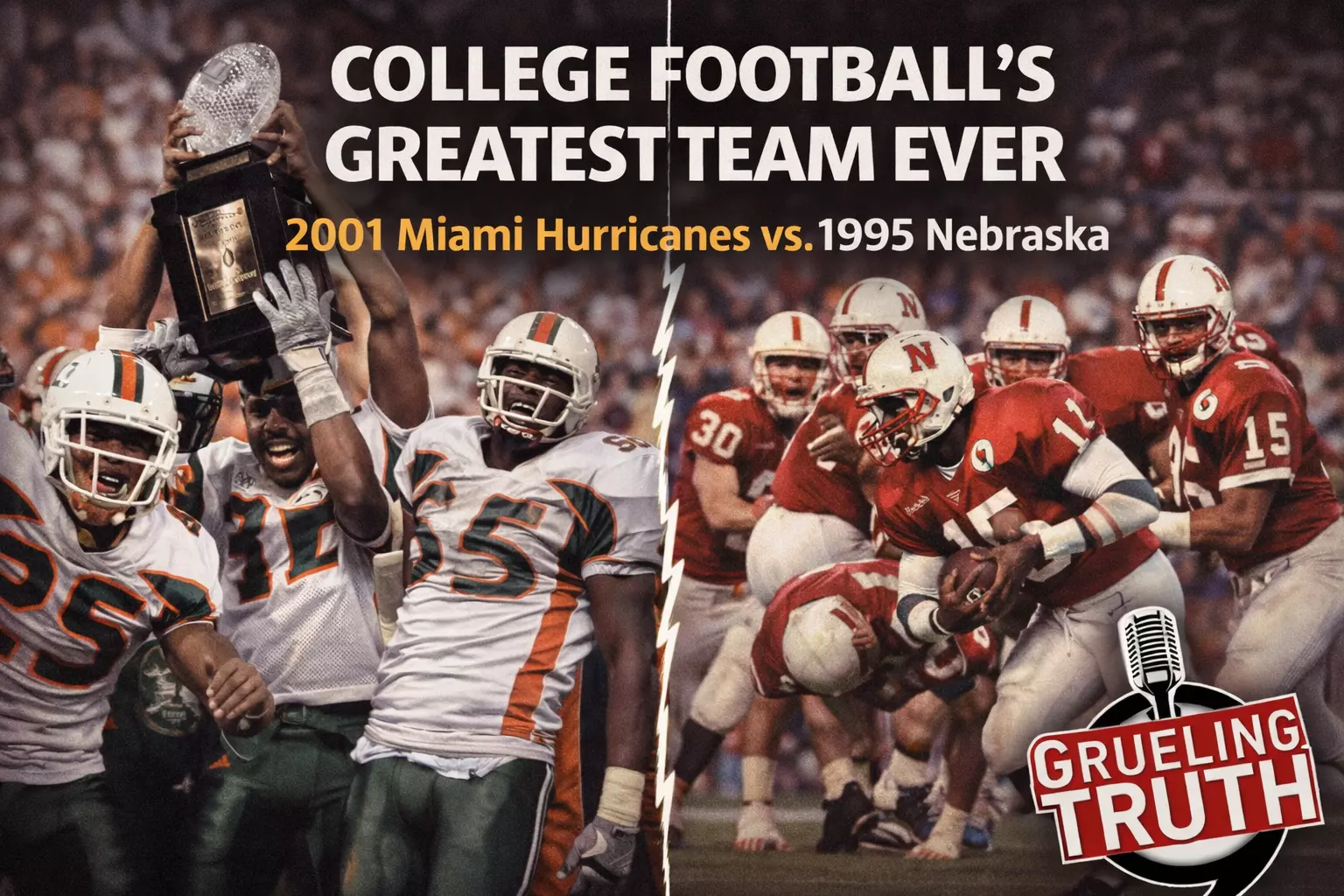
Every era of college football produces a team so dominant that it seems to exist outside the normal boundaries of the sport. Two teams stand above all others in that conversation: the
2001 Miami Hurricanes
and the
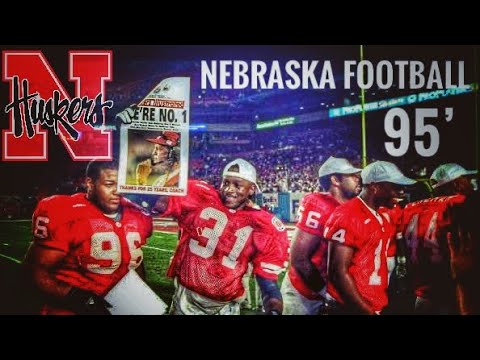
1995 Nebraska Cornhuskers. They played in different eras, under different rules, with different styles—but both overwhelmed the sport in ways that still feel unreal decades later.
If the debate is about
greatness, not just championships, the argument comes down to
how they dominated,
who they dominated, and
what kind of dominance mattered more.
The 2001 Miami Hurricanes: Talent Overload and NFL Reality
The 2001 Hurricanes are often described with a single phrase:
the most talented roster ever assembled. And that’s not hyperbole.
Miami finished 12–0, won the national championship by destroying Nebraska 37–14 in the Rose Bowl, and did it with a roster that looked more like an NFL Pro Bowl than a college team.
NFL Pipeline Like No Other
The defining characteristic of the 2001 Hurricanes is how many of their players became elite professionals. That team produced:
Multiple first-round draft picks
Dozens of NFL starters
Several future Hall of Famers
Ed Reed, Andre Johnson, Clinton Portis, Frank Gore, Willis McGahee, Vince Wilfork, Jonathan Vilma, Sean Taylor (a year later but part of the core), and Jeremy Shockey weren’t just great college players—they were
NFL difference-makers.
No team before or since has ever stacked that much pro-ready talent at nearly every position.
Dominance Through Explosiveness
Miami didn’t just beat teams—they
humiliated
them.
Average margin of victory: over
32 points per game
Only one game decided by fewer than 20 points
Routinely ended games by halftime
This was dominance through
speed, athleticism, and violence in space. Miami could score from anywhere, defend sideline to sideline, and turn mistakes into instant touchdowns.
The Competition Question
Critics of Miami often point to the Big East schedule. It’s a fair discussion—but incomplete.
Miami beat:
A top-ranked Florida State team
A Virginia Tech program loaded with NFL talent
A Nebraska team that had just come off its own dominant run
And they didn’t just beat them—they
overpowered them physically, something Big East teams weren’t supposed to do to traditional powers.
Miami’s greatness lies in this reality:
If you put that roster into almost any era, it would still look like an NFL team playing college football.
The GREATEST College Football Team EVER Assembled… WE WILL NEVER WITNESS THIS AGAIN!
The 1995 Nebraska Cornhuskers: Systemic Perfection and Relentless Power
If Miami represents raw talent,
1995 Nebraska represents absolute football perfection.
Tom Osborne’s Cornhuskers went
12–0, won the national championship by dismantling Florida 62–24 in the Fiesta Bowl, and did so with a style that opponents knew was coming—and still couldn’t stop.
The Most Dominant Statistical Team Ever
Nebraska’s 1995 numbers still defy belief:
Average margin of victory: 38.7 points
No opponent finished within
14 points
Faced and crushed multiple Top-10 teams
Outscored opponents 638–174
This wasn’t explosive dominance—it was
inevitable dominance.
Power, Precision, and Punishment
Nebraska’s offense was a perfectly tuned machine:
Option football executed at an elite level
Massive, disciplined offensive linemen
Quarterback Tommie Frazier running an offense that forced defenders into impossible decisions
Every snap was punishment. Every drive broke will.
Defenses knew what was coming. It didn’t matter.
The Competition Argument Favors Nebraska
One of Nebraska’s strongest claims to the GOAT title is
who they played and how they beat them.
They dominated:
Florida (SEC power) by 38 points
Colorado, Kansas State, Arizona State—ranked teams that were physically strong and well-coached
Unlike Miami, Nebraska didn’t rely on superior athletes in space. They beat teams that were
built to stop them—and still ran through them.
This is where Nebraska’s case becomes terrifying:
They were unstoppable even without surprise.
“The Greatest Team Ever” Nebraska Football 1995 Highlights!
Style vs. Substance: What Kind of Dominance Matters More?
This debate ultimately hinges on philosophy.
Miami’s Case
Most talented roster ever
NFL-level speed and explosiveness
Could win games in any style
Would thrive in modern spread and NIL-era football
Miami dominated because it had
better players everywhere.
Nebraska’s Case
Perfect execution
Physical and mental dominance
Destroyed elite competition without hiding intent
Represents the peak of system football
Nebraska dominated because it was
flawless.
Head-to-Head Hypothetical: Who Wins?
In a theoretical matchup:
Miami likely wins a modern, wide-open game
Nebraska likely wins a trench-heavy, clock-control battle
Miami would try to turn the game into space and speed. Nebraska would try to turn it into attrition.
That’s why the argument never ends.
Final Verdict: Two Different Versions of “Greatest”
If the question is:
Who was the most talented team ever?
→
2001 Miami Hurricanes
If the question is:
Who played the most dominant season of football ever?
→
1995 Nebraska Cornhuskers
Miami represents the
future of football: athleticism, depth, and pro readiness. Nebraska represents the pinnacle of the past: discipline, power, and inevitability.
There may never be another team like either one.
And that’s why, decades later, the debate still matters.
Up To $1500 in Bonus Bets Paid Back if your First Bet Does Not Win
T&Cs apply
4.5/5
Gambling problem? Call 1-800-GAMBLER or 1-800-MY-RESET (Available in the US) 877-8-HOPENY or text HOPENY (467369) (NY) 1-800-327-5050 (MA), 1-800-BETS-OFF (IA), 1-800-981-0023 (PR). 21+ only. Please Gamble Responsibly. See BetMGM.com for Terms. First Bet Offer for new customers only (if applicable). Subject to eligibility requirements. Bonus bets are non-withdrawable. In partnership with Kansas Crossing Casino and Hotel. Promotional offers not available in Mississippi, Massachusetts, New York, Ontario, or Puerto Rico.
New DraftKings Customers: Spend $5+ Get $150 in Bonuses
T&Cs apply
4.5/5
GAMBLING PROBLEM? CALL 1-800-GAMBLER or 1-800-MY-RESET, (800) 327-5050 or visit gamblinghelplinema.org (MA). Please Gamble Responsibly. 888-789-7777/visit ccpg.org (CT), or visit www.mdgamblinghelp.org (MD), 1-800-981-0023 (PR). 21+ and present in most states. (18+ DC/NH/PR/WY). Void in CAN. Eligibility restrictions apply. On behalf of Boot Hill Casino (KS). Pass-thru of per wager tax may apply in IL. 1 per new DraftKings customer. $5+ first-time bet req. Max. $150 issued as non-withdrawable Bonus Bets. Stake removed from payout. Reward issued as $50 in Bonus Bets every 7 days via click-to-claim for 14 days. Bonus Bets and click-to-claims expire 7 days (168hrs) after issuance. Terms: sportsbook.draftkings.com/promos. Ends 10/11/26 at 11:59 PM ET. Sponsored by DK.
Must be 21+. GAMBLING PROBLEM? CALL 1-800-GAMBLER OR CALL 1-800-MY-RESET, www.mdgamblinghelp.org (MD), (800)-327-5050 or gamblinghelplinema.org (MA), Call (877)8-HOPENY or text HOPENY (467369) (NY), (888) 789-7777 or ccpg.org (CT), morethanagame.nc.gov (NC), 1800gambler.net (WV)
Bet $1 and get double the winnings up to $25 for your next 10 bets
T&Cs apply
4.4/5
21+ New users only. Must register using eligible promo code. First bet after registration must qualify. Max. Bonus Bet: $1,000. Bonus Bet expires 14 days after receipt. Void where prohibited. See Caesars.com/promos for full terms. Gambling Problem? 1-800-GAMBLER (1-800-426-2537)
21+ and present in OH. Gambling Problem? Call 1-800-GAMBLER.
This site is using
Cloudflare
and adheres to the
Google Safe Browsing Program. We adapted
Google's Privacy Guidelines
to keep your data safe at all times.
Close
Ready to Win Big? Join the Elite with Our Sports Betting Deals!
FanDuel Promo
New Users – Get $250 in Bonus Bets when you wager $5 for 5 days
Up To $1500 in Bonus Bets Paid Back if your First Bet Does Not Win
Best Slots
T&Cs and 21+ apply
Gambling problem? Call 1-800-GAMBLER or 1-800-MY-RESET (Available in the US) 877-8-HOPENY or text HOPENY (467369) (NY) 1-800-327-5050 (MA), 1-800-BETS-OFF (IA), 1-800-981-0023 (PR). 21+ only. Please Gamble Responsibly. See BetMGM.com for Terms. First Bet Offer for new customers only (if applicable). Subject to eligibility requirements. Bonus bets are non-withdrawable. In partnership with Kansas Crossing Casino and Hotel. Promotional offers not available in Mississippi, Massachusetts, New York, Ontario, or Puerto Rico.
Code:
Open BetMGM
Get Bonus
DraftKings Promo
New DraftKings Customers: Spend $5+ Get $150 in Bonuses
Newcomer
T&Cs and 21+ apply
GAMBLING PROBLEM? CALL 1-800-GAMBLER or 1-800-MY-RESET, (800) 327-5050 or visit gamblinghelplinema.org (MA). Please Gamble Responsibly. 888-789-7777/visit ccpg.org (CT), or visit www.mdgamblinghelp.org (MD), 1-800-981-0023 (PR). 21+ and present in most states. (18+ DC/NH/PR/WY). Void in CAN. Eligibility restrictions apply. On behalf of Boot Hill Casino (KS). Pass-thru of per wager tax may apply in IL. 1 per new DraftKings customer. $5+ first-time bet req. Max. $150 issued as non-withdrawable Bonus Bets. Stake removed from payout. Reward issued as $50 in Bonus Bets every 7 days via click-to-claim for 14 days. Bonus Bets and click-to-claims expire 7 days (168hrs) after issuance. Terms: sportsbook.draftkings.com/promos. Ends 10/11/26 at 11:59 PM ET. Sponsored by DK.
Code:
Open DraftKings
Get Bonus
Find out what the legends have to say about sports this week....