The Big 12’s strongest playoff argument is no longer a prediction about what its best teams might accomplish. It is a collection of results
The Big 12’s strongest playoff argument is no longer a prediction about what its best teams might accomplish. It is a collection of results that deserves national attention.
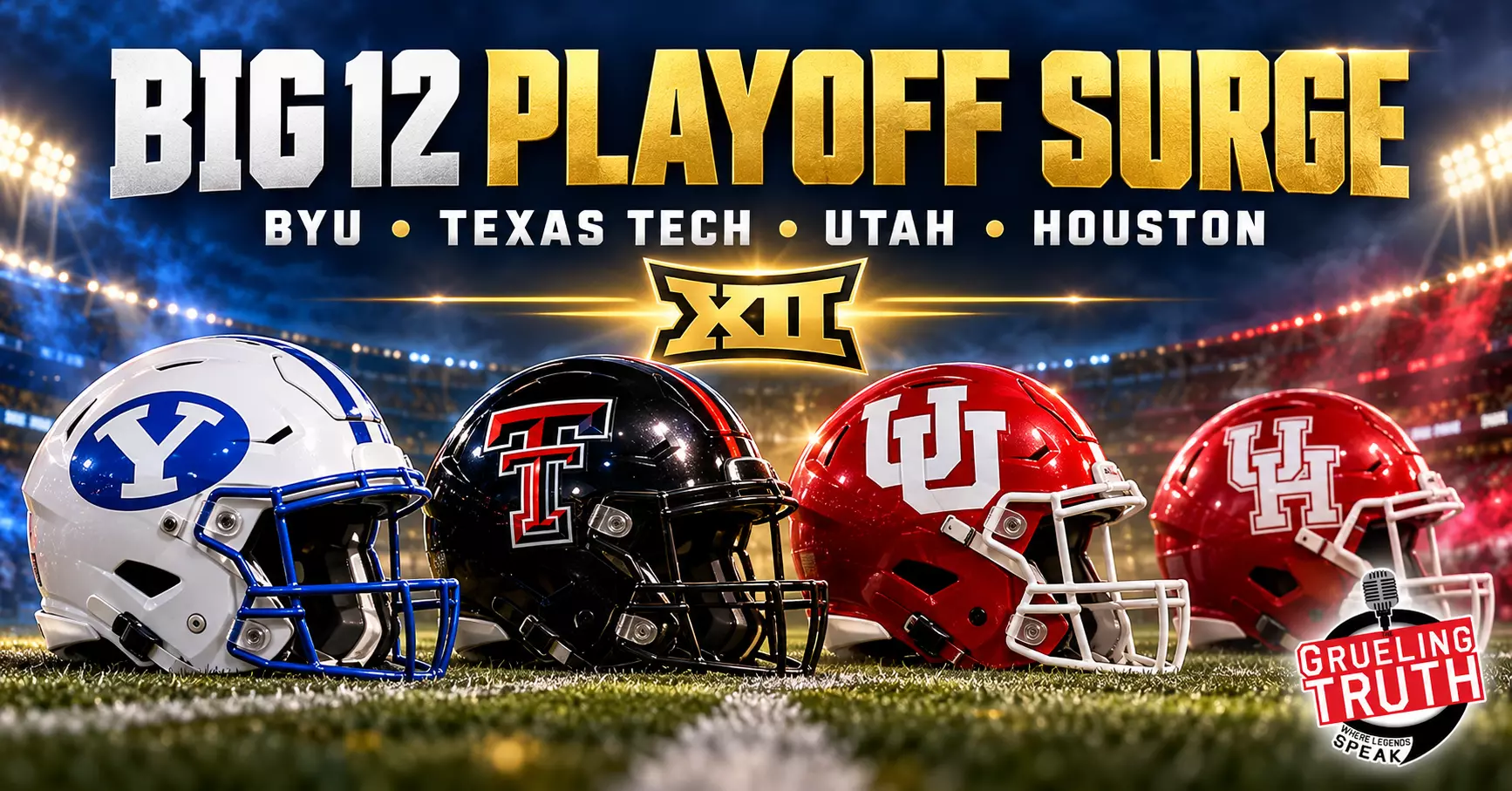
BYU is ranked No. 2 after beating Notre Dame. Texas Tech sits eighth with an unbeaten record. Utah is undefeated and ranked 10th, while one-loss Houston has climbed to No. 14. The conference has three unbeaten teams and another contender positioned to strengthen its case immediately.
That does not establish how many College Football Playoff places the Big 12 will receive. October rankings cannot reserve December invitations, and the conference’s leading teams still have substantial work ahead.
But the discussion should begin with their individual résumés rather than an assumption about how many bids the league deserves.
The Big 12 has several credible candidates. Each has a different argument—and different questions to answer.
The Cougars entered that game unbeaten. They emerged with a victory over an opponent that arrived ranked second nationally, providing a significant result outside conference play.
That matters in a résumé discussion.
Conference games establish a hierarchy within a league. A victory like this gives evaluators additional evidence about how a contender measures against strong opposition from elsewhere.
BYU’s case also extends beyond one Saturday. The Cougars have won at TCU and defeated Iowa State and Arizona, reaching 6–0 without surrendering the opportunity created by their strongest performance.
The Notre Dame result is the centerpiece. The unbeaten record gives it a stronger foundation.
Still, the Cougars cannot assume their remaining opponents will simply become supporting characters in a championship story. Their next assignment is a road game at UCF, and a November 7 trip to Utah remains on the schedule.
BYU has earned a prominent position. Maintaining it requires managing the weeks between headline games.
Texas Tech Has a Win That Could Keep Gaining Value
Texas Tech’s résumé contains an especially useful result: a 28–26 victory over Houston.
That win becomes more meaningful as Houston continues succeeding. Beating an opponent early in the season can look different several weeks later, once there is more evidence about the team that lost.
The Red Raiders also have road victories over Oregon State and Colorado, along with a 53–25 win against Arizona State. They enter Saturday’s trip to Cincinnati at 6–0 overall and 3–0 in conference play.
The Houston game demonstrates the ability to survive a close contest. The Arizona State result supplies evidence of a much more commanding performance.
Those are complementary parts of a playoff case. A contender benefits from showing it can win when the margin is narrow and establish separation when opportunities arise.
There are reasons to examine how Texas Tech is producing those results, too. Its defense has forced 12 turnovers and scored four defensive touchdowns this season. Those plays count fully, but the Red Raiders must remain capable of winning when a takeaway does not become an immediate touchdown.
Cincinnati provides the next test. Texas Tech’s argument improves by handling that assignment, rather than looking beyond it.
Utah Combines an Unbeaten Record With Strong Performance Indicators
Utah’s case has considerable substance on both sides of the ball.
The Utes are 6–0, averaging 40.2 points while allowing 14.8 per game. Their average victory margin is 20 points. Those numbers suggest more than a team repeatedly finding a fortunate ending.
They also offer a useful way to evaluate the unbeaten record. Winning matters most, but how a team wins can help distinguish consistent control from a series of narrow escapes.
Utah has beaten Arkansas outside the conference and collected Big 12 victories over Iowa State, Kansas and Colorado. The Colorado game ended 27–24, demonstrating that the Utes have not moved through every assignment comfortably.
Saturday’s matchup with Houston offers a more demanding measurement.
A victory would add a top-15 opponent to Utah’s record while protecting its unbeaten start. A loss would require a reassessment, although the meaning would depend on the performance and everything that follows.
That is the value of the game: it will provide stronger evidence than another week of debating rankings.
Houston Deserves Its Own Assessment
Houston should not be treated merely as the opponent that validates someone else’s season.
The Cougars are 6–1, with their only defeat coming by two points at Texas Tech. They now have an opportunity to win at Utah and establish a result that would substantially improve their own standing.
Their profile gives the matchup credibility.
Houston averages 220 rushing yards per game and allows only 82.6. Quarterback Conner Weigman is coming off a performance against Oklahoma State in which he threw for 343 yards and five touchdowns.
Those strengths create a legitimate football argument for the Cougars. They can run, defend the run and produce through the passing game.
The remaining question is whether they can carry those qualities into another difficult road environment and finish with a victory.
Houston’s narrow loss at Texas Tech deserves context. It cannot replace a signature win. Saturday presents the chance to earn one.
Conference Losses Must Be Evaluated Honestly
The Big 12’s contenders will inevitably create problems for one another.
Utah plays Houston this weekend and hosts BYU in November. Texas Tech already has beaten Houston. Those results will help establish the league’s order, but they also will put defeats on credible teams’ records.
The evaluation should account for both sides.
Beating a strong conference opponent deserves recognition. Losing to one deserves scrutiny appropriate to the circumstances. Neither result should be dismissed simply because both teams share a league.
At the same time, contenders cannot use conference depth to excuse every poor performance. A close road defeat and a decisive home loss provide different information. Repeated mistakes matter. So do quality victories and consistent execution.
The strongest assessment considers the full season rather than selecting whichever result supports a preferred conclusion.
There Is No Reason to Assign the Big 12 a Bid Total Yet
The AP rankings
establish where voters currently place these teams. They do not settle playoff selection.
There is still time for strong résumés to improve, promising seasons to deteriorate and other national contenders to change the comparison.
Declaring the Big 12 a one-bid, two-bid or three-bid conference now would substitute a conference-wide prediction for the individual assessments still to come.
BYU’s argument begins with Notre Dame and an unbeaten record. Texas Tech has its own spotless start and a valuable head-to-head victory over Houston. Utah combines strong production with an immediate chance to add a major win. Houston can move the discussion significantly with a victory in Salt Lake City.
Those cases deserve to be evaluated separately.
The conference has already accomplished enough to demand attention. Its leading teams now must turn that attention into stronger evidence, one Saturday at a time.
New Users – Get $350 in Bonus Bets when you wager $5 for 7 days
T&Cs apply
4.6/5
Gambling Problem? Call 1-800-GAMBLER or 1-800-MY-RESET. Call 1-888-789-7777 or visit ccpgg.org/chat (CT). Hope is here. GamblingHelpLineMA.org or call (800) 327-5050 for 24/7 support (MA). Visit www.mdgamblinghelp.org (MD). Call 1-877-8HOPE-NY or text HOPENY (NY). 21+ (18+ DC, WY) and present in select states (for KS, in affiliation with Kansas Star Casino). Find online real money wagering only. Min $5 wager required for 7 consecutive days. $5 free play credit. Bonus issued as non-withdrawable bonus with cash withdrawable bonus with cash withdrawable. Bonus bets which expire 7 days after receipt. Restrictions apply. See terms at sportsbook.fanduel.com. Call 1-877-770-7867 (LA).
Up To $1500 in Bonus Bets Paid Back if your First Bet Does Not Win
T&Cs apply
4.5/5
Gambling problem? Call 1-800-GAMBLER or 1-800-MY-RESET (Available in the US) 877-8-HOPENY or text HOPENY (467369) (NY) 1-800-327-5050 (MA), 1-800-BETS-OFF (IA), 1-800-981-0023 (PR). 21+ only. Please Gamble Responsibly. See BetMGM.com for Terms. First Bet Offer for new customers only (if applicable). Subject to eligibility requirements. Bonus bets are non-withdrawable. In partnership with Kansas Crossing Casino and Hotel. Promotional offers not available in Mississippi, Massachusetts, New York, Ontario, or Puerto Rico.
New DraftKings Customers: Bet $5, Get $200 + 3 Months of NBA League Pass!
T&Cs apply
4.5/5
GAMBLING PROBLEM? CALL 1-800-GAMBLER or 1-800-MY-RESET, (800) 327-5050 or visit gamblinghelplinema.org (MA). Please Gamble Responsibly. 888-789-7777/visit ccpg.org (CT), or visit www.mdgamblinghelp.org (MD), 1-800-981-0023 (PR). 21+ and present in most states. (18+ DC/NH/PR/WY). Void in CAN. Eligibility restrictions apply. On behalf of Boot Hill Casino (KS). Pass-thru of per wager tax may apply in IL. 1 per new Sportsbook customer. $5+ first-time bet req. Max. $200 issued as non-withdrawable Bonus Bets. Stake removed from payout. Reward issued as $50 in Bonus Bets every 7 days via click-to-claim for 21 days. Bonus Bets and click-to-claims expire 7 days (168hrs) after issuance. Terms: dkng.co/offer. Get 1 promo code to redeem a 3-month NBA League Pass subscription, complimentary of DraftKings. Subscription auto-renews monthly at then-current price (currently $16.99/mo); cancel anytime. Terms, restrictions, and eligibility requirements apply. Redeem League Pass by 12/19/26 at 11:59 PM ET. Addt’l terms: support.watch.nba.com/hc/en-us/articles/9165532876183-League-Pass-Terms-of-Use_. Ends 11/29/26 at 11:59 PM ET. Sponsored by DK.
Must be 21+. GAMBLING PROBLEM? CALL 1-800-GAMBLER OR CALL 1-800-MY-RESET, www.mdgamblinghelp.org (MD), (800)-327-5050 or gamblinghelplinema.org (MA), Call (877)8-HOPENY or text HOPENY (467369) (NY), (888) 789-7777 or ccpg.org (CT), morethanagame.nc.gov (NC), 1800gambler.net (WV)
Bet $1 and get double the winnings up to $25 for your next 10 bets
T&Cs apply
4.4/5
21+ New users only. Must register using eligible promo code. First bet after registration must qualify. Max. Bonus Bet: $1,000. Bonus Bet expires 14 days after receipt. Void where prohibited. See Caesars.com/promos for full terms. Gambling Problem? 1-800-GAMBLER (1-800-426-2537)
21+ and present in OH. Gambling Problem? Call 1-800-GAMBLER.
This site is using
Cloudflare
and adheres to the
Google Safe Browsing Program. We adapted
Google's Privacy Guidelines
to keep your data safe at all times.
Close
Ready to Win Big? Join the Elite with Our Sports Betting Deals!
FanDuel Promo
New Users – Get $350 in Bonus Bets when you wager $5 for 7 days
Our Favorite
T&Cs and 21+ apply
Gambling Problem? Call 1-800-GAMBLER or 1-800-MY-RESET. Call 1-888-789-7777 or visit ccpgg.org/chat (CT). Hope is here. GamblingHelpLineMA.org or call (800) 327-5050 for 24/7 support (MA). Visit www.mdgamblinghelp.org (MD). Call 1-877-8HOPE-NY or text HOPENY (NY). 21+ (18+ DC, WY) and present in select states (for KS, in affiliation with Kansas Star Casino). Find online real money wagering only. Min $5 wager required for 7 consecutive days. $5 free play credit. Bonus issued as non-withdrawable bonus with cash withdrawable bonus with cash withdrawable. Bonus bets which expire 7 days after receipt. Restrictions apply. See terms at sportsbook.fanduel.com. Call 1-877-770-7867 (LA).
Code:
Open FanDuel
Get Bonus
BetMGM Promo
Up To $1500 in Bonus Bets Paid Back if your First Bet Does Not Win
Best Slots
T&Cs and 21+ apply
Gambling problem? Call 1-800-GAMBLER or 1-800-MY-RESET (Available in the US) 877-8-HOPENY or text HOPENY (467369) (NY) 1-800-327-5050 (MA), 1-800-BETS-OFF (IA), 1-800-981-0023 (PR). 21+ only. Please Gamble Responsibly. See BetMGM.com for Terms. First Bet Offer for new customers only (if applicable). Subject to eligibility requirements. Bonus bets are non-withdrawable. In partnership with Kansas Crossing Casino and Hotel. Promotional offers not available in Mississippi, Massachusetts, New York, Ontario, or Puerto Rico.
Code:
Open BetMGM
Get Bonus
DraftKings Promo
New DraftKings Customers: Bet $5, Get $200 + 3 Months of NBA League Pass!
Newcomer
T&Cs and 21+ apply
GAMBLING PROBLEM? CALL 1-800-GAMBLER or 1-800-MY-RESET, (800) 327-5050 or visit gamblinghelplinema.org (MA). Please Gamble Responsibly. 888-789-7777/visit ccpg.org (CT), or visit www.mdgamblinghelp.org (MD), 1-800-981-0023 (PR). 21+ and present in most states. (18+ DC/NH/PR/WY). Void in CAN. Eligibility restrictions apply. On behalf of Boot Hill Casino (KS). Pass-thru of per wager tax may apply in IL. 1 per new Sportsbook customer. $5+ first-time bet req. Max. $200 issued as non-withdrawable Bonus Bets. Stake removed from payout. Reward issued as $50 in Bonus Bets every 7 days via click-to-claim for 21 days. Bonus Bets and click-to-claims expire 7 days (168hrs) after issuance. Terms: dkng.co/offer. Get 1 promo code to redeem a 3-month NBA League Pass subscription, complimentary of DraftKings. Subscription auto-renews monthly at then-current price (currently $16.99/mo); cancel anytime. Terms, restrictions, and eligibility requirements apply. Redeem League Pass by 12/19/26 at 11:59 PM ET. Addt’l terms: support.watch.nba.com/hc/en-us/articles/9165532876183-League-Pass-Terms-of-Use_. Ends 11/29/26 at 11:59 PM ET. Sponsored by DK.
Code:
Open DraftKings
Get Bonus
Find out what the legends have to say about sports this week....
New Users – Get $350 in Bonus Bets when you wager $5 for 7 days
Gambling Problem? Call 1-800-GAMBLER or 1-800-MY-RESET. Call 1-888-789-7777 or visit ccpgg.org/chat (CT). Hope is here. GamblingHelpLineMA.org or call (800) 327-5050 for 24/7 support (MA). Visit www.mdgamblinghelp.org (MD). Call 1-877-8HOPE-NY or text HOPENY (NY). 21+ (18+ DC, WY) and present in select states (for KS, in affiliation with Kansas Star Casino). Find online real money wagering only. Min $5 wager required for 7 consecutive days. $5 free play credit. Bonus issued as non-withdrawable bonus with cash withdrawable bonus with cash withdrawable. Bonus bets which expire 7 days after receipt. Restrictions apply. See terms at sportsbook.fanduel.com. Call 1-877-770-7867 (LA).