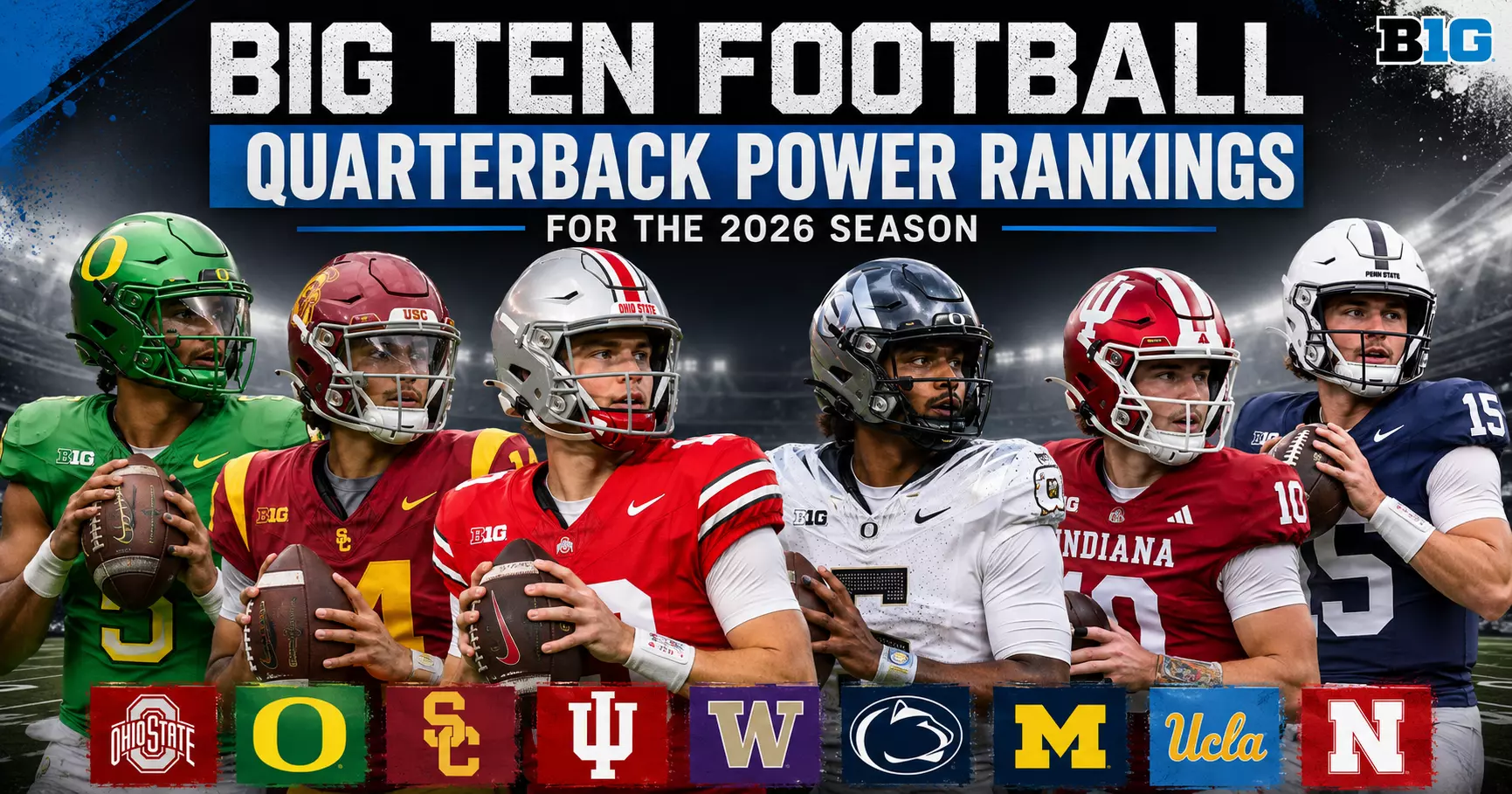
The Big Ten has never been deeper at the quarterback position than it is entering the 2026 season. All 18 Teams look set
The Big Ten has never been deeper at the quarterback position than it is entering the 2026 season. With 18 teams now competing in the conference, nearly every program believes it has a quarterback capable of leading a winning season. The conference features Heisman contenders, former five-star recruits, veteran transfers, dual-threat playmakers, and rising sophomores looking to make the leap.
At the top sits a returning Heisman finalist, but several challengers—including proven veterans from Oregon, USC, Indiana, and Penn State—will make the race for the Big Ten Championship one of the nation’s most entertaining storylines.
Here are our preseason
Big Ten Quarterback Power Rankings
heading into the 2026 college football season.
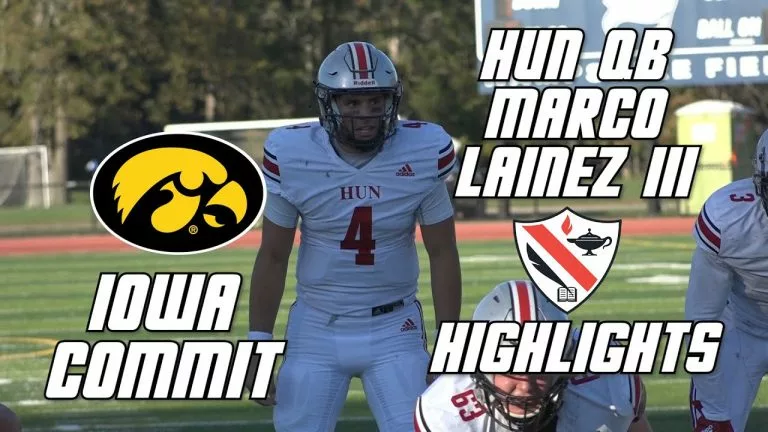
18. Marco Lainez – Iowa
Iowa has struggled to find consistency at quarterback for much of the past decade, and Marco Lainez will have the opportunity to change that narrative. The former
four-star recruit
possesses solid athletic ability and enough arm strength to make every throw, but entering 2026 he remains largely unproven as a full-time starter.
The Hawkeyes will once again rely heavily on defense and a physical running game, meaning Lainez won’t be asked to throw 35 times per game. Instead, his job will be to limit mistakes, convert key third downs, and capitalize on play-action opportunities.
If Lainez develops quickly, Iowa could surprise people. Until then, he enters the season as the conference’s biggest unknown among returning starters.
Marco Lainez III | Hun QB 23′ | Iowa commit highlights
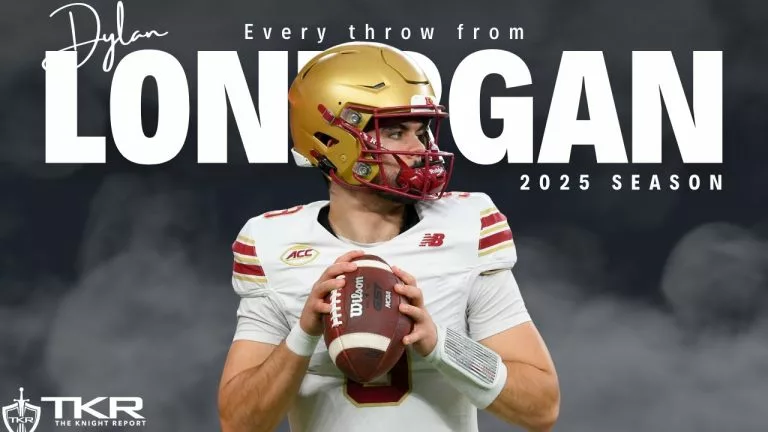
17. Dylan Lonergan – Rutgers
The Boston College transfer gives Rutgers more experience than it had a year ago, but the Scarlet Knights still have plenty to prove offensively.
Lonergan has shown flashes throughout his career, displaying a quick release and enough mobility to extend plays. Consistency, however, has been elusive. Rutgers hopes a fresh start and a new offensive system will allow him to maximize his potential.
He has the tools to climb these rankings during the season, but entering Week One, there’s simply too much uncertainty.
Every throw from Dylan Lonergan for the 2025 season — Rutgers Scarlet Knights Football
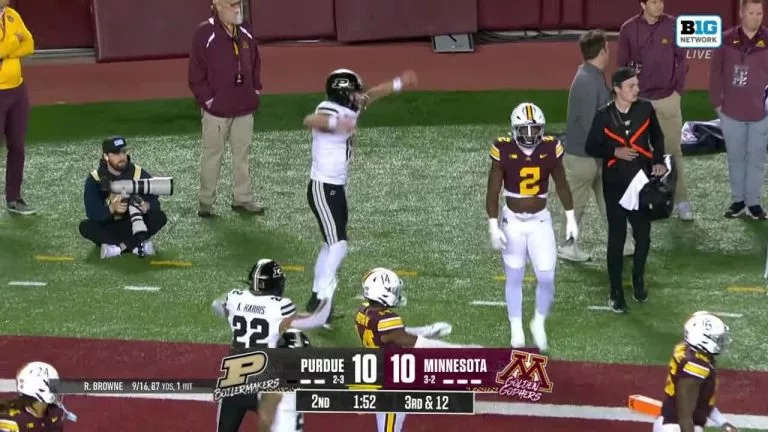
16. Ryan Browne – Purdue
Ryan Browne finally gets his opportunity to lead Purdue after patiently waiting for his chance. He has experience within the program and understands the offense, making him a solid option for the Boilermakers.
Browne isn’t flashy, but he makes good decisions and has enough athleticism to keep defenses honest. Purdue desperately needs offensive stability after inconsistent quarterback play in recent seasons.
If Browne can reduce turnovers and improve his downfield accuracy, Purdue’s offense could become much more competitive in conference play.
Ryan Browne with the QB Keeper vs. Minnesota | Purdue Football | 10/11/25
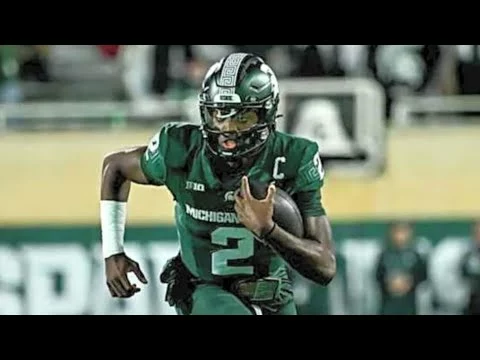
15. Aidan Chiles – Northwestern
Aidan Chiles gets another opportunity to restart his career after transferring to Northwestern, where offensive coordinator Chip Kelly hopes to unlock his considerable talent.
Physically, Chiles checks nearly every box. He has excellent size, arm strength, and mobility. Decision-making and consistency have been the primary issues throughout his young career.
If Kelly successfully develops him, Chiles could become one of the conference’s biggest surprises.
Aidan Chiles 🔥 Michigan State Transfer QB 2025 Highlights
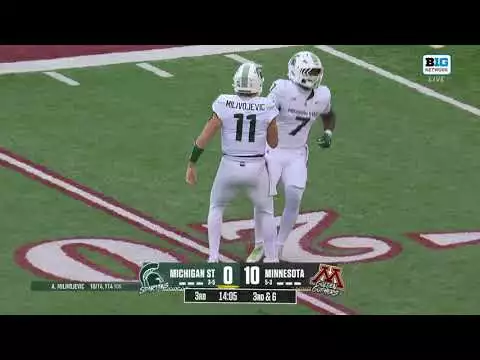
14. Alessio Milivojevic – Michigan State
Michigan State hands the offense to Alessio Milivojevic, one of the conference’s youngest starting quarterbacks.
The sophomore possesses intriguing upside, particularly as a passer, but he’ll experience the typical growing pains that come with leading a Big Ten offense for the first time.
The Spartans are investing in his long-term development, and while 2026 may include some bumps along the way, the future appears bright.
Milivojevic Finds Bullard for the 71-YD TD vs. Minnesota | Michigan State Football
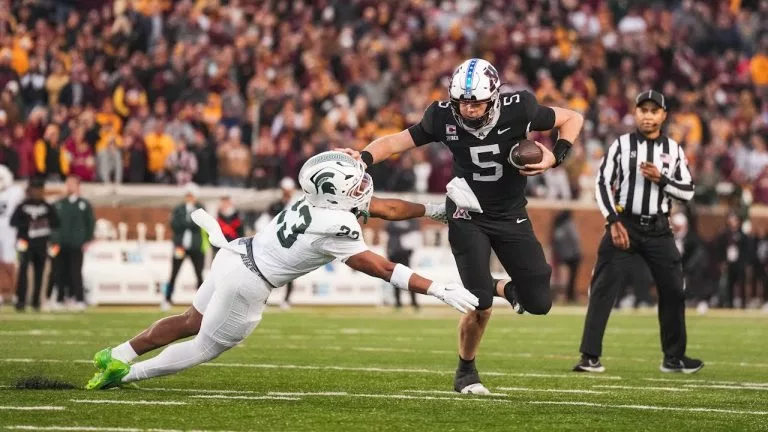
13. Drake Lindsey – Minnesota
Minnesota believes Drake Lindsey is ready to become its quarterback of the future.
The sophomore has impressed coaches with his accuracy, leadership, and command of the offense. While he lacks the experience of many quarterbacks ranked ahead of him, his talent is undeniable.
If Lindsey develops quickly, he could become one of the breakout stars of the conference this season.
Drake Lindsey | 2025 Minnesota Gopher Football Highlights
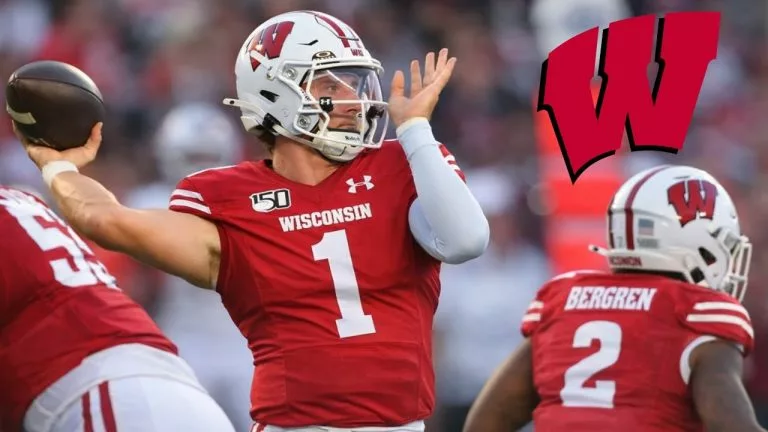
12. Colton Joseph – Wisconsin
The Old Dominion transfer brings exciting dual-threat ability to Madison.
Joseph can hurt defenses with both his legs and his arm, giving Wisconsin’s offense a dimension it has lacked in recent years. His mobility should create opportunities outside the pocket while helping extend drives.
The biggest question remains how quickly he’ll adapt to Big Ten defenses, but the physical tools are impressive.
Colton Joseph | Welcome to Wisconsin 🔴⚪
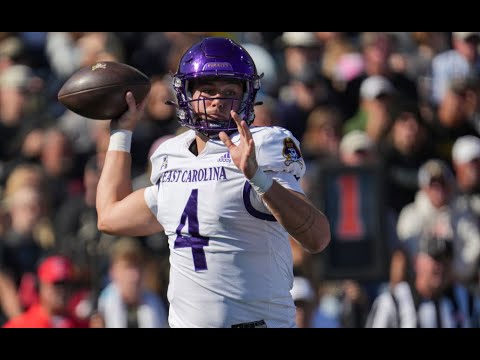
11. Katin Houser – Illinois
Katin Houser has quietly become one of the conference’s more experienced quarterbacks after stops at Michigan State and East Carolina.
His maturity, football IQ, and leadership should help Illinois remain competitive. Houser doesn’t possess elite physical traits, but he understands how to operate an offense efficiently.
Expect him to provide steady quarterback play throughout the season.
Katin Houser East Carolina Highlights
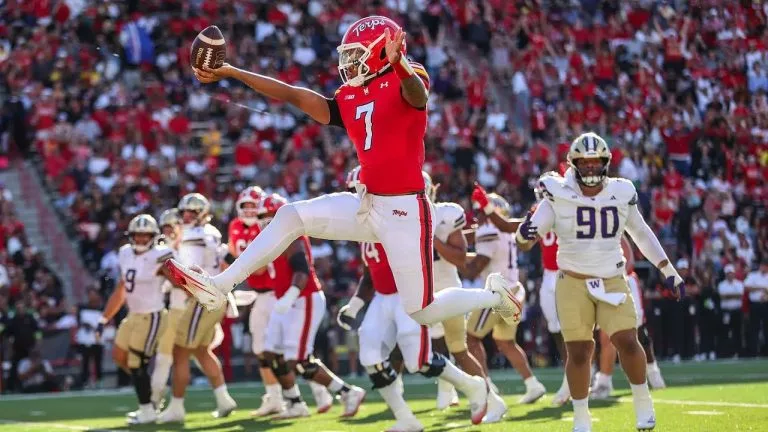
10. Malik Washington – Maryland
Maryland enters the season expecting a breakout year from Malik Washington.
With offensive coordinator Clint Trickett designing the offense, Washington should have every opportunity to showcase his athleticism and big-play ability.
His ceiling remains extremely high, and another year of development could allow him to emerge as one of the conference’s top quarterbacks.
Malik Washington 2025 CFB Maryland Season Highlights
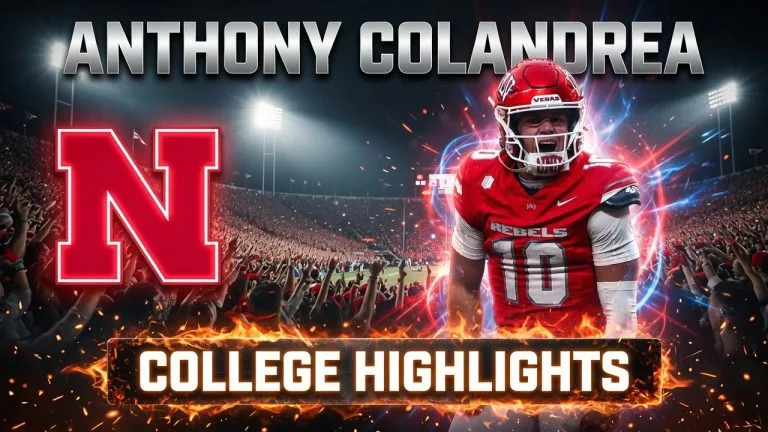
9. Anthony Colandrea – Nebraska
Anthony Colandrea arrives from Virginia with a reputation as one of college football’s most exciting
improvisational quarterbacks.
His mobility and willingness to attack downfield create explosive plays, although he’ll need to cut down on turnovers against Big Ten defenses.
Nebraska believes his playmaking ability can elevate the offense immediately.
NEBRASKA QB1 | Anthony Colandrea Highlight Video
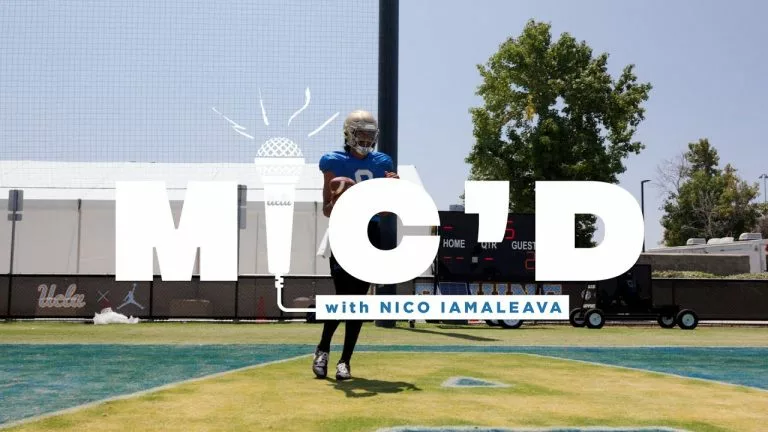
8. Nico Iamaleava – UCLA
Few quarterbacks in college football possess more natural talent than Nico Iamaleava.
After gaining valuable experience in the SEC, he now joins UCLA with enormous expectations. His combination of arm strength, athleticism, and size makes him one of the conference’s highest-upside players.
If everything comes together, he could finish the season much higher than eighth.
Mic’d Up – Nico Iamaleava
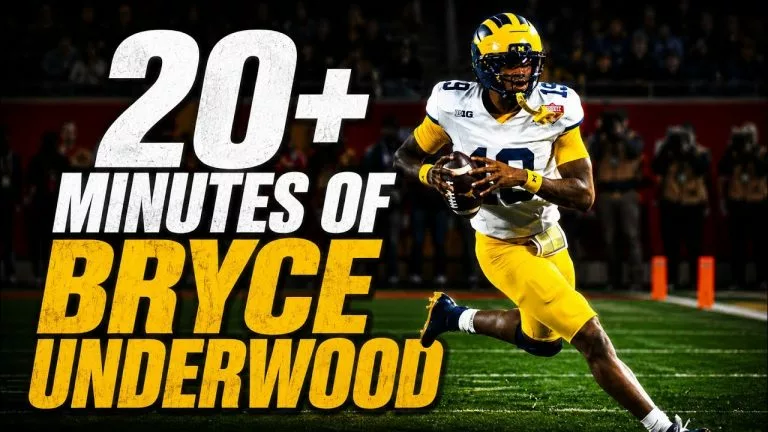
7. Bryce Underwood – Michigan
The former No. 1 overall recruit enters his sophomore season carrying enormous expectations.
Bryce Underwood flashed elite talent as a freshman, showing why recruiting analysts viewed him as one of the nation’s premier quarterback prospects.
Michigan believes he has superstar potential, and another offseason of development should only improve his command of the offense.
Bryce Underwood Michigan Highlights | 2025 Freshman Season
6. Rocco Becht – Penn State
Penn State made one of the biggest transfer portal additions in the country by landing Rocco Becht from Iowa State.
Becht brings extensive starting experience, excellent leadership, and proven production against quality competition.
His arrival immediately raises the ceiling for a Penn State team with legitimate College Football Playoff aspirations.
Rocco Becht Iowa State Highlights
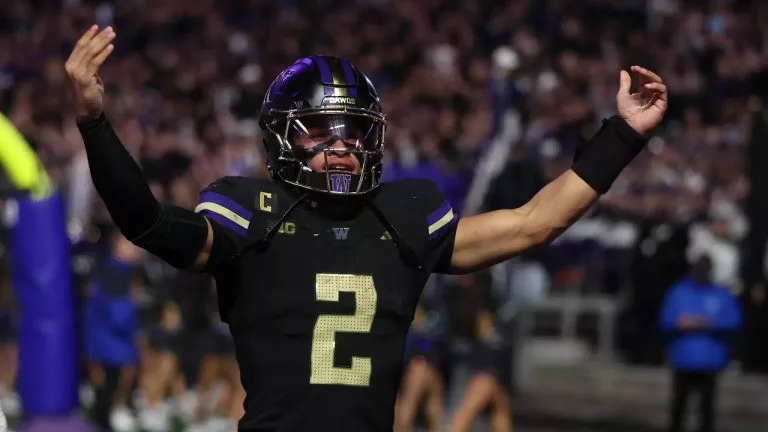
5. Demond Williams Jr. – Washington
Demond Williams Jr. is one of the conference’s most electric playmakers.
The dual-threat quarterback stresses defenses with his ability to extend plays, create explosive runs, and make difficult throws on the move.
Washington’s offense becomes significantly more dangerous whenever Williams has the football.
Demond Williams | 2025 Washington Highlights
4. Josh Hoover – Indiana
Curt Cignetti once again found his quarterback through the transfer portal.
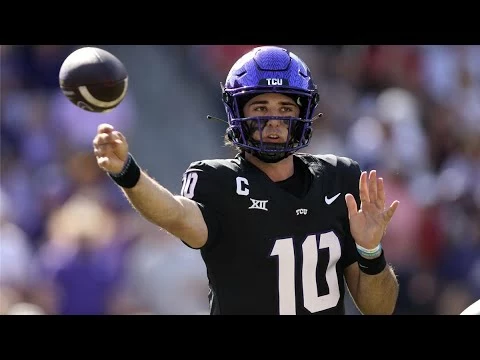
Josh Hoover arrives from TCU after establishing himself as one of the most productive passers in college football. His experience, accuracy, and command of the passing game make him an ideal fit for Indiana’s aggressive offensive system.
With one of the conference’s better supporting casts, Hoover has the opportunity to put together another outstanding statistical season while leading Indiana into the Big Ten title race.
Josh Hoover | 2025 TCU Highlights
3. Jayden Maiava – USC
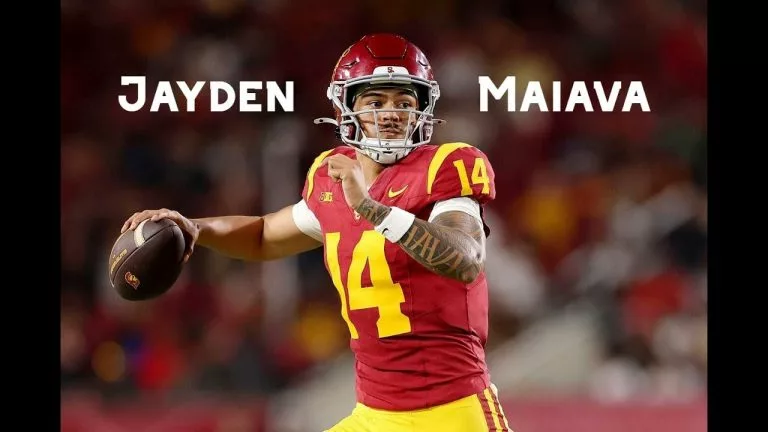
Jayden Maiava quietly became one of the nation’s most productive quarterbacks last season, throwing for
3,711 yards
while leading USC’s explosive offense.
His confidence, quick decision-making, and willingness to push the ball vertically make him one of the country’s most dangerous passers.
If USC contends for the conference championship, Maiava will almost certainly be in the Heisman conversation.
Jayden Maiava – USC | 2025 Highlights
2. Dante Moore – Oregon
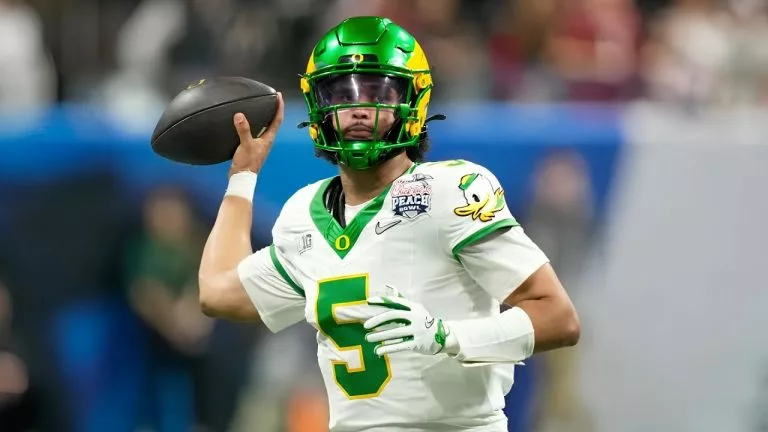
Many expected Dante Moore to leave for the NFL, but his decision to return instantly gives Oregon one of the nation’s elite quarterbacks.
Moore possesses perhaps the strongest arm in the conference and continues to improve his decision-making with experience.
His combination of talent, leadership, and production makes Oregon a legitimate national championship contender.
Dante Moore | 2025 Highlights
1. Julian Sayin – Ohio State
There is little debate entering 2026.
Julian Sayin is the
best quarterback
in the Big Ten and one of the top players in all of college football.
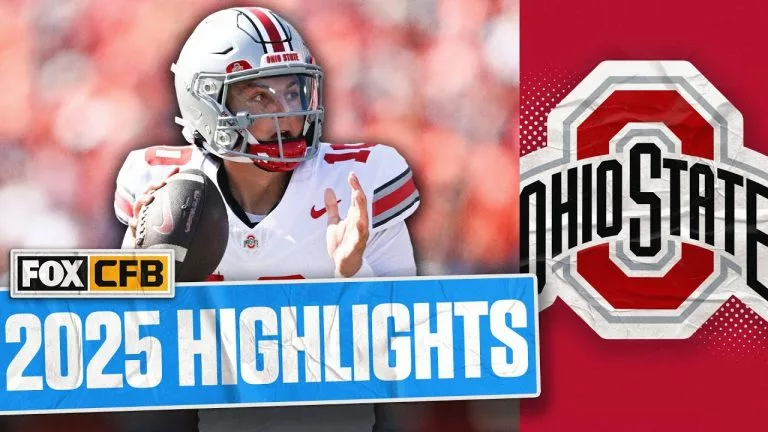
After finishing as a Heisman finalist in 2025, Sayin led the nation with a remarkable
77.0% completion percentage
while throwing for
3,610 yards. His elite accuracy, quick processing, poise under pressure, and ability to attack every level of the field make him the complete package.
Ohio State enters the season as one of the favorites to win both the Big Ten Championship and the national title, and Sayin is the biggest reason why. Unless another quarterback produces a truly spectacular season, he’ll remain the conference’s gold standard throughout 2026.
Julian Sayin 2025 Ohio State Buckeyes Freshman Season Highlights 🏈 FOX College Football
Final Thoughts
The Big Ten has evolved into arguably the nation’s premier quarterback conference. Established stars like
Julian Sayin, Dante Moore, Jayden Maiava,
and
Josh Hoover
headline the league, while young talents such as
Bryce Underwood
and
Demond Williams Jr.
provide incredible depth. Add experienced transfers like
Rocco Becht
and
Nico Iamaleava, and it’s easy to see why nearly every weekend in the Big Ten should feature elite quarterback play.
With so much talent under center, the race for the conference championship—and a spot in the College Football Playoff—could ultimately come down to which quarterback delivers in the biggest moments.
Up To $1500 in Bonus Bets Paid Back if your First Bet Does Not Win
T&Cs apply
4.5/5
Gambling problem? Call 1-800-GAMBLER or 1-800-MY-RESET (Available in the US) 877-8-HOPENY or text HOPENY (467369) (NY) 1-800-327-5050 (MA), 1-800-BETS-OFF (IA), 1-800-981-0023 (PR). 21+ only. Please Gamble Responsibly. See BetMGM.com for Terms. First Bet Offer for new customers only (if applicable). Subject to eligibility requirements. Bonus bets are non-withdrawable. In partnership with Kansas Crossing Casino and Hotel. Promotional offers not available in Mississippi, Massachusetts, New York, Ontario, or Puerto Rico.
New DraftKings Customers: Spend $5+ Get $150 in Bonuses
T&Cs apply
4.5/5
GAMBLING PROBLEM? CALL 1-800-GAMBLER or 1-800-MY-RESET, (800) 327-5050 or visit gamblinghelplinema.org (MA). Please Gamble Responsibly. 888-789-7777/visit ccpg.org (CT), or visit www.mdgamblinghelp.org (MD), 1-800-981-0023 (PR). 21+ and present in most states. (18+ DC/NH/PR/WY). Void in CAN. Eligibility restrictions apply. On behalf of Boot Hill Casino (KS). Pass-thru of per wager tax may apply in IL. 1 per new DraftKings customer. $5+ first-time bet req. Max. $150 issued as non-withdrawable Bonus Bets. Stake removed from payout. Reward issued as $50 in Bonus Bets every 7 days via click-to-claim for 14 days. Bonus Bets and click-to-claims expire 7 days (168hrs) after issuance. Terms: sportsbook.draftkings.com/promos. Ends 10/11/26 at 11:59 PM ET. Sponsored by DK.
Must be 21+. GAMBLING PROBLEM? CALL 1-800-GAMBLER OR CALL 1-800-MY-RESET, www.mdgamblinghelp.org (MD), (800)-327-5050 or gamblinghelplinema.org (MA), Call (877)8-HOPENY or text HOPENY (467369) (NY), (888) 789-7777 or ccpg.org (CT), morethanagame.nc.gov (NC), 1800gambler.net (WV)
Bet $1 and get double the winnings up to $25 for your next 10 bets
T&Cs apply
4.4/5
21+ New users only. Must register using eligible promo code. First bet after registration must qualify. Max. Bonus Bet: $1,000. Bonus Bet expires 14 days after receipt. Void where prohibited. See Caesars.com/promos for full terms. Gambling Problem? 1-800-GAMBLER (1-800-426-2537)
21+ and present in OH. Gambling Problem? Call 1-800-GAMBLER.
This site is using
Cloudflare
and adheres to the
Google Safe Browsing Program. We adapted
Google's Privacy Guidelines
to keep your data safe at all times.
Close
Ready to Win Big? Join the Elite with Our Sports Betting Deals!
FanDuel Promo
New Users – Get $250 in Bonus Bets when you wager $5 for 5 days
Up To $1500 in Bonus Bets Paid Back if your First Bet Does Not Win
Best Slots
T&Cs and 21+ apply
Gambling problem? Call 1-800-GAMBLER or 1-800-MY-RESET (Available in the US) 877-8-HOPENY or text HOPENY (467369) (NY) 1-800-327-5050 (MA), 1-800-BETS-OFF (IA), 1-800-981-0023 (PR). 21+ only. Please Gamble Responsibly. See BetMGM.com for Terms. First Bet Offer for new customers only (if applicable). Subject to eligibility requirements. Bonus bets are non-withdrawable. In partnership with Kansas Crossing Casino and Hotel. Promotional offers not available in Mississippi, Massachusetts, New York, Ontario, or Puerto Rico.
Code:
Open BetMGM
Get Bonus
DraftKings Promo
New DraftKings Customers: Spend $5+ Get $150 in Bonuses
Newcomer
T&Cs and 21+ apply
GAMBLING PROBLEM? CALL 1-800-GAMBLER or 1-800-MY-RESET, (800) 327-5050 or visit gamblinghelplinema.org (MA). Please Gamble Responsibly. 888-789-7777/visit ccpg.org (CT), or visit www.mdgamblinghelp.org (MD), 1-800-981-0023 (PR). 21+ and present in most states. (18+ DC/NH/PR/WY). Void in CAN. Eligibility restrictions apply. On behalf of Boot Hill Casino (KS). Pass-thru of per wager tax may apply in IL. 1 per new DraftKings customer. $5+ first-time bet req. Max. $150 issued as non-withdrawable Bonus Bets. Stake removed from payout. Reward issued as $50 in Bonus Bets every 7 days via click-to-claim for 14 days. Bonus Bets and click-to-claims expire 7 days (168hrs) after issuance. Terms: sportsbook.draftkings.com/promos. Ends 10/11/26 at 11:59 PM ET. Sponsored by DK.
Code:
Open DraftKings
Get Bonus
Find out what the legends have to say about sports this week....