Michigan won the 2023 national title with an elite defense. Ohio State followed with another championship-caliber unit in 2024
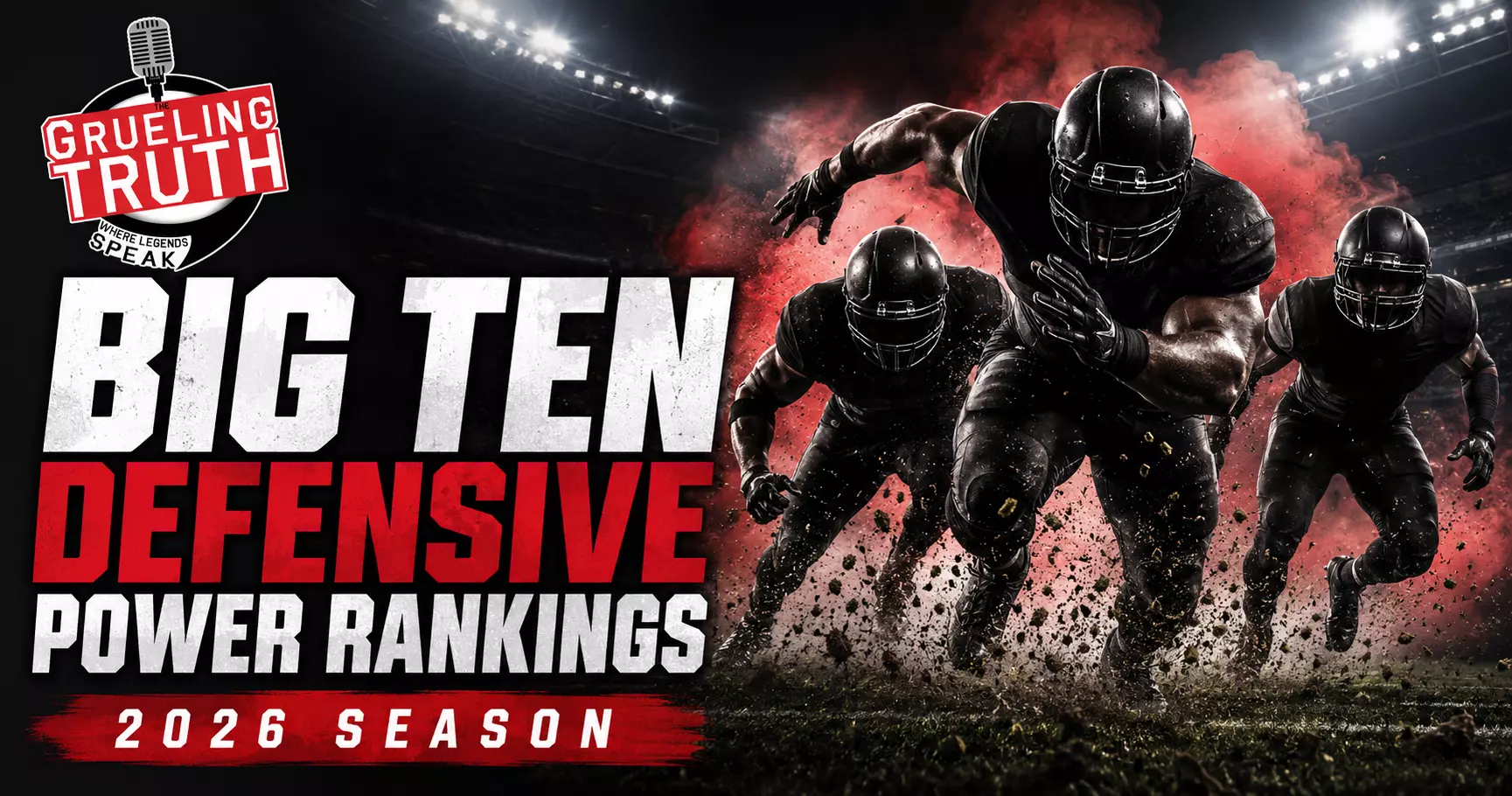
Defense has become the defining characteristic of the Big Ten’s recent national championship run.
Michigan won the 2023 national title with an elite defense. Ohio State followed with another championship-caliber unit in 2024, and Indiana completed the conference’s three-peat by allowing approximately 11 points per game during its undefeated 2025 season.
The conference should again feature several of the country’s best defenses in 2026. Ohio State may possess the nation’s deepest defensive front, Oregon returns multiple potential NFL players, and Indiana still has enough talent to remain formidable after losing several championship contributors.
These rankings consider previous performance, returning production, transfer additions, individual talent, coaching, positional depth and expected performance at all three levels.
18. Purdue Boilermakers
Purdue’s defense should improve under
Barry Odom, but there is an enormous distance between improvement and becoming a respectable Big Ten unit.
The Boilermakers lacked the size, speed and depth required to consistently compete against conference opponents in 2025. Purdue struggled to generate pressure without blitzing and frequently allowed opposing offenses to control the line of scrimmage.
Odom and his staff have aggressively rebuilt the roster through recruiting and the transfer portal. Former Army pass rusher Elo Modozie is one of the most intriguing additions. His athleticism could give Purdue a legitimate edge presence, something the defense desperately needs.
The Boilermakers must also improve their tackling and reduce explosive plays. Too many short completions and routine runs became substantial gains last season.
Purdue’s defense should look more organized and competitive, but it remains short on proven Big Ten talent. This is still a developmental project rather than a finished unit.
17. Rutgers Scarlet Knights
It is unusual to place a Greg Schiano defense this low, but Rutgers must prove that its extensive reconstruction will work.
The Scarlet Knights surrendered more than 31 points per game in 2025, making defense one of the program’s greatest disappointments. Rutgers struggled to pressure quarterbacks, defend explosive passes and consistently get off the field on third down.
Schiano responded by overhauling his defensive staff and hiring Travis Johansen from South Dakota as defensive coordinator. Johansen brings an aggressive system and an impressive FCS résumé, but adjusting that scheme to Big Ten competition may require time.
Rutgers added experienced edge rushers and several transfers in the secondary. Linebacker additions Ty Morris and Sean Allison should also strengthen the middle of the defense.
There is reason to expect improvement. However, the Scarlet Knights remain unproven at cornerback and safety, while the pass rush must become substantially more productive. Until that happens, Rutgers belongs near the bottom.
16. Maryland Terrapins
Maryland returns considerable overall production, but much of that continuity comes from an offense that was more dependable than its defense.
The Terrapins have athletes in the secondary and enough speed at linebacker to create problems. Their biggest concern is the line of scrimmage. Maryland must become stronger against the run and generate more pressure without depending on elaborate blitz packages.
Returning experience should help the communication problems that occasionally produced open receivers and explosive gains in 2025. Maryland’s defensive backs need to turn more of their opportunities into takeaways.
The Terrapins also must develop dependable depth. A competitive starting lineup can quickly become vulnerable when one or two important players are unavailable.
Maryland reportedly ranks near the top of the country in overall returning production, providing hope for improvement. Still, the defense needs to become more physical before it can move into the middle of the Big Ten.
15. Michigan State Spartans
Michigan State begins another defensive transition with several intriguing players but limited proven cohesion.
The Spartans have attempted to improve through the transfer portal, adding experience at multiple levels. The challenge is turning those pieces into a defense capable of surviving against the Big Ten’s best offenses.
Michigan State must create a more disruptive front. The Spartans have lacked consistent edge pressure and have too often allowed quarterbacks to remain comfortable in the pocket. Better pass rushing would reduce the strain on a secondary that has experienced its own inconsistency.
Linebacker could become the unit’s strength if the returning players improve their recognition and tackling. The Spartans need that group to prevent opponents from turning routine runs into explosive gains.
Michigan State
should have enough talent to avoid being completely overwhelmed. However, the number of new players, coaching adjustments and unanswered questions makes it difficult to rank the Spartans higher.
14. Northwestern Wildcats
Northwestern’s defense has frequently kept the program competitive even when its offense struggled.
The Wildcats generally play with good discipline and understand their assignments. Their defensive backs keep plays in front of them, while the front seven attempts to win through leverage and positioning rather than overwhelming athleticism.
The problem is a lack of disruptive talent. Northwestern needs more sacks, tackles for loss and turnovers. A defense can execute properly for most of a possession and still surrender points if it cannot produce a drive-ending play.
The arrival of Chip Kelly to run the offense could indirectly help the defense. If Northwestern sustains more drives and improves its scoring, the defense will face fewer short fields and fewer possessions.
The Wildcats should remain competitive against the bottom half of the conference. Their limited pass rush and overall athletic ceiling prevent them from climbing higher in these preseason rankings.
13. UCLA Bruins
UCLA’s defense has the potential to outperform this ranking, particularly if its transfer additions quickly adjust.
The Bruins have improved the size and athleticism of their front seven since joining the Big Ten. They are no longer completely unprepared for the conference’s physical running games.
Consistency remains the issue. UCLA can produce impressive stretches before surrendering explosive plays because of missed tackles or coverage breakdowns. The Bruins must become more reliable on third down and inside the red zone.
The secondary has enough athletic ability to compete, but it needs help from the pass rush. No defensive backfield can consistently hold up if opposing quarterbacks receive unlimited time.
UCLA’s defense should be better than it was during its first Big Ten seasons. Whether that improvement becomes statistically visible will depend on the offense’s ability to avoid turnovers and sustain possessions.
12. Illinois Fighting Illini
Illinois lost several important defenders, creating another rebuilding challenge for Bret Bielema and his staff.
The Fighting Illini have consistently developed defensive backs and physical front-seven players. That developmental history establishes a relatively safe floor even when experienced starters depart.
Illinois must replace leadership and production in the secondary. Young cornerbacks will be tested early, particularly against the conference’s deep collection of receivers. The defensive line also needs to create more pressure without exposing the secondary through constant blitzing.
The Illini should remain physical against the run. Bielema’s teams rarely lack size or toughness, and the defensive structure is generally sound.
This unit may be noticeably better by November than it is in September. Entering the season, however, personnel losses and uncertainty in the secondary place Illinois outside the conference’s top 10.
11. Nebraska Cornhuskers
Nebraska returns enough production to become one of the Big Ten’s most improved defenses.
The Cornhuskers bring back approximately 69 percent of their overall production, according to ESPN’s offseason calculations. That continuity should be especially valuable for a defense that showed encouraging flashes in 2025.
Nebraska’s front has the size needed to withstand Big Ten running games. The Cornhuskers must now become more disruptive, producing additional sacks and negative plays rather than merely occupying blockers.
The secondary possesses intriguing athleticism but must become more consistent when defending deep passes. Nebraska cannot afford coverage breakdowns against Oregon, Indiana, Ohio State and Washington.
If the Cornhuskers develop a dependable pass rush, this defense could finish in the conference’s upper half. Until that improvement is demonstrated, Nebraska begins at No. 11.
10. Minnesota Golden Gophers
Minnesota’s defense did not meet expectations in 2025, but the Golden Gophers remain capable of producing a significant rebound.
The unit finished closer to the middle of the conference than many anticipated, partly because Minnesota faced powerful Ohio State and Oregon offenses. The Gophers still displayed the disciplined structure normally associated with P.J. Fleck’s teams.
Minnesota must improve its pass rush and create more takeaways. The defense was often solid without being sufficiently disruptive.
The secondary should remain competitive, particularly if the front seven prevents quarterbacks from extending plays. Linebacker development will also be critical against the conference’s mobile quarterbacks and receiving running backs.
Minnesota does not possess the collection of future NFL players found at Ohio State or Oregon. It can still field a good defense through preparation, tackling and assignment discipline.
This is a reliable unit with a relatively high floor, although its lack of elite pass-rushing talent limits the ceiling.
9. USC Trojans
USC’s defensive transformation continues under a staff that has already made the Trojans more physical and fundamentally sound.
The days when USC attempted to win every game 45–42 appear to be over. The Trojans have invested heavily in defensive recruiting and no longer look dramatically undersized against Big Ten opponents.
USC’s greatest strength should be its athleticism. The Trojans can run at linebacker and possess defensive backs capable of matching up with talented receivers.
The defensive line remains the determining factor. USC must consistently defeat blocks and control rushing attacks without committing additional defenders to the box. If the front can accomplish that, the secondary will have greater freedom to play aggressively.
This defense has top-five potential, but it must demonstrate that it can perform consistently against physical opponents away from Los Angeles. Until then, USC begins just inside the conference’s top half.
8. Washington Huskies
Washington enters 2026 with one of the Big Ten’s most underrated defenses.
The Huskies have rebuilt their roster following the enormous turnover that occurred after the 2023 national championship season. Their defense now possesses greater experience, size and depth.
Washington’s secondary should be a strength. The Huskies have enough athleticism to play aggressive coverage and create opportunities for their pass rush.
The front seven must prove it can remain effective against power-running teams. Washington will encounter several opponents determined to test its interior defensive line and linebacker discipline.
Jedd Fisch has accumulated enough talent for the Huskies to compete with the conference’s second tier. If Washington improves its run defense and creates more negative plays, it could become a top-six unit.
For now, the Huskies belong at No. 8—above the conference’s rebuilding defenses but below the established elite.
7. Penn State Nittany Lions
Penn State
remains talented, but the Nittany Lions face considerable turnover following a coaching change and several NFL departures.
The program continues to recruit well enough to field future professional players at every level. Penn State’s speed at linebacker and in the secondary should remain a defining strength.
The defensive line presents more uncertainty. The Nittany Lions lost several experienced contributors and need younger players to become full-time impact performers.
A new coaching staff also introduces schematic questions. Players must learn new terminology, coverage responsibilities and pressure packages. Even talented defenses can experience temporary breakdowns during that transition.
Penn State’s ceiling remains extremely high. By the middle of the season, the Nittany Lions could again look like one of the country’s better defenses.
Entering preseason camp, however, turnover and coaching changes make them slightly less dependable than the six teams ranked ahead of them.
6. Wisconsin Badgers
Wisconsin’s defense could be the strength that keeps Luke Fickell’s program competitive in 2026.
ESPN’s preseason SP+ projections reportedly place the Badgers’ defense at No. 22 nationally, an improvement from No. 35 in 2025.
Linebackers Mason Posa and Cooper Catalano return, giving Wisconsin an experienced foundation. Sebastian Cheeks is also positioned for a larger role.
The Badgers strengthened their secondary with cornerbacks Javan Robinson and Bryce West. Those additions should allow Wisconsin to play more aggressively and create additional pressure.
The defensive line must replace several important contributors, but the transfer portal provided enough depth to construct a strong rotation.
Wisconsin may not have the star power of Ohio State or Oregon, but it should be physical, experienced and difficult to attack. If the offense can reduce the number of short fields, the Badgers could finish among the Big Ten’s five best defenses.
5. Iowa Hawkeyes
Iowa remains one of the safest defensive projections in college football.
Personnel changes rarely cause a dramatic collapse because defensive coordinator Phil Parker’s system has produced year after year. The Hawkeyes develop defensive backs, tackle properly and force opponents to execute long drives without mistakes.
Iowa may not possess the conference’s most talented defensive line, but its front generally maintains gap integrity and prevents offenses from consistently reaching the second level.
The secondary should again become the defense’s defining strength. Parker consistently transforms lightly recruited prospects into dependable Big Ten starters and future NFL players.
Iowa’s offense will influence the final statistics. If the Hawkeyes avoid turnovers and generate first downs, the defense will not be asked to repeatedly protect short fields.
The lack of elite pass-rushing talent keeps Iowa outside the top four. In terms of reliability, however, few teams in the country are easier to trust.
4. Michigan Wolverines
Michigan has enough talent to remain among the Big Ten’s premier defenses despite coaching and personnel changes.
The Wolverines made a significant portal addition by landing Utah edge rusher John Henry Daley. If healthy, Daley can provide the pass-rushing presence Michigan needs after losing experienced defensive linemen.
Michigan continues to recruit elite size and athleticism up front. Its defensive identity should remain built around controlling the line of scrimmage and forcing opponents into obvious passing situations.
The secondary has promising talent but must establish a new hierarchy following veteran departures. Michigan’s defensive backs will benefit if the front generates consistent pressure.
New head coach Kyle Whittingham built his reputation on physical defense at Utah. His arrival should ensure that Michigan’s established identity does not change dramatically.
The Wolverines have more uncertainty than the top three, but their combination of talent, coaching and defensive culture makes them a legitimate championship-level unit.
3. Indiana Hoosiers
Indiana must replace several contributors from its
national championship defense, but the remaining foundation is exceptional.
Defensive tackle Tyrique Tucker is one of the best returning interior defenders in college football. Tucker earned first-team All-Big Ten and third-team AP All-America recognition during Indiana’s championship run.
His ability to defeat blocks and collapse the pocket gives the Hoosiers a disruptive presence in the middle. That pressure is especially valuable because it prevents quarterbacks from comfortably stepping forward.
Indiana’s coaching is another major advantage. Curt Cignetti and his staff consistently identify players who fit their system, and the Hoosiers have effectively integrated transfers without sacrificing cohesion.
The departures of Mikail Kamara and other veterans will be difficult to overcome. Indiana may not again allow only approximately 11 points per game.
Even with some regression, this should remain a top-15 national defense and one of the Big Ten’s three best units.
2. Oregon Ducks
Oregon may possess the best defensive line in college football.
A’Mauri Washington gives the Ducks a massive interior presence capable of commanding double teams. Bear Alexander produced the most complete season of his college career in 2025, recording 50 tackles and becoming a more dependable run defender.
Matayo Uiagalelei and Teitum Tuioti elected to return rather than enter the NFL Draft, giving Oregon experienced edge defenders capable of creating pressure.
That front should allow the Ducks to defend the run without committing safeties near the line of scrimmage. It will also make life considerably easier for Oregon’s linebackers and defensive backs.
The secondary experienced some turnover, but Dan Lanning has recruited enough blue-chip talent to replace departing starters.
Oregon’s defense has very few obvious weaknesses. If the new defensive backs perform as expected, the Ducks could easily finish first in the conference and lead the program to a Big Ten championship.
1. Ohio State Buckeyes
Ohio State begins the 2026 season with the best defense in the Big Ten.
The Buckeyes led the country in scoring defense in 2025, allowing fewer than 10 points per game. They lost several stars, but their recruiting and portal additions have produced another loaded roster.
The defensive line could become the nation’s best. Eddrick Houston recorded 21 tackles, three sacks and a forced fumble in a rotational role last season. He is positioned for a major breakout.
Alabama transfer James Smith provides SEC experience and immediate interior strength. Kenyatta Jackson Jr. returns on the edge, while Beau Atkinson, Qua Russaw and Zion Grady give defensive-line coach Larry Johnson a deep collection of pass rushers.
Ohio State must replace All-American safety Caleb Downs, arguably the country’s best defensive player in 2025. That loss matters. However, the Buckeyes possess enough talent in the secondary to remain effective.
No other Big Ten defense combines Ohio State’s depth, athleticism and pass-rushing potential. The Buckeyes are not simply No. 1 in the conference—they are a legitimate candidate to field the best defense in college football.
Final Big Ten Defensive Power Rankings
Ohio State
Oregon
Indiana
Michigan
Iowa
Wisconsin
Penn State
Washington
USC
Minnesota
Nebraska
Illinois
UCLA
Northwestern
Michigan State
Maryland
Rutgers
Purdue
Ohio State and Oregon enter the season in a tier of their own because of their defensive-line talent and overall depth. Indiana and Michigan remain championship-caliber units, although both must replace important contributors.
Iowa is the safest team outside the top four because of its coaching and developmental history. Wisconsin is the most intriguing sleeper, while Penn State possesses enough raw talent to rise rapidly once its new staff and starters settle in.
At the bottom, Rutgers and Purdue should improve after major defensive changes. They still have substantial ground to make up in a conference that continues to produce some of the strongest defenses in college football.
New Users – Get $350 in Bonus Bets when you wager $5 for 7 days
T&Cs apply
4.6/5
Gambling Problem? Call 1-800-GAMBLER or 1-800-MY-RESET. Call 1-888-789-7777 or visit ccpgg.org/chat (CT). Hope is here. GamblingHelpLineMA.org or call (800) 327-5050 for 24/7 support (MA). Visit www.mdgamblinghelp.org (MD). Call 1-877-8HOPE-NY or text HOPENY (NY). 21+ (18+ DC, WY) and present in select states (for KS, in affiliation with Kansas Star Casino). Find online real money wagering only. Min $5 wager required for 7 consecutive days. $5 free play credit. Bonus issued as non-withdrawable bonus with cash withdrawable bonus with cash withdrawable. Bonus bets which expire 7 days after receipt. Restrictions apply. See terms at sportsbook.fanduel.com. Call 1-877-770-7867 (LA).
Up To $1500 in Bonus Bets Paid Back if your First Bet Does Not Win
T&Cs apply
4.5/5
Gambling problem? Call 1-800-GAMBLER or 1-800-MY-RESET (Available in the US) 877-8-HOPENY or text HOPENY (467369) (NY) 1-800-327-5050 (MA), 1-800-BETS-OFF (IA), 1-800-981-0023 (PR). 21+ only. Please Gamble Responsibly. See BetMGM.com for Terms. First Bet Offer for new customers only (if applicable). Subject to eligibility requirements. Bonus bets are non-withdrawable. In partnership with Kansas Crossing Casino and Hotel. Promotional offers not available in Mississippi, Massachusetts, New York, Ontario, or Puerto Rico.
New DraftKings Customers: Bet $5, Get $200 + 3 Months of NBA League Pass!
T&Cs apply
4.5/5
GAMBLING PROBLEM? CALL 1-800-GAMBLER or 1-800-MY-RESET, (800) 327-5050 or visit gamblinghelplinema.org (MA). Please Gamble Responsibly. 888-789-7777/visit ccpg.org (CT), or visit www.mdgamblinghelp.org (MD), 1-800-981-0023 (PR). 21+ and present in most states. (18+ DC/NH/PR/WY). Void in CAN. Eligibility restrictions apply. On behalf of Boot Hill Casino (KS). Pass-thru of per wager tax may apply in IL. 1 per new Sportsbook customer. $5+ first-time bet req. Max. $200 issued as non-withdrawable Bonus Bets. Stake removed from payout. Reward issued as $50 in Bonus Bets every 7 days via click-to-claim for 21 days. Bonus Bets and click-to-claims expire 7 days (168hrs) after issuance. Terms: dkng.co/offer. Get 1 promo code to redeem a 3-month NBA League Pass subscription, complimentary of DraftKings. Subscription auto-renews monthly at then-current price (currently $16.99/mo); cancel anytime. Terms, restrictions, and eligibility requirements apply. Redeem League Pass by 12/19/26 at 11:59 PM ET. Addt’l terms: support.watch.nba.com/hc/en-us/articles/9165532876183-League-Pass-Terms-of-Use_. Ends 11/29/26 at 11:59 PM ET. Sponsored by DK.
Must be 21+. GAMBLING PROBLEM? CALL 1-800-GAMBLER OR CALL 1-800-MY-RESET, www.mdgamblinghelp.org (MD), (800)-327-5050 or gamblinghelplinema.org (MA), Call (877)8-HOPENY or text HOPENY (467369) (NY), (888) 789-7777 or ccpg.org (CT), morethanagame.nc.gov (NC), 1800gambler.net (WV)
Bet $1 and get double the winnings up to $25 for your next 10 bets
T&Cs apply
4.4/5
21+ New users only. Must register using eligible promo code. First bet after registration must qualify. Max. Bonus Bet: $1,000. Bonus Bet expires 14 days after receipt. Void where prohibited. See Caesars.com/promos for full terms. Gambling Problem? 1-800-GAMBLER (1-800-426-2537)
21+ and present in OH. Gambling Problem? Call 1-800-GAMBLER.
This site is using
Cloudflare
and adheres to the
Google Safe Browsing Program. We adapted
Google's Privacy Guidelines
to keep your data safe at all times.
Close
Ready to Win Big? Join the Elite with Our Sports Betting Deals!
FanDuel Promo
New Users – Get $350 in Bonus Bets when you wager $5 for 7 days
Our Favorite
T&Cs and 21+ apply
Gambling Problem? Call 1-800-GAMBLER or 1-800-MY-RESET. Call 1-888-789-7777 or visit ccpgg.org/chat (CT). Hope is here. GamblingHelpLineMA.org or call (800) 327-5050 for 24/7 support (MA). Visit www.mdgamblinghelp.org (MD). Call 1-877-8HOPE-NY or text HOPENY (NY). 21+ (18+ DC, WY) and present in select states (for KS, in affiliation with Kansas Star Casino). Find online real money wagering only. Min $5 wager required for 7 consecutive days. $5 free play credit. Bonus issued as non-withdrawable bonus with cash withdrawable bonus with cash withdrawable. Bonus bets which expire 7 days after receipt. Restrictions apply. See terms at sportsbook.fanduel.com. Call 1-877-770-7867 (LA).
Code:
Open FanDuel
Get Bonus
BetMGM Promo
Up To $1500 in Bonus Bets Paid Back if your First Bet Does Not Win
Best Slots
T&Cs and 21+ apply
Gambling problem? Call 1-800-GAMBLER or 1-800-MY-RESET (Available in the US) 877-8-HOPENY or text HOPENY (467369) (NY) 1-800-327-5050 (MA), 1-800-BETS-OFF (IA), 1-800-981-0023 (PR). 21+ only. Please Gamble Responsibly. See BetMGM.com for Terms. First Bet Offer for new customers only (if applicable). Subject to eligibility requirements. Bonus bets are non-withdrawable. In partnership with Kansas Crossing Casino and Hotel. Promotional offers not available in Mississippi, Massachusetts, New York, Ontario, or Puerto Rico.
Code:
Open BetMGM
Get Bonus
DraftKings Promo
New DraftKings Customers: Bet $5, Get $200 + 3 Months of NBA League Pass!
Newcomer
T&Cs and 21+ apply
GAMBLING PROBLEM? CALL 1-800-GAMBLER or 1-800-MY-RESET, (800) 327-5050 or visit gamblinghelplinema.org (MA). Please Gamble Responsibly. 888-789-7777/visit ccpg.org (CT), or visit www.mdgamblinghelp.org (MD), 1-800-981-0023 (PR). 21+ and present in most states. (18+ DC/NH/PR/WY). Void in CAN. Eligibility restrictions apply. On behalf of Boot Hill Casino (KS). Pass-thru of per wager tax may apply in IL. 1 per new Sportsbook customer. $5+ first-time bet req. Max. $200 issued as non-withdrawable Bonus Bets. Stake removed from payout. Reward issued as $50 in Bonus Bets every 7 days via click-to-claim for 21 days. Bonus Bets and click-to-claims expire 7 days (168hrs) after issuance. Terms: dkng.co/offer. Get 1 promo code to redeem a 3-month NBA League Pass subscription, complimentary of DraftKings. Subscription auto-renews monthly at then-current price (currently $16.99/mo); cancel anytime. Terms, restrictions, and eligibility requirements apply. Redeem League Pass by 12/19/26 at 11:59 PM ET. Addt’l terms: support.watch.nba.com/hc/en-us/articles/9165532876183-League-Pass-Terms-of-Use_. Ends 11/29/26 at 11:59 PM ET. Sponsored by DK.
Code:
Open DraftKings
Get Bonus
Find out what the legends have to say about sports this week....
New Users – Get $350 in Bonus Bets when you wager $5 for 7 days
Gambling Problem? Call 1-800-GAMBLER or 1-800-MY-RESET. Call 1-888-789-7777 or visit ccpgg.org/chat (CT). Hope is here. GamblingHelpLineMA.org or call (800) 327-5050 for 24/7 support (MA). Visit www.mdgamblinghelp.org (MD). Call 1-877-8HOPE-NY or text HOPENY (NY). 21+ (18+ DC, WY) and present in select states (for KS, in affiliation with Kansas Star Casino). Find online real money wagering only. Min $5 wager required for 7 consecutive days. $5 free play credit. Bonus issued as non-withdrawable bonus with cash withdrawable bonus with cash withdrawable. Bonus bets which expire 7 days after receipt. Restrictions apply. See terms at sportsbook.fanduel.com. Call 1-877-770-7867 (LA).