The Big 12 may not have the same national brand power as the SEC or Big Ten, but it might be the most unpredictable conference.
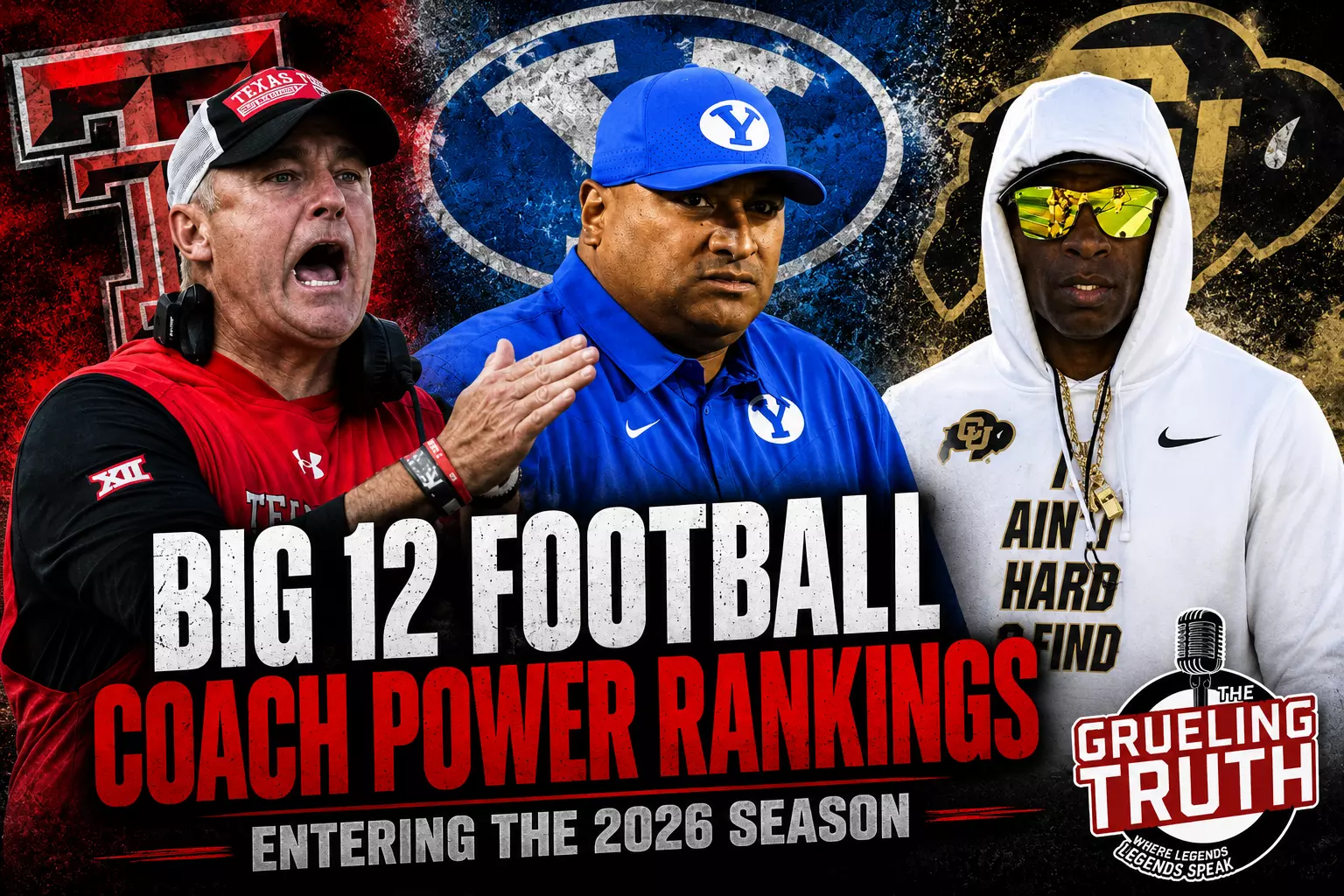
The Big 12 may not have the same national brand power as the SEC or Big Ten, but it might be the most unpredictable conference in college football. There is no Alabama or Georgia-like monster sitting above everyone else. Instead, the league is loaded with solid programs, rising coaches, dangerous offenses, and several programs that believe they can win the conference.
This ranking is based on current momentum, program-building ability, recruiting, player development, career résumé, and how much confidence each coach inspires heading into the 2026 season.
16. Scott Satterfield — Cincinnati
His time at Appalachian State proved he can build and maintain a winning program, and his experience gives him credibility. The problem is that Cincinnati fans expect more after the program’s playoff breakthrough under Luke Fickell. Satterfield has had to rebuild the roster, adjust to a tougher league, and try to create a new identity in a conference that offers very little margin for error. There have been signs of progress, but Cincinnati still needs to become more consistent offensively and more physical defensively. Satterfield will not be in Cincinnati in 2027, he should have been gone after last season.
15. Morgan Scalley — Utah
Morgan Scalley takes over at Utah with one major advantage: continuity. He has been part of the Utah program for years, helped build its defensive identity, and understands exactly what made the Utes successful under Kyle Whittingham. That matters. Utah has long been one of the toughest, most physical, best-coached programs in the West, and Scalley should be able to preserve much of that culture. The reason he ranks this low is simple: being a great assistant does not automatically make someone a great head coach. Now he has to manage every part of the program, not just the defense. Recruiting, staff management, offensive philosophy, transfer portal decisions, boosters, media, and game-day leadership all fall on him. Scalley has the background to succeed, but entering 2026, he remains more projection than proven head coaching production.
14. Deion Sanders — Colorado
Deion Sanders
remains one of the biggest names in college football, but this ranking is about coaching results, not headlines. Sanders brought instant attention, money, recruiting buzz, and national relevance back to Colorado. That alone deserves credit. The Buffaloes mattered again because of him. However, the next step is consistency. Colorado must prove it can win in the trenches, develop depth, and survive a full Big 12 schedule without relying only on star power and media attention. Sanders has changed the way people view Colorado football, but there are still fair questions about roster construction, defense, line play, and long-term sustainability. His ceiling is high because he can recruit and attract players few coaches can. But entering 2026, he still needs to prove Colorado can become more than a fascinating story.
13. Scott Frost — UCF
Scott Frost is one of the most fascinating coaches in the Big 12. His first run at UCF was magical, highlighted by an undefeated season that made the Knights one of the biggest stories in college football. His time at Nebraska, however, was a major disappointment and damaged his national reputation. Now he returns to UCF with a chance to prove the first run was not a fluke. Frost understands the program, the recruiting footprint, and the offensive identity that once made UCF so dangerous. The question is whether he has evolved enough as a head coach. The Big 12 is much tougher than the American Athletic Conference was during his first stint. If Frost rediscovers the formula, UCF could become dangerous again. If not, this comeback could stall quickly.
12. Jimmy Rogers — Iowa State
Jimmy Rogers arrives at Iowa State with a strong reputation as a winner and program builder, but the Big 12 is a different world. Iowa State has historically been one of the tougher jobs in the conference, and sustaining success there requires excellent player evaluation, development, and culture. Rogers has shown he can lead, but now he must prove he can do it at the Power Four level. Iowa State fans are used to toughness, discipline, and overachieving, and Rogers must maintain that identity while also modernizing the roster for today’s transfer portal era. The Cyclones do not have the same recruiting advantages as several Big 12 rivals, which means coaching matters even more. Rogers may climb this list quickly if he wins early, but right now he is still a first-year Big 12 coach with plenty to prove.
11. Rich Rodriguez — West Virginia
Rich Rodriguez returning to West Virginia is one of the best storylines in the Big 12. His first run in Morgantown was outstanding, turning the Mountaineers into a national factor with one of the most exciting offenses in college football. Now he is back, older, more experienced, and trying to prove he can recreate that magic in a very different era. The transfer portal and NIL have changed the sport, but Rodriguez still knows offense and still knows what West Virginia football can be when it has an edge. His ranking is tricky because the résumé is strong, but the current rebuild is still uncertain. West Virginia fans remember the glory days, but nostalgia does not win games. Rodriguez must prove he can build a modern Big 12 contender, not just revive memories of the past.
10. Collin Klein — Kansas State
Collin Klein may eventually become a very good head coach at Kansas State, but entering 2026, he has to start near the bottom of the Big 12 rankings because he is still unproven as a head coach. That does not mean he lacks ability. Klein is a Kansas State legend, a former Heisman Trophy finalist, and someone who understands the culture in Manhattan as well as anyone. His offensive mind and connection to the program give him a real chance to succeed. The challenge is that replacing established leadership and immediately winning in a balanced Big 12 is difficult. Kansas State fans know Klein, trust Klein, and believe in Klein, but until he proves he can run the entire program, develop a roster, handle game management, recruit at a high level, and win consistently as the head man, he has more to prove than anyone else in the league. I think that he can and will.
9. Brent Brennan — Arizona
Brent Brennan has done a strong job stabilizing Arizona and giving the Wildcats a real identity in the Big 12. Arizona is not an easy job, especially with the transition from the Pac-12 to a new conference, but Brennan has shown he can build tough, competitive teams. His previous work at San Jose State proved he could win at a difficult job, and that matters when evaluating coaches. Arizona has talent, a strong recruiting region, and enough upside to become a consistent Big 12 threat. Brennan’s challenge is proving that Arizona can sustain success year after year. One good season can create excitement, but consistent winning is what separates solid coaches from elite coaches. He has the program moving in the right direction, but the next step is turning Arizona from dangerous into dependable.
8. Eric Morris — Oklahoma State
Eric Morris takes over
Oklahoma State
with an offensive reputation that makes him one of the most intriguing coaches in the league. His background at Incarnate Word and North Texas showed that he can develop quarterbacks, score points, and build productive offenses. Oklahoma State is a proud program with a strong football culture, and replacing the previous era will not be easy. Morris has to prove he can recruit at a Big 12 level, build depth, and handle the weekly grind of a conference where almost every game is winnable and losable. His upside is significant because offense travels in today’s college football. If he finds the right quarterback, Oklahoma State could become a nightmare matchup quickly. Still, this ranking balances potential with proof, and Morris needs Power Four results before moving higher.
7. Dave Aranda — Baylor
Dave Aranda is one of the best defensive minds in college football, and his 2021 Big 12 championship season at Baylor remains one of the most impressive coaching jobs in recent league history. That version of Baylor was tough, physical, disciplined, and extremely difficult to play against. The problem is that the Bears have not consistently maintained that level. Aranda’s calm, intellectual style works when the team is winning, but when results slide, fans begin to question whether the program has enough urgency. Still, he has already proven he can win the Big 12, something many coaches on this list cannot say. Baylor is a tricky job with good resources but high competition. If Aranda gets the defense back to an elite level and finds offensive consistency, he could jump right back into the top half of this ranking.
6. Kenny Dillingham — Arizona State
Kenny Dillingham has quickly become one of the brightest young coaches in college football. His energy, offensive creativity, and connection to Arizona State have given the Sun Devils real momentum. Arizona State’s rise in the Big 12 showed that Dillingham is not just a young coach with ideas — he can lead a program. He understands modern offense, quarterback development, recruiting, and how to sell belief to players and fans. What makes him especially dangerous is that he is still early in his career. The ceiling is enormous. The only reason he is not higher is that he still needs more years of sustained success. But if you were hiring for the next decade, Dillingham would be near the top of any Big 12 list. Arizona State looks like a program with a real future under him.
5. Lance Leipold — Kansas
Lance Leipold deserves enormous credit for making Kansas football matter again. Before he arrived, the Jayhawks were one of the worst Power Five programs in America. He changed that by building a tough, disciplined, well-coached team that no longer looked like an automatic win for anyone. That kind of turnaround is real coaching. Leipold has won at multiple levels, and his ability to develop players is one of his biggest strengths. The reason he is not higher is that Kansas must prove it can sustain the momentum. After the initial breakthrough, expectations rise, and maintaining success becomes harder. Leipold has already done something many coaches failed to do in Lawrence: create belief. Now the challenge is turning Kansas from a great story into a yearly Big 12 contender.
4. Sonny Dykes — TCU
Sonny Dykes has already done something very few Big 12 coaches can claim: he led a team to the national championship game. TCU’s 2022 run was magical, and even if the Horned Frogs have not fully duplicated that season, it still matters. Dykes is an excellent offensive coach who understands quarterback play and knows how to build explosive attacks. TCU has recruiting advantages in Texas, strong facilities, and a recent national brand boost because of that playoff run. The question is consistency. Since the national title appearance, TCU has been good but not elite. Dykes remains one of the league’s most proven coaches, but he needs another major season to quiet the idea that 2022 was a lightning-in-a-bottle moment. Still, his ceiling is higher than most coaches in this conference.
3. Joey McGuire — Texas Tech
Joey McGuire has turned Texas Tech into one of the toughest and most exciting programs in the Big 12. His background as a legendary Texas high school coach has helped him recruit and connect with players across the state. Texas Tech has always had passion and offensive tradition, but McGuire has added toughness, defense, and belief. The Red Raiders have become one of the league’s most dangerous teams, and their rise is no accident. McGuire recruits hard, develops relationships, and has built a culture that fits Lubbock perfectly. Texas Tech fans believe they can win the Big 12, and that belief is a reflection of the job he has done. He still needs to sustain championship-level success, but entering 2026, few coaches in the league have more momentum.
2. Willie Fritz — Houston
Willie Fritz is one of the best pure football coaches in America. He has won everywhere he has been, and Houston is now benefiting from his program-building ability. Fritz is not flashy, but his teams are disciplined, tough, and fundamentally sound. What makes his rise impressive is that Houston’s Big 12 transition could have been ugly. Instead, Fritz has stabilized the Cougars and made them relevant faster than expected. He understands how to build from the ground up, develop overlooked players, and create a winning culture. That matters more than press conference hype. Houston has recruiting access, talent nearby, and now a coach who knows how to turn potential into wins. If this ranking is about who can build and sustain a program, Fritz belongs near the very top.
1. Kalani Sitake — BYU
Kalani Sitake takes the top spot because he has turned BYU into one of the most consistent and dangerous programs in the Big 12. BYU is a unique job with unique challenges, and Sitake understands the place perfectly. He has built a tough, physical, unified program that reflects the school’s identity while still adapting to modern college football. The Cougars have been one of the league’s best stories, and their success is not a fluke. Sitake’s teams are disciplined, physical, and mentally tough. He also deserves credit for staying committed to BYU despite outside interest. That loyalty matters. In a conference defined by parity, culture can be the difference between winning nine games and winning five. Sitake has built one of the strongest cultures in the Big 12, and entering 2026, he deserves the No. 1 ranking.
Final Thoughts
The Big 12
is wide open, and that is what makes this conference so fun. Kalani Sitake, Willie Fritz, Joey McGuire, Kenny Dillingham, and Sonny Dykes give the league a strong top five. Lance Leipold, Eric Morris, Brent Brennan, and Rich Rodriguez make the middle of the conference dangerous, while several new coaches could rise quickly if they win early.
No league in college football may have more week-to-week uncertainty than the Big 12.
Up To $1500 in Bonus Bets Paid Back if your First Bet Does Not Win
T&Cs apply
4.5/5
Gambling problem? Call 1-800-GAMBLER or 1-800-MY-RESET (Available in the US) 877-8-HOPENY or text HOPENY (467369) (NY) 1-800-327-5050 (MA), 1-800-BETS-OFF (IA), 1-800-981-0023 (PR). 21+ only. Please Gamble Responsibly. See BetMGM.com for Terms. First Bet Offer for new customers only (if applicable). Subject to eligibility requirements. Bonus bets are non-withdrawable. In partnership with Kansas Crossing Casino and Hotel. Promotional offers not available in Mississippi, Massachusetts, New York, Ontario, or Puerto Rico.
New DraftKings Customers: Spend $5+ Get $150 in Bonuses
T&Cs apply
4.5/5
GAMBLING PROBLEM? CALL 1-800-GAMBLER or 1-800-MY-RESET, (800) 327-5050 or visit gamblinghelplinema.org (MA). Please Gamble Responsibly. 888-789-7777/visit ccpg.org (CT), or visit www.mdgamblinghelp.org (MD), 1-800-981-0023 (PR). 21+ and present in most states. (18+ DC/NH/PR/WY). Void in CAN. Eligibility restrictions apply. On behalf of Boot Hill Casino (KS). Pass-thru of per wager tax may apply in IL. 1 per new DraftKings customer. $5+ first-time bet req. Max. $150 issued as non-withdrawable Bonus Bets. Stake removed from payout. Reward issued as $50 in Bonus Bets every 7 days via click-to-claim for 14 days. Bonus Bets and click-to-claims expire 7 days (168hrs) after issuance. Terms: sportsbook.draftkings.com/promos. Ends 10/11/26 at 11:59 PM ET. Sponsored by DK.
Must be 21+. GAMBLING PROBLEM? CALL 1-800-GAMBLER OR CALL 1-800-MY-RESET, www.mdgamblinghelp.org (MD), (800)-327-5050 or gamblinghelplinema.org (MA), Call (877)8-HOPENY or text HOPENY (467369) (NY), (888) 789-7777 or ccpg.org (CT), morethanagame.nc.gov (NC), 1800gambler.net (WV)
Bet $1 and get double the winnings up to $25 for your next 10 bets
T&Cs apply
4.4/5
21+ New users only. Must register using eligible promo code. First bet after registration must qualify. Max. Bonus Bet: $1,000. Bonus Bet expires 14 days after receipt. Void where prohibited. See Caesars.com/promos for full terms. Gambling Problem? 1-800-GAMBLER (1-800-426-2537)
21+ and present in OH. Gambling Problem? Call 1-800-GAMBLER.
This site is using
Cloudflare
and adheres to the
Google Safe Browsing Program. We adapted
Google's Privacy Guidelines
to keep your data safe at all times.
Close
Ready to Win Big? Join the Elite with Our Sports Betting Deals!
FanDuel Promo
New Users – Get $250 in Bonus Bets when you wager $5 for 5 days
Up To $1500 in Bonus Bets Paid Back if your First Bet Does Not Win
Best Slots
T&Cs and 21+ apply
Gambling problem? Call 1-800-GAMBLER or 1-800-MY-RESET (Available in the US) 877-8-HOPENY or text HOPENY (467369) (NY) 1-800-327-5050 (MA), 1-800-BETS-OFF (IA), 1-800-981-0023 (PR). 21+ only. Please Gamble Responsibly. See BetMGM.com for Terms. First Bet Offer for new customers only (if applicable). Subject to eligibility requirements. Bonus bets are non-withdrawable. In partnership with Kansas Crossing Casino and Hotel. Promotional offers not available in Mississippi, Massachusetts, New York, Ontario, or Puerto Rico.
Code:
Open BetMGM
Get Bonus
DraftKings Promo
New DraftKings Customers: Spend $5+ Get $150 in Bonuses
Newcomer
T&Cs and 21+ apply
GAMBLING PROBLEM? CALL 1-800-GAMBLER or 1-800-MY-RESET, (800) 327-5050 or visit gamblinghelplinema.org (MA). Please Gamble Responsibly. 888-789-7777/visit ccpg.org (CT), or visit www.mdgamblinghelp.org (MD), 1-800-981-0023 (PR). 21+ and present in most states. (18+ DC/NH/PR/WY). Void in CAN. Eligibility restrictions apply. On behalf of Boot Hill Casino (KS). Pass-thru of per wager tax may apply in IL. 1 per new DraftKings customer. $5+ first-time bet req. Max. $150 issued as non-withdrawable Bonus Bets. Stake removed from payout. Reward issued as $50 in Bonus Bets every 7 days via click-to-claim for 14 days. Bonus Bets and click-to-claims expire 7 days (168hrs) after issuance. Terms: sportsbook.draftkings.com/promos. Ends 10/11/26 at 11:59 PM ET. Sponsored by DK.
Code:
Open DraftKings
Get Bonus
Find out what the legends have to say about sports this week....