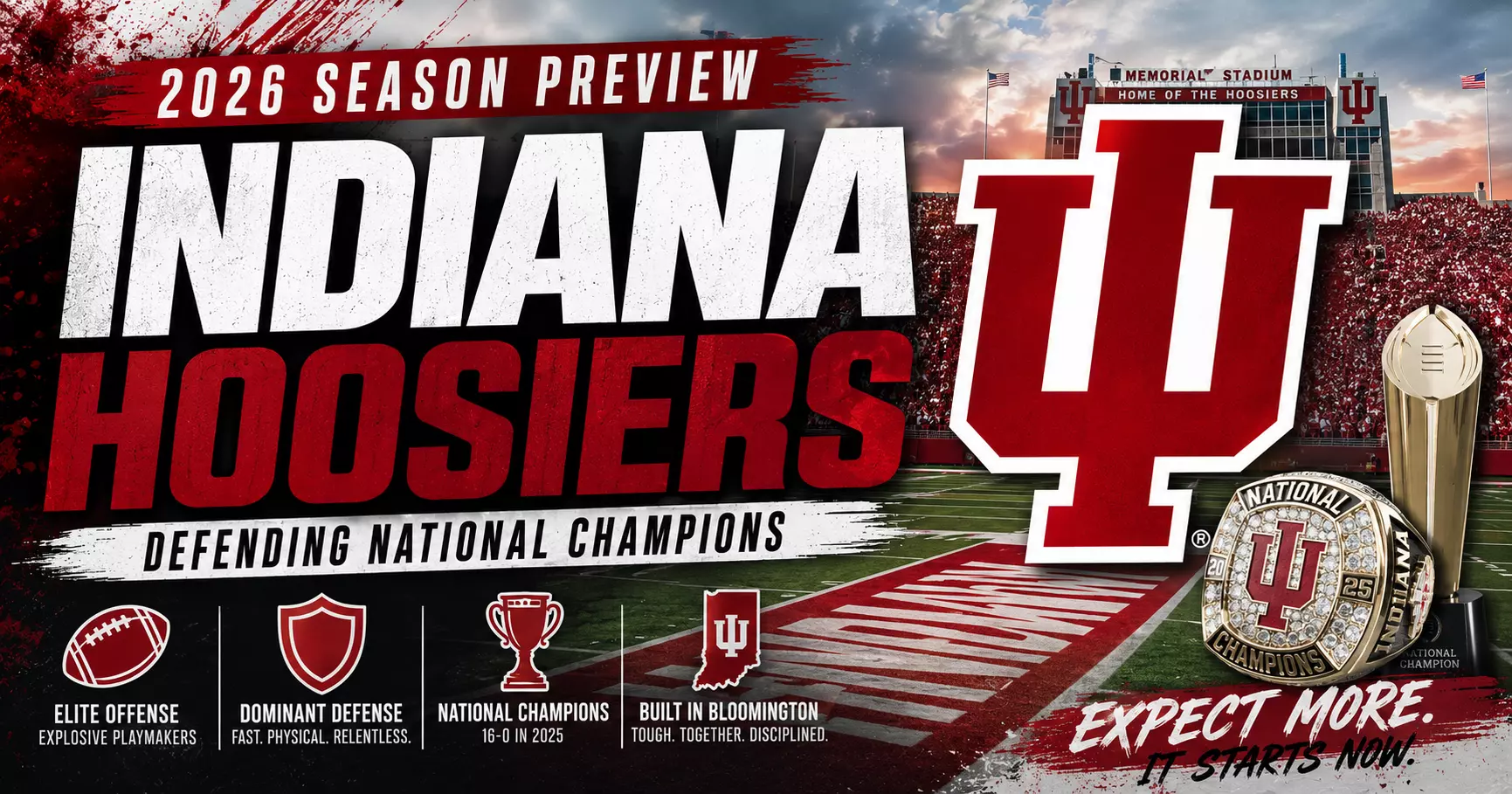
Just two years after finishing near the bottom of the Big Ten, Indiana finished a perfect 16-0, defeated Ohio State for the conference championship
Part 1: Coaching Staff, Offensive Philosophy and Position Breakdown
One year ago,
Indiana football
completed the greatest season in school history.
Actually, that undersells it.
The Hoosiers completed one of the greatest turnarounds in the history of college football.
Just two years after finishing near the bottom of the Big Ten, Indiana finished a perfect
16-0, defeated Ohio State for the conference championship, beat Alabama and Oregon in the College Football Playoff, and dominated Miami to capture its first national championship.
The architect was
Curt Cignetti.
After arriving from James Madison in 2024, Cignetti transformed a program that had spent decades fighting simply to reach bowl games into the sport’s newest powerhouse.
Now comes the difficult part.
Replacing greatness.
Gone are Heisman Trophy-winning quarterback
Fernando Mendoza, star running back Roman Hemby, All-American cornerback D’Angelo Ponds, linebacker Aiden Fisher and numerous NFL Draft selections.
Most programs would take a significant step backward.
Indiana isn’t most programs anymore.
Instead of rebuilding, Cignetti has once again reloaded through the transfer portal, landing arguably the nation’s best transfer class highlighted by quarterback
Josh Hoover, wide receiver
Nick Marsh, running back
Turbo Richard, offensive lineman
Joe Brunner, tight end
Brock Schott, and defensive standouts
Tobi Osunsanmi,
Joshua Burnham,
Chiddi Obiazor,
Preston Zachman, and
A.J. Harris.
National expectations haven’t changed.
Most preseason publications still consider Indiana one of the top five teams in America and a legitimate favorite to repeat as Big Ten champions.
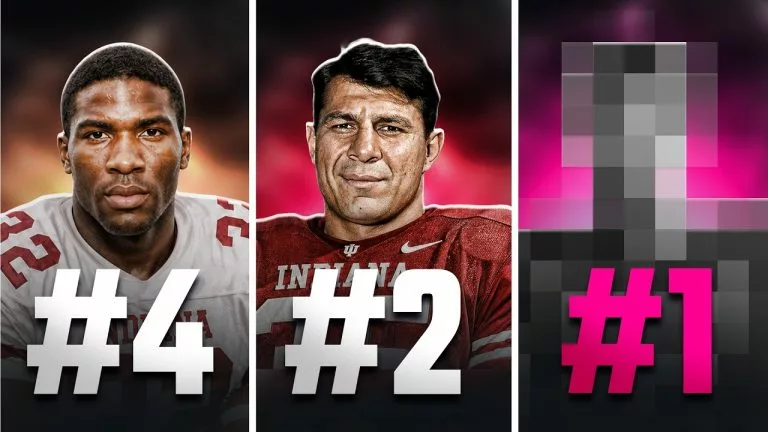
Top 10 Indiana Hoosier Football Players of All Time
Top 10 Indiana Hoosier Football Players of All Time
Coaching Staff
One reason Indiana has become college football’s model program is continuity.
While several assistants received NFL interest after the national championship season, Cignetti managed to retain nearly every key coach while also making targeted additions.
Head Coach
Curt Cignetti
Few coaches in America have enjoyed a better three-year stretch.
Known for his relentless attention to detail and unmatched ability to evaluate transfer portal talent, Cignetti has built a program where every player understands his role.
His greatest strength may not be X’s and O’s.
It’s culture.
Players consistently describe Indiana as one of the most demanding programs in the country.
Every practice is competitive.
Every position is earned.
Nothing is given.
That mentality has completely transformed Indiana football.
Offensive Coordinator
Mike Shanahan
Shanahan has become one of college football’s brightest offensive minds.
Indiana runs a pro-spread offense built around:
Tempo without recklessness
Efficient quarterback play
Vertical passing concepts
Multiple personnel packages
Physical rushing attack
What makes Shanahan dangerous is his adaptability.
Rather than forcing players into one system, he builds the offense around his personnel.
That approach turned Fernando Mendoza into a Heisman Trophy winner.
Now he’ll attempt to do the same with Josh Hoover.
Defensive Coordinator
Bryant Haines
If Shanahan receives praise for Indiana’s offense, Bryant Haines deserves equal credit defensively.
His multiple 4-2-5 scheme disguises pressure better than almost anyone in college football.
Opposing quarterbacks rarely receive the same look twice.
Indiana blitzes from every angle while remaining fundamentally sound against the run.
It’s an aggressive system that consistently creates sacks and turnovers.
Haines has quietly become one of the highest-paid defensive coordinators in America—and deservedly so.
Offensive Philosophy
Indiana’s offense remains one of the nation’s most explosive despite replacing several stars.
The Hoosiers don’t simply throw the football.
They attack every inch of the field.
Expect Indiana to average nearly 500 yards per game once again thanks to outstanding quarterback play, elite receiver talent and one of the country’s best offensive coaching staffs.
The priorities remain:
Win first down.
Create explosive plays.
Force defenses into impossible choices.
Run efficiently enough to keep defenses honest.
Score touchdowns instead of field goals.
Few offenses execute these principles better than Indiana.
Quarterbacks
Josh Hoover Takes Over the Most Difficult Job in College Football
Replacing one after a perfect 16-0 national championship season might be the toughest assignment in America.
Fortunately for Indiana,
Josh Hoover
isn’t an ordinary transfer.
The former TCU star arrives in Bloomington after throwing for more than
9,600 career passing yards
and
71 touchdowns
during his career with the Horned Frogs.
He isn’t Fernando Mendoza.
He doesn’t need to be.
Hoover possesses one of the strongest arms in college football.
He excels attacking defenses vertically and has extensive experience reading complex coverages.
His biggest challenge throughout his career has been limiting turnovers.
Under Curt Cignetti and Mike Shanahan, many believe Hoover could become an even better quarterback than he was at TCU because of Indiana’s offensive structure and surrounding talent.
Behind Hoover, veteran
Grant Wilson
provides valuable experience while
Jacob Bell
continues his development as the future of the position.
Indiana’s quarterback room remains among the strongest in the Big Ten.
Running Backs
Turbo Richard Headlines Another Loaded Backfield
Replacing Roman Hemby and Kaelon Black won’t be easy.
Those two backs formed one of the nation’s best rushing tandems during Indiana’s championship run.
Curt Cignetti responded exactly as everyone expected.
He attacked the transfer portal.
Former Boston College standout
Turbo Richard
arrives after establishing himself as one of the ACC’s most explosive runners.
Richard combines elite acceleration with outstanding vision and has the versatility to contribute as both a runner and receiver.
Indiana also returns promising young backs who now have another offseason inside the system, giving running backs coach Tino Sunseri multiple options throughout the season.
Don’t expect one featured back.
Expect another committee similar to last season, allowing Indiana to stay fresh throughout Big Ten play.
Wide Receivers
Perhaps the Deepest Receiver Room in the Big Ten
Indiana lost Elijah Sarratt and Omar Cooper Jr.
Most programs would struggle replacing that production.
Instead, the Hoosiers may have upgraded.
The headline addition is
Nick Marsh, one of the nation’s premier receivers after transferring from Michigan State.
At 6-foot-3 with elite speed, Marsh immediately gives Indiana another true No. 1 option capable of dominating outside.
Returning star
Charlie Becker
quietly became one of Indiana’s most dependable receivers during the championship season and now enters 2026 poised for a breakout campaign.
Sophomore
Davion Chandler
continues to develop into a dangerous slot weapon, while
Tyler Morris
provides veteran reliability.
Transfer
Shazz Preston
gives Indiana another explosive perimeter receiver, making this one of the deepest receiving corps in America.
Josh Hoover inherits perhaps the best collection of pass catchers he’ll ever play with.
Tight Ends
Brock Schott Brings Immediate Production
Indiana again looked to the portal for reinforcements.
Former Miami tight end
Brock Schott
gives the Hoosiers another athletic mismatch capable of stretching defenses vertically while remaining an effective blocker.
He joins a room that also includes returning contributors who understand Mike Shanahan’s offense.
Indiana frequently uses multiple tight ends to create mismatches against linebackers and safeties.
Expect Schott to become a significant red-zone weapon while helping Indiana maintain one of the nation’s most balanced offenses.
Part 2: Offensive Line, Defensive Line, Linebackers, Secondary and Special Teams
If Indiana’s offense receives most of the national attention, the defense is what truly separates the Hoosiers from the rest of the country.
Curt Cignetti has built a program around winning the line of scrimmage, limiting mistakes, and playing relentlessly physical football. The offense grabs the headlines, but Bryant Haines’ defense has become one of the most aggressive and opportunistic units in America.
With another outstanding transfer portal class and several key returning contributors, Indiana once again enters the season with one of the deepest rosters in the Big Ten.
Offensive Line
The Foundation of Indiana’s Championship Aspirations
Indiana’s remarkable 2025 season began with outstanding play along the offensive line.
The Hoosiers consistently gave Fernando Mendoza clean pockets, opened running lanes for Roman Hemby and Kaelon Black, and dominated the line of scrimmage against some of the nation’s best defenses.
Although several starters departed for the NFL, offensive line coach Bob Bostad once again rebuilt the unit through recruiting and the transfer portal.
The centerpiece of the group is
Joe Brunner, the Wisconsin transfer who was one of the most sought-after offensive linemen in the portal. Brunner brings Big Ten experience, outstanding technique, and the physical mentality that perfectly fits Indiana’s offense.
Returning veteran
Carter Smith
provides leadership and versatility. Smith has started multiple games during his career and understands every aspect of Indiana’s offensive system. His experience should prove invaluable as the Hoosiers integrate new faces into the lineup.
Indiana also returns several younger linemen who gained valuable experience during the championship season, while additional portal additions provide depth that simply didn’t exist a few years ago.
One reason Indiana has become a legitimate national championship contender is its ability to continually reload rather than rebuild. Nowhere is that more evident than along the offensive line.
Biggest Question
Can the new starters develop chemistry quickly enough to protect Josh Hoover against one of the nation’s toughest schedules?
If the answer is yes, Indiana’s offense should once again rank among the country’s elite.
Position Grade: A-
Defensive Line
Speed, Length and Constant Pressure
Bryant Haines rarely asks his defensive line to simply occupy blockers.
Instead, Indiana’s defensive front attacks.
The Hoosiers want to pressure quarterbacks without relying exclusively on blitzes, allowing linebackers and defensive backs to disguise coverages while still collapsing the pocket.
The biggest addition is former Michigan edge rusher
Joshua Burnham.
Burnham possesses NFL size at 6-foot-4 and more than 250 pounds while bringing the athleticism to rush from multiple alignments. Indiana expects him to become one of the premier pass rushers in the Big Ten.
Joining him is former Stanford standout
Tobi Osunsanmi, another explosive edge defender capable of creating negative plays. Osunsanmi’s speed off the edge gives Indiana another weapon against today’s pass-heavy offenses.
Inside, the Hoosiers return a talented rotation capable of controlling the line of scrimmage against physical Big Ten rushing attacks.
Bryant Haines prefers rotating eight or nine defensive linemen throughout games, keeping everyone fresh during the fourth quarter.
Few teams in America can rotate defensive linemen the way Indiana does.
Position Grade: A
Linebackers
Another Elite Unit
Replacing All-American
Aiden Fisher
would cripple most programs.
Indiana simply added another elite transfer.
Former Notre Dame linebacker
Preston Zachman
arrives in Bloomington after proving himself one of the most instinctive linebackers in college football. His ability to diagnose plays before they develop makes him a perfect fit for Bryant Haines’ aggressive defense.
Alongside Zachman is transfer
Chiddi Obiazor, who brings tremendous versatility. Obiazor can rush the passer, stop the run, and drop comfortably into coverage, making him one of the defense’s most valuable chess pieces.
Returning contributors provide additional depth, ensuring Indiana once again fields one of the nation’s fastest linebacker corps.
Perhaps the greatest strength of this unit is communication.
Indiana’s linebackers rarely find themselves out of position.
That discipline has become a hallmark of Curt Cignetti’s football teams.
Biggest Question
Can this group create as many game-changing turnovers as last season?
If so, Indiana’s defense could again finish among the national leaders.
Position Grade: A
Secondary
Reloaded Through the Transfer Portal
Few secondaries lost more NFL talent than Indiana’s.
Few replaced it better.
The headline addition is former Georgia cornerback
A.J. Harris, one of the premier defensive backs available in the transfer portal. Harris combines outstanding size, speed, and SEC experience, immediately giving Indiana another shutdown corner.
The coaching staff also returns several young defensive backs who gained meaningful experience during the national championship season.
Bryant Haines asks his secondary to play aggressively.
Corners are expected to challenge receivers at the line of scrimmage.
Safeties frequently disguise coverages before rotating late into position.
That aggressive approach creates turnovers while also forcing quarterbacks into difficult decisions.
Although replacing players like D’Angelo Ponds won’t be easy, Indiana has recruited and developed enough talent to remain one of the conference’s best pass defenses.
Biggest Strength
Athleticism.
Indiana’s defensive backs may actually be faster overall than last year’s championship secondary.
Position Grade: A
Special Teams
Winning Hidden Yardage
One of the most overlooked aspects of Indiana’s rise has been outstanding special teams play.
Curt Cignetti believes every possession matters.
That philosophy extends to every kickoff, punt, and field goal attempt.
The Hoosiers once again return one of the conference’s better kicking operations, with experienced specialists capable of consistently flipping field position.
Indiana also emphasizes punt coverage and kickoff discipline, rarely allowing opponents to generate momentum through the return game.
Expect explosive athletes like
Nick Marsh
and
Charlie Becker
to contribute in the return game when opportunities arise.
Special teams may not receive national headlines, but they have consistently provided Indiana with an advantage in close games.
Position Grade: A-
Why Indiana Could Have the Best Defense in the Big Ten
Ohio State recruits at an elite level.
Penn State consistently produces NFL defenders.
Michigan remains one of the nation’s most physical teams.
Yet Indiana may possess the conference’s most complete defense entering 2026.
Why?
Because the Hoosiers combine elite coaching with outstanding depth.
Bryant Haines has built a defense that doesn’t rely on one superstar.
Instead, it attacks opponents with wave after wave of talented defenders capable of making plays.
Indiana finished among the national leaders in sacks, turnovers forced, and scoring defense during its championship season, and the personnel additions suggest the Hoosiers could be even deeper in 2026.
Just as importantly, the defense complements the offense perfectly.
The Hoosiers don’t ask their defense to survive shootouts.
They ask it to create extra possessions, control field position, and deliver timely stops.
If this unit performs to its potential, Indiana won’t simply defend its national championship.
It will enter every Saturday believing it has the best defense on the field.
Part 3: Five Most Important Players, Biggest Strengths, Biggest Concerns, X-Factors and Season Prediction
Winning one national championship is one of the hardest accomplishments in sports.
Winning back-to-back titles is even more difficult.
History shows that defending champions aren’t usually beaten because they suddenly become untalented. They’re beaten because every opponent treats them like the biggest game on the schedule.
Indiana will experience that reality every Saturday in 2026.
No one will overlook the Hoosiers.
Every Big Ten opponent wants to be the team that knocks off the defending national champions.
The good news for Curt Cignetti is that Indiana possesses one of the deepest rosters in America, one of the nation’s premier coaching staffs, and a culture that refuses to allow complacency.
Now comes the challenge of proving last season wasn’t a one-year miracle.
Five Most Important Players
1. Josh Hoover, Quarterback
No player carries more responsibility than Josh Hoover.
Replacing a Heisman Trophy winner is never easy, but Hoover enters Bloomington with one of the most impressive résumés in college football. After throwing for more than 9,600 career yards at TCU, he arrives with experience, leadership, and the confidence to lead a championship-caliber offense.
Hoover doesn’t need to duplicate Fernando Mendoza’s season.
He simply needs to be himself.
Indiana’s offensive system is loaded with talent, and Hoover’s willingness to attack vertically should make the Hoosiers one of the nation’s most explosive offenses once again.
If Hoover performs at an All-Big Ten level, Indiana will remain firmly in the
national championship
conversation.
2. Nick Marsh, Wide Receiver
Indiana hasn’t had to worry about replacing elite receivers because Curt Cignetti continues to recruit and develop outstanding talent.
Nick Marsh may be the next great one.
The Michigan State transfer possesses elite size, speed, and ball skills, giving Indiana another legitimate No. 1 receiver capable of taking over games.
Marsh’s presence forces defenses to commit extra attention outside, creating favorable matchups for Charlie Becker, Tyler Morris, and Indiana’s tight ends.
Expect Marsh to become one of the Big Ten’s most productive receivers.
3. Joshua Burnham, Defensive End
Championship defenses need elite edge rushers.
Joshua Burnham gives Indiana exactly that.
The former Michigan defender brings Big Ten experience and NFL-caliber athleticism to Bryant Haines’ aggressive defense.
Burnham has the ability to change games by consistently pressuring opposing quarterbacks without requiring additional blitzers.
If Burnham develops into an All-American candidate, Indiana’s defense could again lead the conference in sacks.
4. Joe Brunner, Offensive Line
Quarterback play receives the headlines.
Offensive line play wins championships.
Joe Brunner arrives from Wisconsin with the reputation of being one of the conference’s most technically sound offensive linemen.
His experience against elite Big Ten defensive fronts should immediately strengthen Indiana’s offensive line.
Brunner’s leadership will also prove invaluable as Indiana integrates several new starters.
5. A.J. Harris, Cornerback
Indiana lost one of the nation’s best secondaries to graduation and the NFL.
A.J. Harris is expected to become the next shutdown corner.
The former Georgia defensive back possesses outstanding athletic ability and SEC experience against elite receivers.
His ability to eliminate one side of the field allows Bryant Haines to become even more aggressive with blitz packages and disguised coverages.
Biggest Strengths
Coaching
Curt Cignetti has rapidly become one of college football’s elite head coaches.
His ability to identify transfer portal talent, develop players, and build culture separates Indiana from nearly every other program in America.
The continuity of the coaching staff is another enormous advantage.
Indiana knows exactly who it is.
Quarterback Play
Although Fernando Mendoza has departed, Josh Hoover enters as one of the nation’s most accomplished quarterbacks.
Few defending champions have been able to replace a Heisman Trophy winner with a quarterback possessing this much experience.
Hoover should allow Indiana’s offense to remain among the country’s best.
Defensive Depth
Indiana may not have the single biggest defensive star in college football.
It may not need one.
The Hoosiers rotate waves of talented defenders, allowing them to remain fresh deep into games.
That depth was one of the defining characteristics of last year’s championship team.
Transfer Portal Success
No program has embraced the transfer portal more effectively than Indiana.
If Indiana again finishes among the national leaders in takeaways, the Hoosiers become extremely difficult to beat.
Ceiling and Floor
Best-Case Scenario
Everything clicks immediately.
Josh Hoover becomes an All-American.
Nick Marsh develops into one of the nation’s premier receivers.
The defense remains among the country’s elite.
Indiana reaches Indianapolis once again and earns another College Football Playoff berth.
Record: 13-0 Regular Season
Worst-Case Scenario
Replacing so many veteran leaders proves more difficult than expected.
The offensive line struggles early.
Close games begin going against the Hoosiers.
Indiana remains a very good football team but falls just short of the conference championship.
Record: 9-3
Most Likely Outcome
This roster is simply too talented to fall far.
Curt Cignetti has built one of the deepest programs in college football, and Indiana’s coaching staff has consistently shown an ability to maximize talent through player development and the transfer portal.
The Hoosiers will almost certainly experience closer games than they did during last year’s magical run.
That’s natural.
Repeating as national champions is incredibly difficult.
Still, Indiana should enter every game believing it has the better team.
Final Prediction
Indiana begins the season exactly where every defending national champion wants to be—and where every challenger wants to knock them from.
The Hoosiers have earned national respect through elite coaching, relentless player development, and perhaps the best use of the transfer portal in college football. Curt Cignetti has built something sustainable, not something dependent on one recruiting class or one quarterback.
Josh Hoover steps into an ideal situation with outstanding receivers, a strong offensive line, and one of the nation’s brightest offensive minds calling plays. Defensively, Bryant Haines once again fields a fast, aggressive unit capable of overwhelming opponents with pressure and forcing game-changing turnovers.
The Big Ten will be more competitive than ever, with Ohio State, Oregon, Penn State, and Michigan all possessing College Football Playoff aspirations. But Indiana has proven it belongs in that conversation.
The Hoosiers won’t sneak up on anyone in 2026. Every opponent will circle this game on the calendar. That challenge makes a repeat championship unlikely—but not impossible.
Projected Regular Season Record:11-1
Big Ten Record:8-1
Big Ten Finish:2nd
College Football Playoff:Yes (Top-4 Seed)
Big Ten Championship Game:Indiana vs. Ohio State
National Championship Outlook:
Indiana has all the pieces to return to the College Football Playoff and legitimately compete for another national title. If Josh Hoover settles in quickly and the offensive line develops chemistry, the Hoosiers have the talent, coaching, and culture to make another championship run. The road will be more difficult than it was in 2025, but Indiana enters 2026 as one of a handful of programs capable of finishing the season holding the national championship trophy once again.
Up To $1500 in Bonus Bets Paid Back if your First Bet Does Not Win
T&Cs apply
4.5/5
Gambling problem? Call 1-800-GAMBLER or 1-800-MY-RESET (Available in the US) 877-8-HOPENY or text HOPENY (467369) (NY) 1-800-327-5050 (MA), 1-800-BETS-OFF (IA), 1-800-981-0023 (PR). 21+ only. Please Gamble Responsibly. See BetMGM.com for Terms. First Bet Offer for new customers only (if applicable). Subject to eligibility requirements. Bonus bets are non-withdrawable. In partnership with Kansas Crossing Casino and Hotel. Promotional offers not available in Mississippi, Massachusetts, New York, Ontario, or Puerto Rico.
New DraftKings Customers: Spend $5+ Get $150 in Bonuses
T&Cs apply
4.5/5
GAMBLING PROBLEM? CALL 1-800-GAMBLER or 1-800-MY-RESET, (800) 327-5050 or visit gamblinghelplinema.org (MA). Please Gamble Responsibly. 888-789-7777/visit ccpg.org (CT), or visit www.mdgamblinghelp.org (MD), 1-800-981-0023 (PR). 21+ and present in most states. (18+ DC/NH/PR/WY). Void in CAN. Eligibility restrictions apply. On behalf of Boot Hill Casino (KS). Pass-thru of per wager tax may apply in IL. 1 per new DraftKings customer. $5+ first-time bet req. Max. $150 issued as non-withdrawable Bonus Bets. Stake removed from payout. Reward issued as $50 in Bonus Bets every 7 days via click-to-claim for 14 days. Bonus Bets and click-to-claims expire 7 days (168hrs) after issuance. Terms: sportsbook.draftkings.com/promos. Ends 10/11/26 at 11:59 PM ET. Sponsored by DK.
Must be 21+. GAMBLING PROBLEM? CALL 1-800-GAMBLER OR CALL 1-800-MY-RESET, www.mdgamblinghelp.org (MD), (800)-327-5050 or gamblinghelplinema.org (MA), Call (877)8-HOPENY or text HOPENY (467369) (NY), (888) 789-7777 or ccpg.org (CT), morethanagame.nc.gov (NC), 1800gambler.net (WV)
Bet $1 and get double the winnings up to $25 for your next 10 bets
T&Cs apply
4.4/5
21+ New users only. Must register using eligible promo code. First bet after registration must qualify. Max. Bonus Bet: $1,000. Bonus Bet expires 14 days after receipt. Void where prohibited. See Caesars.com/promos for full terms. Gambling Problem? 1-800-GAMBLER (1-800-426-2537)
21+ and present in OH. Gambling Problem? Call 1-800-GAMBLER.
This site is using
Cloudflare
and adheres to the
Google Safe Browsing Program. We adapted
Google's Privacy Guidelines
to keep your data safe at all times.
Close
Ready to Win Big? Join the Elite with Our Sports Betting Deals!
FanDuel Promo
New Users – Get $250 in Bonus Bets when you wager $5 for 5 days
Up To $1500 in Bonus Bets Paid Back if your First Bet Does Not Win
Best Slots
T&Cs and 21+ apply
Gambling problem? Call 1-800-GAMBLER or 1-800-MY-RESET (Available in the US) 877-8-HOPENY or text HOPENY (467369) (NY) 1-800-327-5050 (MA), 1-800-BETS-OFF (IA), 1-800-981-0023 (PR). 21+ only. Please Gamble Responsibly. See BetMGM.com for Terms. First Bet Offer for new customers only (if applicable). Subject to eligibility requirements. Bonus bets are non-withdrawable. In partnership with Kansas Crossing Casino and Hotel. Promotional offers not available in Mississippi, Massachusetts, New York, Ontario, or Puerto Rico.
Code:
Open BetMGM
Get Bonus
DraftKings Promo
New DraftKings Customers: Spend $5+ Get $150 in Bonuses
Newcomer
T&Cs and 21+ apply
GAMBLING PROBLEM? CALL 1-800-GAMBLER or 1-800-MY-RESET, (800) 327-5050 or visit gamblinghelplinema.org (MA). Please Gamble Responsibly. 888-789-7777/visit ccpg.org (CT), or visit www.mdgamblinghelp.org (MD), 1-800-981-0023 (PR). 21+ and present in most states. (18+ DC/NH/PR/WY). Void in CAN. Eligibility restrictions apply. On behalf of Boot Hill Casino (KS). Pass-thru of per wager tax may apply in IL. 1 per new DraftKings customer. $5+ first-time bet req. Max. $150 issued as non-withdrawable Bonus Bets. Stake removed from payout. Reward issued as $50 in Bonus Bets every 7 days via click-to-claim for 14 days. Bonus Bets and click-to-claims expire 7 days (168hrs) after issuance. Terms: sportsbook.draftkings.com/promos. Ends 10/11/26 at 11:59 PM ET. Sponsored by DK.
Code:
Open DraftKings
Get Bonus
Find out what the legends have to say about sports this week....