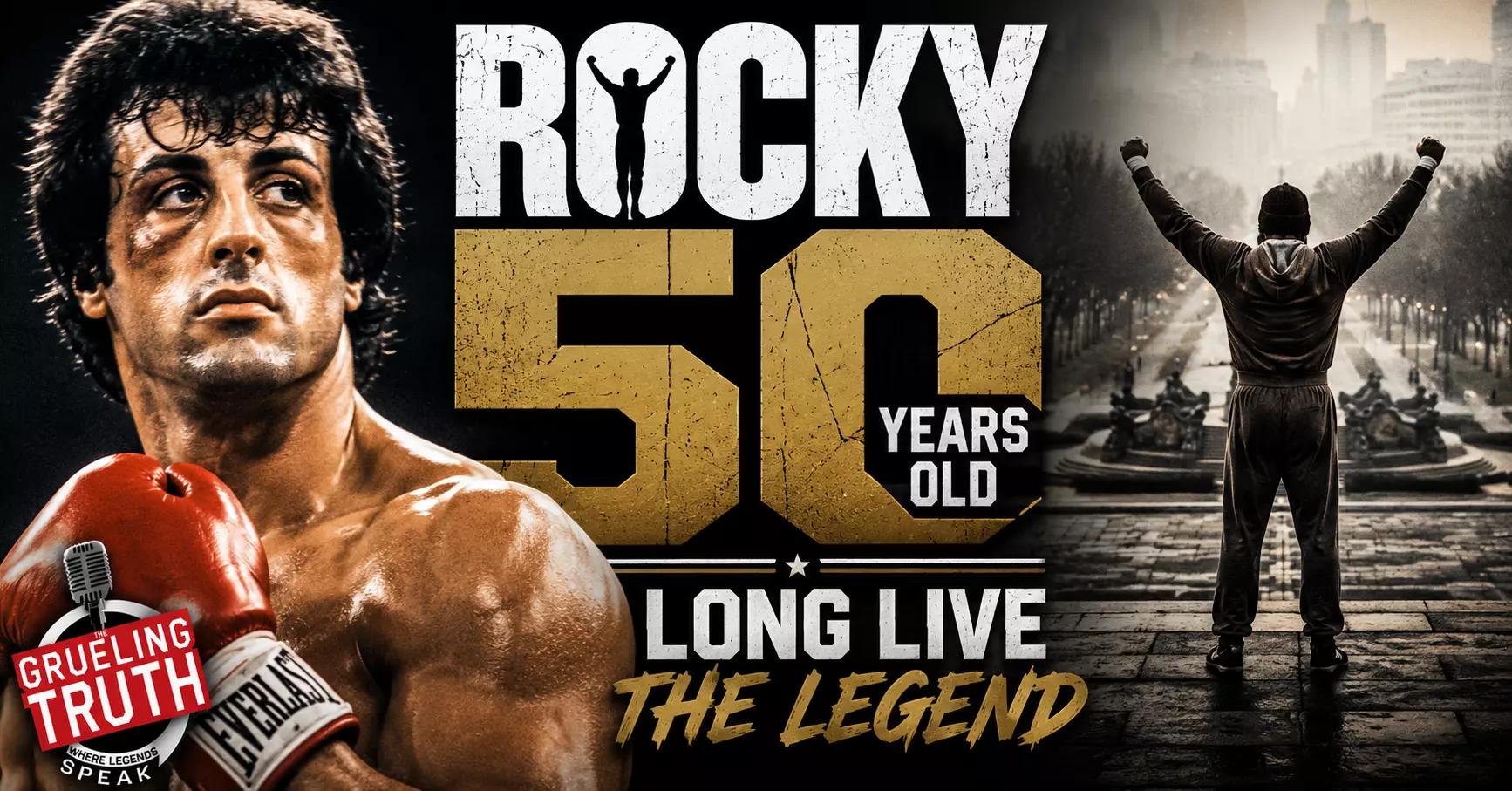
Over 50 years ago, a film called Rocky wrapped. Rumors circulated that some of the crew felt the movie was corny and destined to bomb
Over 50 years ago, a film called Rocky wrapped. Rumours circulated that some of the crew felt the movie was corny and destined to bomb at the box office. They snickered at writer/actor Sylvester Stallone.
Many of them hadn’t even heard of him.
Talia Shire, who would play Adrian (Rocky’s girlfriend) hadn’t heard of him either, but when she received the script in the mail, she knew what she was reading.
“I’d just had a baby when that script came in the mail, remembered Shire. “I had no idea who this person was who wrote it. But it was brilliant—the language, the written text of that piece, the
poetry
that Sylvester composed. He had truly created a folk myth.”
The film cost less than a million dollars to produce. The shooting schedule was tight. Stallone, a struggling actor, worked for almost nothing, but, showing his faith, took a cut of the box office returns. The studio was glad to comply.
Shire, unforgettable as Adrian, had to provide most of her own costume. Burt Young made himself stink like gin to play Paulie. Carl Weathers (as Apollo Creed) blew everybody away at his audition, except himself.
“I could do a lot better if you got me a real actor,” Weathers said, nodding at the guy with long hair and glasses.
Weathers was quickly told that the film’s star and writer was the guy he had just insulted. The ex-NFL cornerback chuckled and replied, “Him?”
The remark didn’t bother Stallone. He actually liked it, figuring it was exactly what a brash champion would mutter.
Weathers was cast.
That long-haired person with glasses had written the screenplay for Rocky in a little over three days, fueled by caffeine and ambition. A few days before, Stallone had witnessed the Muhammad Ali/Chuck Wepner fight. Wepner, who had more guts than boxing ability, inspired him. Stallone was off on an odyssey that would change his life forever.
Producer Irwin Winkler said, “My partner, the late Robert Chartoff, and I interviewed Sly Stallone as an actor for another picture, and he told us he was also a writer. He sent us one script, but we weren’t interested.
He said, “I have another idea. And then he proceeded to tell us about
Rocky.”
Things took off from there.
MGM Studios wanted his screenplay. They offered the unemployed actor 200,000 dollars to NOT play the lead. Stallone held to his guns. He knew Rocky was his chance. Up to this point, his career had consisted mostly of playing thugs and heavies.
He’d shown flashes of talent in The Lords of the Flatbush – even writing most of his own dialogue, but it wasn’t enough. No new roles were forthcoming when Stallone attended the Ali/Wepner fight. A month later, money was being offered that Stallone had never dreamed of. Turning down the 200 grand was the smartest decision he’d ever made.
Director John G. Avildsen read the script a few months before filming was to begin,
“I was charmed by [the story],” the director said later of Stallone’s script. “I thought it was an excellent character study and a beautiful love story.”
With the film complete, Stallone worked closely with Avildsen in the editing room. He wanted authenticity. Editors Richard Halsey and Scott Conrad won the Oscar for their work.
The film opened in November. Critic Vincent Canby found little to impress him.
He wrote that Rocky was “Pure 1930s make-believe” and a “sentimental little slum movie.”
Canby also took a shot at Stallone’s acting: “His acting is less a performance than an impersonation.” The critic was in the minority.
Roger Ebert commented that Stallone reminded him of a “young Marlon Brando.”
Stallone was aware of the criticism and figured his baby was about to crash.
Attending a screening, Stallone expected the worst. Instead, the story goes that as the credits rolled, people in the theatre located him and stood up to applaud.
I saw the film a few weeks after it opened. Word of mouth had spread. Being a boxing and movie fan all my life, I was curious. I was a little bored at the beginning. Then, like magic, things start to happen. Rocky gets together with Adrian and, in one of the most dramatic scenes in the film, goes head-to-head with grouchy trainer Mickey (Burgess Meredith).
As Rocky began to train, I could feel the people around me stirring. The last act was the fight, and somehow it now felt real. As the film rushed to its conclusion, I, too, heard myself screaming and yelling at the screen.
A little underdog film, with a character named “Rocky,” had touched a nerve. The acting by the entire cast had been phenomenal. The music led by “Gonna Fly Now” was perfect. The film picked up Academy Awards for Best Director and Best Film.
It grossed $117 million. ($689 million today)
50 years later, the film still has the same gritty power and emotion. It’s quite a ride.
New Users – Get $350 in Bonus Bets when you wager $5 for 7 days
T&Cs apply
4.6/5
Gambling Problem? Call 1-800-GAMBLER or 1-800-MY-RESET. Call 1-888-789-7777 or visit ccpgg.org/chat (CT). Hope is here. GamblingHelpLineMA.org or call (800) 327-5050 for 24/7 support (MA). Visit www.mdgamblinghelp.org (MD). Call 1-877-8HOPE-NY or text HOPENY (NY). 21+ (18+ DC, WY) and present in select states (for KS, in affiliation with Kansas Star Casino). Find online real money wagering only. Min $5 wager required for 7 consecutive days. $5 free play credit. Bonus issued as non-withdrawable bonus with cash withdrawable bonus with cash withdrawable. Bonus bets which expire 7 days after receipt. Restrictions apply. See terms at sportsbook.fanduel.com. Call 1-877-770-7867 (LA).
Up To $1500 in Bonus Bets Paid Back if your First Bet Does Not Win
T&Cs apply
4.5/5
Gambling problem? Call 1-800-GAMBLER or 1-800-MY-RESET (Available in the US) 877-8-HOPENY or text HOPENY (467369) (NY) 1-800-327-5050 (MA), 1-800-BETS-OFF (IA), 1-800-981-0023 (PR). 21+ only. Please Gamble Responsibly. See BetMGM.com for Terms. First Bet Offer for new customers only (if applicable). Subject to eligibility requirements. Bonus bets are non-withdrawable. In partnership with Kansas Crossing Casino and Hotel. Promotional offers not available in Mississippi, Massachusetts, New York, Ontario, or Puerto Rico.
New DraftKings Customers: Bet $5, Get $200 + 3 Months of NBA League Pass!
T&Cs apply
4.5/5
GAMBLING PROBLEM? CALL 1-800-GAMBLER or 1-800-MY-RESET, (800) 327-5050 or visit gamblinghelplinema.org (MA). Please Gamble Responsibly. 888-789-7777/visit ccpg.org (CT), or visit www.mdgamblinghelp.org (MD), 1-800-981-0023 (PR). 21+ and present in most states. (18+ DC/NH/PR/WY). Void in CAN. Eligibility restrictions apply. On behalf of Boot Hill Casino (KS). Pass-thru of per wager tax may apply in IL. 1 per new Sportsbook customer. $5+ first-time bet req. Max. $200 issued as non-withdrawable Bonus Bets. Stake removed from payout. Reward issued as $50 in Bonus Bets every 7 days via click-to-claim for 21 days. Bonus Bets and click-to-claims expire 7 days (168hrs) after issuance. Terms: dkng.co/offer. Get 1 promo code to redeem a 3-month NBA League Pass subscription, complimentary of DraftKings. Subscription auto-renews monthly at then-current price (currently $16.99/mo); cancel anytime. Terms, restrictions, and eligibility requirements apply. Redeem League Pass by 12/19/26 at 11:59 PM ET. Addt’l terms: support.watch.nba.com/hc/en-us/articles/9165532876183-League-Pass-Terms-of-Use_. Ends 11/29/26 at 11:59 PM ET. Sponsored by DK.
Must be 21+. GAMBLING PROBLEM? CALL 1-800-GAMBLER OR CALL 1-800-MY-RESET, www.mdgamblinghelp.org (MD), (800)-327-5050 or gamblinghelplinema.org (MA), Call (877)8-HOPENY or text HOPENY (467369) (NY), (888) 789-7777 or ccpg.org (CT), morethanagame.nc.gov (NC), 1800gambler.net (WV)
Bet $1 and get double the winnings up to $25 for your next 10 bets
T&Cs apply
4.4/5
21+ New users only. Must register using eligible promo code. First bet after registration must qualify. Max. Bonus Bet: $1,000. Bonus Bet expires 14 days after receipt. Void where prohibited. See Caesars.com/promos for full terms. Gambling Problem? 1-800-GAMBLER (1-800-426-2537)
21+ and present in OH. Gambling Problem? Call 1-800-GAMBLER.
This site is using
Cloudflare
and adheres to the
Google Safe Browsing Program. We adapted
Google's Privacy Guidelines
to keep your data safe at all times.
Close
Ready to Win Big? Join the Elite with Our Sports Betting Deals!
FanDuel Promo
New Users – Get $350 in Bonus Bets when you wager $5 for 7 days
Our Favorite
T&Cs and 21+ apply
Gambling Problem? Call 1-800-GAMBLER or 1-800-MY-RESET. Call 1-888-789-7777 or visit ccpgg.org/chat (CT). Hope is here. GamblingHelpLineMA.org or call (800) 327-5050 for 24/7 support (MA). Visit www.mdgamblinghelp.org (MD). Call 1-877-8HOPE-NY or text HOPENY (NY). 21+ (18+ DC, WY) and present in select states (for KS, in affiliation with Kansas Star Casino). Find online real money wagering only. Min $5 wager required for 7 consecutive days. $5 free play credit. Bonus issued as non-withdrawable bonus with cash withdrawable bonus with cash withdrawable. Bonus bets which expire 7 days after receipt. Restrictions apply. See terms at sportsbook.fanduel.com. Call 1-877-770-7867 (LA).
Code:
Open FanDuel
Get Bonus
BetMGM Promo
Up To $1500 in Bonus Bets Paid Back if your First Bet Does Not Win
Best Slots
T&Cs and 21+ apply
Gambling problem? Call 1-800-GAMBLER or 1-800-MY-RESET (Available in the US) 877-8-HOPENY or text HOPENY (467369) (NY) 1-800-327-5050 (MA), 1-800-BETS-OFF (IA), 1-800-981-0023 (PR). 21+ only. Please Gamble Responsibly. See BetMGM.com for Terms. First Bet Offer for new customers only (if applicable). Subject to eligibility requirements. Bonus bets are non-withdrawable. In partnership with Kansas Crossing Casino and Hotel. Promotional offers not available in Mississippi, Massachusetts, New York, Ontario, or Puerto Rico.
Code:
Open BetMGM
Get Bonus
DraftKings Promo
New DraftKings Customers: Bet $5, Get $200 + 3 Months of NBA League Pass!
Newcomer
T&Cs and 21+ apply
GAMBLING PROBLEM? CALL 1-800-GAMBLER or 1-800-MY-RESET, (800) 327-5050 or visit gamblinghelplinema.org (MA). Please Gamble Responsibly. 888-789-7777/visit ccpg.org (CT), or visit www.mdgamblinghelp.org (MD), 1-800-981-0023 (PR). 21+ and present in most states. (18+ DC/NH/PR/WY). Void in CAN. Eligibility restrictions apply. On behalf of Boot Hill Casino (KS). Pass-thru of per wager tax may apply in IL. 1 per new Sportsbook customer. $5+ first-time bet req. Max. $200 issued as non-withdrawable Bonus Bets. Stake removed from payout. Reward issued as $50 in Bonus Bets every 7 days via click-to-claim for 21 days. Bonus Bets and click-to-claims expire 7 days (168hrs) after issuance. Terms: dkng.co/offer. Get 1 promo code to redeem a 3-month NBA League Pass subscription, complimentary of DraftKings. Subscription auto-renews monthly at then-current price (currently $16.99/mo); cancel anytime. Terms, restrictions, and eligibility requirements apply. Redeem League Pass by 12/19/26 at 11:59 PM ET. Addt’l terms: support.watch.nba.com/hc/en-us/articles/9165532876183-League-Pass-Terms-of-Use_. Ends 11/29/26 at 11:59 PM ET. Sponsored by DK.
Code:
Open DraftKings
Get Bonus
Find out what the legends have to say about sports this week....
New Users – Get $350 in Bonus Bets when you wager $5 for 7 days
Gambling Problem? Call 1-800-GAMBLER or 1-800-MY-RESET. Call 1-888-789-7777 or visit ccpgg.org/chat (CT). Hope is here. GamblingHelpLineMA.org or call (800) 327-5050 for 24/7 support (MA). Visit www.mdgamblinghelp.org (MD). Call 1-877-8HOPE-NY or text HOPENY (NY). 21+ (18+ DC, WY) and present in select states (for KS, in affiliation with Kansas Star Casino). Find online real money wagering only. Min $5 wager required for 7 consecutive days. $5 free play credit. Bonus issued as non-withdrawable bonus with cash withdrawable bonus with cash withdrawable. Bonus bets which expire 7 days after receipt. Restrictions apply. See terms at sportsbook.fanduel.com. Call 1-877-770-7867 (LA).