The cruiserweight division has long been one of boxing’s most overlooked weight classes, often sandwiched between the glamour divisions of heavyweight and light heavyweight. Yet over the years, it has produced legends, memorable battles, and champions who made their mark in boxing history. For decades,
Evander Holyfield
stood alone as the standard-bearer, but Oleksandr Usyk’s meteoric rise has sparked a debate that didn’t exist until recently.
Is Holyfield still the undisputed king of cruiserweights, or has Usyk done enough to claim that mantle? Both men offer compelling cases, and whichever side you fall on, there’s no wrong answer. Beyond those two icons, the division has seen its share of underrated warriors, forgotten champions, and transitional stars who deserve their place in history.
This list takes a closer look at the greatest cruiserweights of all time, ranking them from #11 to #1. Each fighter brought something unique—whether it was dominance, skill, resilience, or simply unforgettable fights that defined the weight class.
11) Dwight Muhammad Qawi
Dwight Muhammad Qawi wasn’t just a champion; he was a pioneer for the division. A former light heavyweight king, Qawi moved up after Michael Spinks ended his reign and wasted no time making noise at cruiserweight.
He defeated Michael Greer before shocking Piet Crous in South Africa to win the WBA title. Qawi then stopped Leon Spinks in defense of his crown, setting up his legendary clash with a young Evander Holyfield. In a grueling 15-round war, Qawi nearly toppled the future Hall of Famer and proved that cruiserweight had a true star.
Even after losing to Holyfield, Qawi remained relevant with victories over Lee Roy Murphy and Tyrone Booze, plus a highly controversial loss to Ossie Ocasio. He was rugged, exciting, and helped bring legitimacy to a division that desperately needed a name champion.
Dwight Muhammad Qawi Documentary – A Champion’s Redemption
10) Jean-Marc Mormeck
Jean-Marc Mormeck is often forgotten, but for a time he was the clear #1 cruiserweight in the world. He unified titles, beat quality opposition, and pushed the division into the modern era.
Mormeck first won his title by stopping Virgil Hill—no small feat, as Hill had just dismantled Fabrice Tiozzo. He then racked up wins over contenders Dale Brown and Alexander Gurov, before beating Hill again in a rematch.
One of his defining victories came against Wayne Braithwaite, an undefeated champion at the time. Though he suffered a shocking loss to O’Neil Bell, Mormeck avenged it and briefly restored his claim to the throne. His ambitions led him to a showdown with David Haye, where he knocked Haye down before succumbing to a knockout himself.
Mormeck’s willingness to unify and take risks elevated the division at a time when it lacked star power.
Jean Marc Mormeck vs David Haye *WBA, WBC 200lbs titles [10-11-2007] #boxing #boxeo #france #uk
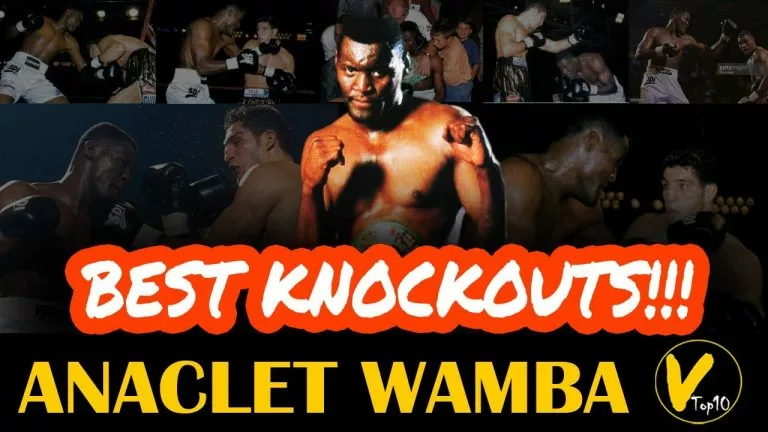
9) Anaclet Wamba
Standing 6’3” and blessed with skill, Anaclet Wamba was a French technician who deserves far more recognition than he receives. Born in the Congo, Wamba compiled a sterling 46-2-1 record and was arguably never beaten clean in the ring.
His lone true loss came by disqualification in Italy against Massimiliano Duran in a bout most observers saw as corrupt. Wamba later avenged that defeat, stopping Duran to win the WBC crown. From there, he defended against Duran in a rematch, handled Olympic gold medalist Andrew Maynard, and turned back the rugged Akim Tafer.
Perhaps his best defenses were against future champions Adolpho Washington and Marcelo Dominguez. Both would later hold belts, but neither could solve Wamba in his prime. He may not have had Holyfield’s flair or Usyk’s speed, but his durability, size, and consistency kept him atop the division for years.
5 Anaclet Wamba Greatest Knockouts
8) Al Cole
Al “Ice” Cole doesn’t always make lists like this, but his résumé is stronger than many recall. As IBF champion, Cole defended his title five times and faced no shortage of quality challengers.
Cole fought and defeated James Warring, a solid champion, before moving on to test himself against names like Juan Carlos Gomez and Milton McCrory. Known for his jab and right hand, Cole was also remarkably durable, rarely being overwhelmed in his prime.
Though his move to heavyweight didn’t pan out, Cole was a force at cruiserweight in the early 1990s. He stood tall in an era where the division was still trying to establish itself and fought anyone put in front of him.
Alfred “Ice” Cole – Highlights & Knockouts
7) Steve Cunningham
Few cruiserweights had the combination of athleticism, skill, and résumé that Steve Cunningham brought to the table. “USS” Cunningham fought everyone, and his list of victims reads like a who’s who of cruiserweight history.
Cunningham’s signature wins include Guillermo Jones, Krzysztof Wlodarczyk, and Marco Huck—all world champions in their own right. He also beat Kelvin Davis, Wayne Braithwaite, and Troy Ross, adding depth to his record.
At his best, Cunningham was tall, rangy, and technically sharp, using his jab and movement to frustrate opponents. Even in losses, such as his controversial defeat to Tomasz Adamek, he proved his toughness and skill. He was one of the most consistent cruiserweights of the 2000s and remains one of the division’s defining figures.
Steve Cunningham – USS (Highlights & Knockouts)
6) David Haye
David Haye brought excitement and swagger back to the division. By the mid-2000s, the cruiserweight crown was fractured, but Haye consolidated it in spectacular fashion.
After surviving a knockdown to stop Jean-Marc Mormeck, Haye crushed Enzo Maccarinelli in just two rounds, becoming the undisputed man at cruiserweight. His combination of speed, power, and confidence made him stand out in a division that often struggled for mainstream attention.
Though his stay at
cruiserweight
was short, Haye left no doubt about who ruled the weight class. His knockout power and charisma carried him to heavyweight, but his legacy at 200 pounds remains intact.
David Haye – Speed & Power | Highlights (Reuploaded)
5) James Toney
James “Lights Out” Toney is a complicated figure to rank. From a pure eye-test standpoint, he might be the second-best cruiserweight ever. His skill set, defense, and counterpunching were unmatched.
Toney captured the IBF title by defeating Vassiliy Jirov in one of the greatest cruiserweight fights ever. It was a masterclass in skill and toughness, showcasing Toney at his very best. He also picked up wins over name opponents during a four-year run in the division.
The knock on Toney is that he didn’t stick around long enough to build a deeper legacy. Still, at his peak, few could touch him at this weight, and his performance against Jirov remains a benchmark for cruiserweight greatness.
James Toney vs Prince Charles Williams – Highlights (Toney KNOCKS OUT Williams)
4) Johnny Nelson
Johnny Nelson had a strange career. Early on, he was inconsistent, losing to average opponents and struggling to find his style. But once he matured, Nelson went on an incredible run that cemented his place in cruiserweight history.
As WBO champion, Nelson held the belt for nearly seven years, racking up 14 defenses. He defeated Marcelo Dominguez, Guillermo Jones, and many other contenders during his reign. His awkward style, defensive skills, and mental toughness carried him through close fights.
Though never flashy, Nelson’s longevity and ability to dominate over time make him one of the best ever.
Johnny Nelson vs Markus Bott
3) Carlos De Leon
Carlos De Leon was the first true star of the cruiserweight division. By 1980, the Puerto Rican champion had claimed the WBC title and would go on to win it four more times over a decade.
De Leon defeated early division names like Marvin Camel and ST Gordon, bouncing back from setbacks with resilience. His career was inconsistent—losing to fighters like Gordon and Alonzo Ratliff—but his ability to regain the championship kept him relevant.
He lost badly to Evander Holyfield in a unification bout but regained the WBC strap when Holyfield left the division. For the first half of the 1980s, De Leon was the face of cruiserweight boxing.
Carlos De Leon – Beautiful Boxing
2) Oleksandr Usyk
Oleksandr Usyk’s
rise through cruiserweight was nothing short of historic. In just 15 fights, he became the undisputed champion of the division, cleaning it out in an era of dangerous contenders.
Usyk defeated Krzysztof Glowacki for his first belt in just his tenth fight, then unified against champions like Mairis Briedis and Murat Gassiev. His dominance was undeniable—he outboxed everyone, often in their own backyards.
Usyk’s cruiserweight résumé is spotless, and he transitioned to heavyweight without missing a beat, eventually becoming undisputed there as well. If not for Holyfield’s longer reign, Usyk might already hold the #1 spot.
Oleksandr Usyk || Ukrainian boxer || the world’s best cruiserweight
1) Evander Holyfield
Evander Holyfield was the original king of cruiserweight, and his dominance set the standard for everyone who followed.
After turning pro at light heavyweight, Holyfield moved up and immediately carved out history. He defeated Dwight Muhammad Qawi in a grueling 15-round battle for his first title, then unified the division against Rickey Parkey and Carlos De Leon. Along the way, he beat Ossie Ocasio, Olympic gold medalist Henry Tillman, and stopped Qawi in a rematch.
Holyfield’s time at cruiserweight was short but devastatingly effective. He was the undisputed champion, the clear best in the division, and the first to truly elevate the weight class. His later exploits at heavyweight—defeating George Foreman, Riddick Bowe, and Mike Tyson—only add to his legend.
The cruiserweight division may not carry the glamour of heavyweight or the history of middleweight, but its champions have carved their own legacies. From Qawi’s grit to Cunningham’s consistency, from Toney’s brilliance to Nelson’s longevity, the division has showcased a variety of styles and personalities.
At the very top, the debate between Holyfield and Usyk defines the modern cruiserweight conversation. Holyfield’s reign gave the division credibility in its infancy, while Usyk’s dominance proved it could produce pound-for-pound elite fighters even decades later.
In the end, the cruiserweight division is a reminder that greatness isn’t limited by weight class. These champions brought skill, courage, and drama to boxing history—and their impact will never be forgotten.
Up To $1500 in Bonus Bets Paid Back if your First Bet Does Not Win
T&Cs apply
4.5/5
Gambling problem? Call 1-800-GAMBLER or 1-800-MY-RESET (Available in the US) 877-8-HOPENY or text HOPENY (467369) (NY) 1-800-327-5050 (MA), 1-800-BETS-OFF (IA), 1-800-981-0023 (PR). 21+ only. Please Gamble Responsibly. See BetMGM.com for Terms. First Bet Offer for new customers only (if applicable). Subject to eligibility requirements. Bonus bets are non-withdrawable. In partnership with Kansas Crossing Casino and Hotel. Promotional offers not available in Mississippi, Massachusetts, New York, Ontario, or Puerto Rico.
New DraftKings Customers: Spend $5+ Get $150 in Bonuses
T&Cs apply
4.5/5
GAMBLING PROBLEM? CALL 1-800-GAMBLER or 1-800-MY-RESET, (800) 327-5050 or visit gamblinghelplinema.org (MA). Please Gamble Responsibly. 888-789-7777/visit ccpg.org (CT), or visit www.mdgamblinghelp.org (MD), 1-800-981-0023 (PR). 21+ and present in most states. (18+ DC/NH/PR/WY). Void in CAN. Eligibility restrictions apply. On behalf of Boot Hill Casino (KS). Pass-thru of per wager tax may apply in IL. 1 per new DraftKings customer. $5+ first-time bet req. Max. $150 issued as non-withdrawable Bonus Bets. Stake removed from payout. Reward issued as $50 in Bonus Bets every 7 days via click-to-claim for 14 days. Bonus Bets and click-to-claims expire 7 days (168hrs) after issuance. Terms: sportsbook.draftkings.com/promos. Ends 10/11/26 at 11:59 PM ET. Sponsored by DK.
Must be 21+. GAMBLING PROBLEM? CALL 1-800-GAMBLER OR CALL 1-800-MY-RESET, www.mdgamblinghelp.org (MD), (800)-327-5050 or gamblinghelplinema.org (MA), Call (877)8-HOPENY or text HOPENY (467369) (NY), (888) 789-7777 or ccpg.org (CT), morethanagame.nc.gov (NC), 1800gambler.net (WV)
Bet $1 and get double the winnings up to $25 for your next 10 bets
T&Cs apply
4.4/5
21+ New users only. Must register using eligible promo code. First bet after registration must qualify. Max. Bonus Bet: $1,000. Bonus Bet expires 14 days after receipt. Void where prohibited. See Caesars.com/promos for full terms. Gambling Problem? 1-800-GAMBLER (1-800-426-2537)
21+ and present in OH. Gambling Problem? Call 1-800-GAMBLER.
This site is using
Cloudflare
and adheres to the
Google Safe Browsing Program. We adapted
Google's Privacy Guidelines
to keep your data safe at all times.
Close
Ready to Win Big? Join the Elite with Our Sports Betting Deals!
FanDuel Promo
New Users – Get $250 in Bonus Bets when you wager $5 for 5 days
Up To $1500 in Bonus Bets Paid Back if your First Bet Does Not Win
Best Slots
T&Cs and 21+ apply
Gambling problem? Call 1-800-GAMBLER or 1-800-MY-RESET (Available in the US) 877-8-HOPENY or text HOPENY (467369) (NY) 1-800-327-5050 (MA), 1-800-BETS-OFF (IA), 1-800-981-0023 (PR). 21+ only. Please Gamble Responsibly. See BetMGM.com for Terms. First Bet Offer for new customers only (if applicable). Subject to eligibility requirements. Bonus bets are non-withdrawable. In partnership with Kansas Crossing Casino and Hotel. Promotional offers not available in Mississippi, Massachusetts, New York, Ontario, or Puerto Rico.
Code:
Open BetMGM
Get Bonus
DraftKings Promo
New DraftKings Customers: Spend $5+ Get $150 in Bonuses
Newcomer
T&Cs and 21+ apply
GAMBLING PROBLEM? CALL 1-800-GAMBLER or 1-800-MY-RESET, (800) 327-5050 or visit gamblinghelplinema.org (MA). Please Gamble Responsibly. 888-789-7777/visit ccpg.org (CT), or visit www.mdgamblinghelp.org (MD), 1-800-981-0023 (PR). 21+ and present in most states. (18+ DC/NH/PR/WY). Void in CAN. Eligibility restrictions apply. On behalf of Boot Hill Casino (KS). Pass-thru of per wager tax may apply in IL. 1 per new DraftKings customer. $5+ first-time bet req. Max. $150 issued as non-withdrawable Bonus Bets. Stake removed from payout. Reward issued as $50 in Bonus Bets every 7 days via click-to-claim for 14 days. Bonus Bets and click-to-claims expire 7 days (168hrs) after issuance. Terms: sportsbook.draftkings.com/promos. Ends 10/11/26 at 11:59 PM ET. Sponsored by DK.
Code:
Open DraftKings
Get Bonus
Find out what the legends have to say about sports this week....




































![Video: Jean Marc Mormeck vs David Haye *WBA, WBC 200lbs titles [10-11-2007] #boxing #boxeo #france #uk](/wp-content/uploads/2025/09/video-jean-marc-mormeck-vs-david-haye-wba-wbc-200lbs-titles-10-11-2007-boxing-boxeo-france-uk.jpg.webp)