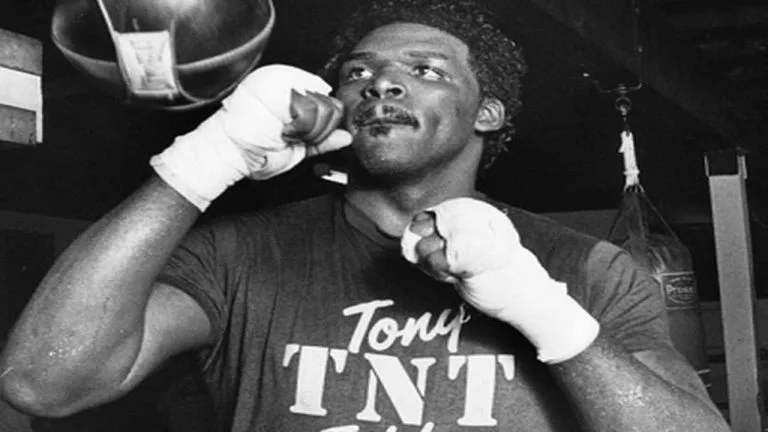
Anthony “Tony” Tubbs was born on February 15, 1958, in Cincinnati, Ohio. Growing up in a working-class family, Tubbs discovered boxing in his teens and quickly developed into one of the most talented amateurs of his generation. While many heavyweights relied on sheer size and strength, Tubbs stood out for his quick hands, sharp reflexes, and defensive wizardry.
He compiled a remarkable amateur record of approximately
240 wins against fewer than 15 losses, becoming one of the top American heavyweights of the late 1970s. Tubbs won the 1978 U.S. National Championship and represented the United States in international competitions, including the 1979 Pan American Games. Though he didn’t win Olympic gold, his reputation as one of the slickest, most polished heavyweights in the amateur ranks was well established.
By 1980, Tubbs turned professional, bringing with him expectations that he could become the next great
American heavyweight champion.
Tony “TNT” Tubbs – Incredible Speed (Highlight Reel)
Building a Professional Career
Tubbs made his professional debut on June 14, 1980, stopping Bruce Scott in the first round. From the beginning, his style was apparent: he was not a knockout artist but a fast-handed, technically sound boxer who specialized in slipping punches and countering.
In his early years, Tubbs fought frequently, racking up wins against experienced opponents like Jimmy Young, Clarence Hill, and Blalock McClain. By the mid-1980s, he had established himself as one of the division’s top contenders. Alongside Greg Page, Tim Witherspoon, and Pinklon Thomas, Tubbs was part of a crop of gifted but inconsistent American heavyweights who were capable of brilliance on one night and mediocrity the next.
Winning the WBA Heavyweight Title
Tubbs’ big break came on
April 29, 1985, when he faced Greg Page for the vacant
WBA heavyweight championship
in Buffalo, New York.
The fight was billed as a showdown between two highly skilled heavyweights who had been amateur rivals. Page entered as the favorite, but Tubbs boxed superbly over 15 rounds, using his jab and faster hands to control the action. He won a unanimous decision, fulfilling his potential by becoming the WBA champion.
At just 27 years old and undefeated, Tubbs seemed poised for a long reign. His hand speed, ring IQ, and defensive ability made him a difficult puzzle for any opponent.
Title Defense and the Witherspoon Loss
Tubbs’ title reign was unfortunately brief. His first defense came on
January 17, 1986, against “Terrible”
Tim Witherspoon
in Atlanta. Tubbs entered the fight overweight at 238 pounds, and his lack of conditioning was noticeable.
Witherspoon, who was known for his awkward, looping punches and toughness, outworked Tubbs over 15 rounds. The judges awarded Witherspoon a close
majority decision, ending Tubbs’ reign after just nine months. Many observers felt that Tubbs had the talent to win, but his lack of discipline had cost him dearly.
This fight became symbolic of Tubbs’ career — immense natural ability, but undermined by conditioning issues and inconsistency.
The Tyson Opportunity in Tokyo
After losing his title, Tubbs remained in the contender mix. He rebuilt with wins over Orlin Norris, Lionel Washington, and others. That led to the biggest opportunity of his career: a shot at the
undisputed heavyweight champion,
Mike Tyson, on
March 21, 1988, in Tokyo, Japan.
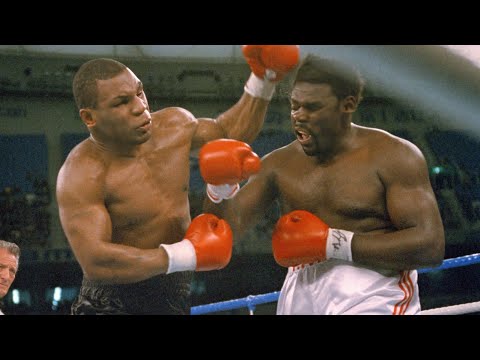
Tubbs came into the fight lighter and in better shape, weighing 238 pounds. In the first round, he used his jab and slick head movement to frustrate Tyson briefly. Some even scored the opening round for Tubbs.
But Tyson’s power was overwhelming. In the second round, Tyson landed a ferocious left hook that staggered Tubbs, followed by a barrage that forced the referee to stop the fight. Tubbs had shown glimpses of his skill, but Tyson’s destructive force ended his challenge quickly.
The fight gave Tubbs international exposure, but it also confirmed that he could not withstand the firepower of the elite punchers in the division.
Mike Tyson vs Tony Tubbs – Full FIGHT – Best Quality
Battles in the 1990s
Though his days as a champion were over, Tubbs continued to fight and, at times, surprise the boxing world.
1992 – Bruce Seldon Upset:
Tubbs revived his career by defeating the previously unbeaten Bruce Seldon for the NABF heavyweight title. It was a reminder that, when motivated, Tubbs’ boxing skill could overcome younger, stronger opponents.
1993 – Riddick Bowe:
Tubbs fought the unbeaten former undisputed champion in Atlantic City. Though Bowe won a unanimous decision, Tubbs impressed by going the distance and landing sharp counters. Some even argued he gave Bowe more trouble than Evander Holyfield had in their first fight.
1993 – Lionel Butler:
Tubbs lost to the hard-hitting Butler in a seventh-round TKO, showing again his vulnerability when he couldn’t avoid heavy shots.
1993 – Tommy Morrison:
Tubbs was brought in as a test for the rising “Duke.” Morrison’s power was too much, and Tubbs was stopped in the first round.
1994–1997:
Tubbs continued to fight regularly, often against journeymen or rising prospects. He remained crafty and capable of upsetting the odds, but his best days were behind him.
Fighting Into His Forties
Amazingly, Tubbs kept fighting into the 2000s. He won several minor regional titles and defeated club fighters well past the point when most of his contemporaries had retired. His longevity was a testament to his toughness, though some lamented that he never fully walked away.
His final professional bout came in 2006, at the age of 48. He retired with a record of
47 wins (25 by knockout) and 10 losses.
Style, Strengths, and Weaknesses
Tony Tubbs was unique among heavyweights of his era:
Strengths:
Exceptional hand speed for a heavyweight.
A sharp, quick jab.
Defensive reflexes that allowed him to slip punches and counter.
A high-level amateur pedigree that gave him a polished skill set.
Weaknesses:
Lack of knockout power to discourage aggressive opponents.
Chronic conditioning issues; he often came in overweight.
Mental inconsistency — Tubbs admitted in later years that motivation was sometimes a problem.
At his best, Tubbs could outbox almost anyone. But without the power of a Tyson or Foreman, or the discipline of a Holmes or Holyfield, he fell short of true greatness.
Life After Boxing
After retirement, Tubbs remained connected to the sport, working with young fighters and occasionally appearing at boxing functions. He returned to his Cincinnati roots, where he mentored amateurs and reflected on his career.
Though he never achieved the fame of his contemporaries, Tubbs is remembered fondly by boxing historians as a man of immense natural ability who, on his best night, could trouble even the best heavyweights in the world.
Legacy
Tony Tubbs’ career is often viewed through the lens of “what could have been.” He had the skill set to be a dominant champion, but his reign lasted less than a year. He fought Mike Tyson, Tim Witherspoon, and Riddick Bowe, and at times looked brilliant. But he is also remembered for inconsistent performances, struggles with weight, and a lack of sustained focus.
Yet Tubbs’ name deserves respect. He was a
world champion in the golden era of heavyweights, a fighter who beat Greg Page, outboxed Bruce Seldon, and shared the ring with some of the greatest names in boxing history.
Conclusion
Tony Tubbs’ life and career reflect the fine line between talent and legacy. He had all the tools: speed, skill, defense, and a deep amateur pedigree. But discipline and motivation held him back from becoming an all-time great. Still, his story adds another fascinating chapter to the rich history of heavyweight boxing — a champion whose brilliance shone brightly, if only for a fleeting moment.
Up To $1500 in Bonus Bets Paid Back if your First Bet Does Not Win
T&Cs apply
4.5/5
Gambling problem? Call 1-800-GAMBLER or 1-800-MY-RESET (Available in the US) 877-8-HOPENY or text HOPENY (467369) (NY) 1-800-327-5050 (MA), 1-800-BETS-OFF (IA), 1-800-981-0023 (PR). 21+ only. Please Gamble Responsibly. See BetMGM.com for Terms. First Bet Offer for new customers only (if applicable). Subject to eligibility requirements. Bonus bets are non-withdrawable. In partnership with Kansas Crossing Casino and Hotel. Promotional offers not available in Mississippi, Massachusetts, New York, Ontario, or Puerto Rico.
New DraftKings Customers: Spend $5+ Get $150 in Bonuses
T&Cs apply
4.5/5
GAMBLING PROBLEM? CALL 1-800-GAMBLER or 1-800-MY-RESET, (800) 327-5050 or visit gamblinghelplinema.org (MA). Please Gamble Responsibly. 888-789-7777/visit ccpg.org (CT), or visit www.mdgamblinghelp.org (MD), 1-800-981-0023 (PR). 21+ and present in most states. (18+ DC/NH/PR/WY). Void in CAN. Eligibility restrictions apply. On behalf of Boot Hill Casino (KS). Pass-thru of per wager tax may apply in IL. 1 per new DraftKings customer. $5+ first-time bet req. Max. $150 issued as non-withdrawable Bonus Bets. Stake removed from payout. Reward issued as $50 in Bonus Bets every 7 days via click-to-claim for 14 days. Bonus Bets and click-to-claims expire 7 days (168hrs) after issuance. Terms: sportsbook.draftkings.com/promos. Ends 10/11/26 at 11:59 PM ET. Sponsored by DK.
Must be 21+. GAMBLING PROBLEM? CALL 1-800-GAMBLER OR CALL 1-800-MY-RESET, www.mdgamblinghelp.org (MD), (800)-327-5050 or gamblinghelplinema.org (MA), Call (877)8-HOPENY or text HOPENY (467369) (NY), (888) 789-7777 or ccpg.org (CT), morethanagame.nc.gov (NC), 1800gambler.net (WV)
Bet $1 and get double the winnings up to $25 for your next 10 bets
T&Cs apply
4.4/5
21+ New users only. Must register using eligible promo code. First bet after registration must qualify. Max. Bonus Bet: $1,000. Bonus Bet expires 14 days after receipt. Void where prohibited. See Caesars.com/promos for full terms. Gambling Problem? 1-800-GAMBLER (1-800-426-2537)
21+ and present in OH. Gambling Problem? Call 1-800-GAMBLER.
This site is using
Cloudflare
and adheres to the
Google Safe Browsing Program. We adapted
Google's Privacy Guidelines
to keep your data safe at all times.
Close
Ready to Win Big? Join the Elite with Our Sports Betting Deals!
FanDuel Promo
New Users – Get $250 in Bonus Bets when you wager $5 for 5 days
Up To $1500 in Bonus Bets Paid Back if your First Bet Does Not Win
Best Slots
T&Cs and 21+ apply
Gambling problem? Call 1-800-GAMBLER or 1-800-MY-RESET (Available in the US) 877-8-HOPENY or text HOPENY (467369) (NY) 1-800-327-5050 (MA), 1-800-BETS-OFF (IA), 1-800-981-0023 (PR). 21+ only. Please Gamble Responsibly. See BetMGM.com for Terms. First Bet Offer for new customers only (if applicable). Subject to eligibility requirements. Bonus bets are non-withdrawable. In partnership with Kansas Crossing Casino and Hotel. Promotional offers not available in Mississippi, Massachusetts, New York, Ontario, or Puerto Rico.
Code:
Open BetMGM
Get Bonus
DraftKings Promo
New DraftKings Customers: Spend $5+ Get $150 in Bonuses
Newcomer
T&Cs and 21+ apply
GAMBLING PROBLEM? CALL 1-800-GAMBLER or 1-800-MY-RESET, (800) 327-5050 or visit gamblinghelplinema.org (MA). Please Gamble Responsibly. 888-789-7777/visit ccpg.org (CT), or visit www.mdgamblinghelp.org (MD), 1-800-981-0023 (PR). 21+ and present in most states. (18+ DC/NH/PR/WY). Void in CAN. Eligibility restrictions apply. On behalf of Boot Hill Casino (KS). Pass-thru of per wager tax may apply in IL. 1 per new DraftKings customer. $5+ first-time bet req. Max. $150 issued as non-withdrawable Bonus Bets. Stake removed from payout. Reward issued as $50 in Bonus Bets every 7 days via click-to-claim for 14 days. Bonus Bets and click-to-claims expire 7 days (168hrs) after issuance. Terms: sportsbook.draftkings.com/promos. Ends 10/11/26 at 11:59 PM ET. Sponsored by DK.
Code:
Open DraftKings
Get Bonus
Find out what the legends have to say about sports this week....