It took Jose Napoles 64 fights to get a title shot, and when he did, he didn’t waste it.
Napoles (a refugee from Cuba) faced defending champion Curtis Cokes at the
Fabulous Forum
in 1969. Cokes had defended his title four times. He was slick and quick. Napoles, though, was better.
He boxed and rocked Cokes for 13 rounds until the champion waved the white flag. Napoles repeated his win over Cokes two months later.
“He’s a much better fighter – definitely better than Curtis Cokes,” said an honest Cokes after losing the rematch.
Napoles, nicknamed Mantequilla – Spanish for butter.
The moniker fit. He’d glide in the ring and look for openings.
No false moves, just silky and precise.
Napoles turned away the challenges of Emile Griffith and Ernie Lopez. He stayed sharp by stopping Fighting Mack and Pedro Toro in non-title fights. A title fight was next, but not against a high-ranked contender. Someone in the top ten but not considered much of a risk.
They found a 26-year-old Italian from Canastota, New York. The guy was plucky and could swat, but he was also predictable. Many knew him because of his uncle, the tough and determined former welterweight and middleweight champion, Carmen Basillo. He grew tired of constantly being in his uncle’s shadow, but granted, the guy had defeated the great Sugar Ray Robinson.
Nevertheless, when his career began, Backus didn’t look like a promising fighter. He learned as he fought, engaging in 15 amateur fights (reportedly) before turning professional.
He won four fights in succession before dropping three in a row. The determination was there, just not the talent.
Backus kept training. He also made extra money by working multiple jobs. Backus had a winning percentage of slightly over 50 percent through his first 15 fights.
He retired for a couple of years, but missed boxing. Maybe he hadn’t really given himself a chance. He resumed training, returning to the ring in the fall of 1967.
Backus ran off seven wins in succession before running into tricky Percy Pugh. They fought three more times, with Backus winning two of them. The loss didn’t deter him. He put together another winning streak over fringe contenders.
In 1970, he faced highly ranked welterweight Manuel Gonzales in Syracuse, New York. Backus was supposed to lose, but stunned many by defeating Gonzalez easily. The win earned Backus a shot at Napoles title.
The venue was the War Memorial Auditorium in Syracuse. Backus had fought there many times. He’d have the home-field advantage, if nothing else. Oddsmakers weren’t impressed.
In an interview on Boxingnewonline.net years later, Backus said he was confident.”I was 100 percent ready for him and I was 100 percent willing. I respected him, but I didn’t fear him.”
As expected, Napoles did well in the round. A few minutes later, both fighters were bleeding from cuts.
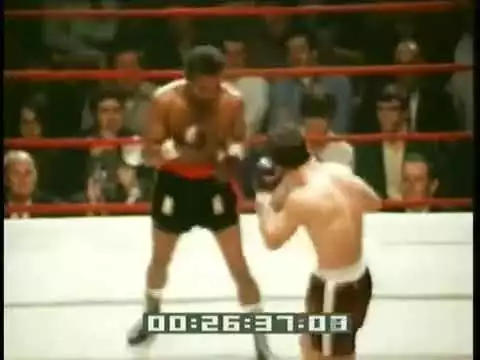
Billy Backus vs. Jose Napoles I – World Welterweight Title
Thin skin was a Napoles flaw.
Backus was exploiting it, but paying a heavy price. The crimson was flowing like a faucet nobody could stop. Backus did better in round two, but Naploes was still tattooing him with shots. Backus continued to press.
In the next heat, a headbutt caused an even worse cut on the champion’s left eyelid. Referee Jack Millcich, on advice from the ringside physician, called the bout in round four.
“It was the worst cut I’ve ever seen. I could see his eyeball,” said Milicich. Billy Backus, the underdog from Canastota, was the new welterweight champion of the world.
Backus would lose the title in a rematch.
He lost several more fights later in his career.
No matter.
Billy Backus, the upstart from Canastota, would forever be a world champion.
Up To $1500 in Bonus Bets Paid Back if your First Bet Does Not Win
T&Cs apply
4.5/5
Gambling problem? Call 1-800-GAMBLER or 1-800-MY-RESET (Available in the US) 877-8-HOPENY or text HOPENY (467369) (NY) 1-800-327-5050 (MA), 1-800-BETS-OFF (IA), 1-800-981-0023 (PR). 21+ only. Please Gamble Responsibly. See BetMGM.com for Terms. First Bet Offer for new customers only (if applicable). Subject to eligibility requirements. Bonus bets are non-withdrawable. In partnership with Kansas Crossing Casino and Hotel. Promotional offers not available in Mississippi, Massachusetts, New York, Ontario, or Puerto Rico.
New DraftKings Customers: Spend $5+ Get $150 in Bonuses
T&Cs apply
4.5/5
GAMBLING PROBLEM? CALL 1-800-GAMBLER or 1-800-MY-RESET, (800) 327-5050 or visit gamblinghelplinema.org (MA). Please Gamble Responsibly. 888-789-7777/visit ccpg.org (CT), or visit www.mdgamblinghelp.org (MD), 1-800-981-0023 (PR). 21+ and present in most states. (18+ DC/NH/PR/WY). Void in CAN. Eligibility restrictions apply. On behalf of Boot Hill Casino (KS). Pass-thru of per wager tax may apply in IL. 1 per new DraftKings customer. $5+ first-time bet req. Max. $150 issued as non-withdrawable Bonus Bets. Stake removed from payout. Reward issued as $50 in Bonus Bets every 7 days via click-to-claim for 14 days. Bonus Bets and click-to-claims expire 7 days (168hrs) after issuance. Terms: sportsbook.draftkings.com/promos. Ends 10/11/26 at 11:59 PM ET. Sponsored by DK.
Must be 21+. GAMBLING PROBLEM? CALL 1-800-GAMBLER OR CALL 1-800-MY-RESET, www.mdgamblinghelp.org (MD), (800)-327-5050 or gamblinghelplinema.org (MA), Call (877)8-HOPENY or text HOPENY (467369) (NY), (888) 789-7777 or ccpg.org (CT), morethanagame.nc.gov (NC), 1800gambler.net (WV)
Bet $1 and get double the winnings up to $25 for your next 10 bets
T&Cs apply
4.4/5
21+ New users only. Must register using eligible promo code. First bet after registration must qualify. Max. Bonus Bet: $1,000. Bonus Bet expires 14 days after receipt. Void where prohibited. See Caesars.com/promos for full terms. Gambling Problem? 1-800-GAMBLER (1-800-426-2537)
21+ and present in OH. Gambling Problem? Call 1-800-GAMBLER.
This site is using
Cloudflare
and adheres to the
Google Safe Browsing Program. We adapted
Google's Privacy Guidelines
to keep your data safe at all times.
Close
Ready to Win Big? Join the Elite with Our Sports Betting Deals!
FanDuel Promo
New Users – Get $250 in Bonus Bets when you wager $5 for 5 days
Up To $1500 in Bonus Bets Paid Back if your First Bet Does Not Win
Best Slots
T&Cs and 21+ apply
Gambling problem? Call 1-800-GAMBLER or 1-800-MY-RESET (Available in the US) 877-8-HOPENY or text HOPENY (467369) (NY) 1-800-327-5050 (MA), 1-800-BETS-OFF (IA), 1-800-981-0023 (PR). 21+ only. Please Gamble Responsibly. See BetMGM.com for Terms. First Bet Offer for new customers only (if applicable). Subject to eligibility requirements. Bonus bets are non-withdrawable. In partnership with Kansas Crossing Casino and Hotel. Promotional offers not available in Mississippi, Massachusetts, New York, Ontario, or Puerto Rico.
Code:
Open BetMGM
Get Bonus
DraftKings Promo
New DraftKings Customers: Spend $5+ Get $150 in Bonuses
Newcomer
T&Cs and 21+ apply
GAMBLING PROBLEM? CALL 1-800-GAMBLER or 1-800-MY-RESET, (800) 327-5050 or visit gamblinghelplinema.org (MA). Please Gamble Responsibly. 888-789-7777/visit ccpg.org (CT), or visit www.mdgamblinghelp.org (MD), 1-800-981-0023 (PR). 21+ and present in most states. (18+ DC/NH/PR/WY). Void in CAN. Eligibility restrictions apply. On behalf of Boot Hill Casino (KS). Pass-thru of per wager tax may apply in IL. 1 per new DraftKings customer. $5+ first-time bet req. Max. $150 issued as non-withdrawable Bonus Bets. Stake removed from payout. Reward issued as $50 in Bonus Bets every 7 days via click-to-claim for 14 days. Bonus Bets and click-to-claims expire 7 days (168hrs) after issuance. Terms: sportsbook.draftkings.com/promos. Ends 10/11/26 at 11:59 PM ET. Sponsored by DK.
Code:
Open DraftKings
Get Bonus
Find out what the legends have to say about sports this week....