“When I was young, I told some kids I was going to fight for the heavyweight championship. They laughed at me."Pat Valentino
“When I was young, I told some kids I was going to fight for the heavyweight championship. They laughed at me.”
Pat Valentino
Years ago, I was wandering around Fisherman’s Wharf with my family when my dad said, “Look, there’s Joe DiMaggio’s place.”
He said it casually. Everything about DiMaggio was legendary, including the team he played for.
A year later, we were back, and Dad was at it again.
He wanted to eat at a place called Scoma’s. It was located near the water, surrounded by leisure and fishing boats. At least that’s what my 16-year-old self remembers. As we waited to be seated, my dad leaned over and said, “You see that guy over there?”
I did. He was ten feet away. His shoulders were wide, and his hair was short and black. Several people surrounded him. I had no idea who he was. My sister was bored, while my mom just looked.
Valentino was born Pasquale Guglielmi in San Francisco.
His childhood was tough, shaped by an unrelenting father. The abuse toughened him up, but never made him bitter.
Valentino was one of eight children and painfully shy.
He dropped out of school at 13 to help feed his family. He worked two jobs, sometimes three. His father remained distant and harsh.
“I was the fifth oldest,” he said years later. “And he just hated me.”
Growing increasingly pessimistic, he heard about boxer Ray Actis, who, like Valentino, was the son of Italian immigrants.
Actis could punch, eventually fighting future champions Billy Conn and Gus Lesnavich. His achievements gave the shy, uneducated Valentino hope of escaping his dismal life.
Valentino went to a local gym to see what he could do. The results were disappointing, but quitting wasn’t an option.
His amateur career was brief, but he began working with trainer Tommy Cello, also an ex-boxer. Valentino turned professional in 1939. He took the last name of his second cousin, silent-film legend Rudolph Valentino.
Debuting in his home city, Valentino knocked out his opponent. Power was his game. He knocked out his next seven opponents.
For the first time in his life, Pasquale Guglielmi Valentino was being noticed. Valentino lost for the first time to Pisano Mario Duccini, then reeled off 10 straight wins, eight by knockout.
Valentino, 24, moved up, throwing hands with light heavyweights. He lost some fights, most notably to talented heavyweight Jimmy Bivens in San Francisco. His record stood at 33 wins in 39 bouts, with 25 knockouts. Valentino enlisted in the military in 1944.
He returned in 1946, winning 24 of 28 fights. Two draws against future Light heavyweight champion Joey Maxim led to a shot at the California heavyweight title against favored Turkey Thompson. Valentino won the fight, earning a ranking in the heavyweight division.
Torn retina surgery sidelined Valentino for 10 months, but then came the call to face National Boxing Association (NBA) heavyweight champion Ezzard Charles. The Cincinnati Cobra was one of the best fighters on the planet. Valentino was still healing from eye surgery, but his dream shot had arrived.
No way he’d turn it down.
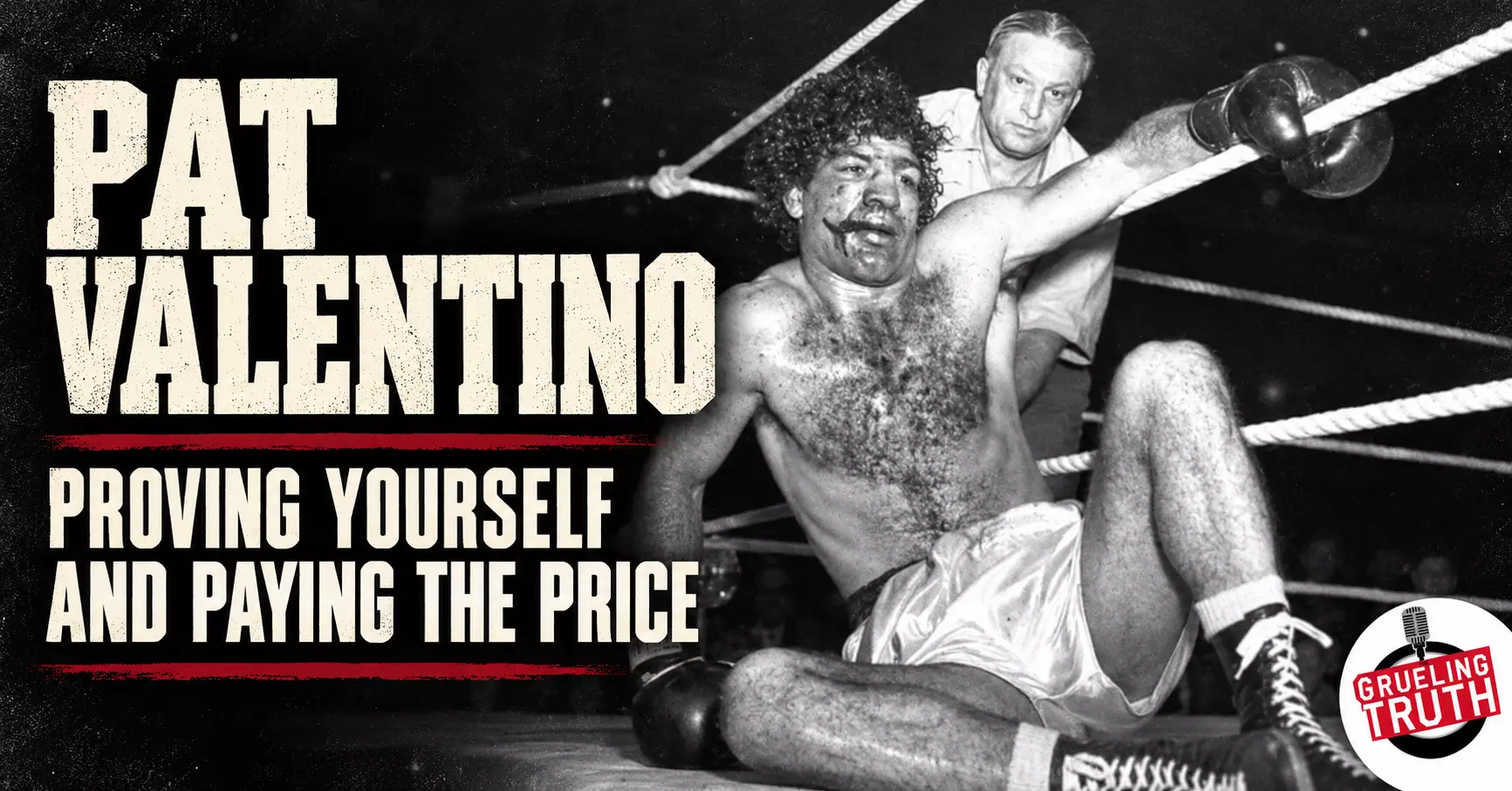
On October 14, 1949, Valentino faced Charles at a sold-out Cow Palace in San Francisco. He entered the ring against Charles as a significant underdog. Valentino’s $5,000 purse was the biggest of his career. He was giddy and confident.
Valentino came out aggressively, pounding Charles with thudding body shots. The champ fought back, but Valentino had the edge in the early rounds. Charles responded with a cobra-like jab, stinging Valentino consistently. Valentino remained aggressive, clobbering Charles when he could, but the defending champ made him pay for every reckless move.
Through seven rounds, Valentino was ahead on two of the three judges’ scorecards. He was halfway home to the greatest prize in the world. His hometown fans cheered with every blow, but the pace was working against Valentino.
In round eight, he continued to force the fight, but Charles had him figured out. After a clinch, Charles zapped Valentino with a left hook, then fired a hard right hand that landed flush on the jaw. Valentino went down on the seat of his pants. He tried to get up before the count of 10, but didn’t make it.
The dream was over, but the respect was evident. Boxing fans celebrated Valentino’s guts.
But the price he paid was monumental.
The beating he had received, especially to his right eye, permanently blinded him.
His career was over.
Not so fast, said his manager. Former heavyweight champion Joe Louis wanted to fight Valentino in an exhibition bout.
The purse was the biggest of his career.
Valentino accepted the fight and concocted a way to pass the pre-fight physical.
No problem, as he told Ring Magazine in 2002, “During the eye test at the weigh-in, I brought my right hand over my right eye and read the chart with my good eye. Then I used my left hand to cover my right eye, and no one noticed.”
Valentino thought that since the fight was an exhibition, Louis wouldn’t fight that hard.
Hardly.
Louis, despite being past his peak, possessed a single gear. He banged Valentino around for seven rounds and brutally knocked him out.
The beating convinced Valentino to retire.
He was 29. Soon after, Hollywood beckoned; Valentino appeared in four movies.
Not bad for a guy people once laughed at and mocked. He eventually came over and talked to us at our table. My dad did most of the talking. This guy fought Joe Louis? Damn.
Up To $1500 in Bonus Bets Paid Back if your First Bet Does Not Win
T&Cs apply
4.5/5
Gambling problem? Call 1-800-GAMBLER or 1-800-MY-RESET (Available in the US) 877-8-HOPENY or text HOPENY (467369) (NY) 1-800-327-5050 (MA), 1-800-BETS-OFF (IA), 1-800-981-0023 (PR). 21+ only. Please Gamble Responsibly. See BetMGM.com for Terms. First Bet Offer for new customers only (if applicable). Subject to eligibility requirements. Bonus bets are non-withdrawable. In partnership with Kansas Crossing Casino and Hotel. Promotional offers not available in Mississippi, Massachusetts, New York, Ontario, or Puerto Rico.
New DraftKings Customers: Spend $5+ Get $150 in Bonuses
T&Cs apply
4.5/5
GAMBLING PROBLEM? CALL 1-800-GAMBLER or 1-800-MY-RESET, (800) 327-5050 or visit gamblinghelplinema.org (MA). Please Gamble Responsibly. 888-789-7777/visit ccpg.org (CT), or visit www.mdgamblinghelp.org (MD), 1-800-981-0023 (PR). 21+ and present in most states. (18+ DC/NH/PR/WY). Void in CAN. Eligibility restrictions apply. On behalf of Boot Hill Casino (KS). Pass-thru of per wager tax may apply in IL. 1 per new DraftKings customer. $5+ first-time bet req. Max. $150 issued as non-withdrawable Bonus Bets. Stake removed from payout. Reward issued as $50 in Bonus Bets every 7 days via click-to-claim for 14 days. Bonus Bets and click-to-claims expire 7 days (168hrs) after issuance. Terms: sportsbook.draftkings.com/promos. Ends 10/11/26 at 11:59 PM ET. Sponsored by DK.
Must be 21+. GAMBLING PROBLEM? CALL 1-800-GAMBLER OR CALL 1-800-MY-RESET, www.mdgamblinghelp.org (MD), (800)-327-5050 or gamblinghelplinema.org (MA), Call (877)8-HOPENY or text HOPENY (467369) (NY), (888) 789-7777 or ccpg.org (CT), morethanagame.nc.gov (NC), 1800gambler.net (WV)
Bet $1 and get double the winnings up to $25 for your next 10 bets
T&Cs apply
4.4/5
21+ New users only. Must register using eligible promo code. First bet after registration must qualify. Max. Bonus Bet: $1,000. Bonus Bet expires 14 days after receipt. Void where prohibited. See Caesars.com/promos for full terms. Gambling Problem? 1-800-GAMBLER (1-800-426-2537)
21+ and present in OH. Gambling Problem? Call 1-800-GAMBLER.
This site is using
Cloudflare
and adheres to the
Google Safe Browsing Program. We adapted
Google's Privacy Guidelines
to keep your data safe at all times.
Close
Ready to Win Big? Join the Elite with Our Sports Betting Deals!
FanDuel Promo
New Users – Get $250 in Bonus Bets when you wager $5 for 5 days
Up To $1500 in Bonus Bets Paid Back if your First Bet Does Not Win
Best Slots
T&Cs and 21+ apply
Gambling problem? Call 1-800-GAMBLER or 1-800-MY-RESET (Available in the US) 877-8-HOPENY or text HOPENY (467369) (NY) 1-800-327-5050 (MA), 1-800-BETS-OFF (IA), 1-800-981-0023 (PR). 21+ only. Please Gamble Responsibly. See BetMGM.com for Terms. First Bet Offer for new customers only (if applicable). Subject to eligibility requirements. Bonus bets are non-withdrawable. In partnership with Kansas Crossing Casino and Hotel. Promotional offers not available in Mississippi, Massachusetts, New York, Ontario, or Puerto Rico.
Code:
Open BetMGM
Get Bonus
DraftKings Promo
New DraftKings Customers: Spend $5+ Get $150 in Bonuses
Newcomer
T&Cs and 21+ apply
GAMBLING PROBLEM? CALL 1-800-GAMBLER or 1-800-MY-RESET, (800) 327-5050 or visit gamblinghelplinema.org (MA). Please Gamble Responsibly. 888-789-7777/visit ccpg.org (CT), or visit www.mdgamblinghelp.org (MD), 1-800-981-0023 (PR). 21+ and present in most states. (18+ DC/NH/PR/WY). Void in CAN. Eligibility restrictions apply. On behalf of Boot Hill Casino (KS). Pass-thru of per wager tax may apply in IL. 1 per new DraftKings customer. $5+ first-time bet req. Max. $150 issued as non-withdrawable Bonus Bets. Stake removed from payout. Reward issued as $50 in Bonus Bets every 7 days via click-to-claim for 14 days. Bonus Bets and click-to-claims expire 7 days (168hrs) after issuance. Terms: sportsbook.draftkings.com/promos. Ends 10/11/26 at 11:59 PM ET. Sponsored by DK.
Code:
Open DraftKings
Get Bonus
Find out what the legends have to say about sports this week....