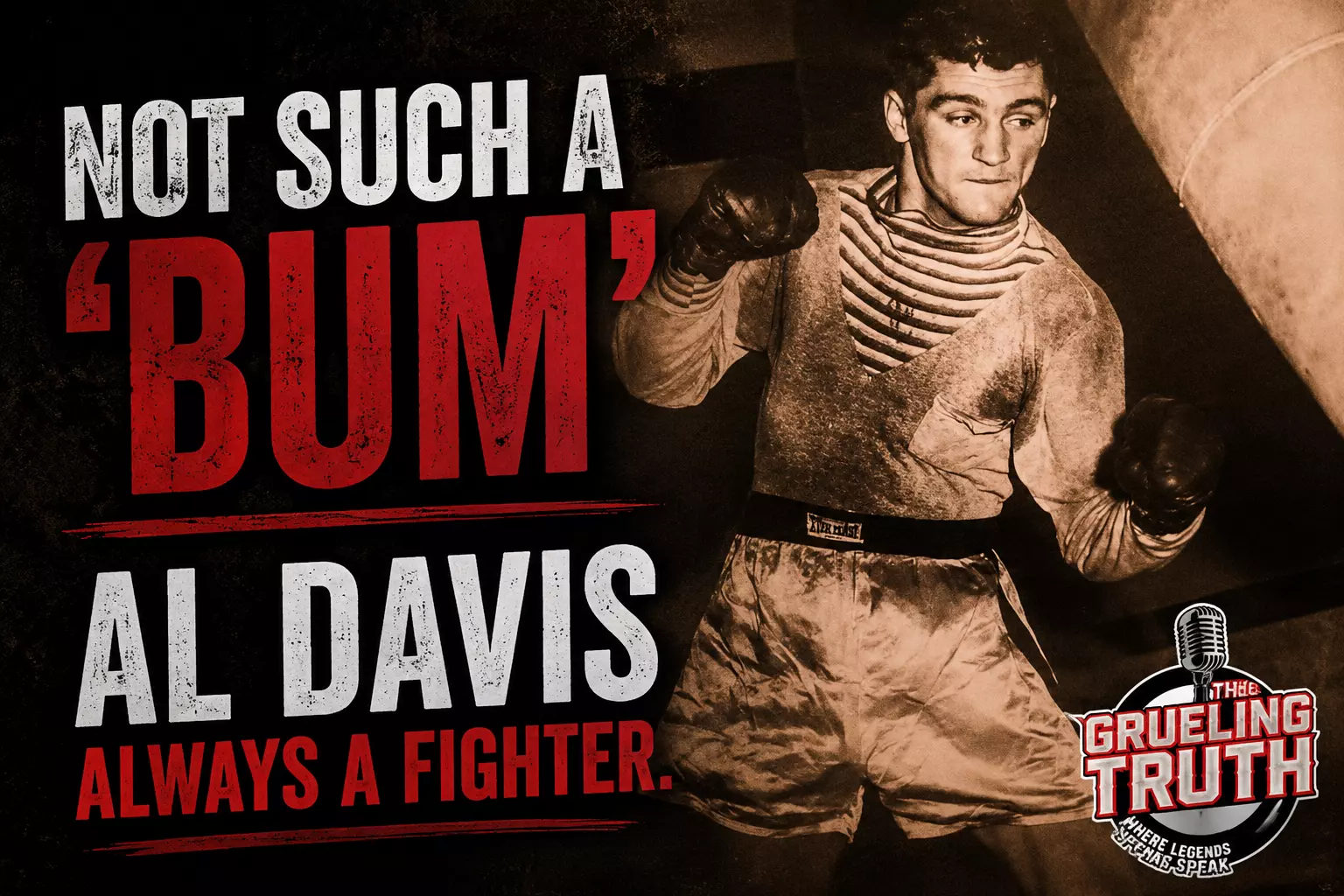
Al Davis fought all his life. He boxed in the ring and brawled in the streets, usually for some unknown underdog.
Al Davis fought all his life.
He boxed in the ring and brawled in the streets, usually for some unknown underdog.
Born Abraham Davidoff on January 26, 1920, he grew up in a rough section of Brooklyn known as Brownsville.
Davis learned the reality early.
Little Al served as a lookout for his father, who ran a candy store and operated an
illegal liquor store
in the same location. His job was to tell his pops if any cops were in the neighborhood.
Davis was aware at a young age that his brothers hung out with a dangerous crowd and worked as collectors for a group of gangsters known as Murder, Inc., which answered to the crime syndicate.
Most of the young kids in the neighborhood felt intimidated, but Davis had no problem standing up to goons like enforcer Abe “Kid Twist” Reles.
Davis began boxing professionally as a teenager after a successful amateur career.
He possessed a deadly left hook.
With an aggressive style, Davis was drawing immense crowds. His manager came up with the idea of calling him “Bummy.” because of his street background. Davis hated it. He wasn’t a bum and didn’t like being booed. That’s showbiz said his manager. The name stuck.
On November 1, 1939, during his fight with popular ex-champion Tony Canzoneri, the situation got out of control. Davis destroyed the popular Canzoneri inside three rounds. The booing was louder. Davis had graduated from unpopular to outright villain. The catcalls hurt. He didn’t get it.
Davis soldiered on, fighting all the top-rated boxers and maintaining a protective friendship with a young man named Charlie, who was disabled. Davis won his first thirty-three professional bouts. The streak ended when he fought future “Hall of Famer” Lou Ambers.
The taunting of the crowd was so demoralizing that Davis retired.
In Brownsville, people celebrated him as a generous young man who had risen out of his murderous surroundings. Everyone who knew him recognized this version as closer to the truth.
Davis returned to the ring in 1940 and fought Fritzie Zivic, known for dirty tactics. Zivic lived up to his reputation. He thumbed Davis repeatedly in the eyes. Davis lost his temper and retaliated. He walked up to Zivic and started hitting him low. The referee disqualified him.
The New York State Boxing Commission banned Davis for life. Many protested on his behalf. What about Zivic?
Davis joined the military and got married. A few months later, after hearing what witnesses had to say about the Zivic fight, the boxing commission reinstated Davis. Zivic apologized. Davis received leave from the Army to fight a rematch with Zivic. Davis lost, but donated his entire purse to charity.
He kept fighting, even though his desire to box was waning. He won four of his next five fights before taking on former and future lightweight champion Bob Montgomery. The fight figured to be easy pickings for Montgomery, as word had leaked out that Davis had lost his edge.
Montgomery entered the match a 10-1 favorite. He exited it a loser. His left hook did the trick. Davis fought for another two years, losing to the great Henry Armstrong and being stopped by Rocky Graziano in a war.
At home, the slugger was now a daddy, welcoming his son into the world in early 1945.
Sadly, Davis was running out of time. He opened a bar and grill that lost money.
He returned to the ring out of shape and fifteen pounds over his
prime weight.
On November 21, 1945, he was hanging out at his former business, shooting the bull with friends. Davis noticed four men with guns enter the bar. Unarmed, he walked right over to the four. One of them recognized him and called him a bum.
Davis knocked him out, but he sustained a gut shot. The other three high-tailed it out of the bar with Davis in pursuit. They kept firing, and Davis, bleeding, kept coming after them. A fatal shot in the neck stopped him, but his heroics had allowed the police to nab the robbers.
Up To $1500 in Bonus Bets Paid Back if your First Bet Does Not Win
T&Cs apply
4.5/5
Gambling problem? Call 1-800-GAMBLER or 1-800-MY-RESET (Available in the US) 877-8-HOPENY or text HOPENY (467369) (NY) 1-800-327-5050 (MA), 1-800-BETS-OFF (IA), 1-800-981-0023 (PR). 21+ only. Please Gamble Responsibly. See BetMGM.com for Terms. First Bet Offer for new customers only (if applicable). Subject to eligibility requirements. Bonus bets are non-withdrawable. In partnership with Kansas Crossing Casino and Hotel. Promotional offers not available in Mississippi, Massachusetts, New York, Ontario, or Puerto Rico.
New DraftKings Customers: Spend $5+ Get $150 in Bonuses
T&Cs apply
4.5/5
GAMBLING PROBLEM? CALL 1-800-GAMBLER or 1-800-MY-RESET, (800) 327-5050 or visit gamblinghelplinema.org (MA). Please Gamble Responsibly. 888-789-7777/visit ccpg.org (CT), or visit www.mdgamblinghelp.org (MD), 1-800-981-0023 (PR). 21+ and present in most states. (18+ DC/NH/PR/WY). Void in CAN. Eligibility restrictions apply. On behalf of Boot Hill Casino (KS). Pass-thru of per wager tax may apply in IL. 1 per new DraftKings customer. $5+ first-time bet req. Max. $150 issued as non-withdrawable Bonus Bets. Stake removed from payout. Reward issued as $50 in Bonus Bets every 7 days via click-to-claim for 14 days. Bonus Bets and click-to-claims expire 7 days (168hrs) after issuance. Terms: sportsbook.draftkings.com/promos. Ends 10/11/26 at 11:59 PM ET. Sponsored by DK.
Must be 21+. GAMBLING PROBLEM? CALL 1-800-GAMBLER OR CALL 1-800-MY-RESET, www.mdgamblinghelp.org (MD), (800)-327-5050 or gamblinghelplinema.org (MA), Call (877)8-HOPENY or text HOPENY (467369) (NY), (888) 789-7777 or ccpg.org (CT), morethanagame.nc.gov (NC), 1800gambler.net (WV)
Bet $1 and get double the winnings up to $25 for your next 10 bets
T&Cs apply
4.4/5
21+ New users only. Must register using eligible promo code. First bet after registration must qualify. Max. Bonus Bet: $1,000. Bonus Bet expires 14 days after receipt. Void where prohibited. See Caesars.com/promos for full terms. Gambling Problem? 1-800-GAMBLER (1-800-426-2537)
21+ and present in OH. Gambling Problem? Call 1-800-GAMBLER.
This site is using
Cloudflare
and adheres to the
Google Safe Browsing Program. We adapted
Google's Privacy Guidelines
to keep your data safe at all times.
Close
Ready to Win Big? Join the Elite with Our Sports Betting Deals!
FanDuel Promo
New Users – Get $250 in Bonus Bets when you wager $5 for 5 days
Up To $1500 in Bonus Bets Paid Back if your First Bet Does Not Win
Best Slots
T&Cs and 21+ apply
Gambling problem? Call 1-800-GAMBLER or 1-800-MY-RESET (Available in the US) 877-8-HOPENY or text HOPENY (467369) (NY) 1-800-327-5050 (MA), 1-800-BETS-OFF (IA), 1-800-981-0023 (PR). 21+ only. Please Gamble Responsibly. See BetMGM.com for Terms. First Bet Offer for new customers only (if applicable). Subject to eligibility requirements. Bonus bets are non-withdrawable. In partnership with Kansas Crossing Casino and Hotel. Promotional offers not available in Mississippi, Massachusetts, New York, Ontario, or Puerto Rico.
Code:
Open BetMGM
Get Bonus
DraftKings Promo
New DraftKings Customers: Spend $5+ Get $150 in Bonuses
Newcomer
T&Cs and 21+ apply
GAMBLING PROBLEM? CALL 1-800-GAMBLER or 1-800-MY-RESET, (800) 327-5050 or visit gamblinghelplinema.org (MA). Please Gamble Responsibly. 888-789-7777/visit ccpg.org (CT), or visit www.mdgamblinghelp.org (MD), 1-800-981-0023 (PR). 21+ and present in most states. (18+ DC/NH/PR/WY). Void in CAN. Eligibility restrictions apply. On behalf of Boot Hill Casino (KS). Pass-thru of per wager tax may apply in IL. 1 per new DraftKings customer. $5+ first-time bet req. Max. $150 issued as non-withdrawable Bonus Bets. Stake removed from payout. Reward issued as $50 in Bonus Bets every 7 days via click-to-claim for 14 days. Bonus Bets and click-to-claims expire 7 days (168hrs) after issuance. Terms: sportsbook.draftkings.com/promos. Ends 10/11/26 at 11:59 PM ET. Sponsored by DK.
Code:
Open DraftKings
Get Bonus
Find out what the legends have to say about sports this week....