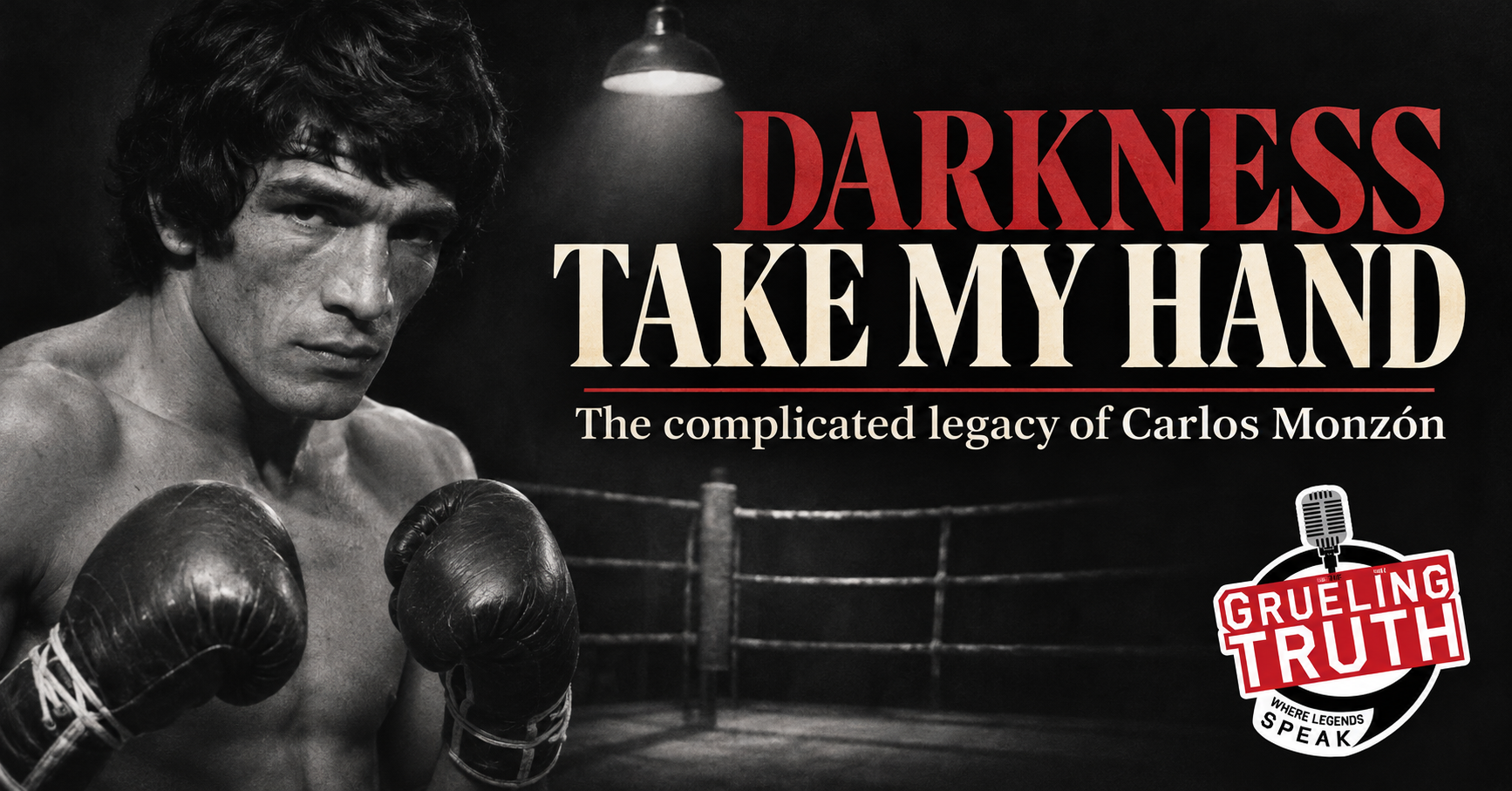
How good a fighter was Carlos Monzón? Damn good. The first time I saw him fight was against Nino Benvenuti, the reigning world middleweight champion. Benvenuti had won 82 of 86 fights,
How good a fighter was Carlos Monzón?
Damn good.
The first time I saw him fight was against Nino Benvenuti, the reigning world middleweight champion. Benvenuti had won 82 of 86 fights, including two of three over former champion Emile Griffith. I liked him and was hoping he’d beat Monzón. The thinking was that Benvenuti could outbox his slightly taller adversary.
A minute into the fight, Monzón was clearly hungry for the title. He fired wicked punches that landed with a thud. He boxed better than advertised. He was mean. The champion looked confused, as if he couldn’t handle the pressure. He glanced at the referee for help. Benvenuti punched back, rarely landing a blow, and when he did, they had no effect. He was being walked down and beaten up.
In the 12th round, Benvenuti landed a solid left hook to the jaw. His crowd cheered, but the challenger didn’t bat an eye. A right hand sent Benvenuti to the ropes. Seconds later, another one landed on the point of his chin. The champion collapsed to his knees, his head resting on his left glove as if in silent prayer.
It didn’t help.
It took Monzón 80 fights to get a shot at a world title. His path to the top had been fraught with poverty and long odds. Born into a family of 12, Monzón quit school in the third grade, fought for pesos in the streets of Santa Fe, Argentina, shined shoes, and sold papers.
After a solid amateur career,
Monzón turned pro in 1963. He fought at a relentless pace, stepping into the ring 22 times in just 19 months. Though he dropped early-career decisions to Antonio Aguilar in 1963 and Alberto Massi in 1964, Monzón adjusted and never lost again. From 1970 to 1977, he utterly dominated the middleweight division.
Tall, lean, and strong, the sullen Monzón was multi-talented, born with unique skill and punishing power. He defeated all the top contenders, including personal favorites Emile Griffith (twice), Bennie Briscoe, Benvenuti in a rematch, and Tony Mundine. He beat the stuffing out of welterweight champion José Nápoles and won two brutal decisions over Rodrigo Valdez.
A darker side of Monzón, apparently lurking even before he captured the title, showed itself in the 1970s. His temper was explosive, easily erupting in violence. Reports and articles detailed his horrific abuse of women and how he beat the crap out of the paparazzi. His outbursts could be entirely unpredictable. The chaos followed him home; during a domestic dispute in 1973, his first wife, Mercedes “Pelusa” García, shot him twice—once in the arm and once in the shoulder—though he recovered to continue his boxing career.
After retiring from the ring in 1977, the violence only continued. His home country protected him and treated him like a god until 1988, when authorities finally arrested Monzón for murdering his estranged wife, Alicia Muñiz.
The incident was brutal. Following a heated argument fueled by alcohol and rage, police charged Monzón with strangling Alicia and throwing her off a second-floor balcony. He followed her over the edge seconds later, injuring his shoulder in the fall. Monzón was convicted of murder and sentenced to 11 years in prison.
On January 8, 1995, shortly before his release from prison, Monzón was on a weekend furlough when he lost control of his car. The accident killed both him and his passenger near his home in Santa Fe. Monzón was 52.
His life, filled with incredible highs and disastrous lows, had come full circle.
Remembering him is complicated. Inside the ring, he controlled the action with absolute skill and power. Outside of it, his inner rage and darkness could explode at any minute, destroying everyone around him, and ultimately, himself.
To the people of Argentina, he is still a hero, worshiped for his ring exploits. To others, he is a monster who could fight.
New Users - Get $200 in Bonus Bets when you wager $5 for 4 days
T&Cs apply
4.6/5
Gambling Problem? Call 1-800-GAMBLER or 1-800-MY-RESET. Visit www.mdgamblinghelp.org (MD). 1-888-789-7777 or ccpg.org/chat (CT). Hope is here. GamblingHelpLineMA.org or (800) 327-5050 for 24/7 support (MA). 1-877-8-HOPENY or text HOPENY (467369) (NY). 21+ (18+ D.C., WY) and present in select states (for KS, in affiliation with Kansas Star Casino). First online real money wager only. Min $5 wager required for 4 consecutive days. $5 first deposit required. Bonus issued as nonwithdrawable bonus bets which expire 5 days after receipt. Restrictions apply. See terms at sportsbook.fanduel.com. Call 1-877-770-7867 (LA).
Get Up to $1,000 Back in Bonus Bets Over Your First 10 Days
T&Cs apply
4.5/5
Gambling problem? Call 1-800-GAMBLER or 1-800-MY-RESET (Available in the US) 877-8-HOPENY or text HOPENY (467369) (NY) 1-800-327-5050 (MA), 1-800-BETS-OFF (IA), 21+ only. Please Gamble Responsibly. Visit mdgamblinghelp.org (MD). See BetMGM.com for Terms. New Player Offer for new players only. Subject to eligibility requirements. Bonus bets are non-withdrawable. In partnership with Kansas Crossing Casino and Hotel. This promotional offer is not available in NJ, MA, MI, NV, NY, ON, PA, PR, and WV.
New DraftKings Customers: Bet $5, Get $200 + 3 Months of NBA League Pass
T&Cs apply
4.5/5
GAMBLING PROBLEM? CALL 1-800-GAMBLER or 1-800-MY-RESET, (800) 327-5050 or visit gamblinghelplinema.org (MA). Please Gamble Responsibly. 888-789-7777/visit ccpg.org (CT), or visit www.mdgamblinghelp.org (MD), 1-800-981-0023 (PR). 21+ and present in most states. (18+ DC/NH/PR/WY). Void in CAN. Eligibility restrictions apply. On behalf of Boot Hill Casino (KS). Pass-thru of per wager tax may apply in IL. 1 per new Sportsbook customer. $5+ first-time bet req. Max. $200 issued as non-withdrawable Bonus Bets. Stake removed from payout. Reward issued as $50 in Bonus Bets every 7 days via click-to-claim for 21 days. Bonus Bets and click-to-claims expire 7 days (168hrs) after issuance. Terms: dkng.co/offer. Get 1 promo code to redeem a 3-month NBA League Pass subscription, complimentary of DraftKings. Subscription auto-renews monthly at then-current price (currently $16.99/mo); cancel anytime. Terms, restrictions, and eligibility requirements apply. Redeem League Pass by 12/19/26 at 11:59 PM ET. Addt’l terms: support.watch.nba.com/hc/en-us/articles/9165532876183-League-Pass-Terms-of-Use_. Ends 11/29/26 at 11:59 PM ET. Sponsored by DK.
Must be 21+. GAMBLING PROBLEM? CALL 1-800-GAMBLER OR CALL 1-800-MY-RESET, www.mdgamblinghelp.org (MD), (800)-327-5050 or gamblinghelplinema.org (MA), Call (877)8-HOPENY or text HOPENY (467369) (NY), (888) 789-7777 or ccpg.org (CT), morethanagame.nc.gov (NC), 1800gambler.net (WV)
Bet $1 and get double the winnings up to $25 for your next 10 bets
T&Cs apply
4.4/5
21+ New users only. Must register using eligible promo code. First bet after registration must qualify. Max. Bonus Bet: $1,000. Bonus Bet expires 14 days after receipt. Void where prohibited. See Caesars.com/promos for full terms. Gambling Problem? 1-800-GAMBLER (1-800-426-2537)
21+ and present in OH. Gambling Problem? Call 1-800-GAMBLER.
This site is using
Cloudflare
and adheres to the
Google Safe Browsing Program. We adapted
Google's Privacy Guidelines
to keep your data safe at all times.
Close
Ready to Win Big? Join the Elite with Our Sports Betting Deals!
FanDuel Promo
New Users - Get $200 in Bonus Bets when you wager $5 for 4 days
Our Favorite
T&Cs and 21+ apply
Gambling Problem? Call 1-800-GAMBLER or 1-800-MY-RESET. Visit www.mdgamblinghelp.org (MD). 1-888-789-7777 or ccpg.org/chat (CT). Hope is here. GamblingHelpLineMA.org or (800) 327-5050 for 24/7 support (MA). 1-877-8-HOPENY or text HOPENY (467369) (NY). 21+ (18+ D.C., WY) and present in select states (for KS, in affiliation with Kansas Star Casino). First online real money wager only. Min $5 wager required for 4 consecutive days. $5 first deposit required. Bonus issued as nonwithdrawable bonus bets which expire 5 days after receipt. Restrictions apply. See terms at sportsbook.fanduel.com. Call 1-877-770-7867 (LA).
Code:
Open FanDuel
Get Bonus
BetMGM Promo
Get Up to $1,000 Back in Bonus Bets Over Your First 10 Days
Best Slots
T&Cs and 21+ apply
Gambling problem? Call 1-800-GAMBLER or 1-800-MY-RESET (Available in the US) 877-8-HOPENY or text HOPENY (467369) (NY) 1-800-327-5050 (MA), 1-800-BETS-OFF (IA), 21+ only. Please Gamble Responsibly. Visit mdgamblinghelp.org (MD). See BetMGM.com for Terms. New Player Offer for new players only. Subject to eligibility requirements. Bonus bets are non-withdrawable. In partnership with Kansas Crossing Casino and Hotel. This promotional offer is not available in NJ, MA, MI, NV, NY, ON, PA, PR, and WV.
Code:
Open BetMGM
Get Bonus
DraftKings Promo
New DraftKings Customers: Bet $5, Get $200 + 3 Months of NBA League Pass
Newcomer
T&Cs and 21+ apply
GAMBLING PROBLEM? CALL 1-800-GAMBLER or 1-800-MY-RESET, (800) 327-5050 or visit gamblinghelplinema.org (MA). Please Gamble Responsibly. 888-789-7777/visit ccpg.org (CT), or visit www.mdgamblinghelp.org (MD), 1-800-981-0023 (PR). 21+ and present in most states. (18+ DC/NH/PR/WY). Void in CAN. Eligibility restrictions apply. On behalf of Boot Hill Casino (KS). Pass-thru of per wager tax may apply in IL. 1 per new Sportsbook customer. $5+ first-time bet req. Max. $200 issued as non-withdrawable Bonus Bets. Stake removed from payout. Reward issued as $50 in Bonus Bets every 7 days via click-to-claim for 21 days. Bonus Bets and click-to-claims expire 7 days (168hrs) after issuance. Terms: dkng.co/offer. Get 1 promo code to redeem a 3-month NBA League Pass subscription, complimentary of DraftKings. Subscription auto-renews monthly at then-current price (currently $16.99/mo); cancel anytime. Terms, restrictions, and eligibility requirements apply. Redeem League Pass by 12/19/26 at 11:59 PM ET. Addt’l terms: support.watch.nba.com/hc/en-us/articles/9165532876183-League-Pass-Terms-of-Use_. Ends 11/29/26 at 11:59 PM ET. Sponsored by DK.
Code:
Open DraftKings
Get Bonus
Find out what the legends have to say about sports this week....
New Users - Get $200 in Bonus Bets when you wager $5 for 4 days
Gambling Problem? Call 1-800-GAMBLER or 1-800-MY-RESET. Visit www.mdgamblinghelp.org (MD). 1-888-789-7777 or ccpg.org/chat (CT). Hope is here. GamblingHelpLineMA.org or (800) 327-5050 for 24/7 support (MA). 1-877-8-HOPENY or text HOPENY (467369) (NY). 21+ (18+ D.C., WY) and present in select states (for KS, in affiliation with Kansas Star Casino). First online real money wager only. Min $5 wager required for 4 consecutive days. $5 first deposit required. Bonus issued as nonwithdrawable bonus bets which expire 5 days after receipt. Restrictions apply. See terms at sportsbook.fanduel.com. Call 1-877-770-7867 (LA).