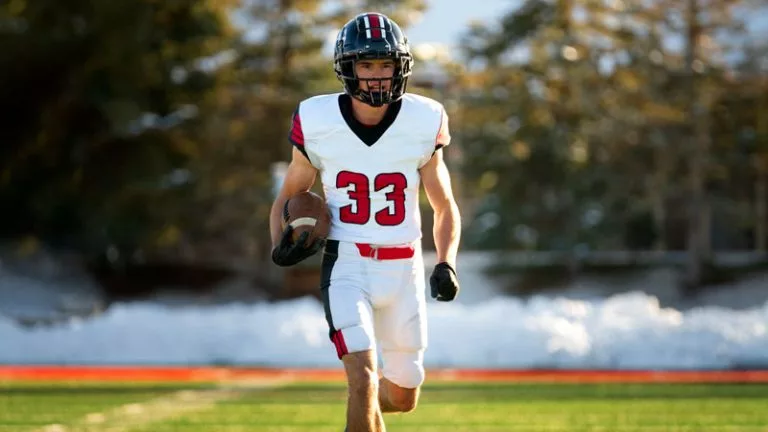
College football betting is placing money on the outcome of a college football game or a season-long event, like who wins a national title or who takes home the Heisman Trophy. Every game gets assigned odds, which are numbers that tell you both how likely something is to happen and how much money you stand to win if you are right.
Odds usually appear as a positive or negative number. A minus number, like -247, means that team is the favorite, and you have to risk more money to win a smaller amount. A plus number, like +185, means that team is the underdog, and a smaller bet can pay out a lot more if it hits. So when you see Stony Brook at -247 against Delaware State at +185, the number tells you the crowd expects Stony Brook to win, but Delaware State could pay out nicely if they pull off the upset.
Is it worth your time? That depends on whether you like turning a random Thursday night game into something with stakes attached. College football stretches across well over a hundred teams, dozens of conferences, and a full season running from late August through the National Championship in January. On most sportsbooks, you will find it all under a tab called NCAAF. It’s just the four letters they use for college football.
Before you fade a heavy favorite this week, running a quick check of
NCAAF public betting
shows you the ticket and money split across that week’s slate, since a lopsided college football crowd can push a line further than the matchup itself justifies.
What you can bet on once you sign up
Once you sign up on any sportsbook, a whole buffet of betting markets opens up in front of you, and a market is just another word for a specific question you can bet on inside a single game or season. Think of each market as its own little side bet next to the main event. Here are the ones you need to know before you ever tap that first wager.
| Market | What it means | Example |
| Moneyline | Pick the outright winner | Mercyhurst +1500 vs Youngstown State -4347 |
| Spread | Bet the margin, not just the win | Charleston Southern +11.5 vs Lindenwood -11.5 |
| Total | Bet combined score over or under a set number | Stony Brook vs Delaware State set at 51.5 |
| Futures | Season long bet on a final outcome | SMU +10000 to win the national title |
| Props | Bet on a single stat inside one game | Passing yards, receiving touchdowns, tackles |
Moneyline bets
The moneyline is the simplest bet in the entire sport. You are just picking who wins the game straight up. No math about margins, no worrying about spreads, just pick your team and see if they get the job done. Using a real slate as our example, a matchup like Mercyhurst against Youngstown State showed Mercyhurst at +1500 while Youngstown State sat at -4347, indicating the book expects a blowout in Youngstown State’s favor. A hundred dollars on that Mercyhurst moneyline would pay out fifteen hundred dollars in profit if the upset lands.
Remember what we said earlier about plus and minus numbers, because that is what is playing out here. The bigger that minus number gets, the more locked in the book thinks that outcome is, and the smaller your payout becomes since you are risking more to win less. Flip it around and a large plus number means the book thinks that team has almost no shot.
Spread bets
A spread bet, sometimes called a point spread, does not ask who wins. It asks whether a team wins by more than a certain number of points, or loses by less than that number.
For example, in a matchup between Charleston Southern and Lindenwood, Charleston Southern was sitting at +11.5 while Lindenwood sat at -11.5. That means if you bet on Charleston Southern against the spread, they do not need to win the game outright. They just need to lose by 11 points or fewer, or win outright, and your bet cashes. If you bet on Lindenwood at -11.5, they need to win by 12 points or more for you to collect.
Point totals and futures
A point total, also called an over/under, asks a completely different question. Instead of picking a winner or a margin, you are picking whether the combined score of both teams will go over or under a number set by the book. Looking at a real slate, a game between Stony Brook and Delaware State had its total set at 51.5, meaning if you bet the over, you needed both teams combined to score 52 points or more, and if you bet the under, you needed the combined score to land at 51 or fewer.
A future is a bet on something that will not be decided for weeks or even months, like which team wins the national championship or which player takes home the Heisman Trophy at the end of the year. Programs like SMU and Washington have both shown up around +10,000 to win it all outright, while a longer shot like Kentucky has sat closer to +35,000. If you like sweating a ticket across an entire season instead of just one Saturday afternoon, our full rundown on
best college football futures bets
is where you want to plant your flag next.
Player props, same game parlays, and live betting
Beyond the big three markets and futures, most books now let you build your own action inside a single game.
College football prop bets
let you wager on individual stat lines, like whether a quarterback throws for over a certain number of passing yards or whether a running back finds the end zone.
A same-game parlay lets you stack multiple picks from one single matchup into a single ticket, so you could combine a moneyline pick with a total and a player prop all in one bet for a much bigger potential payout. Some books also offer a cash-out option, which lets you sell your bet back early for a guaranteed amount instead of riding it all the way to the final whistle, win or lose.
FanDuel ReviewNew Users – Get $350 in Bonus Bets when you wager $5 for 7 days
Bet now
Gambling Problem? Call 1-800-GAMBLER or 1-800-MY-RESET. Call 1-888-789-7777 or visit ccpgg.org/chat (CT). Hope is here. GamblingHelpLineMA.org or call (800) 327-5050 for 24/7 support (MA). Visit www.mdgamblinghelp.org (MD). Call 1-877-8HOPE-NY or text HOPENY (NY). 21+ (18+ DC, WY) and present in select states (for KS, in affiliation with Kansas Star Casino). Find online real money wagering only. Min $5 wager required for 7 consecutive days. $5 free play credit. Bonus issued as non-withdrawable bonus with cash withdrawable bonus with cash withdrawable. Bonus bets which expire 7 days after receipt. Restrictions apply. See terms at sportsbook.fanduel.com. Call 1-877-770-7867 (LA).
BetMGM ReviewUp To $1500 in Bonus Bets Paid Back if your First Bet Does Not Win
Bet now
Gambling problem? Call 1-800-GAMBLER or 1-800-MY-RESET (Available in the US) 877-8-HOPENY or text HOPENY (467369) (NY) 1-800-327-5050 (MA), 1-800-BETS-OFF (IA), 1-800-981-0023 (PR). 21+ only. Please Gamble Responsibly. See BetMGM.com for Terms. First Bet Offer for new customers only (if applicable). Subject to eligibility requirements. Bonus bets are non-withdrawable. In partnership with Kansas Crossing Casino and Hotel. Promotional offers not available in Mississippi, Massachusetts, New York, Ontario, or Puerto Rico.
DraftKings ReviewNew DraftKings Customers: Bet $5, Get $200 + 3 Months of NBA League Pass!
Bet now
GAMBLING PROBLEM? CALL 1-800-GAMBLER or 1-800-MY-RESET, (800) 327-5050 or visit gamblinghelplinema.org (MA). Please Gamble Responsibly. 888-789-7777/visit ccpg.org (CT), or visit www.mdgamblinghelp.org (MD), 1-800-981-0023 (PR). 21+ and present in most states. (18+ DC/NH/PR/WY). Void in CAN. Eligibility restrictions apply. On behalf of Boot Hill Casino (KS). Pass-thru of per wager tax may apply in IL. 1 per new Sportsbook customer. $5+ first-time bet req. Max. $200 issued as non-withdrawable Bonus Bets. Stake removed from payout. Reward issued as $50 in Bonus Bets every 7 days via click-to-claim for 21 days. Bonus Bets and click-to-claims expire 7 days (168hrs) after issuance. Terms: dkng.co/offer. Get 1 promo code to redeem a 3-month NBA League Pass subscription, complimentary of DraftKings. Subscription auto-renews monthly at then-current price (currently $16.99/mo); cancel anytime. Terms, restrictions, and eligibility requirements apply. Redeem League Pass by 12/19/26 at 11:59 PM ET. Addt’l terms: support.watch.nba.com/hc/en-us/articles/9165532876183-League-Pass-Terms-of-Use_. Ends 11/29/26 at 11:59 PM ET. Sponsored by DK.
Here are the steps to go from sitting on the sidelines to holding a live ticket.
-
Click our on-page banners
Our banners will point you straight to some of the best sportsbooks out there, the kind of platforms with large college football coverage across every conference and every kickoff time so before you fund a single account, run through our full rankings of the
best NCAAF betting sites. The best ones cover every conference and keep futures odds current all season long.
-
Fill in your real details
For nearly every legal sportsbook you must be at least 18 or 21 depending on your state, and you must physically be located in a state where sports betting is legal. Once you are in, the sign up form will usually ask for your full name, email address, date of birth, home address, and sometimes a phone number for verification. Most platforms also let you skip the typing entirely and sign up using your Google or Apple account instead, which shaves a solid minute off the process.
-
Once your account is live, look for a sports tab or a menu icon, then search for College Football or NCAAF, since it often gets shortened that way in the app. On most sites you will find college football sitting right alongside NFL, NBA, and other major leagues in the sidebar, and clicking into it drops you straight into that week’s full slate of games with moneylines, spreads, and totals all sitting right there together.
-
Open a game and see what greets you
Tapping into any single matchup opens up a much bigger menu than just the three main markets. We have seen pages stacked with same game parlay builders, player props, live betting toggles, and futures tabs all sitting in the same spot, giving you a full command center for that one game alone.
-
Fund your account and place your bet
Head into your account menu and fund your account then tap the odds on whatever market you want. From there you set your bet amount, confirm, and you are officially live. Most platforms let you track the game in real time right inside the app, and if a cash out option is available on your bet, you will see that button right next to your live ticket, ready whenever you want to lock in an early result instead of riding it to the final whistle.
Five real tips before you place your first bet
Here are five tips for punters who want to last a whole season.
🚫 Never chase your losses
This is the oldest lesson in the entire sport and it never stops being true. If a bet does not hit, resist the urge to immediately double your next wager just to win back what you lost. If your Mercyhurst moneyline or your Charleston Southern spread does not win, doubling your next bet to get it back does not fix the first loss, it just puts a second one on the table. That act spirals fast, and before you know it, you have blown through money you never wanted to use.
🔍 Shop around before you bet
Shop your college football lines across more than one book. Because college football runs so many games at once, from ranked Saturday matchups down to Tuesday MAC games, sportsbooks do not always agree on the odds. A spread that sits at -3.5 on one platform might sit at -3 on another. Checking two or three books before you lock in a spread or total is worth the extra thirty seconds, especially on games with less betting volume where lines move less efficiently.
College football rosters feature a handful of key players, especially at quarterback, and a single injury can flip a game completely. A team that looked like a lock at -10 can suddenly become a toss-up if their starting quarterback goes down Thursday night. Always check team news in the day or two leading up to kickoff before you lock in anything, since the odds you see on Monday rarely reflect what happens by Saturday.
❌ Do not bet every single game on the slate
A hundred plus teams kick off most Saturdays, and throwing five dollars on all of them just to have a rooting interest is not a good game plan. Say you follow the SEC closely and you know the injury reports and coaching tendencies; stick to those six or seven games. Skip the MAC Tuesday nighter between two teams you have never watched.
⚠️ Watch out for letdown spots and trap games
This is one of the best
college football betting strategies
because a big win drains a team more than the scoreboard shows. A ranked team coming off a big win, say a top ten program that just knocked off a rival in front of a sold-out stadium, will sometimes come out flat the next week against a team they should smoke by four touchdowns. Sportsbooks know this happens constantly, so watch for a big favorite sitting at something like -24 the week right after a statement win.
Pros and cons
- Wide weekly game selection across every conference
- Solid player prop variety on nearly every matchup
- Live betting is available once kickoff happens
- Availability varies by sportsbook
Final verdict: Know your markets before you bet them
Whether you are a die-hard alum who has screamed at a television every Saturday since childhood, or a complete newbie who just wants to understand what your buddies are talking about, you have now seen the details. The moneylines, the spreads, the totals, the futures stacked with names like Arch Manning and CJ Carr chasing a Heisman Trophy, and the step-by-step path from signing up to holding a live ticket in your hand.
We had a blast walking you through all of this. That said, do not sit on the sidelines forever. Pick the games where you have an edge, shop your odds, and check the injury report before kickoff. Ready to fund an account and find a book that fits your style? Pick a platform from our rankings and get your first ticket down.
Don’t miss out on these premier betting bonuses

1.
New Users – Get $350 in Bonus Bets when you wager $5 for 7 days
Gambling Problem? Call 1-800-GAMBLER or 1-800-MY-RESET. Call 1-888-789-7777 or visit ccpgg.org/chat (CT). Hope is here. GamblingHelpLineMA.org or call (800) 327-5050 for 24/7 support (MA). Visit www.mdgamblinghelp.org (MD). Call 1-877-8HOPE-NY or text HOPENY (NY). 21+ (18+ DC, WY) and present in select states (for KS, in affiliation with Kansas Star Casino). Find online real money wagering only. Min $5 wager required for 7 consecutive days. $5 free play credit. Bonus issued as non-withdrawable bonus with cash withdrawable bonus with cash withdrawable. Bonus bets which expire 7 days after receipt. Restrictions apply. See terms at sportsbook.fanduel.com. Call 1-877-770-7867 (LA).

2.
Up To $1500 in Bonus Bets Paid Back if your First Bet Does Not Win
Min. Deposit: $5
Gambling problem? Call 1-800-GAMBLER or 1-800-MY-RESET (Available in the US) 877-8-HOPENY or text HOPENY (467369) (NY) 1-800-327-5050 (MA), 1-800-BETS-OFF (IA), 1-800-981-0023 (PR). 21+ only. Please Gamble Responsibly. See BetMGM.com for Terms. First Bet Offer for new customers only (if applicable). Subject to eligibility requirements. Bonus bets are non-withdrawable. In partnership with Kansas Crossing Casino and Hotel. Promotional offers not available in Mississippi, Massachusetts, New York, Ontario, or Puerto Rico.

3.
New DraftKings Customers: Bet $5, Get $200 + 3 Months of NBA League Pass!
Min. Deposit: 5
GAMBLING PROBLEM? CALL 1-800-GAMBLER or 1-800-MY-RESET, (800) 327-5050 or visit gamblinghelplinema.org (MA). Please Gamble Responsibly. 888-789-7777/visit ccpg.org (CT), or visit www.mdgamblinghelp.org (MD), 1-800-981-0023 (PR). 21+ and present in most states. (18+ DC/NH/PR/WY). Void in CAN. Eligibility restrictions apply. On behalf of Boot Hill Casino (KS). Pass-thru of per wager tax may apply in IL. 1 per new Sportsbook customer. $5+ first-time bet req. Max. $200 issued as non-withdrawable Bonus Bets. Stake removed from payout. Reward issued as $50 in Bonus Bets every 7 days via click-to-claim for 21 days. Bonus Bets and click-to-claims expire 7 days (168hrs) after issuance. Terms: dkng.co/offer. Get 1 promo code to redeem a 3-month NBA League Pass subscription, complimentary of DraftKings. Subscription auto-renews monthly at then-current price (currently $16.99/mo); cancel anytime. Terms, restrictions, and eligibility requirements apply. Redeem League Pass by 12/19/26 at 11:59 PM ET. Addt’l terms: support.watch.nba.com/hc/en-us/articles/9165532876183-League-Pass-Terms-of-Use_. Ends 11/29/26 at 11:59 PM ET. Sponsored by DK.

4.
Get Up to $1,000 Matched in FanCash
Must be 21+. GAMBLING PROBLEM? CALL 1-800-GAMBLER OR CALL 1-800-MY-RESET, www.mdgamblinghelp.org (MD), (800)-327-5050 or gamblinghelplinema.org (MA), Call (877)8-HOPENY or text HOPENY (467369) (NY), (888) 789-7777 or ccpg.org (CT), morethanagame.nc.gov (NC), 1800gambler.net (WV)

5.
Bet $1 and get double the winnings up to $25 for your next 10 bets
Wagering (WR): 1x Deposit
Best Alternative
 Open FanDuel
21+ New users only. Must register using eligible promo code. First bet after registration must qualify. Max. Bonus Bet: $1,000. Bonus Bet expires 14 days after receipt. Void where prohibited. See Caesars.com/promos for full terms. Gambling Problem? 1-800-GAMBLER (1-800-426-2537)
🤔 What is the easiest bet for a total beginner to start with?
The moneyline is the easiest starting point since you are just picking who wins the game outright. There is no math involving points or margins, so it is the simplest way to get comfortable before moving into spreads and totals.
You can start with as little as a few dollars on most platforms, since there is usually no large minimum deposit required. It’s best to start small on purpose while learning how odds and payouts work.
📊 What is the difference between a spread bet and a moneyline bet?
A moneyline is a straight up pick on who wins the game, while a spread bet factors in a point margin that the favorite must cover or the underdog must stay within.
Yes, most platforms offer live betting, which lets odds update in real time once kickoff happens so you can bet based on what you are actually watching unfold. This is a great option once you have some experience reading how a game is playing out.
🏆 What is a futures bet and why does it pay out more?
A futures bet is a wager on a season-long outcome, like a team winning the national championship or a player winning the Heisman Trophy. It pays out more because your money is locked in for months instead of a single game.