Many US sportsbooks cover NCAAF games, so finding a betting site to wager on is not that big of a deal.
For the best experience, you can choose one of our top five platforms recommended below. I’ve selected these sportsbooks based on the range of college football markets, competitive NCAAF odds, betting features, promotions, mobile experience, and overall usability.
Depending on the sportsbook and your state, you may also find team and player props, alternate lines, live betting, parlays, and same-game parlays for major NCAAF matchups.
Up next, find my personal top 5 best betting sites for college football!
| Sportsbook |
Welcome Bonus |
Available States |
College Football Betting |
| BetMGM |
Up to $1,500 in bonus bets if your first wager loses |
AZ, CO, IL, IN, IA, KS, KY, LA, MD, MA, MI, MO, MS, NV, NJ, NY, NC, OH, PA, TN, VA, WV, WY, DC |
✅ Yes |
| DraftKings |
Up to $200 in bonus bets when you bet $5 and win |
AZ, AR, CO, CT, DC, IL, IN, IA, KS, KY, LA, ME, MD, MA, MI, MO, NH, NJ, NY, NC, OH, OR, PA, TN, VT, VA, WV, WY |
✅ Yes |
| FanDuel |
Up to $350 in bonus bets when you wager $5 for 7 days |
AR, AZ, CO, CT, DC, IL, IN, IA, KS, KY, LA, MA, MD, MI, MO, MS, NJ, NY, NC, OH, PA, TN, VA, VT, WV, WY |
✅ Yes |
| Fanatics |
10 x $100 bet match in FanCash |
AR, AZ, CO, CT, DC, IL, IN, IA, KS, KY, LA, MA, MD, MI, MO, MS, NJ, NY, NC, OH, PA, TN, VA, VT, WV, WY |
✅ Yes |
| Borgata |
Bet $20 Get $100 in bonus bets |
NJ, PA |
✅ Yes |
BetMGM – Best NCAAF game coverage
BetMGM Pros & Cons
- Wide variety of betting options
- User-friendly mobile app interface
- Generous promotions for new users
- Extensive selection of casino games
- Limited availability in some states
If you register with BetMGM, you can bet on major NCAAF conferences in the Football Bowl Subdivision (FBS). We saw events in the Big Ten, Big 12, ACC, SEC, Conference USA, Mid-American, Sun Belt, and more. The site has a quick filter button that lets you select your preferred conference with a single click.
Across the games, BetMGM supports staking on game lines, spreads, totals, halves, and team props. We made straight, parlay, and same-game parlay picks, and everything ran smoothly.
At BetMGM, we saw a lossback welcome offer that returns your first wager up to $1,500 in bonus bets if you don’t win. If the promo isn’t available in your state, you’ll find a Bet $10 and Get $150 in bonus bets offer instead. Your wager has to win to receive the bonus bets.
DraftKings Pros & Cons
- Extensive daily fantasy integration
- Frequent promotions and bonus offers
- Highly competitive betting odds
- Wide variety of casino games
- High rollover requirements on bonuses
If your state allows betting on college football props, DraftKings is a top sportsbook to consider. The renowned platform lists the markets right on the main tab when you visit the NCAAF section. Therefore, you simply scroll to find the predictions you wish to make.
The props we found on DraftKings include TD scorers, passing yards, receiving yards, and rushing yards. Interestingly, most have submarkets. For instance, under TDs, you have First TD Scorer, Anytime TD Scorer, and 2+ TDs, to name a few.
While reviewing DraftKings, we saw regular NFL parlay boosts, and NCAAF ones may be available from time to time. After registering, you can claim $200 in bonus bets if you bet $5 on -500 odds or longer and win.
FanDuel — Top pick for competitive lines
FanDuel Pros & Cons
- Seamless integration of sportsbook and casino
- Diverse casino game selection
- Frequent promotions for both platforms
- User-friendly and responsive interface
- High playthrough requirements on bonuses
The NCAAF betting odds on FanDuel are some of the most competitive you’ll find on any US sportsbook. How so? Well, the site has relatively low juice, with most lines having under 4.5%. That equals 95.5% in potential returns, giving you more favorable payouts in the long run.
These low-vig odds apply mainly to moneylines, spreads, and totals. For other markets like props, halves, scoring, and futures, the juice is higher, reaching 7% in most cases. However, we still rate it as competitive since our benchmark is 8%.
You can place your first wager on online college football betting odds at FanDuel and get $250 in bonus bets if you win. The promo requires a $5 minimum stake, and other sports and leagues are eligible.
Fanatics — Best NCAAF sportsbook for FanCash rewards
Fanatics Pros & Cons
- Seamless integration with Fanatics ecosystem
- Innovative rewards tied to merchandise
- User-friendly and intuitive platform
- Competitive betting markets and odds
- Limited availability in some states
Fanatics Sportsbook has built an impressive college football betting menu, with markets available on games throughout the NCAAF season.
Scrolling around, I found the usual moneyline, spread, and totals markets, plus player props, futures, and same-game parlays.
The sportsbook also highlights fast-updating college football odds, making it easy to find markets as matchups approach.
After I created an account with them, I could claim the Fanatics sign-up promo, which gives you a 10x $100 bet match in FanCash. Also, when you bet $20, you will get $350 in bonus bets!
What really sets Fanatics apart is its FanCash rewards system. Depending on your state and promotion, as a new player, you can currently receive up to $1,000 in matched FanCash over your first 10 days.
This can vary because they also offer state-specific promotions, so the exact promotion you see after registering may differ.
Fanatics is available in 23 states plus Washington, D.C., making it highly accessible across the US given how restrictive the US is when it comes to gambling and betting.
Its clean interface and strong selection of NCAAF markets make it a particularly good choice if you want college football betting alongside regular rewards and promotions.
Borgata — Best NCAAF sportsbook for New Jersey bettors
Borgata Pros & Cons
- Wide variety of casino games
- Integrated MGM Rewards loyalty program
- User-friendly app and website
- Trusted brand with strong reputation
- Limited availability in some states
Borgata is a strong option for New Jersey players and bettors looking to wager on college football, with a dedicated NCAAF section covering regular-season games, conference championship markets, and futures such as the Heisman Trophy.
I found the main game markets, including moneylines, spreads, and totals, alongside parlay options.
The biggest limitation is its location. Borgata Sports is available for sports betting only to customers physically located in New Jersey, so it isn’t an option for bettors in other states, which is a shame, given how great the site is.
New Jersey also prohibits wagers on college events held in the state and on New Jersey college teams, meaning the NCAAF menu isn’t quite as comprehensive for local matchups.
New customers can currently claim a Bet $20, Get $100 in Bonus Bets welcome offer. The sportsbook also benefits from Borgata’s wider casino and rewards ecosystem, making it particularly appealing to bettors who already use the brand.
Our team of writers cover almost every college football game and provide fresh betting picks and updates every day. Check out our latest NCAAF articles:
Latest College Football News, Picks and Betting Predictions
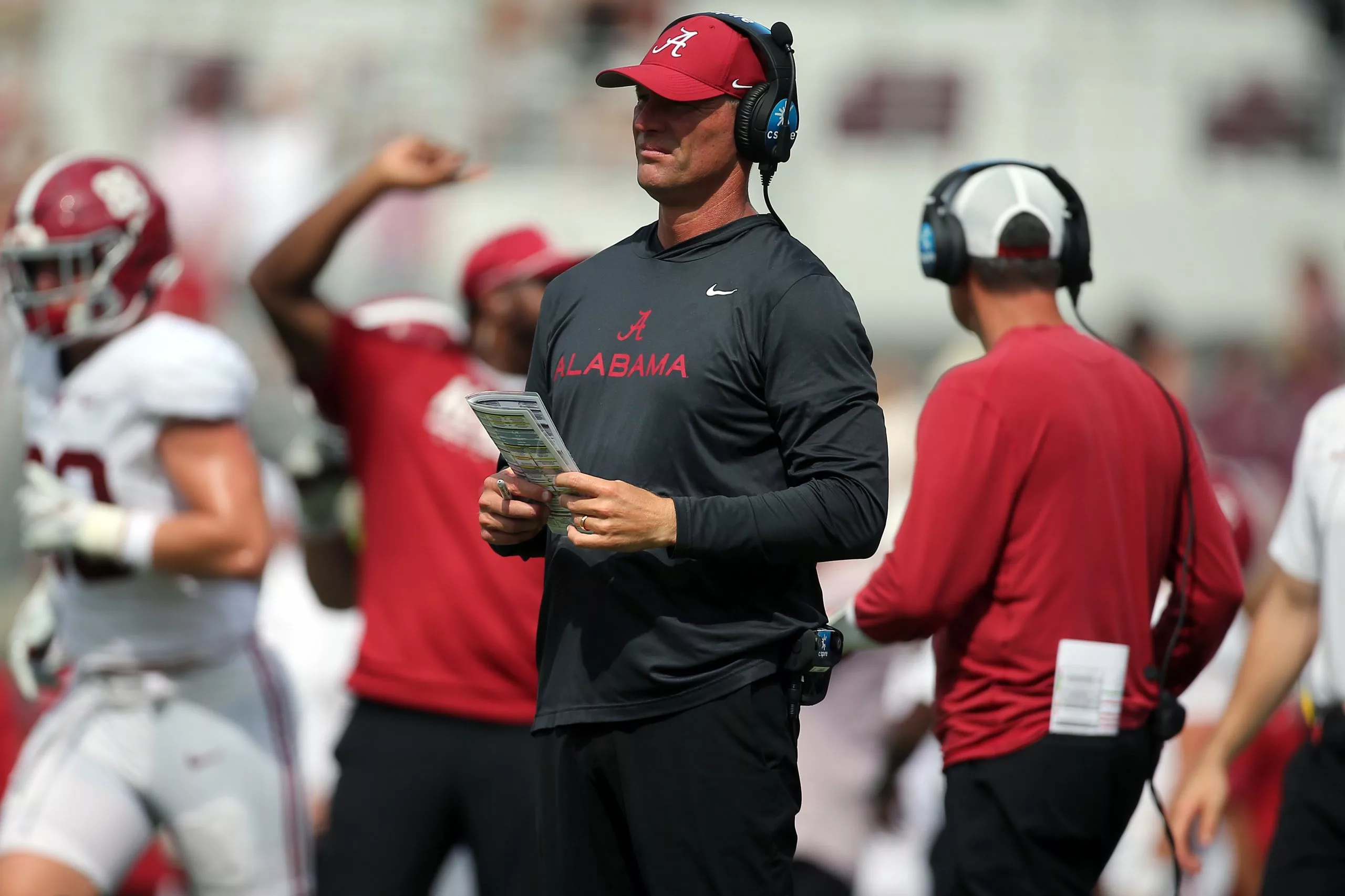
Alabama head coach Kalen DeBoer has watched Georgia often enough to recognize the faces. What caught his attention this week was how quickly those players have been taking control of games. Asked at his Monday news conference in Tuscaloosa what separates this Georgia team from the versions Alabama has faced, …
by Marvin Uzor
10 hours ago
Latest College Football News, Picks and Betting Predictions
by Marvin Uzor
10 hours ago
Latest College Football News, Picks and Betting Predictions
by James Ernest
10 hours ago
Latest College Football News, Picks and Betting Predictions
by James Ernest
10 hours ago
Latest College Football News, Picks and Betting Predictions
by James Ernest
10 hours ago
College football betting is legal in many states, but not every state allows every type of NCAAF wager.
Some states prohibit college sports betting altogether, while others allow betting on college football but restrict wagers involving in-state teams or individual college athletes.
For example, New York, Connecticut, and Delaware allow sports betting but restrict wagers on in-state college teams.
In other states, college sports betting may be prohibited entirely, meaning you won’t find NCAAF markets on legal sportsbooks at all. Rules can also differ for tournaments, championship games, and events involving in-state teams.
Another important restriction concerns college player props. Some states prohibit wagers on individual college athletes, even when they allow betting on college football games.
These restrictions are designed in part to protect college athletes, who can be more accessible than professional players.
The bottom line is that you can sign up and wager at our top NCAAF betting sites if sports betting and the specific college football wagers you want are legal in your state.
However, don’t assume that every sportsbook offers the same NCAAF markets everywhere. Check your state’s regulations to see whether college football betting is permitted and whether there are restrictions on in-state teams, player props, or particular college events.
| State |
College Football Betting |
In-State College Teams |
| Arizona |
✅ Legal |
✅ Allowed |
| Arkansas |
✅ Legal |
✅ Allowed |
| Colorado |
✅ Legal |
✅ Allowed |
| Connecticut |
✅ Legal |
❌ Restricted |
| Delaware |
✅ Legal |
❌ Restricted |
| Florida |
✅ Legal |
✅ Allowed |
| Illinois |
✅ Legal |
⚠️ Restricted online |
| Indiana |
✅ Legal |
✅ Allowed |
| Iowa |
✅ Legal |
✅ Allowed |
| Kansas |
✅ Legal |
✅ Allowed |
| Kentucky |
✅ Legal |
✅ Allowed |
| Louisiana |
✅ Legal |
✅ Allowed |
| Maine |
✅ Legal |
❌ Restricted |
| Maryland |
✅ Legal |
✅ Allowed |
| Massachusetts |
✅ Legal |
❌ Restricted |
| Michigan |
✅ Legal |
✅ Allowed |
| Mississippi |
✅ Legal |
✅ Allowed |
| Montana |
⚠️ Legal, retail only |
❌ Restricted |
| Nebraska |
✅ Legal |
✅ Allowed |
| Nevada |
✅ Legal |
✅ Allowed |
| New Hampshire |
✅ Legal |
❌ Restricted |
| New Jersey |
⚠️ Legal, with restrictions |
❌ Restricted |
| New Mexico |
✅ Legal |
❌ Restricted |
| New York |
✅ Legal |
❌ Restricted |
| North Carolina |
✅ Legal |
✅ Allowed |
| Ohio |
✅ Legal |
✅ Allowed |
| Oregon |
✅ Legal |
❌ Restricted |
| Pennsylvania |
✅ Legal |
✅ Allowed |
| Rhode Island |
✅ Legal |
❌ Restricted |
| South Dakota |
⚠️ Legal, retail only |
❌ Restricted |
| Tennessee |
✅ Legal |
✅ Allowed |
| Virginia |
✅ Legal |
❌ Restricted |
| Washington |
⚠️ Legal, tribal/retail restrictions |
❌ Restricted |
| West Virginia |
✅ Legal |
✅ Allowed |
| Wisconsin |
✅ Legal |
❌ Restricted |
| Wyoming |
✅ Legal |
✅ Allowed |
College football may appear as a smaller version of the pro league, but it’s actually much more than that. In our experience, staking on NCAAF games offers specific benefits, especially compared to the NFL. Let’s discuss the top five advantages:
Volume is one of the most significant advantages of betting on the NCAAF. Based on our research, US sportsbooks typically list 60 to 80 college football games per week during peak season. Sometimes, it’s even above 100 if smaller conferences kick off.
In comparison, the NFL offers a fixed number of 14 to 16 games per week. Besides, pro football only has two conferences, the AFC and the NFC, and eight divisions. Meanwhile, the NCAAF has 10 FBS conferences plus independent teams.
It’s a similar situation when you look at NCAAB and
NBA betting
sites. Pro basketball has two conferences, six divisions, and 30 teams. In contrast, college basketball features 32 conferences and 350+ teams in Division I.
Softer betting odds
We’ve observed that college football odds are not as polished as pro league lines. The reason is that sportsbooks have more work to do due to the high volume of games. On a typical Saturday, the sites have to set odds for matchups in the SEC, Big Ten, Big 12, ACC, Mountain West, MAC, Sun Belt, and more.
The many games make it harder to price moneylines, totals, and spreads properly. Therefore, you can easily find value bets with odds that don’t capture the actual probability. We notice this more with events outside the major headlines.
In the NFL, things are different, since sportsbooks have fewer than 20 games to price each week. They can easily adjust lines based on betting volume and predictions from professional bettors.
High result volatility
If you follow college football, you’ll agree that swings are common. The league has young rosters and frequent coaching changes, which lead to inconsistent performances. Therefore, one team can dominate this week and stumble the next.
As experts, we know that such volatility is risky on the surface because you can’t rely much on past results. Still, it creates a unique opportunity on college football betting sites. If you’re sharp, you can look for mismatches and certain conditions that odds don’t fully show.
Let’s suppose a college football team performs well in one game. In that case, betting lines may still portray them as favorites for the next matchup, even though momentum may drop. You can then back the opponents to improve your chances of winning.
Local knowledge helps
With college football, you’re mainly looking at homegrown teams. Players and coaches are often tied to a particular state, and if you live in the same region, you can leverage your local knowledge. This benefit applies especially to weather conditions and rivalry.
However, as we mentioned earlier, most states restrict bets on in-state college teams. Prop markets on individual players are the most limited. Therefore, even if you know your local team inside out, you may not be able to place specific wagers.
This restriction also applies to
college basketball betting sites, so it’s not only a football thing. The silver lining is that betting is usually allowed on local NCAAF teams when they play out of state.
More bowl and championship variety for futures
Our last advantage of online college football betting relates to the many conferences the league features. After the regular season, the NCAAF has over 40 bowl games. Plus, there are 14 conference championships, then the playoffs. On most sportsbook sites, you can place futures on these games at the start of the season.
Clearly, NCAAF betting offers more bowl and championship variety than the NFL. In pro football, 14 teams make the playoffs, leading to a single-elimination path. From the Wild Card to the Divisional, Conference Championships, and the Super Bowl, it’s just 13 games.
Our standout sports betting sites

1.
New Users – Get $250 in Bonus Bets when you wager $5 for 5 days
Bet now
Gambling Problem? Call 1-800-GAMBLER or 1-800-MY-RESET. Call 1-888-789-7777 or visit ccpg.org/chat (CT). Hope is here. GamblingHelpLineMA.org or call (800) 327-5050 for 24/7 support (MA). Visit www.mdgamblinghelp.org (MD). Call 1-877-8HOPE-NY or text HOPENY (467369) (NY). 21+ (18+ D.C., KY, WY) and present in select states (for KS, in affiliation with Kansas Star Casino). First online real money wager only. Min $5 wager required for 5 consecutive days.$5 first deposit required. Bonus issued as nonwithdrawable bonus bets which expire 7 days after receipt. Restrictions apply. See terms at sportsbook.fanduel.com. Call 1-877-770-7867 (LA). ™/© 2026 MLB

2.
Up To $1500 in Bonus Bets Paid Back if your First Bet Does Not Win
Bet now
Gambling problem? Call 1-800-GAMBLER or 1-800-MY-RESET (Available in the US) 877-8-HOPENY or text HOPENY (467369) (NY) 1-800-327-5050 (MA), 1-800-BETS-OFF (IA), 1-800-981-0023 (PR). 21+ only. Please Gamble Responsibly. See BetMGM.com for Terms. First Bet Offer for new customers only (if applicable). Subject to eligibility requirements. Bonus bets are non-withdrawable. In partnership with Kansas Crossing Casino and Hotel. Promotional offers not available in Mississippi, Massachusetts, New York, Ontario, or Puerto Rico.

3.
New DraftKings Customers: Spend $5+ Get $150 in Bonuses
Bet now
GAMBLING PROBLEM? CALL 1-800-GAMBLER or 1-800-MY-RESET, (800) 327-5050 or visit gamblinghelplinema.org (MA). Please Gamble Responsibly. 888-789-7777/visit ccpg.org (CT), or visit www.mdgamblinghelp.org (MD), 1-800-981-0023 (PR). 21+ and present in most states. (18+ DC/NH/PR/WY). Void in CAN. Eligibility restrictions apply. On behalf of Boot Hill Casino (KS). Pass-thru of per wager tax may apply in IL. 1 per new DraftKings customer. $5+ first-time bet req. Max. $150 issued as non-withdrawable Bonus Bets. Stake removed from payout. Reward issued as $50 in Bonus Bets every 7 days via click-to-claim for 14 days. Bonus Bets and click-to-claims expire 7 days (168hrs) after issuance. Terms: sportsbook.draftkings.com/promos. Ends 10/11/26 at 11:59 PM ET. Sponsored by DK.

4.
Get Up to $1,000 Matched in FanCash
Bet now
Must be 21+. GAMBLING PROBLEM? CALL 1-800-GAMBLER OR CALL 1-800-MY-RESET, www.mdgamblinghelp.org (MD), (800)-327-5050 or gamblinghelplinema.org (MA), Call (877)8-HOPENY or text HOPENY (467369) (NY), (888) 789-7777 or ccpg.org (CT), morethanagame.nc.gov (NC), 1800gambler.net (WV)

5.
Bet $1 and get double the winnings up to $25 for your next 10 bets
Best Alternative
 Open FanDuel
21+ New users only. Must register using eligible promo code. First bet after registration must qualify. Max. Bonus Bet: $1,000. Bonus Bet expires 14 days after receipt. Void where prohibited. See Caesars.com/promos for full terms. Gambling Problem? 1-800-GAMBLER (1-800-426-2537)
College football doesn’t have comprehensive, standardized stats like the NFL. You may find reliable sources for Power Five games, but mid-major and FCS have limited insights. For this reason, researching NCAAF bets may appear challenging.
However, it doesn’t have to be. You can make better college football betting predictions by following our pro research tips below:
💰 Shop Around for the Best Odds
Don’t automatically place your bet at the first sportsbook you use. Compare the same NCAAF market across multiple betting sites because spreads, moneylines, and totals can differ. Even a small difference in price can have a meaningful impact over time, especially if you bet frequently. If one sportsbook offers -105 while another has -115 on the same market, the -105 line generally gives you better value.
📉 Look for Line Value, Not Just Winners
Picking the team you think will win isn’t enough. The key is determining whether the sportsbook’s odds accurately reflect the team’s chances. A strong team can still be a poor bet if the market has already priced in its advantages. Compare the odds with your own estimated probability and look for situations where you believe the sportsbook has underestimated an outcome.
🏈 Bet Against the Public When the Price Is Right
Popular college football teams attract plenty of casual betting action, particularly nationally recognized programs and major rivalry teams. Don’t automatically follow the public. Instead, consider whether the line has moved because of heavy betting on a popular team and whether the current price still represents good value. Betting against public sentiment isn’t a strategy by itself, but it can help you identify potentially inflated lines.
📊 Use Closing Line Value to Measure Your Bets
Track the odds you receive and compare them with the closing line immediately before kickoff. If you regularly bet a team at -3 and the line closes at -4.5, you generally got a better price than the market ultimately offered. This is known as closing line value (CLV) and is a useful way to evaluate whether your process is identifying value, even when individual bets lose.
🎯 Specialize in Specific Betting Markets
You don’t have to bet every market available. Consider specializing in one or two areas, such as NCAAF spreads, totals, or first-half markets. Learn how sportsbooks price those markets and develop a consistent process for evaluating them. Specialization can make it easier to identify mistakes than constantly switching between moneylines, props, parlays, and futures.
⏰ Pay Attention to Line Movement
Monitor how the betting line changes between when it opens and kickoff. Significant movement can reflect new information such as injuries, weather, lineup changes, or substantial market activity. Don’t blindly follow line movement, though. Instead, investigate why the odds changed and decide whether the new price still offers value before placing your wager.
💵 Use Consistent Bet Sizing
Avoid changing your stake dramatically because you feel particularly confident about a matchup. A simple approach is to use a consistent percentage of your betting bankroll for most wagers. This limits the damage from losing streaks and prevents one bad prediction from wiping out a large portion of your bankroll. If you use a larger stake for particularly strong opinions, set your rules in advance rather than making emotional decisions.
A losing Saturday doesn’t mean you need to increase your bets to recover the money immediately. Chasing losses can quickly turn a normal losing streak into a much larger bankroll problem. Treat every NCAAF wager as an independent decision and stick to the staking limits you’ve established before the games begin.
🔄 Reevaluate Your Bets After New Information
College football teams can change considerably during a season because of injuries, transfers, suspensions, depth-chart changes, and improving young players. Don’t rely entirely on preseason expectations or results from several weeks ago. Update your assessment when meaningful new information becomes available and determine whether the current odds still make sense.
Upsides and downsides of NCAAF betting
Registering with our top college football betting sites has its pros, as we already discussed. However, there’s also a con to it, which we’ve outlined below:
Pros and Cons
- High volume of football games
- Softer betting lines
- Local knowledge can help
- Some market restrictions may apply
We selected our top five NCAAF sportsbooks based on extensive tests and analysis. In the process, these are the major factors we examine:
We only recommend sportsbooks that are properly licensed and regulated in the states where they operate. You won’t find any fishy or suspicious companies in this article.
We check whether each operator has the necessary state approval and whether it follows local rules governing sports betting.
This matters for NCAAF because some states allow college football betting but restrict wagers on in-state teams, player props, or certain college events.
You are here for college games, and we look for sportsbooks with extensive NCAAF coverage rather than sites that only list the biggest games.
Our tests consider how many matchups are available, including major FBS conferences such as the SEC, Big Ten, Big 12, and ACC.
We also look at the variety of markets, including moneylines, spreads, totals, props, futures, parlays, and same-game parlays.
Competitive odds can make a significant difference over time, so we compare lines across sportsbooks to see how much value each platform offers.
I personally like to pay particular attention to moneylines, spreads, and totals on popular NCAAF games.
As a general benchmark, we favor sportsbooks that keep juice below 5% on these core markets, although prices can vary by game and market.
College football betting doesn’t stop at kickoff, so I test each sportsbook’s live betting experience.
We look at how quickly odds update, how many markets remain available during games, and whether important markets are accessible during key moments.
We also consider how easy it is to find live NCAAF games and place bets while the action is underway.
We assess the actual value of each sportsbook’s promotions rather than judging an offer solely by its headline figure.
Our review covers welcome bonuses, bonus bets, odds boosts, recurring promotions, parlay offers, and loyalty programs.
We also examine the qualifying requirements and restrictions to determine how useful the promotion is for a typical bettor.
Responsible gambling is another important part of our testing.
We check whether sportsbooks provide tools such as deposit limits, wagering limits, time-outs, self-exclusion, and other account controls.
We favor operators that make these tools easy to find and use, giving bettors practical ways to manage their activity and stay within their limits.
College football betting can seem complicated at first, especially with hundreds of teams and a wide range of betting markets available.
However, the basic process is straightforward. Once you know how to find a game, read the odds, choose a market, and place your wager, you can explore more advanced options like parlays, player props, and live betting.
Here’s a simple step-by-step guide to how to bet on NCAAF games:
-
Choose a legal college football sportsbook –
Start by selecting any of the sportsbooks listed on this page, and check that it is licensed in your state and offers NCAAF betting.
Check that the sportsbook covers the games and markets you want to bet on, as college football restrictions vary between states.
-
Create an account –
Create a new account at your chosen sportsbook using your personal information and complete any required identity and age verification.
You must also be physically located within the sportsbook’s permitted jurisdiction when placing a wager.
-
Find the college football section –
Once your account is ready, search for the sportsbook’s College Football, NCAAF, or NCAA Football section.
You should see upcoming games organized by date, conference, or competition.
-
Choose a game and compare the odds –
Select the matchup you’re interested in and review the available markets. The most common options are the moneyline, point spread, and game total.
Compare the odds before placing your bet because different sportsbooks can offer slightly different prices.
-
Select your bet –
Click on the odds and choose your preferred wager. For example, you might back a favorite on the spread, bet on the underdog’s moneyline, or predict whether the combined score will go over or under the posted total.
Depending on the game you select, you may also find player props, team props, futures, and parlays.
-
Enter your stake –
Your selected wager will appear on the bet slip. Enter how much you want to risk and check the potential payout before confirming.
Only wager an amount you’re ok losing. Remember, this should never be your main source of income.
-
Track your bet –
You can monitor your wager from the sportsbook’s open bets section.
If live betting is available, you may also find additional NCAAF markets after kickoff, although availability and odds can eventually change throughout the game.
The three most common college football betting markets are
moneyline, point spread, and totals (over/under).
They’re also the easiest markets to understand when you’re just getting started. Below, we explain how each one works and use real college football matchups to make the examples easier to follow.
A moneyline bet is a wager on which team will win the game. You don’t need to predict the margin of victory; your team simply needs to win.
For example, imagine a college football matchup between **Alabama and Auburn** with these moneyline odds:
– Alabama: -200; Auburn: +165
If you bet $20 on Alabama at -200, you would make $10 in profit if Alabama wins, giving you a total return of $30 including your original stake.
If you instead bet $20 on Auburn at +165, you would make $33 in profit if Auburn wins, for a total return of $53.
Negative odds indicate the favorite, while positive odds indicate the underdog. In general, favorites require a larger stake to make a smaller profit, while underdogs offer a larger potential profit relative to the amount wagered.
The point spread gives the underdog a virtual head start and requires you to predict whether the favorite will win by more than the posted number.
For example, suppose Ohio State is -7.5 against Michigan. To cash a bet on Ohio State -7.5, the Buckeyes would need to win by at least eight points.
If you bet $20 at -110 odds and Ohio State wins 31-21, your bet wins because the Buckeyes covered the 7.5-point spread. You would profit $18.18 and receive $38.18 total.
If Michigan keeps the game close and loses 31-27, a bet on Ohio State -7.5 would lose because the Buckeyes won by only four points. A bet on Michigan +7.5 would win instead.
The spread is popular because it can make a matchup between a heavily favored team and an underdog more competitive from a betting perspective.
A totals bet, also called an over/under, is focused on the combined number of points scored by both teams rather than the classic “predicting the winner”.
For example, suppose Texas plays against Oklahoma, and the sportsbook sets the total at 58.5 points.
If you bet the over, the two teams must combine for at least 59 points. A final score of Texas 34, Oklahoma 27 would produce 61 total points, so the over would win.
If you bet the under, you need 58 points or fewer. A 27-24 final score would produce 51 points, meaning an under 58.5 wager would win.
Once you understand the basic moneyline, spread, and totals markets, you can explore more advanced NCAAF betting options.
These markets let you bet on specific parts of a game like how an individual player performs, combinations of outcomes, and how the game will unfold in real time.
The availability can vary by sportsbook and state, especially for college player props.
Halftime betting
Halftime bets let you wager on what will happen during the second half only, rather than the entire game.
Sportsbooks may offer moneylines, spreads, and totals for the second half once the first half is complete.
EXAMPLE: Georgia leads Florida 21-17 at halftime and the sportsbook posts a second-half spread of Georgia -3.5. If you bet Georgia -3.5, the Bulldogs would need to outscore Florida by at least four points during the second half for your bet to win.
These markets can be useful because you have more information than you did before kickoff, including the score, any current player injuries, offensive performance, and how each team has looked during the first two quarters.
Quarter betting
Quarter betting works similarly to halftime betting, but focuses on an individual quarter. You might find markets for the first, second, third, or fourth quarter, depending on the sportsbook and game.
EXAMPLE: If Ohio State is playing Michigan, a sportsbook could offer a first-quarter total of 10.5 points. A bet on the over would win if the teams combine for 11 or more points during the first quarter, regardless of what happens during the remaining three quarters.
Quarter markets are particularly popular with bettors who have a specific view about how quickly a team will start or finish a game.
Parlays
A parlay combines two or more individual bets into one wager. Every selection must win for the parlay to cash, but the potential payout is higher than betting the selections individually.
For example, you could create a three-leg NCAAF parlay consisting of:
- Alabama moneyline
- Texas -6.5
- Ohio State vs. Michigan over 52.5 points
If all three selections win, the parlay wins. If even one selection loses, the entire parlay loses.
Parlays are easy to build and can combine different college football games, making them one of the most popular markets at US sportsbooks. However, the higher potential payout comes with a higher risk of losing the entire wager.
Same-game parlays
A same-game parlay (SGP) lets you combine multiple bets from the same college football matchup. Depending on the sportsbook, you may be able to combine a spread, total, player prop, and other markets.
For example, for LSU vs. Texas A&M, you could potentially create an SGP containing:
- LSU moneyline
- Over 54.5 total points
- LSU quarterback over 250 passing yards
All three selections would need to satisfy the sportsbook’s SGP rules for the wager to win.
The advantage is that you can build a bet around your prediction of how a game will play out. However, SGPs can be particularly difficult because some outcomes are correlated and sportsbooks adjust the odds accordingly.
Prop bets focus on specific events or performances rather than simply picking the winner. For NCAAF, these can include passing yards, rushing yards, receiving yards, touchdowns, receptions, completions, and other player or team statistics.
EXAMPLE: a sportsbook might offer a prop on a quarterback’s passing yards at over/under 275.5 yards. If you bet the over, the quarterback would need to finish with at least 276 passing yards for the wager to win.
However, college football player props aren’t legal everywhere. Some states prohibit all college athlete props, while others allow them only under certain conditions, such as when the player or team is from outside the state.
The NCAA has also continued to push state regulators to eliminate individual college player props, and the rules have changed in several states in recent years.
The table below focuses on individual college athlete props, not team props or standard game markets. Because regulations can change, bettors should verify the current rules and the markets offered by their sportsbook before wagering.
| State |
College Player Props |
Restrictions / Notes |
| Arkansas |
✅ Legal |
Generally permitted |
| Colorado |
❌ Not legal |
College player props banned |
| Connecticut |
⚠️ Restricted |
Out-of-state college players only |
| Delaware |
⚠️ Restricted |
Out-of-state college players only |
| Florida |
⚠️ Restricted |
Out-of-state college players only |
| Illinois |
❌ Not legal |
College player props banned |
| Indiana |
⚠️ Restricted |
Pre-game props only |
| Iowa |
⚠️ Restricted |
Out-of-state college players only |
| Kansas |
❌ Not legal |
College player props banned |
| Kentucky |
✅ Legal |
Generally permitted |
| Louisiana |
❌ Not legal |
College player props banned |
| Maryland |
❌ Not legal |
College player props banned |
| Massachusetts |
❌ Not legal |
College player props banned |
| Michigan |
✅ Legal |
Generally permitted |
| Mississippi |
❌ Not legal |
College player props banned |
| Montana |
⚠️ Restricted |
Retail sportsbooks only |
| Nevada |
✅ Legal |
Generally permitted |
| New Hampshire |
⚠️ Restricted |
Out-of-state college players only |
| New Jersey |
⚠️ Restricted |
Out-of-state college players only |
| New Mexico |
⚠️ Restricted |
Retail sportsbooks only |
| New York |
❌ Not legal |
College player props banned |
| North Carolina |
✅ Legal |
Generally permitted |
| North Dakota |
✅ Legal |
Generally permitted |
| Ohio |
❌ Not legal |
College player props banned |
| Oregon |
❌ Not legal |
College player props banned |
| Pennsylvania |
❌ Not legal |
College player props banned |
| Rhode Island |
⚠️ Restricted |
Out-of-state college players only |
| Tennessee |
❌ Not legal |
College player props banned |
| Vermont |
❌ Not legal |
College player props banned |
| Virginia |
❌ Not legal |
College player props banned |
| Washington |
⚠️ Restricted |
Out-of-state college players only |
| Washington, D.C. |
⚠️ Restricted |
Out-of-state college players only |
| Wisconsin |
⚠️ Restricted |
Out-of-state college players only |
| Wyoming |
✅ Legal |
Generally permitted |
Live betting lets you place wagers after the game has started. Sportsbooks continuously update the odds based on the score, time remaining, possession, injuries, and other developments.
EXAMPLE: If Notre Dame is a pregame favorite but falls behind 10-3 early in the second quarter, its live moneyline price may become much longer than it was before kickoff. You could then decide whether the live odds provide enough value to back Notre Dame.
Live markets can include moneylines, spreads, totals, and selected props. However, markets can disappear temporarily while sportsbooks update their odds, especially after major plays such as touchdowns, turnovers, or injuries.
Futures bets
Futures are wagers on an outcome that will be decided later in the season. In college football, common futures include the national champion, conference winner, Heisman Trophy winner, and team season win totals.
EXAMPLE: Before the season you might bet on Georgia to win the national championship at +600. If Georgia wins the title, a $20 bet would produce $120 in profit, plus your original $20 stake.
Futures can offer attractive odds early in the season, but your money remains tied up until the outcome is determined or you cash out.
College football futures let you bet on outcomes that won’t be decided until later in the season, rather than a single game.
They can cover everything from a team’s total number of regular-season wins to the eventual national champion or individual award winners.
Futures are available before and during the season, although odds generally change as teams win games, lose games, and move closer to their targets.
Current sportsbooks offer markets such as win totals, national championship, conference championships, playoff qualification, and the Heisman Trophy.
A win-total bet asks you to predict whether a team will finish the regular season over or under a number set by the sportsbook. The line is usually a half number, such as 8.5, so there is no tie between the over and under.
For example, sportsbooks currently have Ohio State’s 2026 regular-season win total at 9.5. A bet on the over requires the Buckeyes to win at least 10 regular-season games, while an under bet wins if they finish with nine or fewer.
Imagine you bet Ohio State over 9.5 wins before the 2026 season. If the Buckeyes finish 10-2, your bet wins. If they finish 9-3, your bet loses. The result of their bowl or College Football Playoff games would not change a regular-season win-total bet.
National championship
The national championship is one of the most popular NCAAF futures. You simply select the team you believe will win the College Football Playoff National Championship and lock in the available odds. Your bet remains open throughout the season and pays out if your team eventually wins the title.
For the 2026 season, Ohio State, Notre Dame, and Texas are among the leading contenders, with sportsbooks currently listing Ohio State around +600 at some books.
Suppose you bet $20 on Ohio State at +600 to win the 2026 national championship. If Ohio State wins the title, you would make $120 in profit and receive $140 in total, including your original $20 stake. If another team wins, the bet loses.
Instead of predicting the eventual champion, you can sometimes bet on whether a team will make the College Football Playoff. This can be an appealing alternative if you believe a team is good enough to qualify but aren’t confident it can win the entire tournament.
For example, current 2026 markets have Notre Dame at around +130 to make the CFP at FanDuel in one available market.
If you bet $20 on Notre Dame to make the 2026 College Football Playoff at +130, you’d make $26 in profit if the Fighting Irish qualify. Your total payout would be $46, including your $20 stake. Notre Dame wouldn’t need to win the championship for this bet to cash — it only needs to qualify for the playoff.
Conference championship
Conference championship futures let you predict which team will finish as the champion of a particular conference. Sportsbooks commonly offer markets for conferences such as the SEC, Big Ten, Big 12, ACC, and others.
These bets can provide a shorter route to a payout than national championship futures because you’re backing a team to win its conference rather than the entire CFP.
Imagine a sportsbook lists Oregon at +260 to win the 2026 Big Ten Championship. A $20 bet would produce $52 in profit if Oregon wins the conference, giving you a $72 total payout. If another Big Ten team wins the conference, the bet loses.
Heisman Trophy
The Heisman Trophy market lets you bet on the player you think will win college football’s most prestigious individual award. Quarterbacks are often prominent in the market, but running backs, receivers, and other players can also be listed.
For the 2026 season, Miami quarterback Darian Mensah, Oregon quarterback Dante Moore, and Texas quarterback Arch Manning are among the leading Heisman candidates
Suppose you back Dante Moore at 11/1 to win the 2026 Heisman Trophy. A $20 bet would return $220 in profit if Moore wins the award, plus your original $20 stake for a $240 total payout. Your bet is settled based on who wins the Heisman, regardless of whether Oregon wins the national championship.
Depending on the sportsbook, you may find plenty of additional NCAAF futures beyond the major markets above.
These can include conference win totals, undefeated regular-season records, whether a team reaches the national championship game, division winners, and other season-long team or player achievements.
Current sportsbook futures boards show markets across individual conferences and team regular-season win totals.
The main advantage of futures is that you can lock in a price before the outcome is known. However, your money is typically tied up for much longer than with a standard game bet, and a team’s odds can move significantly throughout the season.
Yes,
you can bet live on college football games at many US sportsbooks, provided in-game betting is legal and available in your state. Live betting begins after kickoff, when the sportsbook replaces its pregame lines with dynamic odds that change as the game develops. BetMGM, for example, currently lists live college football betting and says its live odds are updated throughout games.
The biggest difference from pregame betting is that the sportsbook is constantly recalculating the odds based on the
score, time remaining, possession, field position, injuries, and what is happening on the field. A team that was a 7-point favorite before kickoff could become a much bigger favorite after taking a two-touchdown lead, while an early underdog may shorten dramatically after a strong start.
The exact selection varies by sportsbook and game, but common live NCAAF markets include:
- Live moneyline:
Pick which team will win from the current point in the game.
- Live spread:
Bet on the adjusted point spread based on the current score and game situation.
- Live totals:
Bet whether the teams will finish above or below an updated over/under.
- First-half and second-half markets:
Some sportsbooks continue offering markets specifically for the remaining half.
- Live quarter markets:
Certain sportsbooks offer betting on individual quarters.
- Live player and team props:
Where permitted, you may find updated markets for statistics such as passing, rushing, receiving, or touchdowns.
- Live parlays:
Some sportsbooks allow multiple live selections to be combined into a parlay. BetMGM specifically advertises live parlays as part of its live betting offering.
For example, imagine a team entered the game as a
-7.5 favorite but is trailing 10-7 at halftime. The sportsbook might now make that team a live -1.5 favorite. If you still believe it will come back and win by at least two points, you could take the new spread instead of the original pregame line.
Live odds can move extremely quickly, and sportsbooks may temporarily suspend a market after major events such as touchdowns, turnovers, fourth-down attempts, or injuries. Once the sportsbook has recalculated the market, betting normally resumes with new odds.
🏈 FanDuel — Live college football betting
FanDuel offers live betting on college football games alongside its standard NCAAF pregame markets. The sportsbook’s college football section makes it easy to find individual teams and upcoming matchups, while live markets become available as eligible games get underway.
Depending on the matchup and your location, you can typically expect core live markets such as moneyline, spread, and totals. Additional markets can appear during the game, although the exact selection isn’t guaranteed for every matchup.
FanDuel’s live betting interface is particularly useful if you want to watch a game before deciding whether to place a wager, since the odds adjust as the score and game situation change.
🎯 DraftKings — Live college football betting
DraftKings has a dedicated live betting section where odds update as sporting events unfold. Its live betting system is designed around constantly changing prices, so you can accept updated odds as the game progresses. :contentReference[oaicite:3]{index=3}
For college football, DraftKings also offers live player-based Pick6 selections in eligible locations. These Live Picks use real-time statistics and projections that change during the game, giving bettors another way to follow NCAAF action beyond traditional game lines. :contentReference[oaicite:4]{index=4}
Traditional live sportsbook markets can include moneylines, spreads, and totals, with additional markets depending on the game and state. As with other sportsbooks, some markets may disappear temporarily while DraftKings updates its prices.
🦁 BetMGM — Live college football betting
BetMGM has one of the more clearly defined live college football offerings. Its NCAAF sportsbook currently displays game lines as well as first-half, second-half, and first-quarter markets, while its live betting platform allows wagers after kickoff. :contentReference[oaicite:5]{index=5}
BetMGM specifically promotes live college football betting and says bettors can find live opportunities throughout games. Its live offering includes updated moneylines, spreads, totals, and other available markets. The sportsbook also supports live parlays, allowing bettors to combine multiple live selections when the relevant markets are available. :contentReference[oaicite:6]{index=6}
One important point is that live college football availability can depend on your state. BetMGM notes that state regulations can affect which college events and types of wagers are available, so you may see fewer markets than bettors in another jurisdiction.
NCAAF Vs NFL betting
Although college football and the NFL use many of the same betting markets,
NCAAF and NFL betting aren’t identical. College football has a much larger number of teams, bigger differences in team quality, and more variation in playing styles. Rules surrounding college sports betting can also differ by state, particularly when it comes to wagers on in-state teams and individual college athletes.
If you’re used to NFL betting, don’t automatically assume the same approach will work for college football. Here are some of the biggest differences to keep in mind:
🏈 Team quality can vary much more in college football
The biggest difference is the gap between teams. The NFL is designed to maintain competitive balance, with mechanisms such as the draft and salary cap helping prevent a small group of teams from dominating indefinitely.
College football has no equivalent level of competitive balance. A top-ranked program can face a much weaker opponent, creating significantly larger point spreads than you typically see in the NFL.
This matters when betting spreads and totals. A heavily favored college team may be capable of scoring points deep into the second half, while NFL favorites are generally less likely to dominate to the same extent.
📊 More teams and less consistent data
There are only 32 NFL teams, whereas the FBS has well over 100 programs. That makes college football a much larger betting market to analyze.
It can also be harder to compare teams because schedules vary considerably. A team might have impressive statistics after playing several weaker opponents, while another may have worse numbers because it faced multiple highly ranked teams.
Before betting on NCAAF, consider the strength of schedule rather than relying solely on a team’s win-loss record or basic statistics.
🎓 College player props have additional restrictions
NFL player props are widely available, but college football player props are subject to much greater restrictions. Some states prohibit wagers on individual college athletes altogether, while others allow them only under specific circumstances.
This means you might find quarterback passing-yard or touchdown props at one sportsbook and state, but not at another. Always check your local regulations and the markets available to you before assuming a particular NCAAF prop is legal.
🏟️ Home-field advantage can be different
Home-field advantage is important in both sports, but college football stadiums can create particularly challenging environments for visiting teams. Some programs play in front of more than 100,000 fans, while traditions, rivalries, travel distances, and weather can add another layer to a matchup.
When comparing an NCAAF spread, consider where the game is being played and whether the visiting team has experience performing in similar environments.
📅 College schedules and rivalries matter
College teams don’t have the same 17-game regular season structure as NFL teams. Their schedules can include conference games, non-conference matchups, rivalry games, and games against very different levels of opposition.
Rivalry games are particularly important. A team’s season-long form doesn’t always tell the full story when it faces a traditional rival, so don’t overlook the history and importance of the matchup when handicapping a game.
💰 Point spreads can become very large
College football sportsbooks regularly post much larger spreads than you’ll typically encounter in the NFL. It’s not unusual to see elite teams favored by 20, 30, or even more points against weaker opponents.
That creates an important distinction between picking a winner and betting the spread. A team can win comfortably but still fail to cover a large number.
For example, if Georgia is -21.5 and wins 35-17, it wins the game but doesn’t cover the spread. The underdog would cover because it stayed within 21 points.
🌦️ Weather can have a bigger impact
Weather is worth monitoring for both NFL and NCAAF games, but it can become particularly important in college football because games are played at many different venues and times throughout the season.
Strong wind, heavy rain, extreme heat, or cold can affect passing, kicking, and overall scoring. Before betting totals or quarterback props, check the forecast and consider whether the conditions could change how the teams normally play.
⚠️ Don’t transfer NFL betting strategies directly to NCAAF
A strategy that works well for NFL betting isn’t automatically profitable in college football. The larger number of teams, differences in team quality, schedule disparities, player turnover, and state-specific betting restrictions all make NCAAF a distinct market.
If you’re new to college football betting, start by learning how teams perform against different levels of competition and become familiar with the conferences and programs you want to bet on. Then use that information alongside the sportsbook’s current odds rather than relying on NFL-based assumptions.
College football season is one of the busiest periods for US sportsbooks, so it’s a good time to look for
betting bonuses that can be used on NCAAF games. Most sportsbooks don’t require you to use your welcome offer on a particular sport, meaning you can often use your bonus bets or qualifying wager on a college football moneyline, spread, total, or other eligible market.
For example, if a sportsbook gives you
$200 in bonus bets after a qualifying $5 wager, you can generally use those bonus bets on an eligible NCAAF game. However, always check the promotion’s terms because minimum odds, eligible markets, bet types, and state availability can apply.
How to use a sportsbook welcome bonus on NCAAF
Using a standard sportsbook welcome offer to bet on college football is relatively simple:
- Choose a legal sportsbook
– Make sure the operator is available in your state and accepts NCAAF wagers.
- Register and claim the promotion
– New customers usually need to opt into the offer during registration or before placing their qualifying bet.
- Complete the qualifying wager
– This may involve betting a minimum amount at specified odds. For example, bet365 currently advertises a Bet $10, Get $150 in Bonus Bets offer, subject to its terms.
- Bet on college football
– Once your bonus is credited, you can generally select an eligible NCAAF moneyline, spread, total, or other qualifying market.
- Check the terms first
– Bonus bets are normally non-withdrawable, and you generally receive only the winnings from a bonus-bet wager rather than the bonus stake itself.
For example, suppose you receive
$150 in bonus bets
and use $50 on a college football spread at +110. If the bet wins, you’d receive $55 in winnings, while the $50 bonus stake isn’t returned.
College football betting apps make it easier to follow NCAAF odds and place wagers from your phone, whether you’re betting before kickoff or following a game live. The best apps combine
wide college football coverage, competitive odds, useful betting markets, fast in-play updates, promotions, and a straightforward mobile interface.
The leading US sportsbooks all offer mobile apps, but each has slightly different strengths. For example, bet365 stands out for its betting features and broad NCAAF coverage, FanDuel is known for its competitive lines and easy-to-use interface, while DraftKings offers a particularly strong selection of college football props where permitted. BetMGM and Caesars are also worth considering for their extensive NCAAF markets and sportsbook features. Recent 2026 comparisons similarly rank bet365, FanDuel, DraftKings, BetMGM, Caesars, BetRivers, and Fanatics among the leading college football betting apps.
| Sportsbook |
Welcome Bonus |
App Store Rating |
Google Play Rating |
| FanDuel |
Bet $5, Get $350 in Bonus Bets |
⭐ 4.8/5 |
⭐ 4.5/5 |
| DraftKings |
Bet $5, Get $200 in Bonus Bets |
⭐ 4.8/5 |
⭐ 4.7/5 |
| BetMGM |
Up to $1,500 in bonus bets if your first wager loses |
⭐ 4.8/5 |
⭐ 4.0/5 |
| Borgata |
Up to $1,000 in bonus bets |
⭐ 4.7/5 |
⭐ 3.9/5 |
| Fanatics |
Up to $1,000 in FanCash over your first 10 days |
⭐ 4.8/5 |
⭐ 4.7/5 |
Prediction markets
If you want another way to follow NCAAF,
prediction markets
have become an increasingly popular alternative to traditional sportsbooks.
Instead of a sportsbook setting odds and taking the other side of your bet, prediction markets let users trade contracts based on whether a particular event will happen.
The contract price generally reflects the market’s implied probability of that outcome.
For a broader look at how these platforms work, see our guide to
prediction markets, or check out our dedicated
prediction markets for sports
guide.
The basic concept is relatively simple. A prediction market creates a contract around a specific question, such as “Will Ohio State win the national championship?” or “Will TCU beat North Carolina?” You then buy contracts representing your prediction.
For example, if a “Yes” contract is trading at $0.65, the market is effectively assigning a 65% probability to that outcome.
If the event happens, the winning contract pays $1; if it doesn’t, it pays $0. You can also sell your position before the event is resolved if the market moves in your favor.
This differs from traditional sports betting. At a sportsbook, you might see TCU -8.5 (-110) and wager $110 to win $100.
On a prediction market, you could instead buy a contract on TCU winning the game, with the contract price changing as traders buy and sell.
There are also similarities. Both allow you to speculate on the outcome of college football games, and both provide markets that can cover game winners, spreads, totals, futures, and player-related outcomes.
The biggest differences are how the prices are created, how the platforms operate, and how contracts are settled.
Three of the biggest names to consider are Polymarket, Kalshi, and Crypto.com. Each takes a slightly different approach to sports prediction markets.
| Prediction Market |
Bonus |
NCAAF Coverage |
| Polymarket |
$20 trading bonus with eligible $10 deposit* |
Extensive college football coverage, including game winners, spreads, totals, props, national championship, and other futures. |
| Kalshi |
$25 bonus when you trade $25 with eligible promotion* |
Dedicated NCAAF markets covering game winners, spreads, totals, championship futures, playoff qualification, and team win totals. |
| Crypto.com |
Varies by promotion and location |
Covers major college football, including match winners, point spreads, and player statistics, alongside other major US sports. |
Conclusion – Wager on a legit NCAAF betting site today
Finding quality college football betting sites in the US shouldn’t be a Herculean task. By applying our expert knowledge, we selected the top five: BetMGM, bet365, Caesars, FanDuel, and DraftKings. Each sportsbook scored high marks in our strict rating analysis.
BetMGM provides broad NCAAF conference coverage, while bet365 gives you regular bet boosts. At Caesars, you claim a generous sign-up bonus, and FanDuel lists low-vig odds. With DraftKings, you can wager on player and team props with ease.
Pick any of the five on our list, and rest assured that you’ll get first-rate NCAAF betting offerings. After making your decision, tap the banners on this page for your preferred sportsbook. It’ll take you to the betting site so you can register an account.
Our favorite sportsbook bonuses
1.
New Users – Get $250 in Bonus Bets when you wager $5 for 5 days
Wagering (WR): New Users – Get $350 in Bonus Bets when you wager $5 for 7 days ($50 Bonus Bets per day)
Gambling Problem? Call 1-800-GAMBLER or 1-800-MY-RESET. Call 1-888-789-7777 or visit ccpg.org/chat (CT). Hope is here. GamblingHelpLineMA.org or call (800) 327-5050 for 24/7 support (MA). Visit www.mdgamblinghelp.org (MD). Call 1-877-8HOPE-NY or text HOPENY (467369) (NY). 21+ (18+ D.C., KY, WY) and present in select states (for KS, in affiliation with Kansas Star Casino). First online real money wager only. Min $5 wager required for 5 consecutive days.$5 first deposit required. Bonus issued as nonwithdrawable bonus bets which expire 7 days after receipt. Restrictions apply. See terms at sportsbook.fanduel.com. Call 1-877-770-7867 (LA). ™/© 2026 MLB
2.
Up To $1500 in Bonus Bets Paid Back if your First Bet Does Not Win
Min. Deposit: $5
Gambling problem? Call 1-800-GAMBLER or 1-800-MY-RESET (Available in the US) 877-8-HOPENY or text HOPENY (467369) (NY) 1-800-327-5050 (MA), 1-800-BETS-OFF (IA), 1-800-981-0023 (PR). 21+ only. Please Gamble Responsibly. See BetMGM.com for Terms. First Bet Offer for new customers only (if applicable). Subject to eligibility requirements. Bonus bets are non-withdrawable. In partnership with Kansas Crossing Casino and Hotel. Promotional offers not available in Mississippi, Massachusetts, New York, Ontario, or Puerto Rico.
3.
New DraftKings Customers: Spend $5+ Get $150 in Bonuses
Wagering (WR): New DraftKings Customers: Spend $5+ Get $150 in Bonuses (Paid Over 14 Days)*, Min. Deposit: 5
GAMBLING PROBLEM? CALL 1-800-GAMBLER or 1-800-MY-RESET, (800) 327-5050 or visit gamblinghelplinema.org (MA). Please Gamble Responsibly. 888-789-7777/visit ccpg.org (CT), or visit www.mdgamblinghelp.org (MD), 1-800-981-0023 (PR). 21+ and present in most states. (18+ DC/NH/PR/WY). Void in CAN. Eligibility restrictions apply. On behalf of Boot Hill Casino (KS). Pass-thru of per wager tax may apply in IL. 1 per new DraftKings customer. $5+ first-time bet req. Max. $150 issued as non-withdrawable Bonus Bets. Stake removed from payout. Reward issued as $50 in Bonus Bets every 7 days via click-to-claim for 14 days. Bonus Bets and click-to-claims expire 7 days (168hrs) after issuance. Terms: sportsbook.draftkings.com/promos. Ends 10/11/26 at 11:59 PM ET. Sponsored by DK.
4.
Get Up to $1,000 Matched in FanCash
Must be 21+. GAMBLING PROBLEM? CALL 1-800-GAMBLER OR CALL 1-800-MY-RESET, www.mdgamblinghelp.org (MD), (800)-327-5050 or gamblinghelplinema.org (MA), Call (877)8-HOPENY or text HOPENY (467369) (NY), (888) 789-7777 or ccpg.org (CT), morethanagame.nc.gov (NC), 1800gambler.net (WV)
5.
Bet $1 and get double the winnings up to $25 for your next 10 bets
Wagering (WR): 1x Deposit
Best Alternative
Open FanDuel
21+ New users only. Must register using eligible promo code. First bet after registration must qualify. Max. Bonus Bet: $1,000. Bonus Bet expires 14 days after receipt. Void where prohibited. See Caesars.com/promos for full terms. Gambling Problem? 1-800-GAMBLER (1-800-426-2537)
The best apps for betting on college football are BetMGM, bet365, Caesars Sportsbook, FanDuel, and DraftKings. You can pick any of the five that suits your preferences.
There’s no single best way to bet on college football because it depends on your strategy. That said, moneylines, totals, spreads, and props are some of the best markets if you do your homework.
You can’t get 100% accurate college football predictions since anything can happen on the pitch. This applies to every other sport. Do extensive research to improve your picks, but always bet responsibly because no outcome is guaranteed.
In college football, +6.5 is a point spread, and it applies to the underdog. Betting on it means you predict that the team will lose by not more than 6 points. If they lose by 7 or more, the wager loses.
College football betting lines usually come out days before the games take place. If it’s a Saturday game, for instance, you’ll see the odds between Monday and Wednesday or much earlier.