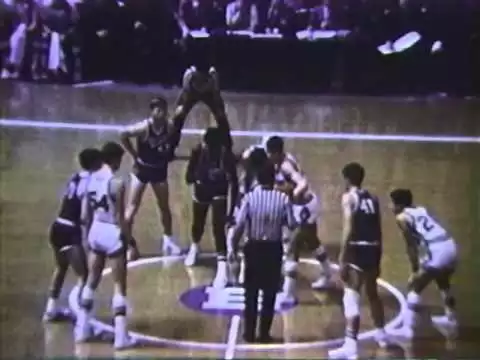
The 1970s was a Golden Era for one class Indiana High School Basketball and multiple legends were born across the state.
Indiana high school basketball in the 1970s wasn’t just a sport—it was the heartbeat of the state. This was the single-class tournament era, where every team, no matter how small, had a path to the same championship. Packed gyms, sectional battles, and statewide attention created an environment where legends were forged through performance, not hype.
This list ranks the
20 greatest Indiana high school players whose careers spanned 1971 to 1979, based strictly on their impact at the prep level. This is about what they did in Indiana gyms—how they led, how they dominated, and how they performed when everything was on the line.
20) Tim Johnson – Aurora
Tim Johnson was one of the most respected players in Southeastern Indiana during the 1970s, anchoring Aurora as a consistently competitive program in a region known for physical, disciplined basketball. In an era where games were often decided in the half-court and toughness was a requirement, Johnson stood out because he combined that physical edge with skill and consistency. He was not a player built on flash; instead, he built his reputation on reliability.
Johnson’s game was defined by versatility. He could score inside, rebound effectively, and defend multiple positions depending on matchups. His ability to contribute in all phases made him invaluable, especially during tournament play, where adaptability determined survival. Opponents knew stopping Johnson was key, yet he consistently produced.
Despite playing outside major media markets, his impact was undeniable. Johnson represents the essence of 1970s Indiana basketball—tough, dependable, and built for big moments. Johnson’s big moment came when he led Aurora to an upset victory over Lawrence central and
Steve Risley
in the Semi-State before losing a tight game in the Elite 8 to Columbus east.
1977 Indiana Semi-State Championship Aurora vs. Columbus East
19) Brad Miley – Rushville
Brad Miley was a foundational player for Rushville during the 1970s, combining leadership and scoring ability to guide his team through one of the state’s most competitive regions. Miley’s strength was his understanding of the game. He knew how to control tempo, how to create opportunities, and how to keep his team composed when games became physical and tight.
Miley was a fanatic on the glass and set records in 1975 and 76 that still stand today.
Rushville’s success during this period was closely tied to Miley’s presence. His ability to consistently make the right play and lead under pressure made him one of the most respected players in Eastern Indiana.
1976 State Finals Rushville vs East Chicago Washington
18) Rick Goins – Rushville
Rick Goins added a dynamic offensive element to Rushville basketball during the decade. Known for his scoring ability, Goins was capable of changing a game’s momentum in a matter of possessions. When he found a rhythm, he became extremely difficult to contain.
Goins thrived in the physical nature of the era. He attacked the rim, absorbed contact, and found ways to score even when defenses were focused on stopping him. His ability to produce in different ways made him a versatile offensive weapon.
In tournament play, where scoring was often limited, Goins’ ability to generate offense gave Rushville an edge. His contributions ensured his team remained competitive, even against more talented opponents.
1976 STATE FINALS Rushville vs Marion
17) Steve Collier – Southwestern (Shelbyville)
Steve Collier was the embodiment of toughness in 1970s Indiana basketball. At Southwestern, he built his reputation on physical play, effort, and consistency. Collier didn’t shy away from competition—he embraced it, even against larger and more established programs.
His game revolved around strength and determination. He could score in traffic, rebound effectively, and defend aggressively. Collier’s willingness to do the hard work made him a valuable contributor in structured systems.
His consistency set him apart. Night after night, he delivered the same intensity, helping his team remain competitive. Collier represents the gritty identity of Indiana basketball during the decade.
16) Landon Turner – Indianapolis Tech
Landon Turner emerged in the late 1970s as one of the most skilled offensive players in Indianapolis. At Tech, he developed into a versatile scorer capable of impacting the game in multiple ways. His ability to operate efficiently made him a focal point of his team.
Turner’s game was smooth and controlled. He didn’t force shots; instead, he allowed opportunities to develop and capitalized on them. His size and skill combination made him difficult to defend, especially against smaller opponents.
Competing against top-level Indianapolis talent, Turner proved himself consistently. His performances validated his place among the state’s elite.
15) Jerry Sichting – Martinsville
Jerry Sichting was the definition of an Indiana point guard. At Martinsville, he controlled games with intelligence, poise, and discipline. He dictated tempo and ensured his team remained organized.
His decision-making was elite. Sichting understood when to push and when to slow the game down, rarely making mistakes. His leadership was crucial in tight games, particularly in tournament play.
He wasn’t flashy, but he was incredibly effective. Sichting’s style perfectly reflected the fundamentals-first identity of Indiana basketball.
14) Steve Risley – Lawrence Central
Steve Risley was one of the most versatile and physically imposing players in Central Indiana during the mid-1970s. At Lawrence Central, he developed into a true matchup problem, capable of impacting the game in multiple ways. Risley wasn’t limited to one role—he could score inside, step out and shoot, and create mismatches depending on who was guarding him.
What made Risley stand out was his ability to take over stretches of a game. When Lawrence Central needed offense, he could deliver. When they needed rebounding or defensive presence, he provided that as well. His size and strength allowed him to compete with bigger players, while his skill set made him dangerous against smaller defenders.
Risley also thrived in the structured style of 1970s basketball. He understood spacing, timing, and how to operate within a system without forcing plays. His ability to consistently produce against strong competition made him one of the most respected players in the Indianapolis area.
13) Ray Tolbert – Madison Heights
Ray Tolbert was one of the most dominant interior players in Indiana during the mid-1970s. At Madison Heights, he controlled the paint with strength, rebounding, and physical presence that few opponents could match. Tolbert was the type of player who dictated how games were played—if he established position inside, defenses had little answer.
His rebounding ability set him apart. He consistently controlled the boards on both ends, creating second-chance opportunities while limiting opponents’ possessions. Offensively, he was efficient and powerful, finishing through contact and using his strength to create space.
Tolbert’s impact went beyond statistics. His presence forced teams to adjust their entire game plan. In an era where inside play often determined outcomes, Tolbert was one of the most reliable and dominant forces in the state. His consistency and physicality made him one of the defining big men of the decade.
12) Tom Abernethy – South Bend St. Joseph’s
Tom Abernethy was one of the most fundamentally sound players in Northern Indiana during the early 1970s. Playing at South Bend St. Joseph’s, he built his reputation on toughness, rebounding, and the ability to impact the game without needing to dominate the ball.
Abernethy’s strength was his all-around game. He could defend multiple positions, rebound effectively, and score efficiently when opportunities presented themselves. He was the type of player coaches trusted because he consistently made the right decisions and executed within the system.
In a region known for strong basketball tradition, Abernethy stood out because of his reliability. He didn’t rely on highlight plays—he relied on consistency and effort. His ability to perform night after night made him one of the most respected players in his area.
11) Wayne Radford – Indianapolis Arlington
Wayne Radford was a powerful and versatile player who made a significant impact at
Indianapolis Arlington
during the mid-1970s. Known for his strength and physical style, Radford could dominate inside while also contributing offensively in multiple ways.
Radford’s game was built on toughness. He attacked the basket aggressively, rebounded with authority, and defended with intensity. He was not easily pushed off his spot, and his ability to play through contact made him one of the more difficult players to handle in the paint.
Beyond his physical tools, Radford had a strong understanding of the game. He knew how to position himself, how to take advantage of matchups, and how to contribute in key moments. His consistency and ability to perform against strong competition made him one of the top players in the Indianapolis area.
10) Dave Colescott – Marion
Dave Colescott was a major contributor for Marion, one of Indiana’s most respected programs. Playing under pressure, he developed into a consistent scorer and competitor.
Colescott could produce offensively in multiple ways, making him a focal point of opposing defenses. His toughness and resilience fit perfectly within Marion’s identity.
His ability to perform in big moments helped maintain Marion’s reputation as a competitive force.
1975 IHSAA State Semifinal #1: Marion 73, Lebanon 65
9) Monte Towe – Oak Hill
Monte Towe brought a different dimension to Indiana high school basketball in the early 1970s. At Oak Hill, he was a dynamic guard known for his speed, playmaking ability, and leadership. Towe’s quickness allowed him to push the pace and create opportunities in ways that were uncommon for the era.
His ball-handling and court vision made him a true playmaker. He could break down defenses, set up teammates, and still score when needed. Despite not having the size of some of his peers, Towe’s skill level and competitiveness allowed him to dominate games.
Being named All-State in 1971 reflects how impactful he was during his time. He represented a shift toward more dynamic guard play, showing that speed and skill could be just as effective as size and physicality.
8) Bruce Parkinson – Yorktown
Bruce Parkinson was one of the most prolific scorers in Indiana high school basketball history. At Yorktown, he put up numbers that were nearly unheard of during the mid-1970s, especially considering the slower pace and physical nature of the era.
Parkinson’s ability to score from anywhere on the floor made him nearly impossible to defend. He could shoot from distance, create his own shot, and consistently produce regardless of defensive attention. Opponents knew he was the focal point—and it still didn’t matter.
What separated Parkinson was his consistency. He didn’t have off nights. He delivered every game, making him one of the most feared offensive players in the state. His scoring dominance alone places him among the greatest players of the decade.
GoldandBlack com Saturday Simulcast: March 1 edition with Purdue Hall of Famer Bruce Parkinson SD
7) Mike Woodson – Indianapolis Broad Ripple
Mike Woodson brought a level of physicality and athleticism that stood out even in the rugged 1970s. At Broad Ripple, he was a powerful and versatile player who could impact the game in multiple ways.
Woodson’s strength allowed him to attack the basket with authority, while his athleticism made him a strong defender capable of guarding multiple positions. He wasn’t limited to one role—he could score, rebound, and defend at a high level.
What made Woodson special was his ability to control the game physically. He dictated matchups, imposed his presence, and elevated his team’s level of play. In an era defined by toughness, Woodson was one of the most complete players in the state.
6) Kent Benson – New Castle
Kent Benson was one of the most dominant big men in Indiana during the early 1970s, anchoring New Castle as a powerhouse program. His size, strength, and defensive presence made him a force in the paint, and his ability to control the interior set the tone for how games were played. Benson wasn’t just a scorer—he was a complete post player who impacted every possession.
Leading New Castle to the
1971 Final Four, Benson established himself as one of the premier players in the state. His rebounding ability allowed his team to control possessions, while his defensive presence altered shots and forced opponents to rethink their approach inside. Offensively, he was efficient, using his size and positioning to score consistently.
What made Benson special was his ability to dominate without needing to take over every possession. He understood his role and executed it perfectly. In the single-class tournament era, having a player who could control the paint like Benson was invaluable, and his presence made New Castle a legitimate contender every time they stepped on the floor.
1971 IHSAA State Semifinal #1: Elkhart 65, New Castle 60 (3OT)
5) Pete Trgovich – East Chicago Washington
Pete Trgovich was one of the toughest and most skilled players in Indiana during the early 1970s, playing for East Chicago Washington—one of the state’s premier programs. Trgovich combined physical play with offensive skill, making him one of the most difficult players to defend during his era.
He was a relentless competitor. Trgovich attacked the basket, battled on the boards, and never backed down from contact. His ability to score in traffic and finish through defenders made him a constant offensive threat. At the same time, his physicality and toughness set the tone for his team.
Playing in Northwest Indiana meant facing elite competition regularly, and Trgovich consistently delivered. He was a player who thrived in big games, particularly in tournament settings where physical play intensified. His combination of toughness, scoring, and competitiveness made him one of the defining players of the decade.
4) Junior Bridgeman – East Chicago Washington
Junior Bridgeman was one of the most complete players in Indiana high school basketball during the 1970s. At East Chicago Washington, he combined scoring ability, intelligence, and versatility to become one of the most respected players in the state. Bridgeman could impact the game in nearly every way.
What made Bridgeman stand out was his balance. He wasn’t just a scorer—he was a playmaker, a defender, and a leader. He understood how to read the game, how to take advantage of matchups, and how to elevate his teammates. His smooth playing style made everything look effortless, but his effectiveness was undeniable.
Bridgeman thrived in high-pressure situations. In tournament play, where decision-making and composure were critical, he consistently delivered. His all-around ability and consistency make him one of the most complete players of the decade and a cornerstone of Indiana basketball during that era.
3) Kyle Macy – Peru
Kyle Macy was the embodiment of Indiana basketball fundamentals. At Peru, he developed into one of the smartest and most efficient players in the state, controlling games with precision and leadership. Macy wasn’t just a guard—he was the engine that made his team function.
His ability to dictate tempo separated him from many of his peers. Macy understood when to push the pace and when to slow it down, ensuring his team always played under control. He was also an elite shooter, capable of delivering in critical moments when scoring opportunities were limited.
What made Macy truly special was his consistency. He rarely made mistakes and always seemed to be in the right position. In a decade defined by execution and discipline, Macy may have been the most fundamentally sound player in the state. His leadership and reliability make him one of the greatest guards of the 1970s.
2) Phil Cox – Connersville
Phil Cox’s legacy is defined by one word:
March.
As the leader of the
1972 Connersville state championship team, Cox delivered one of the most memorable tournament performances in Indiana history. In a single-class system where every game carried immense pressure, Cox consistently rose to the occasion, guiding his team through a gauntlet of elite competition.
Cox had a natural ability to perform in big moments. Whether it was scoring when his team needed it most or maintaining composure in tight situations, he delivered. His leadership was just as important as his production—he kept his team focused and confident throughout the tournament run.
In Indiana basketball, championships matter—and Cox proved himself on the biggest stage. His ability to lead a team to a state title in the most demanding environment cements his place among the greatest players of the decade.
1) Larry Bird – Springs Valley
Before he became
“Larry Legend,”
Larry Bird was already dominating Indiana high school basketball at Springs Valley. His ability to control every aspect of the game made him unlike anyone else in the state during the 1970s.
Bird wasn’t just a scorer—he was a complete player. He could rebound, pass, defend, and most importantly, think the game at a level far beyond his peers. His understanding of spacing, timing, and decision-making allowed him to dictate the flow of every game he played.
What made Bird truly special was his ability to elevate everyone around him. He didn’t just produce individually—he made his team better. Even in high school, he demonstrated the qualities that would later define his legendary career.
In a decade filled with great players, Bird stands apart as the most complete and impactful. His dominance at Springs Valley secures his place as the greatest Indiana high school player of the 1970s.
Final Word
This was Indiana basketball at its purest:
One class
One champion
No shortcuts
The players on this list didn’t build their reputations through rankings or exposure—they built them in packed gyms, under pressure, when everything was on the line.
Up To $1500 in Bonus Bets Paid Back if your First Bet Does Not Win
T&Cs apply
4.5/5
Gambling problem? Call 1-800-GAMBLER or 1-800-MY-RESET (Available in the US) 877-8-HOPENY or text HOPENY (467369) (NY) 1-800-327-5050 (MA), 1-800-BETS-OFF (IA), 1-800-981-0023 (PR). 21+ only. Please Gamble Responsibly. See BetMGM.com for Terms. First Bet Offer for new customers only (if applicable). Subject to eligibility requirements. Bonus bets are non-withdrawable. In partnership with Kansas Crossing Casino and Hotel. Promotional offers not available in Mississippi, Massachusetts, New York, Ontario, or Puerto Rico.
New DraftKings Customers: Spend $5+ Get $150 in Bonuses
T&Cs apply
4.5/5
GAMBLING PROBLEM? CALL 1-800-GAMBLER or 1-800-MY-RESET, (800) 327-5050 or visit gamblinghelplinema.org (MA). Please Gamble Responsibly. 888-789-7777/visit ccpg.org (CT), or visit www.mdgamblinghelp.org (MD), 1-800-981-0023 (PR). 21+ and present in most states. (18+ DC/NH/PR/WY). Void in CAN. Eligibility restrictions apply. On behalf of Boot Hill Casino (KS). Pass-thru of per wager tax may apply in IL. 1 per new DraftKings customer. $5+ first-time bet req. Max. $150 issued as non-withdrawable Bonus Bets. Stake removed from payout. Reward issued as $50 in Bonus Bets every 7 days via click-to-claim for 14 days. Bonus Bets and click-to-claims expire 7 days (168hrs) after issuance. Terms: sportsbook.draftkings.com/promos. Ends 10/11/26 at 11:59 PM ET. Sponsored by DK.
Must be 21+. GAMBLING PROBLEM? CALL 1-800-GAMBLER OR CALL 1-800-MY-RESET, www.mdgamblinghelp.org (MD), (800)-327-5050 or gamblinghelplinema.org (MA), Call (877)8-HOPENY or text HOPENY (467369) (NY), (888) 789-7777 or ccpg.org (CT), morethanagame.nc.gov (NC), 1800gambler.net (WV)
Bet $1 and get double the winnings up to $25 for your next 10 bets
T&Cs apply
4.4/5
21+ New users only. Must register using eligible promo code. First bet after registration must qualify. Max. Bonus Bet: $1,000. Bonus Bet expires 14 days after receipt. Void where prohibited. See Caesars.com/promos for full terms. Gambling Problem? 1-800-GAMBLER (1-800-426-2537)
21+ and present in OH. Gambling Problem? Call 1-800-GAMBLER.
This site is using
Cloudflare
and adheres to the
Google Safe Browsing Program. We adapted
Google's Privacy Guidelines
to keep your data safe at all times.
Close
Ready to Win Big? Join the Elite with Our Sports Betting Deals!
FanDuel Promo
New Users – Get $250 in Bonus Bets when you wager $5 for 5 days
Up To $1500 in Bonus Bets Paid Back if your First Bet Does Not Win
Best Slots
T&Cs and 21+ apply
Gambling problem? Call 1-800-GAMBLER or 1-800-MY-RESET (Available in the US) 877-8-HOPENY or text HOPENY (467369) (NY) 1-800-327-5050 (MA), 1-800-BETS-OFF (IA), 1-800-981-0023 (PR). 21+ only. Please Gamble Responsibly. See BetMGM.com for Terms. First Bet Offer for new customers only (if applicable). Subject to eligibility requirements. Bonus bets are non-withdrawable. In partnership with Kansas Crossing Casino and Hotel. Promotional offers not available in Mississippi, Massachusetts, New York, Ontario, or Puerto Rico.
Code:
Open BetMGM
Get Bonus
DraftKings Promo
New DraftKings Customers: Spend $5+ Get $150 in Bonuses
Newcomer
T&Cs and 21+ apply
GAMBLING PROBLEM? CALL 1-800-GAMBLER or 1-800-MY-RESET, (800) 327-5050 or visit gamblinghelplinema.org (MA). Please Gamble Responsibly. 888-789-7777/visit ccpg.org (CT), or visit www.mdgamblinghelp.org (MD), 1-800-981-0023 (PR). 21+ and present in most states. (18+ DC/NH/PR/WY). Void in CAN. Eligibility restrictions apply. On behalf of Boot Hill Casino (KS). Pass-thru of per wager tax may apply in IL. 1 per new DraftKings customer. $5+ first-time bet req. Max. $150 issued as non-withdrawable Bonus Bets. Stake removed from payout. Reward issued as $50 in Bonus Bets every 7 days via click-to-claim for 14 days. Bonus Bets and click-to-claims expire 7 days (168hrs) after issuance. Terms: sportsbook.draftkings.com/promos. Ends 10/11/26 at 11:59 PM ET. Sponsored by DK.
Code:
Open DraftKings
Get Bonus
Find out what the legends have to say about sports this week....