Legacy. Winning. Dominance. These 20 legends built Big Ten Basketball.
There is no conference in America with a deeper, richer, and more historically significant basketball tradition than the Big Ten. Across generations, the league has produced dominant scorers, National Players of the Year, transcendent champions, and program-changing icons. This list looks exclusively at players who competed
while their universities were members of the Big Ten
— meaning legends such as Len Bias, Juan Dixon, and others from Maryland, Rutgers, Penn State, or Nebraska
before conference expansion
were not eligible.
Criteria
The rankings are based on:
Winning and postseason success
Individual dominance
Awards, accolades, and consistency
Historical impact and legacy
Separating the top ten was nearly impossible — the greatness in this league runs deep.
20) Joe Barry Carroll, Purdue
Joe Barry Carroll was the most dominant center Purdue ever produced, a 7’1″ shot-blocking force who became the defining star of late-70s Big Ten basketball. Carroll carried Purdue to the
1980 Final Four, anchoring an elite defense while averaging over 20 points and 12 rebounds per game. His senior season earned him
All-American honors, and no player in Purdue history blended size, power, and skill the way Carroll did. His rim protection changed games, and his presence alone forced opponents to alter their entire offensive strategy. Carroll’s legacy is still felt at Purdue, where he is remembered as the program’s first great modern big man.
Joe Barry Carroll: The Most MISUNDERSTOOD #1 Pick Ever?
19) Kent Benson, Indiana
Kent Benson was the interior backbone of Indiana’s
1976 undefeated national championship team, the last team in men’s college basketball to finish a season without a loss. While Benson was not a flashy player, his intelligence, toughness, and consistency made him the perfect fit for Bob Knight’s motion offense. Benson was a rugged screener, a strong rebounder, and a reliable interior scorer who rarely made mistakes. Indiana lost only one game during Benson’s final two seasons. He was named the
1976 NCAA Tournament’s Most Outstanding Player
and later became the No. 1 pick in the NBA Draft. While his pro career disappointed, his Big Ten legacy is untouchable.
INDIANA BASKETBALL LEGEND KENT BENSON ON BIG TEN EXPANSION
18) Gary Bradds, Ohio State
Gary Bradds had impossibly large shoes to fill when he arrived at Ohio State following the Jerry Lucas era — yet he somehow exceeded expectations. Bradds averaged over
33 points per game as a senior
and was named the
National Player of the Year
in 1964. His scoring ability was unmatched for his time, featuring deep shooting range (before the 3-point line), elite footwork, and a relentless motor. Playing alongside legends such as Bobby Knight earlier in his career, Bradds helped Ohio State remain a dominant national contender. His jersey hangs among the greats in Columbus, and he remains one of the purest scorers in Big Ten history.
17) John Wooden, Purdue
Before he became the most successful coach in the history of basketball,
John Wooden was a superstar player
at Purdue. From 1929 to 1932, Wooden was the conference’s premier guard — tough, efficient, and intelligent. He led Purdue to the
1932 National Championship (Helms title)
and became a
three-time All-American. His crisp fundamentals and leadership on the court foreshadowed what would become his legendary coaching career. Wooden is often remembered only for UCLA, but his playing career at Purdue was extraordinary, and he remains one of the best all-around guards the Big Ten has ever seen.
Gary Bradds – Ohio Basketball Hall of Fame Enshrinement
16) Don Schlundt, Indiana
Don Schlundt was Indiana’s first great post-war superstar. Playing from 1951–1955, Schlundt became a dominant inside scorer, setting the
school’s all-time scoring record
— one that stood until Steve Alford broke it over 30 years later. Schlundt led Indiana to the
1953 National Championship, anchoring a balanced but deadly Hoosier offense. A
three-time All-American, Schlundt was nearly unstoppable near the basket, combining soft touch with a powerful frame. His ability to score in traffic and draw fouls made him one of the most efficient players of his era. Schlundt remains one of the foundational legends of Indiana basketball.
Reid Duffy Chronicles: Bob Leonard Indiana University 1953 NCCA Basketball Champions
15) Steve Smith, Michigan State
Steve Smith was a 6’7″ scoring machine with elite versatility, smooth shooting touch, and unmatched competitive fire. One of the greatest players Tom Izzo ever coached prior to the Final Four era, Smith averaged over 20 points per game during his junior and senior seasons and became one of the most feared shot-makers in the country. His combination of size, court vision, and clutch shooting made him nearly unguardable. Smith carried Michigan State to Big Ten success and became a
two-time All-American, later enjoying a long, productive NBA career. His jersey rightfully hangs in the rafters at the Breslin Center.
2016 NCAA Silver Anniversary Award recipient Steve Smith
14) John Kotz, Wisconsin
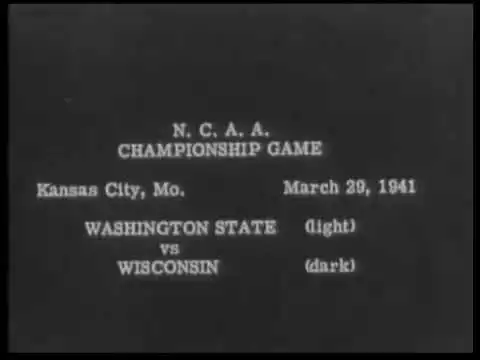
John Kotz was Wisconsin’s first true basketball superstar. Playing in the early 1940s, Kotz led the Badgers to their
first and only National Championship
in 1941 and was named the
NCAA Tournament’s Most Outstanding Player. Kotz was a versatile two-way threat, equally effective as a scorer, passer, and defender. His leadership in the pre-war era helped establish Wisconsin as a national basketball power. Even more impressively, Kotz performed during a time when the game was slower, more physical, and less structured — yet he still became one of the decade’s standout players. Badger fans still regard him as an icon.
1941 National Championship Highlights: Wisconsin and Washington State
13) Steve Alford, Indiana
Steve Alford remains one of the most beloved players in the history of Indiana basketball. A hometown hero from New Castle, Alford became the Hoosiers’ all-time leading scorer (later surpassed by Calbert Cheaney) and one of the greatest shooters the conference has ever seen. He led Indiana to the
1987 National Championship, hitting clutch shots throughout the tournament and providing veteran leadership to a young team. A
two-time All-American, Alford’s scoring efficiency, competitive fire, and mastery of Bob Knight’s system made him one of the most iconic players of the 1980s.
Steve Alford is Indiana hoops through and through
12) Mateen Cleaves, Michigan State
Mateen Cleaves was the heartbeat of Michigan State’s resurgence under Tom Izzo. A fiery competitor and emotional leader, Cleaves became a
three-time All-American,
three-time team captain, and the driving force behind the Spartans’
2000 National Championship team. Cleaves’ passing, toughness, and relentless defensive pressure defined the early Izzo era, and his leadership elevated those around him. Known for his clutch performances and uncanny ability to control tempo, Cleaves remains one of the great point guards in Big Ten history and the standard for all future Michigan State floor generals.
The Story of Mateen’s One Shining Moment
11) Andy Phillip, Illinois
Andy Phillip was the centerpiece of
Illinois basketball
in the early 1940s and arguably the greatest player the program has ever produced. A do-it-all guard with exceptional scoring and passing ability, Phillip became a
three-time All-American
and the
1943 National Player of the Year. His career was interrupted by World War II, but his impact remains legendary. Phillip was a pioneer for modern guard play, mastering fast breaks, ball distribution, and floor leadership decades before those concepts became mainstream. He is still considered the most complete player Illinois has ever had.
10) Ronnie Lester, Iowa
Ronnie Lester is often regarded by Iowa fans as the greatest Hawkeye ever — and for good reason. A dynamic guard with elite quickness, vision, and scoring ability, Lester earned
First-Team All-American honors
in 1979 and led Iowa to the
1980 Final Four. Unfortunately, a knee injury in the national semifinal derailed Iowa’s title hopes — the Hawkeyes were leading UCLA early and controlling the game before Lester went down. When healthy, Lester was electrifying and nearly unstoppable, setting Iowa records for assists, field goals, and total points. Many believe that without the injury, Lester would have delivered a national title.
Hawkeye Basketball Legend Ronnie Lester #12 Jersey Retirement Ceremony @ Fieldhouse on March 1, 1980
9) Glenn Robinson, Purdue
Glenn “Big Dog” Robinson arrived at Purdue and immediately became one of the most dominant players in Big Ten history. In 1994, Robinson put together one of the greatest single seasons ever:
30.3 points, 10.1 rebounds, and National Player of the Year honors. He carried Purdue to the
Elite Eight
and elevated the Boilermakers into the national spotlight. Robinson combined power, mid-range efficiency, and smooth athleticism into a nearly unstoppable offensive package. He is still regarded as one of the most complete forwards ever to play in the conference and the greatest Purdue scorer of all time.
Glenn Robinson Official Purdue Boilermakers Highlights
8) Calbert Cheaney, Indiana
Calbert Cheaney remains the
Big Ten’s all-time leading scorer
with 2,613 points — a record that may never be broken. A three-time All-American under Bob Knight, Cheaney was the perfect blend of size, smoothness, shooting touch, and defensive versatility. He led Indiana to the
1992 Final Four
and the
1993 Elite Eight, starring on some of Knight’s most talented teams. Despite heavy expectations, Cheaney consistently delivered and earned National Player of the Year honors in 1993. His dominance, efficiency, and longevity make him one of the greatest wings the Big Ten has ever produced.
Calbert Cheaney Segment
7) Glen Rice, Michigan
Glen Rice is Michigan’s all-time leading scorer and one of the most efficient offensive players in Big Ten history. In 1989, Rice put together one of the greatest NCAA Tournament runs ever, averaging over
30 points per game
and leading the Wolverines to the
National Championship. His shooting was revolutionary — deep range long before the NBA adopted it fully — and his versatility allowed him to play the 2, 3, or 4 positions seamlessly. Rice set numerous Michigan scoring records and remains the gold standard for Wolverine basketball excellence.
Flashback: Glen Rice Highlights in 1989 Final Four Win vs. Illinois | Michigan Basketball
6) Cazzie Russell, Michigan
Cazzie Russell was the first true megastar in Michigan basketball history. A three-time All-American and the
1966 National Player of the Year, Russell led the Wolverines to
back-to-back Final Four appearances
in 1964 and 1965. His scoring ability, leadership, and flair made him one of the most exciting players of the 1960s. Russell set the foundation for Michigan’s modern basketball success and remains one of the most revered athletes ever to wear the maize and blue. Without Russell, Michigan’s basketball tradition simply would not exist in its current form.
My Way The Cazzie Russell Story (part 1)
5) Rick Mount, Purdue
Rick Mount was one of the greatest pure scorers the sport has ever seen — a legendary shooter decades ahead of his time. Without the three-point line, Mount still averaged
over 32 points per game, and many historians believe he would have averaged 40+ in today’s era. Mount carried Purdue to the
1969 National Championship Game, where he nearly led the Boilermakers to an upset of John Wooden’s UCLA dynasty. His shooting form, range, and confidence were unmatched. Mount is still regarded by many as the greatest shooter in college basketball history.
Rick Mount: How Did This Purdue LEGEND Fail to Pan Out in the ABA?
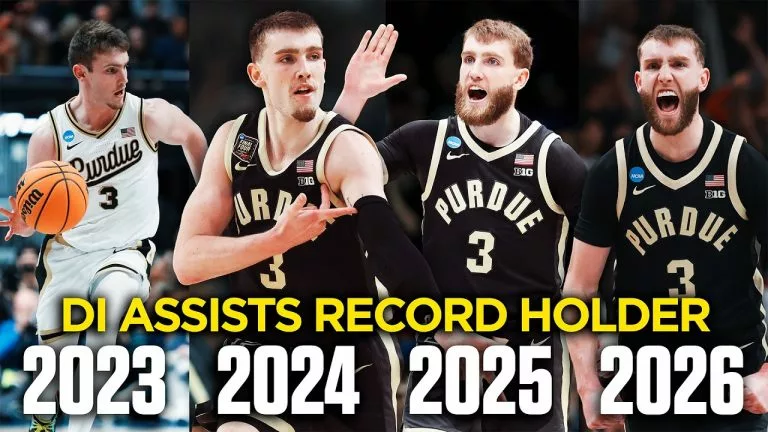
4. Braden Smith, Purdue
Braden Smith has earned a place among the 20 greatest players in Big Ten history because he combined elite production, winning, durability, and historic accomplishments in a way few conference players ever have. During his career at Purdue, Smith developed from an underrated recruit into arguably the greatest point guard the conference has ever produced. He was a three-time First Team All-Big Ten selection, the 2025 Big Ten Player of the Year, a two-time Consensus First Team All-American, and the winner of the prestigious Bob Cousy Award as the nation’s top point guard.
What truly separates Smith is that he became both the Big Ten’s all-time assists leader and the NCAA’s all-time assists leader, finishing his career with 1,103 assists. He consistently controlled games with his vision, leadership, and basketball IQ while leading Purdue to multiple Big Ten championships and deep NCAA Tournament runs.
The Big Ten has produced legends such as Magic Johnson, Jerry Lucas, Isiah Thomas, Glenn Robinson, and Zach Edey. Braden Smith belongs in that conversation because he redefined what a point guard could accomplish in the conference. His combination of individual awards, team success, and record-breaking production makes him one of the greatest players ever to wear a Big Ten uniform.
Braden Smith full career March Madness highlights (2023-26)
3) Isiah Thomas, Indiana
Isiah Thomas played only two seasons at Indiana — but his impact was monumental. A brilliant point guard with unmatched toughness, court vision, and swagger, Thomas led Indiana to the
1981 National Championship, earning
Final Four Most Outstanding Player
honors. Thomas dominated the Big Ten from the moment he arrived, winning the conference title both seasons and carrying a flawed team to a national title with his leadership and clutch play. Bob Knight called Thomas the smartest player he ever coached. He is widely regarded as the greatest guard in Indiana history and one of the best in conference history.
Isaiah Thomas 1981 Indiana Hoosiers Championship Highlights
2) Magic Johnson, Michigan State
Magic Johnson changed basketball forever. A 6’9″ point guard with vision, charisma, and game-breaking creativity, Magic led Michigan State to the
1979 National Championship, defeating Larry Bird in the most-watched college basketball game ever played. Magic’s ability to elevate teammates was unprecedented — he turned MSU into a powerhouse overnight. A two-time All-American and the Big Ten’s most charismatic player ever, Magic revolutionized the sport and remains one of its most influential figures. If not for Jerry Lucas’ unreal resume, Magic would sit at No. 1.
Magic Johnson – Michigan State Highlights
1) Jerry Lucas, Ohio State
Jerry Lucas is the greatest player in
Big Ten history
— and it isn’t particularly close. A
three-time All-American,
three-time Big Ten Player of the Year, and
two-time National Player of the Year, Lucas dominated the sport in a way few players ever have. He led Ohio State to
three straight Final Fours
(1960–62) and won the
1960 National Championship. Lucas was a legendary rebounder, a flawless shooter, and one of the most intelligent players the game has ever seen. His college career ranks among the greatest in basketball history, not just Big Ten history.
Ohio State honors basketball legend Jerry Lucas with statue
Up To $1500 in Bonus Bets Paid Back if your First Bet Does Not Win
T&Cs apply
4.5/5
Gambling problem? Call 1-800-GAMBLER or 1-800-MY-RESET (Available in the US) 877-8-HOPENY or text HOPENY (467369) (NY) 1-800-327-5050 (MA), 1-800-BETS-OFF (IA), 1-800-981-0023 (PR). 21+ only. Please Gamble Responsibly. See BetMGM.com for Terms. First Bet Offer for new customers only (if applicable). Subject to eligibility requirements. Bonus bets are non-withdrawable. In partnership with Kansas Crossing Casino and Hotel. Promotional offers not available in Mississippi, Massachusetts, New York, Ontario, or Puerto Rico.
New DraftKings Customers: Spend $5+ Get $150 in Bonuses
T&Cs apply
4.5/5
GAMBLING PROBLEM? CALL 1-800-GAMBLER or 1-800-MY-RESET, (800) 327-5050 or visit gamblinghelplinema.org (MA). Please Gamble Responsibly. 888-789-7777/visit ccpg.org (CT), or visit www.mdgamblinghelp.org (MD), 1-800-981-0023 (PR). 21+ and present in most states. (18+ DC/NH/PR/WY). Void in CAN. Eligibility restrictions apply. On behalf of Boot Hill Casino (KS). Pass-thru of per wager tax may apply in IL. 1 per new DraftKings customer. $5+ first-time bet req. Max. $150 issued as non-withdrawable Bonus Bets. Stake removed from payout. Reward issued as $50 in Bonus Bets every 7 days via click-to-claim for 14 days. Bonus Bets and click-to-claims expire 7 days (168hrs) after issuance. Terms: sportsbook.draftkings.com/promos. Ends 10/11/26 at 11:59 PM ET. Sponsored by DK.
Must be 21+. GAMBLING PROBLEM? CALL 1-800-GAMBLER OR CALL 1-800-MY-RESET, www.mdgamblinghelp.org (MD), (800)-327-5050 or gamblinghelplinema.org (MA), Call (877)8-HOPENY or text HOPENY (467369) (NY), (888) 789-7777 or ccpg.org (CT), morethanagame.nc.gov (NC), 1800gambler.net (WV)
Bet $1 and get double the winnings up to $25 for your next 10 bets
T&Cs apply
4.4/5
21+ New users only. Must register using eligible promo code. First bet after registration must qualify. Max. Bonus Bet: $1,000. Bonus Bet expires 14 days after receipt. Void where prohibited. See Caesars.com/promos for full terms. Gambling Problem? 1-800-GAMBLER (1-800-426-2537)
21+ and present in OH. Gambling Problem? Call 1-800-GAMBLER.
This site is using
Cloudflare
and adheres to the
Google Safe Browsing Program. We adapted
Google's Privacy Guidelines
to keep your data safe at all times.
Close
Ready to Win Big? Join the Elite with Our Sports Betting Deals!
FanDuel Promo
New Users – Get $250 in Bonus Bets when you wager $5 for 5 days
Up To $1500 in Bonus Bets Paid Back if your First Bet Does Not Win
Best Slots
T&Cs and 21+ apply
Gambling problem? Call 1-800-GAMBLER or 1-800-MY-RESET (Available in the US) 877-8-HOPENY or text HOPENY (467369) (NY) 1-800-327-5050 (MA), 1-800-BETS-OFF (IA), 1-800-981-0023 (PR). 21+ only. Please Gamble Responsibly. See BetMGM.com for Terms. First Bet Offer for new customers only (if applicable). Subject to eligibility requirements. Bonus bets are non-withdrawable. In partnership with Kansas Crossing Casino and Hotel. Promotional offers not available in Mississippi, Massachusetts, New York, Ontario, or Puerto Rico.
Code:
Open BetMGM
Get Bonus
DraftKings Promo
New DraftKings Customers: Spend $5+ Get $150 in Bonuses
Newcomer
T&Cs and 21+ apply
GAMBLING PROBLEM? CALL 1-800-GAMBLER or 1-800-MY-RESET, (800) 327-5050 or visit gamblinghelplinema.org (MA). Please Gamble Responsibly. 888-789-7777/visit ccpg.org (CT), or visit www.mdgamblinghelp.org (MD), 1-800-981-0023 (PR). 21+ and present in most states. (18+ DC/NH/PR/WY). Void in CAN. Eligibility restrictions apply. On behalf of Boot Hill Casino (KS). Pass-thru of per wager tax may apply in IL. 1 per new DraftKings customer. $5+ first-time bet req. Max. $150 issued as non-withdrawable Bonus Bets. Stake removed from payout. Reward issued as $50 in Bonus Bets every 7 days via click-to-claim for 14 days. Bonus Bets and click-to-claims expire 7 days (168hrs) after issuance. Terms: sportsbook.draftkings.com/promos. Ends 10/11/26 at 11:59 PM ET. Sponsored by DK.
Code:
Open DraftKings
Get Bonus
Find out what the legends have to say about sports this week....