The ABA may not have lasted a full decade, but its fingerprints are all over today’s NBA. From the red, white, and blue basketball to the three-point line, to the high-flying style of play, the league left behind a cultural and competitive legacy far larger than its lifespan. By the time the NBA-ABA merger came in 1976, the “rebel league” had already given us unforgettable stars like Julius Erving, George Gervin, and David Thompson.
This list celebrates the greatest players of the ABA era. NBA accomplishments don’t matter here—what counts is what these players did between those wild late-’60s beginnings and the league’s final tip-off in the mid-’70s.
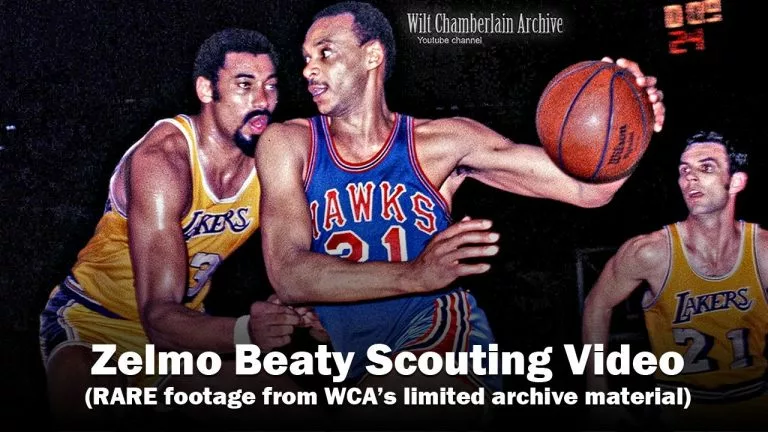
10) Zelmo Beaty
Zelmo Beaty’s move to the ABA changed everything for the Utah Stars. The veteran big man, already a proven
NBA All-Star, immediately dominated the new league. In his very first ABA season, Beaty averaged 22.9 points and 15.7 rebounds, leading the Stars to the 1971 ABA championship and earning Playoff MVP honors.
Known for his relentless work ethic and toughness, Beaty wasn’t just about stats—he brought credibility and leadership to the ABA at a time when it desperately needed respected veterans. He was also the first ABA player to break the 60-point barrier in a single game, cementing his place in league lore.
Zelmo Beaty Scouting Video (Hall of Fame NBA and ABA Center)
9) George Gervin
“The Iceman” didn’t spend long in the ABA, but his impact was undeniable. Gervin’s silky finger rolls, smooth jumper, and effortless scoring made him an instant sensation with the Virginia Squires and San Antonio Spurs.
While his ABA tenure was shorter than most on this list, his offensive brilliance was impossible to ignore. Gervin was already laying the foundation for the Hall of Fame career that would make him one of the NBA’s all-time great scorers.
George Gervin’s First Season With The Spurs (VERY RARE FOOTAGE)
8) Roger Brown
Few players ever put together a playoff performance like Roger Brown in 1970. In the ABA Finals against the Los Angeles Stars, Brown scored 53, 39, and 45 points in consecutive games to carry the Indiana Pacers to their first championship—and took home Finals MVP honors.
Nicknamed “The Rajah,” Brown’s quick first step and dazzling one-on-one moves made him almost impossible to guard. He became a Pacers legend and one of the true icons of the ABA’s golden years.
Roger Brown Career Highlight Video
7) Jimmy Jones
One of the most underrated players in ABA history, Jimmy Jones was a six-time All-Star and one of the league’s most consistent all-around guards. He holds the highest field goal percentage in ABA history among guards (over 51%), a staggering number for a perimeter player.
Jones could score, distribute, and defend, but most importantly, he made everyone around him better. Though he never won a championship, his career totals place him among the ABA’s all-time leaders in nearly every major category.
Jimmy Jones (7pts/5asts) vs. NBA All-Stars (1972)
6) Dan Issel
Before he was a Denver Nuggets mainstay in the NBA, Dan Issel was a scoring machine for the Kentucky Colonels. Averaging more than 23 points per game in his ABA career, Issel combined blue-collar toughness with a silky scoring touch.
Known as “The Horse,” Issel played with relentless energy, rebounded with grit, and could step outside to knock down jumpers—a rare skill for big men of his era. He helped the Colonels become one of the most consistently strong franchises in the league.]
Dan Issel (19pts/9rebs/5asts) vs. ABA All-Stars (1976)
5) George McGinnis
George McGinnis was a force of nature. Standing 6-foot-8 and weighing over 230 pounds, he had the frame of an NFL linebacker with the skills of a guard. Averaging 25.2 points, 12.9 rebounds, and 3.5 assists in the ABA, he carried the
Indiana Pacers
to back-to-back championships in 1972 and 1973.
McGinnis could score inside, hit from the outside, and dominate the glass. He’s one of the greatest players ever to come out of Indiana, and in the ABA, he was nothing short of unstoppable.
George McGinnis: The Elite Forward That Dominated the ABA & the NBA
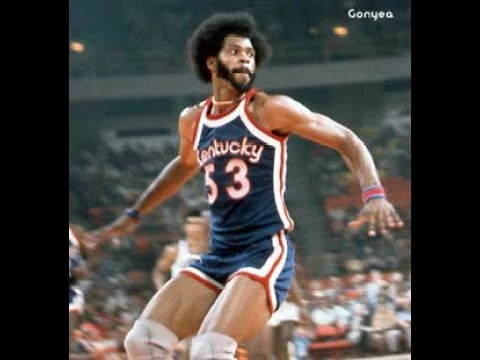
4) Artis Gilmore
Artis Gilmore may have been the single most imposing physical presence in ABA history. At 7-foot-2, “The A-Train” was the league’s all-time leader in rebounds, blocked shots, and minutes played. He anchored the Kentucky Colonels’ defense and helped lead them to the 1975 ABA championship.
Gilmore’s dominance was undeniable—he was both a statistical monster and an intimidation factor who changed how opponents attacked the basket. Some argue he could have done even more, but his résumé speaks for itself.
Remember The ABA: Artis “A-Train” Gilmore (1976 pt. 1)
3) Mel Daniels
Mel Daniels was the heart and soul of the Indiana Pacers dynasty. A two-time ABA MVP, Rookie of the Year, and seven-time All-Star, Daniels ranks near the top in virtually every major ABA career statistic.
Tough, relentless, and passionate, Daniels gave the Pacers their identity as the league’s premier dynasty. Without him, the ABA might not have survived as long as it did.
Mel Daniels: The Best Center in ABA History
2) Rick Barry
Rick Barry was already an NBA superstar when he shocked the basketball world by signing with the ABA in 1968. His arrival gave the young league instant credibility. Barry averaged more than 30 points per game in his ABA years, dazzling fans with his unlimited shooting range and trademark underhand free throws.
More than his stats, Barry’s presence legitimized the ABA, proving it could attract marquee talent. His decision to jump leagues remains one of the pivotal moments in professional basketball history.
The Polarizing Story of Rick Barry’s Stint in the ABA
1) Julius Erving
There could only be one choice at the top. Julius “Dr. J” Erving wasn’t just the greatest player in
ABA history—he was its symbol. Erving averaged 28.7 points, 12.1 rebounds, and 4.8 assists in his ABA career, while also delivering gravity-defying dunks and highlight plays that made him a cultural icon.
Dr. J gave the ABA its identity. He was the Babe Ruth of basketball—larger than life, redefining what was possible, and ensuring the league would never be forgotten. Even after the merger, his ABA prime remained one of the most electrifying stretches any player has ever produced.
Julius Erving ABA Highlights
Final Thoughts
The ABA may be gone, but its legends live on. From Erving’s dunks to Brown’s playoff explosions, from Gilmore’s dominance to Issel’s scoring touch, these players helped build a league that changed basketball forever. The NBA inherited its stars, its innovations, and its swagger—but the ABA’s story is still uniquely its own.
Up To $1500 in Bonus Bets Paid Back if your First Bet Does Not Win
T&Cs apply
4.5/5
Gambling problem? Call 1-800-GAMBLER or 1-800-MY-RESET (Available in the US) 877-8-HOPENY or text HOPENY (467369) (NY) 1-800-327-5050 (MA), 1-800-BETS-OFF (IA), 1-800-981-0023 (PR). 21+ only. Please Gamble Responsibly. See BetMGM.com for Terms. First Bet Offer for new customers only (if applicable). Subject to eligibility requirements. Bonus bets are non-withdrawable. In partnership with Kansas Crossing Casino and Hotel. Promotional offers not available in Mississippi, Massachusetts, New York, Ontario, or Puerto Rico.
New DraftKings Customers: Spend $5+ Get $150 in Bonuses
T&Cs apply
4.5/5
GAMBLING PROBLEM? CALL 1-800-GAMBLER or 1-800-MY-RESET, (800) 327-5050 or visit gamblinghelplinema.org (MA). Please Gamble Responsibly. 888-789-7777/visit ccpg.org (CT), or visit www.mdgamblinghelp.org (MD), 1-800-981-0023 (PR). 21+ and present in most states. (18+ DC/NH/PR/WY). Void in CAN. Eligibility restrictions apply. On behalf of Boot Hill Casino (KS). Pass-thru of per wager tax may apply in IL. 1 per new DraftKings customer. $5+ first-time bet req. Max. $150 issued as non-withdrawable Bonus Bets. Stake removed from payout. Reward issued as $50 in Bonus Bets every 7 days via click-to-claim for 14 days. Bonus Bets and click-to-claims expire 7 days (168hrs) after issuance. Terms: sportsbook.draftkings.com/promos. Ends 10/11/26 at 11:59 PM ET. Sponsored by DK.
Must be 21+. GAMBLING PROBLEM? CALL 1-800-GAMBLER OR CALL 1-800-MY-RESET, www.mdgamblinghelp.org (MD), (800)-327-5050 or gamblinghelplinema.org (MA), Call (877)8-HOPENY or text HOPENY (467369) (NY), (888) 789-7777 or ccpg.org (CT), morethanagame.nc.gov (NC), 1800gambler.net (WV)
Bet $1 and get double the winnings up to $25 for your next 10 bets
T&Cs apply
4.4/5
21+ New users only. Must register using eligible promo code. First bet after registration must qualify. Max. Bonus Bet: $1,000. Bonus Bet expires 14 days after receipt. Void where prohibited. See Caesars.com/promos for full terms. Gambling Problem? 1-800-GAMBLER (1-800-426-2537)
21+ and present in OH. Gambling Problem? Call 1-800-GAMBLER.
This site is using
Cloudflare
and adheres to the
Google Safe Browsing Program. We adapted
Google's Privacy Guidelines
to keep your data safe at all times.
Close
Ready to Win Big? Join the Elite with Our Sports Betting Deals!
FanDuel Promo
New Users – Get $250 in Bonus Bets when you wager $5 for 5 days
Up To $1500 in Bonus Bets Paid Back if your First Bet Does Not Win
Best Slots
T&Cs and 21+ apply
Gambling problem? Call 1-800-GAMBLER or 1-800-MY-RESET (Available in the US) 877-8-HOPENY or text HOPENY (467369) (NY) 1-800-327-5050 (MA), 1-800-BETS-OFF (IA), 1-800-981-0023 (PR). 21+ only. Please Gamble Responsibly. See BetMGM.com for Terms. First Bet Offer for new customers only (if applicable). Subject to eligibility requirements. Bonus bets are non-withdrawable. In partnership with Kansas Crossing Casino and Hotel. Promotional offers not available in Mississippi, Massachusetts, New York, Ontario, or Puerto Rico.
Code:
Open BetMGM
Get Bonus
DraftKings Promo
New DraftKings Customers: Spend $5+ Get $150 in Bonuses
Newcomer
T&Cs and 21+ apply
GAMBLING PROBLEM? CALL 1-800-GAMBLER or 1-800-MY-RESET, (800) 327-5050 or visit gamblinghelplinema.org (MA). Please Gamble Responsibly. 888-789-7777/visit ccpg.org (CT), or visit www.mdgamblinghelp.org (MD), 1-800-981-0023 (PR). 21+ and present in most states. (18+ DC/NH/PR/WY). Void in CAN. Eligibility restrictions apply. On behalf of Boot Hill Casino (KS). Pass-thru of per wager tax may apply in IL. 1 per new DraftKings customer. $5+ first-time bet req. Max. $150 issued as non-withdrawable Bonus Bets. Stake removed from payout. Reward issued as $50 in Bonus Bets every 7 days via click-to-claim for 14 days. Bonus Bets and click-to-claims expire 7 days (168hrs) after issuance. Terms: sportsbook.draftkings.com/promos. Ends 10/11/26 at 11:59 PM ET. Sponsored by DK.
Code:
Open DraftKings
Get Bonus
Find out what the legends have to say about sports this week....