Feb 27, 1954; Indianapolis, Indiana, USA; Crispus Attucks players, including Oscar Robertson (second from left) celebrate after winning the sectional title game 53-46 over Tech by hoisting Coach Ray Crowe on their shoulders at Butler Fieldhouse. Mandatory Credit: Maurice G. Burnett/Indianapolis Star-USA TODAY NETWORK
The 1950s were the purest era of Indiana basketball—one class, one champion, and a tournament path that demanded perfection. There were no second chances. No easy roads. Just packed gyms, small-town pride, and legends forged under pressure.
This list honors the
10 most impactful Indiana high school basketball players of the 1950s, based on verified performance, tournament impact, and historical legacy.
10) Dan Howe (Fort Wayne South Side – 1958 State Champion)
Dan Howe was a key figure on one of the most dominant teams of the decade—the 1958 Fort Wayne South Side state champions. A four-year varsity player, Howe brought consistency, toughness, and leadership to a team that overwhelmed its competition during the tournament.
South Side’s run culminated in a decisive 63–34 victory over Crawfordsville in the
state finals, a game that showcased their balance and discipline. Howe’s role wasn’t about flashy numbers—it was about execution. He played within the system, defended at a high level, and contributed in every phase of the game.
In an era where championships were built on fundamentals and teamwork, Howe embodied everything Indiana basketball valued. His steady presence helped anchor a team that left no doubt in March of 1958.
9) Don Schlundt (Washington-Clay – 1951)
Don Schlundt was one of the most physically dominant players in Indiana at the start of the decade. Playing at Washington-Clay, he used his size and strength to control the paint in ways few players could match during that era.
In 1951, Schlundt led Clay to its only sectional championship, establishing himself as one of the premier big men in the state. He rebounded aggressively, altered shots defensively, and provided a consistent scoring presence inside. His physical advantage forced opponents to adjust their entire approach when facing him.
Schlundt’s high school dominance translated directly to Indiana University, where he became a national champion and All-American. But his foundation—and reputation—were built in Indiana gyms, where he proved to be nearly unstoppable around the basket.
8) Robin Freeman (Gary Roosevelt – Early 1950s)
Robin Freeman was one of the most explosive scorers in Indiana during the early 1950s. At Gary Roosevelt, he developed a reputation as a player who could take over games with his offensive ability.
Freeman played with aggression and confidence, attacking defenses and scoring in bunches. In a decade where offensive structure was emphasized, Freeman’s ability to create his own shot set him apart. He thrived when games became tight and possessions mattered most.
Roosevelt consistently competed at a high level during the tournament, and Freeman’s scoring made them a dangerous opponent. His style helped push Indiana basketball toward a more dynamic offensive approach, proving that individual scoring could still define outcomes.
7) Dick Barnett (Gary Roosevelt – Early 1950s)
Dick Barnett brought finesse and precision to an era dominated by physical play. His signature fall-away jumper became one of the most effective and difficult shots to defend in Indiana basketball.
At Gary Roosevelt, Barnett complemented Freeman’s aggression with control and efficiency. He understood spacing, timing, and shot selection, allowing him to score without forcing the game. His ability to remain composed under pressure made him invaluable in tournament play.
Barnett’s style of play was ahead of its time. He showed that skill and technique could be just as dominant as strength, helping to evolve the way the game was played in Indiana.
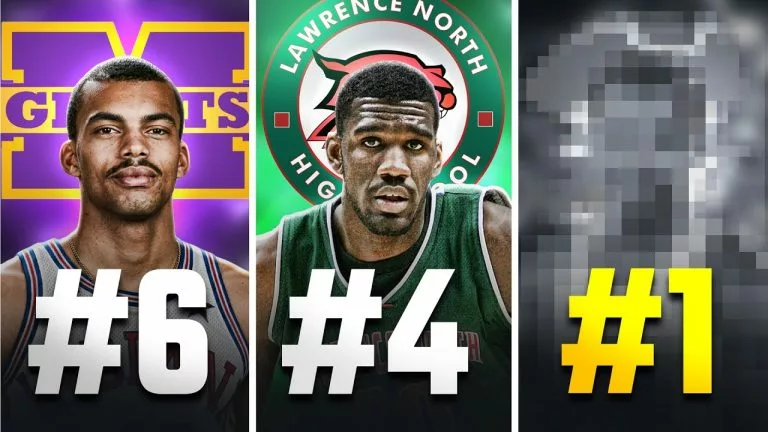
6) Bill Scott (Crispus Attucks – 1955 State Champion)
Bill Scott was a starting guard on the historic
1955 Crispus Attucks
state championship team, one of the most important teams in basketball history. As a backcourt leader, Scott provided ball control, defense, and composure.
In the state finals, Attucks defeated Gary Roosevelt 97–74, showcasing their dominance. Scott’s role in that run was critical—he helped manage the game, limit mistakes, and ensure the offense ran smoothly.
Scott wasn’t the headline name, but he was essential to Attucks’ success. In a tournament environment where discipline mattered above all else, his steady play helped secure a championship that changed Indiana basketball forever.
5) Bill Hampton (Crispus Attucks – 1955 State Champion)
Bill Hampton was another key contributor to the 1955 Crispus Attucks championship team. Known for his athleticism and versatility, Hampton brought energy and production on both ends of the floor.
Attucks finished the 1955 season with a 30–1 record, dominating opponents throughout the tournament. Hampton’s ability to score, defend, and rebound gave the team balance and depth.
He played a critical role in complementing the team’s stars, ensuring that Attucks remained dangerous from every position. Hampton’s contributions often went underappreciated, but his impact was undeniable in one of the greatest seasons in Indiana history.
4) Willie Merriweather (Crispus Attucks – 1955 State Champion)
Willie Merriweather was the interior force behind Attucks’ 1955 championship run. Averaging around 20 points and 20 rebounds, he dominated the paint in a way few players could match.
Merriweather controlled rebounds, protected the rim, and provided consistent scoring inside. His presence allowed Attucks to dictate games physically, wearing down opponents over time.
In the state finals and throughout the tournament, Merriweather’s impact was constant. He didn’t just contribute—he controlled the interior.
3) Hallie Bryant (Crispus Attucks – 1953 Mr. Basketball)
Hallie Bryant was one of the most versatile and complete players of the 1950s. Before Attucks’ championship runs, Bryant had already established himself as one of the best players in the state.
He led Crispus Attucks to a Final Four appearance in 1951 and was named Indiana Mr. Basketball in 1953. Bryant could score, rebound, and defend at a high level, making him a matchup problem for any opponent.
His leadership and all-around ability helped set the foundation for Attucks’ later dominance. Bryant was not just a great player—he was a pioneer for the program’s success.
2) Bobby Plump (Milan – 1954 State Champion)
Bobby Plump is the face of the most iconic story in Indiana basketball history. Leading Milan to the 1954 state championship, he proved that discipline and execution could overcome overwhelming odds.
Milan’s run included victories over significantly larger schools, culminating in a 32–30 win over Muncie Central in the state finals. Plump’s game-winning shot remains the most famous moment in Indiana basketball history.
But his greatness extended beyond that moment. Plump controlled games with intelligence and composure, never allowing pressure to dictate his decisions. He was the definition of a winner.
The Original Hoosiers: The 1954 Milan Indians #hoosiers #milanindians #hoosierhysteria
1) Oscar Robertson (Crispus Attucks – 1955, 1956 State Champion)
Oscar Robertson is the greatest Indiana high school basketball player of the 1950s—and arguably of all time.
Leading Crispus Attucks to back-to-back state championships in 1955 and 1956, Robertson dominated every aspect of the game. At 6’5”, he handled the ball, controlled tempo, rebounded, and scored at will.
There was no answer for him defensively. None.
More importantly, Robertson’s success changed the game and broke barriers, elevating Indiana basketball to a new level.
Top 10 Indiana High School Basketball Teams of All Time
Final Word
The 1950s weren’t about hype. They were about
winning the
toughest tournament
in America.
New Users – Get $350 in Bonus Bets when you wager $5 for 7 days
T&Cs apply
4.6/5
Gambling Problem? Call 1-800-GAMBLER or 1-800-MY-RESET. Call 1-888-789-7777 or visit ccpgg.org/chat (CT). Hope is here. GamblingHelpLineMA.org or call (800) 327-5050 for 24/7 support (MA). Visit www.mdgamblinghelp.org (MD). Call 1-877-8HOPE-NY or text HOPENY (NY). 21+ (18+ DC, WY) and present in select states (for KS, in affiliation with Kansas Star Casino). Find online real money wagering only. Min $5 wager required for 7 consecutive days. $5 free play credit. Bonus issued as non-withdrawable bonus with cash withdrawable bonus with cash withdrawable. Bonus bets which expire 7 days after receipt. Restrictions apply. See terms at sportsbook.fanduel.com. Call 1-877-770-7867 (LA).
Up To $1500 in Bonus Bets Paid Back if your First Bet Does Not Win
T&Cs apply
4.5/5
Gambling problem? Call 1-800-GAMBLER or 1-800-MY-RESET (Available in the US) 877-8-HOPENY or text HOPENY (467369) (NY) 1-800-327-5050 (MA), 1-800-BETS-OFF (IA), 1-800-981-0023 (PR). 21+ only. Please Gamble Responsibly. See BetMGM.com for Terms. First Bet Offer for new customers only (if applicable). Subject to eligibility requirements. Bonus bets are non-withdrawable. In partnership with Kansas Crossing Casino and Hotel. Promotional offers not available in Mississippi, Massachusetts, New York, Ontario, or Puerto Rico.
New DraftKings Customers: Bet $5, Get $200 + 3 Months of NBA League Pass!
T&Cs apply
4.5/5
GAMBLING PROBLEM? CALL 1-800-GAMBLER or 1-800-MY-RESET, (800) 327-5050 or visit gamblinghelplinema.org (MA). Please Gamble Responsibly. 888-789-7777/visit ccpg.org (CT), or visit www.mdgamblinghelp.org (MD), 1-800-981-0023 (PR). 21+ and present in most states. (18+ DC/NH/PR/WY). Void in CAN. Eligibility restrictions apply. On behalf of Boot Hill Casino (KS). Pass-thru of per wager tax may apply in IL. 1 per new Sportsbook customer. $5+ first-time bet req. Max. $200 issued as non-withdrawable Bonus Bets. Stake removed from payout. Reward issued as $50 in Bonus Bets every 7 days via click-to-claim for 21 days. Bonus Bets and click-to-claims expire 7 days (168hrs) after issuance. Terms: dkng.co/offer. Get 1 promo code to redeem a 3-month NBA League Pass subscription, complimentary of DraftKings. Subscription auto-renews monthly at then-current price (currently $16.99/mo); cancel anytime. Terms, restrictions, and eligibility requirements apply. Redeem League Pass by 12/19/26 at 11:59 PM ET. Addt’l terms: support.watch.nba.com/hc/en-us/articles/9165532876183-League-Pass-Terms-of-Use_. Ends 11/29/26 at 11:59 PM ET. Sponsored by DK.
Must be 21+. GAMBLING PROBLEM? CALL 1-800-GAMBLER OR CALL 1-800-MY-RESET, www.mdgamblinghelp.org (MD), (800)-327-5050 or gamblinghelplinema.org (MA), Call (877)8-HOPENY or text HOPENY (467369) (NY), (888) 789-7777 or ccpg.org (CT), morethanagame.nc.gov (NC), 1800gambler.net (WV)
Bet $1 and get double the winnings up to $25 for your next 10 bets
T&Cs apply
4.4/5
21+ New users only. Must register using eligible promo code. First bet after registration must qualify. Max. Bonus Bet: $1,000. Bonus Bet expires 14 days after receipt. Void where prohibited. See Caesars.com/promos for full terms. Gambling Problem? 1-800-GAMBLER (1-800-426-2537)
21+ and present in OH. Gambling Problem? Call 1-800-GAMBLER.
This site is using
Cloudflare
and adheres to the
Google Safe Browsing Program. We adapted
Google's Privacy Guidelines
to keep your data safe at all times.
Close
Ready to Win Big? Join the Elite with Our Sports Betting Deals!
FanDuel Promo
New Users – Get $350 in Bonus Bets when you wager $5 for 7 days
Our Favorite
T&Cs and 21+ apply
Gambling Problem? Call 1-800-GAMBLER or 1-800-MY-RESET. Call 1-888-789-7777 or visit ccpgg.org/chat (CT). Hope is here. GamblingHelpLineMA.org or call (800) 327-5050 for 24/7 support (MA). Visit www.mdgamblinghelp.org (MD). Call 1-877-8HOPE-NY or text HOPENY (NY). 21+ (18+ DC, WY) and present in select states (for KS, in affiliation with Kansas Star Casino). Find online real money wagering only. Min $5 wager required for 7 consecutive days. $5 free play credit. Bonus issued as non-withdrawable bonus with cash withdrawable bonus with cash withdrawable. Bonus bets which expire 7 days after receipt. Restrictions apply. See terms at sportsbook.fanduel.com. Call 1-877-770-7867 (LA).
Code:
Open FanDuel
Get Bonus
BetMGM Promo
Up To $1500 in Bonus Bets Paid Back if your First Bet Does Not Win
Best Slots
T&Cs and 21+ apply
Gambling problem? Call 1-800-GAMBLER or 1-800-MY-RESET (Available in the US) 877-8-HOPENY or text HOPENY (467369) (NY) 1-800-327-5050 (MA), 1-800-BETS-OFF (IA), 1-800-981-0023 (PR). 21+ only. Please Gamble Responsibly. See BetMGM.com for Terms. First Bet Offer for new customers only (if applicable). Subject to eligibility requirements. Bonus bets are non-withdrawable. In partnership with Kansas Crossing Casino and Hotel. Promotional offers not available in Mississippi, Massachusetts, New York, Ontario, or Puerto Rico.
Code:
Open BetMGM
Get Bonus
DraftKings Promo
New DraftKings Customers: Bet $5, Get $200 + 3 Months of NBA League Pass!
Newcomer
T&Cs and 21+ apply
GAMBLING PROBLEM? CALL 1-800-GAMBLER or 1-800-MY-RESET, (800) 327-5050 or visit gamblinghelplinema.org (MA). Please Gamble Responsibly. 888-789-7777/visit ccpg.org (CT), or visit www.mdgamblinghelp.org (MD), 1-800-981-0023 (PR). 21+ and present in most states. (18+ DC/NH/PR/WY). Void in CAN. Eligibility restrictions apply. On behalf of Boot Hill Casino (KS). Pass-thru of per wager tax may apply in IL. 1 per new Sportsbook customer. $5+ first-time bet req. Max. $200 issued as non-withdrawable Bonus Bets. Stake removed from payout. Reward issued as $50 in Bonus Bets every 7 days via click-to-claim for 21 days. Bonus Bets and click-to-claims expire 7 days (168hrs) after issuance. Terms: dkng.co/offer. Get 1 promo code to redeem a 3-month NBA League Pass subscription, complimentary of DraftKings. Subscription auto-renews monthly at then-current price (currently $16.99/mo); cancel anytime. Terms, restrictions, and eligibility requirements apply. Redeem League Pass by 12/19/26 at 11:59 PM ET. Addt’l terms: support.watch.nba.com/hc/en-us/articles/9165532876183-League-Pass-Terms-of-Use_. Ends 11/29/26 at 11:59 PM ET. Sponsored by DK.
Code:
Open DraftKings
Get Bonus
Find out what the legends have to say about sports this week....
New Users – Get $350 in Bonus Bets when you wager $5 for 7 days
Gambling Problem? Call 1-800-GAMBLER or 1-800-MY-RESET. Call 1-888-789-7777 or visit ccpgg.org/chat (CT). Hope is here. GamblingHelpLineMA.org or call (800) 327-5050 for 24/7 support (MA). Visit www.mdgamblinghelp.org (MD). Call 1-877-8HOPE-NY or text HOPENY (NY). 21+ (18+ DC, WY) and present in select states (for KS, in affiliation with Kansas Star Casino). Find online real money wagering only. Min $5 wager required for 7 consecutive days. $5 free play credit. Bonus issued as non-withdrawable bonus with cash withdrawable bonus with cash withdrawable. Bonus bets which expire 7 days after receipt. Restrictions apply. See terms at sportsbook.fanduel.com. Call 1-877-770-7867 (LA).