Indiana isn’t just a basketball state—it’s
the
basketball state.
From packed high school gyms on cold winter nights to iconic college arenas and even professional glory, basketball in Indiana isn’t a pastime—it’s part of the culture. That means coaching here is different. Expectations are higher. Pressure is greater. And legacies are harder earned.
This list is about what these coaches accomplished
in the state of Indiana—not what they did elsewhere. That’s why a legend like John Wooden doesn’t make the cut. This is about impact, influence, championships, and shaping basketball at every level—from high school to college to the pros.
Let’s break down the ten greatest. Check out the
Top March Madness Parlays!
10) Digger Phelps
Digger Phelps built Notre Dame into one of the most dangerous programs in college basketball during his tenure, and he did it in a way that perfectly fit Indiana basketball culture—tough, fearless, and willing to take on anyone.
Phelps’ signature achievement came in 1978 when he led Notre Dame to the
Final Four, still the only appearance in program history. But what truly defined his career was his ability to beat giants. Notre Dame under Phelps became known as the place where highly ranked teams came in—and often left stunned.
Of course, the most famous moment came when his Fighting Irish ended UCLA’s historic
88-game winning streak. That wasn’t just a win—it was a national statement.
Beyond the big moments, Phelps was an elite recruiter who consistently brought in talent capable of competing with the nation’s best. His teams were fundamentally sound, disciplined, and fearless in big moments.
While Notre Dame never quite broke through to win it all, Phelps made them relevant nationally—and in Indiana, that matters.
Irish in the ACC: Digger Phelps: Ring of Honor Night
9) Tony Hinkle
Tony Hinkle isn’t just a great Indiana coach—he’s one of the most influential figures in basketball history, period.
At Butler University, Hinkle didn’t just coach basketball—he coached
three sports
and won over
1,000 combined games, a staggering accomplishment that speaks to his versatility and leadership.
But his legacy goes far beyond wins and losses.
Hinkle is the reason
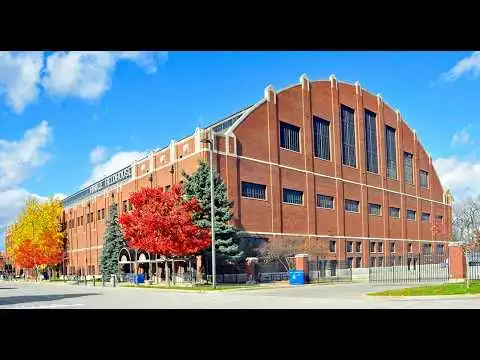
Hinkle Fieldhouse exists as we know it today, one of the most iconic venues in all of basketball. It stands as a monument not just to Butler, but to Indiana basketball itself.
And then there’s this—he helped change the game forever.
Before Hinkle, basketballs were brown. He pushed for the now-standard
orange basketball, improving visibility and fundamentally changing how the game was played and watched.
On the court, his teams were disciplined and fundamentally strong, reflecting the core values of Indiana basketball.
Hinkle didn’t just coach in Indiana.
He helped define what basketball in Indiana—and America—would become.
Hinkle Fieldhouse: A Quick Peek at This Legendary Building
8) Jack Butcher
Jack Butcher is the embodiment of Indiana high school basketball.
A star player who turned down the Boston Celtics to return home and coach—that alone tells you everything about his priorities and impact.
At Loogootee, Butcher built something extraordinary.
Four undefeated seasons
Seven regional championships
Multiple semistate titles
A trip to the state championship game
His 1975 team, which included his son Bill Butcher, went undefeated all the way to the state finals.
Butcher’s teams weren’t just talented—they were disciplined, fundamentally sound, and mentally tough.
In a state where high school basketball can mean everything to a community, Butcher delivered excellence year after year.
He didn’t chase the spotlight.
He built a dynasty in his hometown—and became a legend doing it.
Across Indiana – Butcher Basketball
7) Gene Keady
Gene Keady spent two decades going toe-to-toe with Bob Knight—and that alone tells you everything you need to know about how good he was.
Coaching at Purdue during Knight’s peak at Indiana was no easy task. Most coaches would’ve been overshadowed. Keady wasn’t.
He won
six Big Ten championships, consistently putting Purdue in position to compete at the highest level in one of the toughest conferences in the country.
Keady’s teams had a clear identity:
Physical
Defensive-minded
Relentlessly tough
They weren’t flashy, but they were incredibly difficult to beat.
The one knock—and it’s a fair one—is postseason success. Keady never quite translated his regular-season dominance into deep NCAA Tournament runs the way Knight did.
But make no mistake—Keady built a powerhouse in West Lafayette. His consistency, player development, and ability to compete year after year against elite competition make him one of the greatest coaches the state has ever seen.
Remembering Gene Keady and Bob Knight’s rivalry
6) Bob “Slick” Leonard
Bob “Slick” Leonard is Indiana Pacers basketball.
Before the NBA success, before the modern era—there was Slick.
Leonard coached the Pacers to
three ABA championships, establishing them as one of the premier franchises in professional basketball during that era.
But his impact goes beyond wins.
When the Pacers were in financial trouble, Leonard and his wife helped organize a
telethon to sell season tickets, a move that quite literally helped save the franchise and secure its place in the NBA.
That’s not just coaching—that’s leadership.
On the court, Leonard’s teams were tough, disciplined, and played with pride. Off the court, he became the voice of the franchise, beloved by fans for decades.
In Indiana, where basketball loyalty runs deep, few figures are more respected than Slick Leonard.
He didn’t just coach a team.
He helped build a franchise—and a legacy.
Bobby “Slick” Leonard’s Basketball Hall of Fame Enshrinement Speech
5) Brad Stevens
Brad Stevens’ time at Butler was short—but what he accomplished was historic.
In just
six seasons, Stevens transformed Butler from a strong mid-major into a national powerhouse.
Two straight national championship game appearances (2010, 2011)
Multiple deep NCAA Tournament runs
A program that consistently overachieved
And let’s be clear—Butler didn’t have the resources of Duke, Kentucky, or North Carolina.
They had Stevens.
His ability to maximize talent, control tempo, and execute in late-game situations was unmatched.
The near-upset of Duke in the 2010 national title game—decided by inches—remains one of the greatest moments in tournament history.
Stevens didn’t just win games.
He elevated Butler—and put Indiana basketball back in the national spotlight in a modern era dominated by blue bloods.
All-Access with Brad Stevens and Butler Basketball
4) Bill Green
Bill Green is one of the greatest high school coaches not just in Indiana—but anywhere.
His career wasn’t built overnight. Early struggles at Sacred Heart and Cathedral tested him, but when he got his opportunity at Indianapolis Washington, everything changed.
Green won a state championship in 1969 with one of the greatest teams in IHSAA history.
Then came Marion—and dominance.
Back-to-back titles in
1975 and 1976
A return in the 1980s that led to
three straight state titles (1985–87)
A total of
six state championships
That’s not success—that’s a dynasty.
Green’s teams were disciplined, skilled, and relentless. But more importantly, he impacted lives.
In Indiana, high school basketball is about community—and Green was a pillar in every community he coached.
His legacy goes beyond banners.
It’s about the generations of players he influenced.
1975 IHSAA State Championship: Marion 58, Loogootee 46
3) Branch McCracken
Branch McCracken is the man who put Indiana University basketball on the map.
Before Bob Knight, there was McCracken. Check out the
Top Sportsbooks
for Betting on March Madness!
He led Indiana to
two national championships (1940, 1953)
and won
four Big Ten titles, establishing the Hoosiers as a national power.
But his impact goes far beyond wins.
McCracken broke barriers by recruiting
Bill Garrett, helping integrate college basketball in the Big Ten. That decision alone makes his legacy larger than the game.
On the court, his teams played with discipline and intelligence, reflecting the values that would define Indiana basketball for decades.
McCracken didn’t just win.
He built the foundation that others—most notably Knight—would build upon.
Without McCracken, there is no Indiana basketball tradition as we know it.
Branch McCracken interview
2) Piggy Lambert
Piggy Lambert was a visionary.
At Purdue, he won
11 Big Ten championships, a staggering number that places him among the most dominant conference coaches in history.
But Lambert’s impact wasn’t just about winning—it was about innovation.
He is widely credited with helping develop the
fast break, revolutionizing how basketball is played.
He also played a major role in shaping the early structure of professional basketball and was a key influence on
John Wooden, one of the greatest coaches ever.
Lambert didn’t just coach teams.
He shaped the game itself.
In Indiana, where basketball IQ and innovation are valued as much as toughness, Lambert stands as one of the true pioneers.
Wooden’s Wisdom: What influence did Ward Piggy Lambert have on you?
1) Bob Knight
There is no debate.
Bob Knight is the greatest basketball coach in Indiana history—and one of the greatest anywhere.
When Knight arrived at Indiana, the program was struggling. Within two years, he had them in the
Final Four.
From there, he built a dynasty:
3 National Championships
11 Big Ten titles
The last undefeated national champion (1976)
Knight’s teams were defined by:
Discipline
Defense
Execution
He demanded perfection—and often got it.
Beyond the wins, Knight established a culture that defined Indiana basketball: tough, smart, and fundamentally sound.
Up To $1500 in Bonus Bets Paid Back if your First Bet Does Not Win
T&Cs apply
4.5/5
Gambling problem? Call 1-800-GAMBLER or 1-800-MY-RESET (Available in the US) 877-8-HOPENY or text HOPENY (467369) (NY) 1-800-327-5050 (MA), 1-800-BETS-OFF (IA), 1-800-981-0023 (PR). 21+ only. Please Gamble Responsibly. See BetMGM.com for Terms. First Bet Offer for new customers only (if applicable). Subject to eligibility requirements. Bonus bets are non-withdrawable. In partnership with Kansas Crossing Casino and Hotel. Promotional offers not available in Mississippi, Massachusetts, New York, Ontario, or Puerto Rico.
New DraftKings Customers: Spend $5+ Get $150 in Bonuses
T&Cs apply
4.5/5
GAMBLING PROBLEM? CALL 1-800-GAMBLER or 1-800-MY-RESET, (800) 327-5050 or visit gamblinghelplinema.org (MA). Please Gamble Responsibly. 888-789-7777/visit ccpg.org (CT), or visit www.mdgamblinghelp.org (MD), 1-800-981-0023 (PR). 21+ and present in most states. (18+ DC/NH/PR/WY). Void in CAN. Eligibility restrictions apply. On behalf of Boot Hill Casino (KS). Pass-thru of per wager tax may apply in IL. 1 per new DraftKings customer. $5+ first-time bet req. Max. $150 issued as non-withdrawable Bonus Bets. Stake removed from payout. Reward issued as $50 in Bonus Bets every 7 days via click-to-claim for 14 days. Bonus Bets and click-to-claims expire 7 days (168hrs) after issuance. Terms: sportsbook.draftkings.com/promos. Ends 10/11/26 at 11:59 PM ET. Sponsored by DK.
Must be 21+. GAMBLING PROBLEM? CALL 1-800-GAMBLER OR CALL 1-800-MY-RESET, www.mdgamblinghelp.org (MD), (800)-327-5050 or gamblinghelplinema.org (MA), Call (877)8-HOPENY or text HOPENY (467369) (NY), (888) 789-7777 or ccpg.org (CT), morethanagame.nc.gov (NC), 1800gambler.net (WV)
Bet $1 and get double the winnings up to $25 for your next 10 bets
T&Cs apply
4.4/5
21+ New users only. Must register using eligible promo code. First bet after registration must qualify. Max. Bonus Bet: $1,000. Bonus Bet expires 14 days after receipt. Void where prohibited. See Caesars.com/promos for full terms. Gambling Problem? 1-800-GAMBLER (1-800-426-2537)
21+ and present in OH. Gambling Problem? Call 1-800-GAMBLER.
This site is using
Cloudflare
and adheres to the
Google Safe Browsing Program. We adapted
Google's Privacy Guidelines
to keep your data safe at all times.
Close
Ready to Win Big? Join the Elite with Our Sports Betting Deals!
FanDuel Promo
New Users – Get $250 in Bonus Bets when you wager $5 for 5 days
Up To $1500 in Bonus Bets Paid Back if your First Bet Does Not Win
Best Slots
T&Cs and 21+ apply
Gambling problem? Call 1-800-GAMBLER or 1-800-MY-RESET (Available in the US) 877-8-HOPENY or text HOPENY (467369) (NY) 1-800-327-5050 (MA), 1-800-BETS-OFF (IA), 1-800-981-0023 (PR). 21+ only. Please Gamble Responsibly. See BetMGM.com for Terms. First Bet Offer for new customers only (if applicable). Subject to eligibility requirements. Bonus bets are non-withdrawable. In partnership with Kansas Crossing Casino and Hotel. Promotional offers not available in Mississippi, Massachusetts, New York, Ontario, or Puerto Rico.
Code:
Open BetMGM
Get Bonus
DraftKings Promo
New DraftKings Customers: Spend $5+ Get $150 in Bonuses
Newcomer
T&Cs and 21+ apply
GAMBLING PROBLEM? CALL 1-800-GAMBLER or 1-800-MY-RESET, (800) 327-5050 or visit gamblinghelplinema.org (MA). Please Gamble Responsibly. 888-789-7777/visit ccpg.org (CT), or visit www.mdgamblinghelp.org (MD), 1-800-981-0023 (PR). 21+ and present in most states. (18+ DC/NH/PR/WY). Void in CAN. Eligibility restrictions apply. On behalf of Boot Hill Casino (KS). Pass-thru of per wager tax may apply in IL. 1 per new DraftKings customer. $5+ first-time bet req. Max. $150 issued as non-withdrawable Bonus Bets. Stake removed from payout. Reward issued as $50 in Bonus Bets every 7 days via click-to-claim for 14 days. Bonus Bets and click-to-claims expire 7 days (168hrs) after issuance. Terms: sportsbook.draftkings.com/promos. Ends 10/11/26 at 11:59 PM ET. Sponsored by DK.
Code:
Open DraftKings
Get Bonus
Find out what the legends have to say about sports this week....