Jimmy King was the glue guy of the
Fab Five backcourt, a long, explosive guard who did a little bit of everything. While Jalen Rose and Chris Webber drew most of the headlines, King’s athleticism and defensive versatility were vital to Michigan’s identity. He was a terrific transition finisher, could guard either backcourt spot, and chipped in as a secondary ball-handler. As a senior, he averaged double figures in scoring with solid rebounding and assists, reflecting his balanced game. King’s ability to complement stars and still make winning plays earns him a deserved spot on this list.
jimmy king – fab5 – express yourself
24. Kenny Battle — Illinois (1986–1990)
Kenny Battle was the emotional engine of the famed “Flyin’ Illini.” A powerful, high-flying guard/wing, Battle brought relentless energy to both ends of the floor. He was a fierce on-ball defender, a menace in passing lanes, and an elite finisher in transition. As a senior, he averaged over 16 points and 6 rebounds per game, setting the tone physically and mentally for an Illinois team that reached the 1989 Final Four. Battle’s intensity and all-out style made him the culture-setter for one of the most beloved teams in Big Ten history.
Kenny Battle flight 33
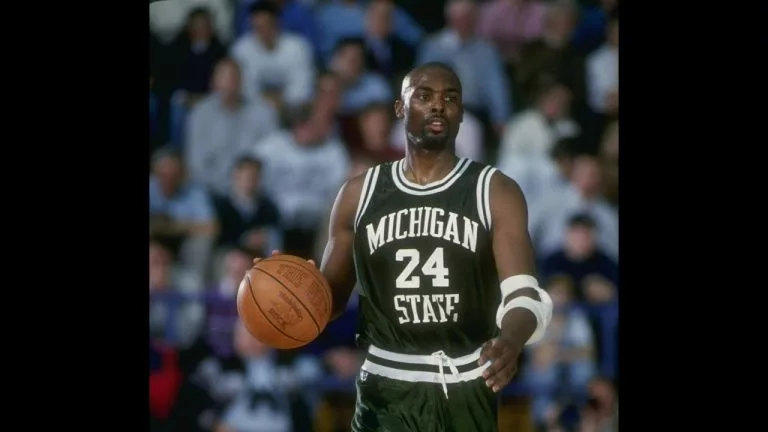
23. Alan Anderson — Michigan State (2001–2005)
Alan Anderson was one of Tom Izzo’s most versatile perimeter players, capable of sliding between guard and forward seamlessly. At 6’6″, he could handle the ball, initiate offense, post smaller guards, and defend three positions. Anderson averaged low double figures in scoring with strong rebounding and assists as a senior, helping lead Michigan State to the 2005 Final Four. He was the guy Izzo trusted to plug holes—defending a hot scorer one night, facilitating the offense the next. Anderson’s adaptability, toughness, and IQ made him invaluable in big tournament games.
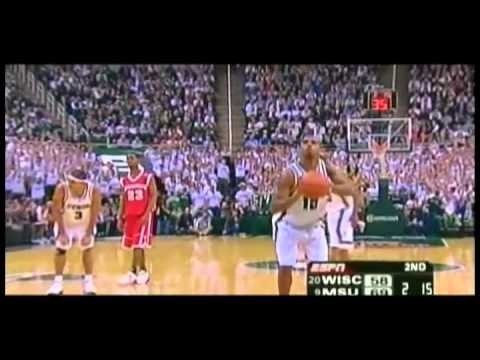
Alan Anderson’s Perfect Game!!!
22. Mike Kelley — Wisconsin (1997–2001)
Mike Kelley is one of the greatest defensive guards the Big Ten has ever seen. Under Dick Bennett, he became the point-of-attack stopper for some of the most suffocating defenses in the country. Kelley finished his career as Wisconsin’s all-time leader in steals and was named Big Ten Defensive Player of the Year. He wasn’t a high-volume scorer, but he controlled games with his positioning, discipline, and ability to disrupt opposing ball-handlers. Kelley was central to Wisconsin’s shocking 2000 Final Four run, and his defensive mastery remains the standard in Madison.
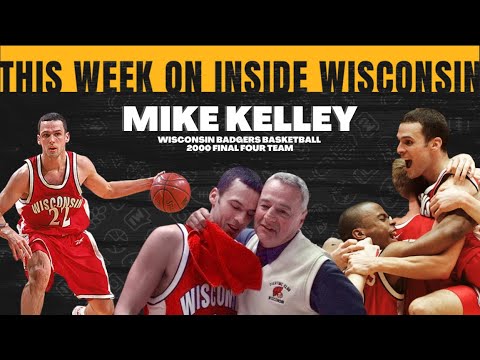
Episode 104: Wisconsin Badgers Basketball Legend Mike Kelley!
21. Gary Grant — Michigan (1984–1988)
Gary Grant, nicknamed “The General,” was one of the most complete two-way guards Michigan ever produced. A three-time All-Big Ten selection and an All-American as a senior, Grant was an elite defender, creative playmaker, and high-level scorer. He finished his career with over 2,000 points and set school records in assists and steals. In his final season he averaged over 20 points, six-plus assists, and around three steals per game, controlling every aspect of the Wolverines’ offense and defense. Grant’s blend of scoring, passing, and lockdown perimeter defense makes him a foundational name in Big Ten guard history.
1988 Michigan BB vs. Iowa
20. Scott Skiles — Michigan State (1982–1986)
Scott Skiles
was a fiery, fearless guard whose scoring numbers still jump off the page. As a senior, he averaged roughly 27 points per game—one of the top single-season marks in conference history—while facing constant defensive attention. Skiles had deep shooting range, excellent handle, and zero fear of big moments. He played with an edge that perfectly suited the physical Big Ten of the mid-1980s and routinely carried Michigan State’s offense. His combination of swagger, shot-making, and toughness makes him one of the most memorable Spartan guards ever.
Scott Skiles at Michigan State
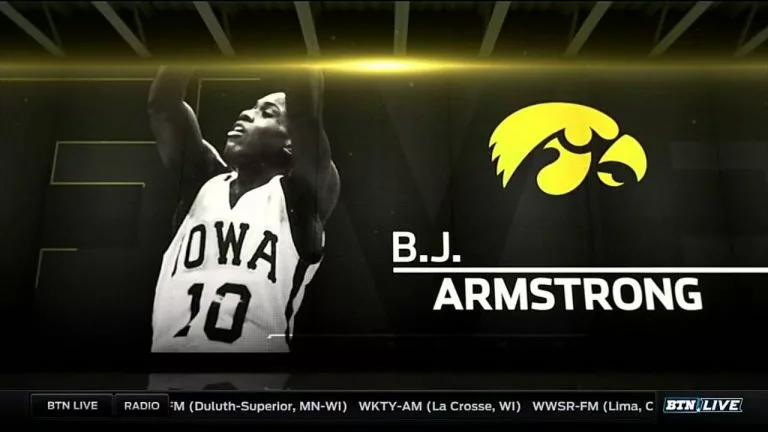
19. B.J. Armstrong — Iowa (1985–1989)
B.J. Armstrong was the steady, skilled point guard at the heart of Iowa’s strong late-’80s teams under Tom Davis. An excellent shooter and floor general, Armstrong averaged in the mid-to-high teens in scoring as an upperclassman while consistently dishing out solid assist numbers. He shot a high percentage from three and the free-throw line and rarely turned the ball over. Armstrong helped lead Iowa to multiple NCAA Tournament appearances, including a Sweet 16 and Elite Eight run. His blend of efficiency, poise, and leadership made him the prototype Big Ten point guard of that era.
Iowa All-Time Starting Five
18. Steve Alford — Indiana (1983–1987)
Steve Alford is one of the purest shooters in Big Ten and Indiana history. A two-time All-American, he graduated with over 2,400 career points and elite percentages from the field, three, and the foul line. Alford thrived in Bob Knight’s motion offense, constantly moving without the ball, reading screens, and punishing any defensive lapse. His defining moment came in the 1987 National Championship Game, where he scored 23 points and hit seven three-pointers to help deliver a title. Alford’s precision, discipline, and reliability made him the perfect Knight-era Hoosier guard.
Big Ten Icons: Steve Alford 5
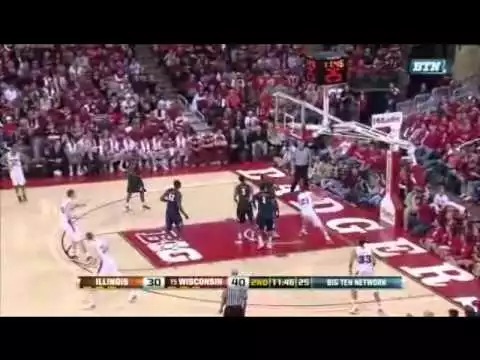
17. Luther Head — Illinois (2001–2005)
Luther Head was the athletic, sharpshooting x-factor in one of the greatest backcourts in college basketball history. As a senior on the 2004–05 Illinois team that went 37–2, he averaged around 16 points, four rebounds, and three assists per game while shooting better than 40% from deep. Head could attack off the dribble, finish above the rim, and guard multiple perimeter spots. His ability to toggle between point and shooting guard alongside Deron Williams and Dee Brown made Illinois nearly impossible to scheme against. Head’s all-around impact was central to that historic season.
Luther Head’s game winner vs Purdue
16. Devin Harris — Wisconsin (2001–2004)
Devin Harris was the dynamic lead guard who helped usher Wisconsin from the Dick Bennett defensive era into a more balanced, modern attack under Bo Ryan. The 2004 Big Ten Player of the Year, Harris averaged roughly 19 points, four rebounds, and four assists as a junior before heading to the NBA. He was a crafty slasher, an improved outside shooter, and an excellent defender who could pressure the ball full court. Harris’ ability to create off the dribble and carry the scoring load gave Wisconsin an offensive gear it hadn’t had in years.
Devin Harris Wisconsin Mix
15. Jordan Taylor — Wisconsin (2008–2012)
Jordan Taylor is the gold standard for efficiency at the point guard position. In 2010–11, he posted one of the most remarkable statistical seasons in Big Ten history, averaging over 18 points and nearly five assists while committing just over one turnover per game. His assist-to-turnover ratio was off the charts. Taylor wasn’t the fastest player, but he was incredibly strong and smart, navigating tight spaces and punishing mistakes. He thrived in late-clock situations, hitting big shots and making the right decisions. Taylor’s steadiness and reliability elevated Wisconsin into perennial contention.
Jordan Taylor Highlights IV
14. Mike Conley — Ohio State (2006–2007)
Mike Conley’s lone season at Ohio State remains a masterpiece in freshman point guard play. He averaged around 11 points, six assists, and over two steals, all while shooting above 50% from the field and leading the Buckeyes to the 2007 national title game. Conley’s speed with the ball, tight handle, and ambidextrous finishing made him a terror in the open floor and in the pick-and-roll. Defensively, he harassed opposing guards into mistakes. Conley played with the poise of a senior from day one, and his impact in just one season was enormous.
Mike Conley Ohio State Highlights
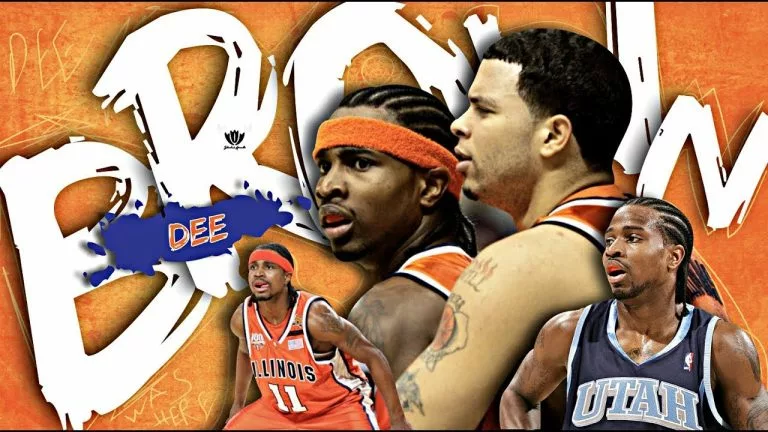
13. Dee Brown — Illinois (2002–2006)
Dee Brown was the emotional heartbeat and turbocharger of Illinois’ golden age. A blur with the ball, Brown could change a game’s tempo in a single possession. He averaged in the low-to-mid teens in scoring across his career, with strong assist and steal totals, and was named Big Ten Player of the Year in 2005. Brown could run the offense as a point guard or stretch defenses as a shooter, and his on-ball defense was elite. His energy, charisma, and big-shot ability were central to Illinois’ 37–2 season and run to the 2005 title game.
An NCAA ICON! Dee Brown! What STUNTED his GROWTH?
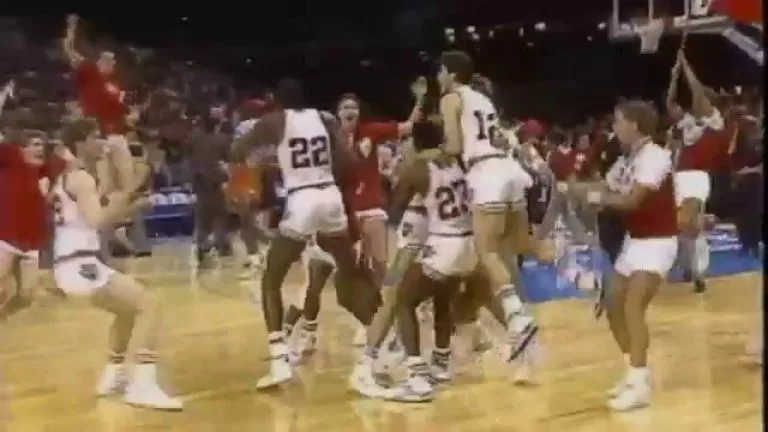
12. Kendall Gill — Illinois (1986–1990)
Kendall Gill was a classic do-everything Big Ten guard. As a senior, he averaged around 20 points per game, leading Illinois in scoring while also rebounding, defending, and facilitating. Gill’s combination of length, athleticism, and toughness made him a problem on both ends of the floor. He was a key figure on the 1989 Flyin’ Illini Final Four team, often drawing the toughest defensive assignment while still carrying a major scoring load. Gill’s versatility and competitiveness cement his place among the greatest Illini and Big Ten guards.
Kendall Gill Flying Illini
11. Rickey Green — Michigan (1975–1977)
Rickey Green played only two seasons in Ann Arbor, but his impact was seismic. After transferring in, he took over as Michigan’s floor general and led the Wolverines to the
1976 national title game. As a senior, he averaged nearly 20 points, over five assists, and more than three steals per game while shooting above 50% from the field—outrageous efficiency for a guard. Green’s speed shredded defenses in transition, and his on-ball pressure created easy baskets. He’s still remembered as one of the most electric two-year players the conference has ever seen.
Greatest Seasons: 1976 Basketball – Michigan
10. Shawn Respert — Michigan State (1990–1995)
Shawn Respert was an offensive force of nature. He finished his Michigan State career with over 2,500 points, ranking among the Big Ten’s all-time leading scorers. As a senior, he averaged more than 25 points per game while shooting efficiently from both the field and three-point range. Respert moved beautifully without the ball, could hit contested jumpers off screens, and had NBA range long before that was common in the college game. Opponents constructed entire game plans just to try to slow him. His scoring prowess makes him one of the era’s defining guards.
From the Vault: January 22, 1995 Shawn Respert scores 33 points to beat Michigan 73-71
9. Deron Williams — Illinois (2002–2005)
Deron Williams was the brains and backbone of the 2004–05 Illinois team that nearly completed a perfect season. He averaged in the low teens in scoring with over six assists per game as a junior, but his impact went far beyond numbers. Williams was a big, strong guard who could defend, shoot from deep at a high clip, and control tempo with absolute mastery. His performance in the 2005 Elite Eight comeback against Arizona is legendary. Williams’ combination of size, skill, poise, and clutch play makes him one of the most complete guards the conference has produced.
Deron Williams Illinois Highlights
8. Ronnie Lester — Iowa (1976–1980)
Ronnie Lester is often described by coaches and opponents as one of the most naturally gifted guards they ever faced. As a junior, he averaged close to 19 points and 7–8 assists per game while leading Iowa to its first Big Ten title in nearly two decades. Lester’s quickness with the ball, creativity in traffic, and ability to finish or find teammates made him almost impossible to game-plan for. He led the Hawkeyes to the 1980 Final Four, and many believe a fully healthy Lester might have carried them even further. At his peak, he was arguably the best guard in America.
Hawkeye Basketball Legend Ronnie Lester #12 Jersey Retirement Ceremony @ Fieldhouse on March 1, 1980
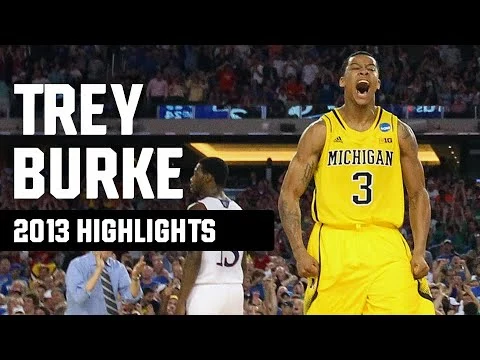
7. Trey Burke — Michigan (2011–2013)
Trey Burke’s 2012–13 season is one of the crown jewels of Big Ten guard play. He averaged 18.6 points and 6.7 assists, guided Michigan to the national title game, and swept the major National Player of the Year awards. Burke was lethal in the pick-and-roll, equally capable of threading passes to teammates or pulling up from deep. His game-tying three against Kansas in the Sweet 16 is etched into tournament lore. Beyond the numbers, Burke brought swagger, resilience, and composure to every big moment. He’s the defining Michigan guard of the modern era.
Trey Burke highlights from his legendary 2013 NCAA tournament run
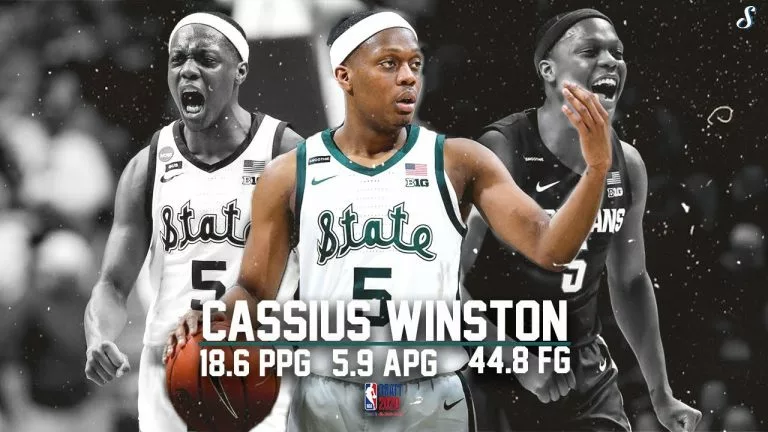
6. Cassius Winston — Michigan State (2016–2020)
Cassius Winston is the Big Ten’s all-time assists leader and the steady heart of one of Tom Izzo’s best late-decade teams. As a junior, he averaged just under 19 points and 7–8 assists per game, winning Big Ten Player of the Year and leading Michigan State to the Final Four. Winston wasn’t the fastest or tallest, but he might have been the smartest player on the floor every night. His pick-and-roll mastery, three-point shooting, and ability to control tempo were elite. Winston’s leadership, efficiency, and clutch play secure his spot among the very best.
Cassius Winston MSU 2019-20 Season Montage | 18.3 PPG 5.7 APG 42.9 FG% 2nd Team All-American
5. Mateen Cleaves — Michigan State (1996–2000)
Mateen Cleaves was the emotional epicenter of Michigan State’s rise to national power. A three-time All-American and two-time Big Ten Player of the Year, Cleaves averaged around 12–13 points and 6–7 assists per game for his career. But his legacy is about far more than stats. He led the Spartans to three straight Final Fours and the 2000 national championship, famously returning from injury during the title game to steady his team. Cleaves’ fire, leadership, and toughness reshaped Michigan State basketball and left a permanent stamp on the conference’s history.
One Shining Moment – MSU 2000 NCAA Tournament Highlights
4. Rick Mount — Purdue (1967–1970)
Rick Mount is the greatest pure shooter the Big Ten has ever seen, and one of the greatest in college basketball history—despite playing before the three-point line. He averaged over 30 points per game in each of his last two seasons, including roughly 35 as a senior. Mount’s range extended well beyond 25 feet, and he routinely hit shots that would be threes in the modern game. He led Purdue to the 1969 national championship game and dropped a legendary 61 points on Iowa. Mount’s scoring artistry was decades ahead of its time.
1970 Rick Mount (Part 1)
3. Isiah Thomas — Indiana (1979–1981)
Isiah Thomas packed a Hall of Fame game into two college seasons. As Indiana’s floor general, he averaged around 16 points and six assists per game, but his true value was his command, toughness, and ability to elevate when it mattered most. Thomas led the Hoosiers to the 1981 national championship and was named the Final Four’s Most Outstanding Player. He was a ferocious defender, a brilliant passer, and a fearless late-game scorer. Isiah is the prototype of the tough, winning Big Ten point guard—and one of the greatest leaders the conference has ever known.
Isiah Thomas | Big Ten Icons
2. Braden Smith, Purdue
Braden Smith belongs in any discussion of the top 10 guards in Big Ten history because he combined elite production, winning, durability, and leadership in a way few players ever have. The Purdue star finished his career as the NCAA’s all-time assists leader with 1,103 assists, breaking a record that had stood for more than three decades. He also left Purdue as the program’s all-time assists leader while ranking among the school’s all-time leaders in points and steals.
Smith wasn’t just a passer. He was a complete floor general who could score, defend, rebound, and control every aspect of a game. He was a three-time First Team All-Big Ten selection, a two-time First Team All-American, the 2025 Big Ten Player of the Year, and winner of the prestigious Bob Cousy Award as the nation’s top point guard.
Most importantly, Smith was a winner. He helped lead Purdue to multiple Big Ten championships, a national championship game appearance, and consistent NCAA Tournament success. His combination of statistics, accolades, and team accomplishments places him among the greatest guards the Big Ten has ever produced and makes a strong case that he belongs comfortably inside the conference’s all-time top ten.
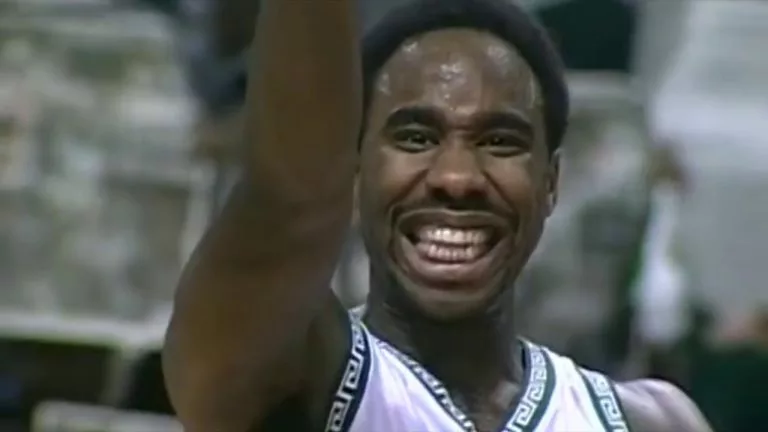
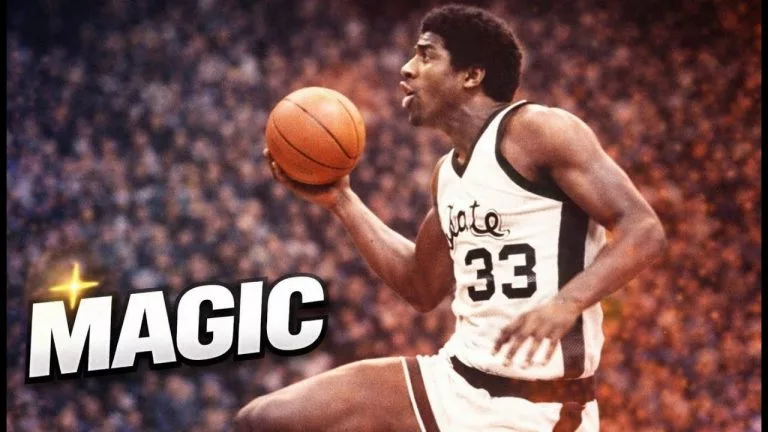
1. Magic Johnson — Michigan State (1977–1979)
Magic Johnson stands alone at the top. At 6’9″, he completely reimagined what a point guard could be, averaging roughly 17 points, 8 assists, and 7–8 rebounds per game over his Michigan State career. Magic’s size, vision, and creativity made him a matchup nightmare, and his personality and joy for the game lifted everyone around him. In 1979, he led the Spartans to the national championship and delivered a legendary performance in the title game against
Larry Bird’s Indiana State. Magic didn’t just dominate the Big Ten—he changed the sport itself. He is, unquestionably, the greatest guard in Big Ten history.
1978 Flashback – Young Magic Johnson Electrifies Michigan State !
Up To $1500 in Bonus Bets Paid Back if your First Bet Does Not Win
T&Cs apply
4.5/5
Gambling problem? Call 1-800-GAMBLER or 1-800-MY-RESET (Available in the US) 877-8-HOPENY or text HOPENY (467369) (NY) 1-800-327-5050 (MA), 1-800-BETS-OFF (IA), 1-800-981-0023 (PR). 21+ only. Please Gamble Responsibly. See BetMGM.com for Terms. First Bet Offer for new customers only (if applicable). Subject to eligibility requirements. Bonus bets are non-withdrawable. In partnership with Kansas Crossing Casino and Hotel. Promotional offers not available in Mississippi, Massachusetts, New York, Ontario, or Puerto Rico.
New DraftKings Customers: Spend $5+ Get $150 in Bonuses
T&Cs apply
4.5/5
GAMBLING PROBLEM? CALL 1-800-GAMBLER or 1-800-MY-RESET, (800) 327-5050 or visit gamblinghelplinema.org (MA). Please Gamble Responsibly. 888-789-7777/visit ccpg.org (CT), or visit www.mdgamblinghelp.org (MD), 1-800-981-0023 (PR). 21+ and present in most states. (18+ DC/NH/PR/WY). Void in CAN. Eligibility restrictions apply. On behalf of Boot Hill Casino (KS). Pass-thru of per wager tax may apply in IL. 1 per new DraftKings customer. $5+ first-time bet req. Max. $150 issued as non-withdrawable Bonus Bets. Stake removed from payout. Reward issued as $50 in Bonus Bets every 7 days via click-to-claim for 14 days. Bonus Bets and click-to-claims expire 7 days (168hrs) after issuance. Terms: sportsbook.draftkings.com/promos. Ends 10/11/26 at 11:59 PM ET. Sponsored by DK.
Must be 21+. GAMBLING PROBLEM? CALL 1-800-GAMBLER OR CALL 1-800-MY-RESET, www.mdgamblinghelp.org (MD), (800)-327-5050 or gamblinghelplinema.org (MA), Call (877)8-HOPENY or text HOPENY (467369) (NY), (888) 789-7777 or ccpg.org (CT), morethanagame.nc.gov (NC), 1800gambler.net (WV)
Bet $1 and get double the winnings up to $25 for your next 10 bets
T&Cs apply
4.4/5
21+ New users only. Must register using eligible promo code. First bet after registration must qualify. Max. Bonus Bet: $1,000. Bonus Bet expires 14 days after receipt. Void where prohibited. See Caesars.com/promos for full terms. Gambling Problem? 1-800-GAMBLER (1-800-426-2537)
21+ and present in OH. Gambling Problem? Call 1-800-GAMBLER.
This site is using
Cloudflare
and adheres to the
Google Safe Browsing Program. We adapted
Google's Privacy Guidelines
to keep your data safe at all times.
Close
Ready to Win Big? Join the Elite with Our Sports Betting Deals!
FanDuel Promo
New Users – Get $250 in Bonus Bets when you wager $5 for 5 days
Up To $1500 in Bonus Bets Paid Back if your First Bet Does Not Win
Best Slots
T&Cs and 21+ apply
Gambling problem? Call 1-800-GAMBLER or 1-800-MY-RESET (Available in the US) 877-8-HOPENY or text HOPENY (467369) (NY) 1-800-327-5050 (MA), 1-800-BETS-OFF (IA), 1-800-981-0023 (PR). 21+ only. Please Gamble Responsibly. See BetMGM.com for Terms. First Bet Offer for new customers only (if applicable). Subject to eligibility requirements. Bonus bets are non-withdrawable. In partnership with Kansas Crossing Casino and Hotel. Promotional offers not available in Mississippi, Massachusetts, New York, Ontario, or Puerto Rico.
Code:
Open BetMGM
Get Bonus
DraftKings Promo
New DraftKings Customers: Spend $5+ Get $150 in Bonuses
Newcomer
T&Cs and 21+ apply
GAMBLING PROBLEM? CALL 1-800-GAMBLER or 1-800-MY-RESET, (800) 327-5050 or visit gamblinghelplinema.org (MA). Please Gamble Responsibly. 888-789-7777/visit ccpg.org (CT), or visit www.mdgamblinghelp.org (MD), 1-800-981-0023 (PR). 21+ and present in most states. (18+ DC/NH/PR/WY). Void in CAN. Eligibility restrictions apply. On behalf of Boot Hill Casino (KS). Pass-thru of per wager tax may apply in IL. 1 per new DraftKings customer. $5+ first-time bet req. Max. $150 issued as non-withdrawable Bonus Bets. Stake removed from payout. Reward issued as $50 in Bonus Bets every 7 days via click-to-claim for 14 days. Bonus Bets and click-to-claims expire 7 days (168hrs) after issuance. Terms: sportsbook.draftkings.com/promos. Ends 10/11/26 at 11:59 PM ET. Sponsored by DK.
Code:
Open DraftKings
Get Bonus
Find out what the legends have to say about sports this week....