Indiana and Kentucky have produced a rivalry that can change a season in December and end one in March. Tonight it continues
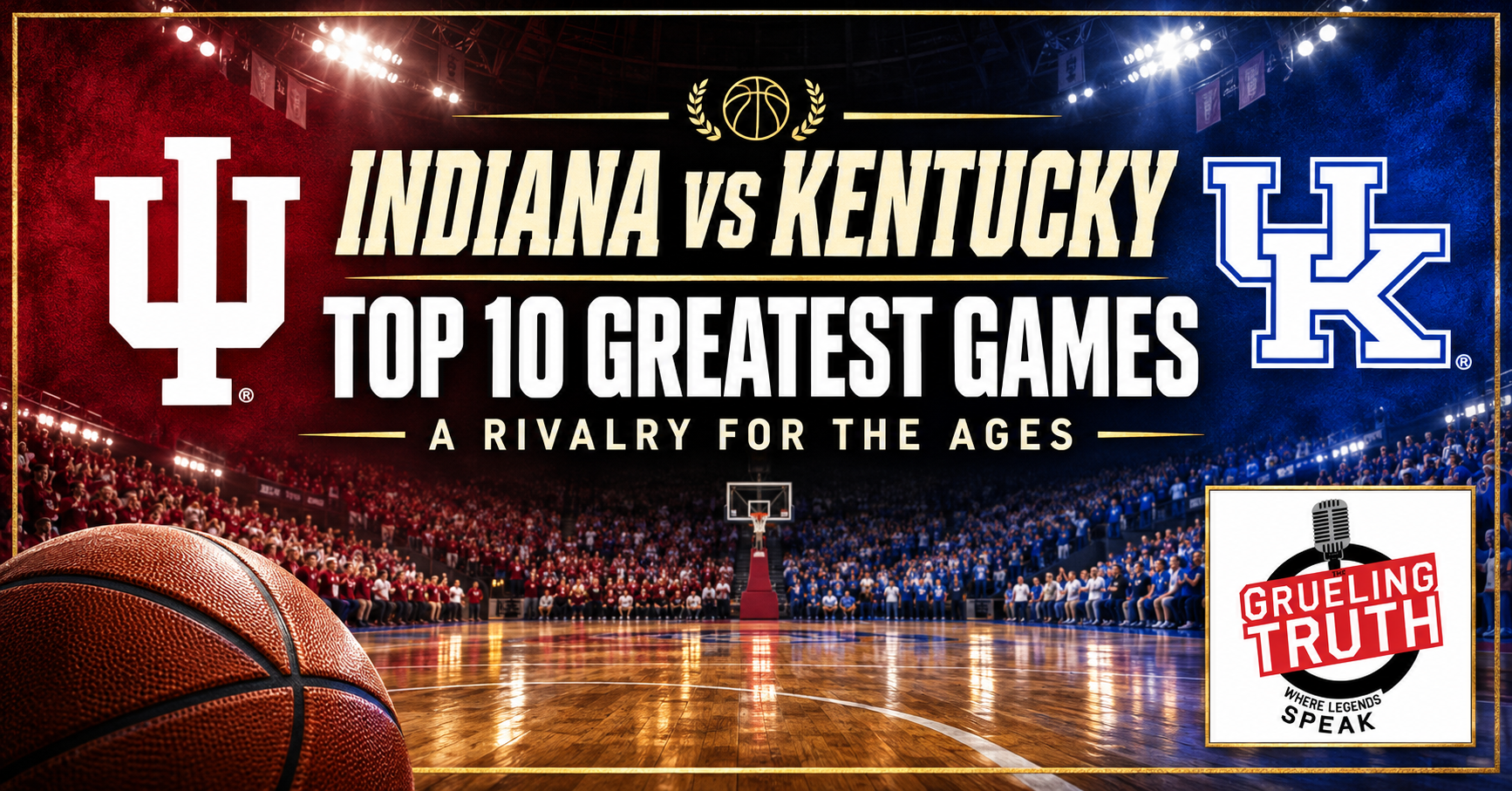
Indiana and Kentucky have produced a rivalry that can change a season in December and end one in March. Its best games include overtime marathons, remarkable individual performances, a shot that became part of Indiana basketball’s identity and an upset that stopped a perfect season.
This countdown weighs the quality of the contest, the stakes and its lasting significance. The order is an editorial judgment. Dates, scores and statistical details are drawn from university records, game reports and historical box scores.
10. Kentucky 102, Indiana 90 — March 23, 2012
Georgia Dome, Atlanta | NCAA South Regional semifinal
The NCAA Tournament rematch of the Watford game became an offensive showcase. Kentucky led 50–47 at halftime and eventually pulled away, advancing with a 102–90 victory.
Michael Kidd-Gilchrist scored 24 points and grabbed 10 rebounds. Doron Lamb added 21 points, and Darius Miller supplied 19. Anthony Davis dealt with early foul trouble but still finished with nine points, 12 rebounds and three blocks.
Christian Watford led Indiana with 27 points, Cody Zeller scored 20 and Victor Oladipo added 15. The Hoosiers shot 52.2 percent from the field, a strong offensive performance that still could not overcome Kentucky’s depth and foul shooting.
The Wildcats made 35 of 37 free throws. Indiana made 13 of 17. That combination of drawing fouls and converting opportunities repeatedly rewarded Kentucky’s attacks.
A twelve-point result understates the quality of the basketball. Indiana produced enough offense to challenge an exceptional opponent, while Kentucky demonstrated how many different players could take over a possession. The rematch gave the rivalry a second major game in the same season, with the Wildcats answering their December defeat on the tournament stage.
The Big Four Classic
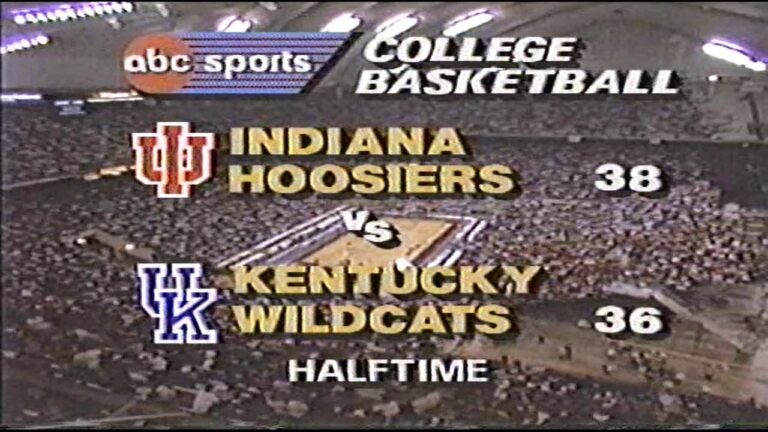
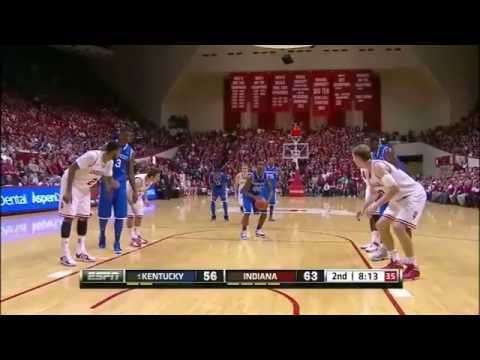
supplied a setting large enough for the expectations. Second-ranked Kentucky and fifth-ranked Indiana played in front of 43,601 fans, and forty minutes were insufficient to settle it. The teams finished regulation tied at 71 before Kentucky won overtime 11–5.
Ed Davender scored 22 points and Rex Chapman added 20 for Eddie Sutton’s Wildcats. Cedric Jenkins contributed 14 points and 10 rebounds, making all five of his field-goal attempts. Rick Calloway answered with 26 points and 11 rebounds for Indiana, while Dean Garrett scored 20.
The box score shows why this was such a demanding contest. Kentucky collected 44 rebounds and Indiana had 43. Both teams had to operate through heavy foul trouble, with the Wildcats converting 29 free throws and Indiana making 18.
This game earns a place because it delivered the tension that a meeting of highly ranked rivals promised. The crowd, the overtime finish and the contributions from both backcourts and frontcourts made it a complete rivalry spectacle. Kentucky had enough left in the extra period to turn an evenly contested afternoon into a memorable victory.
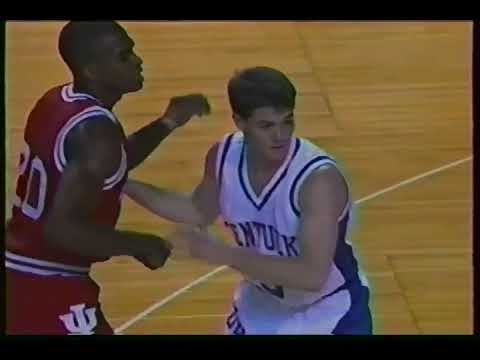
Kentucky vs Indiana NCAA College Basketball Dec 5 1987 Complete w/Commercials
8. Kentucky 81, Indiana 78 — January 3, 1993
Freedom Hall, Louisville
Four players scored 29 points in a game decided by three. That unusual symmetry captures the quality of this matchup between third-ranked Kentucky and fourth-ranked Indiana.
Travis Ford and Jamal Mashburn supplied 58 points for Rick Pitino’s Wildcats. Calbert Cheaney and Matt Nover matched that total for Bob Knight’s Hoosiers. Ford made seven three-pointers and Mashburn made six, giving Kentucky a devastating perimeter combination.
Indiana found its own advantages. Cheaney shot 12-for-19, Nover went 8-for-9 from the field and Alan Henderson collected 13 rebounds. The Hoosiers shot 56.3 percent overall, yet their 18-for-36 performance at the foul line proved costly.
Kentucky led 42–36 at halftime and held on for the victory. Its 16 made three-pointers provided enough offense to survive Indiana’s efficient field-goal shooting and work on the glass.
This belongs among the rivalry’s best because the stars delivered and the styles created a fascinating contrast. Kentucky stretched the floor with long-range shooting, while Indiana received enormous production from Cheaney and Nover. Either fan base can revisit the game and identify a handful of possessions that could have changed the result.
Indiana vs Kentucky CB | 1992-93 Season
7. Indiana 96, Kentucky 84 — December 4, 1993
Hoosier Dome, Indianapolis
Damon Bailey gave Indiana one of its signature performances against Kentucky, scoring 29 points as the 21st-ranked Hoosiers beat the nation’s top-ranked team.
Bailey made 16 of 19 free throws and added six rebounds and five assists. His ability to produce points at the line helped Indiana keep its offense moving in a game that generated plenty of fouls.
He also had substantial support. Brian Evans scored 19 points, Alan Henderson added 17 points and 11 rebounds, and Pat Graham contributed 12 points. Todd Lindeman grabbed 10 rebounds.
Indiana led 55–44 at halftime and finished with a 57–39 rebounding advantage. Kentucky attempted 33 three-pointers but made nine, while the Hoosiers built a more productive afternoon through their collective scoring and control of missed shots.
The final margin was comfortable compared with several games on this list, but the performance deserves its place. Beating the top-ranked Wildcats by twelve gave Indiana fans both a major upset and a defining Bailey memory. The rebounding numbers also underline how thoroughly the Hoosiers supported their leading scorer. This was an impressive team victory with a recognizable Indiana star at its center.
Indiana vs Kentucky – 12/4/1993 (radio)
6. Indiana 90, Kentucky 89 — December 11, 1971
Freedom Hall, Louisville | Double overtime
Steve Downing’s numbers still look extraordinary. Indiana’s center scored 47 points and pulled down 25 rebounds in a double-overtime win over seventh-ranked Kentucky.
Downing played all 50 minutes and made 19 field goals. His production supplied more than half of Indiana’s points, giving Bob Knight’s team the central performance it needed against Adolph Rupp’s Wildcats.
Kentucky had significant answers of its own. Jim Andrews finished with 22 points and 13 rebounds, Ronnie Lyons scored 19 and Tom Parker contributed 17 points and 10 rebounds.
The teams were tied at 74 after regulation and at 82 after the first overtime. Downing scored Indiana’s first five points of the second extra period, and Jerry Memering’s final free throw supplied the eventual winning point.
The combination of an exceptional individual effort and a one-point finish makes this an essential rivalry game. Downing had to keep producing through two additional periods against a ranked opponent that repeatedly extended the contest. Indiana’s 59–44 rebounding advantage also demonstrates how much his work on the glass mattered. Few performances in the series combine such scoring volume, endurance and direct influence on a result.
INDIANA BASKETBALL 1971 IU vs KENTUCKY http://www.ioffer.com/i/61570441
5. Indiana 77, Kentucky 68 — December 15, 1975
Freedom Hall, Louisville | Overtime
Kentucky gave top-ranked Indiana a serious test in the season that would end with the Hoosiers unbeaten. The Wildcats led 34–32 at halftime, and the teams reached the end of regulation tied at 64.
Indiana took control in overtime, outscoring Kentucky 13–4. Scott May and Kent Benson each scored 27 points, with Benson adding 14 rebounds. Both played the entire 45 minutes, giving Indiana sustained production from its two leading scorers.
Jack Givens had 20 points and 12 rebounds for Kentucky, while Larry Johnson scored 16. The Wildcats also finished with a 47–40 rebounding advantage, evidence of how much resistance they offered before the extra period separated the teams.
This game deserves attention because undefeated seasons depend on surviving difficult evenings like this. Kentucky forced Indiana to keep executing after regulation and made the Hoosiers earn their escape.
The later championship adds significance to the result, but the game has enough drama to stand on its own. A tied score after forty minutes, strong interior performances and a decisive overtime provided another substantial chapter between Knight and Joe B. Hall. Indiana’s nine-point winning margin conceals how precarious the night had been.
4. Indiana 73, Kentucky 67 — March 19, 2016
Wells Fargo Arena, Des Moines | NCAA Tournament second round
Thomas Bryant scored 15 of his 19 points in the final eight minutes, helping fifth-seeded Indiana eliminate fourth-seeded Kentucky and advance to the Sweet 16.
Yogi Ferrell added 18 points, giving Indiana a senior guard’s production alongside its freshman center’s decisive finish. Kentucky’s Tyler Ulis scored 27 and helped bring the Wildcats within two points with 10.4 seconds remaining.
The game’s turning point came with the score tied at 50. A designed play produced a Troy Williams pass to a cutting Bryant for a dunk and foul. Bryant completed the three-point play, beginning a 12–2 Indiana run.
Kentucky still made the finish uncomfortable. Bryant had missed two free throws earlier, but he made both when the Wildcats sent him back to the line in the closing seconds.
That response makes the game especially memorable. Indiana earned separation, absorbed a late challenge and trusted a freshman to finish under pressure. The victory also combined the rivalry’s emotional pull with the tournament’s immediate consequences. Bryant and Ferrell gave the Hoosiers the scoring needed to keep playing, while Ulis ensured Kentucky remained dangerous until the final moments.
Indiana vs. Kentucky: Hoosiers take down Wildcats
3. Indiana 72, Kentucky 65 — March 17, 1973
Memorial Gymnasium, Nashville | NCAA Mideast Regional final
A place in the Final Four
gives any rivalry meeting additional weight. Indiana earned that place by defeating Kentucky behind Steve Downing’s 23 points and 13 rebounds.
Quinn Buckner added 16 points, 11 rebounds and five assists. Steve Green scored 14, while John Laskowski provided 10 points. Those contributions gave the Hoosiers enough balance to overcome a strong performance from Kentucky center Jim Andrews, who finished with 23 points and 10 rebounds.
Indiana established a 45–32 halftime lead. Kentucky reduced the margin after the break, but the Hoosiers completed a seven-point victory and moved on.
One revealing detail is that the teams made the same number of field goals, 31. Indiana’s 10 made free throws compared with Kentucky’s three supplied the entire difference in the final score. The Hoosiers also held a 41–36 rebounding advantage.
This game belongs high on the list because it combined accomplished players, a competitive second half and the largest prize available in a regional final. Downing and Buckner supplied outstanding individual performances, while Indiana’s supporting scorers ensured Kentucky could not solve the matchup by focusing on one player.
2. Indiana 73, Kentucky 72 — December 10, 2011
Assembly Hall, Bloomington
Christian Watford’s three-pointer at the buzzer turned a tense rivalry game into one of Indiana basketball’s enduring images.
The unranked Hoosiers led top-ranked Kentucky 63–53 with 9:03 remaining. Kentucky recovered and reclaimed the lead, leaving Indiana needing one final response.
The Wildcats gave the Hoosiers an opening at the foul line. Anthony Davis missed the front end of a one-and-one with 19.9 seconds left. Doron Lamb later missed the first of two free throws with 5.6 seconds remaining before making the second.
Verdell Jones brought the ball into the frontcourt and passed back to Watford on the left wing. Watford released the shot before the horn, completing his 20-point night and sending Assembly Hall into celebration.
Indiana improved to 9–0. The shot gave Tom Crean the biggest victory of his Indiana tenure to that point and provided a moment supporters could immediately identify with the program’s recovery.
Its place near the top comes from the entire finish. Indiana surrendered a substantial lead, Kentucky missed opportunities to close the game, and Jones and Watford converted the final possession. Every replay carries the tension of those decisions.
#1 Kentucky @ Indiana 12-10-11 (Full Game)
1. Kentucky 92, Indiana 90 — March 22, 1975
University of Dayton Arena, Dayton | NCAA Mideast Regional final
The rivalry’s greatest game ended an unbeaten season and decided a Final Four berth. Kentucky beat top-ranked Indiana 92–90 after the Hoosiers had won all 31 of their previous games that season.
Indiana had defeated Kentucky 98–74 in December. The regional final became a dramatically different contest, tied at 44 at halftime before the Wildcats earned the late advantage.
Mike Flynn led Kentucky with 22 points. Kevin Grevey and Jimmy Dan Conner each scored 17. Kent Benson delivered a huge performance for Indiana, finishing with 33 points and 23 rebounds.
Scott May’s broken left wrist was a major limitation. He played only seven minutes and scored two points. Indiana nevertheless remained close enough to make Kentucky protect its lead through the final moments.
The stakes, the individual performances and the two-point finish put this game first. Kentucky overcame a lopsided earlier defeat and stopped a team pursuing perfection. Indiana received an extraordinary effort from Benson and still fell just short. More than fifty years later, those facts continue to give the game weight for both fan bases.
Unforgettable 1975 Clash: Indiana Battles Kentucky for Final Four Spot!
New Users - Get $200 in Bonus Bets when you wager $5 for 4 days
T&Cs apply
4.6/5
Gambling Problem? Call 1-800-GAMBLER or 1-800-MY-RESET. Visit www.mdgamblinghelp.org (MD). 1-888-789-7777 or ccpg.org/chat (CT). Hope is here. GamblingHelpLineMA.org or (800) 327-5050 for 24/7 support (MA). 1-877-8-HOPENY or text HOPENY (467369) (NY). 21+ (18+ D.C., WY) and present in select states (for KS, in affiliation with Kansas Star Casino). First online real money wager only. Min $5 wager required for 4 consecutive days. $5 first deposit required. Bonus issued as nonwithdrawable bonus bets which expire 5 days after receipt. Restrictions apply. See terms at sportsbook.fanduel.com. Call 1-877-770-7867 (LA).
Get Up to $1,000 Back in Bonus Bets Over Your First 10 Days
T&Cs apply
4.5/5
Gambling problem? Call 1-800-GAMBLER or 1-800-MY-RESET (Available in the US) 877-8-HOPENY or text HOPENY (467369) (NY) 1-800-327-5050 (MA), 1-800-BETS-OFF (IA), 21+ only. Please Gamble Responsibly. Visit mdgamblinghelp.org (MD). See BetMGM.com for Terms. New Player Offer for new players only. Subject to eligibility requirements. Bonus bets are non-withdrawable. In partnership with Kansas Crossing Casino and Hotel. This promotional offer is not available in NJ, MA, MI, NV, NY, ON, PA, PR, and WV.
GAMBLING PROBLEM? CALL 1-800-GAMBLER or 1-800-MY-RESET, (800) 327-5050 or visit gamblinghelplinema.org (MA). Please Gamble Responsibly. 888-789-7777/visit ccpg.org (CT), or visit www.mdgamblinghelp.org (MD), 1-800-981-0023 (PR). 21+ and present in most states. (18+ DC/NH/PR/WY). Void in CAN. Eligibility restrictions apply. On behalf of Boot Hill Casino (KS). Pass-thru of per wager tax may apply in IL. 1 per new Sportsbook customer. $5+ first-time bet req. Max. $200 issued as non-withdrawable Bonus Bets. Stake removed from payout. Reward issued as $50 in Bonus Bets every 7 days via click-to-claim for 21 days. Bonus Bets and click-to-claims expire 7 days (168hrs) after issuance. Terms: dkng.co/offer. Get 1 promo code to redeem a 3-month NBA League Pass subscription, complimentary of DraftKings. Subscription auto-renews monthly at then-current price (currently $16.99/mo); cancel anytime. Terms, restrictions, and eligibility requirements apply. Redeem League Pass by 12/19/26 at 11:59 PM ET. Addt’l terms: support.watch.nba.com/hc/en-us/articles/9165532876183-League-Pass-Terms-of-Use_. Ends 11/29/26 at 11:59 PM ET. Sponsored by DK.
Must be 21+. GAMBLING PROBLEM? CALL 1-800-GAMBLER OR CALL 1-800-MY-RESET, www.mdgamblinghelp.org (MD), (800)-327-5050 or gamblinghelplinema.org (MA), Call (877)8-HOPENY or text HOPENY (467369) (NY), (888) 789-7777 or ccpg.org (CT), morethanagame.nc.gov (NC), 1800gambler.net (WV)
Bet $1 and get double the winnings up to $25 for your next 10 bets
T&Cs apply
4.4/5
21+ New users only. Must register using eligible promo code. First bet after registration must qualify. Max. Bonus Bet: $1,000. Bonus Bet expires 14 days after receipt. Void where prohibited. See Caesars.com/promos for full terms. Gambling Problem? 1-800-GAMBLER (1-800-426-2537)
21+ and present in OH. Gambling Problem? Call 1-800-GAMBLER.
The sweepstakes and social casinos featured here are for adults aged 18 or over. No purchase is necessary to enter or win, and every operator offers a free way to get Sweeps Coins. Availability in Ohio varies by operator. Offers are subject to each operator's terms. Need a break? Call or text 1-800-MY-RESET (24/7) or visit https://ncpgambling.org. We may earn a commission when you sign up through links on this site. This does not change how we review operators.
This site is using
Cloudflare
and adheres to the
Google Safe Browsing Program. We adapted
Google's Privacy Guidelines
to keep your data safe at all times.
Close
Ready to Win Big? Join the Elite with Our Sports Betting Deals!
FanDuel Promo
New Users - Get $200 in Bonus Bets when you wager $5 for 4 days
Our Favorite
T&Cs and 21+ apply
Gambling Problem? Call 1-800-GAMBLER or 1-800-MY-RESET. Visit www.mdgamblinghelp.org (MD). 1-888-789-7777 or ccpg.org/chat (CT). Hope is here. GamblingHelpLineMA.org or (800) 327-5050 for 24/7 support (MA). 1-877-8-HOPENY or text HOPENY (467369) (NY). 21+ (18+ D.C., WY) and present in select states (for KS, in affiliation with Kansas Star Casino). First online real money wager only. Min $5 wager required for 4 consecutive days. $5 first deposit required. Bonus issued as nonwithdrawable bonus bets which expire 5 days after receipt. Restrictions apply. See terms at sportsbook.fanduel.com. Call 1-877-770-7867 (LA).
Code:
Open FanDuel
Get Bonus
BetMGM Promo
Get Up to $1,000 Back in Bonus Bets Over Your First 10 Days
Best Slots
T&Cs and 21+ apply
Gambling problem? Call 1-800-GAMBLER or 1-800-MY-RESET (Available in the US) 877-8-HOPENY or text HOPENY (467369) (NY) 1-800-327-5050 (MA), 1-800-BETS-OFF (IA), 21+ only. Please Gamble Responsibly. Visit mdgamblinghelp.org (MD). See BetMGM.com for Terms. New Player Offer for new players only. Subject to eligibility requirements. Bonus bets are non-withdrawable. In partnership with Kansas Crossing Casino and Hotel. This promotional offer is not available in NJ, MA, MI, NV, NY, ON, PA, PR, and WV.
Code:
Open BetMGM
Get Bonus
DraftKings Promo
Bet $5, Get $200 + 3 Months of NBA League Pass
Newcomer
T&Cs and 21+ apply
GAMBLING PROBLEM? CALL 1-800-GAMBLER or 1-800-MY-RESET, (800) 327-5050 or visit gamblinghelplinema.org (MA). Please Gamble Responsibly. 888-789-7777/visit ccpg.org (CT), or visit www.mdgamblinghelp.org (MD), 1-800-981-0023 (PR). 21+ and present in most states. (18+ DC/NH/PR/WY). Void in CAN. Eligibility restrictions apply. On behalf of Boot Hill Casino (KS). Pass-thru of per wager tax may apply in IL. 1 per new Sportsbook customer. $5+ first-time bet req. Max. $200 issued as non-withdrawable Bonus Bets. Stake removed from payout. Reward issued as $50 in Bonus Bets every 7 days via click-to-claim for 21 days. Bonus Bets and click-to-claims expire 7 days (168hrs) after issuance. Terms: dkng.co/offer. Get 1 promo code to redeem a 3-month NBA League Pass subscription, complimentary of DraftKings. Subscription auto-renews monthly at then-current price (currently $16.99/mo); cancel anytime. Terms, restrictions, and eligibility requirements apply. Redeem League Pass by 12/19/26 at 11:59 PM ET. Addt’l terms: support.watch.nba.com/hc/en-us/articles/9165532876183-League-Pass-Terms-of-Use_. Ends 11/29/26 at 11:59 PM ET. Sponsored by DK.
Code:
Open DraftKings
Get Bonus
Find out what the legends have to say about sports this week....
New Users - Get $200 in Bonus Bets when you wager $5 for 4 days
Gambling Problem? Call 1-800-GAMBLER or 1-800-MY-RESET. Visit www.mdgamblinghelp.org (MD). 1-888-789-7777 or ccpg.org/chat (CT). Hope is here. GamblingHelpLineMA.org or (800) 327-5050 for 24/7 support (MA). 1-877-8-HOPENY or text HOPENY (467369) (NY). 21+ (18+ D.C., WY) and present in select states (for KS, in affiliation with Kansas Star Casino). First online real money wager only. Min $5 wager required for 4 consecutive days. $5 first deposit required. Bonus issued as nonwithdrawable bonus bets which expire 5 days after receipt. Restrictions apply. See terms at sportsbook.fanduel.com. Call 1-877-770-7867 (LA).